Extending Reforestation in Bojonegoro: An Initiative for a Greener Future
It was 9 AM in the morning in Pandantoyo Village in Bojonegoro Regency, but it was already blazing hot. Some locals, however, said it was milder compared to the dry season. Even in 2019, the temperature reached 44 degree Celcius at midday. Incredibly hot days those were!

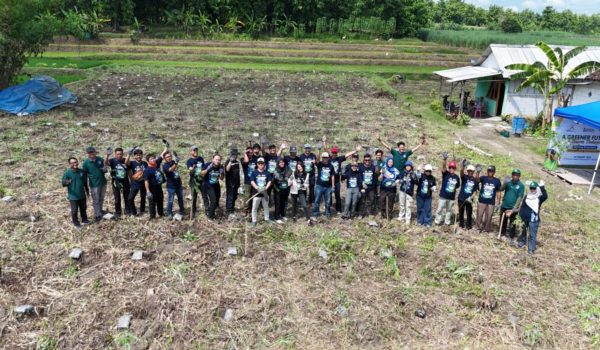
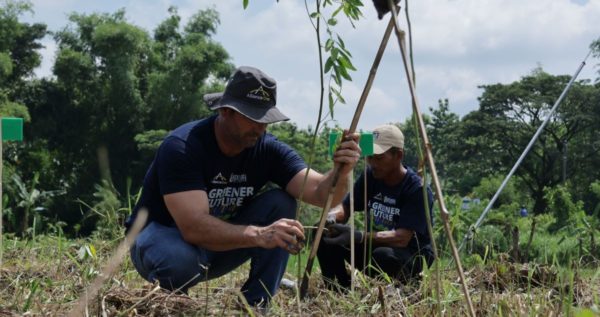
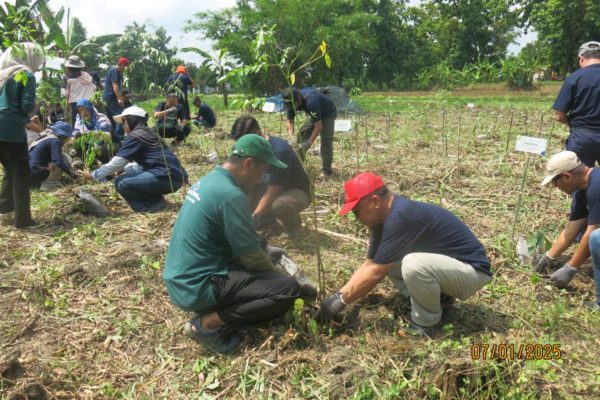
Although the temperature stood at 32 degrees Celsius that morning, according to AccuWeather, staff of Alliance One Indonesia and Indonesia Tri Sembilan gathered to volunteer in a tree-planting event, continuing their companies’ reforestation commitment.

“This is our second year planting trees together with Trees4Trees. This year, we’re continuing the effort by planting more trees in Pandantoyo and two other villages,” said Iba Swasono, the Alliance One Indonesia Operational Manager for Bojonegoro Regency. He also emphasized that this year, both companies have planted a total of 11,000 trees to improve the environment and support local communities.
Extending Reforestation
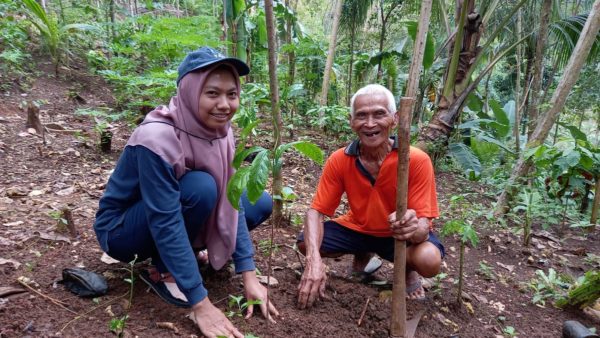
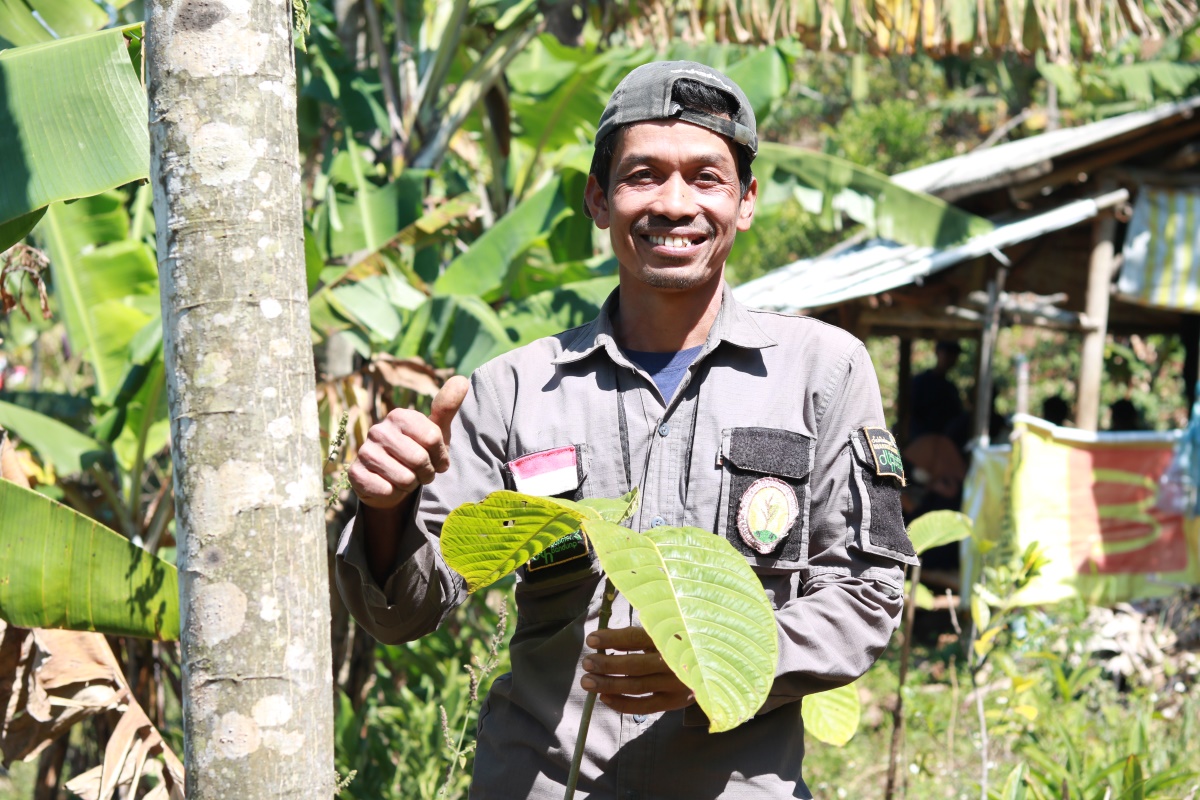
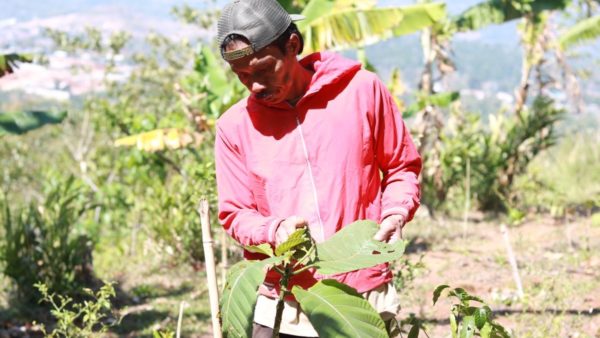
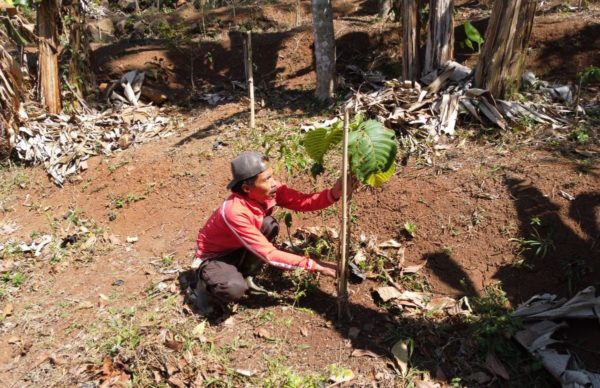
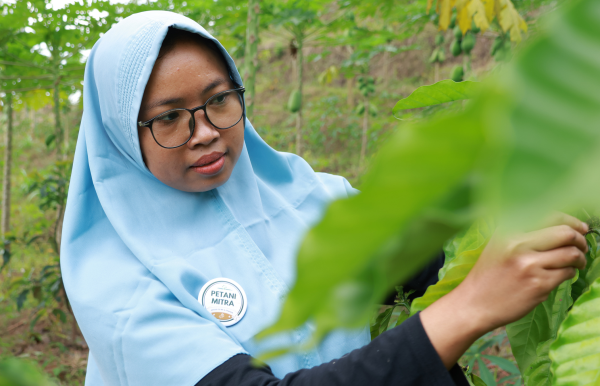
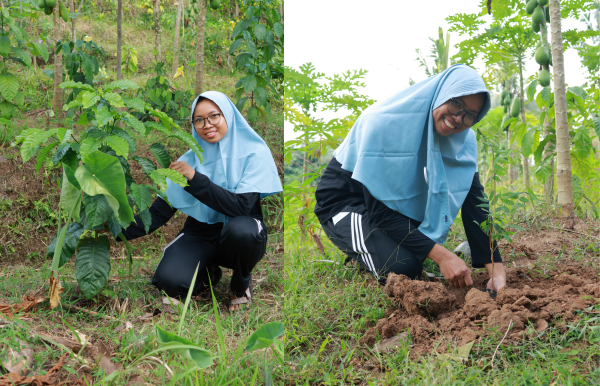
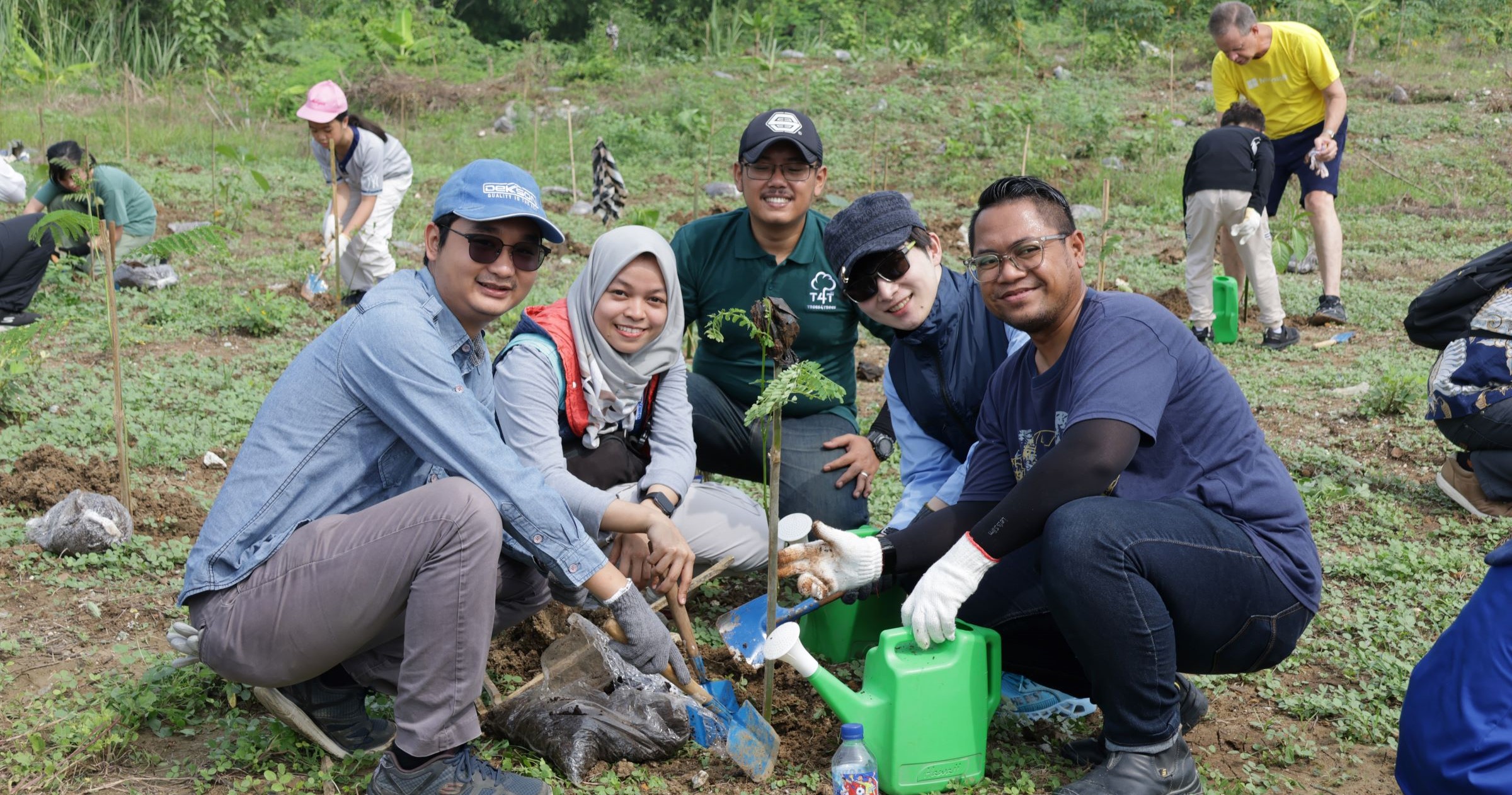
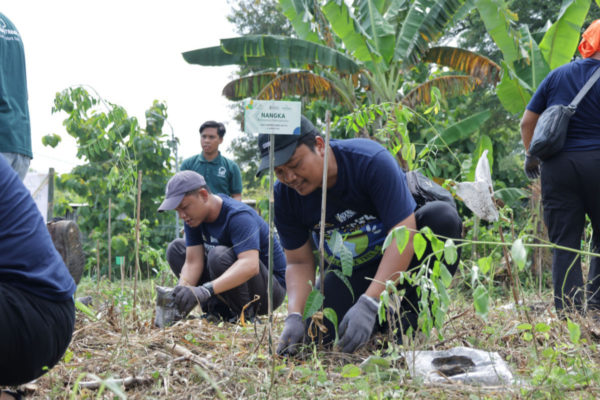
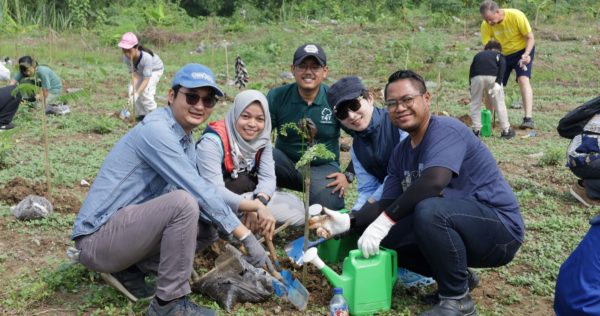
Despite the scorching heat, all participants including Iba Swasono (below) joined the tree-planting enthusiastically.

Extending Reforestation

Involving Staff and Local Communities in a Green Mission

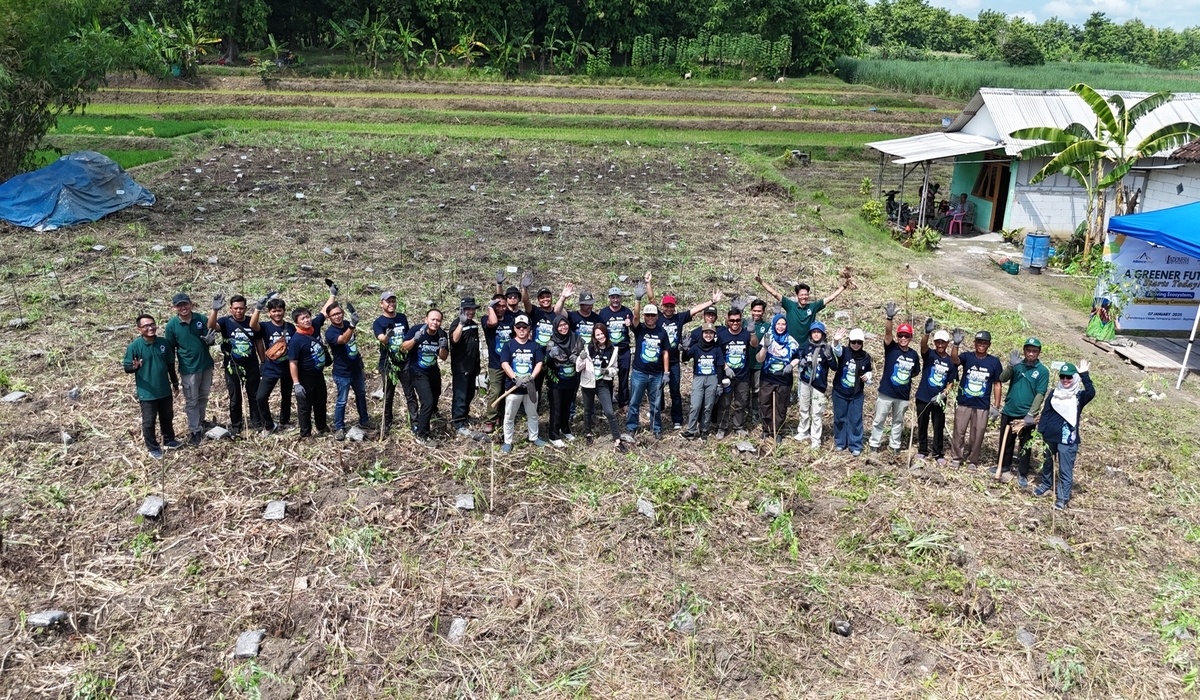
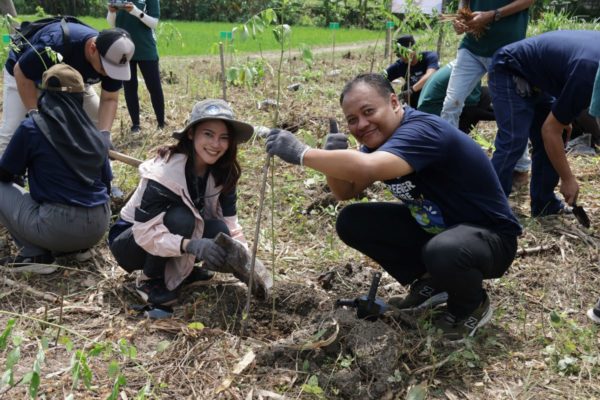
Around 30 staff members from both companies joined the event, working together to plant 400 trees. In addition to involving staff as volunteers, local communities and farmers partnering with the companies were also engaged.

“I am very excited to see farmers and local communities involved in this initiative and this is the most exciting part of it,” said Leandro Silveira, President Director of Alliance One Indonesia.

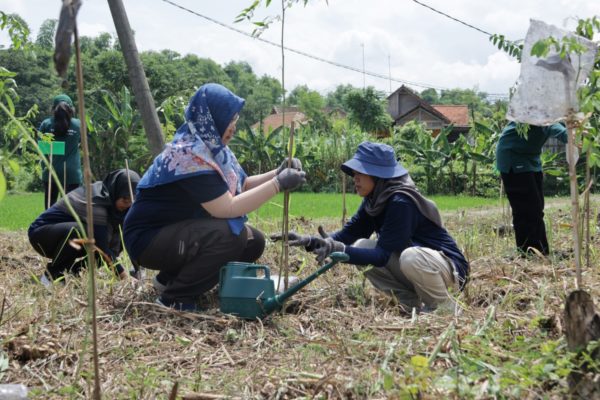
Baroroh, Program Department Head of Indonesia Tri Sembilan, shared that the company engages all staff in tree-planting, not only at events but also around plantation sites and their homes. Despite the challenges of the tree-planting event in the heat, she found it rewarding. “It’s exciting to learn which trees thrive in Bojonegoro’s heat. More importantly, we’re helping reduce carbon emissions,” she said.
plant trees
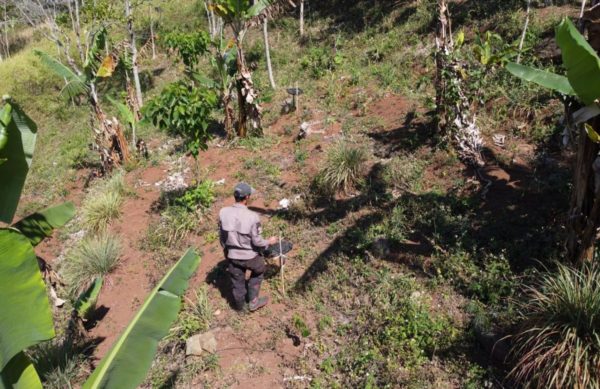
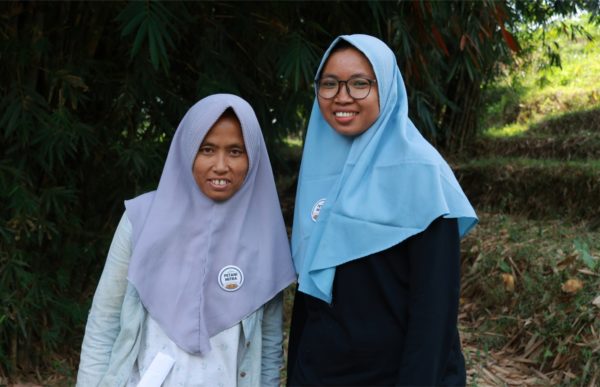
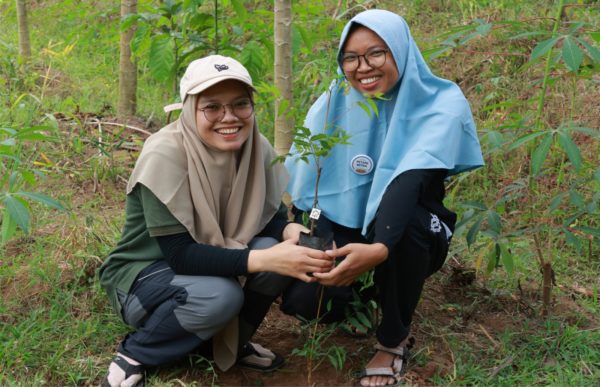
Baroroh (above), who participated in the tree-planting event for the past two years, planted trees with her team. All participants were full of spirits joining the event (below).

Extending Reforestation


Planting Trees, Addressing Complex Environmental Issues

The environmental issues in Bojonegoro are complex. The regency is known for its rich petroleum reserves, which are believed to contribute to rising temperatures due to petroleum industry activities. Large-scale deforestation has also played a role in temperature spikes, driven by the rapid development of plantations, residential areas, and local farming activities.

“The temperature wasn’t as high as it is now. Since many trees have been cut down, the days have felt much hotter,” explained Yatemi, a local resident. She lives near an open plot of land that was once cultivated with sugarcane, but remained unproductive, without shading trees.

Ade, a local farmer, shared that in addition to raising livestock, many locals rely on farming as their primary livelihood. “We plant crops that thrive in hot temperatures, such as corn, sugarcane, and tobacco,” he said. Despite the significant profits, unfortunately they are not familiar with sustainable farming practices, leading to a significant tree cover decline. This has resulted in local communities facing not only land degradation and soaring temperatures but also drought and water scarcity.

“When the dry season comes, Pandantoyo village struggles with clean water access due to water sources drying up,” said Khoirum Minan, the Trees4Trees Unit Manager responsible for tree planting in Bojonegoro.
Planting Trees

A Sustainable Program for A Healthier Environment

With the sustainable tree-planting initiative of both companies, positive impacts on the environment and people in Bojonegoro are expected. According to Iba, the main goal is to restore critical areas and plants trees that yield benefits, positively affect the community and the environment. “Communities depend on the environment. So, if the environment is damaged, it will affect the surrounding communities,” said Iba.
Extending Reforestation
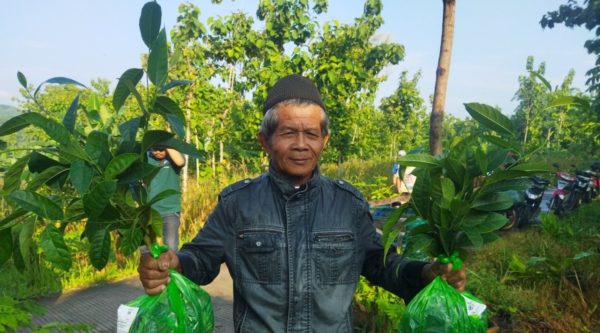
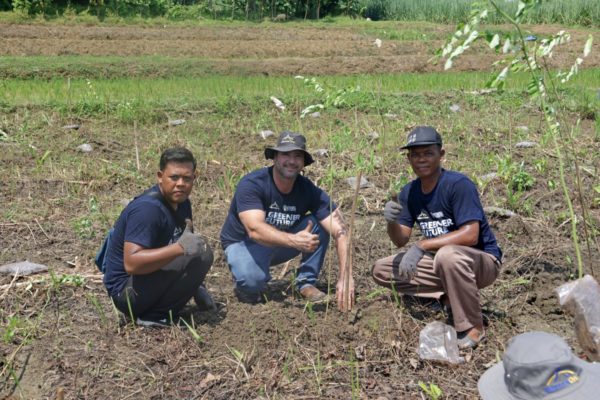
Leandro Silveira planted trees together with local communities

Supporting this initiative, Trees4Trees provided three species of trees to help achieve environmental and social impacts. “We provide indigofera, highly beneficial as livestock fodder. Additionally, we planted jackfruit trees for their economic value and suren trees for their pest-prevention benefits in community forestry. All of these are also resistant to hot temperatures,” said Pandu Budi Wahono, the Trees4Trees Director.

As part of both companies’ sustainability program, the initiative aims to plant 6,000 trees this year, with plans to continue planting annually to reach 53,000 trees in total.

“We know sustainability takes time. We cannot grow all the trees in just one year. The trees we are growing now are not to be cut or used in production but to improve the environment where our farmer community lives. That’s why we’ll plant each year and keep continuing in the coming years,” said Silveira.

Writer: V. Arnila Wulandani. Photo: Yulianisa Dessenita
Expanding Green: Trees4Trees’ Planting Season 2024 – 2025

Expanding Green

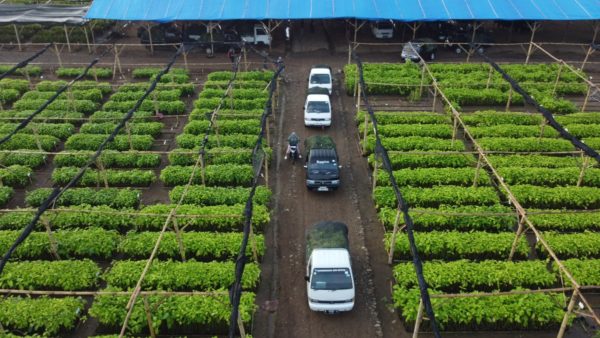
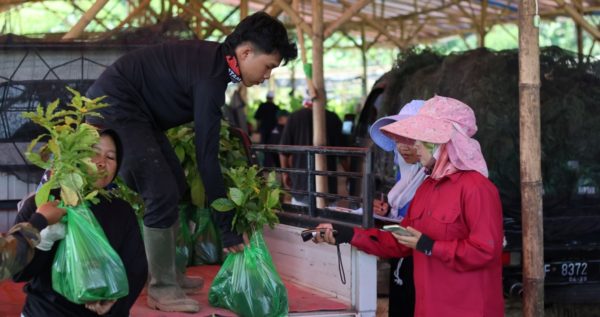
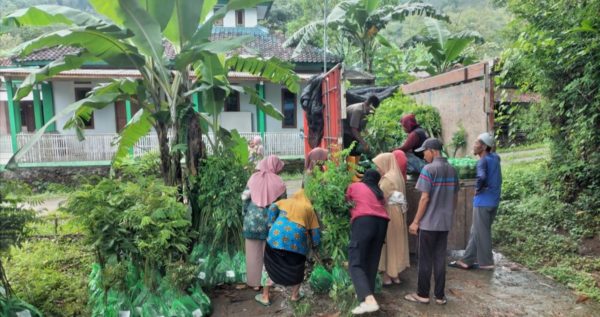
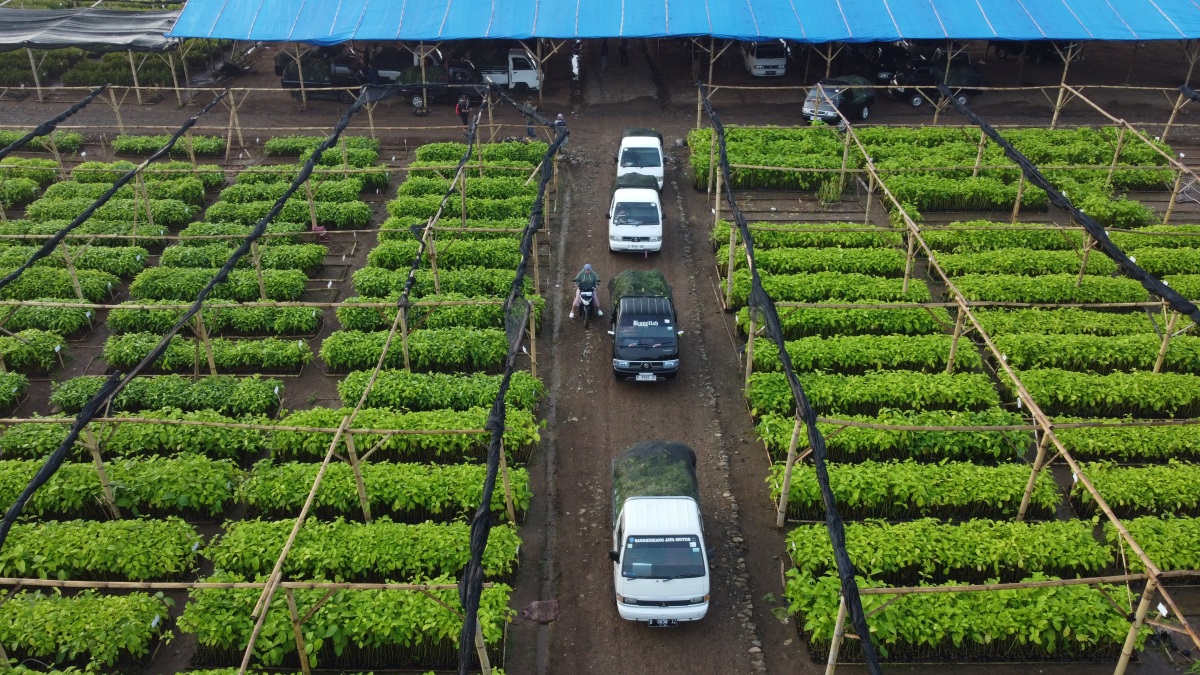
As our 2024-2025 planting season officially began in December 2024, the seedlings distribution process is now in full swing. New green leaves flourishing in our nurseries, reflecting the dedicated and meticulous work of our nurseries’ team. Together with our field team, they are currently busy distributing those seedlings to thousands of local farmers who serve as our tree-growing partners.  

This season, we aim to plant over 5.3 million trees by engaging nearly 20,000 local farmers across 17 regencies, covering over 200 villages. Additionally, we are also expanding our tree-planting efforts to Bali Island and the Citanduy watershed in West Java, while further advancing mangrove forest restoration in Cilacap, Central Java.   

Together with our supporters, we are focusing on tree-planting initiatives that help restore river watersheds, combat drought and water scarcity, enhance urban areas, and rehabilitate degraded mangrove forests. This season, 34 tree species are being planted, which are expected to improve the environment and benefit local communities. Below are our tree-planting initiatives for this season and the environmental challenges we aim to address through these efforts. 

distribution seedling
(Above) Our nursery team is busy loading seedlings. (Below) The enthusiastic local community in Kebumen receives seedlings.

Expanding Green

Expanding Watershed Restoration 

River pollution and watershed degradation pose significant environmental challenges, significantly affecting those who rely on these critical resources. This is especially true for the Citarum River, where we have been actively engaged in reforestation efforts. 

Since 2020, we have planted nearly 8 million trees in the Citarum watershed to support government-led restoration initiatives. “Our goal is to plant 20 million trees by 2028 across five Citarum sub-watersheds: Cisangkuy, Ciwidey, Cirasea, Ciminyak, and Citarik,” said Trees4Trees Director, Pandu Budi Wahono. 

Over 2.5 million trees have been planted since early January, with a goal of 4.6 million trees in total this year. These efforts, supported by 17,000 local farmers, aim to reforest 177 villages across Bandung, West Bandung, and Sumedang Regency. The ten species being planted include both fruit and shade trees, contributing to watershed restoration, revitalizing greenery, and preventing disasters, especially landslides. 

This season, our restoration efforts are expanding beyond the Citarum watershed to new areas. These include planting over 50,000 trees in the Citanduy watershed in Tasikmalaya and over 18,000 in the Sangianggede watershed in Jembrana Regency, West Bali, to protect water sources essential for the traditional Subak irrigation system.  

Expanding Green
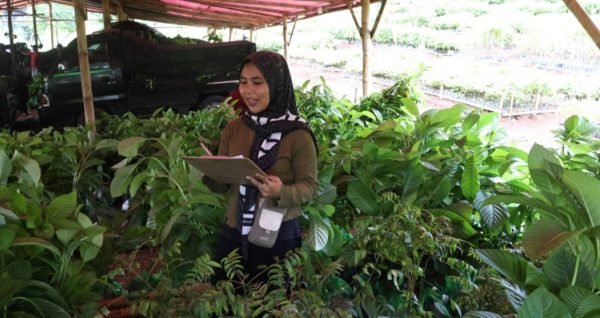
Seedlings are prepared carefully in one of our nurseries to reforest the Citarum watershed.

Expanding Green

Restoring the Degraded Cilacap Mangrove Forest 

In the 1990s, Ujung Alang Village in Cilacap Regency, Central Java, faced massive mangrove deforestation due to irresponsible land conversion for aquaculture ponds. To help the mangrove forests recover, local communities have been replanting mangroves for these past two decades. During 2022 to 2024, we contributed to the efforts by planting 24,750 mangroves across 7.4 hectares in the Kampung Laut District. 

This season, we plan to extend the initiative by planting 120,000 mangroves across 50 hectares. Four mangrove species consist of Avicennia, Rhizophora, Bruguiera, and Ceriops will be planted, as they naturally thrive in the area. The planting will follow the silvofishery concept, integrating fishery with mangrove reforestation.  

“This approach aims to provide economic benefits to local communities, with mangrove crab farming scheduled to coincide with this year’s planting efforts, as most local communities are interested in mangrove crab farming,” Yoga, the Trees4Trees Cilacap Unit Manager revealed.  

seedling
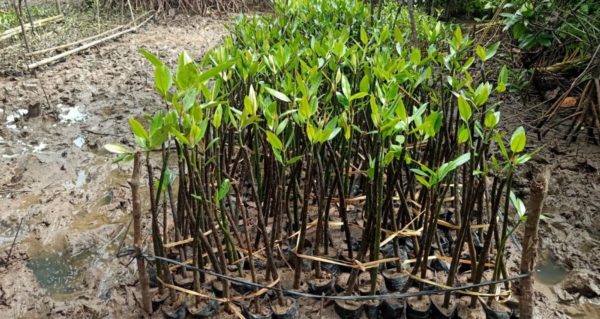
Mangrove seedlings are grown in our nursery partner managed by the local community. These seedlings are ready for Cilacap mangrove planting project.

Combating Drought and Water Scarcity  

Many of our planting areas experienced annual drought and water scarcity, significantly impacting the well-being of local communities living nearby. Villages in Kebumen, Pati, and Boyolali Regency in Central Java, Gunungkidul in Yogyakarta, Cidaun in West Java, and Bojonegoro in East Java are among our planting areas frequently affected by these issues, especially during the dry season.  

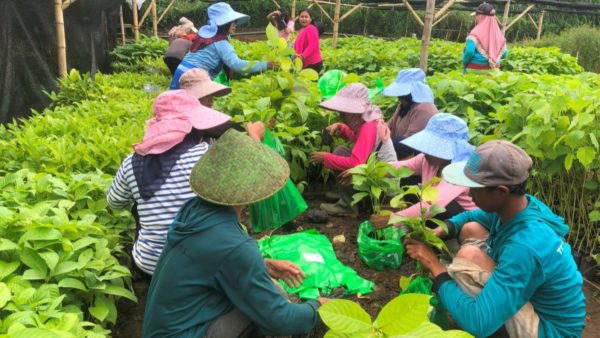
“When the dry season arrives, many areas, including our tree-planting sites in Bojonegoro, suffer from water scarcity as most water sources dry up. We aim to help local communities address this issue by planting trees that thrive in dry-prone areas,” said Khoirum Minan, the Trees4Trees Unit Manager responsible for the Bojonegoro project. 

Planting Trees
Despite the scorching day, the tree-planting in Bojonegoro recently have successfully conducted supported by companies to combat water scarcity and drought.

To continue in combating these challenges, this season we plan to plant 530,000 trees across 40 villages in five regencies in Central Java, Yogyakarta, and East Java, engaging over 2,000 local farmers. Additionally, in Cianjur Regency, West Java, we are building on last year’s success of planting 50,000 trees by adding 15,000 more trees to support local communities in developing long-term solutions to combat water scarcity and drought. 

Expanding Green
The exciting face of local communities in Kebumen (above) and Boyolali (below) receiving seedlings during planting season this year.

farmer

More Green Spaces in Urban and Industrial Areas 

The presence of urban forests amidst the bustling of cities and industrial areas offers numerous benefits. Tree-lined parks, greenways, sidewalks, and other vegetation in urban settings improve the air, water, and soil quality, reduce noise and pollution, and mitigate the effects of global warming. These improvements help prevent disasters like flooding and maintain the overall health of the urban environment. 

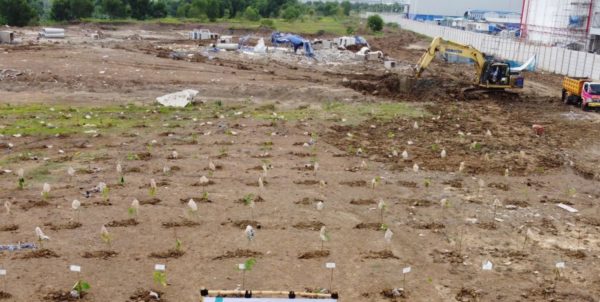
Recognizing these significant benefits, we launched our urban forestry tree-planting initiative in 2022 and have since planted over 60,000 trees. This season, we are focusing on increasing green spaces in urban and industrial areas. Since December 2024, we have planted 22,300 trees in the Bekasi and Karawang industrial regions, with more to come throughout the season. This initiative is expected to help reduce temperatures, combat air pollution, and enhance water and soil quality in these industrial zones. 

“As the soil around industrial areas is marginal, our initial step is to plant fast-growing trees before introducing other tree species. We collaborate with companies in the urban forestry initiatives this year and hope to inspire others to contribute,” said Pandu Budi Wahono. 

planting event
Urban forest tree-planting in the industrial area of GIIC, Bekasi.

Working Together with Partners and Local Communities 

This season, we are deeply grateful for the support of companies partnering with us in our reforestation mission. Together with local communities, we are working toward a shared vision of a healthier Earth. “Over eight companies are supporting us this season, and we hope more will join,” said Pandu Budi Wahono. Companies play a crucial role in reforestation efforts, not only helping to restore the environment but also demonstrating their commitment to sustainability, aligning with their core values. 

tree planting event
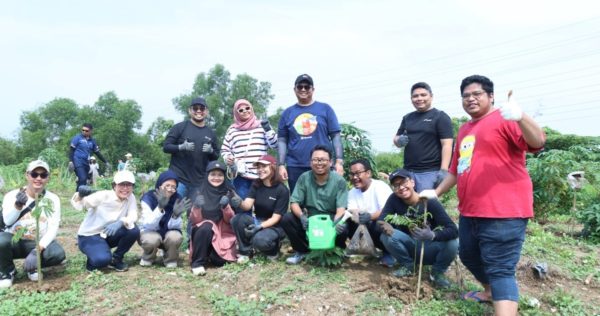
Tree-planting volunteers from companies helped to plant trees in urban areas of GIIC in Bekasi, West Java.

As climate change reaches alarming levels, collective action is more important than everWith collective efforts of individuals, governments, organizations, and companies in tackling this crisis, we can address environmental challenges and create a healthier planet for future generations. Trees4Trees invite you to join us in this mission! You can donate trees,  plan a tree-planting event, or support our tree-planting initiative to make a lasting impact on the environment.

Writer: V. Arnila Wulandani. Photos: Kemas Duga Muis, Yulianisa Dessenita, Trees4Trees Field Team

Eco-Friendly Farming: Cicalengka Farmers Move Beyond Timber Logging

Eco-Friendly Farming

For farmers in Nagrog Village, Cicalengka District, West Java, farming is not just a job that fulfills their daily lives, but a cultural heritage passed down through generations. Most of them inherit family land, which they manage by growing crops and trees. They harvest and sell their yield, providing them with a decent livelihood.  

Traditionally, crops like chili, banana, citronella grass, clove buds, and some vegetables formed their primary harvests. They also cultivated trees like burflower (jabon), gmelina, and albizia (sengon), earning income by logging and selling the timbers. However, in recent years, many of them have recognized the need to adopt more environmentally friendly practices to secure their livelihood for the future. 

Trees
Crops like citronella grass, bananas, and vegetables are typical crops planted in farmers’ lands.

From Harvesting Timber to a New Eco-Friendly Farming Model 

“Logging trees for timber is an outdated way to earn income,” said Faisal, one of Nagrog Village’s farmers. “For us, cutting down the trees and selling the timber is a thing of the past. We’re transitioning to a farming model focused on growing trees without cutting them down. Tree cover is essential for preventing erosion and controlling rainwater runoff in our village,” he explained.  

In recent years, the farmers in Nagrog Village have united to create a greener future. As an initial step, they have shifted their focus to cultivating more trees and crops, prioritizing the sustainable harvest of fruits and leaves over cutting timber.

Eco-Friendly Farming
Faizal took a rest after working on his land in Nagrog Village

Maximizing Cloves and Citronella Grass 

Clove trees and citronella grass are the main crops they cultivate lately. “Clove buds fetch a good price in the market. It’s 80,000 rupiah per kilogram,” shared Agus, another farmer. “Citronella grass grows exceptionally in our village land, with consistent demand and good prices as it’s used for essential oils,” he added. Agus also noted Arabica coffee’s potential, priced between 15,000 and 18,000 rupiah per kilogram, although market fluctuations are a challenge. “So, we need to diversify crops and fruit trees to stabilize our income,” he emphasized.  

On the other hand, Yaya, another farmer, faces different challenges when growing cloves due to his open land exposed with direct sunlight. “The dry season has always been tough, especially last year. Many of my young clove trees didn’t survive the heat. My crops also struggled,” he said. “I’ve used shading nets, but I think more shade trees are needed to reduce the heat and improve their survival rate,” he said. 

Agus is taking care of burflower trees he planted, ensuring they grow healthy.

Tree Growers

Greener Future with Tree Planting Support 

In 2022, new hope arrived for the green initiatives taken by farmers in Nagrog Village. EcoMatcher, in collaboration with Trees4Trees introduced a tree planting program that engaged local farmers as tree grower partners. Among the participants were Faizal, Agus, and Yaya, who benefited from the program.  

“I received over 400 tree seedlings of clove and burflowers trees. This really helped me since I can’t afford them on my own,” said Yaya. He considered cloves to enhance the existing trees he planted, and burflowers to provide shade for his sun-scorched land.  

Eco-Friendly Farming
Yaya is working on his land, where he implemented agroforestry by combining crops and trees.

Faisal highlighted how the program supports farmers in multiple ways, not only providing free seedlings but also advanced farming knowledge. It includes teaching farmers with agroforestry technique to optimize results both income and environmental health.  

“We planted burflower trees to provide shade for our crops. Citronella grasses were planted on sloped lands to prevent erosion, and clove trees were added to our existing stock, offering valuable buds in six years while benefiting the environment. We’re truly grateful for this program,” Faisal said. 

Cultivating Hope for the Future  

With increased tree cover supporting their green initiatives, farmers are now exploring further innovations. “Clove trees offer benefits beyond the buds; their leaves can be used for essential oil production. We’re also looking into enhancing income from citronella grasses by producing essential oils ourselves, because the demand is high, and the market is competitive,” said Faisal. 

However, a lack of production machinery and knowledge remains a challenge for them. Despite this, they remain hopeful about realizing their dream. “With more trees planted, we believe doors open to further improvements in our sustainable farming practices,” added Faisal. 

In line with Faisal, Agus expressed his commitment to working with fellow farmers in his village to implement environmentally friendly farming practices. “I’m no longer interested in logging trees for timber. By preserving trees, we protect the environment and safeguard our village’s water sources for our community’s lasting survival. I think that is the most important thing,” he said. 

Writer: V. Arnila Wulandani. Photo: Kemas Duga Muis

I’m Imah, a Woman Farmer, and It’s My Right to Reforest and Uplift My Village

I’m Imah, a Woman Farmer

I’m Imah, a Woman Farmer

It was like any other season in Gunungsari Village, Kebumen. The long dry season had turned the trees brown, and the land was starting to crack from the lack of moisture. Despite the harsh conditions, the villagers remained committed to their fields, and farming as they always had. While preparing together with the team, we joked with each other and said hello to the villagers who passed by around us. Not long after that Imah joined us, with a shy smile.  

Sorry to keep you waiting, I was finishing up some cooking,” she said.  

In supporting the role of women, Trees4Trees emphasizes their involvement by partnering with local women, like Imah. A loving wife and a persistent farmer; that is what she is. Together with Lailatul KH, Trees4Trees’ Field Coordinator, she worked hand in hand to keep Gunungsari Village green. Besides joining Trees4Trees, Imah also actively participated in community activities like the PKK (a village women’s association).  

According to Imah, women are the backbone of the rural economy, especially in the agriculture role. Beyond farming, women are efficient in managing household finances and ensuring food security for their families. Today, Imah contributes to her household income by selling agricultural produce while her husband focuses on cultivating their fields. For her, women farmers can support other micro-businesses, such as food production, crafts, and various other village-based enterprises. 

Despite her accomplishments, Imah acknowledges the challenges women face, including gender inequality, education gaps, and limited access to farmland. Often, women are underestimated in their ability to manage land. However, the most significant obstacle that affects their farming economy is competition with large businesses that tend to manipulate harvest prices. 

“I once joined a women farmers’ empowerment program from both government and non-governmental organizations, including Trees4Trees. Through these programs, I gained valuable skills that can be used to improve my future endeavors,” Imah shared. 

I’m Imah, a Woman Farmer
Imah proudly showcases the tree she planted with Trees4Trees.

Women’s contributions to the household are significant, and so are their roles in other areas. 

She believes that women’s contributions make up 50% of the overall effort in farming, where they serve and assist in the fields, boosting family income and inspiring other women farmers. 

“We need support and encouragement to not be afraid of becoming farmers. Farmers can succeed, and we need society to appreciate the work of female farmers,” Imah expressed. 

Imah joined the Trees4Trees program two years ago, motivated by her desire for more experience and the availability of new tree species that were not previously accessible. Through the program, she has received hundreds of trees, including suren, coffee, and sengon, as well as corn crops that provide essential food supplies for her family. 

“Before this, I only planted cassava. Now, my land is filled with trees from Trees4Trees,” Imah said happily. Her hope in participating in the program is to become a modern, progressive woman farmer and build a strong household. 

“The benefits are not yet fully felt, but at least the money that would have been spent on buying seedlings can now be used for other needs,” she explained. 

“Through these programs, I gained valuable skills and met other women farmers like myself. I have also participated in household economic management training with Trees4Trees and hope to join their upcoming workshop on utilizing corn waste for briquette production, as I manage the corn provided by Trees4Trees.” 

Imah, together with Ratiyem, a woman farmer in her village.

A hardworking and devoted wife. 

Lailatul KH, the Trees4Trees field coordinator, added, “Bu Imah is hardworking, devoted to her husband, and often helps him in the fields.” 

She hopes that more women will join the program, recognizing the significant role they play in farming. Tasks like weeding and harvesting are heavily dependent on women, and by increasing the number of women participating in these programs, productivity and family welfare will improve. 

Imah is a living example of how a woman is supported with the right resources and trusted for her abilities to succeed, she not only transforms her own life but becomes an example for so many others to take charge of their paths.  

I’m Imah and Trees4Trees Team

Written by Teresia Miranti | Source compiled by Lailatul KH | Photograph by Y. Desennita 
7 Eco-Friendly DIY Christmas and New Year Decorations Using Tree Parts

7 Eco-Friendly DIY Christmas

Christmas and New Year are just around the corner. Decorating a Christmas tree, adding festive touches to your home, and preparing meaningful gifts for loved ones are some of the most exciting traditions of the season.  

As the classic colors of red, green, and gold are the hallmark colors of Christmas and New Year that bring ambience of warmth and joy, this year why not try something different by creating eco-friendly decorations that connect you more with nature?  

Tree twigs, leaves, fruits, or even planted trees can be transformed into stunning Christmas and New Year decor. Best of all, you can make them yourself at home! Here, we present 7 eco-friendly DIY Christmas and New Year decoration ideas using tree parts and planted trees. Let’s explore these simple projects and make your holidays even more special! 

Pine cones decoration 

When walking through a pine forest or along streets lined with pine trees, don’t forget to look around and collect fallen pine cones. Add a touch of gold or white glitter to the tips of the cones for a shimmering effect. These glittery pine cones can be used as hanging decorations for your Christmas tree, decorating candle holders, or Christmas wreath. 

Pine Cones

Source: Pinterest

Dried oranges hanging decoration 

Slices of dried oranges can be a unique, affordable, eco-friendly, and fragrant way to decorate your home. What you need to do is just to slice oranges you do not want to eat into thin slices, then dry them. You can heat them with an oven or if you live in a tropical country, you can dry them in the sunlight. You can insert a thread to a single or few slices of oranges to make a hanging decoration for your Christmas tree. You can also mix them with star anise, cinnamon bar, or dried cherry. 

7 Eco-Friendly DIY Christmas

Source: Pinterest

Leaves and grasses Christmas wreath 

Fallen leaves and grass often seem invaluable. However, they can be transformed into a beautiful and eco-friendly Christmas wreath. Arrange grasses and various types of leaves in different shapes onto a circle rattan, cardboard, or braided tree root as a base. You can use glue or thread to arrange them. Enhance the design by adding pine cones, dried flowers or fruits, and decorative ribbons. Hang your stunning wreath on your door or wall to bring eco-friendly and fresh ambience to your home. 

DIY Christmas

Source: Pinterest

Dried leaves and flowers greetings card 

Real leaves and flowers can also be transformed into stunning decorations for greeting cards. You can use them fresh or dried, depending on your preference. Start with folded recycled paper and glue uniquely shaped leaves and a flower piece to the front. Add a ribbon, dried roots, thread, or a splash of paint to enhance its aesthetic appeal. These handmade greeting cards can be displayed as home decorations or sent alongside gifts to your loved ones. 

7 Eco-Friendly DIY Christmas

Source: Pinterest

Twigs Christmas tree 

Fallen twigs can be transformed into a creative and eco-friendly alternative to a Christmas tree. You can design them as either a hanging tree or a stacked tree.  

For a hanging twig tree, gather five to ten twigs of varying lengths. Arrange them in order from shortest to longest, then tie the ends of each twig to one another using rope or string, leaving spaces between them. Hang the structure on a wall and decorate it with fairy lights and small hanging ornaments. 

Christmas Trees

Source: Pinterest

For a stacked twig tree, you’ll need an upright stick as the base. Drill a hole through the center of each twig, then slide them onto the base stick, starting with the longest twig at the bottom and ending with the shortest at the top. Finish the look with string lights and festive decorations.

Source: Pinterest

Pot mini Christmas tree  

A mini live tree is an excellent choice for an eco-friendly Christmas decoration. You can select a young pine or another lush potted tree. Simply decorate it with small hanging ornaments and place it in a corner of the room.  

Source: Pinterest

Planted poinsettia Christmas decoration 

Did you know that the vibrant red flowers associated with Christmas decorations are poinsettia flowers? These shrub plants, native to Mexico and Central America, have spread worldwide and well-known as a Christmas decoration due to their bold red color and the star-shaped crown. Instead of using artificial flowers, consider decorating your home with live potted poinsettias to create a festive ambiance in red and green.

Source: Pinterest

These DIY decorations can also be thoughtful and eco-friendly gifts for your loved ones this Christmas and New Year season! For an even more meaningful gesture, consider gifting Trees4Trees planted trees alongside your handmade creations. 

Our planted trees provide immense benefits to the environment and communities. They have been planted in degraded areas and help local farmers enhance their livelihoods. To gift trees, simply visit our donation page, make a contribution, and provide the recipient’s email address along with a personalized message. We will email a tree planting e-certificate featuring a unique code that allows the recipient to view their trees online. You’ll also be notified once the certificate has been sent to your loved one. 

Click this LINK to learn how to gift trees with us! 

Writer: V. Arnila Wulandani

Our 2024 Achievements Together with Our Partners

Our 2024 Achievements

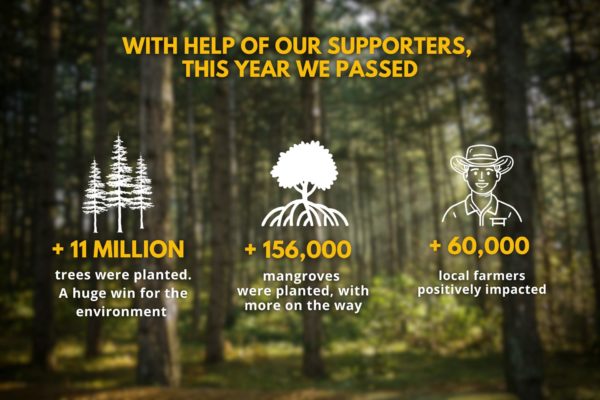
2024 was a remarkable year for the environment in one part of the world. Together with our supporters, we advanced our efforts and achieved significant strides in greening rural and urban areas, including improving drought-prone, water-scarce, and erosion-prone regions, and enhancing industrial areas through urban forestry tree-planting initiatives. In collaboration with coastal communities, we also expanded our efforts to establish green belts by planting more mangroves. 

As we close the chapter on 2024 and look forward to 2025, we extend our deepest gratitude to the individuals, companies, and organizations that contributed to our green initiatives this year. Your generous support as sponsors, donors, and volunteers has enabled us to achieve remarkable milestones, and we are excited to share them with you! 

Our 2024 Achievements


These accomplishments represent a significant milestone for us, as this initiative is not only about planting trees but also about restoring forests both in rural and urban areas, rejuvenating rivers and preventing them from siltation, restoring degraded lands in the industrial areas, preserving biodiversity, and empowering local communities, including young farmers 

Looking ahead to 2025, we remain committed to expanding our tree-planting efforts across various regions in Indonesia and are excited to continue this journey with you. The Trees4Trees planting season is currently underway and will extend into early 2025. This year, we are broadening our initiatives to include Bali Island and planting additional mangroves in Cilacap, Central Java, with the aim of achieving even greater impacts on the environment, local communities, and the economy. Through our commitment, we aspire to double the trees we plant in the next two years.  

Want to make a real impact on the earth this year? Join us in our reforestation mission! Together, help the environment and nurture life on our planet!  

For more details, please reach out to us at info@trees4trees.treesforplant.com or directly click here Plant Trees with Us! 

Writer: V. Arnila Wulandani