Balancing Industrial Growth with Urban Forest Planting

From electricity consumption and infrastructure development to manufacturing and distribution, the industrial sector stands among the world’s largest contributors to greenhouse gas emissions. According to the United Nations Industrial Development Organization (UNIDO), direct industrial emissions account for nearly 22% of total global emissions, while indirect emissions – from electricity and industrial heat – contribute another 31%. This places the industrial sector at the center of the climate challenge and makes it a priority for emission reduction. 

Recognizing this responsibility, Jaya Obayashi has strengthened its commitment to balancing industrial growth with environmental protection through sustainability-driven initiatives. Hardy Tekyawan, a member of the company’s Board of Directors, explained the company not only complies with ISO 14001 international environmental management, but also strives to go beyond compliance by taking direct action. 

“Our parent company is deeply committed to sustainability and, as a construction subsidiary, we are encouraged to actively contribute as well. It’s no longer just about meeting regulations, but about taking part in real environmental action,” he said

Turing Commitment into Action: 500 Trees for Urban Forest Expansion 

As part of their ongoing sustainability efforts, Jaya Obayashi has committed to expanding the urban forest located within the Greenland International Industrial Center (GIIC) area in Cikarang, West Java – one of Indonesia’s largest and most active industrial hubs in the Greater Jakarta region. With support from Trees4Trees, Jaya Obayashi recently planted 500 trees in this location. 

Kentaro Miyashita, Jaya Obayashi’s General Affairs Admin Advisor, confirmed that over 50 employees from various divisions took part in this initiative as planting volunteers. “Every year, we improve and strengthen our sustainability program, while also encouraging more staff to connect to environmental protection efforts,” he said. 

Hardy added that the company’s approach to sustainability applies across all business levels, from head office to project sites. “Our internal engagement must be strong, so everyone consciously participates in environmental responsibility.” 

Balancing Industrial Growth with Urban Forest Planting
Hardy (left), a member of the Jaya Obayashi Board of Directors, receives a tree-planting certificate from Trees4Trees’ Director, Pandu Budi Wahono.

Beyond Compliance: Annual Sustainable Programs 

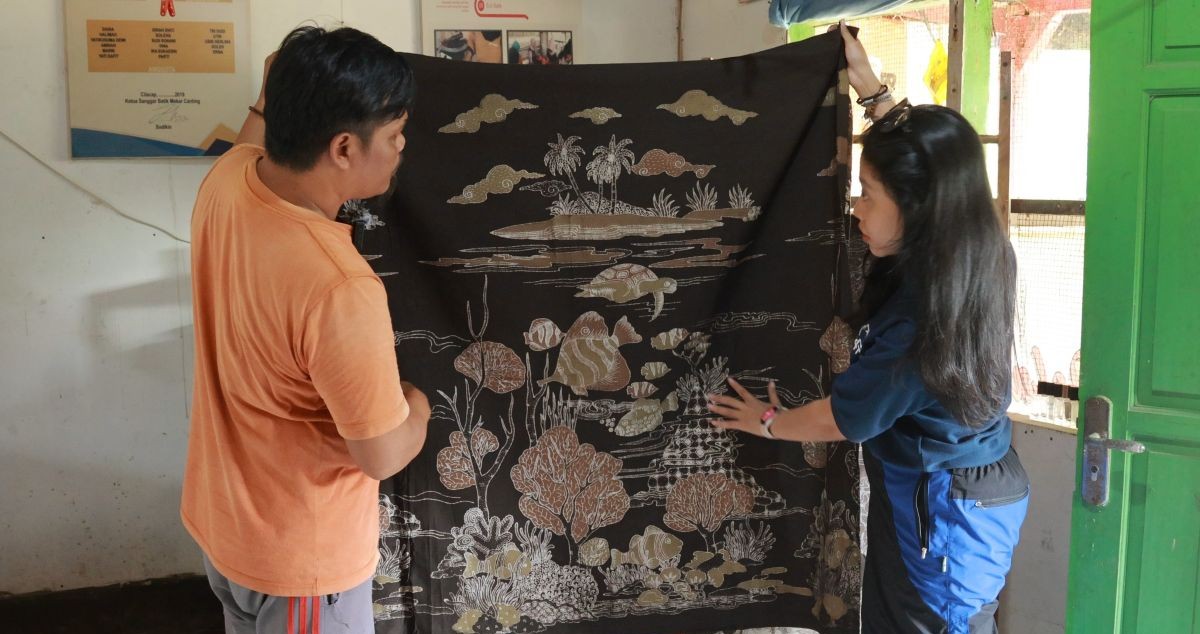
Ramdan and Tasya, from the Jaya Obayashi Corporate Communications and Legal team, also explained that urban reforestation is one of several environmental programs which the Company carries out on a regular basis. “In addition to this tree-planting activity,” explained Ramdan, “we also conducted mangrove planting from 2022 to 2024 and have continued our upcycling program for old employee uniforms.” 

Both went on to emphasize that these efforts are designed, not only to address environmental impact, but also to build a culture of awareness within the organization. By engaging and involving employees, the company aims to strengthen environmental consciousness through practical action. 

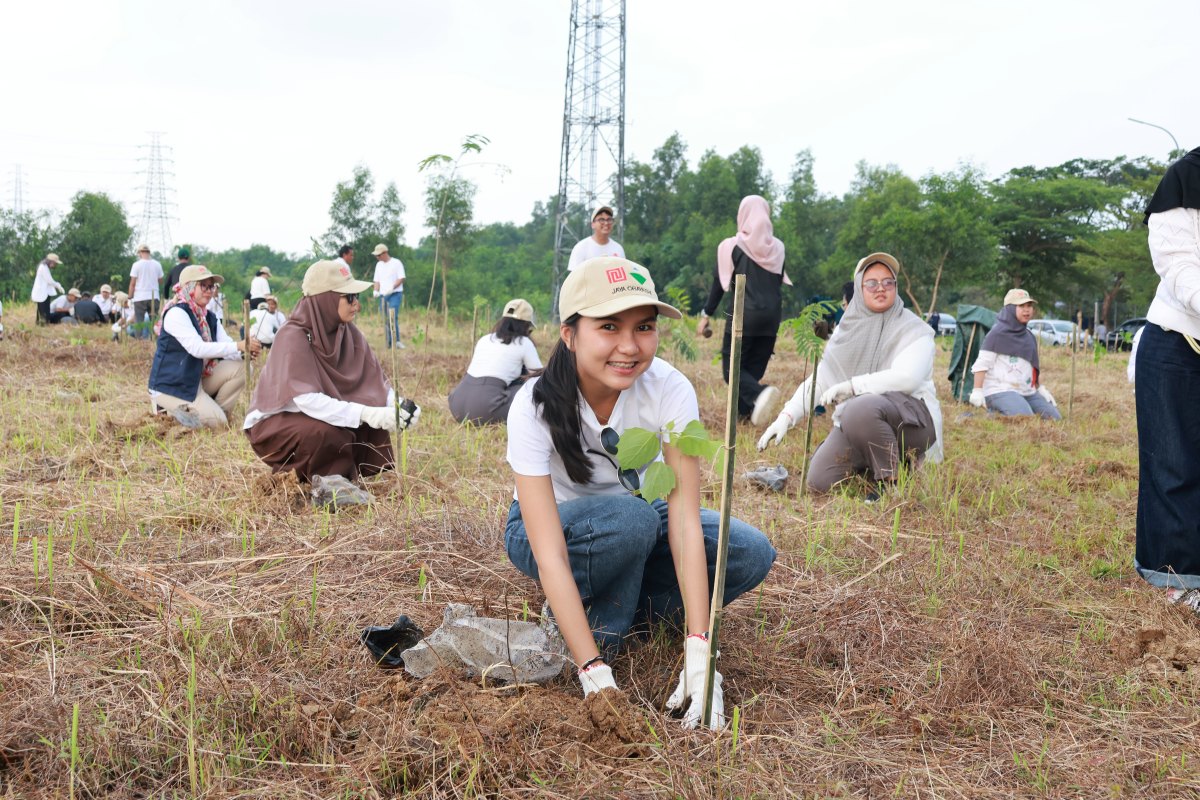
Jaya Obayashi staff plant trees
(Above) Ramdan (crouching in the center) and Tasya (second from the right), together with other Jaya Obayashi employees finish planting trees in a plot of land within the GIIC industrial area. (Below) Over 50 members of staff from Jaya Obayashi join in the tree-planting activity.

Jaya Obayashi staff plant trees

Reversing the Damage, Contributing to Climate Action 

The urban forest planting initiative forms part of Jaya Obayashi’s broader vision to help restore the ecological function of industrial landscapes – areas often exposed to higher temperatures, increased emissions, and land degradation. Tree planting serves as a way to mitigate ecological stress while contributing to positive climate action.

“We all know that global warming is worsening,” says Ramdan. “Through initiatives like this, we are aligning our efforts with the UN SDGs by taking real action.” The company hopes the newly planted trees will provide long-term environmental improvements, while converting unused areas into green buffer zones. 

Tomi Bustomi, Trees4Trees’ Regional Manager for West Java, explained that a mix of tree species was selected to accelerate canopy formation. “These trees sequester emissions and produce oxygen,” he said. “We use a combination of shade trees like rain trees along with fast-growing species such as gmelina, albizia, and cadamba to speed up greening and ecological recovery.” 

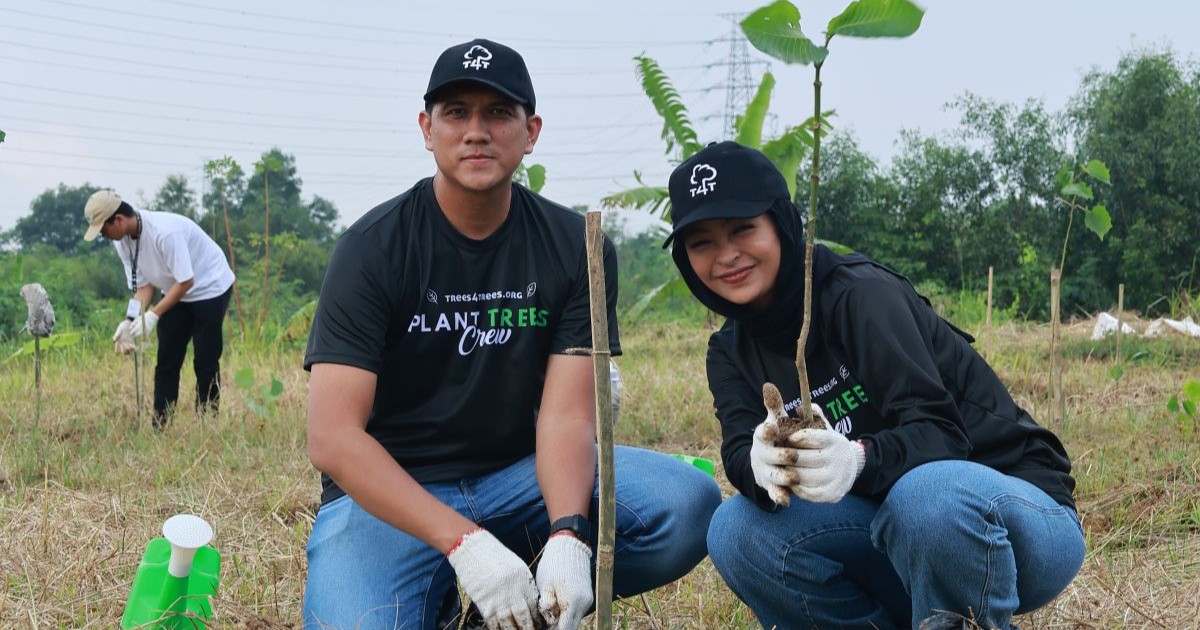
The event was also joined by Trees4Trees Green Ambassadors Tantri (Kotak) and Arda Hatna, whose presence brought extra excitement to the initiative. “The energy and enthusiasm were incredible,” said Tantri. “We hope these trees will help ease today’s climate challenges, growing into shade and absorbing emissions in this industrial area.” 

Their participation shows how collective action can inspire more people to take part in real climate solutions. 

Balancing Industrial Growth with Urban Forest Planting
Tomi Bustomi helps a volunteer with the hands-on aspect of Jaya Obayashi’s tree-planting program.
Arda and Tantri plant trees with Trees4Trees
Arda and Tantri, Trees4Trees green ambassadors joined the tree-planting as volunteers.
A Sense of Peace and Purpose 

Hardy emphasized that the initiative is meant, not only to restore the environment, but also to demonstrate the value of trees to human life. “We love trees because they give us oxygen and support the well-being of humankind and all living creatures. I hope this program inspires others to follow a similar path,” he said. 

Jaya Obayashi staff plant trees
(Above) After planting each seedling, Kentaro braces them with a supporting stake, which will help them to grow tall and strong. (Below) Trees4Trees and Jaya Obayashi staff members, working together in the GIIC industrial area.

Balancing Industrial Growth with Urban Forest Planting

Sharing the same sentiment, Kentaro highlighted the cultural perspectives rooted in the company’s Japanese heritage. “Wooden houses are traditionally very common in Japan, so we naturally feel a cultural closeness to trees,” he explained. Trees, he noted, symbolize both beauty and life. “When we look at trees, they bring a sense of peace. The greenery is soothing to the eyes.”  

In closing, he emphasized that protecting trees today means protecting the future. Continuing planting and protecting trees is not just an environmental responsibility, but also a way of preserving life and culture for future generations. 

Writer: V. Arnila Wulandani. Photos: Yulianisa Dessenita 

Trees4Trees 2024 Annual Report

Trees4Trees 2024 Annual Report

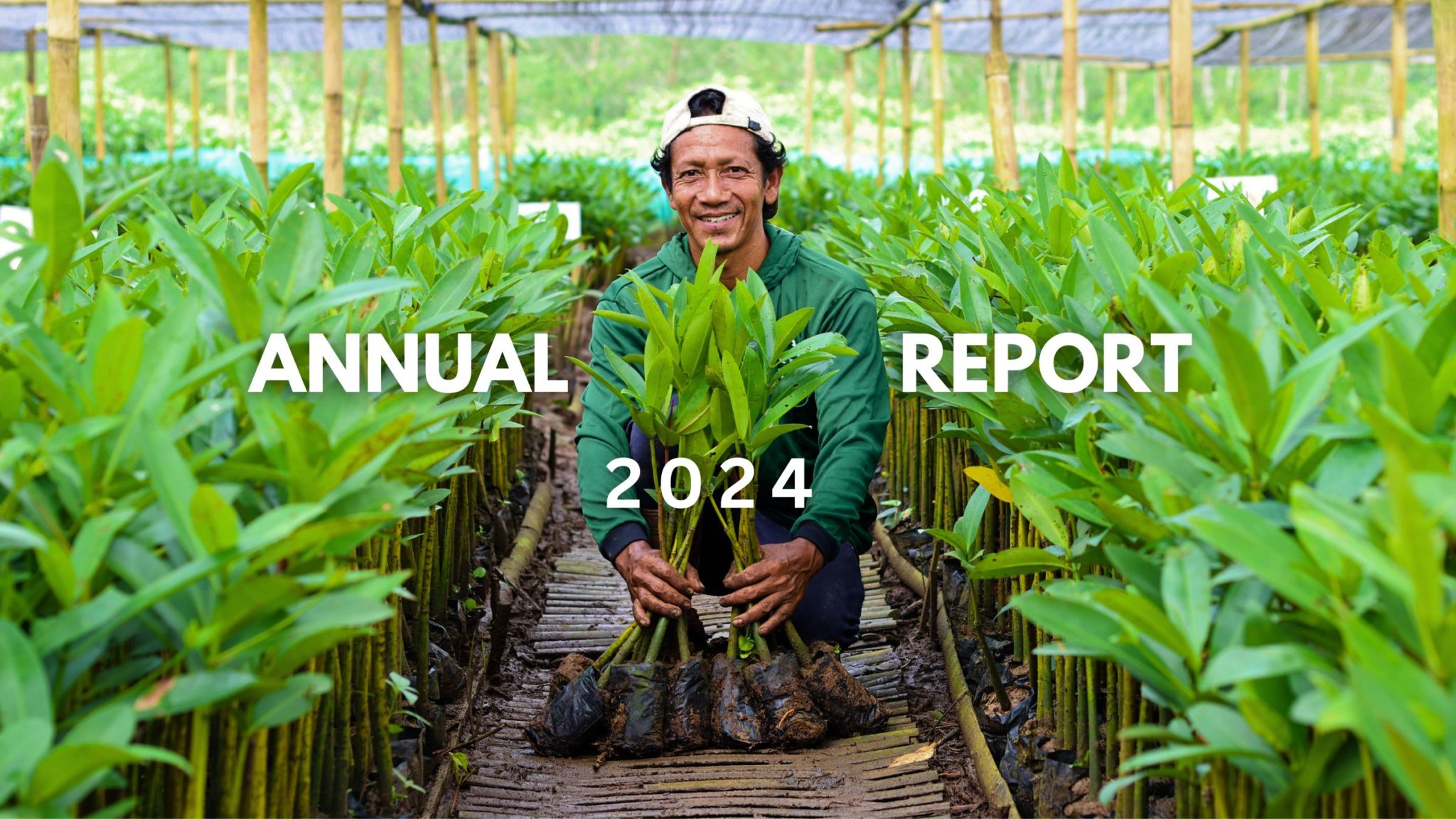
In 2024, we celebrate 17 years of impact. Marking the year of growth, collaboration, and meaningful progress, we are pleased to share our 2024 Annual Report.​ This report presents the financial results for 2024 and tree-planting operations from April 2024 to March 2025. ​

Throughout 2024 planting season, Trees4Trees successfully planted 4.65 million trees across 15 regions in Indonesia, bringing our total to over 15 million trees planted since 2008. This milestone is more than just numbers – it represents ecosystems revitalized and thousands of farming families gaining access to sustainable livelihoods through reforestation and education.​ Looking forward to 2025, our tasks are clear: scale our efforts, restore degraded landscapes, protect biodiversity, and uplift communities through inclusive, sustainable development.

We thank you to our partners, sponsors, and especially the local communities who are the heart of our tree-planting mission. Your continued support our vision for a greener, more resilient Indonesia.​

As we move into our 18th year, we also reflect on how collaboration has shaped our journey. Partnerships with local governments, companies, schools, and farmers have been the driving force behind our achievements. Every seedling planted carries with it a story of cooperation — between people and planet — and a shared hope for a healthier environment.

In 2024, we strengthened our monitoring systems and data transparency, ensuring that every tree planted is tracked and nurtured to maturity. We also expanded our educational outreach to empower youth and communities with knowledge about climate resilience and sustainable land management.

These steps are part of our long-term vision to create lasting change — not just planting trees, but cultivating a culture of stewardship and care for the environment. Together, we are growing a legacy that will continue to thrive for generations to come.

Read more our 2024 Annual Report

2024 ANNUAL REPORT

Expanding Green Spaces: Urban Forestry in Gunung Putri, Bogor

Expanding Green Spaces: Urban Forestry
(Above) Local volunteers at the tree-planting program in Bojong Nangka Village, Gunung Putri District

Gunung Putri District is located near Bantar Gebang, home to West Java’s largest landfill site. Like many other areas on the outskirts of Jakarta, Gunung Putri struggles with a range of environmental problems, from air pollution caused by traffic jams to overpopulation, unchecked residential development, and the disappearance of green spaces. During the dry season, a lack of tree cover makes the region unbearably hot, and when the rains arrive there is flooding caused by poor drainage and soil erosion.  

But look a little closer, and green shoots of progress are beginning to break through the concrete of Gunung Putri. Supported by One Tree Planted (OTP), Trees4Trees has teamed up with local communities to rejuvenate the local environment with an urban forestry program. By replanting and raising awareness, these activities are helping mother nature in Gunung Putri (meaning ‘Princess Mountain’ in Indonesian), rediscover her former beauty. 

Planting Trees
(Above) A key feature of the program was outreach in schools, designed to engage the younger generation in nature preservation and demonstrate the benefits of a greener environment.

Nurturing the next generation 

Earlier this year, the urban forestry program from Trees4Trees and One Tree Planted kicked off in nine villages spanning Gunung Putri District. Planting activities targeted public spaces, privately owned land, schools, and universities. The aim was to regreen the local environment, while also helping reduce pollution and provide some relief from the heat. Another key objective was raising awareness of environmental issues in local communities. 

“Today we planted trees at SD Negeri Nagrak 04 (a local elementary school),” says Agus Susanto, one of several local volunteers in Nagrak Village who helped to plant teak, jabon, durian, jackfruit, and mango trees. “We would like to thank One Tree Planted and Trees4Trees for their support in planting trees in this village, including in this school,” he added.  

Focusing on schools was a key feature of the program. The objective was to instill the younger generation with a passion for nature preservation and demonstrate the benefits offered by greener surroundings. “Hopefully the trees we have planted will grow strong and make this school a greener place to be,” said Agus. “I hope the students can also see the benefits, making the school shadier and cooler, so they can study in comfort.” 

Fsrmers
Planting activities covered a range of places in Gunung Putri District, including schools, private lands, and public park. Providing community benefits.

Expanding Green Spaces: Urban Forestry

In nearby Bojong Nangka Village, the joint planting program mixed timber and multi-purpose trees, including mahogany, trembesi, pulai, jabon, and gmelina, which have wide canopies and are able to provide shade in public spaces. Other multi-purpose trees included durian, mango, clove, avocado, and petai, which have the potential to provide local communities with an alternative source of income.  

“This afternoon was amazing,” explains Amir Arsyad, the head of the village, following the planting activities. “On behalf of the residents of Bojong Nangka Village, we would like to thank Trees4Trees for providing assistance in the form of seedlings – hopefully they will grow well and provide benefits to the environment around us.” 

Trees
(Above) Keep on truckin’: T4T and OTP have delivered 12,000 new trees to locations in Gunung Putri District, including here, on the campus of Trisakti Nagrak

The multiple benefits of tree planting 

The One Tree Planted program has already planted around 12,000 trees in Gunung Putri District this year. With support from Trees4Trees and local communities, this urban forestry project aims to rejuvenate local ecosystems, reduce air pollution, provide shade, reduce soil erosion, improve water retention, sequester carbon, and build the awareness of environmental protection among local communities. 

Amir Arsyad is one of many participants in the program who has seen the benefits of this development and is now committed to nature restoration. “When we protect nature, nature will protect us,” he explains, before noting it is the community’s responsibility to care for their surroundings. “If not us,” he says, “who else will protect the nature around us?”   

Writer: V. Arnila Wulandani. Editor: Chris Alexander. Photos: Rusmanto Manulang/Trees4Trees

Trees4Trees Joins Forces Youth: Reviving Fire-Affected Lands of Merbabu Mountain

Trees4Trees

It still resonates in our minds that last 2023 was marked by unusually hot days. According to several studies, it was recorded as the hottest year in global temperature since this data was first recorded in 1850. The year was also impacted by El Niño, a natural climate warming phenomenon that can affect global weather. Climate change exacerbated the effects of El Nino in 2023  leading to prolonged droughts and heatwaves, which triggered severe wildfires in various regions, including Indonesia. 

One of the major events linked to the phenomenon was the wildfires that devastated several forests in Indonesia’s mountainous areas, with over 140 incidents recorded throughout the year. Merbabu Mountain in Central Java Province suffered some of the worst damage, with over 480 hectares of forest burned. The fire was allegedly caused by natural leaves friction, although human actions like discarded cigarette butts or burning trash may have also played a role. 

Read also: Weathering the Storm: Natural Solutions to El Nino 

A Year After the Wildfire: Youth Community Reforests Fire-Damaged Area 

One year has passed since the devastating wildfire on Merbabu Mountain in October 2023. It destroyed much of the forest cover, including valuable vegetation, such as edelweiss, cantigi, and tree species like puspa, pines, cinnamon, and wilodo. While some parts of the forests have been reforested, other fire-affected areas remain barren. This has motivated the youth community of the Executive Student Board (BEM) Diponegoro University to take action, mobilizing youth communities to restore the land by planting trees.

Trees4Trees
Diponegoro University students went to an altitude of 1,500 meters above sea level together to plant 500 trees in the fire-affected area of Merbabu Mountain.

Collaborating with Trees4Trees, they organized a tree-planting event through an annual environmental program, Gerakan Aksi Tanam Pohon (GESIT) or the Tree Planting Action Movement. The event took place on October 20, 2024 – exactly one year after the wildfires struck. 

“Aligned with our program in conservation, we initiated this tree-planting activity. In total, 70 volunteers from twelve faculties joined as tree-planting volunteers to help the environment, particularly by reforesting fire-affected areas,” said Jania, a student of Diponegoro University and coordinator of the tree-planting activity. 

Green Action
Three species of trees were planted in the area: puspa, cinnamon, and wilodo, all the characteristic trees of Merbabu.

A Green Collaboration to Recover the Environment 

Together with Trees4Trees, the Gen Z volunteers planted 500 trees along the Thekelan hiking trail on the slope of Merbabu Mountain, in Getasan District, Semarang Regency.  

“This tree-planting aims to support ecosystem recovery, allowing the trees to produce more oxygen to benefit all living beings. This small action reflects our care as young generations for the environment,” said Izza, a Diponegoro University student and leader of the Conservation and Disaster Division. 

As part of its mission in education and sustainability promotion, Trees4Trees provided volunteers with essential training on tree-planting techniques and preparations a week before the event. Danang Pambudi, a Trees4Trees forester who led the training, emphasized the importance of sharing tree-planting knowledge with young people. “We hope this education encourages them not only to plant trees at this event but to continue planting more in the future, wherever they can,” he said. 

Aksi Hijau
Trees4Trees’ forester was presenting the tree-planting technique to the tree-planting volunteers.

Why Is It Important to Plant Trees in the Fire-Affected Area? 

Danang revealed, Trees4Trees supported the tree-planting event by providing three species of trees: puspa, cinnamon, and wilodo, all of which are characteristic of Merbabu Mountain. Some of them were diminished during the wildfire. 

“We selected the trees to fit the existing ecosystem. Merbabu is the natural habitat for these species, and by planting them, we help restore the ecosystem. In fact, the puspa tree is even fire-resistant,” said Danang. He also emphasized that if fire-affected areas are left neglected, they will eventually recover on their own. Birds and wind will disperse the seeds of native trees naturally, encouraging regrowth, but it takes time. “By planting these characteristic trees in their natural habitat, we help to accelerate ecosystem recovery. Additionally, we also help enhance carbon sequestration, contributing to fight climate change,” he explained. 

Penanaman
Each tree was planted in 30 cm depth with 3 meters distance from each other to ensure their growth.
Empowering Youth through Trees4Trees Youth4Change 

Trees4Trees‘ involvement in this collaborative tree-planting event was backed with the aim to raise awareness about environmental preservation among the young generation. This initiative is part of the Trees4Trees Youth4Change program, designed to empower youth to express their concerns and take action for a greener planet. 

Trees4Trees
Trees4Trees Youth4Change collaborates with 70 students of Diponegoro University to make an environmental impact in the Merbabu tree-planting

Hatta Iskandar, the Trees4Trees Fundraising Manager, noted that Youth4Change offers opportunities for youth to engage in impactful actions for environmental preservation. “We are excited to collaborate with young communities, especially in tree-planting activities. We hope to continue this collaboration in the future and involve more youth in the green movement,” he stated. 

In the other hand, Danang emphasized the younger generation holds the key to a sustainable future. “It’s vital to cultivate a sense of environmental responsibility in young people. By supporting positive initiatives and sharing knowledge, we can inspire a deep commitment to protecting our planet,” he said. 

Writer: V. Arnila Wulandani. Photo: Yulianisa Dessenita & Doc. BEM UNDIP 

Sururi’s Story: Rejuvenating Mangroves in Semarang

Sururi, Penerima penghargaan Kalpataru 2024

Sururi, Penerima penghargaan Kalpataru 2024

Mangunharjo Wetan is a quiet little village on the north coast near Semarang in Central Java. Here, many local residents earn their living from fishponds. However, these industries have become increasingly vulnerable to flooding caused by coastal erosion and subsidence, rising sea levels, and a lack of coastal barriers. 

These problems are directly impacting lives and livelihoods. For local fishpond farmers like Sururi, solutions are sorely needed. Back in 1995, he started planting mangroves around the village, creating a natural greenbelt that also acts as a flood barrier. 

Sururi’s Story
Flooding is a regular occurrence in Mangunharjo. Photo: Naila Kamalia/Trees4Trees

Starting from Scratch: Building Nature-based Solutions 

When Sururi began planting mangroves almost three decades ago, the area was a coastal sea. “In the past we had no natural barriers. The shoreline was directly exposed to the sea, causing coastal erosion because the shoreline was hit with the waves again and again,” he remembers. “But after we started planting mangroves, they held soil and sands behind the mangroves and slowed down the erosion.” Pointing to the thriving mangrove forest behind him, he explains that, as the mangroves grow bigger, they encourage the land held behind the mangroves to collect and form a natural defense against coastal erosion that triggers tidal floods. 

During the past 29 years, Sururi has seen his fair share of difficulties. The first two years were the hardest,” he explains. Finding seedlings was very difficult, and I had no one to teach me,” he says. In 1997, this changed when Sururi met a professor who mentored him on the proper way to plant mangroves 

Sururi’s Story
Sururi, sitting in front of the mangrove forest he helped to create .

Read also: Five Facts About Mangrove You Need to Know

Recognition for Reforestation: Sururi Receives a Prestigious Kalpataru Award 

Sururi’s efforts have not gone unnoticed. In May 2024, he was awarded the prestigious Kalpataru Award by the Ministry of Environment and Forestry. “I’m grateful, after nearly 30 years of effort, we have achieved the Kalpataru Award. It motivates us to preserve the coastal area better,” he says. 

But despite the personal accolade, Sururi maintains he could not have achieved anything by working alone; for replanting activities to really take root, it takes a village. Having worked together to make it happen, the communities are also enjoying the dividends of this collective endeavor, as the return to ecosystem health has impacted positively on the local economy.  

“Now, local communities can reap the benefit,” says Sururi. “There is a green mussel nursery here, providing an additional source of income for fishermen.”  

Planting mangrove in Mangunharjo coastal area
‘It takes a village’. Local volunteers help plant new mangrove seedlings in Mangunharjo

Trees4Trees Support for Mangrove Restoration in Mangunharjo  

While the mangroves in Mangunharjo have certainly helped prevent a repeat of recent disasters, the area needs more trees to sure up its defenses. To support these efforts, Trees4Trees teamed up with 90 local volunteers, including Sururi and his Mangrove Lestari Farmer Group, to plant 2,000 new mangrove seedlings and 100 Australian pine trees over an area covering 1200 square meters. The activities formed part of the Trees4Trees Planting Festival, held on June 11, 2024. 

Read also: Trees4Trees Planting Festival Celebrating 16th Reforestation Journey 

“We’ve noticed many areas are losing their natural mangrove habitats and their ecological functions,” explains Adi Gani, Project Manager at Trees4Trees. “By planting mangroves and Australian pines together, we aim to enhance the greening of this coastal area; this effort is our contribution to coastal ecosystem restoration in Mangunharjo, and we plan to continue expanding it in the future,” he added. 

Mangrove planting in Mangunharjo_Trees4Trees
Some of the 90 volunteers who took part in Trees4Trees’ Planting Festival

For Sururi, the benefits of these activities are clear: “Biodiversity has flourished, including shrimp and fish. Birds are more abundant in the evenings now too. In the past, we needed the military to protect this area, but now the thriving habitat safeguards itself.”  

Sururi sends his thanks to Trees4Trees, along with hopes for the future:. “We hope this initiative will continue and expand to other locations as well.”  

Writer: V. Arnila Wulandani. Editor: Christopher Alexander. Photos: Yulianisa Dessenita

5 Facts About Mangrove You Need to Know

mangrove roots store vast amount of carbon

mangrove roots store vast amount of carbon

Mangrove forests are among the most important ecosystems on Earth. They are crucial for protecting life on Earth. Alongside salt marshes and seagrass beds, mangroves are part of the “big three” coastal ecosystem that is incredibly powerful at saving the planet. With their dense coverage, mangroves act as natural coastal barriers, protecting communities and serving as nursery grounds for biodiversity.  

Their remarkable ability to sequester vast amounts of carbon helps stabilize the planet’s temperature. It makes them as key weapons in the fight against climate change and preventing global warming from worsening. However, global mangroves populations have been threatened by overexploitation and coastal development, leading to significant losses in recent decades.  

Here are some fascinating facts about mangroves and their spectacular ability! These facts are also highlighting the importance of why we should pay more attention to protecting them from damage and disappearance.  

Mangrove forests store greater carbon than terrestrial forests 

Mangroves cover only 0.1 percent of the planet’s surface. However, latest studies suggest that mangrove forests can sequester carbon 10 times greater than mature tropical forests annually. Scientists also estimate that mangroves store an average of three to five times more carbon than tropical forests in the same size of area. Most of the carbon is stored in the sediment beneath the trees. It can remain bound there for decades, centuries, or even millennia. 

However, when these habitats are destroyed, they will lose their capacity in sequestering carbon. Additionally, they will also release a huge amount of carbon, increasing greenhouse gas levels in the atmosphere.  

Mangrove covers in Mangunharjo coastal area, Semarang Indonesia
Mangroves flourish in the Semarang coastal area, helping the community in preventing tidal floods and erosion.

Coastal defense against floods and tidal waves  

Mangroves have a strong and intricate root system which helps to bind the soil and prevent coastal erosion. These roots also intertwine to form a dense brush above the water that can break waves and absorb wave energy. It is including the hurricane-generated waves or tsunamis.  

Mangrove forests reduce the impact of tidal waves and floods by decreasing the height and velocity of incoming waves. They distribute water among the creeks and canals within the mangroves. This way will reduce the inundation level and the power of waves striking residential areas, farms, or ponds owned by coastal communities. 

A study found that during the deadly 2004 Indian Ocean tsunami, areas with coastal forests, including mangroves, suffered less damage.  

Planting mangroves in Dukuhseti coastal area, Pati, Indonesia
In collaborating with local communities, Trees4Trees plants mangroves in Pati, Semarang, and Cilacap coastal areas.

Incredibly adaptable to the harsh condition and can grow in salty water 

Mangroves are naturally adapted to thrive in coastal zones and harsh coastal conditions. They are highly salt-tolerant, able to survive in water up to 100 times saltier than most plants. Mangroves can filter out up to 90% of the salt in seawater. Furthermore, some species have leaves that excrete excess salt. 

Some mangroves have special roots called pneumatophores that extend above the water to absorb oxygen. These roots, with tiny openings take the oxygen in. However, these parts can easily get clogged by pollutants like oil, be damaged by parasites, or be affected by prolonged flooding. Over time, these environmental stresses can kill large areas of mangrove forests. 

5 Facts About Mangrove
The mangrove root systems make the mangroves can tolerate salty water and harsh coastal condition.

Mangrove ecosystems are among the most biologically diverse on Earth 

It is estimated that there are about 80 mangrove species, making this ecosystem highly diverse. Mangroves thrive in tropical and subtropical latitudes. They range in height from small shrubs to 40-meter-tall trees above the water. Despite their differences, all mangroves grow in low-oxygen, high-salinity coastal environments. Each species has its own unique characteristics suited to its native ecological habitat. Therefore, planting the wrong type in the wrong place will prevent the mangrove from surviving. 

5 Facts About Mangrove
(Above) Young rhizophora (red mangroves) planted in Semarang, Indonesia. (Below) Avicennia (white mangrove) planted in Pati, Indonesia, bearing fruits.

5 Facts About Mangrove

Indonesia boasts the largest mangrove cover in the world 

Indonesia, where Trees4Trees focuses its reforestation efforts, boasts the world’s largest mangrove population. The country accounts for 23% of the global mangrove coverage, with 3 million hectares of mangroves. As the comparation, the size is over 40 times the size of Singapore. Indonesia is home to approximately 45 of the world’s 75 true mangrove species. Some of them are growing as tall as 50 meters. 

However, Indonesia also experiences the highest rate of mangrove destruction globally. From the 1970s to 2007, the FAO reported that around 40% of Indonesia’s mangrove forests were lost. Residential development, agriculture, and aquaculture are the most factors that caused the degradation. 

Read more: Mangrove Types in Indonesia and Their Benefits

Mangrove Cilacap_Trees4Trees
Trees4Trees team monitored one-year mangrove trees that planted in Ujung Alang Village, Cilacap.

Contributing to the mangrove restoration in Indonesia, Trees4Trees has been planting mangroves since 2021. Trees4Trees has planted mangroves in various areas of the Java Islands, including Pati, Semarang, and Cilacap. Over 150,000 mangroves have already been planted, with more to come. In Cilacap, Trees4Trees aims to plant 16,000 mangroves to restore the degraded forests of Ujung Alang Village this year. This village has suffered from land conversion into shrimp ponds. Our mission is to revive the mangrove ecosystem and support the livelihoods of local communities. 

Read also: Restoring Mangrove in Cilacap, Central Java

We invite you to join our mangrove restoration efforts. By partnering with us to plant mangroves, you or your company can make a positive impact on both the environment and the community.

Contact us to get involved in this program!