Restoring Mangrove Belt on Pati’s Coastline
Restoring Mangroves to Strengthen the Green Belt on Java’s North Coast
Trees planted
Families helped
Total areas reforested
CO2 captured
Project started
Planting methods
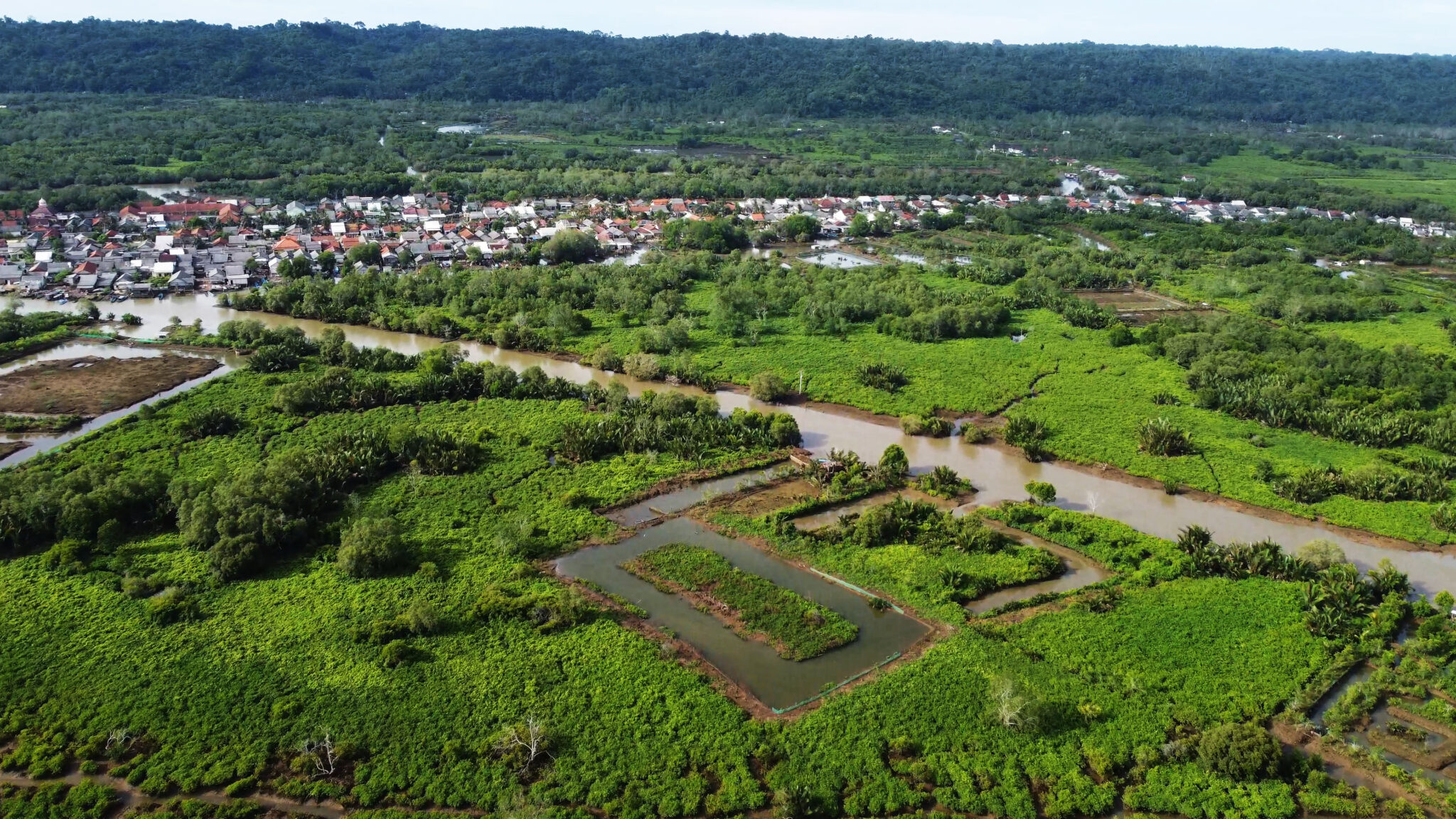
Pati Regency, located on the northern coast of Central Java and stretching 37 miles (60 km) along the shoreline, is one of Indonesia’s important mangrove-growing regions.
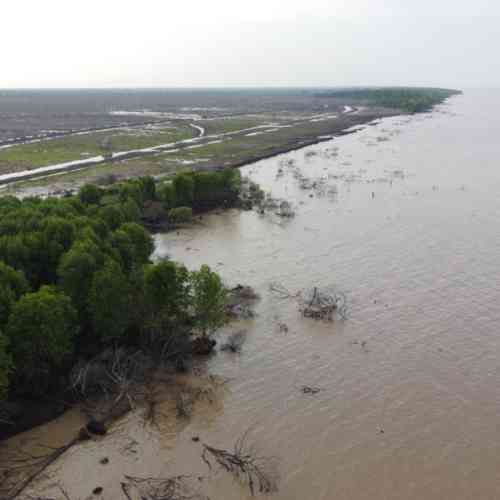
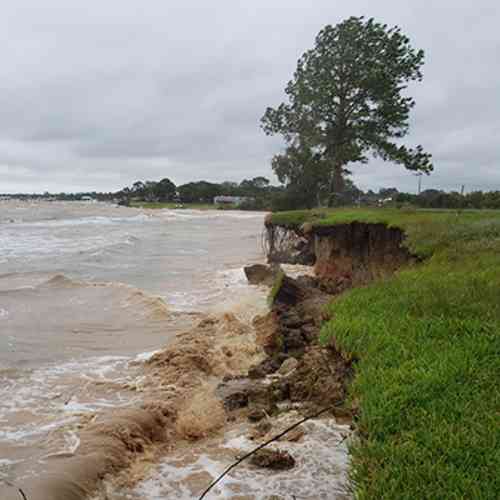
Unfortunately, much of the mangrove cover has been degraded and is now in poor condition. A 2017 survey revealed that around 60% of mangroves in several districts of Pati had already been lost.
Coastal erosion and land overuse – particularly unsustainable aquaculture – are the main drivers of mangrove degradation, contributing to frequent tidal flooding and high waves. Major events occurred in 2001 and again in 2022 and 2023, when heavy rainfall and tidal surges caused severe flooding across Pati Regency, destroying over 600 hectares of agricultural land and damaging thousands of homes. Areas with stronger mangrove coverage, however, suffered the least impact—clear evidence of the vital role mangroves play in protecting coastal communities.
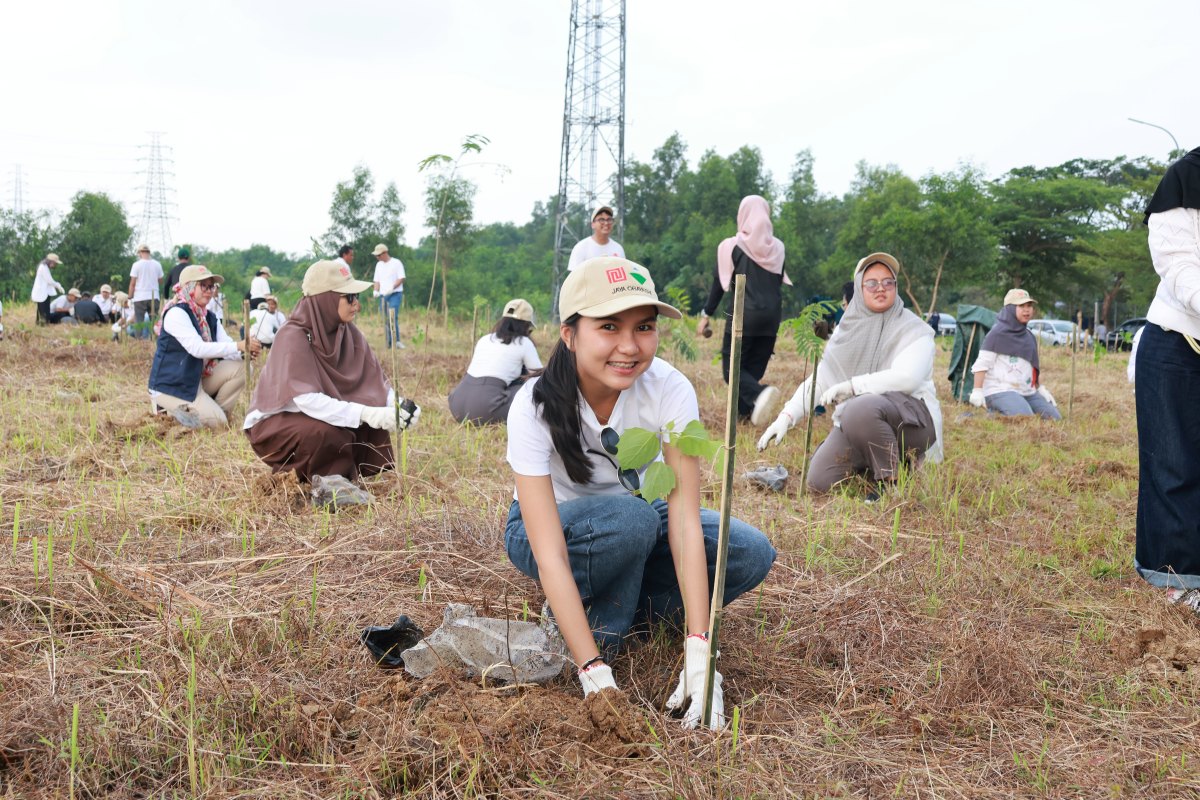
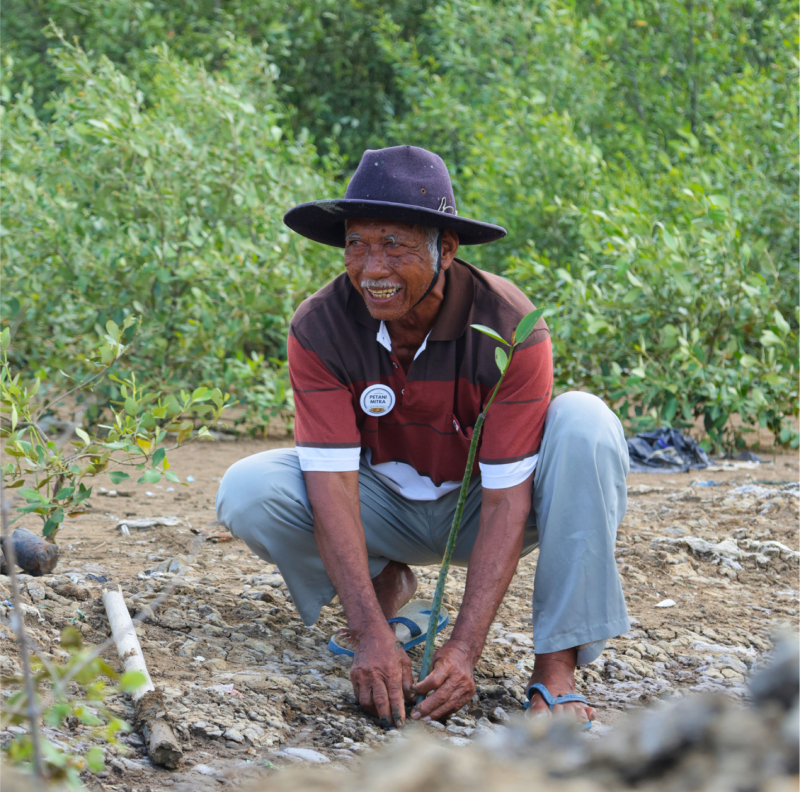
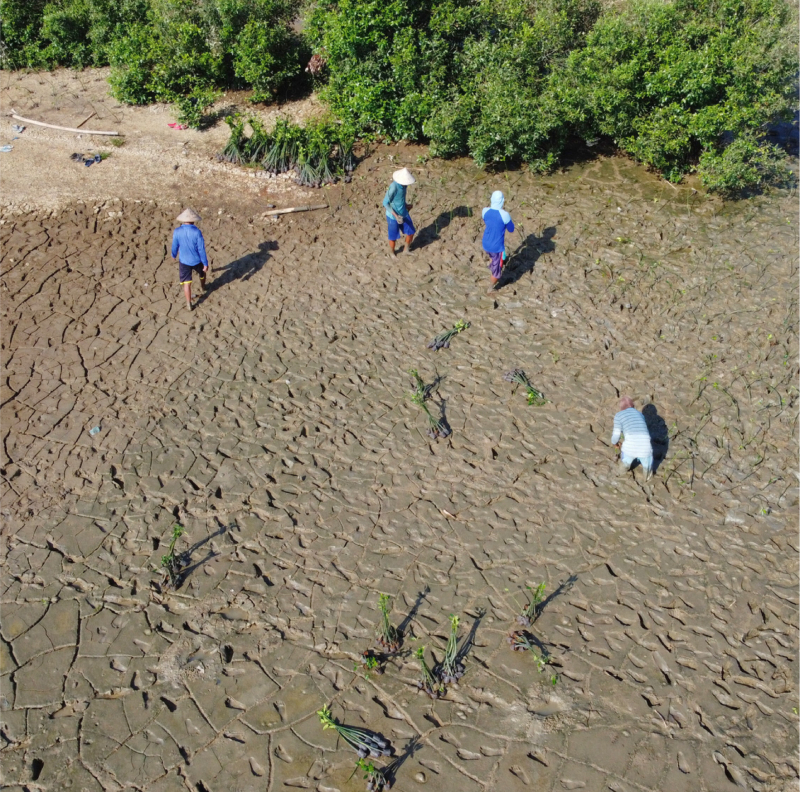
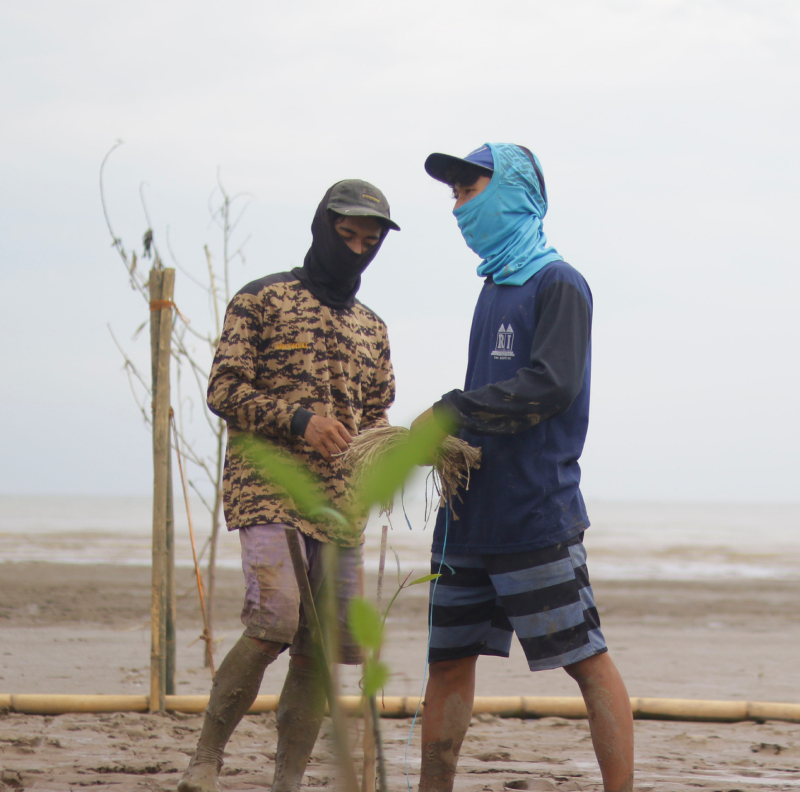
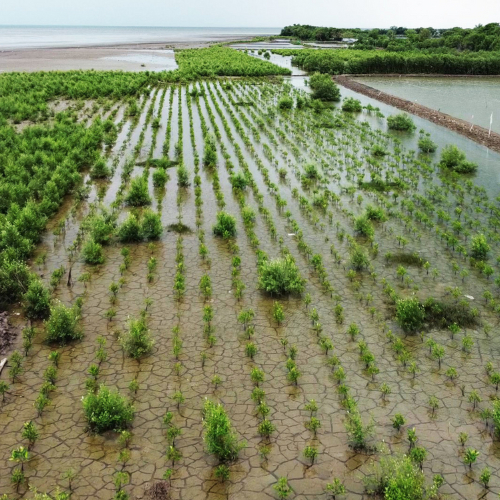
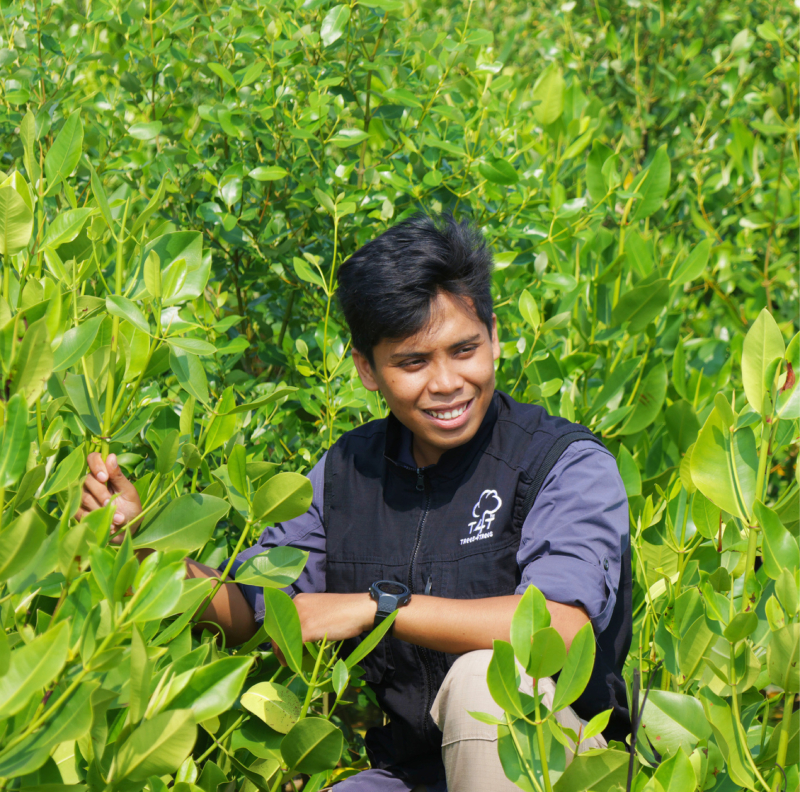
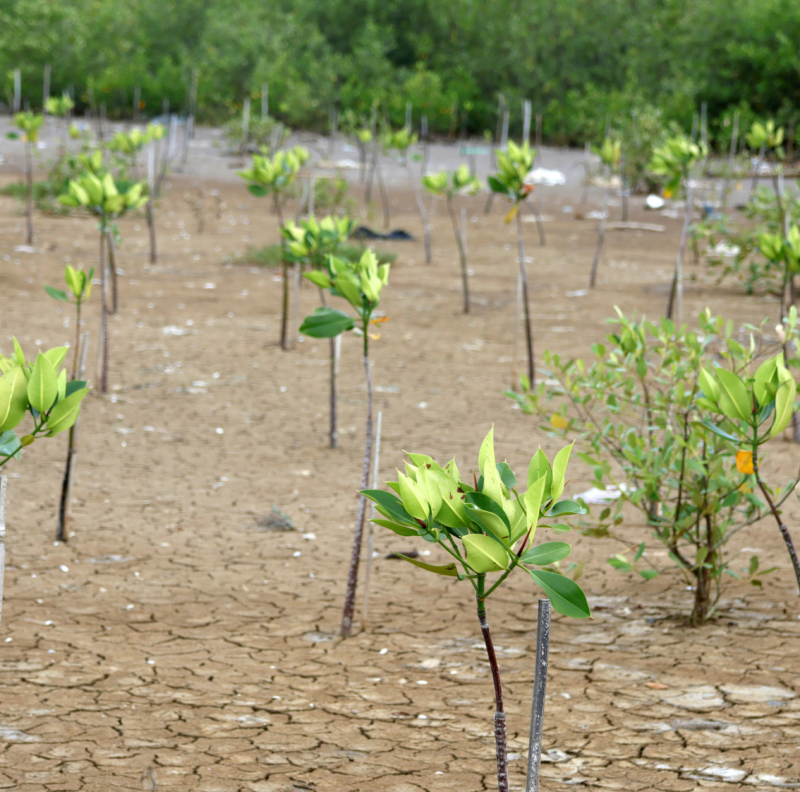
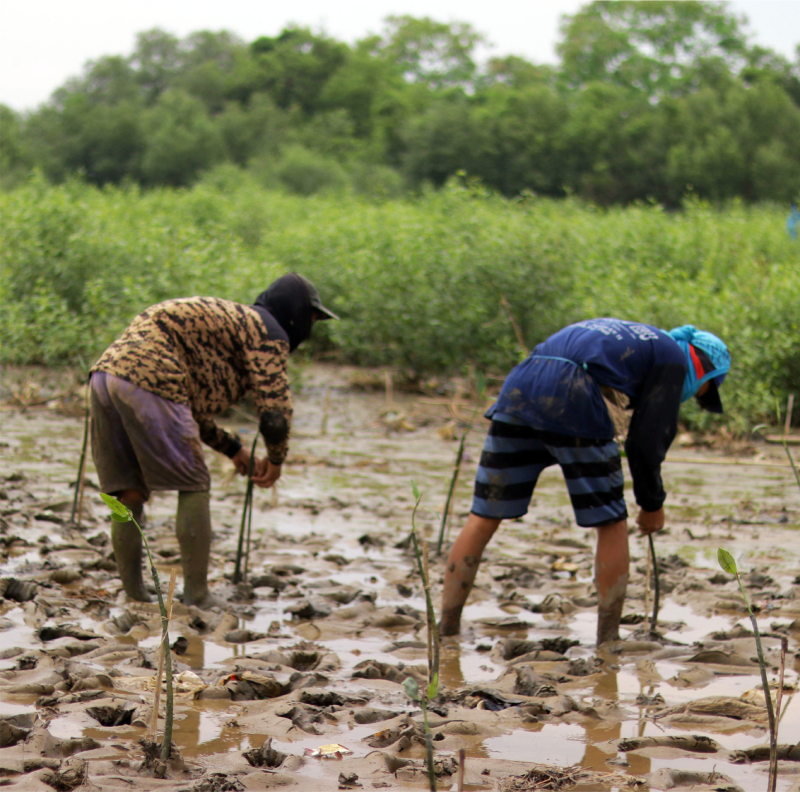
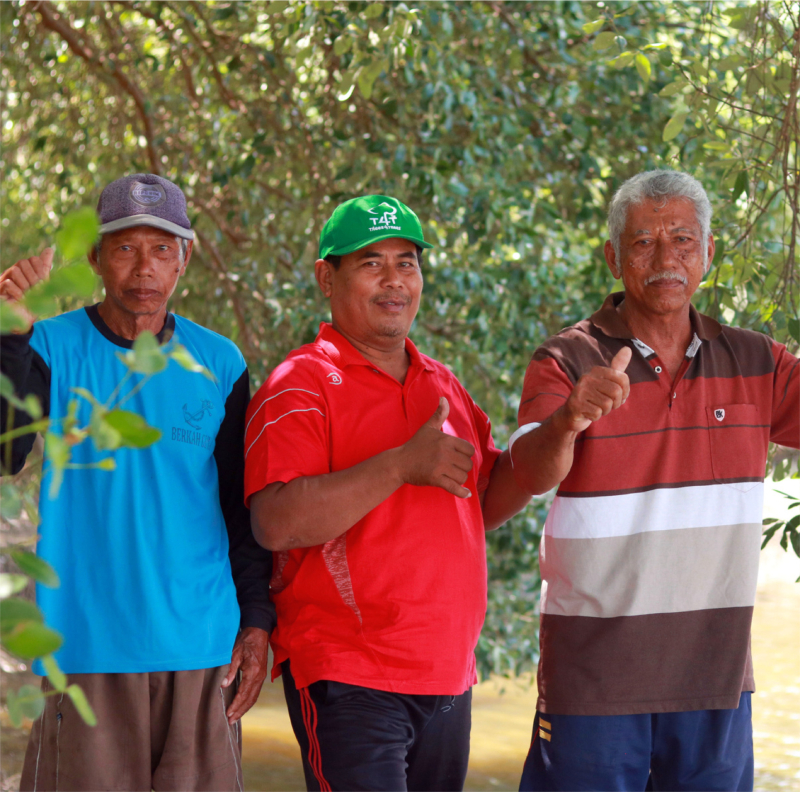
Out of this devastation emerged, the green shoots of a solution. Working closely with local communities, Trees4Trees restored mangrove forests in Pati in 2021 to 2024. By engaging residents from eight surrounding villages, we planted more than 130,000 mangrove trees, helping rebuild the coastline.
Location :
Total area degraded :
Cause of degradation :
Potential area for planting :
Planting density :
Tidal Flooding and Waves
The lack of mangrove cover along Pati Regency’s coastline makes the area highly vulnerable to tidal waves and flooding. These events frequently damage homes and fishponds, harming the well-being of coastal communities and threatening their fisheries-based livelihoods.
Coastal Erosion
Frequent tidal waves and flooding accelerate coastal erosion, threatening surrounding land and gradually causing it to sink into the ocean.
The tree-planting engaged local fishpond farmers to plant mangroves, providing them a short-term income as seasonal tree planting workers and a long-term solution to sustain their livelihood from fisheries by bringing back the healthy mangrove ecosystem to protect their fishponds from tidal waves
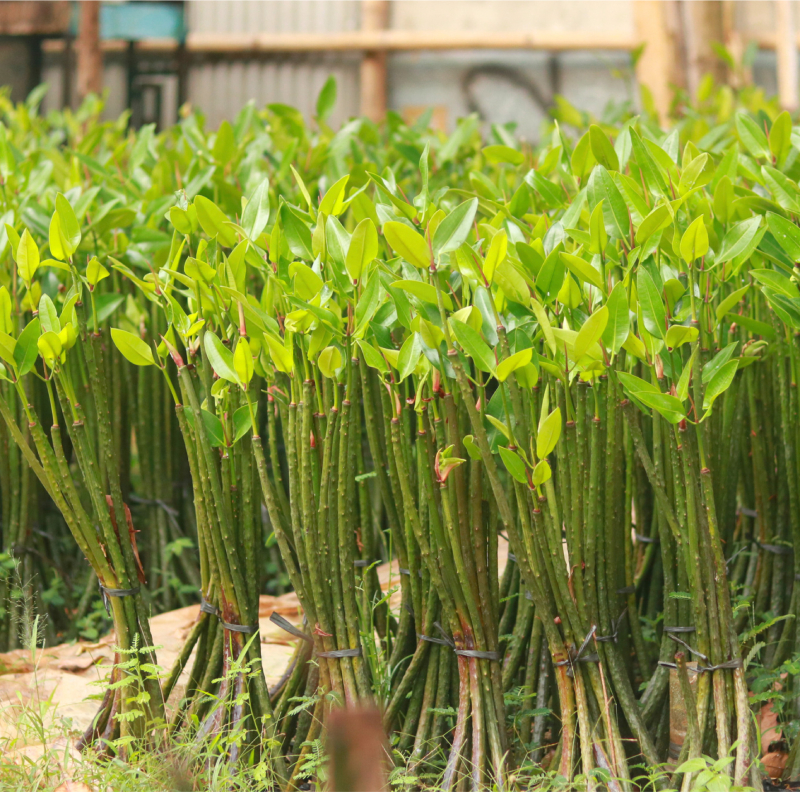
We partnered with local communities to provide mangrove seedlings, creating new job opportunities through seedlings production.
The mangrove tree-planting long-term goal is to protect coastal areas which further benefit coastal communities by protecting their residential areas from tidal surge and coastal flooding.
The northern coastal mangrove area of Pati Regency has been dominated with mangrove api-api (Avicennia marina) but other species also thrive in the area, including Avicennia alba, Rhizopora mucronata, and other species from Brugueira, Sonneratia, and Xylocarpus families.
This area is also home to 47 bird species, fish, crustaceans, and mollusks. These included to mudskipper (Boleophthalmus boddarti) and great-blue-spotted mudskipper (Boleophthalamus pectinirostris) which locally called ikan tembakul – fish species native to Indo-Pacific, mangrove crab (Scylla serrata), mangrove snail (Telescopium telescopium), mud snail (Cerithidea cingulate), sea cucumbers, and shrimps.
Milkfish Producer
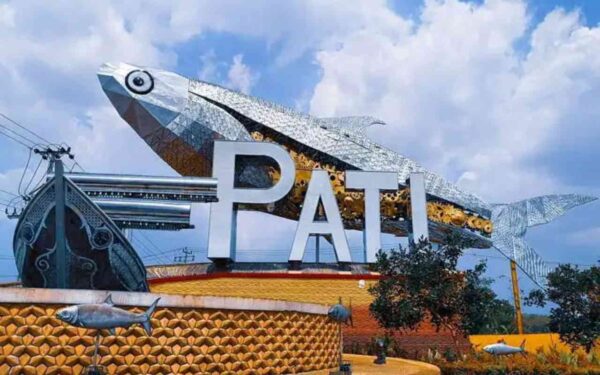
Pati Regency is well-known for milkfish producers cultivated through aquaculture with Juwana District as the biggest producer among other districts.
Authentic Bandeng Presto Culinary
With an abundant harvest of milkfish, Pati regency promotes an authentic local culinary made from the fish that is cooked in a long steam process to tender their bones and enables all of their parts to become edible.

Mangrove restoration along Pati’s coastline aims to create natural coastal barriers that protect communities from erosion and tidal surges, safeguard fishponds from flooding, and support sustainable aquaculture by integrating mangroves with local fisheries.
These efforts also help stabilize the climate through blue carbon sequestration and enhance biodiversity in the surrounding area.
Why Support This Project
- Contributing to the expansion of the green belt, restoring coastal ecosystems, and protecting communities from tidal surges and coastal erosion.
- Supporting local livelihoods that depend on fisheries. Healthy mangroves enhance fish and crustacean populations while safeguarding fishponds, which are vital for coastal livelihoods.
- Combating climate change through carbon sequestration.
Related Stories by Projects
Balancing Industrial Growth with Urban Forest Planting
Growing Green: Microsoft’s Continued Urban Forestry Initiative
From electricity consumption and infrastructure development to manufacturing and distribution,
Unpredictable seasons, rising heatwaves, heavier rainfall, extreme floods, cyclones, and
Surrounded by over 8,000 hectares of coastal trees and wetlands,
Nestled in the foothills of the Malabar Mountains in Bandung
Indonesia, the world’s largest archipelago, is rich in cultural heritage