Balancing Industrial Growth with Urban Forest Planting

From electricity consumption and infrastructure development to manufacturing and distribution, the industrial sector stands among the world’s largest contributors to greenhouse gas emissions. According to the United Nations Industrial Development Organization (UNIDO), direct industrial emissions account for nearly 22% of total global emissions, while indirect emissions – from electricity and industrial heat – contribute another 31%. This places the industrial sector at the center of the climate challenge and makes it a priority for emission reduction. 

Recognizing this responsibility, Jaya Obayashi has strengthened its commitment to balancing industrial growth with environmental protection through sustainability-driven initiatives. Hardy Tekyawan, a member of the company’s Board of Directors, explained the company not only complies with ISO 14001 international environmental management, but also strives to go beyond compliance by taking direct action. 

“Our parent company is deeply committed to sustainability and, as a construction subsidiary, we are encouraged to actively contribute as well. It’s no longer just about meeting regulations, but about taking part in real environmental action,” he said

Turing Commitment into Action: 500 Trees for Urban Forest Expansion 

As part of their ongoing sustainability efforts, Jaya Obayashi has committed to expanding the urban forest located within the Greenland International Industrial Center (GIIC) area in Cikarang, West Java – one of Indonesia’s largest and most active industrial hubs in the Greater Jakarta region. With support from Trees4Trees, Jaya Obayashi recently planted 500 trees in this location. 

Kentaro Miyashita, Jaya Obayashi’s General Affairs Admin Advisor, confirmed that over 50 employees from various divisions took part in this initiative as planting volunteers. “Every year, we improve and strengthen our sustainability program, while also encouraging more staff to connect to environmental protection efforts,” he said. 

Hardy added that the company’s approach to sustainability applies across all business levels, from head office to project sites. “Our internal engagement must be strong, so everyone consciously participates in environmental responsibility.” 

Balancing Industrial Growth with Urban Forest Planting
Hardy (left), a member of the Jaya Obayashi Board of Directors, receives a tree-planting certificate from Trees4Trees’ Director, Pandu Budi Wahono.

Beyond Compliance: Annual Sustainable Programs 

Ramdan and Tasya, from the Jaya Obayashi Corporate Communications and Legal team, also explained that urban reforestation is one of several environmental programs which the Company carries out on a regular basis. “In addition to this tree-planting activity,” explained Ramdan, “we also conducted mangrove planting from 2022 to 2024 and have continued our upcycling program for old employee uniforms.” 

Both went on to emphasize that these efforts are designed, not only to address environmental impact, but also to build a culture of awareness within the organization. By engaging and involving employees, the company aims to strengthen environmental consciousness through practical action. 

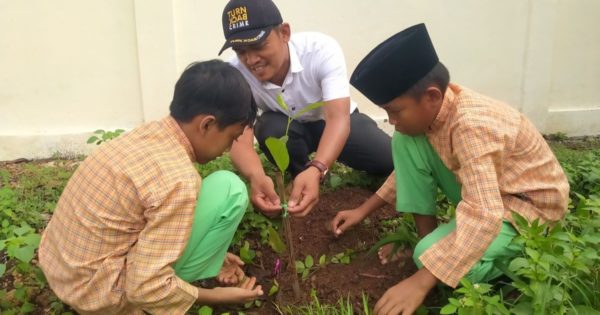
Jaya Obayashi staff plant trees
(Above) Ramdan (crouching in the center) and Tasya (second from the right), together with other Jaya Obayashi employees finish planting trees in a plot of land within the GIIC industrial area. (Below) Over 50 members of staff from Jaya Obayashi join in the tree-planting activity.

Jaya Obayashi staff plant trees

Reversing the Damage, Contributing to Climate Action 

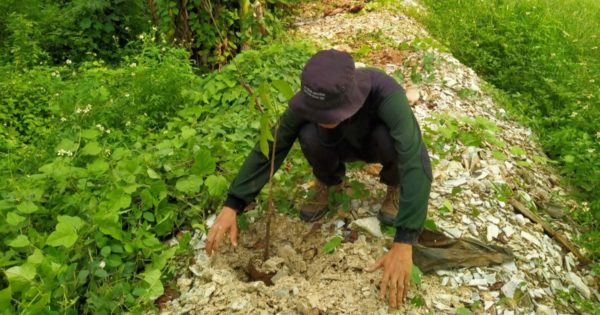
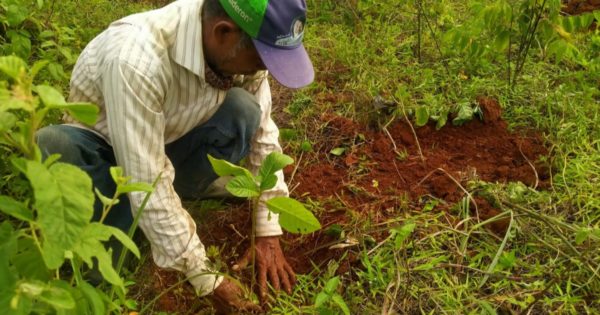
The urban forest planting initiative forms part of Jaya Obayashi’s broader vision to help restore the ecological function of industrial landscapes – areas often exposed to higher temperatures, increased emissions, and land degradation. Tree planting serves as a way to mitigate ecological stress while contributing to positive climate action.

“We all know that global warming is worsening,” says Ramdan. “Through initiatives like this, we are aligning our efforts with the UN SDGs by taking real action.” The company hopes the newly planted trees will provide long-term environmental improvements, while converting unused areas into green buffer zones. 

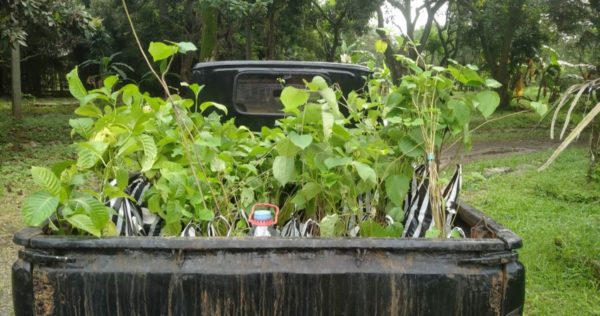
Tomi Bustomi, Trees4Trees’ Regional Manager for West Java, explained that a mix of tree species was selected to accelerate canopy formation. “These trees sequester emissions and produce oxygen,” he said. “We use a combination of shade trees like rain trees along with fast-growing species such as gmelina, albizia, and cadamba to speed up greening and ecological recovery.” 

The event was also joined by Trees4Trees Green Ambassadors Tantri (Kotak) and Arda Hatna, whose presence brought extra excitement to the initiative. “The energy and enthusiasm were incredible,” said Tantri. “We hope these trees will help ease today’s climate challenges, growing into shade and absorbing emissions in this industrial area.” 

Their participation shows how collective action can inspire more people to take part in real climate solutions. 

Balancing Industrial Growth with Urban Forest Planting
Tomi Bustomi helps a volunteer with the hands-on aspect of Jaya Obayashi’s tree-planting program.
Arda and Tantri plant trees with Trees4Trees
Arda and Tantri, Trees4Trees green ambassadors joined the tree-planting as volunteers.
A Sense of Peace and Purpose 

Hardy emphasized that the initiative is meant, not only to restore the environment, but also to demonstrate the value of trees to human life. “We love trees because they give us oxygen and support the well-being of humankind and all living creatures. I hope this program inspires others to follow a similar path,” he said. 

Jaya Obayashi staff plant trees
(Above) After planting each seedling, Kentaro braces them with a supporting stake, which will help them to grow tall and strong. (Below) Trees4Trees and Jaya Obayashi staff members, working together in the GIIC industrial area.

Balancing Industrial Growth with Urban Forest Planting

Sharing the same sentiment, Kentaro highlighted the cultural perspectives rooted in the company’s Japanese heritage. “Wooden houses are traditionally very common in Japan, so we naturally feel a cultural closeness to trees,” he explained. Trees, he noted, symbolize both beauty and life. “When we look at trees, they bring a sense of peace. The greenery is soothing to the eyes.”  

In closing, he emphasized that protecting trees today means protecting the future. Continuing planting and protecting trees is not just an environmental responsibility, but also a way of preserving life and culture for future generations. 

Writer: V. Arnila Wulandani. Photos: Yulianisa Dessenita 

Planting in Kebumen UNESCO Geopark: Supporting Nature and Communities

Planting in Kebumen

When exploring the northern part of Kebumen Regency in Central Java, you will see something that can’t be found anywhere else on Java. The rocks here are actually ancient sea beds, which are packed with marine fossils of corals and radiolarian plankton. 

This landscape, now surrounded by forests, is part of the Kebumen Geopark – an area recognized by UNESCO in 2024 as a Global Geopark, in recognition of its remarkable natural, cultural, and historical value. This landscape is a living testament to the natural history of our planet. 

“Over 80 million years ago,” explains Suparmin, one of the park’s caretakers, “a tectonic collision between the Indo-Australian Plate and the Eurasian Plate triggered a massive earthquake that lifted the seabed to sea level, forming the karst landscapes we see today.” 

The story of this amazing geopark is still being written. Trees4Trees has been working here since 2008, planting trees to help support ecosystem health, protect biodiversity, and sustain the communities who depend on the land for their livelihoods.  

(Above) Suparmin, a local caretaker in Kebumen Geopark, stands in front of a massive basalt rock formation – an ancient sea floor.

Kebumen Geopark: A Biodiversity Hotspot 

The Kebumen Geopark is home to abundant natural and cultural wonders, including 42 geo sites, 24 cultural sites, and eight biological sites. This includes terrestrial and mangrove forests, a sea turtle conservation center, and cultivation areas for local species, like the dwarf honeybee (or klanceng) and native genjah entog coconut. 

These sites provide habitats for wildlife, including rare and protected species. Among them are the endangered Javan hawk-eagle, Javan slow loris, and Javan leopard. “Our forests are home to diverse species, from birds and mammals to reptiles,” says Suparmin, before adding that there are also species of snakes like cobra, python, and tiger snakes here. “This area also shelters the endangered Javan slow loris, which is often targeted by illegal wildlife hunters,” he added. 

(Above) The Javan slow loris is one of several Endangered species that finds a refuge in the geopark. (Below) A snake spotted in the Watukelir geo site, which is home to various reptile species.

Planting in Kebumen

In addition to abundant animal species, the geopark is also home to a range of native and vulnerable plant species, such as Indian sandalwood, valued for its aromatic wood and bark. Other native species include the yellow cheese wood, pangi (or kluwak), bayur, and sugar palm. Some of these species’ feature in Trees4Trees’ ongoing planting program for the region. 

Planting in Kebumen
(Above) Sugar palms, one of several species planted in Kebumen by Trees4Trees, which are central to local livelihoods and help to mitigate the impacts of drought by conserving water.

Natural Heritage Meets Local Wisdom 

This area is just as rich in cultural diversity as it is in geological history. Spanning over 100,000 hectares of land (and 2,000 hectares of sea), the geopark spans valleys, hills, and coastal areas. These places are home to a variety of flora and fauna, as well as centuries-old cultural practices, rituals, and arts, underpinned by a deep respect for nature.  

“Sites in the geopark are sacred to local communities,” explains Suparmin. “Traditional wisdom prohibits exploitation and helps protect this heritage.” He also notes that local communities are actively engaged in nature preservation efforts that are strengthened by government regulations and stakeholders’ support. 

(Above) The distinctive rock formations of the Kebumen Geopark are actually ancient sea beds, brought up from the depths by tectonic activity over 80 million years ago.

Tree Planting in the Geopark  

Over the past 16 years, Trees4Trees has planted more than 1.2 million trees within the geopark. “We’ve worked across 24 villages in four districts within the geopark,” explains Henning Ilmi, Trees4Trees’ Field Coordinator in Kebumen. “This includes planting shade, fruit, and water-conserving tree species to help address drought,” she added.  

Henning also notes that many of these trees offer a mix of environmental and economic benefits. “Genitri trees, for example, are incredibly good at purifying air and their seeds can be made into beautiful beads that provide a source of local income.” According to her, pangi trees (kluwak) are also excellent at conserving water and produce fruits that are highly valuable, as they are central to Indonesian culinary traditions. 

Supporting Biodiversity, Strengthening Local Community Resilience 

Healthy ecosystems support more than just biodiversity – they can also sustains cultural traditions and local livelihoods. For example, in Kebumen Geopark, the landscape supports practices like the tapping of sugar palm sap, a tradition passed down through generations and a key source of income for many families. Sugar palms also help conserve water in drought-prone areas within Kebumen. 

Nature also provides for communities in other ways. Hanafi, a local farmer, relies on a healthy forest to cultivate dwarf honeybees. “Bees get their food from forest trees,” he explains, “without them, I couldn’t raise my honeybees. 

Henning says the long-term tree planting initiative from Trees4Trees has been designed and implemented to improve ecosystems and environmental quality, protect biodiversity, and strengthen local livelihoods. “The geopark is a center for geological heritage conservation and promotes sustainable development,” she explains. “Our tree-planting program supports this effort and aligns with the wider mission of the geopark.”   

The tree-planting program in Kebumen Geopark is a collaborative effort. You too can play your part and help secure its survival by donating trees to the project. This will not only help sustain the ancient ecosystems that protect biodiversity, but also help to support the local communities who depend on them for survival. To find out more, please visit our website. 


Writer: V. Arnila Wulandani. Editor: Chris Alexander. Interview, source compiling & photos:  Yulianisa Dessenita & Henning Ilmi. 


Earth Day 2025: Creating an Urban Forest with FedEx

Earth Day

Every year on April 22, people around the world come together to celebrate Earth Day, an urgent call to reduce our collective carbon footprint and contribute to positive environmental developments. Answering that call, FedEx Indonesia took part in a tree-planting event at the Greenland International Industrial Center (GIIC) in Cikarang, Bekasi on April 26, 2025. The initiative set out to create an urban forest that can regreen one of Jakarta’s major industrial buffer zones. 

Garrick Thompson, Managing Director of FedEx Indonesia, confirmed the initiative was not just a celebration of Earth Day, but also a reflection of the company’s commitment to nature-positive action. The FedEx Indonesia office is located in the heart of Jakarta, where issues like traffic and air pollution are a daily challenge. In nearby buffer zones like Bekasi, where the GIIC is located, environmentally friendly actions can have a wide-ranging impact for people living and working in the city.  

“You know, this environment that we live and work in is fragile,” said Thompson, who is committed to finding solutions for environmental problems in his local area. “There’s a lot of land we can regenerate, and thereby give back to nature,” he added. 

(Above) Garrick Thompson, Managing Director of FedEx Indonesia, who joined the tree-planting event in Cikarang this April.

Planting Trees, Seeding Progress  

The tree-planting initiative was a collaborative effort between FedEx Indonesia, Trees4Trees, and the GIIC management. A total of 300 trees were planted, which will provide shade and fruit in the new urban forest.  

Trees like cadamba (jabon), gmelina, albizia (sengon) jackfruit, and avocado were chosen for their resilience – they should be able to take root and thrive, even in the area’s poor soil, which has been degraded by years of rapid land conversion for industrial development. These trees will provide shade, a simple step which is proven to reduce temperatures and improve airflow in urban areas.    

The planting was carried out by a large team of volunteers from FedEx, who demonstrated their dedication, and the commitment of their company, to environmental preservation. 

(Above) More than 50 FedEx team members took part in the project, which successfully planted 300 new trees around the GIIC in Bekasi.

“We’re excited to bring our team here together with Trees4Trees,” explained Thompson during the tree-planting activities. “We have more than 50 people from our team helping out today,” he added, before noting that this kind of activity will help engender an environmental mindset among employees moving forwards. “It’s a great opportunity to instill a sense of responsibility to give back and to find ways to contribute to a sustainable environment,” he added. 

Dewi Herniani, Vendor Clearance Manager at FedEx, found the experience especially meaningful. Raised in a village close to nature, she was excited to reconnect with the environment through this initiative. “We were each assigned six trees for planting today, but I’m happy that I managed to plant 10,” she said proudly. Dewi hopes to participate in more activities like this, as part of FedEx’s ongoing sustainability program. “If no one cares about greening the environment, and the world ends up without trees, what would it look like? That’s why I believe it’s important for us to act together,” she added. 

(Above) Dewi Herniani, FedEx Indonesia Vendor Clearance Manager, gets her hands dirty and commits to making an impact through urban forestry.

Contributing to FedEx’s Carbon Reduction Goals 

As a global logistics company, FedEx understands the importance of contributing to environmental sustainability. During the event, Thompson noted that tree-planting activities like this contribute to FedEx’s wider sustainability mission. 

“We place a big emphasis on sustainability in our business,” he said. “Our target at FedEx is to be carbon neutral by 2040 and this tree-planting activity plays a big role in helping us achieve that.” Thompson also added that this sustainability goal is a priority, not only for the company, but also for its customers.  

Rahmat Fauzi works in the FedEx Customer Service team. He confirmed that environmental preservation is an integral part of FedEx’s corporate culture. “FedEx is focusing on creating linkages between company, community, and environment. By working together, we can achieve positive impacts,” he said.

(Above) Adi Gani, Trees4Trees’ Project Manager, presents a tree-planting certificate to Garrick Thompson, Managing Director of FedEx Indonesia.
Earth Day
(Above) FedEx employees carefully planted the new saplings together, then watered them and added fertilizer to give the new growth a good chance of survival.

A Shared Responsibility for a Greener Future 

Dewi believes caring for the environment isn’t just a corporate responsibility, but an important path for individuals to follow too. “At FedEx, we’re not just working – each of us has a role in protecting the environment,” before adding that “we all breathe the same air; planting trees is something anyone can do to produce cleaner air, even starting with just one tree.” 

Rahmat added that FedEx’s culture encourages both the company and individuals to act together for the environment, while also giving back to nature and communities. “Humans and nature are connected,” he said. “If we protect nature, it protects us; if we harm it, it harms us back. Initiatives like this are a way to ensure better environmental sustainability in the future,” he added. 

The 300 new trees planted by the FedEx team are expected to grow strong and support a healthier environment in the industrial area, helping reduce carbon emissions and air pollution, increase green cover to cool the climate, and bring lasting benefits to surrounding areas. With support from Trees4Trees, FedEx Indonesia is furthering their sustainability mission and helping to secure a greener, cleaner future for Jakarta’s urban areas. 

Writer: V. Arnila Wulandani. Editor: Chris Alexander. Photos: Kemas Duga Muis 

Preventing Disasters, Empowering Communities of the Slopes of Mount Salak

Preventing Disasters

Mount Salak in Bogor, part of the Halimun-Salak National Park in West Java, serves as a key water catchment area, a significant carbon sink, and a habitat for at least 200 species of flora and fauna. This includes the Javan hawk eagle, a bird of prey that is threatened by extinction. Spanning over 113,000 hectares of conservation land, Mount Salak’s ecosystem not only protects the largest lowland rainforest in the region and supports biodiversity but also provides for communities in the surrounding area.  

However, heavy rainfall on the mountain can make its slopes highly susceptible to erosion, which can cause disastrous landslides and flooding. The surrounding Tamansari District is one of Mount Salak’s buffer areas most affected and is especially at risk during the rainy season. While the landscape may appear green at first glance, several open areas in and around the villages lack tree cover, leaving them vulnerable to environmental degradation. 

To help local communities address these issues and mitigate future impacts, and as part of their ongoing corporate sustainability program. Sumitomo Electric Group Indonesia teamed up with Trees4Treesto implement a tree-planting project in the region.

CSR Sumitomo Group
Over 50 Sumitomo Electric Group Indonesia employees planted trees to help prevent erosion in Tamansari Village, a Mount Salak buffer zone. 

Erosion Control and Improved Carbon Sequestration 

These actions are both timely and sorely needed. Just last year, Tamansari District was hit by a major landslide and flash flood. This followed similar disasters in 2021 and 2023, which seriously threatened the lives of villagers and uprooted local livelihoods. 

In response, Sumitomo Electric Group Indonesia has committed to planting 2,000 trees around Tamansari Village in Tamansari District. This project aims to increase tree cover and reduce the risk of future landslides by controlling the erosion that can trigger potentially deadly disasters. 

Preventing Disasters
Five tree species including eucalyptus, burflower-tree, avocado, jackfruits, and langsat tree, were planted to enhance the environment and support local communities’ livelihoods.

“We chose the slopes of Mount Salak, part of the Citiis River watershed, due to their critical condition,” explains Adi Gani, Trees4Trees’ Project Manager, noting that several degraded open lands need to be restored. “We hope the trees we have planted will help reduce disaster risks, improve water catchment, and benefit local communities,” he says. 

Preventing Disasters
Joining as volunteers, the employees gain valuable knowledge on proper tree planting techniques, including watering and fertilizing.

Another major benefit of this program is its support for Mount Salak’s environmental role as a major carbon sink, thereby contributing to climate change mitigation in line with Sumitomo Group’s corporate sustainability goals. 

“We have a goal to reduce CO₂ emissions,” says Koji Imakita, President Director of Sumiden Serasi Wire Product, a subsidiary of Sumitomo Electric Group Indonesia, who participated as a tree-planting volunteer. “While we recognize that the number of trees we have planted is relatively small, this is a significant step forward in our mission to reduce greenhouse gas emissions.”  

Plant a Planet: Seeding a More Sustainable Future 

Various employees of Sumitomo Electric Group Indonesia and its subsidiaries joined together to volunteer in tree-planting activities coordinated by Trees4Trees. The program, themed ‘Plant a Planet’, demonstrates the company’s dedication to environmental sustainability as part of its corporate responsibility commitments. 

Preventing Disasters
Hand in hand, Sumitomo Electric Group Indonesia successfully planted 800 trees, while another 1,200 trees were planted with the involvement of local communities.

“Previously, we planted mangroves, and now we’re expanding to tree planting in a different location,” said Mulyadi, a volunteer and HR Community Representative from one of Sumitomo Electric Group Indonesia’s subsidiaries. “We hope this initiative will make positive impacts, because a healthy planet is the greatest legacy we can leave behind for future generations.” 

Mario Eko Cumentas is the Chairperson of Sumitomo Electric Group Indonesia Area Committee. He confirmed that the current initiative forms part of the company’s global commitment to environmental preservation and its support for local communities. “Our main goal is to contribute to environmental sustainability so that nature, in turn, continues to support life for future generations,” said Mario. “This includes local communities living in the vicinity,” he added. 

Gohoyoshi: A Commitment to Positive Community Impact 

As a company with Japanese roots, Sumitomo Group upholds a core principle of Gohoyoshi, also known as the ‘five-way win’ approach, which represents the company’s commitment to create positive outcomes for all stakeholders. This includes employees, suppliers, customers, stockholders, and socially vulnerable communities. A key aspect of this tree-planting initiative is the central role of local communities.  

“This tree-planting initiative is very important to us,” explains Koji Imakita. “At Sumitomo Group Indonesia, we follow Gohoyoshi, or the Five-Way Win, as our business philosophy, which prioritizes community well-being. And that’s why we strive to contribute as much as we can to the local communities around us.” 

Guided by the spirit of Gohoyoshi, the company’s sustainability programs not only aim to benefit stakeholders, including local communities, but also to support a healthier environment. This, in turn, supports long-term success and business sustainability. Together with Trees4Trees, Sumitomo Group is helping turn these commitments into tangible impacts for people and planet. 


Writer: V. Arnila Wulandani. Editor: Chris Alexander. Photos: Yulianisa Dessenita 

Extending Reforestation in Bojonegoro: An Initiative for a Greener Future

It was 9 AM in the morning in Pandantoyo Village in Bojonegoro Regency, but it was already blazing hot. Some locals, however, said it was milder compared to the dry season. Even in 2019, the temperature reached 44 degree Celcius at midday. Incredibly hot days those were!

Although the temperature stood at 32 degrees Celsius that morning, according to AccuWeather, staff of Alliance One Indonesia and Indonesia Tri Sembilan gathered to volunteer in a tree-planting event, continuing their companies’ reforestation commitment.

“This is our second year planting trees together with Trees4Trees. This year, we’re continuing the effort by planting more trees in Pandantoyo and two other villages,” said Iba Swasono, the Alliance One Indonesia Operational Manager for Bojonegoro Regency. He also emphasized that this year, both companies have planted a total of 11,000 trees to improve the environment and support local communities.

Extending Reforestation
Despite the scorching heat, all participants including Iba Swasono (below) joined the tree-planting enthusiastically.

Extending Reforestation

Involving Staff and Local Communities in a Green Mission

Around 30 staff members from both companies joined the event, working together to plant 400 trees. In addition to involving staff as volunteers, local communities and farmers partnering with the companies were also engaged.

“I am very excited to see farmers and local communities involved in this initiative and this is the most exciting part of it,” said Leandro Silveira, President Director of Alliance One Indonesia.

Baroroh, Program Department Head of Indonesia Tri Sembilan, shared that the company engages all staff in tree-planting, not only at events but also around plantation sites and their homes. Despite the challenges of the tree-planting event in the heat, she found it rewarding. “It’s exciting to learn which trees thrive in Bojonegoro’s heat. More importantly, we’re helping reduce carbon emissions,” she said.

plant trees
Baroroh (above), who participated in the tree-planting event for the past two years, planted trees with her team. All participants were full of spirits joining the event (below).

Extending Reforestation


Planting Trees, Addressing Complex Environmental Issues

The environmental issues in Bojonegoro are complex. The regency is known for its rich petroleum reserves, which are believed to contribute to rising temperatures due to petroleum industry activities. Large-scale deforestation has also played a role in temperature spikes, driven by the rapid development of plantations, residential areas, and local farming activities.

“The temperature wasn’t as high as it is now. Since many trees have been cut down, the days have felt much hotter,” explained Yatemi, a local resident. She lives near an open plot of land that was once cultivated with sugarcane, but remained unproductive, without shading trees.

Ade, a local farmer, shared that in addition to raising livestock, many locals rely on farming as their primary livelihood. “We plant crops that thrive in hot temperatures, such as corn, sugarcane, and tobacco,” he said. Despite the significant profits, unfortunately they are not familiar with sustainable farming practices, leading to a significant tree cover decline. This has resulted in local communities facing not only land degradation and soaring temperatures but also drought and water scarcity.

“When the dry season comes, Pandantoyo village struggles with clean water access due to water sources drying up,” said Khoirum Minan, the Trees4Trees Unit Manager responsible for tree planting in Bojonegoro.

Planting Trees

A Sustainable Program for A Healthier Environment

With the sustainable tree-planting initiative of both companies, positive impacts on the environment and people in Bojonegoro are expected. According to Iba, the main goal is to restore critical areas and plants trees that yield benefits, positively affect the community and the environment. “Communities depend on the environment. So, if the environment is damaged, it will affect the surrounding communities,” said Iba.

Extending Reforestation
Leandro Silveira planted trees together with local communities

Supporting this initiative, Trees4Trees provided three species of trees to help achieve environmental and social impacts. “We provide indigofera, highly beneficial as livestock fodder. Additionally, we planted jackfruit trees for their economic value and suren trees for their pest-prevention benefits in community forestry. All of these are also resistant to hot temperatures,” said Pandu Budi Wahono, the Trees4Trees Director.

As part of both companies’ sustainability program, the initiative aims to plant 6,000 trees this year, with plans to continue planting annually to reach 53,000 trees in total.

“We know sustainability takes time. We cannot grow all the trees in just one year. The trees we are growing now are not to be cut or used in production but to improve the environment where our farmer community lives. That’s why we’ll plant each year and keep continuing in the coming years,” said Silveira.

Writer: V. Arnila Wulandani. Photo: Yulianisa Dessenita

Expanding Green: Trees4Trees’ Planting Season 2024 – 2025

Expanding Green

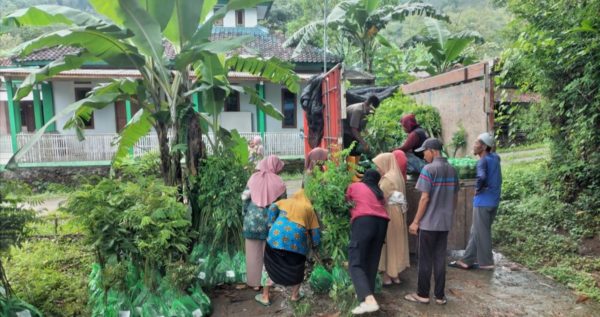
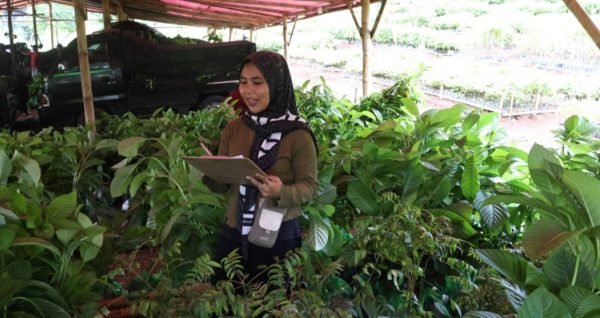
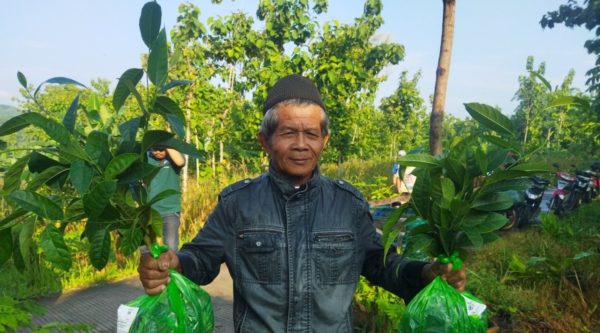
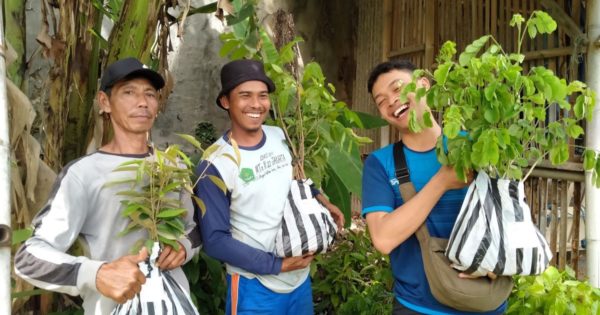
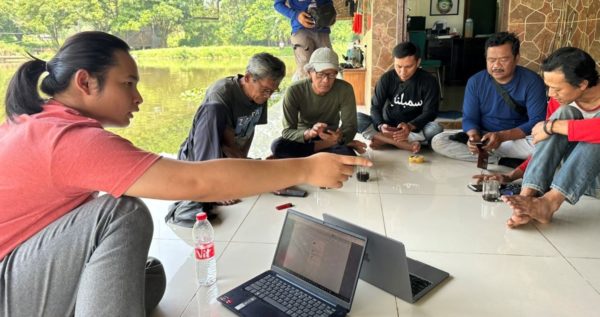
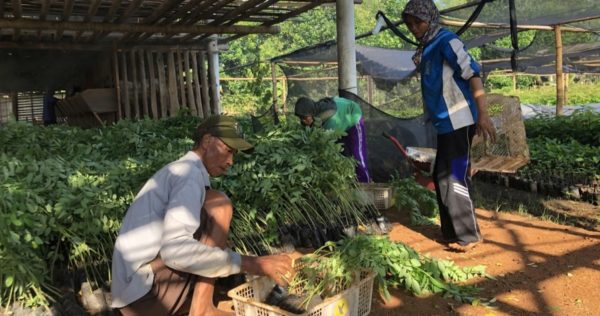
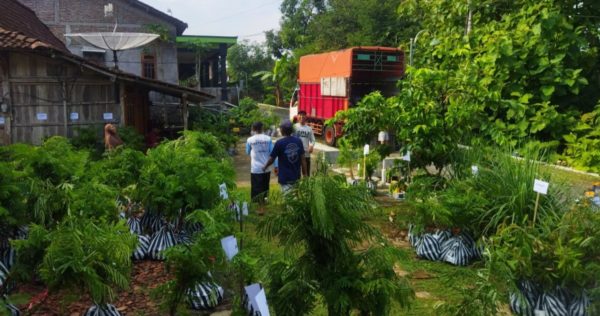
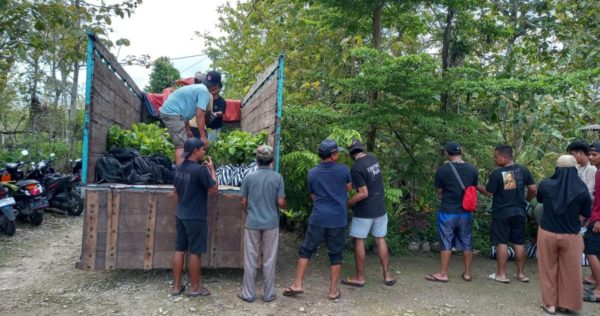
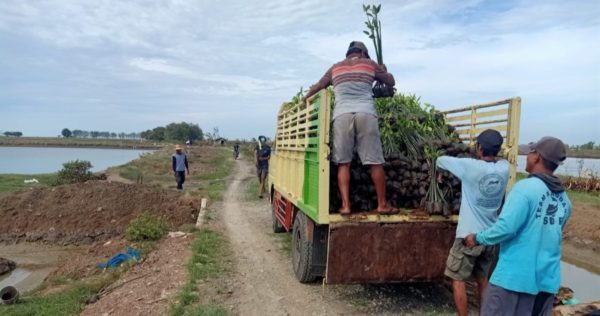
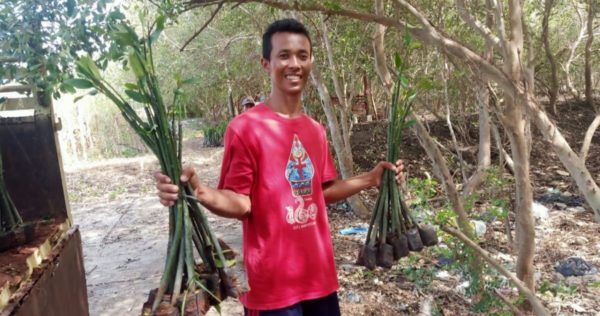
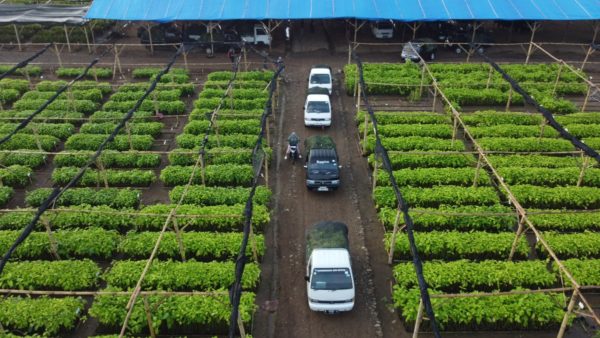
As our 2024-2025 planting season officially began in December 2024, the seedlings distribution process is now in full swing. New green leaves flourishing in our nurseries, reflecting the dedicated and meticulous work of our nurseries’ team. Together with our field team, they are currently busy distributing those seedlings to thousands of local farmers who serve as our tree-growing partners.  

This season, we aim to plant over 5.3 million trees by engaging nearly 20,000 local farmers across 17 regencies, covering over 200 villages. Additionally, we are also expanding our tree-planting efforts to Bali Island and the Citanduy watershed in West Java, while further advancing mangrove forest restoration in Cilacap, Central Java.   

Together with our supporters, we are focusing on tree-planting initiatives that help restore river watersheds, combat drought and water scarcity, enhance urban areas, and rehabilitate degraded mangrove forests. This season, 34 tree species are being planted, which are expected to improve the environment and benefit local communities. Below are our tree-planting initiatives for this season and the environmental challenges we aim to address through these efforts. 
distribution seedling
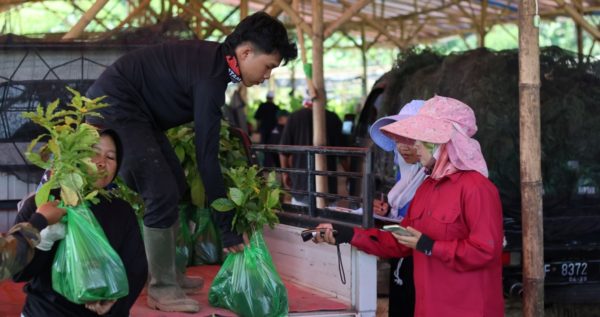
(Above) Our nursery team is busy loading seedlings. (Below) The enthusiastic local community in Kebumen receives seedlings.

Expanding Green

Expanding Watershed Restoration 

River pollution and watershed degradation pose significant environmental challenges, significantly affecting those who rely on these critical resources. This is especially true for the Citarum River, where we have been actively engaged in reforestation efforts. 

Since 2020, we have planted nearly 8 million trees in the Citarum watershed to support government-led restoration initiatives. “Our goal is to plant 20 million trees by 2028 across five Citarum sub-watersheds: Cisangkuy, Ciwidey, Cirasea, Ciminyak, and Citarik,” said Trees4Trees Director, Pandu Budi Wahono. 

Over 2.5 million trees have been planted since early January, with a goal of 4.6 million trees in total this year. These efforts, supported by 17,000 local farmers, aim to reforest 177 villages across Bandung, West Bandung, and Sumedang Regency. The ten species being planted include both fruit and shade trees, contributing to watershed restoration, revitalizing greenery, and preventing disasters, especially landslides. 

This season, our restoration efforts are expanding beyond the Citarum watershed to new areas. These include planting over 50,000 trees in the Citanduy watershed in Tasikmalaya and over 18,000 in the Sangianggede watershed in Jembrana Regency, West Bali, to protect water sources essential for the traditional Subak irrigation system.  
Expanding Green
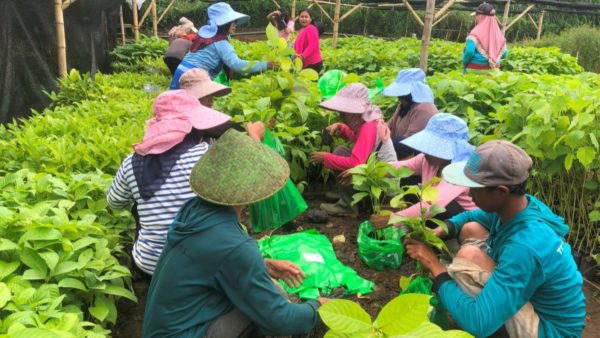
Seedlings are prepared carefully in one of our nurseries to reforest the Citarum watershed.

Expanding Green

Restoring the Degraded Cilacap Mangrove Forest 

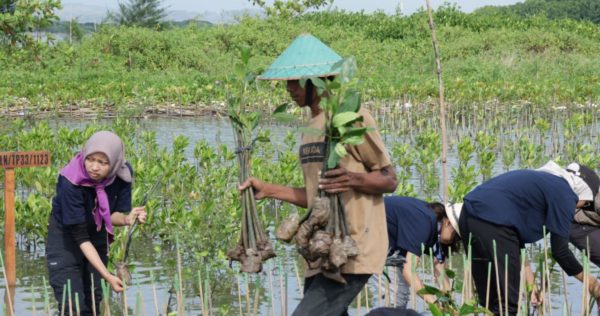
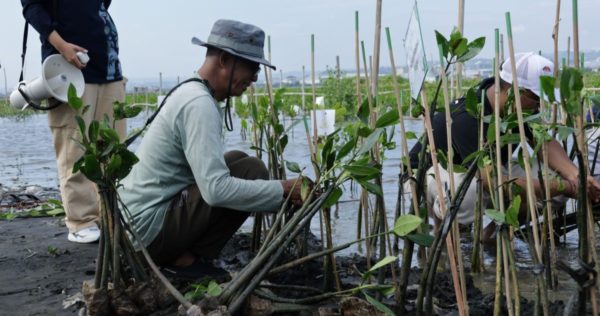
In the 1990s, Ujung Alang Village in Cilacap Regency, Central Java, faced massive mangrove deforestation due to irresponsible land conversion for aquaculture ponds. To help the mangrove forests recover, local communities have been replanting mangroves for these past two decades. During 2022 to 2024, we contributed to the efforts by planting 24,750 mangroves across 7.4 hectares in the Kampung Laut District. 

This season, we plan to extend the initiative by planting 120,000 mangroves across 50 hectares. Four mangrove species consist of Avicennia, Rhizophora, Bruguiera, and Ceriops will be planted, as they naturally thrive in the area. The planting will follow the silvofishery concept, integrating fishery with mangrove reforestation.  

“This approach aims to provide economic benefits to local communities, with mangrove crab farming scheduled to coincide with this year’s planting efforts, as most local communities are interested in mangrove crab farming,” Yoga, the Trees4Trees Cilacap Unit Manager revealed.  
seedling
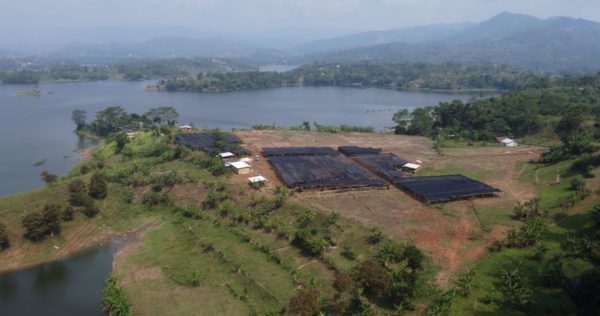
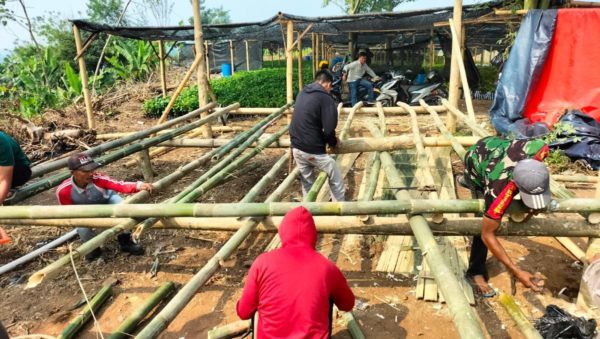
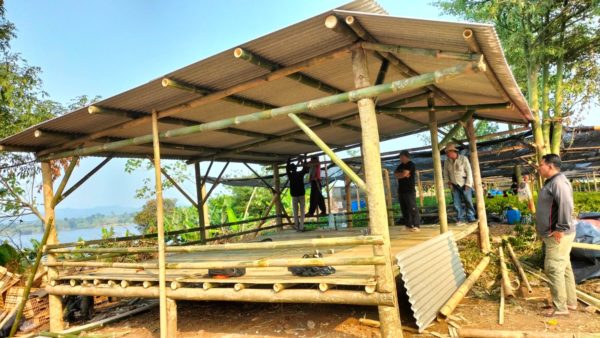
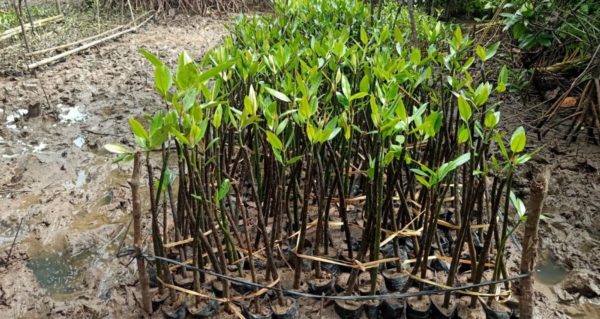
Mangrove seedlings are grown in our nursery partner managed by the local community. These seedlings are ready for Cilacap mangrove planting project.

Combating Drought and Water Scarcity  

Many of our planting areas experienced annual drought and water scarcity, significantly impacting the well-being of local communities living nearby. Villages in Kebumen, Pati, and Boyolali Regency in Central Java, Gunungkidul in Yogyakarta, Cidaun in West Java, and Bojonegoro in East Java are among our planting areas frequently affected by these issues, especially during the dry season.  

“When the dry season arrives, many areas, including our tree-planting sites in Bojonegoro, suffer from water scarcity as most water sources dry up. We aim to help local communities address this issue by planting trees that thrive in dry-prone areas,” said Khoirum Minan, the Trees4Trees Unit Manager responsible for the Bojonegoro project. 
Planting Trees
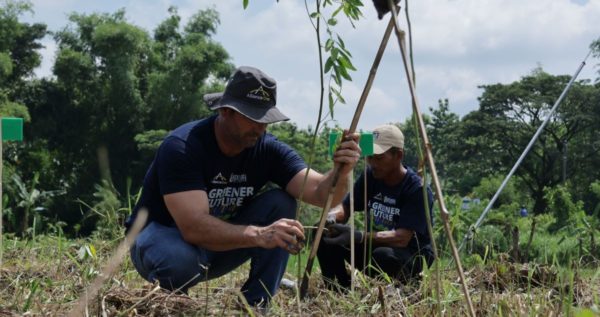
Despite the scorching day, the tree-planting in Bojonegoro recently have successfully conducted supported by companies to combat water scarcity and drought.

To continue in combating these challenges, this season we plan to plant 530,000 trees across 40 villages in five regencies in Central Java, Yogyakarta, and East Java, engaging over 2,000 local farmers. Additionally, in Cianjur Regency, West Java, we are building on last year’s success of planting 50,000 trees by adding 15,000 more trees to support local communities in developing long-term solutions to combat water scarcity and drought. 
Expanding Green
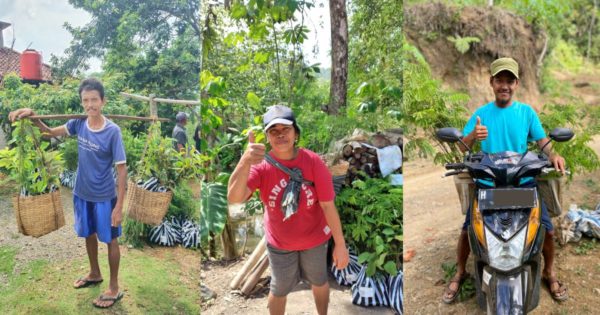
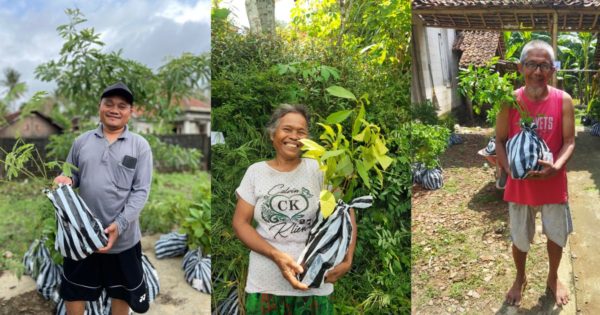
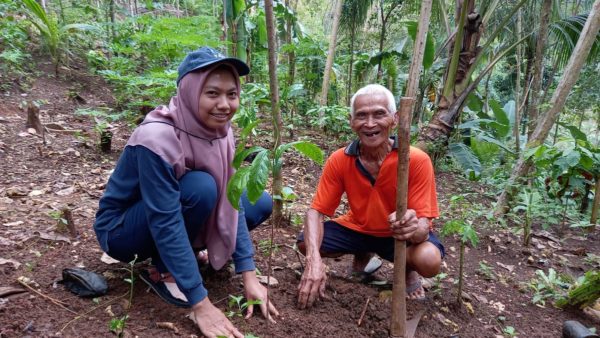
The exciting face of local communities in Kebumen (above) and Boyolali (below) receiving seedlings during planting season this year.

farmer

More Green Spaces in Urban and Industrial Areas 

The presence of urban forests amidst the bustling of cities and industrial areas offers numerous benefits. Tree-lined parks, greenways, sidewalks, and other vegetation in urban settings improve the air, water, and soil quality, reduce noise and pollution, and mitigate the effects of global warming. These improvements help prevent disasters like flooding and maintain the overall health of the urban environment. 

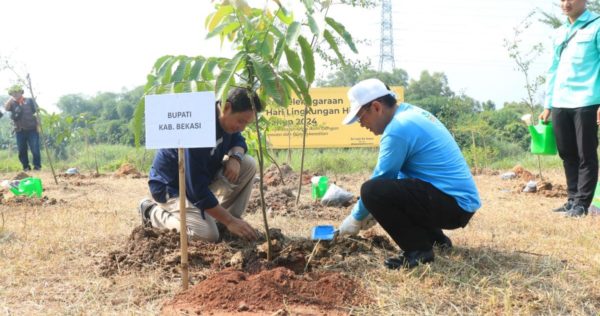
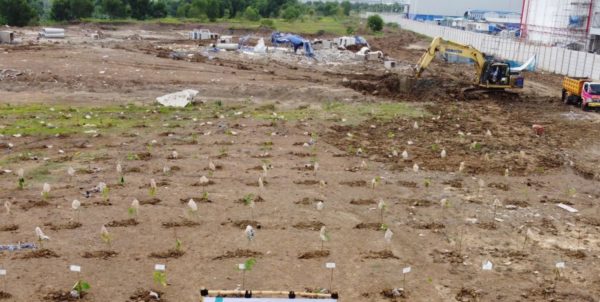
Recognizing these significant benefits, we launched our urban forestry tree-planting initiative in 2022 and have since planted over 60,000 trees. This season, we are focusing on increasing green spaces in urban and industrial areas. Since December 2024, we have planted 22,300 trees in the Bekasi and Karawang industrial regions, with more to come throughout the season. This initiative is expected to help reduce temperatures, combat air pollution, and enhance water and soil quality in these industrial zones. 

“As the soil around industrial areas is marginal, our initial step is to plant fast-growing trees before introducing other tree species. We collaborate with companies in the urban forestry initiatives this year and hope to inspire others to contribute,” said Pandu Budi Wahono. 
planting event
Urban forest tree-planting in the industrial area of GIIC, Bekasi.

Working Together with Partners and Local Communities 

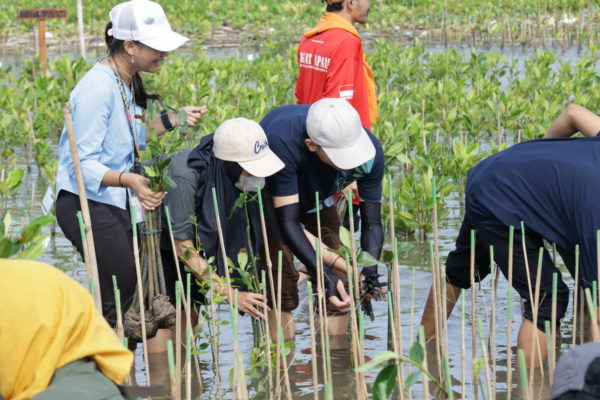
This season, we are deeply grateful for the support of companies partnering with us in our reforestation mission. Together with local communities, we are working toward a shared vision of a healthier Earth. “Over eight companies are supporting us this season, and we hope more will join,” said Pandu Budi Wahono. Companies play a crucial role in reforestation efforts, not only helping to restore the environment but also demonstrating their commitment to sustainability, aligning with their core values. 
tree planting event
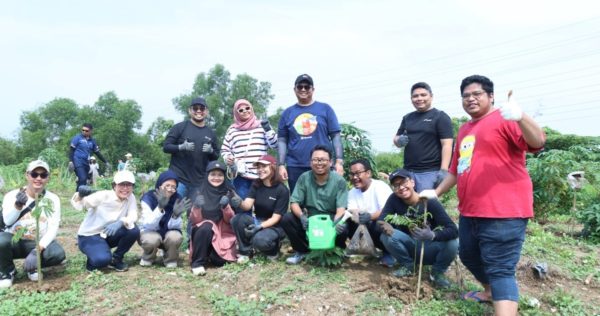
Tree-planting volunteers from companies helped to plant trees in urban areas of GIIC in Bekasi, West Java.

As climate change reaches alarming levels, collective action is more important than everWith collective efforts of individuals, governments, organizations, and companies in tackling this crisis, we can address environmental challenges and create a healthier planet for future generations. Trees4Trees invite you to join us in this mission! You can donate trees,  plan a tree-planting event, or support our tree-planting initiative to make a lasting impact on the environment.

Writer: V. Arnila Wulandani. Photos: Kemas Duga Muis, Yulianisa Dessenita, Trees4Trees Field Team