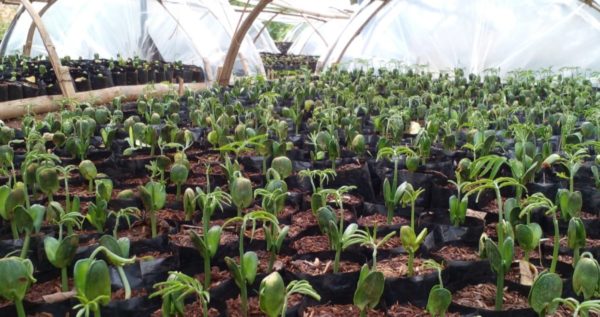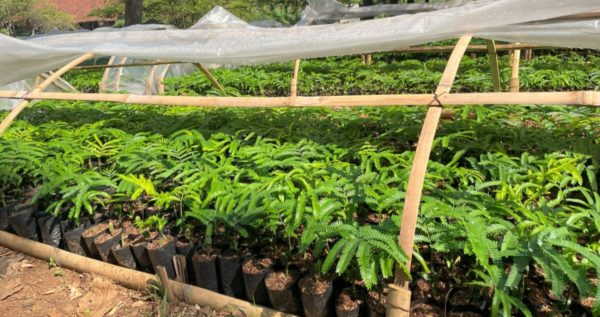
Activity Highlights: Distributing Seedlings for Citarum River Restoration

Distributing seedlings for planting community forests may seem like a simple task. After all, it’s just handing out some seedlings to some farmers, right?  

However, a closer look reveals the complexity and scale of this operation. During the 2023–2024 planting season, the Trees4Trees West Java field team distributed approximately 4.1 million seedlings of 14 different tree species to 18,800 farmers. Each of them could choose up to five different tree species. This seedlings’ distribution is part of our effort to restore areas in the Citarum Watershed, encompassing five sub-watersheds: Cisangkuy, Ciwidey, Cirasea, Ciminyak, and Citarik.

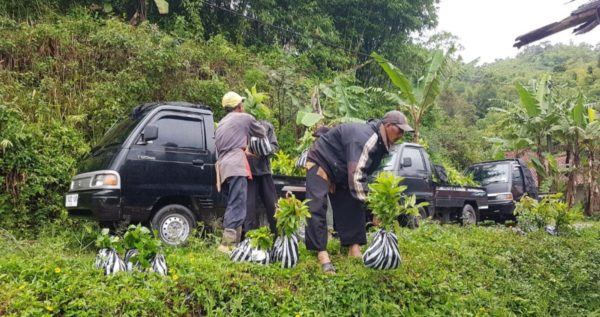
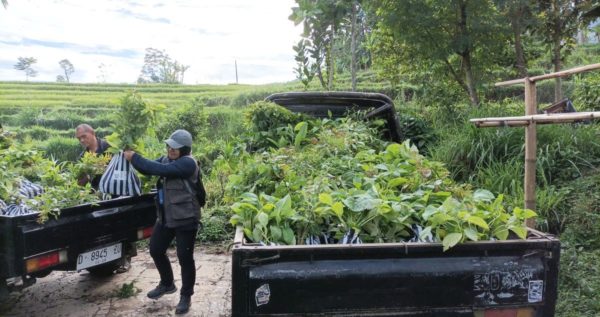
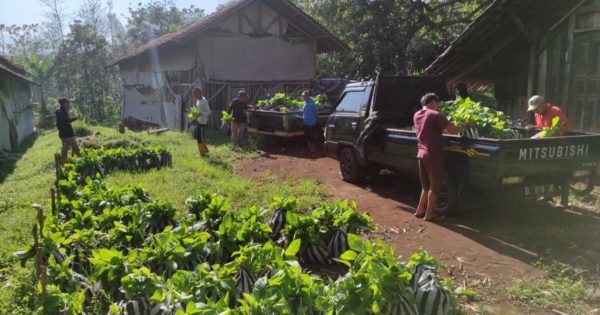
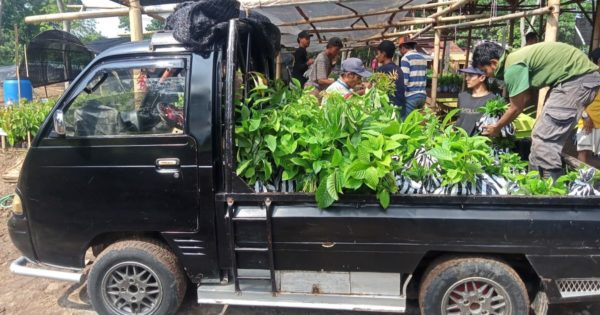
Timber trees were packed 10 to a bag, while fruit trees were packed 8 to a bag. Due to the challenging terrain, with very narrow and steep roads, small pickup trucks were used for delivery. Each truck carried a maximum of 1,500 seedlings to avoid overcrowding and damaging the seedlings.

Adding all this up means there were around 415,000 bags of seedlings individually packed per farmer order and delivered to 176 villages with more than 20,395 planting locations inside a two-month period.

So, on a daily average, 73,000 seedlings were packed into 9,240 bags, each with a unique order quantity and loaded and shipped to the distribution points in 50 trucks. That’s a lot of green for a greener future!

Now, let’s appreciate the hard work and dedication of our field team as they have already completed delivering seedlings to our tree growers around the Citarum Watershed.
Distribution Process

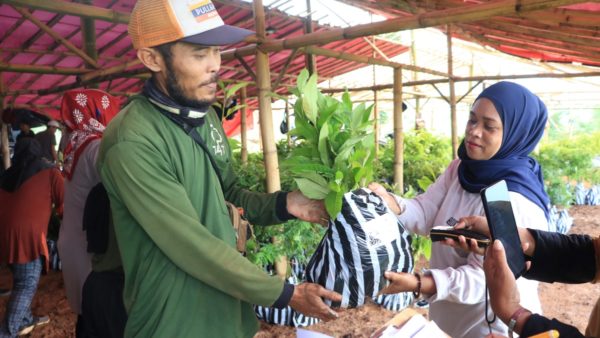
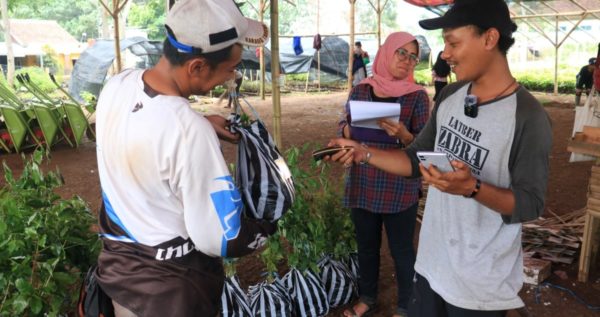
The tree seedlings were placed at the closest meeting point so that it will be easier for residents to pick them up to their lands. (Above) Our field team facilitated the distribution to Sukawening Village in the Ciwidey Sub-watershed. (Below) Our field team managed the distribution to Mekarjaya Village in the Cisangkuy Sub-watershed. 
Tree seedling

Activity hightlights; farmers

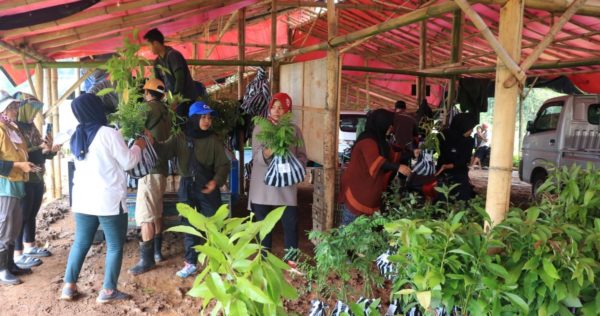
As the tree seedlings arrived at the meeting points, our team, along with the local community, unloaded the trees and grouped them according to each dedicated tree grower who would receive them. Our field teams in Cibenda Village (above) and Pacet Village (below) organized the trees to make distribution easier for each tree grower. 
tree seedling

farmer and tree seedling

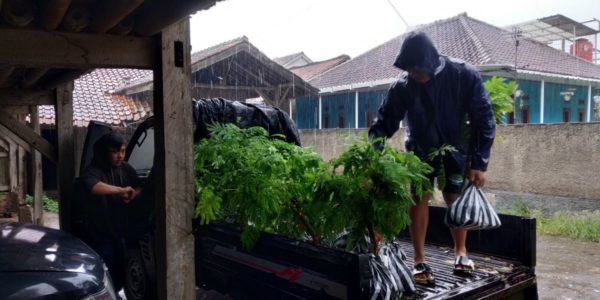
Even though heavy rain fell on the distribution day, our team remained committed to distributing tree seedlings to our tree grower partners in each village. Our team delivered seedlings in Sukawening Village (above) and Neglasari Village (below) in the middle of rainy day. 

distribution process

Activity hightlights; Trees4Trees field team distributed approximately 4.1 million seedlings to 18,800 farmers aiming

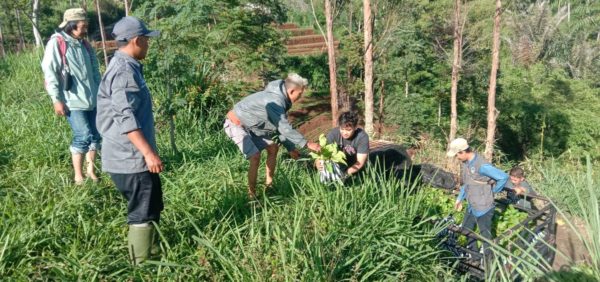
Distributing tree seedlings was sometimes challenging. Our team had to navigate steep and difficult-to-access terrain to reach some villages. In the Cirasea 3 site (above) our team worked hand in hand with the local community to place tree seedlings in locations inaccessible to trucks. (Below) the pickup truck passed through a very narrow road in Loa Village, part of Cirasea 1 site. 

car and tree seedling

The tree-seedlings were all dropped and organized in a meeting point. They are ready to be picked up by the dedicated tree growers. 

Activity hightlights; Trees4Trees field team distributed approximately 4.1 million seedlings to 18,800 farmers aiming

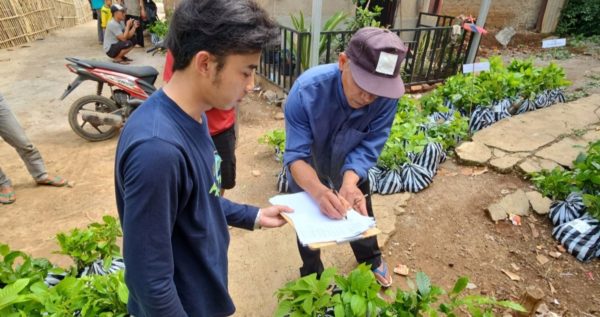
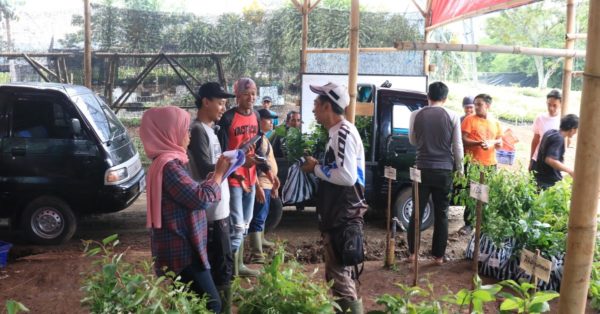
(Above) Before delivering to local farmers, our field team meticulously checks all seedlings, including the total trees, types, and the dedicated tree growers who are supposed to receive them. (Below) Our field team ensured that our tree growers received the correct seedlings according to their requests as in the initial stage before handing the seedlings to them. 
Trees4Trees field team distributed approximately 4.1 million seedlings to 18,800 farmers aiming

Distribution process

Following the arrival of the tree seedlings in a village around the Ciminyak sub-watershed, local communities enthusiastically welcomed them. They can’t wait to receive the tree seedlings they have been eagerly anticipating. 

Activity hightlights; distribution process

The smiles of the local people are invaluable as they receive trees and organic fertilizers from our team. We are grateful to have an opportunity to support them and see the joy on the faces of our tree grower partners in the Cirasea 3 site! 
Activity hightlights; Distribution process

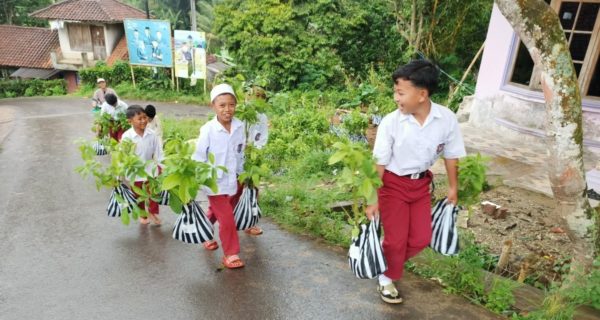
We were delighted to witness schoolchildren actively assisting their parents in transporting the tree seedlings back home in Weninggalih Village. 
Farmers and tree seedling

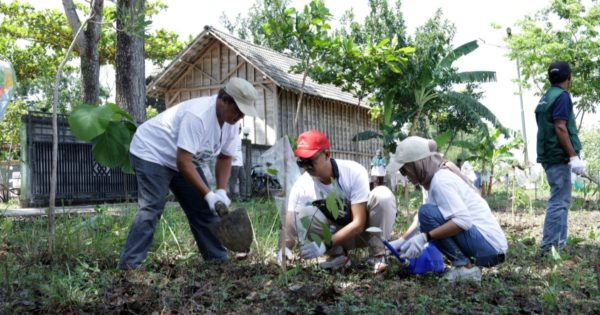
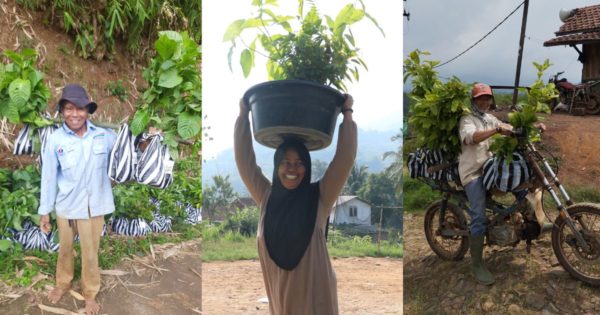
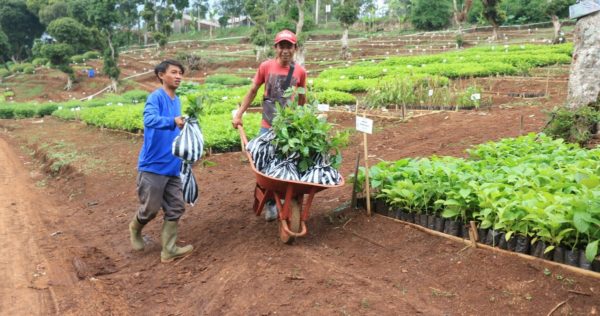
Experiencing our tree growers bringing their trees home was truly thrilling. They transported the trees from the meeting points in a variety of methods, such as carrying them on their backs with bamboo sticks or traditional baskets, placing them on carts, or utilizing off-road motorcycles. Shortly thereafter, they will proceed to plant these trees in their fields in the Citarum watershed surrounding. 

Read also: Nursery Highlight: Tree Seedling Distribution in West Java


Taking the Next Step: Trees4Trees’ Planting Season 2023-2024

Trees4Trees’ Planting Season 2023-2024

Taking the Next Step: Trees4Trees’ Planting Season 2023-2024

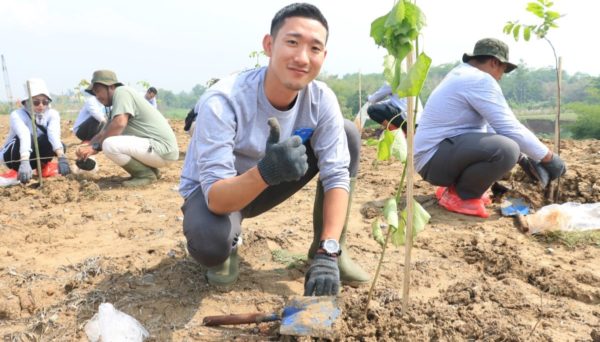
At Trees4Trees, we started the new year early, by kicking off our 2023-2024 planting season back in December. With the generous support of our sponsors, volunteers, and donors, we plan to continue these programs through March 2024. 

Since December, millions of seedlings have been distributed from our nurseries to locations all over Java. Each of these trees offers reason for hope. From village to city and from coast to coast, they can help protect the environment and empower local communities.  

Rising to the challenge 

Indonesia saw its fair share of troubles in 2023. An extended dry season, caused by El Niño, delayed our planting efforts by a month – from November to December. Now the rains have finally arrived, were determined to make up for lost time. 

“We intend to plant 4.9 million trees across Java,” says Pandu Budi Wahono, Trees4Trees Program Manager. “This will help around 21,770 local farmers in 231 villages,” he added.

Continuing the Citarum Watershed project  

A big part of this program is our Citarum Watershed restoration project. Our goal, with support from 18,800 local farmers in 176 villages in the watershed area, is to plant 4 million trees in the next couple of months. 

“The restoration covers areas around five sub-watersheds,” explains Tomi Bustomi, who is our Regional Manager for West Java. “Ciminyak, Ciwidey, Cisangkuy, Cirasea, and Citarik River.,”  

Working alongside the Government of Indonesia, Tomi and his team aim to plant 10 million trees by 2025. In doing so, they will help restore ecosystems, preserve cultural and economic value for local communities, and safeguard biodiversity. 

planting Tree

A shore sign of progress: Replanting on the coast of Java 

In Pati Regency in Central Java, Trees4Trees is creating a green belt along the shoreline by planting mangroves. From 2021 through 2023, we already planted a total of 195,200 trees in six villages. Now, the plan is to extend these efforts to four more villages in the region.  

During December and January, a total of 33,750 new trees were planted in the villages of Semerak, Dukuhseti, Tegalombo, and Banyutowo. Khoirum Minan is the Trees4Trees Pati Unit Manager, who says extending the green belt in this way can benefit local communities by “preventing high tides from hitting residential areas and fishponds owned by locals.”  

Saving water, improving lives  

Last year’s prolonged dry season had a massive impact on local communities. Lots of places experienced serious water shortages, which affected both people and plants. To prevent this happening again in the future, Trees4Trees has been busy planting lots of tropical fruit trees known for their ability to store water when times are hard.  

These tree species include teak, kaliandra, and indigofera. We’ve also planted multi-purpose trees like coffee and petai, which are good for the environment and offer a sustainable source of income for local people too. 

Taking the Next Step: Trees4Trees’ Planting Season 2023-2024
(Above) Water sources in Boyolali dried up in 2023, so T4T stepped  to support water conservation  by planting seedlings that will store water in their trunks, prevent soil erosion, and reduce surface run-off (below).

Distribution process

Expanding urban forests 

Our replanting plan extends to all kinds of environments, tackling a range of problems. This even includes cities and industrial areas, where trees bring some much-needed shade, carbon capture, and soil health, not to mention adding a little natural beauty. 

Most recently, Trees4Trees has been busy planting urban forests in industrial areas like GIIC in Bekasi, KIIC in Karawang, and Bogor. 

Taking the Next Step: Trees4Trees’ Planting Season 2023-2024
(Above) A recent tree planting event at GIIC Bekasi with Nissin and (Below) with Microsoft in Bekasi.

CSR program

another planting event
(Above) Another planting event, this time with AOI & ITS in Bojonegoro, East Java. (Above) Another planting event, this time with AOI & ITS in Bojonegoro, East Java.

It takes a village: Working together with partners 

In all our replanting operations, we collaborate with lots of different companies and organizations to get the job done. Each of these events helps deliver sustainable impacts to different areas, from cultural and historical sites to industrial regions, villages, farmland, and watersheds.  

Every project is a team effort. By involving staff, partners, and clients as tree-planter volunteers, and teaming them up with local communities of growers and farmers, we’re helping create new networks.  

Whether developing skills, sharing stories, or simply making new friends, the Trees4Trees planting season continues to expand its impact. Everyone involved is ready to take the next step on this journey, together. 


Tree-Seedling Distribution in West Java
Nursery Highlight: Tree-seedlings Distribution in West Java
Our planting season is now underway. In West Java, the distribution of tree-seedlings, which began in December 2023 and extends until mid-February 2024, heavily relies on our three nurseries. They are Cirasea Nursery, Soreang Nursery, and Ciminyak Nursery. The three nurseries serve as the cornerstone, facilitating the distribution of millions of tree seedlings to local communities across five sub-watersheds of the Citarum River in West Java. 

Our nurseries team in West Java has been diligently preparing the tree seedlings, which have been growing since April 2023. We invite you to witness their wholehearted efforts as they skillfully prepare the tree seedlings for distribution through images below! 

Nursery Highlight: Tree-seedlings Distribution in West Java
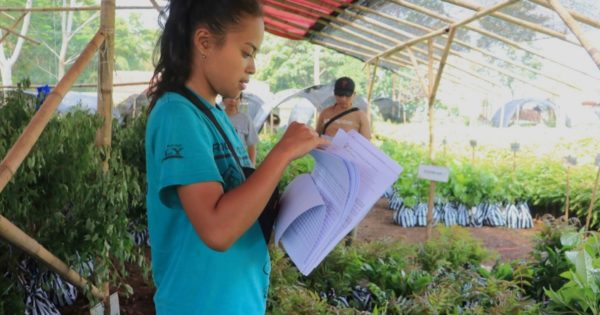
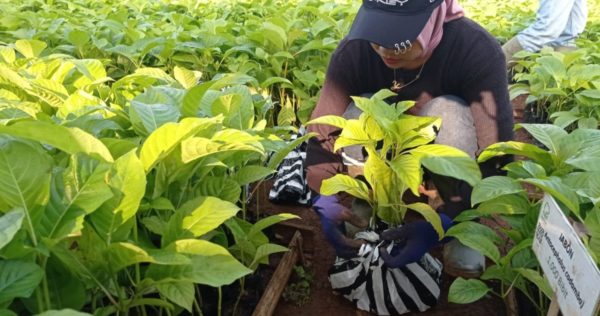
Our nurseries team selected the tree seedlings meticulously. It aims to ensure the distribution of only high-quality tree seedlings to local communities.

Nursery Highlight: Tree-seedlings Distribution in West Java
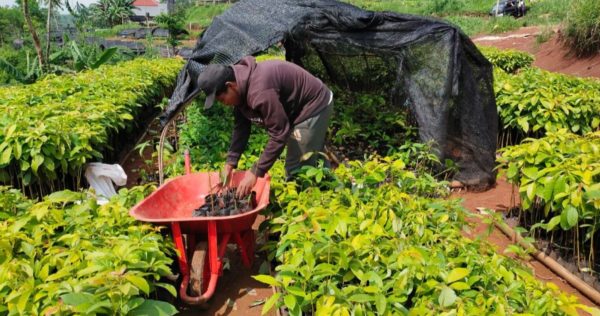
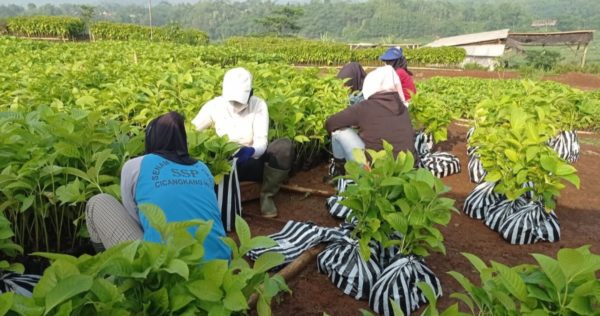
After completing the selection process and quality control, our team packed and categorized each tree based on its type. Demonstrating our commitment to reducing plastic waste, we educated and encouraged our tree growers to reuse the plastic bags previously used for the seedlings.

Nursery Highlight: Tree-seedlings Distribution in West Java
Nursery Highlight: Tree-seedlings Distribution in West Java
We appreciate the dedication of our nurseries’ team as they continue to work wholeheartedly, packing each tree even in the rain.  

Nursery Highlight: Tree-seedlings Distribution in West Java

After finishing the tree-seedling packing process, our nursery workers transported tree-seedlings from the tree blocks to the distribution points.

Seedlings Distribution in West Java
Before loading into trucks for distribution, our dedicated team checked all tree-seedlings and recorded them carefully. (Above) A nursery worker checked the type of trees that would be distributed to the dedicated planting areas. (Below) Our team made sure they recorded and checked all tree-seedlings.

Tree-seedlings Distribution in West Java
Tree distribution process in West Java

As part of our commitment to the transparency of tree distribution and our tree-planting program provided to sponsors and donors, a barcode attach to each tree. Then, they will be scanned and recorded in our in-house technology system called the GEKO system. This in-house technology allows us to monitor the tree distribution and tree-planting process. (Above) The Ciminyak Nursery team and (below) the Soreang Nursery team scanned barcodes on the trees to record them. 

Nursery Highlight: Tree-seedlings Distribution in West Java
Distribution Process

Our nursery team also prepared liquid organic fertilizer. They will then being distributed to our tree growers along with the tree seedlings. We reuse used mineral plastic bottles to store the fertilizer as part of our commitment to reduce plastic waste.

Distribution activity in West Java

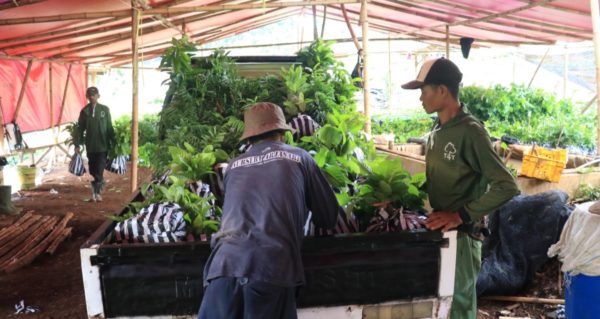
All of our nursery team are working hand in hand. They sticked one to another to load tree seedlings from the distribution point onto the trucks. This exemplifies the cultural spirit of gotong royong in Indonesia, signifying collaborative effort.

Nursery Highlight: Tree Distribution in West Java
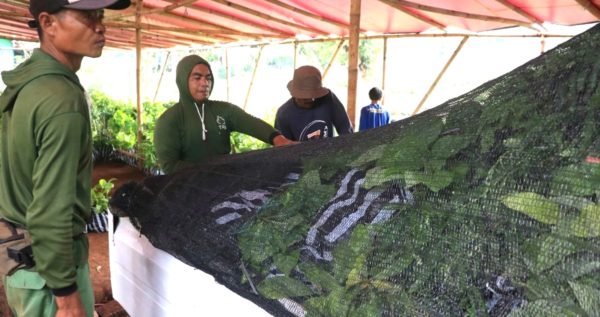
The loading process has already been completed and the tree seedlings are ready to go. (Above) The truck was full of tree seedlings and ready to bring seedlings from Soreang nursery.

Distribution process in West Java

Our nursery team covered the trucks with paranet to ensure tree seedlings safe and not exposed with direct sunlight or rainfall.

Nursery Highlight: Tree-seedlings Distribution in West Java

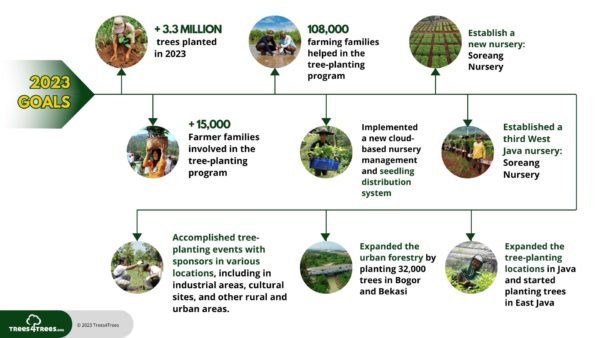
Trees4Trees 2023 Green Journey

Reforestation_urban forest_trees4trees

Green Journey; Reforestation_urban forest_trees4trees

Green Journey; The year 2023 is coming to an end, and a new year is on the horizon! Despite facing challenges such as a prolonged dry season and the impact of the El Nino phenomenon, Trees4Trees remains steadfast in its mission to green the environment. It includes supporting areas affected by drought and water scarcity through tree planting.  

The Trees4Trees planting season is currently in progress and is scheduled to continue until early 2024, leading to the planting of more trees. This initiative is expected to generate larger impacts on the environment, social aspects, and the economy.  

Therefore, we express our gratitude to the individuals, companies, and organizations that have supported our green mission throughout the year. Your remarkable support as sponsors and donors has enabled us to achieve new milestones in 2023, and we are eager to share them with you. 

TREES4TREES 2023 REFORESTATION JOURNEY 


Green journey; reforestation goals_trees4trees

Looking ahead to 2024, we are steadfast in our commitment to expanding tree planting efforts. This involves over 20,000 farmers in 231 villages across various regions in Indonesia. You, your organization, or company can actively contribute by becoming sponsors and donating trees to support this cause. For more details, please reach out to us at info@trees4trees.treesforplant.com. 

 As the new year approaches, it provides a timely opportunity to adopt green resolutions and resetting habits that promote a sustainable lifestyle. Through these changes, we collectively contribute to the well-being of our planet and secure a better future. Additionally, consider gifting trees as a meaningful and eco-friendly New Year’s present. 

 GIFT TREES

Wishing you a joyful New Year! Continue making a positive impact on Earth by participating in Trees4Trees tree planting initiatives.  


Activity Highlights: Farmer Training Initiative to Empower Local Communities

In Trees4Trees‘ tree-planting operation, our focus includes empowering and encouraging local communities – our partners as tree growers – to implement environmentally friendly farming methods. By doing so, we anticipate that the farming activities will not harm the surrounding environment, while also potentially benefiting local communities through the products of the trees, such as fruits, leaves, or bark. 

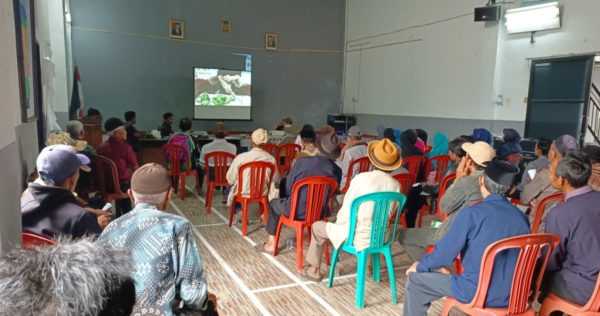
To achieve this goal, we conduct a series of farmer training sessions at each working site as part of our tree-planting initiatives. This year, various topics about organic farming methods have already been covered. These topics include how to make organic pesticide and herbicide, formulating liquid and granular organic fertilizers, and microbe’s decomposer.  

Additionally, there are also topics related to the cultivation techniques, such as applying organic cultivation pattern, increasing timbers and multipurpose tree species productivity, grafting and plant propagation through cutting techniques, and best practices to cultivate fruit trees in organic ways.  

Let’s delve into the recent establishment of Trees4Trees‘ farming training program!  

Farmer Training Initiative to Empower Local Communities

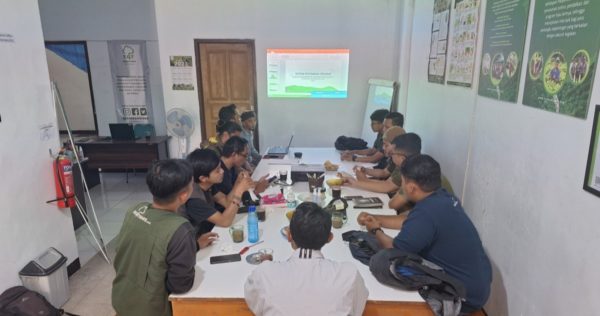
Our field team is at the forefront of engaging local communities to tree-planting programs Trees4Trees held a Training of Trainers to enhance the understanding of organic farming methods among our field team before delivering the knowledge to the tree growers participating in the program. Our field team will continue to disseminate this knowledge to tree growers in each planting area through mentoring and handson practice. 

Farmer Training Initiative to Empower Local Communities

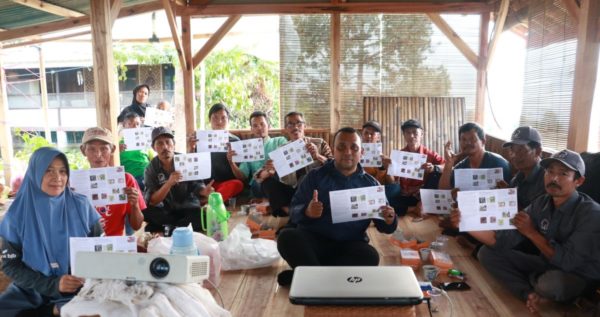
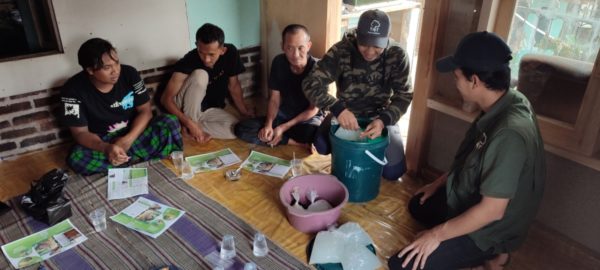
Trees4Trees provides its tree grower partners with brochures (above) and videos (below) as information and tutorial sources they can access for free. These information tools contain tutorials and steps in how to implement each organic farming method 

Farmer Training Initiative to Empower Local Communities

how to make organic liquid fertilizers

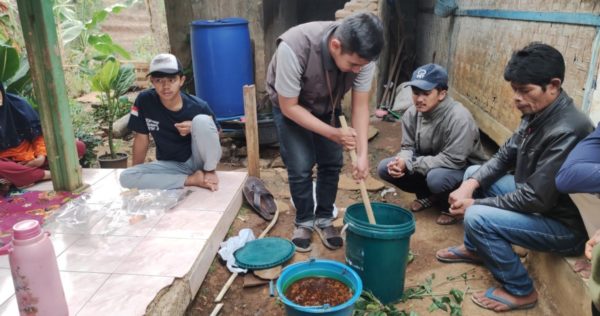
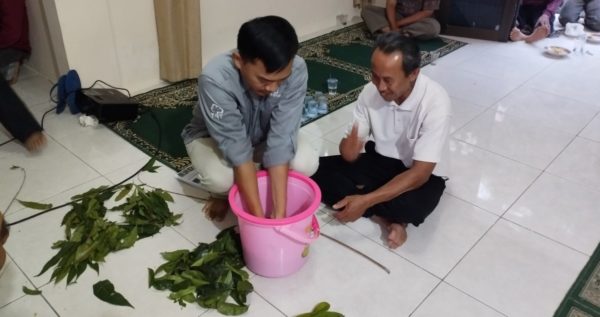
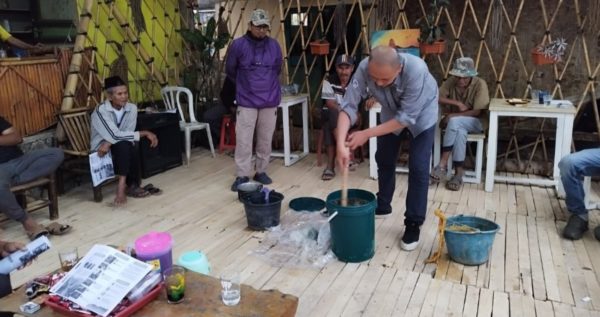
Organic biopesticide is useful to prevent and control pests and disease attack to the trees planted without leaving harmful residuals. Our field team showcases tutorials of organic biopesticide making in a hands-on practice to the local communities. The organic biopesticide is formulated from some tree leaves like suren, sirsak, and sirih leaves. They are mixed with turmeric, galangal, tobacco, molasses, and decomposer microbes.

Farmer Training Initiative to Empower Local Communities

how to make organic liquid fertilizers

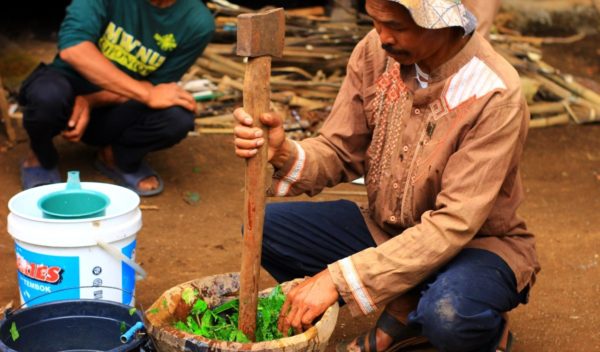
In the process of making organic biopesticides, three kinds of leaves; sirsak, suren, and sirih leaves need to be pounded before they are mixed with other ingredients. Local farmers are pounding them with a traditional pestle and mortar made from wood.  

how to make organic liquid fertilizers

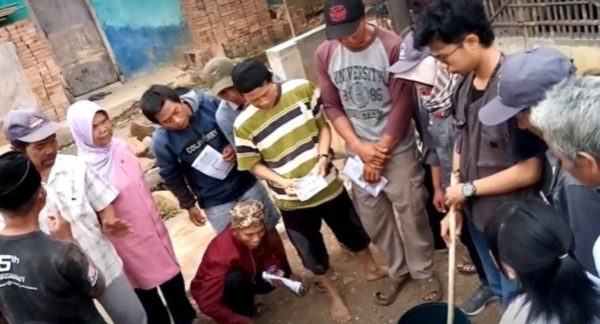
Fulfilling the high demand for knowledge about organic fertilizers in local communities, our field team conducts farming training on how to make organic liquid fertilizers. (Above) We utilize household waste like expired eggs and milk, rice washing water that are mixed with some other ingredients including sheep’s manure, volcanic ash, and spirulina. To apply this type of fertilizer, simply by spraying around the trunk of trees planted. (Below) The organic fertilizer training attracted many local people to directly witness the tutorials demonstration. 

Trees4trees team

Farmer Training Initiative to Empower Local Communities

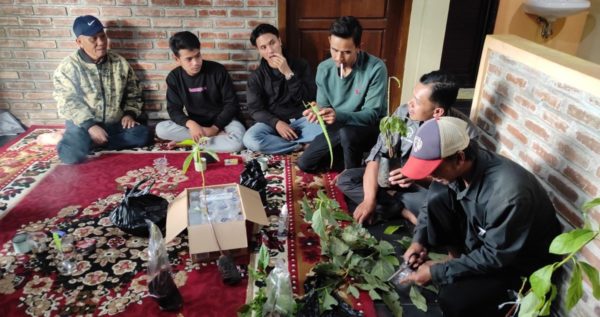
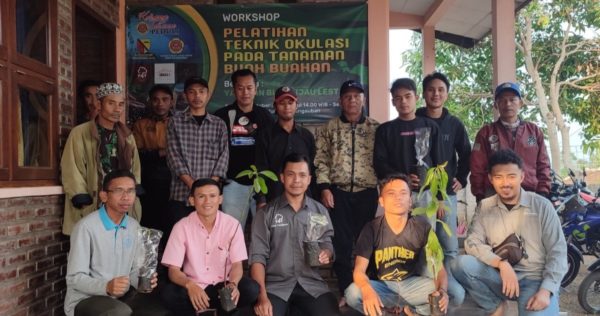
One of the farming training topics we cover is grafting techniques, a cultivation method that involves attaching one plant bud to another. This method aims to combine favorable characteristics from both plants to achieve a better variety of trees 

Trees4Trees' farmers

Farmer Training Initiative to Empower Local Communities

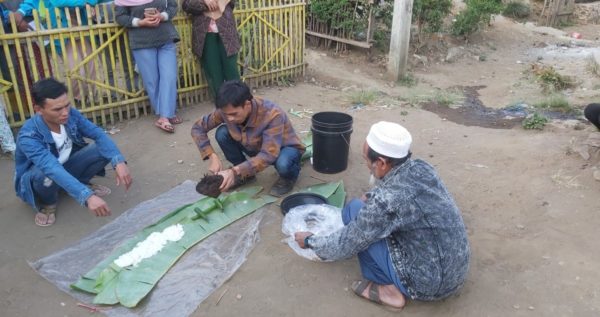
Decomposer microbes and soil fertilizers play a crucial role in the organic farming system due to their numerous functions in plants growth. They help compost plants and livestock waste to become nutrient for plants, reduce chemical waste in the soil, enhance soil fertility, and help to prevent pathogenic bacteria. Additionally, they significantly improve the chemical and biological function of soils. Considering these factors, we conduct training on decomposer microbe production using rotten rice, banana weevil, bamboo roots, molasse, and yeast that are fermented 

Farmer Training Initiative to Empower Local Communities

In one of our farmer training sessions, we presented a tutorial on making herbicide from organic ingredients, including coconut water, sugar, and yeast, followed by a fermentation process. Organic herbicide is useful for controlling and preventing weed growth that can disrupt the growth of trees.  

Nursery Highlights: Growing Multi-purpose Trees Species

Multipurpose tree species refer to the type of trees that are grown to provide numerous benefits both for the environment and the economy. These may include environmental enhancement, such as providing shade, conserving water, and improving soil quality.  

In addition to the environmental benefits, multipurpose trees also yield non-timber commodities, including fruits, leaves, nuts, sap, or bark. These commodities have a significant economic value and are competitive in the market, supporting local community livelihoods. Recognizing these advantages, Trees4Trees cultivates multipurpose tree seedlings like coffee, avocado, durian, petai, clove, and cotton in its nurseries.  

Let’s observe the dedicated efforts of our nursery team as they cultivate and nurture our multipurpose tree seedlings in our four established nurseries! 

Growing Multi-purpose Trees Species

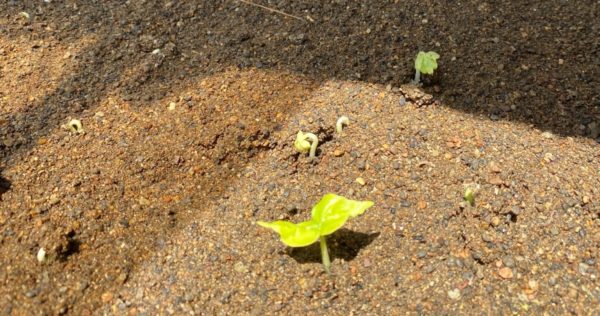
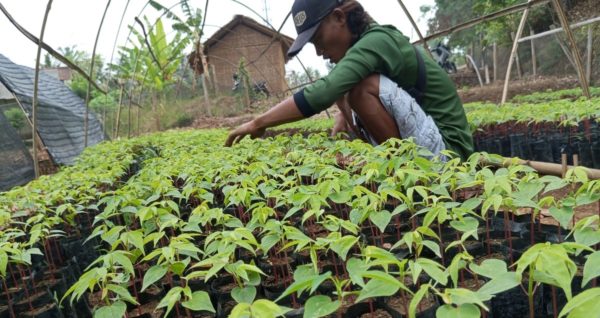
At the Kebumen nursery, a new tree-seedling has been introduced. This year, the nursery has started on the cultivation of the cotton tree, also known in Indonesia as the randu tree or kapuk tree. The decision to grow cotton trees is a response to the strong interest of the local community in Kebumen, driven by the economic value of the tree. Cotton trees produce fibers which are contained in their fruits, and these fibers are essential raw materials for textile yarn. (Above) New shoots of randu tree-seedling have begun to grow. (Below) A nursery worker is removing weeds from the randu tree seedlings to ensure the maximum growth.  

Nursery Highlights: Growing Multi-purpose Trees Species

Nursery Highlights: Growing Multi-purpose Trees Species

Jackfruit, or nangka is one of the favorite fruits in Indonesia, including the Java islands. Considering that the trees are widely cultivated by local people for their delicious fruits, the Kebumen nursery grows jackfruit tree-seedlings. These trees produce sweet, yellow fruits that can be consumed directly or used as an additional ingredient for traditional snacks and drinks, thanks to their distinctive aroma. The young fruits also can be used to prepare traditional Javanese dish called gudeg. 
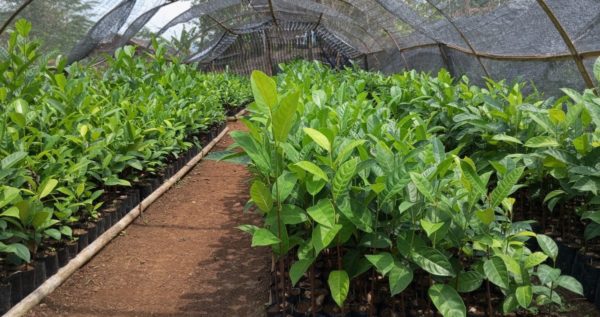
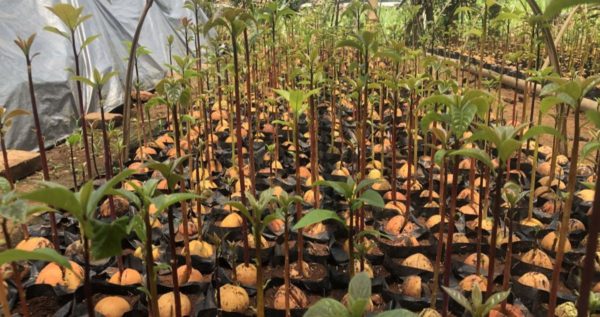
Avocado is one of the multipurpose trees that has a high economic value. Many people incorporate avocado fruit to their healthy diets, contributing to the fruits’ popularity and high demand. All our nurseries cultivate avocado tree-seedlings due to the strong interest of local people in planting avocados. (Above) Avocado tree-seedlings are thriving in the Pati Nursery. (Below) Avocado tree-seedlings are reaching new heights marking significant tree growth in the Cirasea Nursery. 
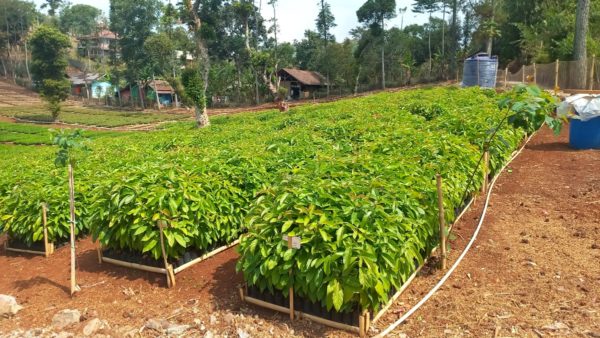
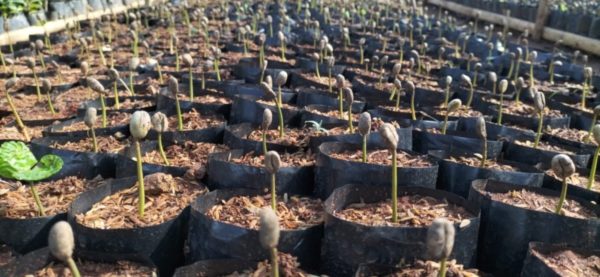
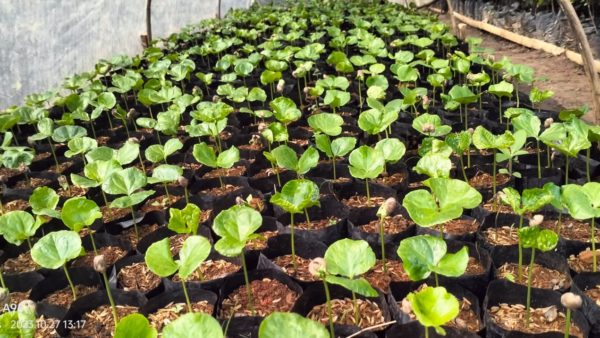
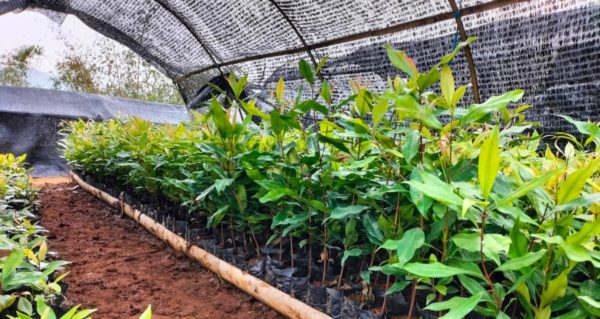
Coffee is one of promising commodities across Indonesia, and during our planting seasons, this species always takes the spotlight. Many tree growers have a strong interest in cultivating coffee trees due to their economic value. (Above) New shoots of coffee tree seedlings have embarked to grow in our Ciminyak nursery. (Below) The twomonthold coffee tree-seedlings are growing greener, displaying their distinctive rounded-shape leaves. 

The clove tree, known as cengkeh is an evergreen tree native to the North Maluku Islands of Indonesia. Its aromatic flower buds are highly valuable due to their competitive prices in the market. This species is one of the trees we cultivate to provide income opportunities for our tree growers. (Above) Clove tree seedlings are growing taller in our Ciminyak nursery.

Nursery Highlights: Growing Multi-purpose Trees Species

Petai is popular in Indonesia due to most of Indonesian enjoy eating the beans fresh. The petai tree, also known as stinky bean tree, is native to Southeast Asia and produces long green beans about the size of almond. These beans have a high demand in the market. We cultivate petai in our nurseries to provide opportunities for our tree growers partner to gain economic benefits by planting the tree. (Above) Petai seedlings in Soreang nursery in 2 weeks old. (Below) Petai seedings in 2 months old.