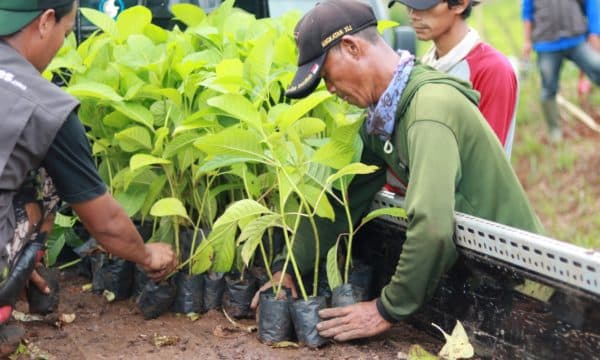
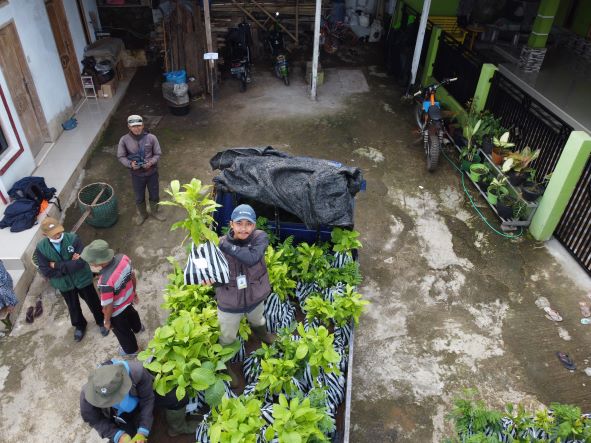
Nursery workers are loading tree seedlings in Ciminyak nursery to be distributed to various planting areas in West Bandung regency. Photo: Trees4Trees/Kemas Duga Muis.
The New Year is about to come! 2022 is an amazing year, and now Trees4Trees is continuing its journey of planting trees to green the world. The Trees4Trees 2022 planting season currently is underway, and more trees will be planted.
We’re thankful for those who support our green journey to make environmental improvements and help local communities through planting trees. Because of incredible support from sponsors and stakeholders, we hit some new milestones in 2022.
Trees4trees 2022 Reforestation journey
2023 will be even better, we’ll be planting a lot more trees in the coming year and helping more communities to get started in smallholder forestry. We’re going to continue our green story in 2023.
this moment is also a good oportunity to reset our habits that support a sustainable life. By changing some habits to be more eco-friendly, we are doing good to the earth and helping to save lives in the future.
Happy New Year! We wish you a greater and greener year to come. Keep spreading kindness to our earth by planting trees with Trees4Trees. You can also gift trees as New Year’s presents.
(Above) The latest batch of seedlings sets off from Trees4Trees’ new nursery in Ciminyak – part of our program to plant 10 million trees in the Citarum watershed by 2025. Photo: Trees4Trees/Kemas Duga Muis.
In 2018, the Citarum became famous for all the wrong reasons, when an environmental survey and medias reported it as the ‘World’s Dirtiest River’. In response, the Indonesian government decided it was high time to implement a comprehensive renewal program for the region. Now, with the help of Trees4Trees, the Citarum is ready to be reborn.
Working closely with the Government of Indonesia and One Tree Planted, and with funding from AstraZeneca, Trees4Trees has started an ambitious reforestation program in the Citarum watershed. A key part of our 2022 planting season, the project will plant a minimum of 10 million trees by 2025.
But how can trees help clean the world’s dirtiest river? What is being done to tackle the problem? And what is the bigger picture for environmental recovery in the region? Trees4Trees has the answers.
Five Facts: A Closer Look at the World’s Most Infamous River
The Citarum is the longest river in West Java, stretching 185 miles (297 km)
It runs from Bandung, via Jakarta, to the Java Sea
It provides electricity to most of Java and Bali
Pollution comes from household, livestock, industry, agriculture, and fisheries waste
The river contains dangerously high levels of lead, aluminum, manganese and iron
What are the Impacts of all this Pollution?
On People and On Nature
Studies by Indonesia’s Ministry of Environment and Forestry have revealed that pollution in the Citarum not only affects the river – the damage also extends to the surrounding landscape. This area, known as the Citarum watershed, supports hundreds of thousands of livelihoods.
Restoring the Citarum Watershed
The Citarum watershed covers degraded areas of 77,024 hectares in West Java with various problems like erosionand sedimentation occurring, dry soil, clean water shortages, and more. Over the years, the Indonesian government has been working to restore critically degraded lands in this region, which have been in steady decline.
“The Citarum watershed is a priority area in Indonesia for recovery,” explains Muhammad Silmi, from the West Java Forestry Service. “The collaboration of government with various elements in society is very helpful in accelerating the recovery effort,” he added.
Muhammad Simi (right), a West Java Forestry Service representative, at Trees4Trees’ Ciminyak nursery in West Java. Photo: Trees4Trees/Kemas Duga Muis.
Taking a Root-and-Branch Approach to Pollution
So how can trees help with this recovery? In the short term, the reintroduction of forests along the banks of the Citarum River can help to increase water retention and reduce surface runoff during the heavy rains that hit West Java during the monsoon. This can dramatically reduce the amount of trash flowing into the river.
Looking to the future, a sturdy network of tree roots can also help bind soils together, preventing erosion and returning valuable nutrients to the earth. Healthy trees also store carbon, provide shelter for wildlife, and offer livelihood opportunities to local people.
‘A Green Movement’: The Trees4Trees Planting Program
The cleaning and greening process has already begun. With funding from AstraZeneca, and support from One Tree Planted, we are engaging more than 38,000 farmers in an area spanning 22,000 hectares of the Citarum watershed. Here, we aim to plant 12 million trees in the next three years, with a minimum of 10 million expected to survive past project completion in 2025.
“Trees4Trees will plant more than 10 million trees in the Citarum Basin by 2025”
Since 2020, we have already planted 1.2 million trees in tributary watersheds such as Ciwidey, Cisangkuy, and Cirasea. By focusing on private land, the program complements similar government schemes already underway in national forests.
“With the (Trees4Trees) program, we can collaborate and involve West Bandung residents to make a green movement for Citarum rehabilitation,” says Sanawinarti, a representative of the West Bandung Regency Environmental Service. “We are really thankful to this program,” she added.
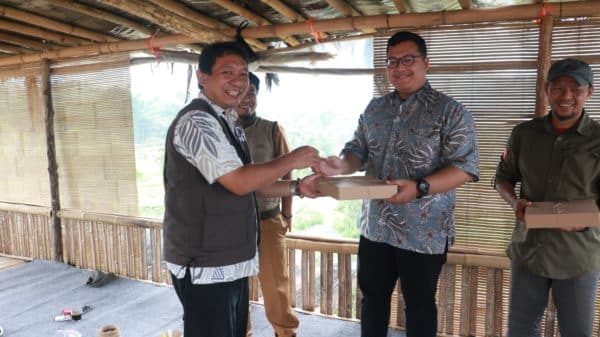
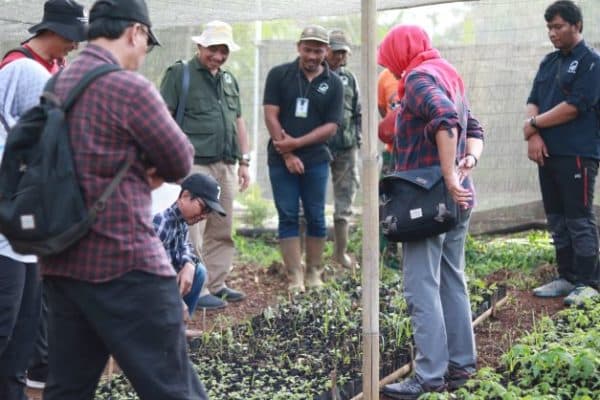
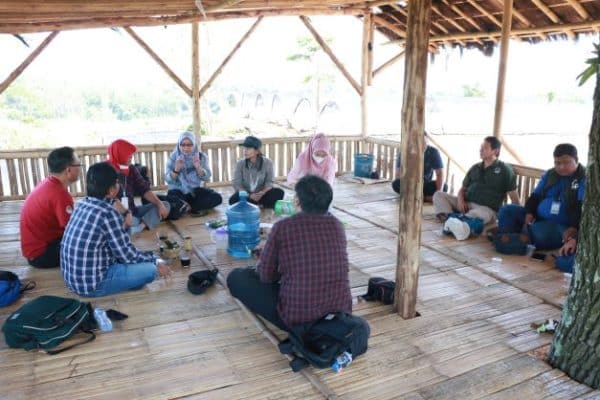
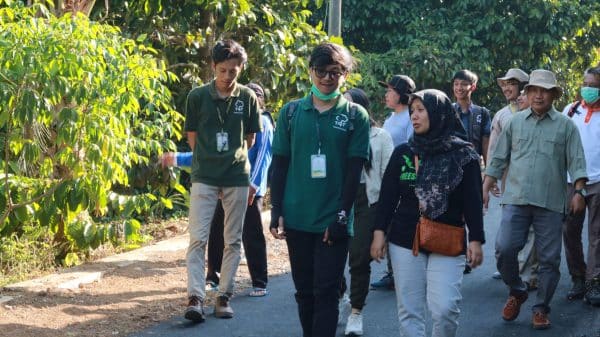
On December 6, Trees4Trees held an opening ceremony for the 2022 planting season at Ciminyak Nursery in West Bandung. The event was attended by representatives from Astra Zeneca Indonesia, the West Java Provincial Forestry Service, the Bandung and West Bandung Regency Environmental Service, and regents (Bupati) representative from both regions. Photo: Trees4Trees/Kemas Duga Muis.
Turning Over a New Leaf: The 2022 Planting Season
On November 24, Trees4Trees kicked off the 2022 planting season in the Citarum river watershed. Since then, more than 1.7 million seedlings have been distributed in the project areas.
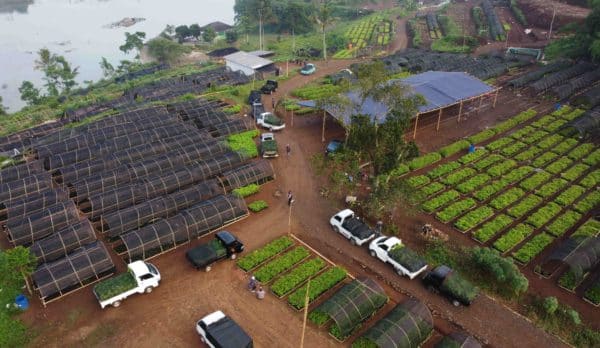
In December, we also celebrated the official opening of a new Trees4Trees nursery: the Ciminyak Nursery in Cililin Regency, West Bandung, which became our second nursery in the Bandung area (the other being Arjasari).
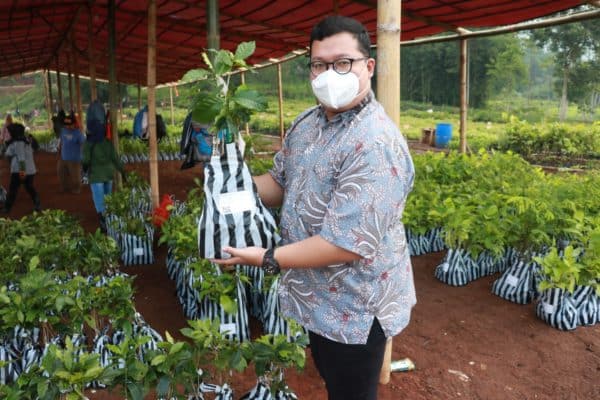
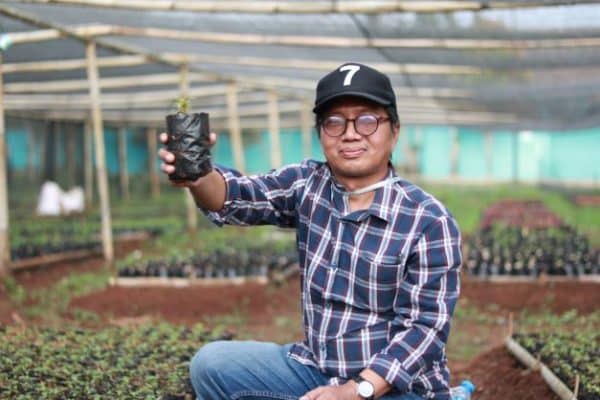
Muhammad Rizki Fauzan from AstraZeneca inspects the latest crop of seedlings at our Ciminyak nursery. Capable of producing around 2.3 million seedlings per year, the site will play a major role in supporting the Citarum watershed reforestation program. Photo: Trees4Trees/Kemas Duga Muis.
“We hope these seedlings will grow well,” said Muhammad Rizki Fauzan, a representative from AstraZeneca Indonesia in a statement during the opening ceremony. “AstraZeneca also hopes that Trees4Trees will continue collaborating with locals and the Forestry Service in the Citarum rehabilitation effort,” he added.
With the support of local farmers, growers, communities, and government officials, Trees4Trees will continue working to rehabilitate the Citarum watershed. Through collaboration and commitment, we will keep striving to reach our target of 10 million trees by 2025. For now, the future’s looking greener already.
Writer: V. Arnila Wulandani. Editor: Christopher Alexander.
Putting Down Roots–Since November, Trees4Trees 2022 has been hard at work as part of the annual planting season. The distribution of seedlings officially kicked off on November 24, 2022, and will continue through February 2023; a range of activities are currently underway, including community engagement, farmer mentoring, and monitoring of results. As of middle December 2022, a total of 1.2 million tree seedlings have been distributed to various locations in Central and West Java by Trees4Trees; by the end of the season, this number is expected to reach 3.5 million.
Responding to the Needs of Local Communities
During the current planting season, Trees4Trees aims to plant 31 different types of tree seedling in a total of more than 16,000 sites. These locations will include a combination of farmers’ fields and public facilities, along with critical wildlife areas such as riverbanks, the outskirts of villages, and around natural springs. The involvement of local people is seen as crucial to the success of this program.
“In the tree-planting process, Trees4Trees always listens and sees the local communities’, especially farmers’ as partners,” explained Tomi Bustomi, Trees4Trees’ West Java Regional Manager. Tomi and his team have tailored the program to the needs of farmers and the unique environmental conditions in each area. “Through the program, we bring real benefits to local communities and help to renew the environment,” he added.
Among the many tree species requested so far by farmers, jabon, sengon, and eucalyptus have proven to be the most popular. Meanwhile, arabica coffee is the most requested multi-purpose plant species, due to coffee being one of Indonesia’s top commodity products, especially in West Java. As a result of the Trees4Trees initiative, farmers in the region will be able to plant new seedlings and get a great benefit from their coffee crops.
Farmers in Central Java and West Java have been able to boost their livelihoods, thanks to the seedlings provided by Trees4Trees. More than half a million seedlings have been distributed so far, in over 16,000 different locations. Photo: Trees4Trees
In Kebumen, Central Java, the seedlings most commonly requested are kaliandra and indigofera. Both plants can used as fodder, while also improving the conditions of dry soil. Several types of plants, like aren and gayam, help to replenish natural springs and can be distributed in arid areas that are vulnerable to water shortages.
Branching Out into New Planting Areas
This year, Trees4Trees is expanding its reach to include new tree-planting areas. In West Java, the Citarum watershed rehabilitation planting zone has been expanded to include three areas around the Ciminyak river and Citarik river sub-watershed regions; both of which are tributaries to the Citarum river. The two new planting sites contain a large number of critically degraded areas, as well as land prone to landslides and drought.
Meanwhile, in Central Java, the existing mangrove planting area has been successfully broadened to incorporate several villages along the shores of Pati district; a total of 43,500 mangrove seedlings have also been successfully planted around the coastal villages of Kalikalong, Bakalan, and Alasdowo. This program of mangrove planting activities will be expanded to include around six more villages, where new growth will help prevent coastal erosion on the north coast of Java and protect fishponds owned by locals.
Mangrove planting activities underway in Central Java, where Trees4Trees has been working with local communities to combat coastal erosion. Photo: Trees4Trees/Haryadi
A series of mangrove planting activities have also been extended to the other side of Central Java, specifically in the village of Ujunggalang in Kampung Laut District, Cilacap. Here, a total of 3,500 mangrove trees were recently planted in a 1-hectare area, with more trees expected to be planted soon. The main aim here is to prevent coastal erosion and restore the original mangrove forests.
As part of Trees4Trees’ commitment to transparency and our responsibility to our sponsors and partners, we use web-based GEKO (Green Earth Kontrol Organizer) technology1 and mobile application to log and monitor our tree planting activities. This includes farmer and land data collection, seedling distribution, planting, and monitoring of work flows.
Modern technology like the GEKO application (above) is helping Trees4Trees coordinate its planting efforts and communicate progress to stakeholders throughout Indonesia. Photo: Trees4Trees/Kemas Duga Muis
“Through this application, Trees4Trees is ensuring that data from tree planting process can be recorded properly and in a structured way,” said Bayu, who is Trees4Trees’ IT Manager. His goal is to facilitate improved team performance in the field, while also communicating reliable and instructive data to sponsors as part of an ongoing process of digitalization and transparency. As he explains, “in the future Trees4Trees will be an organization that is increasingly trusted by all parties in environmental conservation activities through planting trees.”
As part of this process, in 2022 Trees4Trees expanded the functionality of the GEKO app to include farmer training, seedling distribution control, division of workload for each nursery, and the delivery of organically raised seedlings and organic fertilizers to farmers.
Green Impacts, Rooted in Local Communities
Throughout the 2022 planting season, Trees4Trees is striving to achieve lasting green impacts and support environmental renewal on a broader scale. To achieve sustainable results, we’re committed to engaging and involving local communities in all planting areas, while also communicating the results of these activities to our network of partners.
Whether making environmental improvements in the Citarum basin, tackling coastal erosion on the coasts of Central Java, securing the availability of spring water or providing seedlings to farmers, the planting season is already making a tangible difference. From coast to coast in Java, Trees4Trees is planting the seeds of a greener future in Indonesia.
Writer: V. Arnila Wulandani. Editor: Christopher Alexander
1The GEKO app is a tool for forestry planning and operational control, purpose-build and developed in-house by the Trees4Trees technology team. It is available in the Google Play Store, but currently only accessible for internal use.
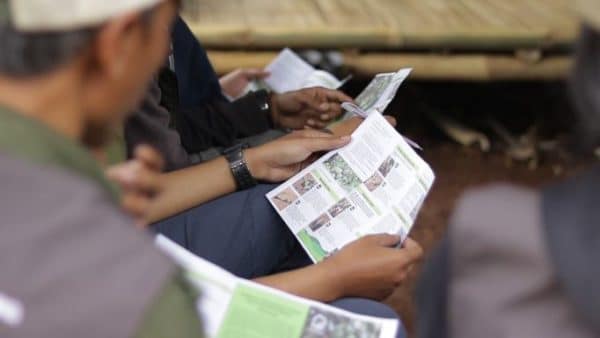
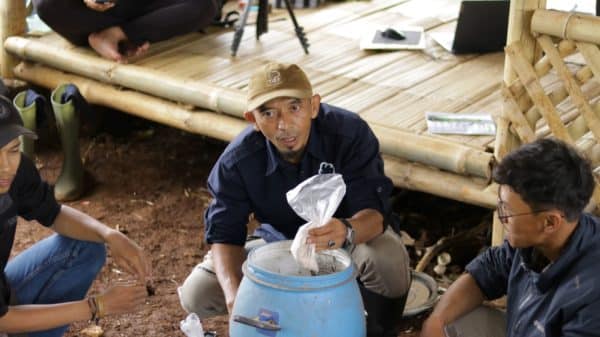
Training participants learnt organic farming materials during the training session. Photo: Trees4Trees/Yulianisa Dessenita
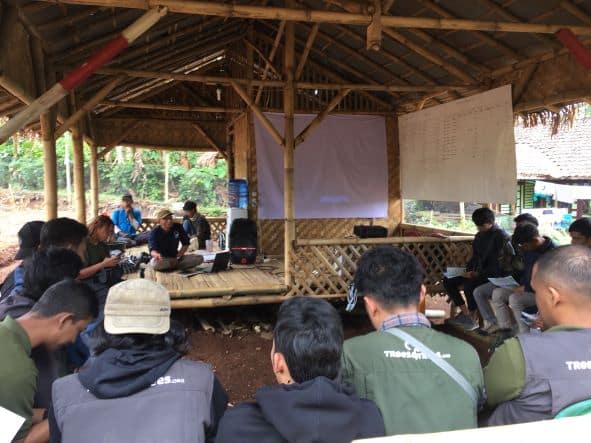
Encouraging the planting season begins, Trees4Trees holds a Training of the Trainer (TOT). It is part of a series of tree planting programs. This year, Trees4Trees held the training from October 10 to 26, 2022 in all sites. The training itself aims to provide field coordinators with practical knowledge related to tree-planting.
Through the training session, Trees4Trees’ training team train all field coordinators to mastering various materials related to organic farming. They are including planting patterns, fertilization, and planting techniques. After the training is completed, field coordinators then will transfer the knowledge to the farmers who are involved in the planting program with Trees4Trees. The training for farmers is conducted during the planting socialization stage, just after Trees4Trees distributes tree seedlings to farmers.
Tailored to the needs of farmers
The field coordinator will deliver the materials to farmers in each village. They will provide material through training according to the materials requested by the farmers.
“When it comes to the initial stage of the program, field coordinators have asked the farmers about what kind of training they would like to get. Once we know what kind of training they want to improve, we structure the training materials into tutorials. So, the training we provide basically will be tailored to the needs of farmers,” said Tedi Purnama, Trees4Trees Training Officer who was also a trainer of TOT training.
Tomi Bustomi, Trees4Trees West Java Regional Manager also said that one of the advantages of the Trees4Trees’ tree planting program is that it involves local farmers in planting trees and always considers the needs of farmers.
“We always listen to the needs of the farmers. Not only for trees we distribute, but also training we provide. Our programs always tailor to the needs of farmers. Therefore, what we provide will bring real benefits to them,” Tomi added.
Encouraging using organic waste and other organic materials that are easy to find
This year Trees4Trees delivers seven training materials through TOT. One of them is mandatory material. It is a timber and multipurpose tree species planting pattern. The other materials include how to make organic liquid fertilizers, organic congested fertilizers, organic pesticides, seedlings propagation techniques, and fruit cultivation techniques. Trees4Trees dedicates the training in fruit cultivation to farmers who are willing to increase their fruit production on a business scale.
According to Tedi, before he delivers the material to the trainee, all materials have been tested first. “We made the simulation first to know the efficiency. Including the ingredients and cost estimation. We make sure that the ingredients and materials we use as references are the easiest, cheapest, and most efficient materials. We designed it in such a way that farmers can easily produce by themselves,” said Tedi.
For example, to make organic fertilizers, field coordinators were trained to use organic waste and other organic materials that are cheap and easy to find, such as eggs, expired milk, rotten fruits, moss, and animal dung.
Encourage farmers to do organic farming
Through this training, it is expected that field coordinators are able to understand all training materials. Afterwards they can deliver the training materials to farmers as well as reinforce and encouraging them to do organic farming.
“The purpose of TOT is to provide another perspective on cultivation patterns to farmers in 180 villages in Central Java and West Java as our partners. In West Java especially, most farmers still use chemicals in agriculture. Trees4Trees wants to encouraging all farmers to cultivate plants withorganicfarming techniques that are environmentally friendly. And the field coordinator will be the first who provides information and answers when farmers ask questionsabouthow to implement an organic farming,” said Tedi.
Trees4Trees Collaborates and the National Research and Innovation Agency of Indonesia (BRIN) are establishing a collaboration to accelerate the development of Trees4Trees programs related to research, education, and community service. The project will reinforce all Trees4Trees programs and will be rolled out in the Citarum watershed reforestation program funded by AstraZeneca Forests and One Tree Planted.
Through the guidance and training from professional forestry experts and researchers of BRIN, it is hoped that Trees4Trees programs can create a greater impact in the local communities and environment and also contribute real world research results of BRIN’s innovation goals.
Trees4Trees Collaborates is in its Early Stage
Currently, the collaboration is in its early stages. It started by holding a training session conducted by BRIN last month. A four-day training was held at Trees4Trees Arjasari, Bandung Regency, and attended by Trees4Trees technical officers, and Field Coordinators.
As part of the event, the BRIN team visited T4T tree-planting sites at local farmers’ fields to review and evaluate the agroforestry and conservation cropping patterns that had been applied. The team also recorded data on tree growth and pests found on the young trees. In addition to the discovery event, the team also visited impact measurement locations and seedling nurseries.
Advancing Trees4Trees program development
The project is expected to advance the success of eight aspects of the Trees4Trees’ program development; agroforestry demonstration plots, conservation demonstration plots, pest control, organic fertilizer and pesticide production, environmental impacts, social impacts, nursery and seedlings production training, and development of mangrove rehabilitation.
“Currently, Trees4Trees is running a program for rehabilitation of critical areas working with local communities around Citarum watershed. To strengthen this program, Trees4Trees initiated research collaboration with BRIN which is the most relevant institution that can support this program development. In the early stages of the collaboration, starting with agroforestry plot research and research on social and ecological impacts, it is expected that the collaboration can provide great benefits,” Anto Wartono, Forestry Planning Manager of Trees4Trees commented.
Author: V. Arnila Wulandani. Photos: Kemas Duga Muis
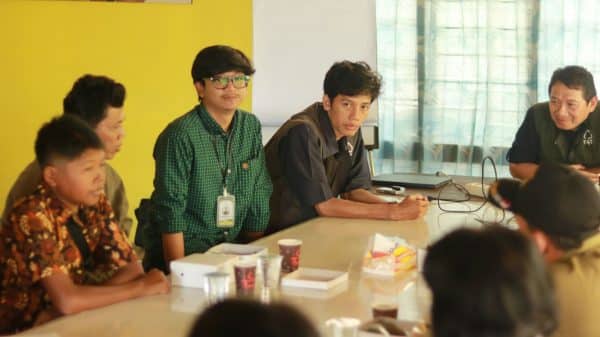
A few weeks ago, Trees4Trees was visited by Fairventures Worldwide, a non-profit organization that is also focused on reforestation and environmental restoration activities. The visit was carried out in Pati Central Java and aimed to conduct a comparative study from the Trees4Tres reforestation program.
Learning Agroforestry Through Comparative Study
The purpose of the comparative study especially was to learn about the cultivation of sengon trees (Paraserianthes falcataria), community empowerment and mentoring techniques of the tree planting program, collaboration with off-takers and factories, also agroforestry systems developed by Trees4Trees and farmers as well as the marketing strategies.
During the three-day visit, the team had the opportunity to visit Pati nursery to see how tree seedlings were grown and treated until they were ready to be distributed to farmers and planted.
Through the discussion sessions, Trees4Trees shared stories, experiences, and efforts in environmental restoration as well as education, involvement, and empowerment of local farmers in planting trees.
The team also visited the farmers’ field and observe the agroforestry patterns that have been applied to the farmers’ field. One of the patterns shown was by combining sengon trees, fruit, and coffee plants in one area. Sengon trees and fruits act as shades for the coffee plants.
“We have a lot of things to learn from this visit and we thank Trees4Trees for the opportunity. From this trip, we can take new things that have not yet been applied in Central Kalimantan. We will bring the new knowledge and experiences that we already got from Trees4Trees to be implemented with our farmers and our staff in Central Kalimantan,” said Raya, Fairventures Worldwide Country Manager of Indonesia.
Sharing Knowledge for Greener Earth
This comparative study also not only aims to share knowledge and experience to achieve the same goal of making the environment healthier but also marks that the two organizations support each other for environmental restoration through planting trees.
“We hope this comparative study can be a good reference to the program run by Fairventures Worldwide in Central Kalimantan. Hopefully, the reforestation we have conducted not only provides a great impact on the environment and local communities but also brings more benefits to the farmers. It is important to share good things for a greener earth and for a more prosperous society”, Novita, Trees4Trees Forestry Coordinator revealed.