Tantri “Kotak” and Arda Hatna: Small Action to Fight Climate Change

Tantri "Kotak"

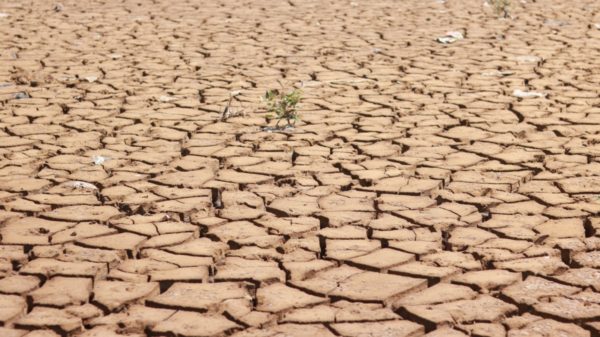
Unpredictable seasons, rising heatwaves, heavier rainfall, extreme floods, cyclones, and prolonged drought – all show how much more intense the weather has become in recent years. These are not random events but signals that climate change is speeding up. Its impacts are already present in our daily lives, affecting our food supply, clean water access, health, and the safety of our homes and communities. 

The World Meteorogical Organization recently confirmed that last 2024 was the warmest year ever recorded since 1850. The past decade has also been the hottest on record, marking an alarming pattern of rapid global warming. 
Tantri "Kotak"

By 2030, climate change is projected to push between 32 and 132 million more people into extreme poverty. Meanwhile, global ice loss has surged from 0.8 trillion tonnes per year in the 1990s to 1.3 trillion tonnes annually by 2017. As ice melts, sea levels rise — increasing the risk of coastal flooding, especially in archipelagic nations like Indonesia. This threatens coastal communities, ecosystems, and wildlife habitats, making climate mitigation more urgent than ever. 

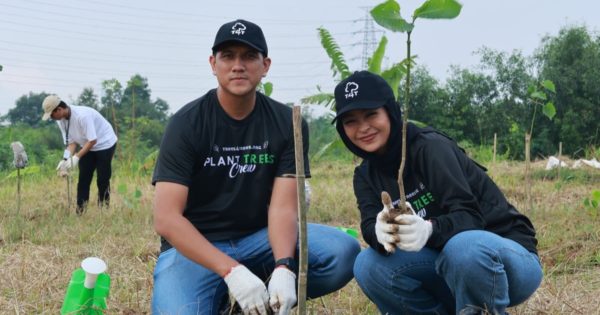
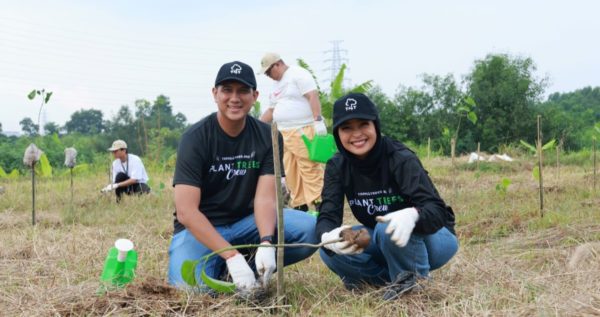
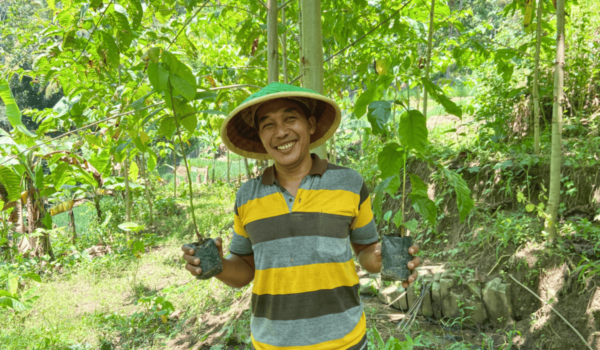
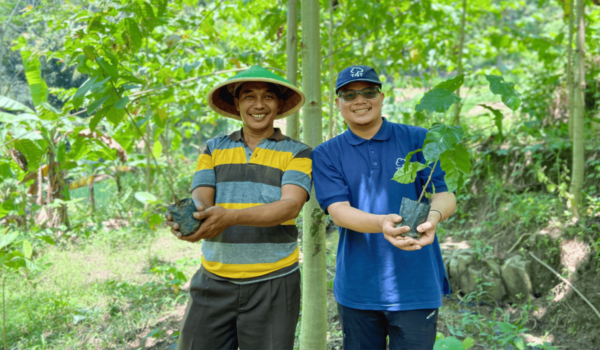
Speaking about the climate impacts we are witnessing today, during the tree-planting event with Trees4Trees and Jaya Obayashi in the GIIC industrial area, Cikarang, Trees4Trees ambassadors Tantri Syalindri (lead vocalist of Kotak Band) and Arda Hatna (solo singer) shared how each of us can play a role in slowing climate change, starting from simple, everyday actions. 

A Reflection Inspired by a Movie 

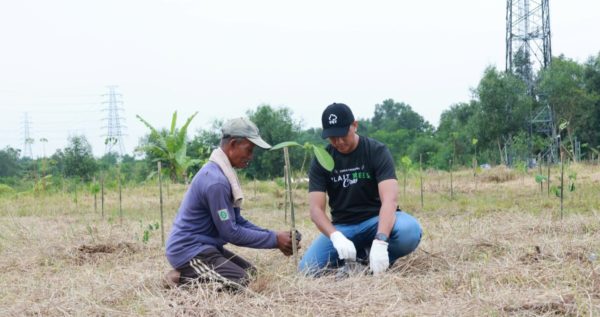
Arda shared that his awareness of environmental protection grew after witnessing unusual weather patterns in recent years. “I’ve realized how enormous and visible the effects of climate change have become. We can feel it directly – the seasons are no longer predictable; the dry season lasts too long, and the rainy season can be just as extreme. Diseases and viruses are also appearing more frequently. I believe climate change plays a major role in all of this,” he said. 

Interestingly, beyond the changing weather, his deeper self-awareness was sparked by reflecting on an antagonist character from a movie.  

“Honestly, I became more interested in environmental issues in 2019, after watching the Avengers movie,” he shared. “The villain, Thanos, wanted to wipe out half of the world’s population because he believed the Earth couldn’t sustain billions of people and provide all human needs. After watching it, I started to wonder – was he wrong, or was there a point? If we keep using up natural resources without giving anything back, eventually the planet won’t survive and neither will we.” 

He went on to explain that this also applies to trees. “If we cut them down to fulfill our needs, we must also replant them. If we only take and never restore, that greed will destroy our own future.” 
Arda and farmer

Engaging the Family in Better Habits  

Arda also emphasized that climate change is largely driven by human activities and often begins with small bad habits, even within our homes. “For example, using electricity 24 hours a day. Whether we realize it or not, we’re contributing to the climate problem.” He admitted that these habits still exist in his own household, which is why change must begin with daily actions. 

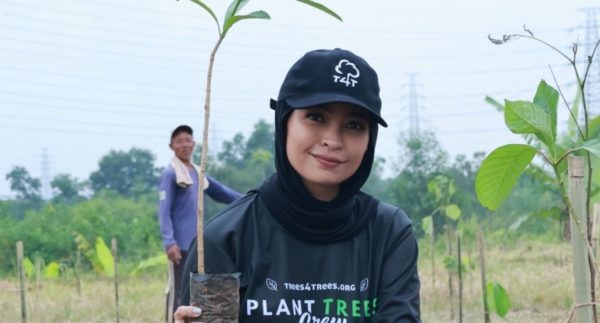
Echoing Arda’s message, Tantri shared that she has also felt the impact of extreme weather and believes the first step toward helping the environment can start from home. “We began by improving our family’s daily habits through small actions,” she said. “We have two children, and we try to lead by example – like not littering and teaching them why waste shouldn’t be thrown carelessly. We also plant trees at home. Some of the trees were planted together with our kids. We gave them planting kits so they could plant on their own.” 
Tantri "Kotak"

Start with Small Actions: Planting Trees 

As musicians, Tantri and her band Kotak began raising environmental awareness as early as 2017 through one of their campaigns. “We were already anxious about the state of the planet back then. Things have only gotten worse today,” she said. Continuing that mission, she now wants to take real action by working with Trees4Trees to help green the Earth – aligning with the spirit of Kotak’s song Hijaukan Bumi (Greening the Earth). 

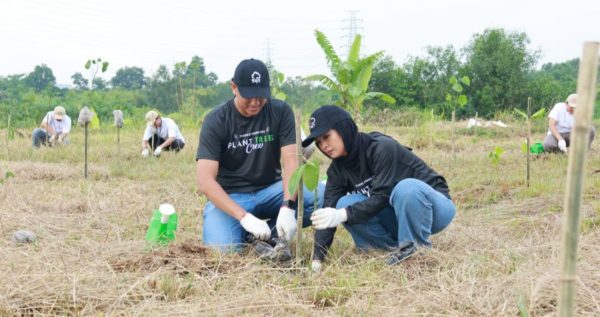
Recently, together with around 50 volunteers from Jaya Obayashi, Tantri and Arda joined a tree-planting event as part of their commitment to speak up for environmental protection and climate action. The activity is also part of an effort to balance nature with industrial growth through urban forestry within the GIIC industrial area. 
Tantri "Kotak" and Arda

Tantri "Kotak"

“This is our small step to contribute to the Earth, and we hope it will inspire others. We hope the trees we plant become part of the solution to today’s climate challenges. As they grow, they will help absorb emissions – especially in this industrial zone and restore some balance to the environment,” Tantri said. 

Arda added that planting trees may look like a small gesture, but when done collectively, it becomes powerful.  

“I believe Earth doesn’t need superheroes. It only needs many people who care enough to protect it. Because together, we can build a greater movement for this planet – our shared home,” he concluded.  

Writer: V. Arnila Wulandani. Photos: Yulianisa Dessenita
Community Culture, Interwoven with Mangrove Conservation

Community Culture

Surrounded by over 8,000 hectares of coastal trees and wetlands, Kampung Laut Village is home to the largest mangrove ecosystem in Central Java. This verdant water world in Cilacap Regency supports a rich variety of biodiversity, including over 50 distinct mangrove species.  

For the communities of Kampung Laut (a name which means ‘ocean village’ in the Indonesian language), mangroves are essential. Most of the people here work as fishers and recognize the importance of these trees to ecosystem health and productivity. 

But the mangroves’ value goes further still, with roots reaching deep into local culture; the trees provide natural dyes which can be used in the traditional art of batik textiles, thereby transforming nature’s bounty into both cultural heirlooms and economic opportunities. 

In this article, we explore a nascent artisan industry that has emerged in Kampung Laut, inspired by nature and intrinsically connected to land and culture. 

The Birth of Kampung Laut Batik 

The story of Kampung Laut batik began in 2015 when Sodiqin, leader of the Mekar Canting Batik Group, was inspired by a batik-making program on national television. Together with two neighbors, he began to experiment with techniques and materials until they found the right formula. 

“At first, we used natural dyes from ketapang leaves and jengkol tree bark,” Sodiqin recalls. “But I wanted something unique that represents Kampung Laut. I noticed the fallen Rhizopora mangrove fruits scattered on the roads. We were curious to see if they could be used as natural dyes, as many people had claimed.” 

Sodiqin and his friends started collecting Rhizopora fruits, cutting and crushing them, then drying them under the sun for three days before boiling them. “The entire process of producing the natural dye takes about a week,” he says, “and dyeing the cloth needs another three days to a week; it takes a while, but the results are worth the wait.” 

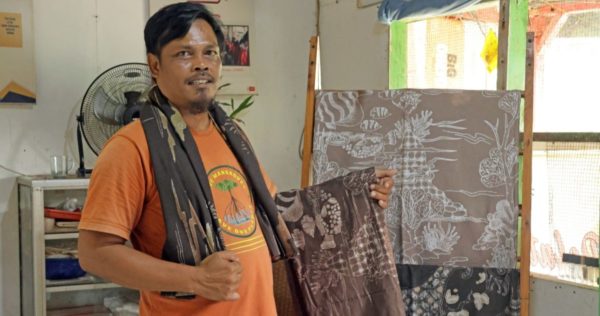
Sodiqin
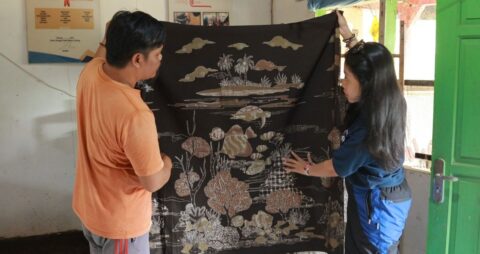
(Above) Sodiqin, founder of the Mekar Canting Batik Group, which is creating mangrove-inspired fabrics.

Motifs and Materials Inspired by Nature 

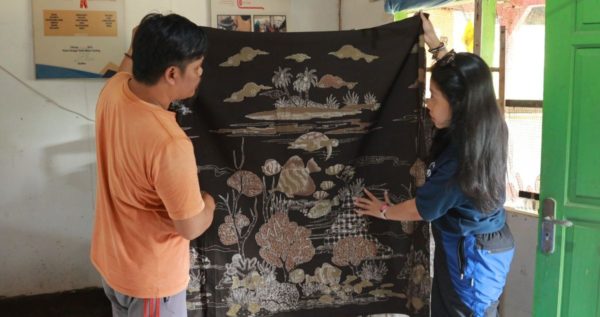
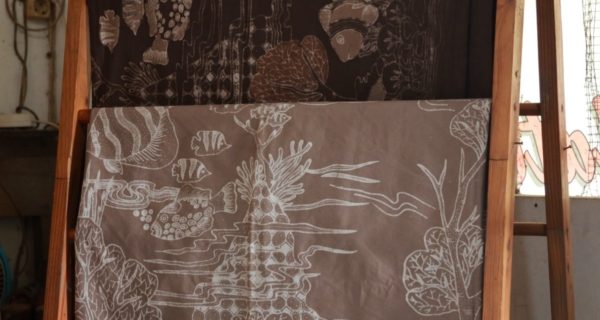
In addition to the distinctive brown hues of Rhizophora mangroves, blended with colors from other local trees, batik designs from Kampung Laut are brought to life through patterns and motifs inspired by the sea and the richness of coastal life. 

As Sodiqin explains, “when we asked ourselves what best reflects Kampung Laut, the answer was simple: mangroves and fisheries.” Designs from the Mekar Canting Batik Group feature fish, crabs, shells, shrimp, mangrove fruits, and underwater scenes. 

Most of their batik fabrics are made using a traditional stamping technique, whereby hot wax is applied to cloth using engraved copper stamps before it is dyed. This method allows the artisans to produce batik more efficiently and replicate patterns more consistently. 

“We also use the hand-drawn technique, but only by special order,” Sodiqin said. “Hand-drawn pieces take longer and require more skill.” This technique involves drawing patterns using a traditional drawing tool called a canting, which is filled with hot wax. It can take months just to complete one piece of batik cloth using this method. 

Community Culture
(Above) several of the fabrics produced by the group, which feature ocean-inspired motifs.

Sustainable Livelihoods, Interwoven with Women’s Empowerment 

What began as the passion project of three individuals has grown into a 20-strong collective, made up mostly of women. Training programs provided by the government and corporate CSR initiatives have strengthened their skills and encouraged more women to join. “It started with women inviting others to learn batik,” says Sodiqin. “Then, through word of mouth, more women have become involved.”  

The rise in popularity of Kampung Laut batik has opened new income opportunities for women in coastal communities. Batik-making provides much-needed earnings, especially during exhibitions or when orders come in. “The income can help women to cover their children’s needs or support other family expenses,” Sodiqin says. 

Nevertheless, marketing remains a challenge. Located in a remote area, accessible only by crossing a lagoon, Kampung Laut has limited access to markets. Most sales come from exhibitions in cities like Jakarta, Yogyakarta, and Semarang. “We tried e-commerce, but delivery is very difficult from here,” he said. 

Community Culture
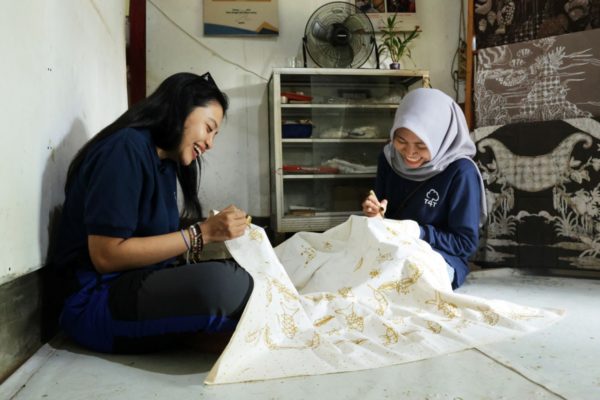
Members of the T4T team try their hand and making batik patterns during a recent visit to the Mekar Canting Batik Group studio.

From Ecology to Economy: Healthy Nature Helps Communities to Thrive 

In 2022, Trees4Trees began replanting mangroves in Kampung Laut to restore areas degraded by deforestation. From 2022 to 2023, over 24,000 individual trees were successfully planted. In 2024-2025, with support from our partner, EcoMatcher, 125,000 trees were planted. In October 2025, together with EcoMatcher and GRAB, we are planting an additional 50,000 mangroves in the area. 

“By expanding mangrove cover, our mangrove planting program helps local communities thrive, sustain their livelihoods, and keep their culture alive, including the mangrove batik,” explains Yoga Septian, Trees4Trees Unit Manager of the Cilacap site. “The local community relies on fisheries and mangroves for their living; beyond fishing, they process mangrove fruits into snacks and produce mangrove batik as additional sources of income,” he added. 

Planting mangrove
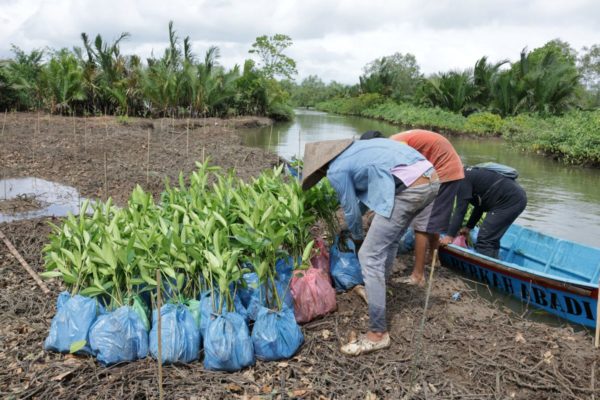
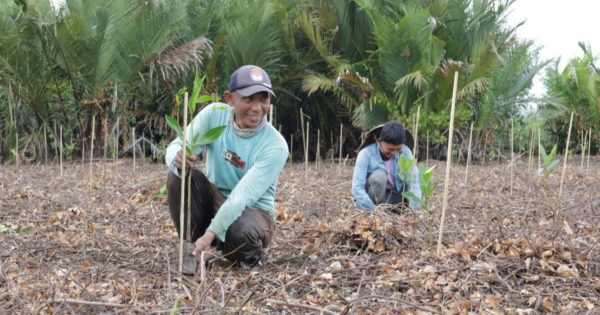
(above) Local fishermen load their boats with mangrove seedlings ready for planting. (Below) Together with local fishermen, T4T team members plant new trees in mangrove areas that had previously been severely degraded.


Community Culture

Healthy mangroves provide numerous benefits to people, nature, and the planet. They produce oxygen, absorb CO2, prevent coastal erosion, and provide essential nurseries for fish. For local people like Sodiqin and his group, these trees also provide materials, livelihoods, and cultural value. 

With that in mind, Sodiqin insists that sustainability is key. “Every time we harvest resources provided by the mangroves, we must also replenish them,” he says, “so they won’t vanish like they did before. The more we plant, the better our lives will be.” 

Writer: V. Arnila Wulandani. Editor: Chris Alexander. Photos: Yulianisa Dessenita for Trees4Trees 
 

Mekarjaya Village’s Farmers: Planting Forest, Sustaining Life

Mekarjaya Village’s

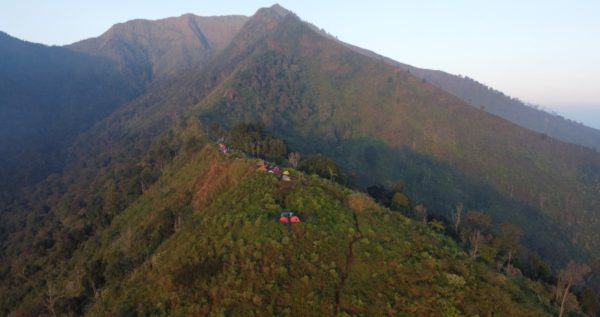
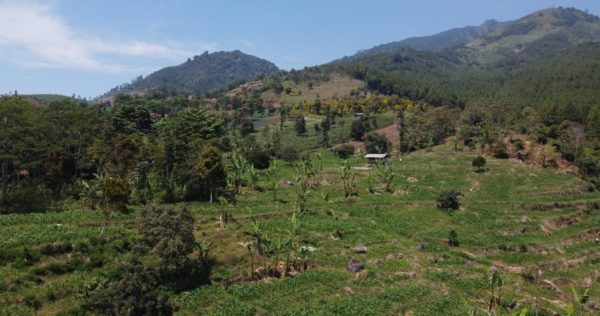
Nestled in the foothills of the Malabar Mountains in Bandung Regency – West Java, Mekarjaya Village lies surrounded by state forests and the towering 1,690-meter Sangar Mountain, which has drawn more visitors each year. This popularity has opened new opportunities of income for local communities through community-managed tourism. 

Yet, the beauty of the forest that visitors admire today exists thanks to the tireless dedication of local forest farmers who have spent years planting and nurturing trees to keep their land alive. Without their efforts, Mekarjaya’s forest could have suffered the same fate as many other parts of the Malabar range – degraded by land conversion and extensive logging. 

Sangar Mountain is located in the Mekarjaya Village in Bandung Regency, West Java.

Starting Greening Action Through Self-Reliance 

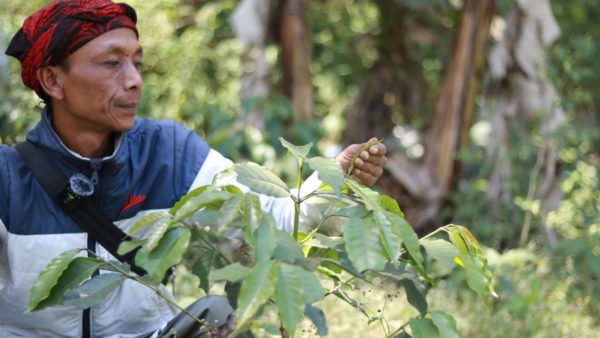
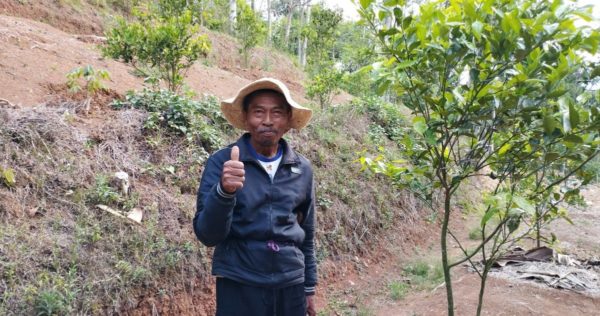
Asep, one of the village’s farmers, remembered how his journey began when he moved to Mekarjaya in 2018 and quickly joined the community’s reforestation mission. “I already had extensive experience in cultivating and planting trees since 2010,” he recalled. “Together with several local communities, we collected gmelina seeds from the streets to produce our own seedlings. Later, we grew thousands of trees and planted barren land around us.” 

With his experience, Asep became a strong supporter of Mekarjaya forest greening efforts. “Back then, we relied only on ourselves. We planted sandalwood, gmelina, eucalyptus – whatever we could – to protect the land we live, because much of the neighborhood forests were already gone,” he said. 

Mekarjaya Village’s
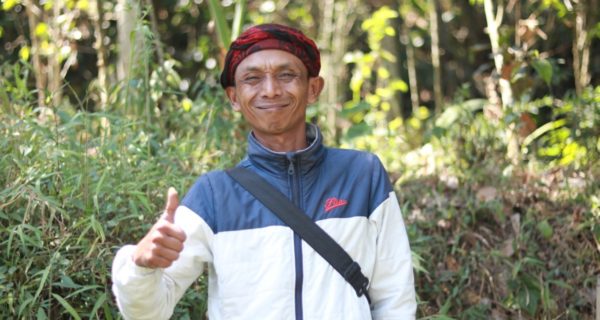
Asep, a forest farmer from Mekarjaya Village, began his green journey by cultivating seedlings on his own and taking the initiative to replant barren land.

Managing Forest Through Social Forestry 

Alex, another forest farmer and leader of Mekarjaya Village’s social forestry group, shared how the community has taken collective responsibility to preserve the forest. Today, more than 100 villagers work together to manage around 140 hectares of state forest in their village.  

“We began looking after the forest in 2008, when the government first opened the opportunity for communities to manage it. But it was only in 2017 that we officially gained the right through the social forestry scheme,” Alex explained.  

Through this scheme, they hold a 35-year permit to manage the state forest – restoring and maintaining the land while being allowed to grow crops and fruit trees, but without cutting down forest trees. “Our responsibility is clear: restore and protect the forest by planting trees and keeping it healthy and lush,” Alex said. 

Since 2017, the villagers have held annual tree-planting activities as part of their commitment to forest preservation. “At first, we used our own seedlings,” Alex continued. “But over time, many nature lovers and hikers began donating trees. Their support has allowed us to continue planting new trees year after year.” 

Mekarjaya Village’s
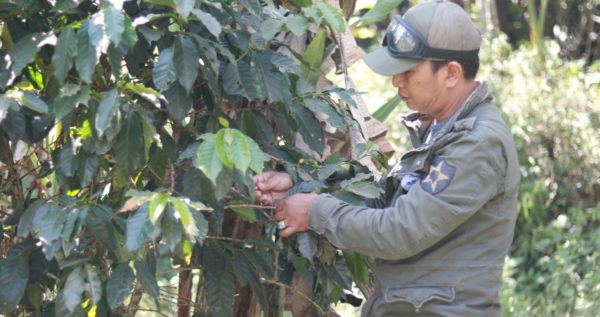
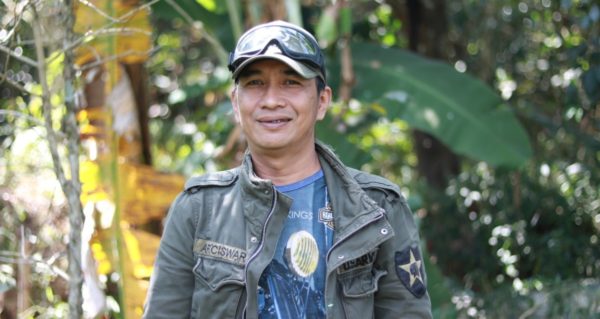
(Above) Alex, a social forestry community leader and forest farmer from Mekarjaya Village. (Below) Asep tending to his coffee trees.

Non-timber Harvesting and Preserving Native Tree Species 

The Mekarjaya forest is rich in native West Javan tree species. “We have puspa, rasamala, saninten, ki semut, and many other tree species,” Alex said. To protect ecological health, the farmers prioritize hardwood and native trees, while for economic benefits, they grow multipurpose and fruit species.  

“We mainly plant coffee to gain economic benefit, as it has high demand and this land is perfect for it,” Alex explained. “We also grow jackfruit, bitter bean, and avocado to harvest non-timber products.” Similarly, Asep focuses on cultivating non-timber trees such as coffee, sapodilla, and bananas. “I also grow damar pine trees – once they mature, they provide shade, while I can harvest their sap,” he added. 

Another farmer, Sutajaya, has chosen a different path. He focuses on creating an arboretum of native trees to support tourism and education. “As Sangar Mountain attracts more hikers, I established an arboretum where visitors can learn about biodiversity while climbing to the mountain,” he explained. 

Mekarjaya Village’s
Sutajaya is preparing to take care of the trees he planted in the arboretum he established, deep in the forest.
Trees4Trees Support: Planting Trees Empowering Communities 

In 2021, when Trees4Trees and TREEO launched a tree-planting initiative, farmers in Mekarjaya eagerly joined the program. Around 30,000 trees were distributed, accelerating reforestation and creating a healthier and more resilient forest. 

“This program truly helps us, as the trees allow us to restore our forest more quickly and enhance economic benefit for local forest farmers,” Alex said. While for Sutajaya, the program goes beyond economic benefits. “As the trees grow bigger and stronger each day, they provide oxygen and restore balance to the ecosystem. Native species are thriving, creating habitats for wildlife while improving air and water quality. For me, that’s the most important benefit,” he reflected. 

A view of the state forest in Mekarjaya Village from afar, where local farmers have planted trees.

Together, the dedication of local forest farmers and the support from initiatives like Trees4Trees and TREEO are breathing new life into Mekarjaya’s forests. What was once threatened by degradation is now transforming into a thriving ecosystem that not only safeguards biodiversity but also sustains the people who depend on it. “Those trees make our forest more abundant. They hold immense ecological and economic value that sustain our environment and strengthen the lives of our community,” Alex said.

Writer: V. Arnila Wulandani. 

When Tradition Preserves Nature: Indigenous Wisdom from West Java

When Tradition Preserves Nature

Indonesia, the world’s largest archipelago, is rich in cultural heritage and ethnic diversity. Here, more than 1,300 ethnic groups form a vibrant mosaic of traditions, many of which are deeply rooted in nature. This connection to nature is especially apparent in the Sundanese Indigenous villages of West Java, where many of our tree-planting programs are based. 

Where Tradition and Nature Intertwine 

Heri is a resident of Legok Kiara, a cultural hamlet in Rawabogo Village, Bandung Regency. He explains, “we have a proverb passed down through generations: There’s no separation between us and nature – only unity in life. Without nature, where would we live?”  

Legok Kiara Water Spring
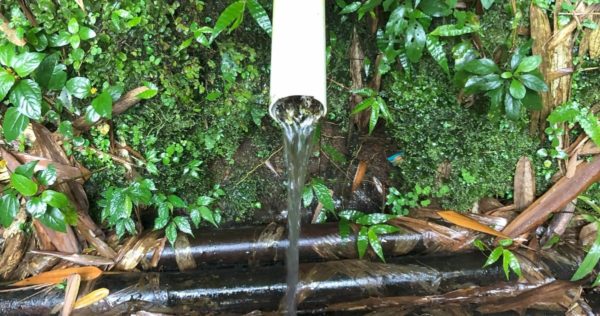
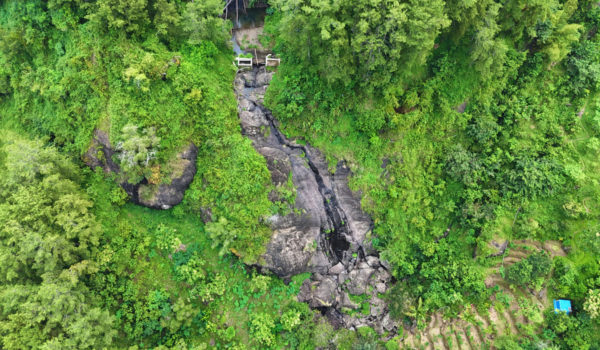
Natural springs like this one in Legok Kiara Hamlet are a vital supply of clean water for the community.

According to Heri, the forest is the village’s lifeline. “Our clean water flows from forest springs. If trees are cleared, drought and floods will follow, so we work hard to protect it.”  

In the neighboring Cikondang hamlet in Lamajang Village, Wawan shares a similar perspective. “We take wood from our forest only for houses or rituals,” he says, “and always in accordance with customary rules; no one dares to cut down trees without getting permission from the elders first.” For people like Heri and Wawan, respect for nature is enshrined in local laws and practices, underpinning many aspects of daily life. 

Cikondang itself is known for its strong culture, pristine nature, and reverence for tradition. The hamlet is home to one of the oldest known Sundanese traditional houses in Indonesia which, like the community itself, has stood the test of time and continues to stand proud in the modern era. 

Rumah Adat Cikondang
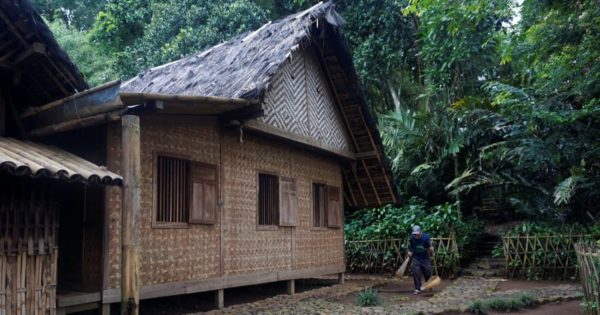
Located in the midst of the forest, this traditional house in Cikondang is built from wood and bamboo. It is around 370 years old.

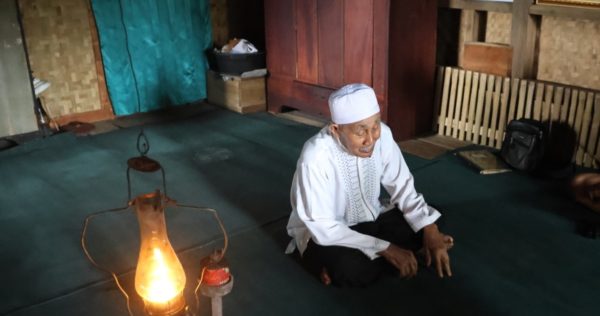
“Here, we believe following traditional rules is the same as obeying God’s law,” says Abah Anom, guardian of the Cikondang traditional house.Anyone who violates them – for example, by cutting trees illegally or selling farmland – will be punished by God.”  

Rumah Adat Cikondang
Abah Anom (center) sits inside the Cikondang traditional house, which has remained largely unchanged for almost four centuries.

Rituals and Rites of Passage: Living in Harmony with Nature 

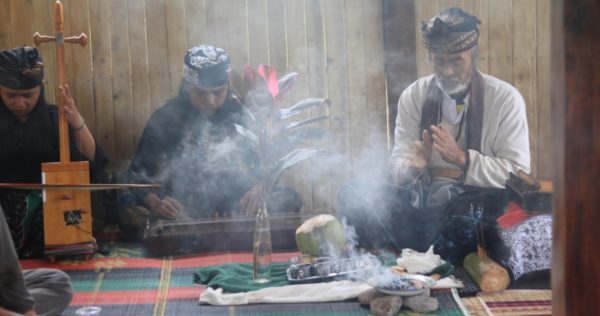
For generations, local wisdom has guided the Sundanese and helped them to live in harmony with nature. “We still practice traditional rituals today,” says Abah Anom. “By continuing them, we believe our lives will be spared from misfortune.” 

Abah Anom goes on to explain a few of his community’s customs in greater detail: “Each year, we hold a traditional irrigation ritual to water 140 hectares of farmland along the Cisangkuy River, ensuring land is irrigated fairly,” he says. “We also perform a clean water ritual at Ciruntah spring, which is a vital water source for the community; we keep it clean and pray to preserve its providence.”  

In Legok Kiara, a similar ritual called Ngalokat Cai (preserving water) begins with cleaning water channels and is followed by prayers over collected spring water. “These rituals reflect our gratitude and responsibility to protect water sources,” says Heri.  

Ritual budaya Sunda
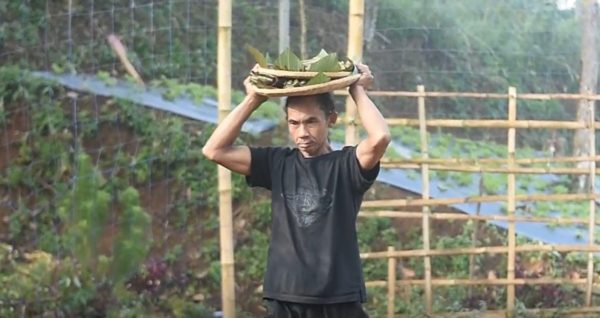
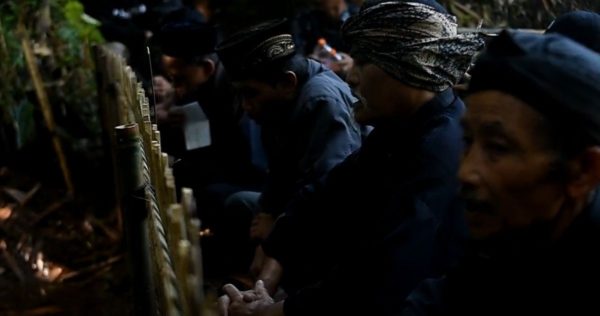
(Above) A Sundanese man carries ritual offerings on his head. (Below) Local communities gather at a spring in Legok Kiara for a water ritual, praying for abundant water.

Nature As the Inspiration for Art and Culture 

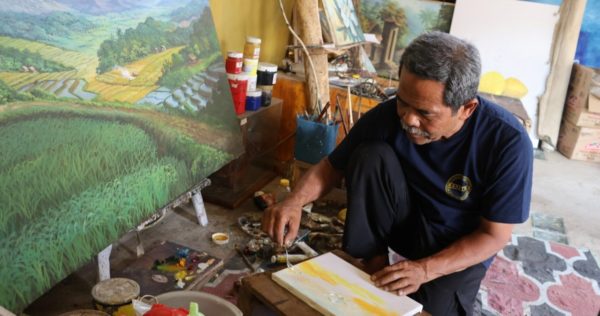
In addition to being a spiritual foundation for daily life, nature can also be a source of artistic inspiration. Vandik, a painter from Jelekong Art Hamlet in Baleendah Village, seeks to reflect Indonesia’s natural beauty in his work. “My first teacher was nature,” he explains. “It’s impossible to paint – in form or color – without studying it closely.” 

Lukisan Vandik
Vandik paints landscapes inspired by the nature around his village, bringing Indonesia’s beauty to his canvas. His works have been exhibited internationally, including in the Netherlands and the US.

Jelekong is home to a long and proud tradition of artists who have taken their inspiration from nature. As Vandik explains, “the early efforts of our elders earned this place the title Art Village,” and to this day the region is still famed for its songs, dances, paintings, and wayang golek (a traditional form of wooden puppetry).” 

Meanwhile, in Legok Kiara, Sundanese arts are often showcased through tourism. “We perform pencak silat, the traditional martial art, along with music like tarawangsa, angklung, and calung performances. All are linked to nature,” says Heri. 

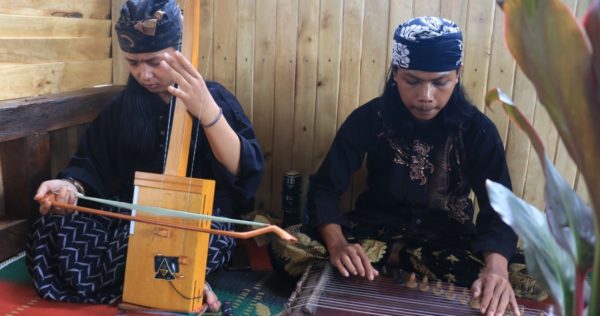
Heri also reveals that the intricate movements of the pencak silat dance are an embodiment of forest animals. Moreover, Tarawangsa music is rooted in rituals that give thanks to nature – even the musical instruments themselves are crafted from wood and bamboo sourced from the forest. 

When Tradition Preserves Nature
(Above) Sundanese men play the traditional instruments tarawangsa (left) and jentreng (right) during a sacred ritual of thanksgiving for the harvest. The sound of the tarawangsa is believed to summon the ancestors. (Below) Wayang golek, wooden puppetry, remains one of the most popular forms of Sundanese performing arts.

When Tradition Preserves Nature

Restoring Forests, Preserving Tradition 

With support from AstraZeneca and One Tree Planted, Trees4Trees has already planted 12 million trees throughout the Citarum watershed in West Java, which is home to many cultural villages. “With trees planted in our village, the Trees4Trees program helps us protect the forest,” says Heri. He adds that, in 2024 alone, over 300,000 trees were planted in his village, with more than 500,000 in Lamajang and Baleendah, where the cultural hamlets of Cikondang and Jelekong are located. “We are very grateful for every one of these precious trees,” he added. 

This initiative not only restores ecosystems but also sustains the natural resources Indigenous communities depend on. By planting trees, Trees4Trees is preserving both culture and nature – ensuring they remain intertwined and continue to flourish together for many more generations to come. 

Petani farmer Trees4Trees
Trees we planted together with farmers in Rawabogo Village in 2023 have flourished and grown healthily.

When Tradition Preserves Nature

Writer: V. Arnila Wulandani. Editor: Chris Alexander. Photos: Kemas Duga Muis, Reza Alwiandhi for Trees4Trees 

Planting in Kebumen UNESCO Geopark: Supporting Nature and Communities

Planting in Kebumen

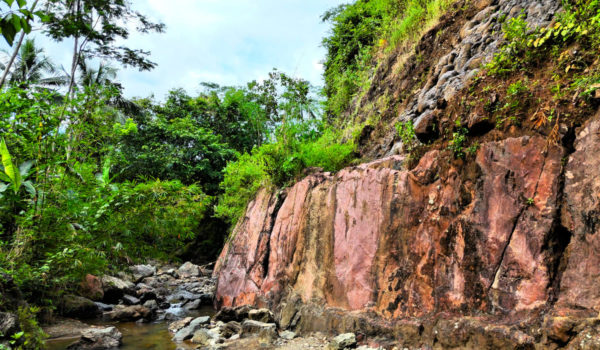
When exploring the northern part of Kebumen Regency in Central Java, you will see something that can’t be found anywhere else on Java. The rocks here are actually ancient sea beds, which are packed with marine fossils of corals and radiolarian plankton. 

This landscape, now surrounded by forests, is part of the Kebumen Geopark – an area recognized by UNESCO in 2024 as a Global Geopark, in recognition of its remarkable natural, cultural, and historical value. This landscape is a living testament to the natural history of our planet. 

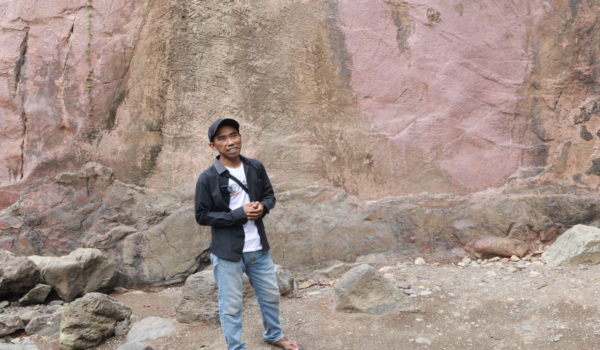
“Over 80 million years ago,” explains Suparmin, one of the park’s caretakers, “a tectonic collision between the Indo-Australian Plate and the Eurasian Plate triggered a massive earthquake that lifted the seabed to sea level, forming the karst landscapes we see today.” 

The story of this amazing geopark is still being written. Trees4Trees has been working here since 2008, planting trees to help support ecosystem health, protect biodiversity, and sustain the communities who depend on the land for their livelihoods.  

(Above) Suparmin, a local caretaker in Kebumen Geopark, stands in front of a massive basalt rock formation – an ancient sea floor.

Kebumen Geopark: A Biodiversity Hotspot 

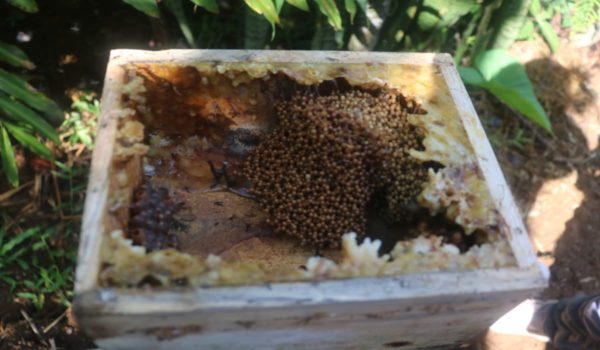
The Kebumen Geopark is home to abundant natural and cultural wonders, including 42 geo sites, 24 cultural sites, and eight biological sites. This includes terrestrial and mangrove forests, a sea turtle conservation center, and cultivation areas for local species, like the dwarf honeybee (or klanceng) and native genjah entog coconut. 

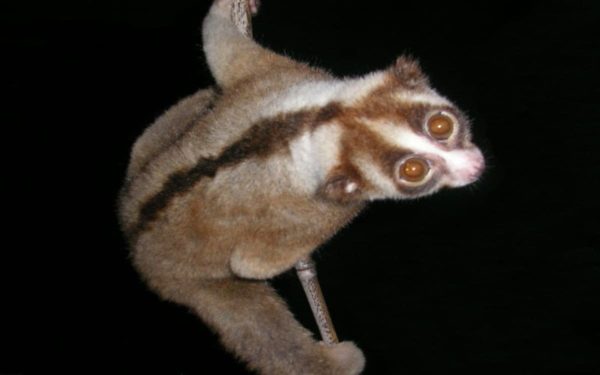
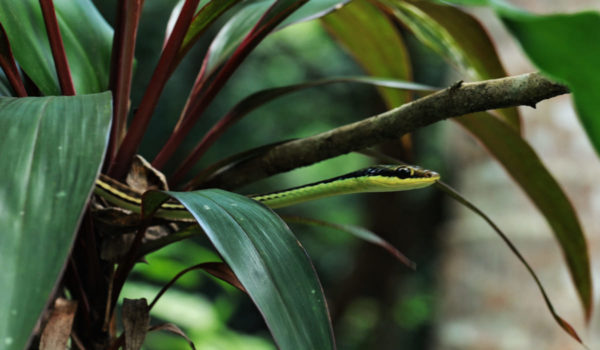
These sites provide habitats for wildlife, including rare and protected species. Among them are the endangered Javan hawk-eagle, Javan slow loris, and Javan leopard. “Our forests are home to diverse species, from birds and mammals to reptiles,” says Suparmin, before adding that there are also species of snakes like cobra, python, and tiger snakes here. “This area also shelters the endangered Javan slow loris, which is often targeted by illegal wildlife hunters,” he added. 

(Above) The Javan slow loris is one of several Endangered species that finds a refuge in the geopark. (Below) A snake spotted in the Watukelir geo site, which is home to various reptile species.

Planting in Kebumen

In addition to abundant animal species, the geopark is also home to a range of native and vulnerable plant species, such as Indian sandalwood, valued for its aromatic wood and bark. Other native species include the yellow cheese wood, pangi (or kluwak), bayur, and sugar palm. Some of these species’ feature in Trees4Trees’ ongoing planting program for the region. 

Planting in Kebumen
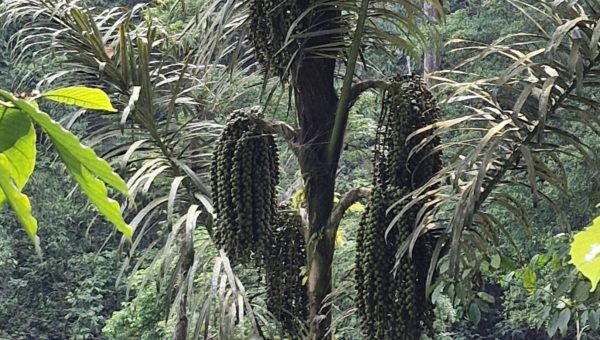
(Above) Sugar palms, one of several species planted in Kebumen by Trees4Trees, which are central to local livelihoods and help to mitigate the impacts of drought by conserving water.

Natural Heritage Meets Local Wisdom 

This area is just as rich in cultural diversity as it is in geological history. Spanning over 100,000 hectares of land (and 2,000 hectares of sea), the geopark spans valleys, hills, and coastal areas. These places are home to a variety of flora and fauna, as well as centuries-old cultural practices, rituals, and arts, underpinned by a deep respect for nature.  

“Sites in the geopark are sacred to local communities,” explains Suparmin. “Traditional wisdom prohibits exploitation and helps protect this heritage.” He also notes that local communities are actively engaged in nature preservation efforts that are strengthened by government regulations and stakeholders’ support. 

(Above) The distinctive rock formations of the Kebumen Geopark are actually ancient sea beds, brought up from the depths by tectonic activity over 80 million years ago.

Tree Planting in the Geopark  

Over the past 16 years, Trees4Trees has planted more than 1.2 million trees within the geopark. “We’ve worked across 24 villages in four districts within the geopark,” explains Henning Ilmi, Trees4Trees’ Field Coordinator in Kebumen. “This includes planting shade, fruit, and water-conserving tree species to help address drought,” she added.  

Henning also notes that many of these trees offer a mix of environmental and economic benefits. “Genitri trees, for example, are incredibly good at purifying air and their seeds can be made into beautiful beads that provide a source of local income.” According to her, pangi trees (kluwak) are also excellent at conserving water and produce fruits that are highly valuable, as they are central to Indonesian culinary traditions. 

Supporting Biodiversity, Strengthening Local Community Resilience 

Healthy ecosystems support more than just biodiversity – they can also sustains cultural traditions and local livelihoods. For example, in Kebumen Geopark, the landscape supports practices like the tapping of sugar palm sap, a tradition passed down through generations and a key source of income for many families. Sugar palms also help conserve water in drought-prone areas within Kebumen. 

Nature also provides for communities in other ways. Hanafi, a local farmer, relies on a healthy forest to cultivate dwarf honeybees. “Bees get their food from forest trees,” he explains, “without them, I couldn’t raise my honeybees. 

Henning says the long-term tree planting initiative from Trees4Trees has been designed and implemented to improve ecosystems and environmental quality, protect biodiversity, and strengthen local livelihoods. “The geopark is a center for geological heritage conservation and promotes sustainable development,” she explains. “Our tree-planting program supports this effort and aligns with the wider mission of the geopark.”   

The tree-planting program in Kebumen Geopark is a collaborative effort. You too can play your part and help secure its survival by donating trees to the project. This will not only help sustain the ancient ecosystems that protect biodiversity, but also help to support the local communities who depend on them for survival. To find out more, please visit our website. 


Writer: V. Arnila Wulandani. Editor: Chris Alexander. Interview, source compiling & photos:  Yulianisa Dessenita & Henning Ilmi. 
  

Samino: Bringing Life Back to His Village Land

In this day and age, where everything moves fast and hyperconnected, people are drawn to validation. Many seek more recognition, more follows, more engagement, or simply acknowledgment in various aspects of life. So, it’s not surprising that a lot of people think value comes from recognition. But that’s not always true, is it?

Realistically, everyone wants to be known in one way or another. It’s easy to be drawn to those who do the bare minimum in front of a camera while overlooking those making a real impact away from the spotlight.

Meanwhile, in Kedungwringin Village, Kebumen, Central Java, far from the noise, rush of the city, even cameras, Samino had been working the land for over 20 years as a farmer. Each morning, he walks the same path to his fields, the earth beneath his feet familiar, the routine unchanged. “For me, farming is a calling and commitment to Mother Nature,” he said with his humble smile.

Becoming a Tree Grower and Facing Challenges of Farming

That day, the sky was clear, unlike usual when rain often poured down. With steady steps, Samino walked 300 meters to his field, just as he did every day. Behind him, the Trees4Trees team followed while observing his farm, taking notes, and preparing to document his story.

Samino, 45, is a father of three children who are still in school. In addition to farming, he also runs a carpentry business at home, making door frames to supplement his income. Although he only completed elementary school, his passion for farming and learning new things has never faded.

His strong spirit and dedication earned him with title of Best Farmer in Kebumen in 2023—an impressive achievement considering he had only joined as a partner farmer earlier that year. It was a clear sign that his care for the land and the trees wasn’t just for show. Still, farming in his village comes with its fair share of challenges.

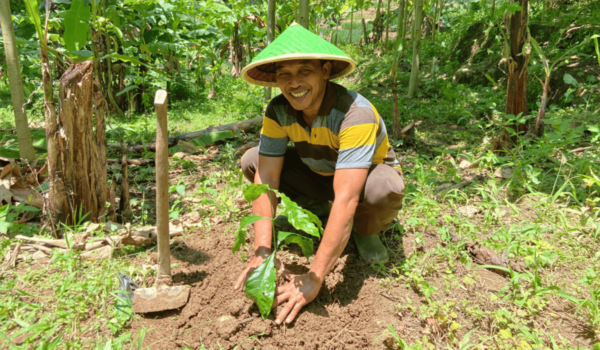
Samino has planted 230 tree seedlings with Trees4Trees — and he’s not stopping there. He’s ready to plant even more in the future.

The dry season often brings drought, and pest attacks can wipe out an entire harvest. But giving up isn’t in his nature. Alongside his fellow members in the Kapokan Kedungwringin farmer group, he keeps pushing forward, taking part in efforts like making organic fertilizer to enrich the soil and lessen their reliance on chemical solutions.

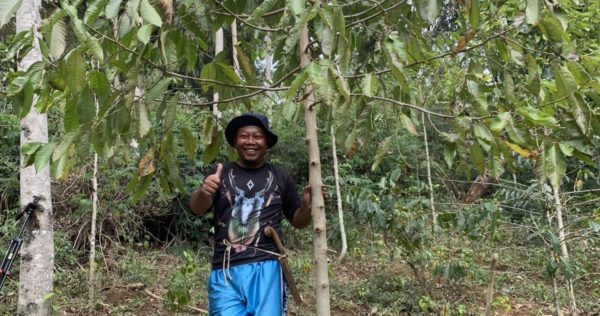
Samino proudly stands beside the Jabon tree he planted in 2023 with Trees4Trees. His biggest goal is to help restore the barren and neglected land in his village.

“Being a farmer is enjoyable; there’s a unique satisfaction in using the harvest we grow ourselves,” Samino shared with a warm, contented grin. 

Planting Trees: Reviving the Dry Land in His Village 

Samino has a big vision for his village. He doesn’t want to see empty land go to waste or the village turn barren. Because of this deep concern, he volunteered to become a field facilitator for Trees4Trees—helping spread the word about the program to other farmers and acting as a bridge between them and the field coordinator. As a tree grower, he’s received 230 seedlings, most of them jabon (Anthocepalus cadamba). That choice was intentional—he believes jabon will make his land more productive in the long run. 

Through the program, Samino also joined a training on making livestock feed to be used as a feed bank. It’s proven to be very useful, especially since he raises livestock himself. For him, farming is more than work—it’s something that speaks to his soul. He once tried his luck in Jakarta as a furniture worker, but city life, with all its noise and pollution, never felt like home. 
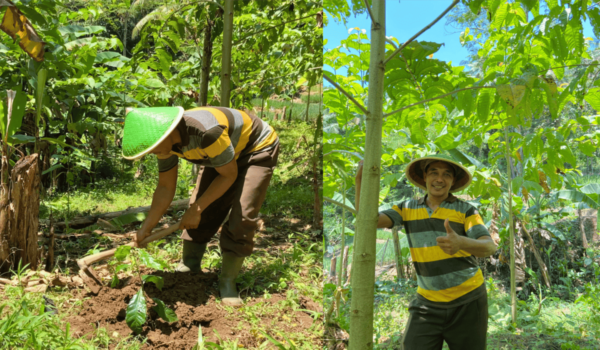
“I spent some time working in Jakarta, but my heart has always belonged to the village—with its clean air and the abundance of nature,” he said. 

When he returned home, he was shocked to see so much barren land. “What really struck me when I came back was how dry and empty the land had become. That’s when I felt the urge to do something about it,” he added. 

Planting with Purpose, Living with Heart 

When the Trees4Trees team came to visit, Samino proudly showed them the trees he had planted. He hopes that one day, these trees will not only improve his livelihood but also bring lasting benefits to his children and grandchildren. He often reminds others of the importance of caring for the trees properly to get the best results. 

Aziz Arifandi, the Field Coordinator for Kedungwringin Village, described him as a cooperative and passionate tree grower. “At first, he was shy and quiet, but once you get to know him, he’s actually really easy to talk to,” Aziz said. “He’s a peaceful, calm person—someone other farmers feel comfortable around when having discussions.” 

Samino with Aziz (right), Trees4Trees’ field coordinator. He was delighted by the team’s visit to monitor the trees that day.

According to Aziz, drought and pests remain the biggest challenges for farmers in the village. He hopes the tree growers will become more enthusiastic and communicative in facing these issues so the village can grow greener. Among them all, Samino stands out—he’s always the most excited whenever the Trees4Trees team visits. 

But there’s more to Samino than just his dedication to planting trees, when he’s tired from working in the fields, Samino has a simple way of unwinding—fishing and playing his guitar. The soft strum of the strings brings him a sense of peace. Through his dedication to farming and reforesting the land, Samino proves that when you work with heart and determination, it’s possible to create meaningful change for the environment and for the next generation. 

Writer: Teresia K. Miranti. Interview and compiled source: Aziz Arifandi. Photos: Henning Ilmi W