Rohmanudin’s Vision: Why Planting Trees is a Better Legacy Than Selling Land 

why Planting Trees is a Better Legacy
Photo: Trees4Trees/Kemas Duga Muis.

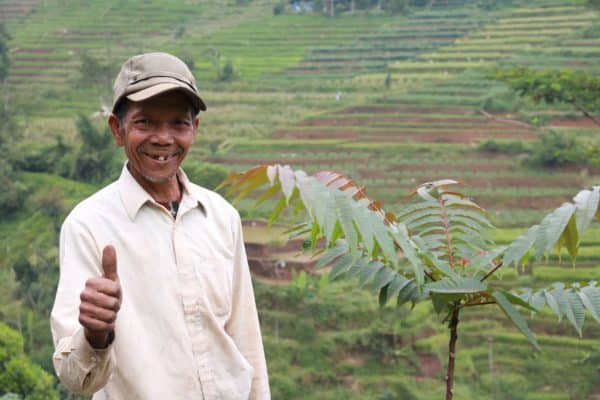
Rohmanudin, 53, has been familiar with farming activities since his childhood, as his parents were farmers who often brought him to the fields. However, Rohmanudin only began farming his own land in 2015. His land, located in Nagrak Village, Cangkuang District in Bandung Regency, was planted with various crops, including several types of trees, fruits, and vegetables. 

“From 2015 to 2016, I began working on my own field, planting various kinds of crops. In 2015, the Indonesia government initiated an agricultural program that led me to grow vegetables for the first time. Thank God, I have been growing different types of plants ever since,” he revealed. 

As part of the government agricultural program, a farmer group was established in Nagrak village, which still exists today. Rohmanudin is one of the most active members of this group.  

Joining to the Tree Planting Program to Improve the Result 

In 2021, Rohmanudin was offered the opportunity to join a tree planting program funded by Astra Zeneca, in collaboration with Trees4Trees and One Tree Planted. He proposed planting tree species that were suitable for his land’s conditions. 

Why Planting Trees is a Better Legacy Than Selling Land 
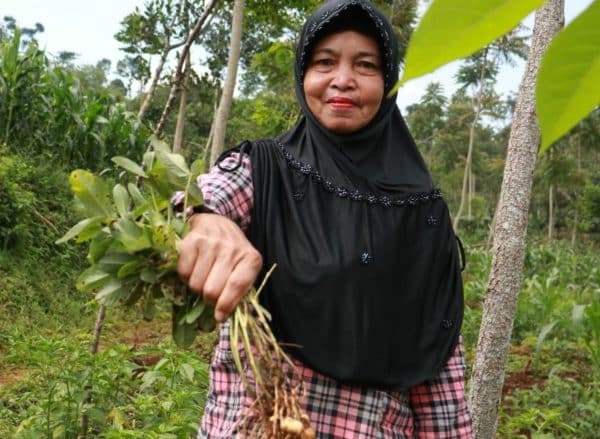
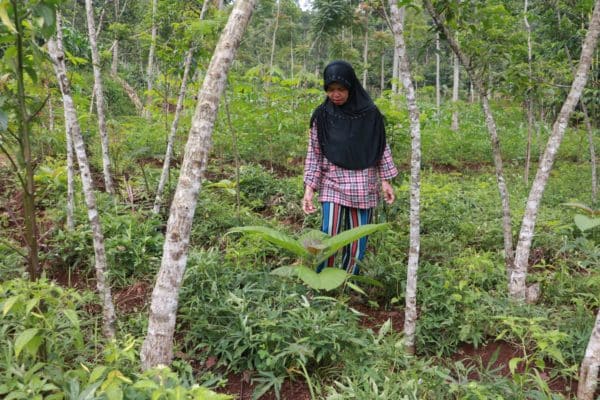
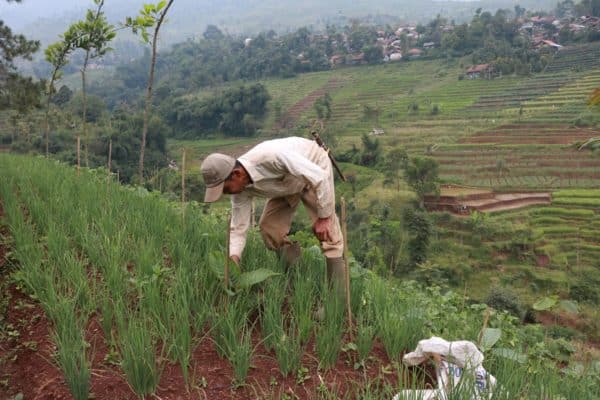
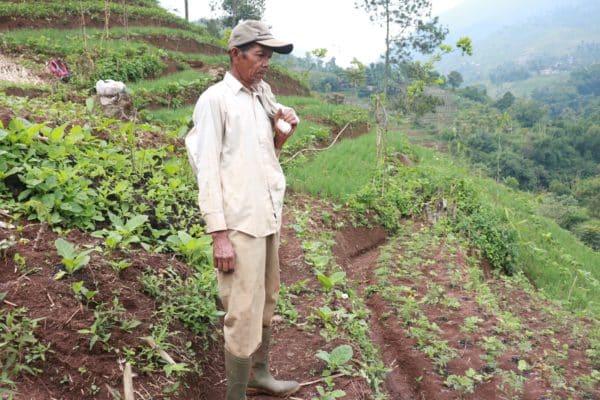
Rohmanudin maintains his land and plants various type of crops and trees. Photo: Trees4Trees/Kemas Duga Muis.

“I proposed then planted jabon (burflowers), sengon (Chinese albizia), and suren (red cedar) because they thrive in this area. I also planted other trees such as stinky beans, as well as fruit trees like sapodilla and rambutan,” Rohmanudin said. 

Since joining the tree planting program, he has noticed significant differences compared to his previous farming activities. He stated that the implementation of the program has improved significantly, and he feels that it is much better now than in the past. 

“In the past, the planting system was not as structured. Now, we have a more structured approach, and I can say that the way we do is the correct one,” Rohmanudin added. 

Read also: A Watershed Moment: Planting Begins at the Citarum River

Effort to Restore the Former Forest in the Village

Rohmanudin is deeply concerned about the vast deforestation that has taken place in his village, where forests have been cleared and replaced with residential areas. As such, he strongly believes that the tree planting program can have a positive impact if implemented effectively, and is therefore highly motivated to care for the trees. 
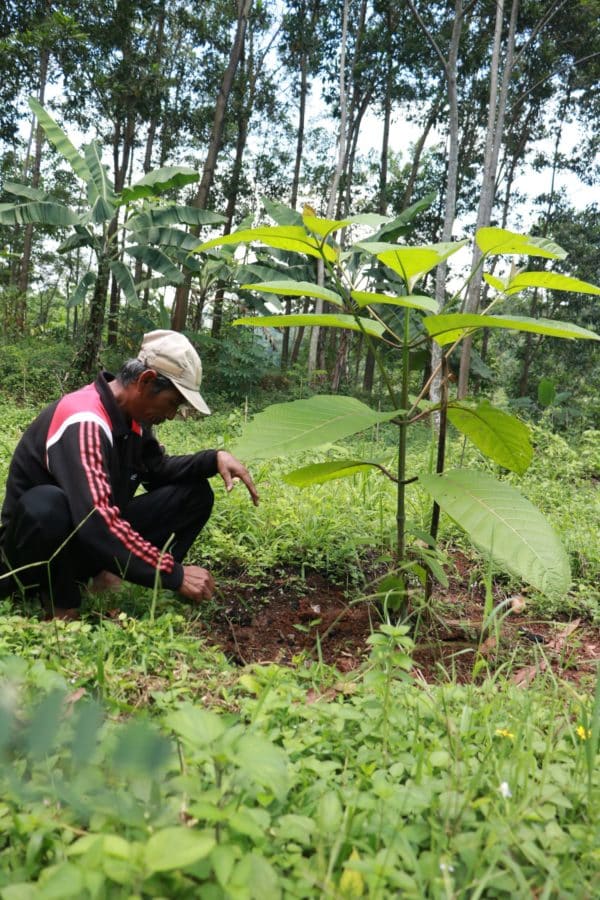
Planting Trees is a Better Legacy
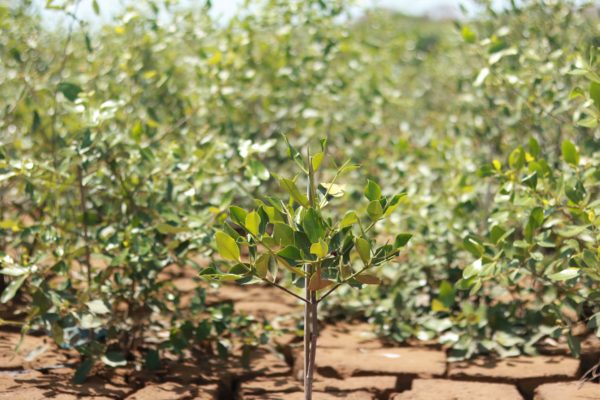
Planting Trees is a Better Legacy; Rohmanudin with the burflower tree he has grown. Photo: Trees4Trees/Kemas Duga Muis.

“In the past, this area was full of rare birds and big trees. The mornings were beautiful and so refreshing. The land was more fertile than today. But now, look, they’re gone! There’s a lot of dry land, and water is scarce. Why did this happen? Because the land was sold out, and housing was built. In the area behind my house, eight hectares were sold out, and now, ten more hectares are gone! Housing has been built there again,” Rohmanudin lamented. 

Planting Trees Instead of Selling Land for a Better Future

Seeing the reality that is happening in his village, Rohmanudin feels agitated. He worries that if all the land in his village is sold and turned into housing, there will be nothing left for future generations, and not enough land to cultivate. 

“Imagine what will happen to our children and grandchildren in the next 10-20 years? They will have nothing left. Moreover, if everyone builds houses here and there, we will get more pollution and disease,” he said. 
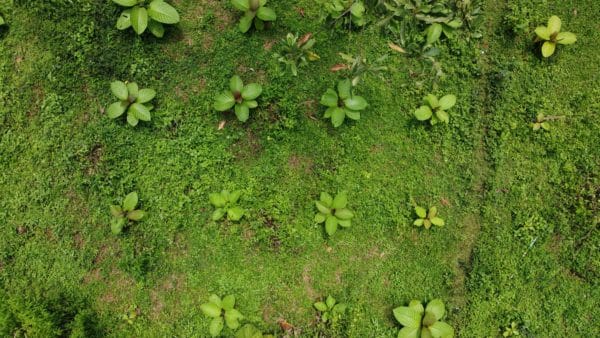
Planting Trees is a Better Legacy
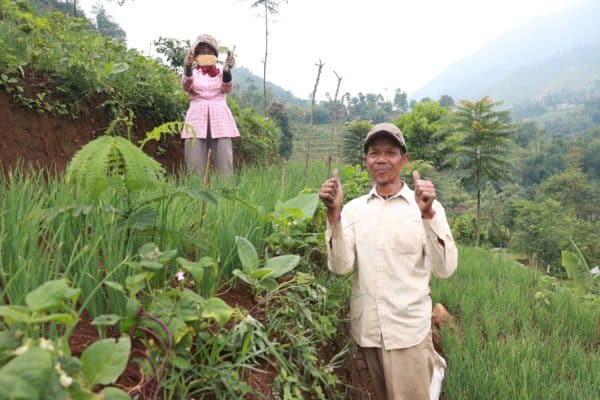
Planting Trees is a Better Legacy; Rohmanudin’s trees grow bigger and greener. Photo: Trees4Trees/Kemas Duga Muis.

He also believes that cutting down a lot of trees will interrupt the process of producing clean air that is essential for human beings. That is why he thinks this tree planting program is necessary. He believes there are advantages that villagers can get, and even planting trees on a little land for the next generations is essential. 

Rohmanudin expects this program will make farmers in his village more aware of protecting their land and keeping it fertile so that more trees could be planted and more results could be harvested. Therefore, they can make a living from the results instead of selling their land to the land developer. 

Writer: V. Arnila Wulandani. Photo: Kemas Duga Muis.

Coastal Communities and Culinary Traditions: Mangrove Restoration in Pati

mangrove
Coastal Communities and Culinary Traditions: Mangrove Restoration in Pati
Fried bandeng presto (steamed milkfish) slices, an authentic culinary of Pati. Photo: Trees4Trees/V. Arnila Wulandani.

The uniqueness of bandeng presto (steamed milkfish) lies in its cooking technique. Steaming the fish at high pressure creates a delicate texture that locks in flavor and allows the meat to fall effortlessly off the bone. After being cooked in this way, even the soft spines of the fish can be eaten. From beachside pots to the kitchens of restaurants, local cooks have mastered this technique, and milkfish have become a dish that’s synonymous with Pati Regency of Central Java. 

This iconic fish puts food on the table in more ways than one. Many people living in Pati make their living as fishpond farmers, with milkfish being their main source of income. However, these industries are increasingly under threat from flooding. Now, with the help of Trees4Trees, farmers are finding that mangroves have the power to reverse the damage and protect their livelihoods. 

An Essential Resource for Local People 

In a year, fishpond farmers in Pati can harvest milkfish two or three times, depending on the weather. “We can sell one kilogram of milkfish for around 15,000 to 25,000 rupiah (US$ 1 to 1.60),” explains Djamari, one of the fishpond farmers from Dukuhseti village. He only cultivates milkfish, as this is the most reliable, most profitable commodity.  

Parmi, another fishpond farmer from Dukuhseti village, agrees. As he explains, “milkfish is the main component of authentic foods in Pati, so the demand is always high,” he added. 

Pati Beach
(Above) the mangroves that surround them. (Below) Fishponds in Dukuhseti village and. Photo: Trees4Trees/V. Arnila Wulandani

Fishponds in Dukuhseti village

Livelihoods Under Threat: Extreme Weather and High Waves  

Fishponds in Pati are increasingly under threat. Recently, when the tide is high, and the weather is bad, the surge can flood the fishponds and decimate stocks of the precious milkfish.  

“Virtually every year, our fishponds are threatened by waves,” explains Parmi. “Last year, when my pond was destroyed, only a few fish were left. I suffered losses of nearly 100 million rupiah due to the damage,” he revealed.  

Parmi’s story is familiar to many fishpond farmers in the region. Djamari added that he has experienced similar problems, which were disastrous to his business. “I estimate that my losses due to last year’s high tide were in the tens of million rupiah,” he said.  

However, Djamari and Parmi actually fared much better compared to their neighbors in other villages. This is because their ponds were protected by mangroves. “Even though there are not many, these mangroves protected our fishponds,” explained Parmi, pointing to the mangrove trees around him.  

Mangrove in Pati
(Above) In Pati, mangroves have proven to be an effective way of limiting the damage caused by annual floods. Photo: Trees4Trees/Yulianisa Dessenita.

The Many Benefits of Mangroves 

Musthofa is the leader of a group of fishpond farmers in Dukuhseti village. He laments that mangrove cover in Pati has been in decline in recent years. “Everything within a hundred meters of the shoreline should be a greenbelt area,” he explains, noting that this protection is largely absent. “Most farmers in our group are aware of the benefits offered by mangroves; we have seen ponds protected with mangroves suffer less damage than areas that are not,” he added.  

“The mangrove trees around our pond were planted in 1995 and stand up to 10 meters tall,” explains Parmi, who also revealed that these trees can offer multiple benefits to farmers. “They not only prevent erosion and waves – the fallen leaves also function as natural fertilizers to fishponds, which accelerates fish growth,” he said. 

Mangrove Farmers
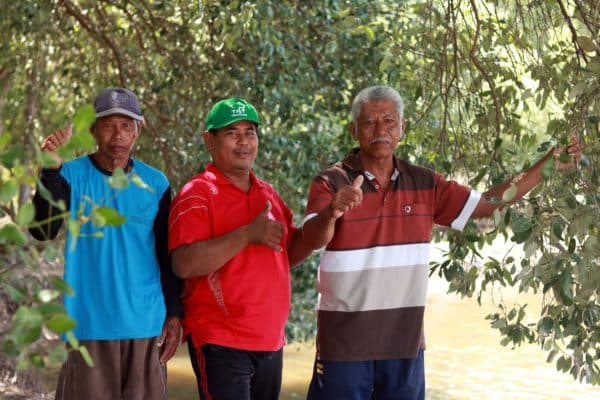
(From left to right) Djamari, Musthofa and Parmi – fishpond farmers who have been helping T4T plant mangroves in Pati. Photo: Trees4Trees/Yulianisa Dessenita.

Restoring Coastal Areas, Supporting Farmers, and Preserving Traditions 

Djamari, Parmi and Musthofa are three of the many local farmers who have been helping Trees4Trees to restore coastal ecosystems and protect livelihoods in Pati. Since 2021, we’ve planted around 138,000 mangrove trees in an area covering 27.8 hectares; in the most recent planting season alone, we planted mangroves in eight coastal villages.  

“We hope the mangroves we have planted will grow tall and strong so they can protect fishponds and prevent coastal erosion in areas around our village,” said Parmi. He added that by planting mangroves, the authentic culinary traditions of Pati – such as bandeng presto – will also be preserved.  

Writer: V. Arnila Wulandani. Editor: Christopher Alexander

Tips for Being an Eco-friendlier Woman

Tips for Being an Eco-friendlier Woman
A woman brings reusable bag. Photo: Freepik

The world celebrates International Women’s Day every March 8th. The day is an opportunity to recognize the contributions of women to society and call for greater gender equality in all areas of life. As a woman who wants to celebrate this momentous day by contributing to the earth through eco-friendly ways in daily life, you can try these tips to become an eco-friendlier woman.  

You can also celebrate the day with woman you love most in your life by considering these things as gifts.  

Get rid of single-use makeup wipes and switch with reusable wipes 

Using single-use makeup cotton wipes or facial cleansing wipes can be wasteful. Instead, switching to reusable cloth wipes can be a simple way to be more eco-friendly in your beauty routine. These cloth wipes can be washed and reused multiple times, resulting in less waste. 

Tips for Being an Eco-friendlier Woman
Reusable cloth wipes can be a way to be more eco-friendly in a beauty routine. Photo: Pexels/Karolina Grabowska

Upcycle, secondhand, and eco-friendly material clothes 

The trend of fashion is very dynamic making the clothing models, variation, and types change vastly. It is easy to buy up-to-date clothes from shops which do not consider the environment of clothing production, but we should consider it because the process involves a huge amount of energy consumption, water, and natural resources. 

Tips for Being an Eco-friendlier Woman
Secondhand clothes, slow fashion, clothes swap, or upcycle clothes are ways to do more sustainable in fashion. Photo: Pexels/cottonbro studio

Instead of buying new clothes every time the fashion trend is changing, we can do a more sustainable way to get clothes and keep fashionable, such as: 

  • Upcycle items we already own 
  • Buy secondhand clothing 
  • Organize a clothes swap or attend it to swap your clothes with others 
  • Choose slow fashion (with a good quality, durable, and long-lasting model) so you can wear it for a long time  
  • Buy clothes with eco-friendly materials like natural dyed clothes or made from degradable material like cotton or silk.  

Earth-friendly bath and skin care products 

There are so many varieties of bath and skin care products made from natural these days. They are free preservatives and free chemicals so safer for the body and for the earth. It usually comes with wonderful-smelling soap, shampoo, and conditioner bars or nature-based skin care from various plants and fruit ingredients, like aloe vera, calendula, rose, and many more. Natural and earth-friendly bath and skin care products sure can pamper your skin and body after a tiring day.   

Recycle and reduce packaging of beauty products 

Another thing to consider before buying beauty products is whether they come with minimal or no packaging. Reducing packaging waste, especially from products that are a part of a woman’s daily routine, can be a significant contribution towards reducing our overall waste. Choosing beauty product brands that offer refillable packages or have programs in place to recycle their packaging is the best way to reduce waste. Alternatively, you can recycle the packaging into useful items or send it to recycling centers. 

eco-friendly soap
Photo: Pexels/Photo by Ümran Gün

Switch to eco-friendly kitchenware  

There are lots of eco-friendly kitchenware, cutlery, and other tableware offered nowadays. Usually, they are made from organic materials that are safe for environments like bamboo for cutlery or spatula, coconut fiber or loofah for dishwasher, responsible wood for glass or plates, or pot from pottery or durable material, so it can be used for a long time. Using eco-friendly kitchenware that is harmless to the environment is a great option to live more sustainably starting from the kitchen.     

Reusable shopping bags and produce bags 

Plastic waste is a serious problem we face these days. Going to the grocery store often means using a bunch of plastic bags and plastic produce sacks and then throwing them away shortly after. Bringing reusable shopping bags and produce bags every time going shopping is a great action to make a green contribution for the earth.  

Plant trees, support women  

Planting trees is a sustainable way to protect the earth. Moreover, it indirectly contributes to cleaning the air and water, which is beneficial for our skin and body. You can celebrate this year’s International Women’s Day by planting trees with Trees4Trees. By doing so, you will also be helping to empower women in our community. Let’s support women for a better and greener future! Plant tree with us through this LINK  

plant a tree
Celebrate the International Women’s Day by planting with Trees4Trees. Photo: Trees4Trees/Kemas Duga Muis.
 

The Story of Euis Maryati: Widowed and Planting Trees to Support Her Family

Euis Maryati
Euis Maryati: Widowed and Planting Trees to Support Her Family

For a woman with four children, it is never easy being a single parent. This is how Euis Maryati (57) feels. She is one of the farmers in Patrolsari Village, Arjasari District. Since a few years ago, she had to be a mother and also head of the family.

As a widower, her life is struggling. Even though, she keeps herself motivated to be a strong woman for the sake of her family. Unlike common life of most women in her village, her daily life is not only about taking care of the household things, but also making income to fulfill her family’s needs. Otherwise, she has to work harder than anyone else. 

Farming Crops is not Enough to Fulfill Her Family’s Daily Needs

Fortunately, Euis Maryati has a field that she can plant many kinds of plants. Most of them are seasonal food crops. Through her field, she can depend her life to the crops’ yield. “Here, I planted various kind of food crops. I planted chilies, cassava, ground nuts, and red bean. There is also corn. Usually, I harvest my seasonal crops once in every two to three months,” said Euis Maryati.  

Afterwards, she sells her crops in a traditional market around her village. Some of the crops are also self-consumed by her family. According to Euis Maryati, by planting crops, at least she does not have to worry if some days she does not have enough money to buy food. Still, she can pick some food crops from her field for her own family consumption.  

Euis Maryati: Widowed and Planting Trees to Support Her Family
Euis Maryati has harvested crops from her field. Photo: Trees4Trees/Kemas Duga Muis

Even though, to meet her family’s daily needs, she cannot avoid doing double jobs at one time. Besides farming, she also sells snacks. “If I do not farm, I cannot support my family’s needs. However, farming crops is not enough. So, I have also opened a small business selling snacks. It is to increase my income to meet my family’s daily needs,” she conveyed. 

Planting Trees: Cultivating a Better Future for Her Family

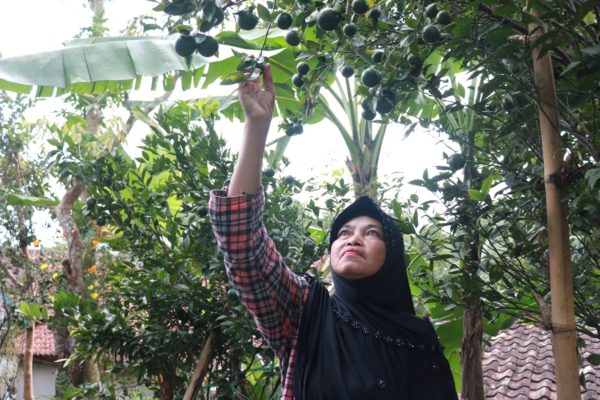
In 2021, when she was offered a partnership program of tree planting funded by Astra Zeneca collaborated with Trees4Trees and One Tree Planted, Euis Maryati planted burflower-tree, avocado, mango, and orange. She planted those trees among her seasonal crops in her field. She admitted that she was lucky to get plants from the tree planting program. She hopes a lot from trees she planted for the future of her family. 

She has been persevering in taking care of her trees. She cleans the grass every day so that all the plants grow well. She also applies her plants with organic fertilizer that she made herself from animal dung. 

Euis Maryati: Widowed and Planting Trees to Support Her Family
Euis Maryati is checking her jabon trees planted in her field along with various crops.

She expects, by taking good care of those trees, she will be able to harvest the good results. Moreover, now plants in her field are more varied. With more types of trees planted, she hopes she can sell more yields in the future, then she can fulfil her family’s needs much better than today. 

“My life has been difficult for years. So I am hoping that it does not get any harder. If not myself, who else will  support my family? I realize that I am both the mother and the head of the family. It is not easy. But for my children and their future, I will continue to work harder,” she stated.  

She thanks to the tree planting program and she hopes it can bring more prosperity and a better future for women farmers and single parents like her. 

Travels in Java: Legok Dayeuh, Where Nature and Culture Converge

Travels in Java: Legok Dayeuh
Photo: Trees4Trees/V. Arnila Wulandani

“We provide a place where tourists can sit, drink a glass of coffee together, take a photo, and enjoy the view,” says Asep, a young entrepreneur in West Java. We’re sitting together in Legok Dayeuh in West Bandung regency, sipping coffee grown in the patchwork of plantations that covers the surrounding landscape. Up here, at 900 meters above sea level in the foothills of Mount Puntang, the air is fresh and cool, and the views are truly beautiful.  

Since 2020, and with support from local government, young people like Asep in the nearby village of Campaka Mulya have been working to develop Legok Dayeuh and turn it into a tourist destination. They’ve been constructing saungs – a kind of traditional bamboo pavilion, where visitors can relax and enjoy panoramic views. These structures add a touch of cultural magic to the natural wonders that surround them.  

Stunning Views of Verdant Surroundings 

Asep explains the saung were a natural choice for the designers and builders of the Legok Dayeuh development project, as they are emblematic of local Sundanese culture. “The tourism spot was initiated by young people in the village and the saung were also built by hand by members of local communities, working together,” says Asep. 

Legok Dayeuh is situated close to the Cigereuh River; a tributary of the Cisangkuy River, which is in the sub-watershed of the Citarum – the longest and largest river in West Java. Campaka Mulya village is located less than two miles (3 km) from the foot of Puntang Mountain and around 9 miles (15 km) from downtown Bandung. 

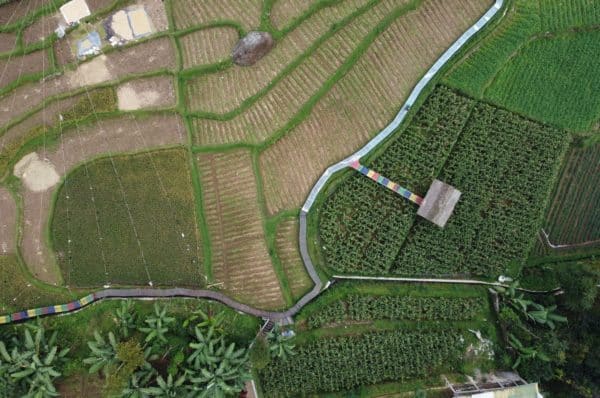
Legok Dayeuh’s main attraction is the vast expanse of rice and corn fields, which cover an area of around five hectares and feature footbridges that allow visitors to immerse themselves in the landscape. Two traditional saung huts, made from bamboo and with roofs of dried sugar palm leaves, provide eye-catching landmarks in the valley. 

Travels in Java: Legok Dayeuh, Where Nature and Culture Converge
(Above) a birds-eye view of Legok Dayeuh. Photo: Trees4Trees/Kemas Duga Muis.
Plenty to See and Do  

“We have welcomed many visitors, including a group of tourists from Japan,” explains Asep. “At the moment, due to ongoing development of the tourism spot, we can only offer tour activity packages for groups,” he added.  

These package tours put an emphasis on nature, discovery and authenticity. Visitors can get their hands dirty, explore the landscape, and experience activities in the fields like planting or harvesting rice paddies with local farmers, swimming and paddling in the river, hiking through the hills, and picking coffee beans.  

“In the future, there will be also a campsite on the hill,” says Asep. “But we’re still in the process of setting it up.” 

Legok Dayeuh: Nature and Culture Converge
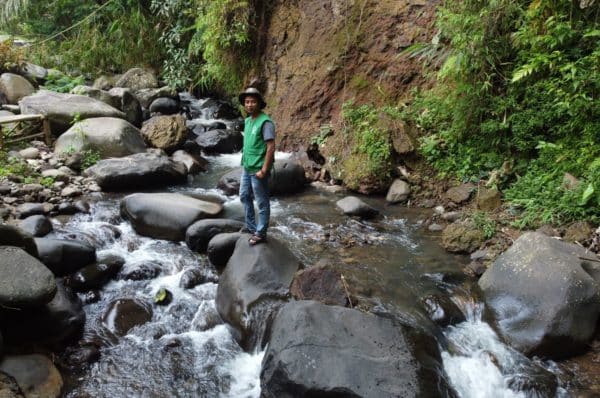
(Above) Asep stands on a rock in the Cigereuh River. Photo: Trees4Trees/Kemas Duga Muis.
Cup of Java: A Taste of Local Tradition  

These high altitudes are perfect for growing coffee – particularly arabica. Many farmers in Campaka Mulya plant coffee trees, and the region is developing a global reputation for the quality of its coffee beans.  

In 2015, a local brand (called Puntang Coffee) actually won the Coffee Specialty Competition in Atlanta, USA. “From that moment on,” explains Asep, “farmers’ interest in growing coffee trees has increased.” 

From planting to picking and from roasting to grinding, every step in the Puntang coffee process is done by hand. Locals like Asep are only too happy to walk visitors through the process, or brew up a special cup for them to taste. Visitors can also take home a 200-gram pack of Puntang coffee for just IDR 100,000 (US$ 6.50). 

Travels in Java: Legok Dayeuh, Where Nature and Culture Converge
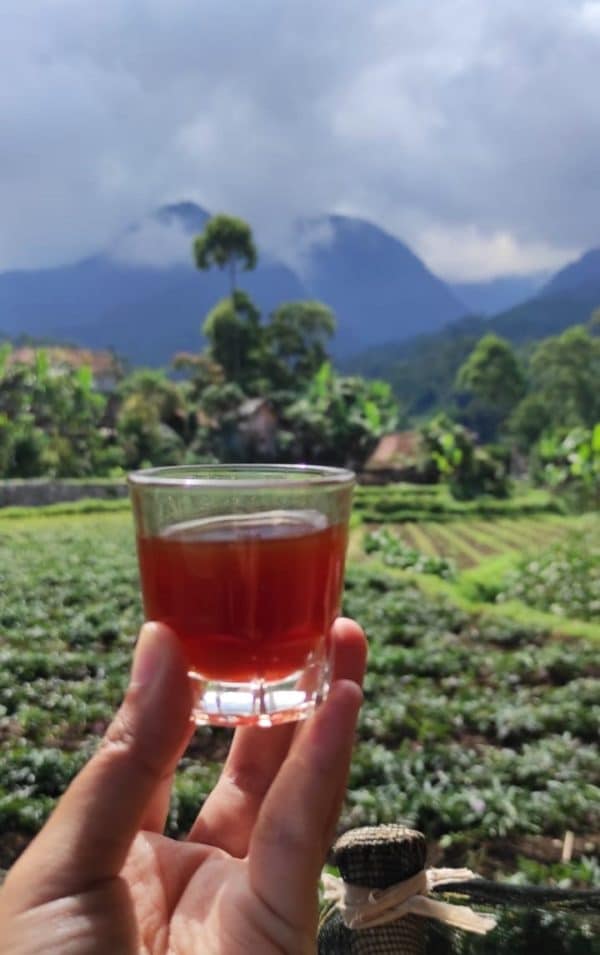
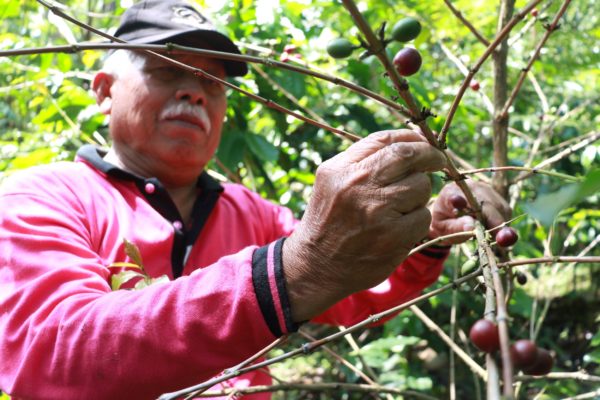
(Above) A glass of Puntang arabica coffee, brewed by Asep. Photo: Trees4Trees/V. Arnila Wulandani. (Below) Abah Usin, a coffee farmer picking the coffee beans. Photo: Trees4Trees/Kemas Duga Muis.
Coffee Farmer

Plant Trees, Empower Locals, Preserve the Environment 

To preserve the natural wonders of Campaka Mulya and help the village develop its tourism potential, Trees4Trees has been planting trees here since 2020. “We plant some types of trees, including jabon (burflower tree), mindi (chinaberry), eucalyptus, and coffee, says Anggy Firmansyah, who is Unit Manager of Trees4Trees in the Cisangkuy planting area. “Particularly for coffee, we aim to support local farmers, who depend on (coffee) as their main source of income.”  

Trees4Trees has also been busy planting trees along the riverbank of the planned camping ground area, to prevent erosion and provide shade. “We hope the trees not only serve to preserve the environment but also support the effort of establishing this tourism destination,” Anggy added. 

Writer: V. Arnila Wulandani. Editor: Christopher Alexander

Iju’s Passion for Planting Trees: Beyond the Harvest

Farmer story: Iju, one of Trees4Trees best farmers from Neglasari village
Iju, one of Trees4Trees best farmers from Neglasari village, Bandung Regency. Photo: Trees4Trees/Kemas Duga Muis

Since returning to his home village in Neglasari Village a few years ago, Iju (60) has decided to manage his family’s land. His home village is located in Ibun District, Bandung Regency. Before, he had worked in a rubber and oil palm plantation in Sumatera Island for years. However, his longing for his home village made him decide to return home.  

After returning from Sumatra, Iju began to plant bamboo trees. Unfortunately, the results were not good and the price was not favorable. Meanwhile, he had to support his family. His four children were married, while one of the youngest was still in senior high school and he needed income to meet his family’s daily needs. 

Switching From Growing Bamboo to Polyculture Planting System 

In the midst of his struggle in planting bamboo trees, he was offered to join planting trees program which initiated by Astra Zeneca and collaborates with Trees4Trees and One Tree Planted. He was excited to join the program and received support and training in agriculture from the Trees4Trees team. He did not only receive trees for free, but also obtained trainings and more knowledge of agriculture he needed from the team. 

Iju also got a suggestion and assistance from the team to manage his land by applying a polyculture or intercropping system. Indonesian called the system as tumpang sari. This system works by planting several types of trees and crops in a field. It allows farmers to reap short-term and long-term yields from several different trees and crops. Through this system, he potentially can get greater results than planting just one type of tree.

Based on the suggestion, Iju then decided to plant several food crops on his land whose results could be harvested in short term, such as onions, cassava, sweet potatoes, and chilies. Meanwhile, from the tree planting program with Trees4Trees, Iju received burflower-tree, gmelina, durian, and avocado trees. He can reap the long-term benefit from those types of trees.

Farmer story: Iju, one of Trees4Trees best farmers from Neglasari village
Iju is taking care of onion in his field. Photo: Trees4Trees/Kemas Duga Muis

Planting Trees to Restore the Former Forest in the Village

According to Iju, he intended to dedicate the long term-harvested trees he planted for his next generation. He said those trees will be his legacy for them. “I will not harvest or cut down these trees. I will pass them to my children and my grandchildren, so they will be able to enjoy the result and the benefit of trees I planted,” Iju said.  

For Iju, planting trees is beyond harvesting and using the result to meet his family daily needs. He believes that trees have much bigger role than that. Trees provide clean air to breathe, water, shelter, and preserve the life to all of living creature on earth. He realizes clean air and water are the most essential needs of human beings, including for the next generations. 

Planting Trees to Restore the Former Forest in the Village
Iju is applying polyculture system in his field. Photo: Trees4Trees/Kemas Duga Muis

“I plant trees because it provides great benefits not only for myself and my family. But also for the environment. They also produce oxygen and store water that keeps us alive. I want my children and grandchildren will have a good life in the future, so I plant trees,” he added.

Iju’s strong will to plant trees was also fueled by the disappearance of the former forest around her village years ago.  

Planting trees: Iju, one of Trees4Trees best farmers from Neglasari village
Iju and his wife are working in their field. They thank Trees4Trees along with the support of Astra Zeneca and One Tree Planted for tree seedlings and agricultural support they have received. Photo: Trees4Trees/Kemas Duga Muis.

“In the past, this village had a dense and natural forest. But the forest is lost and now it becomes a critical land due to excessive use. I have a dream to return the forest back. Who knows, if I keep planting trees, I may see the forest return to the way it was before,” said Iju optimistic.