7 Ways to Celebrate Sustainable Christmas and New Year

7 Ways to Celebrate Sustainable Christmas and New Year
Photo: Freepik 7 Ways to Celebrate Sustainable Christmas and New Year

As the end of the year approaches, people around the world are busy planning a celebration and fun things to do with friends and family. Christmas and New Year are times for celebrating together with merry parties. Festive decorations, presents, food, and other ornaments enliven the celebration but often end up being trash and unpleasant for our environment.

But it is not difficult to make some changes and reduce the environmental impact because this celebration should not have to be a burden for the earth. We can always make Christmas even better by being aware of our impacts. Reduce waste, use compostable materials, and recycle whenever possible. 

These 7 eco-friendly ways can help us to celebrate the Christmas and New Year seasons while caring for the earth. 

A Live Tree  

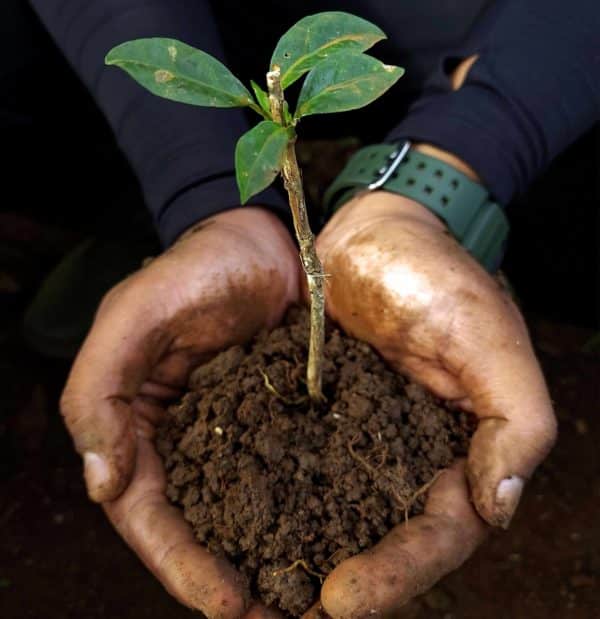
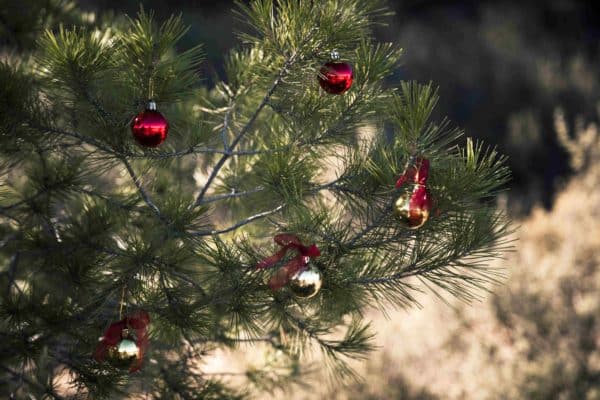
Celebrating Christmas and New Year might not be complete without a pine tree as part of the decorations. Using a live pine tree is the best option to reduce carbon footprint compared to the artificial tree or a cut-down real pine tree. You can use a pine tree planted in a pot or plant it outside the room to help absorb carbon dioxide. 
7 Ways to Celebrate Sustainable Christmas and New Year
Photo: Freepik

Eco-friendly Decorations 

Christmas and New Year decorations and ornaments are beautiful but often made from plastic and undegradable material. Instead of buying new ornaments, reusing last year’s decorations, or creating decorations and ornaments from reusable and eco-friendly materials will be the best choice to reduce undegradable waste.

You can also make your own eco-friendly ornaments. They can be from recycled materials like dried oranges, dried pine fruits, origami ornaments from the newspaper or reused paper, or also hang cookies on the tree.

Minimize the Energy Usage for Lighting  

To reduce the energy during Christmas and New Year celebrations, you can choose solar-powered lights and eco-friendly candles made from soya, vegetable oil, or beeswax to complete the decorations. Also, make sure to keep the energy usage at a minimum by switching off the light when it is not in use.  

Avoid Non-recyclable Single-use Table Ware 

If you host a party or gathering to celebrate Christmas and New Year, avoid using single-use table ware. Minimize the use of glasses, plates, and cutlery made from undegradable materials like plastics, styrofoam, and paper coated with plastics as much as you can. Alternatively, you can ask your guest to bring their own plates, glasses, or water bottles.  

Avoid Food Waste 

Enjoying delicious and varied food is the best way to celebrate Christmas and New Year. But it is important to make plans and estimate how much food you need for the celebration. Always try to cut any food waste and use up those leftovers. 

Less Gift Wrap or Use Recycled Paper to Wrap  

Gifting is always fun to do during Christmas and New Year seasons. And it comes with tons of wrapping paper and plastic which always end up as trash. Compared to wrapping gifts with wrapping paper that contains glitter, plastic, or metallic finish that is harmful to the environment, using recycled wrapping paper is a better option. You can also use newspapers to wrap your gifts and decorate them with reusable items. To reduce using gift wrap, you can give a gift of an experience like cooking a special meal or a tutorial. Digital gifts like e-books, music apps, or movie apps subscriptions are also great options. You can also gift alive trees through Trees4Trees

7 Ways to Celebrate Sustainable Christmas and New Year
Photo: Freepik 7 Ways to Celebrate Sustainable Christmas and New Year

Eco-friendly Gift  

Choose an eco-friendly gift for your loved ones as a Christmas and New Year presents. You can buy a long-lasting or second-hand product, DIY handcrafted, or things made from sustainably sourced materials. You can also gift a potted plant or gift an alive tree through Trees4trees. The tree you gift to your loved ones will contribute to improve  the environment and help the local community where it is planted. 

Learn more to know how you can gift trees for Christmas and New Year gifts to your loved ones: Give Trees as a Gift to Your Loved Ones 

10 Mother’s Day Eco-Friendly Gift Ideas

mothers day gift
10 Mother’s Day Eco-Friendly Gift Ideas
There are ways we can cut down on the environmental effect when giving gifts. A sustainable gift is a perfect choice as it is more eco-friendly and far less to end up in the trash and unused

Different from most of the rest of the world which celebrates Mother’s Day in May, Indonesia celebrates Mother’s Day every 22 December. It is celebrated as Mother’s Day after the first Indonesia Women’s Congress convened on December 22, 1928, promoting women’s rights.  

Like Mother’s Day celebrations in other countries, Mother’s Day in Indonesia is meant to honor women, especially mothers. Friends and family give cards, flowers, and small presents on this day to show their appreciation for favorite women and mothers. In celebrating Mother’s Day, gift-giving can be a wasteful activity. But it should not be. However, we should also love mother earth while giving a gift to our beloved mother.  

There are ways we can cut down on the environmental effect when giving gifts. A sustainable gift is a perfect choice as it is more eco-friendly and far less to end up in the trash and unused. This list of 10 Mother’s Day eco-friendly gift ideas will get you started! These gifts are not only thoughtful but also kind to mother earth.  

Beeswax food wrap  

If your mom really enjoys cooking or loves to spend a lot of time preparing food, beeswax food wrap would be a perfect eco-friendly gift. It is a plastic-free and organic food wrapper that your mom can store the family’s food in an eco-friendly way. By giving this as a gift, you also help her to start a zero-waste movement in her kitchen.  

Eco-friendly Dishes Brush  

To reduce the plastic and undegradable waste from the kitchen, you also can give a set of eco-friendly dish brushes to your mother as a Mother’s Day gift. It is usually made from coconut coir and natural bamboo that is one hundred percent biodegradable and safe for mother earth.  

Bicycle  

Biking is a great way for moms to get exercise. Gifting a new bike to mom as a Mother’s Day gift is a great way to get her exercise. It makes her healthy and of course, it is a zero-emission vehicle.  

Earth-friendly Bath Products 

These days, there are so many varieties of bath products made from natural, free preservatives, and free chemicals that are safe for the body and for the earth. It usually comes with wonderful- smelling soap, shampoo, and conditioner bars. Gift a bundle of natural and earth-friendly bath products for your mom in the Mother’s Dat so she can pamper herself after a tiring day.  

10 Mother’s Day Eco-Friendly Gift Ideas
Photo: Freepik

Essential Oils 

Consider essential oils as an eco-friendly gift as a Mother’s Day gift for your mother. She can use the oils in her beauty products or diffuse them for aromatherapy. There are kinds of oils that can aid some issues for the body. So, you can choose essential oils which you think your mother will enjoy using it. 

Reusable Facial Cleansing Pads 

Using single-use facial cleansing cotton to remove makeup or clean the face can be wasteful. Why don’t you introduce your mom to using a reusable facial cleansing pads as part of her makeup tools? It can be used many times and makes less trash from single-use facial cleansing cotton. 

Reusable Shopping Bags and Produce Bags 

Plastic waste is a serious problem we face these days. Going to the grocery store often means using a bunch of plastic bags and plastic produce sacks and then throwing them away shortly after. Gifting a bundle of reusable shopping bags and produce bags as a Mother’s Day gift is a great way to show your love for mother and mother earth at the same time. Your mother will take the reusable bags with her to the market, food store, or anywhere else she shops.  

10 Mother's day gift
Photo: Freepik

Water Bottle  

Buying a drink in a single-use plastic package can increase the amount of plastic waste globally. Changing the habit of bringing a reusable water bottle will help to reduce plastic waste. Introduce the plastic-free movement and reusable water bottle trend to your mother by gifting a stylish water bottle. Encourage her to bring the bottle wherever she goes to be more eco-friendly. 

Cook a Veggie Meal 

Mother’s Day is a special day for moms. You can serve her a special dish as a gift for Mother’s Day. Cook her a nice vegetable or vegan meal! Eating more vegetables and reducing meat consumption is healthy for the body and it is also one of the most effective ways to combat climate change.  

Gift a Tree 

Gifting a tree to your mother is an extraordinary gift to celebrate Mother’s Day. You can give her an alive tree planted that contributes to improving the environment and empowering the local community where it is planted. A gifted tree is planted around degraded areas in Central Java and West Java, Indonesia to prevent some of the environmental issues, like erosion, flooding, dry soil, clean water shortages, and more. At the same time, the tree will also improve the local community livelihood through fruit and result from the tree.

10 Mother’s Day Eco-Friendly Gift Ideas
Photo: Trees4Trees 10 Mother’s day gift

Learn more to know how you can gift a tree for your mother. Click here: Give Trees as a Gift to Your Loved Ones
Give Trees as a Gift to Your Loved Ones

Give Trees as a Gift
Give Trees
Give Trees as a Gift


Are you thinking about a special and memorable gift that you can give to your loved ones?  A memorable gift is probably something unexpected and unique with a special meaning that makes it a perfect gift.  

Giving a gift of trees is a perfect gift to show your sincere appreciation to your special ones!  

At this end-of-year moment, there are many occasions to give a gift of trees to surprise your friends, family, lover, or your workmate! You can give a gift of trees with someone’s name as a Christmas gift, New Year gift, Mother’s Day gift, or for another special day version you!  You can also write your message along with your gift of trees planted.  Click link below to gift trees to your loved ones.

GIVE TREES FOR A GIFT!

If you have trouble in making donation payment for planting trees, for alternative payment method please send us an email to: info@trees4trees with subject: Donate Trees_Trees4Gifts_Your Name

The gifted trees will be planted in critical areas both in farmers’ fields and public facilities like riverbanks and around the water spring for environmental improvement.  By gifting trees, you will not only giving a memorable gift to you loved ones, but also helping to: 

  • Improve the environment and reduce erosion, drought, and maintain the clean water availability
  • Combat global warming and climate change by trees planted that will absorb greenhouse gases
  • Empower farmers families to plant trees on their land where they grow more economic value trees.


 You Can Visit Your Tree

You can visit your trees through the online map in devtrees4trees.portopaper.com in website. Please Scan a QR code or enter a WIN (World Identification Number) code on our website. Click See Your Trees button to enter a WIN number and visit your trees online! 

The Story of Wasis: How A Tree Grower is Making a Difference in Water Conservation

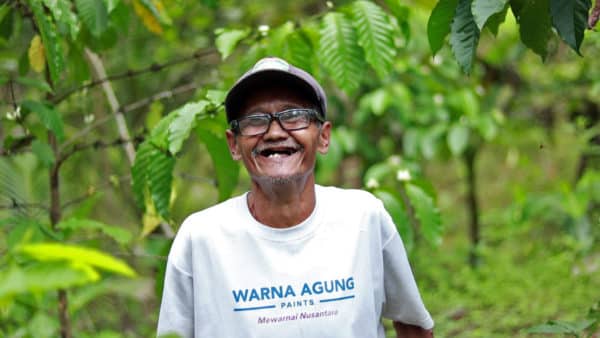
Wasis, The Spring Warrior from Kalirejo Village
Photo: Trees4Trees/Yulianisa Dessenita

Wasis had never thought before that his decision to join the tree planting program initiated by Trees4Trees and Tree Ltd three years ago would be a blessing for many people around him. At the time, Wasis decided to join the tree planting program solely to expand his coffee field’s productivity. However, the trees he has grown not only provide him with a good result but also help preserve the water spring that provides clean water for his fellow villagers 

Wasis lives by himself in a hut not far from his field in Kalirejo Village, Kebumen Regency. There is a water spring established in his field and he is grateful for having it. Although it is little, the water spring is the only clean water source for his daily needs. He also believes the water spring is the key to his fertile field that never runs dry.

Water spring in Wasis’ field produce more clean water after he planted many coffee trees. Photo: Trees4Trees/Yulianisa Dessenita

Growing Coffee is Wasis’ Specialty 

Before returning to his home village eight years ago, Wasis had worked in coffee plantations in Sumatera for more than twenty years. Therefore, growing coffee has been his specialty for years. One day, he decided to come home and brought a few coffee seedlings to be planted in his own field. Although his field is not wide, he has managed it persistently since the beginning.  

Formerly, Wasis planted some timbers, a few coffee trees, and cassava in his field. Unfortunately, cassava did not grow well in his field. Then in 2019, when Wasis received around 200 Robusta coffee seedlings from the tree planting program conducted by Trees4Trees and Tree Ltd, soon, he replaced all cassava planted in his field with Robusta coffee trees he received.  

Harvesting Coffee, Making a Good Income  

After three years growing coffees, a few months ago finally he harvested them for the first time. Deciding to replace cassava with coffee trees was the best decision he ever made. “I got seven kilograms of Robusta coffee beans, and I sold them at Rp27.000 per kilogram,” he said proudly.   

Besides Robusta, Wasis also planted Arabica and Liberica coffee which he brought the seedlings from a plantation where he worked once. Wasis said the selling price of Liberica is higher than the other. “Liberica can reach Rp30.000 per kilogram,” he said.  

To make his coffee trees lush and fruitful, Wasis makes organic fertilizer from cow dung by himself. He believes that the organic fertilizer he applied causes his coffee trees to grow well and fruitful. “I get the cow dung from my neighbors who raise cows. I prefer cow dung better than goat dung because it makes my trees lusher,” he said.  

Coffee beans in Wasis’ field. Photo: Trees4Trees/V. Arnila Wulandani

Planting Trees, Preserving the Water Spring, Helping Local Residents

Wasis has been more than just proud of himself because the coffee trees he planted also made the water spring in his field produces more water than before. According to Wasis, now the spring not only can fulfill his clean water daily need but also other villagers’.  

“Around ten families in a neighboring village not far from here have been lacking clean water,” Wasis revealed. According to him, the local people have tried to dig wells but there was no water coming out. It has been very struggle for them to get clean water for a long time. When they heard the water spring in Wasis’ field has produced more water than before, they asked him permission to take water from there.  

“Water is the most essential thing in life, and they have had a hard time getting it for a long time. I cannot bear not to help them, so I allowed them to take water as much as they need from the spring in my field,” Wasis said.  

The Trees He Grows Bring Fortune 

Wasis said every neighbor who takes water from the spring, then they barter it with food crop yields or other essential things as a thank you.  

“They often barter it with rice grain in return. Usually, I get 50 kilograms of rice grains as a thank you,” Wasis told us. Some people also barter the water with vegetables or other food crops, making him does not need to buy groceries for his daily food. “The water is not only bartered with food. Sometimes, when I need cow dung to make organic fertilizer, they are willing to barter it with water,” he added.  

Wasis said he is so grateful because the spring can help many people and bring such fortune for him. “This spring is getting better because of trees from Trees4Trees and Tree Ltd that I have grown,” he said.  

Now, his biggest hope is to grow more and more trees, especially coffee trees. He wants to get good results to increase his income as well as to preserve the water spring that many people rely on to get clean water.  

Writer: V. Arnila Wulandani

Planting Trees to Improve Farmers’ Livelihood in Kenteng Village

Planting Trees at Kenteng Village Farmers

Kenteng Village Farmers

Planting trees is important because most of the villagers in Kenteng Village, Central Java, work as farmers. They grow food crops such as corn, cassava, and rhizomes such as ginger and turmeric to meet their daily needs. However, the selling price of food crops is not competitive in the market. One kilogram of cassava, for example, is sold at a price of about 1,500 rupiahs (around US$0.10). 

This condition forces farmers to do side jobs to fulfill their needs. Besides farming, most farmers also raise goats to support their families. Recently, many farmers even also make woven crafts from pandan leaves as their side job because the produce from farming is not enough to make a living. 

The villagers are hoping that they can plant trees that can improve their livelihood and rehabilitate their environment at the same time.  

Kenteng Village Farmers_2

Planting tree to rehabilitate the environment 

The soil structure in the village is prone to landslides. But when the dry season comes, drought and clean water shortages threatened this village. In response to this, Faris, Kebumen Trees4Trees Unit Manager is conducting a tree-planting program in Kenteng Village in the 2022 planting season which starts in November. 

Faris revealed that the large number of critically degraded lands and environmental problems that exist  in this village were the main motivations to do  the tree-planting program in this area. 

“Trees4Trees is supporting the village by planting trees in an area of approximately 10 hectares. We intend to plant teak around the village because of the dry soil characteristic. It is most suitable for teak because it doesn’t need a lot of water to grow. Besides, there are also quite a lot of teak trees successfully grown in this area,” said Faris.  

Read also: Preventing Clean Water Shortages and Landslides in Kenteng Village 

Improving the livelihood through planting trees  

The condition of the soil in the village, which is seasonally arid and prone to landslides and drought, makes the life of the people in the village even more difficult. Once these conditions occur, they will disrupt the activity in the village. Farmers must stop their farming activities because collecting water has become the most urgent thing to do.  

Ginardi, the secretary of Kenteng Village revealed that villagers’ biggest hope is they can plant trees that are more valuable than the food crops they are currently growing and can help their environment. 

“We are hoping to be able to plant trees that can maintain the water availability and prevent landslides as well as increase the income of villagers. So, the result of the trees can improve the livelihood of villagers. The result of fruits or other valuable trees like petai or jengkol certainly will greatly benefit the villagers,” Ginardi said. 

Planting fodder trees which fertilize the dry soil  

Apart from relying on agricultural produce, villagers also depend on goats as livestock for their livelihood. Unfortunately, they often have difficulties finding fodder. When the dry season comes, they have to go farther to find it.  

Kenteng Village_donate tree

“Most of the farmers here raise goats as their investment. Currently, they feed their livestock with cassava leaves. But it is still not enough. They have to go some distance away to find more grasses and leaves for their livestock. It takes so much time. So, if we plant trees that are also can be used as animal feed, it will certainly help the villagers,” said Rokhimin, the farmer community leader of Kenteng Village. 

He said that most of the villagers are now interested to plant trees that also can be used as animal feed. Considering the needs of villagers, Faris said that Trees4Trees will plant kaliandra and indigofera trees in Kenteng village beside teak and fruit tree. He said that both trees are also qualified for environmental improvement.  

“Both are not only beneficial as fodder but also improve soil fertility. The village has much barren and fallow land. By planting kaliandra and indigofera, their fallen leaves can amend the topsoil and will increase soil fertility,” he said.  

To help the villagers to plant trees in the village, Trees4Trees is inviting you to take part in #GivingTuesdayForTree campaign and DONATING TREES for Kenteng village until November 29, 2022. You can donate trees through GIVING TUESDAY   

Trees That Absorb the Most Carbon Dioxide

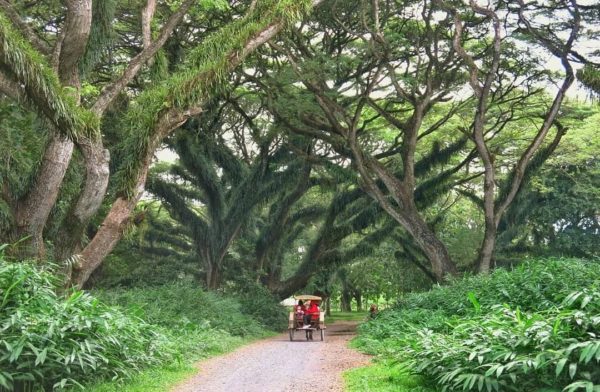
Trembesi trees absorb the highest carbon dioxide
Trembesi trees. Photo: V. Arnila Wulandani

This November, the world celebrates World Tree Day on November 21st to commemorate the great service of trees for all living beings on earth.  

As we know, trees have a significant role in supporting life on earth. Trees not only provide water, home, food, and oxygen which are essential things to live. More broadly, trees have made a great contribution combating climate change. With their ability to sequester and store carbon dioxide, trees keep the stability of the world’s climate. Without trees, probably the earth will only be a lifeless planet.  

Several species of that have immense abilities to sequester a vast amount of carbon dioxide and make a major contribution to life on earth. Some of the tree also can be found in Indonesia. Let us find out what trees absorb the most carbon dioxide!

Trembesi Tree (Samanea saman) 

Local people call this tree species Ki Hujan or pohon hujan which means rain tree. The trembesi tree has an exceptionally large canopy like a giant umbrella. The width of each tree canopy can reach 30 meters. It originates from South America but then spread over tropical countries, including Indonesia.  

Trembesi is more popular as a rain tree due to the water drips from the leaves. In their natural habitat, trembesi tree act as shade tree. Compared to other tree species, a Trembesi tree could absorb a vaster amount of carbon dioxide (CO2), reaching 28,5 tons per year.  

Read also: Indonesian Forest, One of The Largest in the World 

Cassia Tree (Cassia sp.)  

Cassia tree absorbs vast amount of carbon dioxide.
Cassia tree. Photo: wikipedia.

The cassia tree is included in leguminous species. They have beautiful colored flowers such as pink, peach, mauve, and orange. Therefore, they are widely used as ornamental garden trees. Cassia trees can reach 15 meters in height. Several types of cassia trees are also often to be used for reforestation and to combat desertification. Each cassia tree has the ability to absorb at least 5,3 tons of carbon dioxide (CO2) per year. 

Beringin or Banyan Tree (Ficus benjamina) 

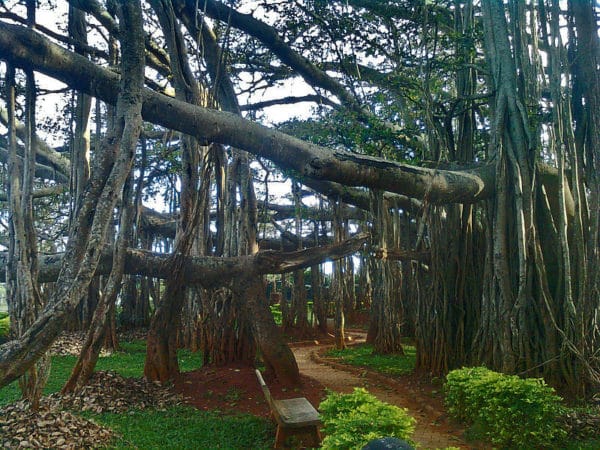
Beringin or banyan tree, synonymous as a haunted tree which has a great benefit for environment.
Beringin or banyan tree, synonymous as a haunted tree which has a great benefit for environment. Photo: Wikipedia.

Although in Indonesia it is known as a haunted tree and synonymous with mystical things, the beringin or banyan tree has extraordinary benefits for the environment. The tree has a high ability to absorb and store water. They also have hanging roots from the branches as their respiration system.
The height of a banyan tree can reach 15 to 25 meters and its age can reach hundred years. In absorbing carbon dioxide, one banyan tree can absorb around 540 kilograms of carbon dioxide (CO2) per year. 

Trees Matoa (Pometia pinnata)  

Matoa tree or pometia pinnata, Papuan tree which absorbs a lot of CO2.
Matoa tree or pometia pinnata, Papuan tree which absorbs a lot of CO2. Photo: Wikipedia.

The matoa tree originates from Papua. The tree can be found in almost all of the lowlands on Papua island. However, this tree species has spread to other areas such as Sulawesi, Maluku, to Java. The height of a Matoa tree is 18 meters on average but can reach up to 50 meters. Matoa fruit has a round oval shape and it has sweet taste. Each matoa tree can absorb around 330 kg of carbon dioxide (CO2) per year. 

Mahoni or Mahogany (Swietenia macrophylla) 

Mahogany tree
Mahogany tree. Photo: Wikipedia.

The origin of mahogany trees is from Central America and South America. The tree can reach 35 meters in height with a diameter of up to 125 centimeters. The mahogany trees act as shade trees in their natural habitat.  However, they are also well-known for their good ability in storing groundwater. Mahogany trees can absorb up to 296 kilograms of carbon dioxide (CO2) per year. 


Source: antara news, dpmg banda aceh portal kabupaten bangka , jurnal asia, muspera mlhk