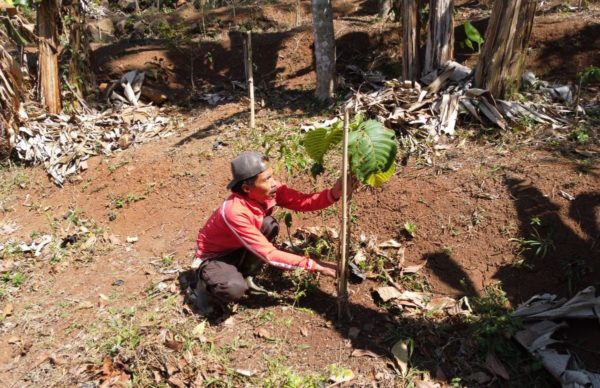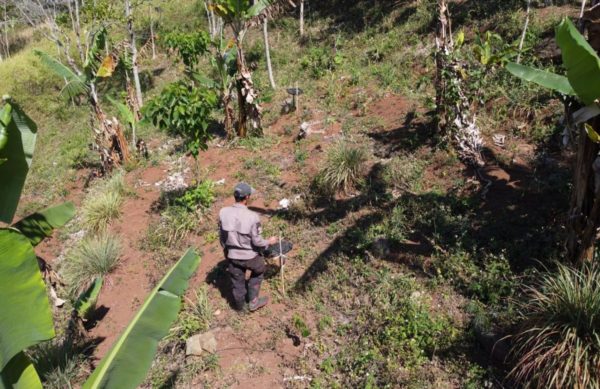
Bali Reforestation: Preserving Water, Local Livelihoods, and Cultural Heritage

Bali

When people think of Bali, they often picture a world-famous tourist destination with stunning beaches, majestic mountains and hills, and a rich cultural heritage showcased through traditional dances, art performances, and iconic architectures. And while that’s all true, Bali is much more than just a tourist destination.  

This island is home to vibrant marine and coastal ecosystems, protected forests, thriving agriculture, and centuries-old traditions deeply rooted in local wisdom. It includes Subak, a traditional irrigation system which reflects the deep connection between nature, community, and tradition. 

However, Bali now faces growing environmental threats, including population growth and deforestation caused by land conversion and excessive land use. These threats not only lead to environmental degradation but also put local livelihoods and traditional practices like Subak at risk, including in the western part of the island, specifically in Melaya District of Jembrana Regency. 

Agricultural Practice and Subak Irrigation System in Melaya 

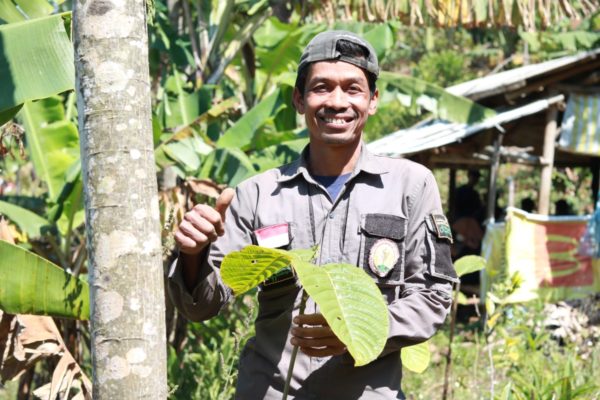
Unlike other regions of Bali, where tourism dominated, Melaya communities depend primarily on agriculture. Rice, coconut, and cacao are the district’s key agricultural products.  

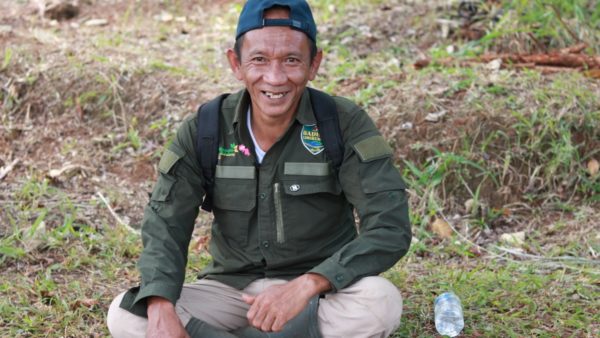
“Cacao production, in particular, has made one of villages in Melaya District, Ekasari Village, renowned as the largest and best cacao producer in Bali,” said Rusmanto Manulang, the Trees4Trees Field Coordinator for Bali. 
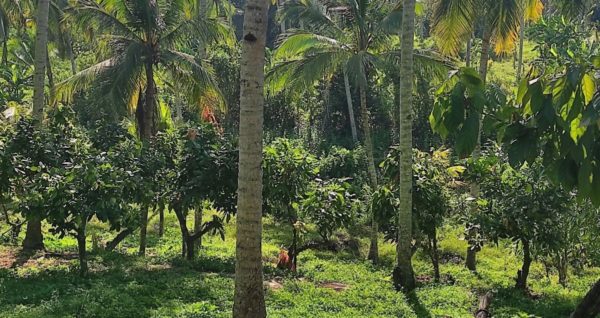
Bali Reforestation
Cacao trees grow alongside coconut trees in agroforestry systems in Ekasari Village, both key agricultural products in Melaya.

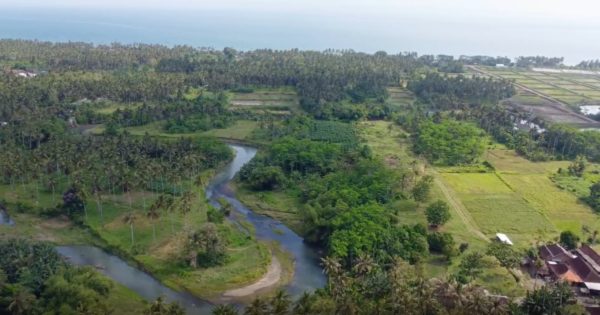
Melaya, where also a home to West Bali National Park and traversed by Sangiang Gede river, practices organic farming and as much of Bali, the agriculture is deeply intertwined with Subak, a traditional irrigation system recognized as a UNESCO World Heritage Site since 2012. The district has 19 Subak sites, spanning over villages, sustaining this centuries-old irrigation system. 

Believed to date back to 9th century, the Subak system follows sustainable and rotational methods, where local farmers work in organized groups, taking turns irrigating rice fields while others grow alternative crops. Water is distributed through irrigation water tunnels network, ensuring equitable access and making water availability crucial.  

“In Melaya, local farmers uphold this practice, working together hand in hand, not only to secure their livelihoods, but also preserve the cultural traditions,” Rusmanto added. 
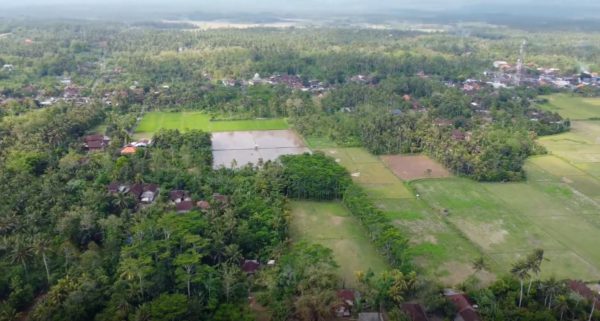
Tuwed village
Rice fields span Tuwed Village, one of Trees4Trees’ tree-planting locations.

Read also: How Do Trees Conserve Water?

Land Degradation in Melaya and the Role of Forest in Water Conservation 

Among Bali’s regencies, Jembrana has the largest forest area, with 49% – approximately 41,307-hectare of its land, covered in forest, according to Ministry of Environment and Forestry (MOEF) in 2021. Most of these are protected forests, serving as habitats for diverse wildlife and sustaining water resources in the region.  

The regency is also traversed by 40 rivers, some flowing into Melaya district, playing a vital role in supporting the Subak irrigation system. This includes the Sangiang Gede river (Tukad Sangiang Gede in Balinese), the longest river in Jembrana, stretching 25,000 meters 

Bali Reforestation
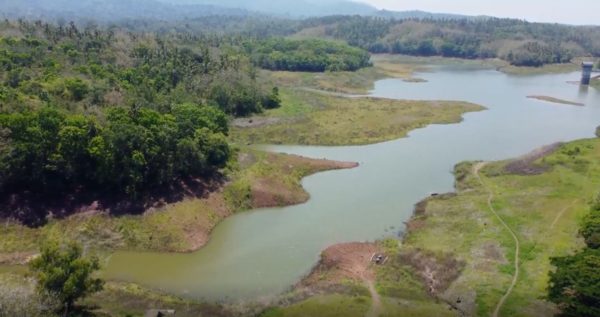
Palasari Reservoir in Ekasari Village stores water of the Sangiang Gede river.

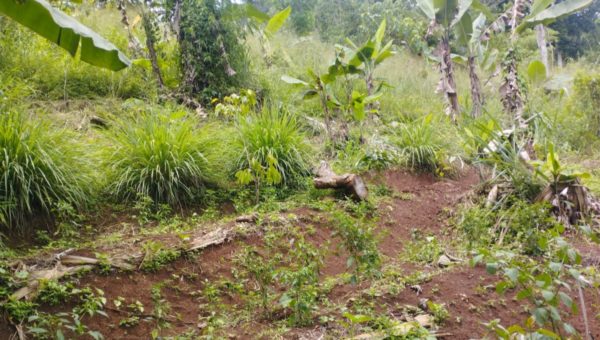
Despite the crucial link between intact forest and water availability, the Sangiang Gede watershed in Melaya district has experienced increasing environmental degradation in recent years, putting water sources at risk. Rapid population growth has led to land conversion for residential and agricultural expansion, resulting in deforestation, erosion that increases river sedimentation, flooding, and water shortages. These challenges threaten both local ecosystems and traditional farming practices.

“Some areas in Melaya Village experience flooding, especially after heavy rain. Meanwhile, in the neighboring Ekasari Village, residents struggle with water shortages during the dry season,” said Rusmanto.

Based on Trees4Trees’ spatial analysis, currently, over 29% of the land in Melaya district, especially in the Sangiang Gede river, has been affected by degradation. It highlights the urgent need for conservation and sustainable land management efforts.  

Trees4Trees Tree Planting: Restoring Nature, Strengthening Communities 

To help local communities address environmental challenges, protect livelihoods, and preserve Bali’s rich agricultural heritage, Trees4Trees is expanding its reforestation efforts on the island. Together with its supporters, Trees4Trees has recently planted over 17,000 trees across two villages in Melaya District: Tuwed and Ekasari. 
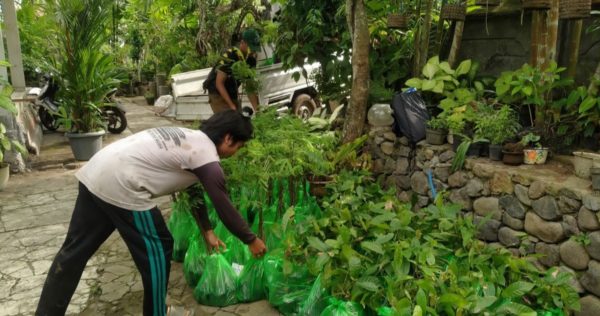
Bali Reforestation
Tree seedlings distribution in Tuwed Village.

Read also: Expanding Green: Trees4Trees Planting Season 2024-2025

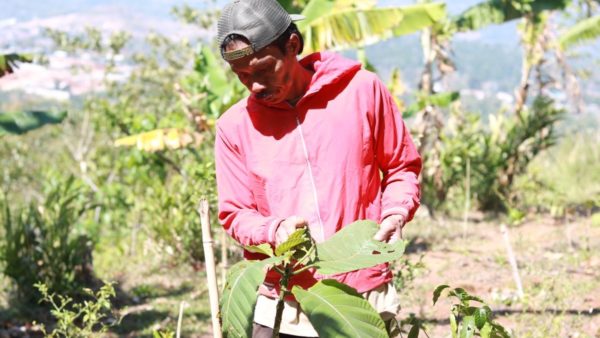
Focusing on cacao and albizia trees, the initiative spans approximately 25 hectares.  It aims to support local farmers and protect forests bordering the villages, which are vital in sustaining the river supplies water to the Subak. With a long-term vision of restoring ecological balance, strengthening local economies, and safeguarding cultural traditions in Bali, Trees4Trees is committed to expanding this initiative in the years ahead.  

You can also participate in this reforestation program! Make a lasting impact on the environment, agriculture, and local communities in Bali by planting trees together with us.  

Contact us at info@trees4trees.treesforplant.com to learn more about how to get involved in the Bali Reforestation! 

Writer: V. Arnila Wulandani. Photos: Muhammad Ely Nezar & Rusmanto Manulang 

Supporting Women Farmers Through Reforestation in the Citarum Watershed

Supporting Women Farmers

Most people living upstream of the Citarum watershed, which spans West Bandung Regency in West Java, make their living from farming. For Sundanese – the main ethnic group in West Java – this is more than just a source of income. It is a tradition passed down through generations. Many of the farming community here are women, most of whom have been working the land from an early age. 

Over 5,000 woman farmers have participated in tree-planting activities since Trees4Trees first began its Citarum watershed reforestation efforts in 2021 (around a quarter of the total turnout). With funding support from AstraZeneca and One Tree Planted, these women have been able to preserve family traditions and improve their economic independence; their participation also highlights the key role women must play in restoring the environment and strengthening communities.  

Read also: The Story of Euis Maryati: Widowed and Planting Trees to Support Her Family

Family, Farming and Tradition: Continuing the Legacy in West Java  

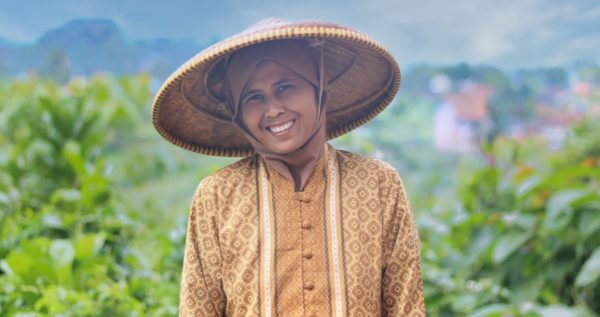
“I’ve never left my village and have worked the soil with my family since I was a teenager,” explains Aisha (60), from Ancolmekar Village. She is one of many local women who have dedicated their lives to farming.  

Aisha joined Trees4Trees as a grower in 2021 and quickly demonstrated her exceptional skills. In 2022, she was recognized as one of the best farmers in the area. “My farming skills have improved over time,” she explains, “because farming has been my habit for decades, sharpening my ability to nurture every plant I grow.” 

Iis Hasanah (47), from Cijambu Village, spent 11 years working abroad as a household servant in Saudi Arabia before returning home to settle down and continue her family legacy of farming.  “After elementary school, my mother often brought me to the field,” she remembers, “which showed me how to sow seeds and grow trees and crops.” She now splits her time between farming and caring for her son, passing her skills on to the next generation. 

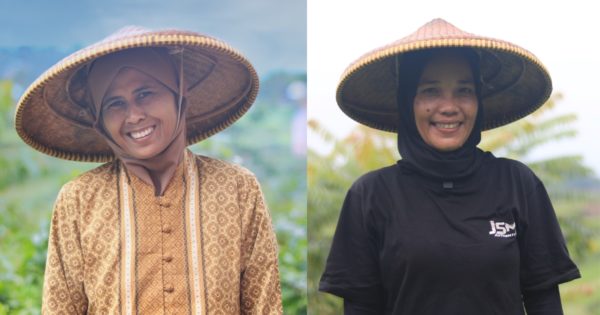
Iis Hasanah and Aisyah
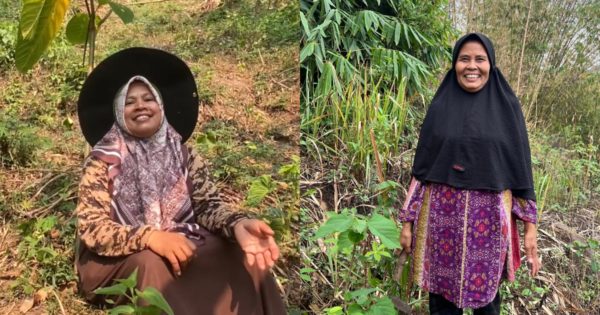
Iis Hasanah (left) and Aisah (right) have determined to work the land and continue their family legacy.

Nurturing Families by Caring for Nature 

For some women, farming offers a connection to their roots. For others, it is a way to provide for their families. Maryati (43) from Kutawaringin Village began farming in her 20s to supplement her family’s income and put her two children through school.   

“In addition to shade trees, I chose to plant fruit and coffee trees due to their competitive prices,” says Maryati. “This way, I can help my husband earn additional income and save more money to secure our family’s economy.”  

Supporting Women Farmers
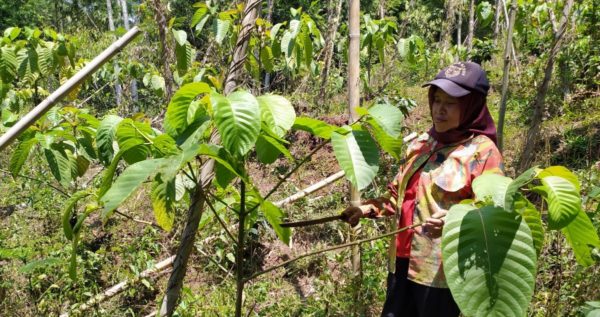
Maryati prunes the leaves of a burflower-tree, part of her daily commitment to care for trees she has planted.

Kokom, from Mekarjaya Village, has been farming for 10 years. On her plot measuring 700 sqm, she grows cassava and peanuts, along with fruit trees. “I sell fruits like avocado, along with coffee and cloves, to cover my children’s needs,” she says. “Crops like cassava, peanuts, and vegetables are for family consumption, which helps us save money on food.”  

Read also: Reviving Clean Water Access in Lebak Muncang Tourism Village: Elis’ Tree Planting Initiative

Women’s Empowerment: The Key to Environmental Preservation  

The active participation of women in Trees4Trees’ Citarum watershed restoration efforts demonstrate their determination to be productive. Andini Mulyani, a woman farmer from Mekarjaya Village, believes women are equally capable of contributing to their communities as men. “It’s not about competing with men,” she says, “but having equal opportunities and roles. Farming isn’t only for men, women can do it too.” 

Supporting Women Farmers
Kokom (left) and Andini Mulyani (right) believe women farmers are equally capable in contributing to both the community and environment.

Through the Citarum watershed reforestation initiative, women are given equal opportunities in tree-planting, including access to seedlings, training and capacity building, and various other benefits. These resources empower them, not only to contribute to their community and families, but to positively impact the surrounding environment. “We receive free seedlings, the yield is ours, and the training sessions help women farmers like us improve our knowledge,” says Iis. 

Despite living near the watershed, many areas in the Citarum watershed face drought and water scarcity. Aisha believes tree-planting activities enable women to collectively address these environmental challenges.  

“Drought, landslides, and water shortages are common issues here,” she says. “The planting initiative from Trees4Trees gives us the chance to preserve water, prevent disasters, and develop our livelihoods while improving the surrounding environment.” 

By empowering women farmers as tree-growing partners, Trees4Trees’ Citarum watershed reforestation program is restoring degraded lands and building community resilience to the impacts of climate change. Crucially, these positive impacts are rooted in local tradition and the principles of gender equality within sustainable social forestry practices. 

Writer: V. Arnila Wulandani. Editor: Chris Alexander. Photos: Zaki Luqman, Giri Satriyo, Adia Mufidz, Kemas Duga Muis for Trees4Trees 

Plan a Perfect Nature Date

Plan a Perfect Nature Date

While the digital era offers countless ways to connect, including online dating, many are rediscovering the joy of real-world connection. Simple pleasures like going on park dates, reading books side by side, or going camping are growing in popularity, even amidst the excitement of online world.  

If you and your loved one enjoy exploring nature, taking in a scenic view, or engaging in outdoor activities, nature dates could be a perfect way to strengthen your bond and grow your relationship through an eco-friendly, real-world connection. In this article, we will share nature-inspired date ideas and tips to bring you closer to each other, along with the many benefits of embracing the beauty of the natural world in your romantic moments. 

Why are nature activities good for you? 

Spending time in nature can be a refreshing reset from your daily routines, reduce stress, and improve your mood. Shifting your focus from computer screens and piled-up work to green spaces, blue skies, and ocean allows you to take a break for a while, then return to your routine feeling more refreshed and productive. Immersing yourself in nature also gives your body a healthy workout, and, most importantly, allows you to breathe fresh air that’s good for your lungs. 

While offering so many benefits for your mental and physical health, enjoying nature with someone you love is also wonderful for strengthening your relationship. Sharing outdoor experiences with your partner offers quality time that helps you understand each other better and perhaps fall in love all over again. 

Read also: 10 eco-friendly activity ideas to enjoy with loved ones  

Plan a Perfect Nature Date

Photo: Pexels

What to prepare for a romantic nature date 

A nature date doesn’t mean sacrificing romance! Here are some ideas to help you plan a romantic nature date! 

Pick the perfect place  

Whether it’s going to a hill, waterfall, beach, lake, or just taking a cozy walk through an urban forest, choosing the right location is key. You can decide on a place you both love, or if you want to have a little surprise, pick a destination your partner has always dreamed of visiting.  

Plan meaningful activities  

Plan activities that bring you closer together and create lasting memories. This could involve watching the sunset together at the beach, camping on a hilltop to catch a breathtaking sunrise, fishing at a serene lake, or having a perfect picnic in the park. For an even deeper connection, volunteering together for an environmental cause, like planting trees, or restoring mangrove forest can be a perfect activity.  

You can contact us to learn more about organizing a tree-planting event and participating as a volunteer! 

Set the mood and ambience  

A love story isn’t complete without the right ambiance! Enhance the romantic atmosphere by packing a delicious picnic, decorating your tent with fresh flowers, or adding solar-powered fairy lights for a magical glow while camping. Playing soft music can also add to the romantic feel.

Express your love through nature 

Expressing love can be even more wonderful in a natural setting. Gift your partner a meaningful piece of eco-friendly gift, like a bouquet of flowers or a planted tree with a certificate with your partner’s name on it. Not only does it create a memorable experience but also leaves a lasting, positive impact on the planet. You can gift a planted tree through us. Click here to learn more!

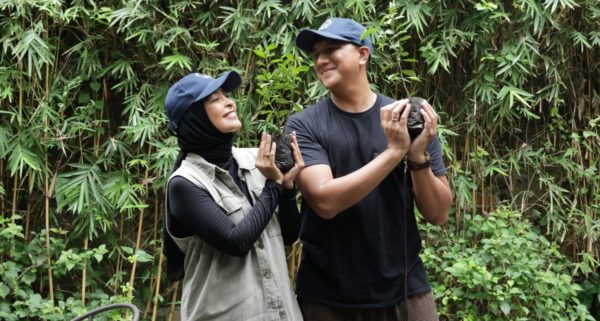
Arda dan Tantri Kotak

The benefits of a nature date 

Going green on your date brings benefits to your relationship and love life, mental and physical health, and helps the planet. So, what rewards can you gain from a nature date? 

Reduce waste and carbon footprint  

Opting for eco-friendly date activities helps lower your carbon footprint. Planning a picnic sustainably, plastic-free packaging, or giving an eco-friendly gift further minimizes waste. By making mindful choices, you’re not only creating memorable moments together but also showing love for the planet.  

Encourage meaningful conversations 

Spending time in nature offers the perfect setting for heart-to-heart conversations. It allows you to have much time to connect deeply with your partner, sharing dreams, reminiscing, and strengthening your bond without digital distractions. 

Whether you’re an outdoor enthusiast or just trying a sustainable date for the first time, these simple yet meaningful experiences can create an unforgettable moment, blending romance and love for the environment. So, why not plan a nature date this Valentine’s Day? Surprise your partner with an eco-friendly adventure that nurtures your love and the planet! 

Writer: V. Arnila Wulandani. Photo: Yulianisa Dessenita, Pexels

Learning Love from Trees

Trees

Photo: Pexels

Green, shady, and life-giving. Trees are truly nature’s incredible gifts. They are uniquely beautiful creations on Earth, but most importantly, we depend on their existence to live. 

As we walk through green spaces, have we ever paused to appreciate just how much trees give us? Their benefits go far beyond their beauty, with their roots bind soil and water, keeping the land fertile and securing water sources. Their branches and dense canopies protect us from storms and scorching sun, regulating the temperature. They also have incredible ability to filter pollutants, giving us clean air to breathe.  

Trees are indeed essential to life on Earth, but did you know they also teach us about love? 

From their life cycle to their resilience through changing seasons, trees teach us that love is something that continues to grow. It is about sincerity, sacrifice, giving, and nurturing life around us. Trees also remind us that love is universal, embracing everyone and every living thing in our surroundings. So, what can we learn from trees? Here are inspiring lessons we can learn about love from trees!  

Unconditional Love 

Like true love, trees give everything without asking for anything in return. They provide all living beings with air, water, food, shelter, and medicine, which all of them are everything we need to survive.  

From trees, we learn to give love, show kindness, and help those in need wholeheartedly without expecting reward or something in return. Let your kindness and love flow unconditionally, just like trees nurture all life around them! 

Learning Love from Trees

Patient and Resilience 

Trees grow through changing seasons and sometimes face harsh conditions. Likewise, love can also be challenging, and it needs patience and resilience. Just as trees stand firm and endure tough weather, they teach us the value of perseverance in love. Strong and deep love takes time to grow, and patience and steadfastness are essential to nurturing a love that lasts through all seasons of life. 

Growing  

Trees continue to grow and evolve over time. Regardless of the weather and the conditions, they persist in their growth. Interestingly, they grow by following the direction of light. This reminds us that love also needs to grow in a positive way, adapting well to change. It may take time to develop, but once love grows strong, just like mature trees that provide shelters, bear fruits, and support life, love can bring happiness, offer help and support to one another. 

Learning Love from Trees

Encouraging and Protecting Each Other 

Research showed that trees can communicate with each other and thrive better when growing together in a community. Trees communicate through mycorrhizal networks, an underground fungal network connecting their roots. This network allows them to share resources and information. Through their roots, they communicate and exchange information about water availability, nutrient levels, and other environmental conditions. Furthermore, they also release chemical signals into the soil, allowing nearby trees to detect. This incredible system allows trees to protect and support one another. From this, we learn that communication, encouragement, and mutual care are essential elements of love.  

Read also: Easy Ways to Show Love Languages to Mother Earth 

Embracing Differences to Create Harmony  

Diverse tree species grow together in forests. They interact with each other and create a balanced and harmonious ecosystem. This teaches us that every individual is unique, with different characteristics, way of thinking, appearance and background. But true love lies in appreciating those differences, embracing them, and using diversity to create harmony of life.  

Learning Love from Trees

For centuries, trees have symbolized vital aspects of life, including courage, wisdom, resilience, protection, and longevity. Beyond sustaining life, they also offer profound lessons about love: unconditional giving, patience, growth, and harmony. This February, as we celebrate love, let us extend it beyond ourselves. Join us in planting trees. Like love, each tree we plant today will continue to grow, protect, and provide for generations to come. Plant trees with us!  

Writer: V. Arnila Wulandani. Photo: Yulianisa Dessenita, Kemas Duga Muis, Pexels

Eco-Friendly Farming: Cicalengka Farmers Move Beyond Timber Logging

Eco-Friendly Farming

For farmers in Nagrog Village, Cicalengka District, West Java, farming is not just a job that fulfills their daily lives, but a cultural heritage passed down through generations. Most of them inherit family land, which they manage by growing crops and trees. They harvest and sell their yield, providing them with a decent livelihood.  

Traditionally, crops like chili, banana, citronella grass, clove buds, and some vegetables formed their primary harvests. They also cultivated trees like burflower (jabon), gmelina, and albizia (sengon), earning income by logging and selling the timbers. However, in recent years, many of them have recognized the need to adopt more environmentally friendly practices to secure their livelihood for the future. 

Trees
Crops like citronella grass, bananas, and vegetables are typical crops planted in farmers’ lands.

From Harvesting Timber to a New Eco-Friendly Farming Model 

“Logging trees for timber is an outdated way to earn income,” said Faisal, one of Nagrog Village’s farmers. “For us, cutting down the trees and selling the timber is a thing of the past. We’re transitioning to a farming model focused on growing trees without cutting them down. Tree cover is essential for preventing erosion and controlling rainwater runoff in our village,” he explained.  

In recent years, the farmers in Nagrog Village have united to create a greener future. As an initial step, they have shifted their focus to cultivating more trees and crops, prioritizing the sustainable harvest of fruits and leaves over cutting timber.

Eco-Friendly Farming
Faizal took a rest after working on his land in Nagrog Village

Maximizing Cloves and Citronella Grass 

Clove trees and citronella grass are the main crops they cultivate lately. “Clove buds fetch a good price in the market. It’s 80,000 rupiah per kilogram,” shared Agus, another farmer. “Citronella grass grows exceptionally in our village land, with consistent demand and good prices as it’s used for essential oils,” he added. Agus also noted Arabica coffee’s potential, priced between 15,000 and 18,000 rupiah per kilogram, although market fluctuations are a challenge. “So, we need to diversify crops and fruit trees to stabilize our income,” he emphasized.  

On the other hand, Yaya, another farmer, faces different challenges when growing cloves due to his open land exposed with direct sunlight. “The dry season has always been tough, especially last year. Many of my young clove trees didn’t survive the heat. My crops also struggled,” he said. “I’ve used shading nets, but I think more shade trees are needed to reduce the heat and improve their survival rate,” he said. 

Agus is taking care of burflower trees he planted, ensuring they grow healthy.

Tree Growers

Greener Future with Tree Planting Support 

In 2022, new hope arrived for the green initiatives taken by farmers in Nagrog Village. EcoMatcher, in collaboration with Trees4Trees introduced a tree planting program that engaged local farmers as tree grower partners. Among the participants were Faizal, Agus, and Yaya, who benefited from the program.  

“I received over 400 tree seedlings of clove and burflowers trees. This really helped me since I can’t afford them on my own,” said Yaya. He considered cloves to enhance the existing trees he planted, and burflowers to provide shade for his sun-scorched land.  

Eco-Friendly Farming
Yaya is working on his land, where he implemented agroforestry by combining crops and trees.

Faisal highlighted how the program supports farmers in multiple ways, not only providing free seedlings but also advanced farming knowledge. It includes teaching farmers with agroforestry technique to optimize results both income and environmental health.  

“We planted burflower trees to provide shade for our crops. Citronella grasses were planted on sloped lands to prevent erosion, and clove trees were added to our existing stock, offering valuable buds in six years while benefiting the environment. We’re truly grateful for this program,” Faisal said. 

Cultivating Hope for the Future  

With increased tree cover supporting their green initiatives, farmers are now exploring further innovations. “Clove trees offer benefits beyond the buds; their leaves can be used for essential oil production. We’re also looking into enhancing income from citronella grasses by producing essential oils ourselves, because the demand is high, and the market is competitive,” said Faisal. 

However, a lack of production machinery and knowledge remains a challenge for them. Despite this, they remain hopeful about realizing their dream. “With more trees planted, we believe doors open to further improvements in our sustainable farming practices,” added Faisal. 

In line with Faisal, Agus expressed his commitment to working with fellow farmers in his village to implement environmentally friendly farming practices. “I’m no longer interested in logging trees for timber. By preserving trees, we protect the environment and safeguard our village’s water sources for our community’s lasting survival. I think that is the most important thing,” he said. 

Writer: V. Arnila Wulandani. Photo: Kemas Duga Muis

7 Eco-Friendly DIY Christmas and New Year Decorations Using Tree Parts

7 Eco-Friendly DIY Christmas

Christmas and New Year are just around the corner. Decorating a Christmas tree, adding festive touches to your home, and preparing meaningful gifts for loved ones are some of the most exciting traditions of the season.  

As the classic colors of red, green, and gold are the hallmark colors of Christmas and New Year that bring ambience of warmth and joy, this year why not try something different by creating eco-friendly decorations that connect you more with nature?  

Tree twigs, leaves, fruits, or even planted trees can be transformed into stunning Christmas and New Year decor. Best of all, you can make them yourself at home! Here, we present 7 eco-friendly DIY Christmas and New Year decoration ideas using tree parts and planted trees. Let’s explore these simple projects and make your holidays even more special! 

Pine cones decoration 

When walking through a pine forest or along streets lined with pine trees, don’t forget to look around and collect fallen pine cones. Add a touch of gold or white glitter to the tips of the cones for a shimmering effect. These glittery pine cones can be used as hanging decorations for your Christmas tree, decorating candle holders, or Christmas wreath. 

Pine Cones

Source: Pinterest

Dried oranges hanging decoration 

Slices of dried oranges can be a unique, affordable, eco-friendly, and fragrant way to decorate your home. What you need to do is just to slice oranges you do not want to eat into thin slices, then dry them. You can heat them with an oven or if you live in a tropical country, you can dry them in the sunlight. You can insert a thread to a single or few slices of oranges to make a hanging decoration for your Christmas tree. You can also mix them with star anise, cinnamon bar, or dried cherry. 

7 Eco-Friendly DIY Christmas

Source: Pinterest

Leaves and grasses Christmas wreath 

Fallen leaves and grass often seem invaluable. However, they can be transformed into a beautiful and eco-friendly Christmas wreath. Arrange grasses and various types of leaves in different shapes onto a circle rattan, cardboard, or braided tree root as a base. You can use glue or thread to arrange them. Enhance the design by adding pine cones, dried flowers or fruits, and decorative ribbons. Hang your stunning wreath on your door or wall to bring eco-friendly and fresh ambience to your home. 

DIY Christmas

Source: Pinterest

Dried leaves and flowers greetings card 

Real leaves and flowers can also be transformed into stunning decorations for greeting cards. You can use them fresh or dried, depending on your preference. Start with folded recycled paper and glue uniquely shaped leaves and a flower piece to the front. Add a ribbon, dried roots, thread, or a splash of paint to enhance its aesthetic appeal. These handmade greeting cards can be displayed as home decorations or sent alongside gifts to your loved ones. 

7 Eco-Friendly DIY Christmas

Source: Pinterest

Twigs Christmas tree 

Fallen twigs can be transformed into a creative and eco-friendly alternative to a Christmas tree. You can design them as either a hanging tree or a stacked tree.  

For a hanging twig tree, gather five to ten twigs of varying lengths. Arrange them in order from shortest to longest, then tie the ends of each twig to one another using rope or string, leaving spaces between them. Hang the structure on a wall and decorate it with fairy lights and small hanging ornaments. 

Christmas Trees

Source: Pinterest

For a stacked twig tree, you’ll need an upright stick as the base. Drill a hole through the center of each twig, then slide them onto the base stick, starting with the longest twig at the bottom and ending with the shortest at the top. Finish the look with string lights and festive decorations.

Source: Pinterest

Pot mini Christmas tree  

A mini live tree is an excellent choice for an eco-friendly Christmas decoration. You can select a young pine or another lush potted tree. Simply decorate it with small hanging ornaments and place it in a corner of the room.  

Source: Pinterest

Planted poinsettia Christmas decoration 

Did you know that the vibrant red flowers associated with Christmas decorations are poinsettia flowers? These shrub plants, native to Mexico and Central America, have spread worldwide and well-known as a Christmas decoration due to their bold red color and the star-shaped crown. Instead of using artificial flowers, consider decorating your home with live potted poinsettias to create a festive ambiance in red and green.

Source: Pinterest

These DIY decorations can also be thoughtful and eco-friendly gifts for your loved ones this Christmas and New Year season! For an even more meaningful gesture, consider gifting Trees4Trees planted trees alongside your handmade creations. 

Our planted trees provide immense benefits to the environment and communities. They have been planted in degraded areas and help local farmers enhance their livelihoods. To gift trees, simply visit our donation page, make a contribution, and provide the recipient’s email address along with a personalized message. We will email a tree planting e-certificate featuring a unique code that allows the recipient to view their trees online. You’ll also be notified once the certificate has been sent to your loved one. 

Click this LINK to learn how to gift trees with us! 

Writer: V. Arnila Wulandani