Amplifying the Reforestation Message with Tantri and Arda: Trees4Trees’ Green Ambassadors

Tantri Arda

Tantri Arda

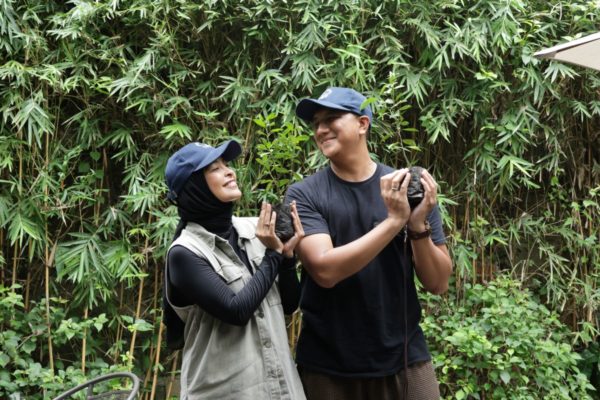
Trees4Trees has taken a new step in broadening its reforestation message by partnering with Tantri Syalindri, lead vocalist of the renowned Indonesian rock band Kotak, and her husband Arda Hatna Danarda, an Indonesian pop singer as green ambassadors. This collaboration aligns with the shared mission of Trees4Trees and Tantri and Arda to promote environmental preservation efforts in Indonesia. 

Through this collaboration, the spirit of protecting the environment and Indonesia’s natural resources is expected to reach a wider audience, particularly the younger generation.  

Creating Environmental Protection Songs and Raising Awareness Among Fans 

As musicians, they have incorporated environmental messages into their songs and performances. In 2015, Tantri and her band, Kotak, released a song titled “Jagalah Bumi” (Protect the Earth) as the soundtrack for a children’s series. Two years later, she collaborated with her bandmate, Chua, the bassist, to create another environmental song in a strong rock style, titled “Hijaukan Bumi” (Green the Earth). 

Due to the environmental messages conveyed in their songs, they gained opportunities to be involved in several environmental preservation projects. One involvement was in a tree-planting program to green the roadsides of tollways, initiated by one of Indonesia’s state-owned companies.  

Arda, on the other hand, spreads awareness about environmental preservation in his own way. “As musicians, we spread environmental messages through our work. The simplest way I contribute is by actively reminding the audience not to litter and leave garbage at the concert venue,” Arda explained. 
Tantri Arda
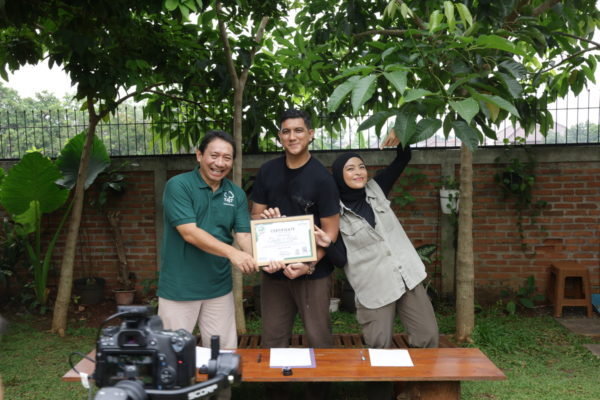
Arda and Tantri received a tree-planting E-certificate from Trees4Trees Program Manager, which they can track tree’s location through unique code called World Identification Number (WIN)

Applying Green Action on Their Wedding and Daily Life  

Planting trees has always been part of Arda’s life. His mother, who comes from a mountainous region, was familiar with planting and passed this habit to her children. “I’ve been planting trees since I was a kid because my mom taught me how. It became a regular part of our lives,” said Arda. When he married Tantri ten years ago, the couple decided to give tree seedlings to their guests as wedding souvenirs, reflecting their care for the environment and nature. 

“Now, ten years later, some of our friends still send us pictures of how tall the trees have grown. It’s incredible to see the growth of something we gave them as a small seedling, and now they are thriving. I’m also grateful that from the little seedlings we gave, then spreading to our friends and acquittance’s home, then creating great impacts by providing the oxygen and shade,” Tantri shared. 

Now, their green habits have been introduced to their children. They not only plant various types of trees and plants around their home, but also teach their kids how to do the same. “I believe it’s human nature to enjoy greenery and feel at ease surrounded by plants and trees, connecting with nature. A green environment brings tranquility, and many ideas are born from that kind of space,” said Arda. 
Tantri Arda
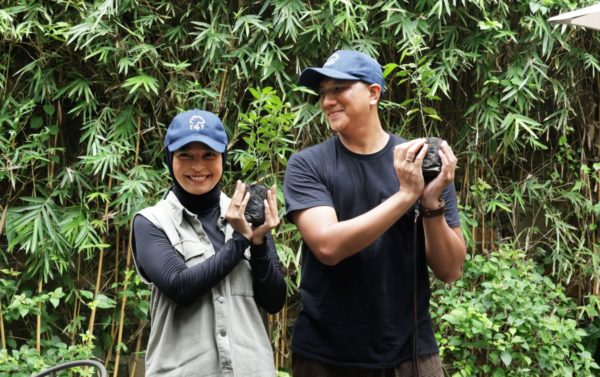
Arda and Tantri introduced a symbolic gesture—a half-closed hand, representing that planting trees is also planting hope for a better future.

Voice Out: Planting Trees for Hopes  

In partnership with Trees4Trees, they committed to promoting the message and spirit of reforestation. Over the next three years, they will collaborate with Trees4Trees on digital campaigns to inspire more people to protect their environment, helping the Earth thrive. Arda introduced a symbolic gesture that will align with this partnership campaign—a half-closed hand, reminiscent of a prayer—representing the idea that planting trees is also planting hope for a better future through a healthier planet.  

This partnership aims to make a lasting impact by raising awareness and encouraging sustainable practices toward Indonesia’s audience. “We have experienced climate change effects, like extreme heat or heavy rain that leads to flooding. I think witnessing these conditions should prompt us to evaluate ourselves. What have we done to preserve and care for our Earth?” said Tantri. 

She also emphasizes that simple actions, like planting trees around our homes, can make a difference. “Planting trees is one of the simplest ways to show our care for the Earth. We can start with our surroundings. But if you don’t have space, you can plant with Trees4Trees. There are plenty of areas out there where we can contribute to reforestation. So, I invite you to help green the Earth for a better life,” Tantri encouraged. 

Writer: V. Arnila Wulandani. Photos: Yulianisa Dessenita 

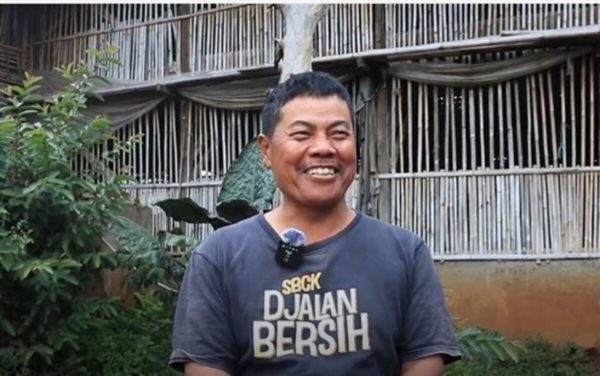
Abah Dayat: Planting the Seeds of a More Sustainable Future

Abah Dayat

Abah Dayat

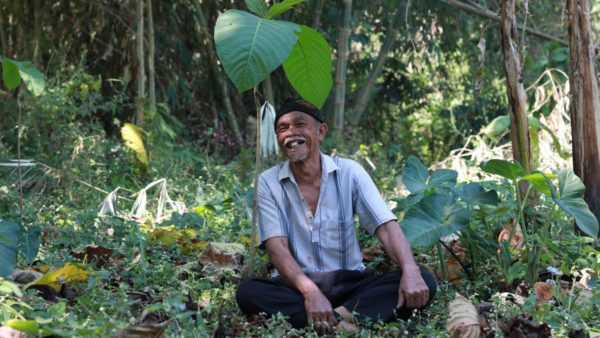
For Abah Dayat, farming is more than a job; it is a passion that has consumed him since he was young. Now 70 years of age, with nine children and 13 grandchildren, he still works the land, planting trees and caring for his livestock. Through a combination of crops and seasonal construction work, he continues to provide for his large family. 

Now in his twilight years, Abah’s focus is shifting beyond seasonal harvests to a more sustainable long-term future; ensuring his descendants grow up in a world that is green, clean, and fertile. With support from Better Green and Trees4Trees, Abah is making this dream come true. 

Creating shade, shedding light on new opportunities 

Abah Dayat lives in Citaman Village, in the Nagreg District of Bandung, where he is a member of a farmers’ collective called Hutan Karya Tani Mandiri Utama. On a plot of land covering 2,800 m2, he has spent years farming cassava, corn, and tobacco. But with a lack of shade, his crops tended to suffer under the equatorial sun. 

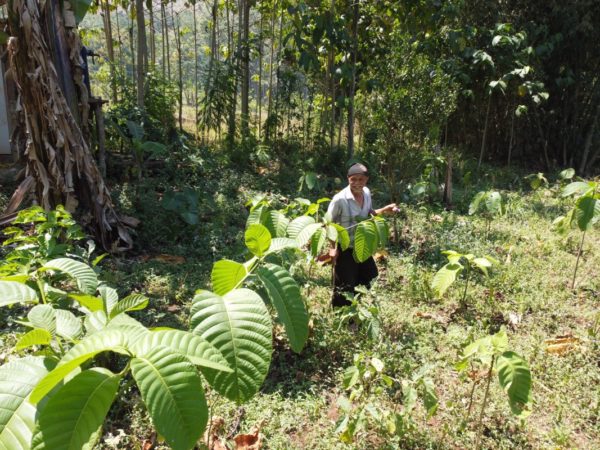
In search of solutions, Abah joined the Trees4Trees tree-planting program in 2022 and quickly began planting seedlings. The new trees have already had a transformative effect on the landscape, providing shade, fresh air, and helping the soil to retain moisture. The fruits provided by these new trees also offer a new source of income. 

“I take care of my plants in a simple way, so they become fertile,” explains Abah. “First I clean away the grass and weeds, then I give them organic fertilizer that comes from the manure of my chickens and goats, then I water them regularly to help them grow.” With this careful and caring approach, Abah has been successful; only a small number of seedlings have failed to take root – the majority have flourished. 

Abah Dayat
Abah Dayat, standing next to one of his young burflower (jabon) trees provided by Better Green and Trees4Trees. Photo: Trees4Trees.

Working with nature to provide for people 

This tale of fertility is a relatively new chapter, changing the narrative in a story that had long been characterized by failure. “Previously there were no trees on my land, only secondary crops,” says Abah, who believes the turning point came with his involvement in the Trees4Trees planting program. “After receiving tree planting assistance from Trees4Trees, now my land is greener because lots of fruits, timber, and other multi-purpose trees are growing.” 

Abah Dayat
Abah Dayat, caring for the next generation of trees planted in Citaman Village, West Java.

Citaman Village is located in the Citarik sub-watershed, on the banks of a tributary to the Citarum River. Trees4Trees has committed to rejuvenating this area, regreening the banks of the Citarum and its tributaries in order to support ecosystem health and improve quality of life for those living off the land. 

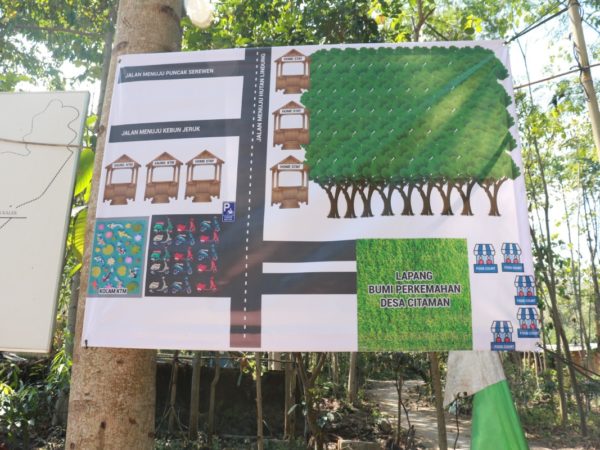
Part of this approach includes supporting local livelihood opportunities with an emphasis on sustainable practices. One such initiative is centered around a public camping ground. Every weekend, around 100 tourists come here to enjoy the views, breathe the fresh air, and hike the nearby hills. 

Since he began planting trees around this camping ground, Abah has noticed the interconnectedness of natural health and the well-being of local people. “The trees I planted not only provide shade,” he explains, “but also improve the fertility of the land, making nature and the environment around here more sustainable.” The new trees have also made the area more attractive to visitors, offering Abah and his community additional income opportunities through ecotourism.  

camping grounds
The camping grounds in Citaman Village welcome around 100 ecotourists each week, providing sustainable livelihood opportunities for residents. Photo: Trees4Trees

Hopes for the future 

Abah Dayat is one of several farmers sponsored by Better Green. With support from Trees4Trees as program implementer, Better Green has committed to planting 30,000 trees between 2022 and 2027. To date, 12,000 have already been planted, including those on Abah’s land. 

For Abah, this partnership represents the promise of a better tomorrow. “I see these trees as an investment in the future, which I hope will be enjoyed by my children and grandchildren after I am gone,” he says, before describing replanting is a kind of social responsibility. Now, after a lifetime lived as a farmer, Abah describes himself simply as “a human being committed to preserving nature.” 

Looking back on the past two years, and planning for the future, Abah has a simple message for his supporters: “I would like to thank Better Green and Trees4Trees for the seedlings they have given to me. With their help, I believe my land will become fertile again and provide benefits to nature, my family, and my community for many years to come.” 

Writer: V. Arnila Wulandani. Photo: Kemas Duga Muis for Trees4Trees

Conserving Nature, Preserving Sundanese Traditional Culture in West Java

Conserving Nature

“I train my sheep to run and swim, build their body strength with massages, and provide them with nutritious food,” explains Maman Abdurohman, a farmer and sheep breeder from Ibun Village in West Java. “This includes vitamins, eggs, honey, and leaves like gmelina,” he added. 

Like most farmers in this region, Maman is a member of the Sundanese tribe, an ethnic group famed for their performance arts. One of their most iconic traditions is a sheep festival which traces its roots back to the 1800s, when these gatherings offered a way for farmers to meet, barter for livestock, and share their knowledge. 

Generations later, the annual sheep show continues to draw the crowds. And now, with support from Trees4Trees, farmers are combining animal husbandry with reforestation efforts; keeping traditions alive, while helping West Java stay green. 

The value of tradition  

The annual sheep gathering, known locally as kesenian ketangkasan domba, is truly unique. Part livestock auction, part beauty pageant, it features a range of activities to demonstrate the animals’ physical strength, health, agility, and beauty – particularly the size, shape, and curvature of their distinctive horns. Accompanied by traditional Sundanese music, the sheep parade is an unforgettable spectacle. 

Conserving Nature
(Above) With traditional music, parades, and demonstrations of animals’ strength, the traditional sheep performance (kesenian ketangkasan domba) is a major highlight in the farming calendar
Farmer
(Above) Yeyen Sopian, a farmer and sheep breeder from Ibun Village in Bandung Regency

“The competition aims not only to find the strongest and best-looking sheep,” explains Yeyen Sopian, a farmer from Ibun Village, “but also to preserve this traditional art as part of Sundanese culture. Each competition draws a big crowd, and the winning animals can be worth a small fortune to their owners. 

“The better their performance, the higher their price,” says Maman, noting that a strong showing in the event can increase a sheep’s value to around 40 or 50 million rupiah (USD 2,500–3,100). “Actually winning the competition can raise their value to 100 or 200 million rupiah (USD 6,300–12,750),” he adds, with a sense of wonder and excitement. 

Conserving Nature
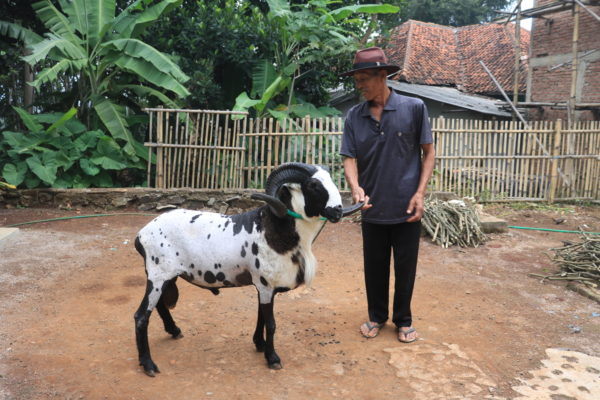
(Above) Maman proudly presents one of the sheep he has raised
sheep
(Above) To farmers like Maman, healthy sheep can be worth a small fortune

Planting trees, preserving culture 

Key to the animals’ strength is the food they eat. “We use a variety of fodder,” explains Yeyen, “including grasses, plants, tofu, and gmelina leaves, which help them grow big and strong.” Gmelina makes for excellent fodder, along with the leaves of red stinkwood trees. To ensure a steady supply, Maman uses a particular pruning method. “The branches must be pruned just right, so we can use the leaves as fodder without harming the trees,” he says.  

“The Ibun community has long grown gmelina trees for their high-nutritious, easily digestible leaves,” says Jeje Sutarja, Trees4Trees’ Unit Manager for the Cirasea Watershed Unit in Bandung. “By providing gmelina trees free of charge, Trees4Trees helps farmers increase tree coverage, which has the triple benefit of supporting the animals’ well-being, preserving traditions, and conserving the natural environment.”  

Winning sheep
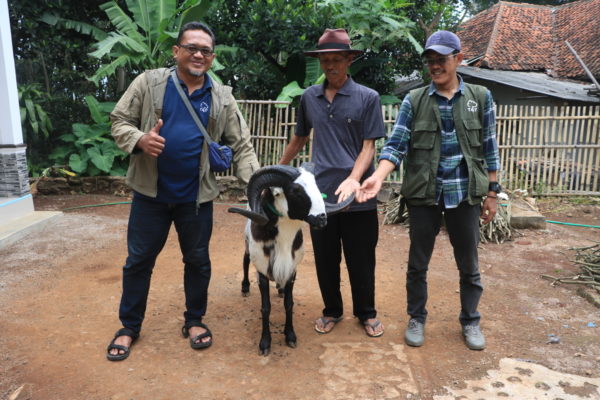
(Above) Members of the Trees4Trees team pose together with Maman (center) and one of his prize-winning sheep
Gmelina
Above) Gmelina trees are essential to the health and well-being of the prized sheep in Ibun Village, West Java

Planting for the future, rooted in traditions of the past  

“Farmers already know how to prune correctly by avoiding cuts to the trunk, and we provide additional guidance,” says Alwi Subhan, Trees4Trees’ Field Coordinator for Ibun District, adding that, by educating farmers on pruning methods, Trees4Trees aims to encourage proper leaf harvesting without harming the trees. “For example, before pruning, they need to measure at least 15 to 20 cm from the trunk to prevent damage to the trees,” explains Alwi. 

In addition to gmelina, Trees4Trees distributes a range of other tree species to the sheep farmers, including red stinkwood, albizia, mindi, and jackfruit. By providing them with the trees and the know-how they need, Trees4Trees is supporting the preservation of nature and culture in West Java. Together, we are helping traditions stay as strong and valued as the animals themselves. 

Writer: V. Arnila Wulandani. Editor: Chris Alexander. Photos: Kemas Duga Muis 

Sururi’s Story: Rejuvenating Mangroves in Semarang

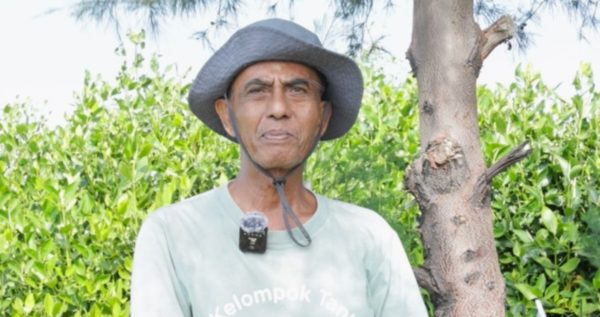
Sururi, Penerima penghargaan Kalpataru 2024

Sururi, Penerima penghargaan Kalpataru 2024

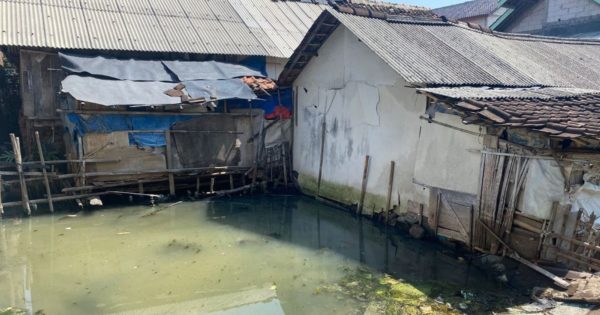
Mangunharjo Wetan is a quiet little village on the north coast near Semarang in Central Java. Here, many local residents earn their living from fishponds. However, these industries have become increasingly vulnerable to flooding caused by coastal erosion and subsidence, rising sea levels, and a lack of coastal barriers. 

These problems are directly impacting lives and livelihoods. For local fishpond farmers like Sururi, solutions are sorely needed. Back in 1995, he started planting mangroves around the village, creating a natural greenbelt that also acts as a flood barrier. 

Sururi’s Story
Flooding is a regular occurrence in Mangunharjo. Photo: Naila Kamalia/Trees4Trees

Starting from Scratch: Building Nature-based Solutions 

When Sururi began planting mangroves almost three decades ago, the area was a coastal sea. “In the past we had no natural barriers. The shoreline was directly exposed to the sea, causing coastal erosion because the shoreline was hit with the waves again and again,” he remembers. “But after we started planting mangroves, they held soil and sands behind the mangroves and slowed down the erosion.” Pointing to the thriving mangrove forest behind him, he explains that, as the mangroves grow bigger, they encourage the land held behind the mangroves to collect and form a natural defense against coastal erosion that triggers tidal floods. 

During the past 29 years, Sururi has seen his fair share of difficulties. The first two years were the hardest,” he explains. Finding seedlings was very difficult, and I had no one to teach me,” he says. In 1997, this changed when Sururi met a professor who mentored him on the proper way to plant mangroves 

Sururi’s Story
Sururi, sitting in front of the mangrove forest he helped to create .

Read also: Five Facts About Mangrove You Need to Know

Recognition for Reforestation: Sururi Receives a Prestigious Kalpataru Award 

Sururi’s efforts have not gone unnoticed. In May 2024, he was awarded the prestigious Kalpataru Award by the Ministry of Environment and Forestry. “I’m grateful, after nearly 30 years of effort, we have achieved the Kalpataru Award. It motivates us to preserve the coastal area better,” he says. 

But despite the personal accolade, Sururi maintains he could not have achieved anything by working alone; for replanting activities to really take root, it takes a village. Having worked together to make it happen, the communities are also enjoying the dividends of this collective endeavor, as the return to ecosystem health has impacted positively on the local economy.  

“Now, local communities can reap the benefit,” says Sururi. “There is a green mussel nursery here, providing an additional source of income for fishermen.”  

Planting mangrove in Mangunharjo coastal area
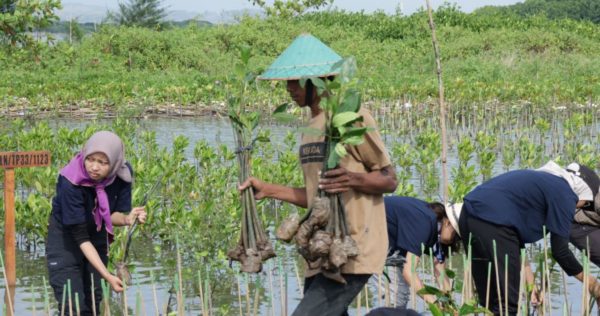
‘It takes a village’. Local volunteers help plant new mangrove seedlings in Mangunharjo

Trees4Trees Support for Mangrove Restoration in Mangunharjo  

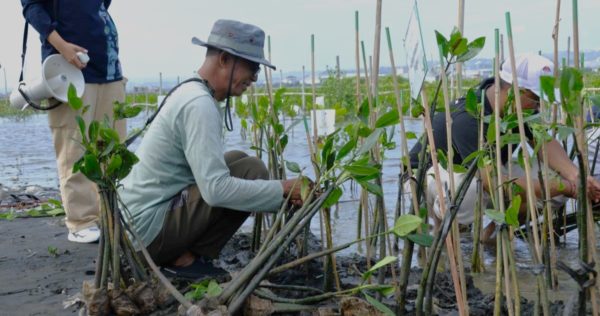
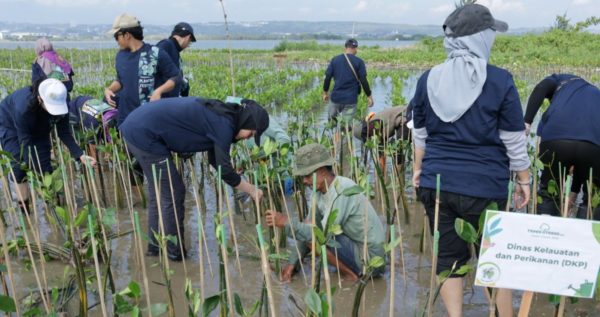
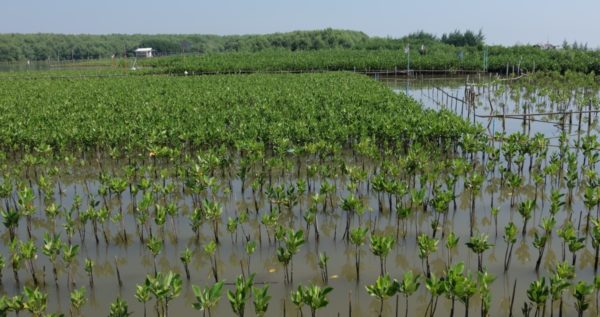
While the mangroves in Mangunharjo have certainly helped prevent a repeat of recent disasters, the area needs more trees to sure up its defenses. To support these efforts, Trees4Trees teamed up with 90 local volunteers, including Sururi and his Mangrove Lestari Farmer Group, to plant 2,000 new mangrove seedlings and 100 Australian pine trees over an area covering 1200 square meters. The activities formed part of the Trees4Trees Planting Festival, held on June 11, 2024. 

Read also: Trees4Trees Planting Festival Celebrating 16th Reforestation Journey 

“We’ve noticed many areas are losing their natural mangrove habitats and their ecological functions,” explains Adi Gani, Project Manager at Trees4Trees. “By planting mangroves and Australian pines together, we aim to enhance the greening of this coastal area; this effort is our contribution to coastal ecosystem restoration in Mangunharjo, and we plan to continue expanding it in the future,” he added. 

Mangrove planting in Mangunharjo_Trees4Trees
Some of the 90 volunteers who took part in Trees4Trees’ Planting Festival

For Sururi, the benefits of these activities are clear: “Biodiversity has flourished, including shrimp and fish. Birds are more abundant in the evenings now too. In the past, we needed the military to protect this area, but now the thriving habitat safeguards itself.”  

Sururi sends his thanks to Trees4Trees, along with hopes for the future:. “We hope this initiative will continue and expand to other locations as well.”  

Writer: V. Arnila Wulandani. Editor: Christopher Alexander. Photos: Yulianisa Dessenita
5 Facts About Mangrove You Need to Know

mangrove roots store vast amount of carbon

mangrove roots store vast amount of carbon

Mangrove forests are among the most important ecosystems on Earth. They are crucial for protecting life on Earth. Alongside salt marshes and seagrass beds, mangroves are part of the “big three” coastal ecosystem that is incredibly powerful at saving the planet. With their dense coverage, mangroves act as natural coastal barriers, protecting communities and serving as nursery grounds for biodiversity.  

Their remarkable ability to sequester vast amounts of carbon helps stabilize the planet’s temperature. It makes them as key weapons in the fight against climate change and preventing global warming from worsening. However, global mangroves populations have been threatened by overexploitation and coastal development, leading to significant losses in recent decades.  

Here are some fascinating facts about mangroves and their spectacular ability! These facts are also highlighting the importance of why we should pay more attention to protecting them from damage and disappearance.  

Mangrove forests store greater carbon than terrestrial forests 

Mangroves cover only 0.1 percent of the planet’s surface. However, latest studies suggest that mangrove forests can sequester carbon 10 times greater than mature tropical forests annually. Scientists also estimate that mangroves store an average of three to five times more carbon than tropical forests in the same size of area. Most of the carbon is stored in the sediment beneath the trees. It can remain bound there for decades, centuries, or even millennia. 

However, when these habitats are destroyed, they will lose their capacity in sequestering carbon. Additionally, they will also release a huge amount of carbon, increasing greenhouse gas levels in the atmosphere.  

Mangrove covers in Mangunharjo coastal area, Semarang Indonesia
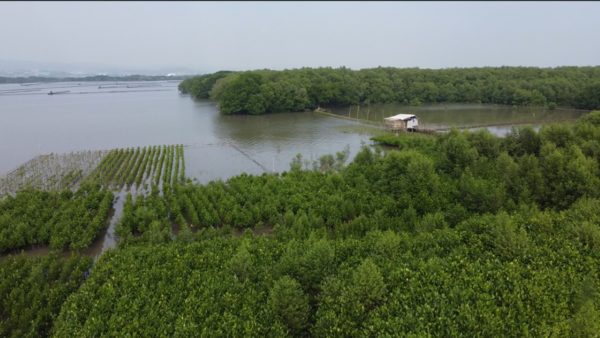
Mangroves flourish in the Semarang coastal area, helping the community in preventing tidal floods and erosion.

Coastal defense against floods and tidal waves  

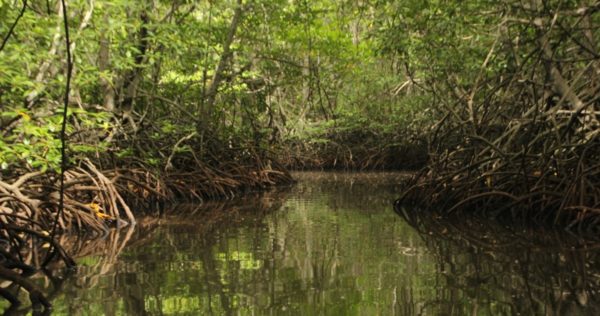
Mangroves have a strong and intricate root system which helps to bind the soil and prevent coastal erosion. These roots also intertwine to form a dense brush above the water that can break waves and absorb wave energy. It is including the hurricane-generated waves or tsunamis.  

Mangrove forests reduce the impact of tidal waves and floods by decreasing the height and velocity of incoming waves. They distribute water among the creeks and canals within the mangroves. This way will reduce the inundation level and the power of waves striking residential areas, farms, or ponds owned by coastal communities. 

A study found that during the deadly 2004 Indian Ocean tsunami, areas with coastal forests, including mangroves, suffered less damage.  

Planting mangroves in Dukuhseti coastal area, Pati, Indonesia
In collaborating with local communities, Trees4Trees plants mangroves in Pati, Semarang, and Cilacap coastal areas.

Incredibly adaptable to the harsh condition and can grow in salty water 

Mangroves are naturally adapted to thrive in coastal zones and harsh coastal conditions. They are highly salt-tolerant, able to survive in water up to 100 times saltier than most plants. Mangroves can filter out up to 90% of the salt in seawater. Furthermore, some species have leaves that excrete excess salt. 

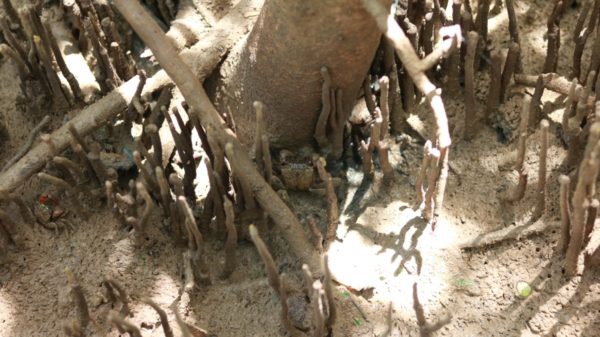
Some mangroves have special roots called pneumatophores that extend above the water to absorb oxygen. These roots, with tiny openings take the oxygen in. However, these parts can easily get clogged by pollutants like oil, be damaged by parasites, or be affected by prolonged flooding. Over time, these environmental stresses can kill large areas of mangrove forests. 

5 Facts About Mangrove
The mangrove root systems make the mangroves can tolerate salty water and harsh coastal condition.

Mangrove ecosystems are among the most biologically diverse on Earth 

It is estimated that there are about 80 mangrove species, making this ecosystem highly diverse. Mangroves thrive in tropical and subtropical latitudes. They range in height from small shrubs to 40-meter-tall trees above the water. Despite their differences, all mangroves grow in low-oxygen, high-salinity coastal environments. Each species has its own unique characteristics suited to its native ecological habitat. Therefore, planting the wrong type in the wrong place will prevent the mangrove from surviving. 

5 Facts About Mangrove
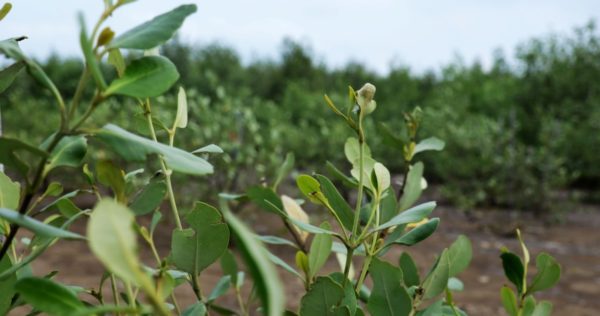
(Above) Young rhizophora (red mangroves) planted in Semarang, Indonesia. (Below) Avicennia (white mangrove) planted in Pati, Indonesia, bearing fruits.

5 Facts About Mangrove

Indonesia boasts the largest mangrove cover in the world 

Indonesia, where Trees4Trees focuses its reforestation efforts, boasts the world’s largest mangrove population. The country accounts for 23% of the global mangrove coverage, with 3 million hectares of mangroves. As the comparation, the size is over 40 times the size of Singapore. Indonesia is home to approximately 45 of the world’s 75 true mangrove species. Some of them are growing as tall as 50 meters. 

However, Indonesia also experiences the highest rate of mangrove destruction globally. From the 1970s to 2007, the FAO reported that around 40% of Indonesia’s mangrove forests were lost. Residential development, agriculture, and aquaculture are the most factors that caused the degradation. 

Read more: Mangrove Types in Indonesia and Their Benefits

Mangrove Cilacap_Trees4Trees
Trees4Trees team monitored one-year mangrove trees that planted in Ujung Alang Village, Cilacap.

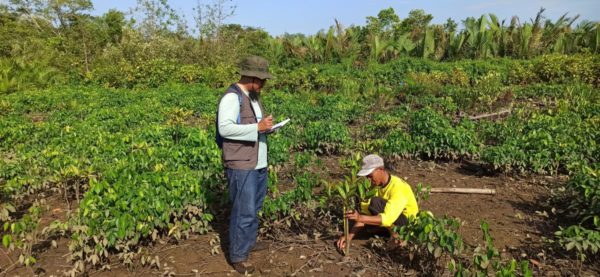
Contributing to the mangrove restoration in Indonesia, Trees4Trees has been planting mangroves since 2021. Trees4Trees has planted mangroves in various areas of the Java Islands, including Pati, Semarang, and Cilacap. Over 150,000 mangroves have already been planted, with more to come. In Cilacap, Trees4Trees aims to plant 16,000 mangroves to restore the degraded forests of Ujung Alang Village this year. This village has suffered from land conversion into shrimp ponds. Our mission is to revive the mangrove ecosystem and support the livelihoods of local communities. 

Read also: Restoring Mangrove in Cilacap, Central Java

We invite you to join our mangrove restoration efforts. By partnering with us to plant mangroves, you or your company can make a positive impact on both the environment and the community.

Contact us to get involved in this program! 

All My Efforts Were Worth It: Planting Mangroves, Protecting Livelihoods in Pati

All My Effort

All My Efforts Were Worth It: Planting Mangroves, Protecting Livelihoods in Pati

As the fifth of eleven siblings, Parmi missed out on a formal education in his youth. Instead, he and his two older brothers learned how to manage fishponds from their father. Parmi quickly turned this passion into a profession and now, more than 50 years later, continues to make a living in this way. 

Fishponds at the center of community life 

Central Java’s Pati Regency, where Parmi lives, is well known for its milkfish (ikan bandeng). “I manage two fishponds covering a total of 1.25 hectares,” he explains. “During the harvesting season, I can yield around a ton of milkfish per hectare, and we harvest two or three times a year.”  

With the income he makes from fishponds, Parmi can provide for his family. “This work allows me to give my son and daughter the education opportunities I never had,” he says.

Farmer mangrove
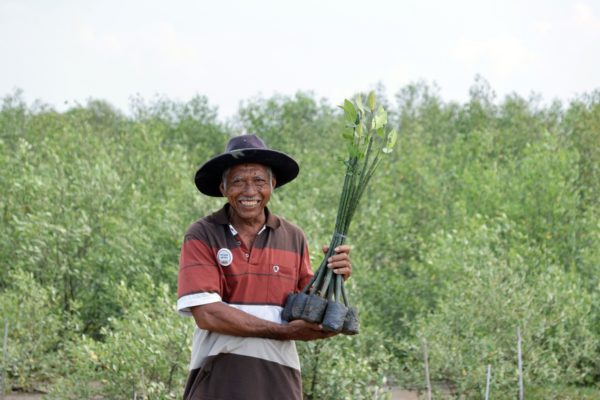
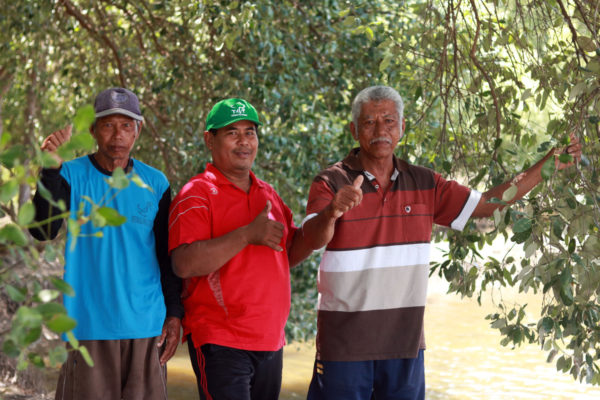
(Above) Parmi (right) with his fellow fishpond farmers, inspecting the mangroves he planted in 2001

Planting trees for protection 

Parmi’s fishponds are located in the coastal village of Dukuhseti, around 100 meters from the shoreline. In 2001, huge waves flooded the coast, destroying ponds and causing enormous damage. “I lost hundreds of millions of rupiahs,” he recalls. At that time, there were no protective barriers along the coast, leaving fishponds vulnerable to floods.  

In response, Parmi and his fellow fishpond farmers took steps to ensure this disaster would not happen again. They planted mangroves along the shoreline to provide a natural buffer against the waves. Now, 23 years later, those mangroves have grown big and strong. But there are not enough of them to guarantee protection. 

In 2022, there was another huge ocean surge. “I lost around 100 million rupiahs (USD 6,190),” Parmi remembers. But he was relatively unscathed, compared to other farmers further up the coast. “Our neighboring village suffered even greater losses because they didn’t have as many mangroves protecting their coast,” he explains. 

All My Efforts Were Worth It: Planting Mangroves
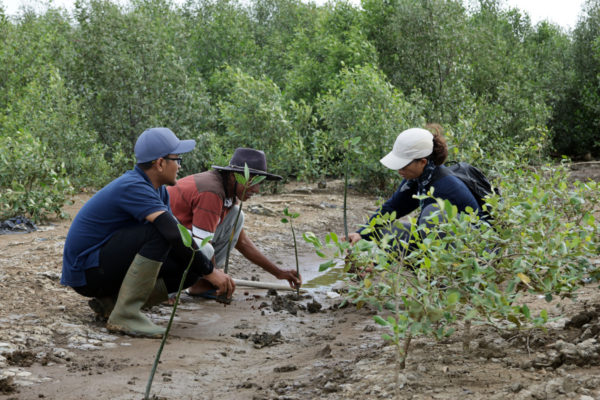
(above) Parmi plants new mangroves with members of the Trees4Trees team

Grab and EcoMatcher team up to plant mangroves 

Back in 2021, Parmi and other members of the Tani Makmur Mandiri farmers’ group were invited to join a mangrove planting initiative run by Trees4Trees, EcoMatcher, and Grab. A total of 30,000 mangrove trees were planted, creating a green belt covering 3.8 hectares along the Dukuhseti shoreline. 

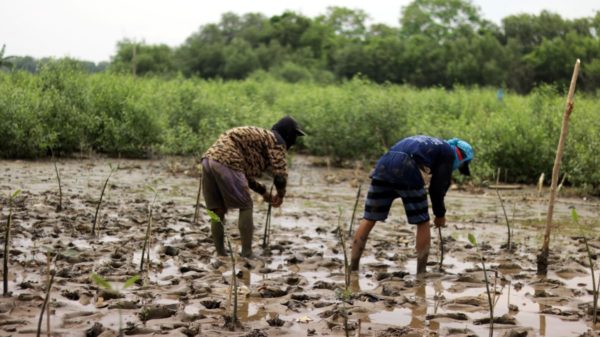
Now, three years later, Parmi and his fellow farmers are reaping the rewards of their efforts. “Planting mangroves is not easy,” he says, remembering how he and his team would work waist-deep in muddy ground. “But seeing these trees grow big and strong (almost all of them are now at least three meters tall), I feel all my efforts were worth it.”  

Ocean waves no longer threaten Parmi’s fishponds as they once did. And the flourishing mangroves offer a range of other, unexpected benefits to the community – the leaves provide a sustainable source of organic fertilizer for the fishponds and the fruits, known locally as brayuh or brayo, can be sold at markets. 

“Local people often come to pick the fruits,” explains Parmi, “which they can sell for 5,000 Rupiah (about thirty US cents) per bucket (500 grams). These fruits are highly in demand here, given their importance to local dishes.”  

Mangrove fruits

Parmi has seen first-hand the protective power and economic potential of mangroves in his community. He insists that caring for these trees and using them sustainably is essential to environmental health and social well-being. “Everyone in the village can freely pick the fruits or leaves, but cutting them down is strictly prohibited,” he says.  

“We would like to thank Grab, Trees4Trees, and EcoMatcher for providing us with these mangroves and the many benefits they offer,” says Parmi.We will continue working to protect and appreciate these mangroves, just as they protect our homes and safeguard our livelihoods.