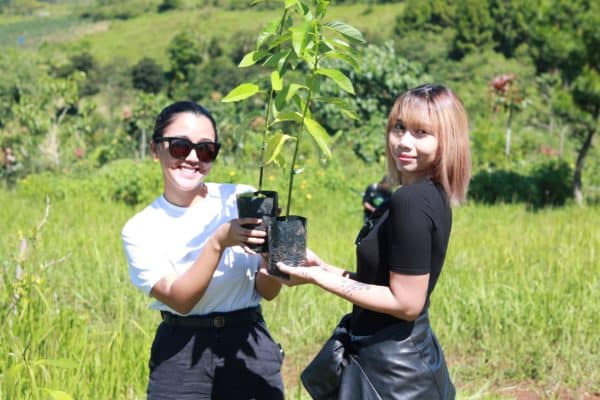
Planting Trees: A Sustainable Initiative in Bojonegoro

Tree planting in Bojonegoro

Tree planting in Bojonegoro

(Planting Trees: A Sustainable Initiative in Bojonegoro) Trate village, in the Sugihwaras District of Bojonegoro Regency, is landscape that’s prone to drought. Three neighboring villages – Papringan, Pandangtoyo, and Jono – have similar troubles. During the dry season, communities living here experience prolonged drought and water scarcity, making access to clean water a major challenge. 

Now, as part of a collaboration between Trees4Trees, Alliance One Indonesia (AOI), and Indonesia Tri Sembilan (ITS), a coordinated initiative is underway to address environmental concerns and support local communities. In 2023, this initiative focused on planting trees in those four villages of Sugihwaras district. 

Working With Partners to Grow a Better World 

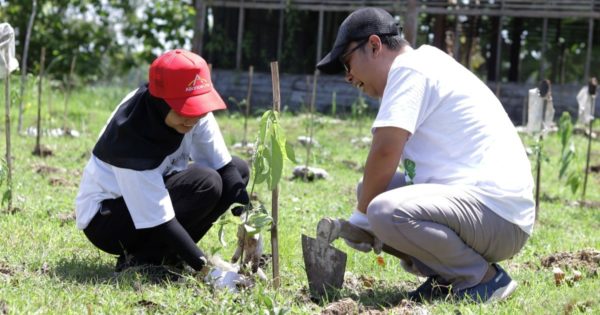
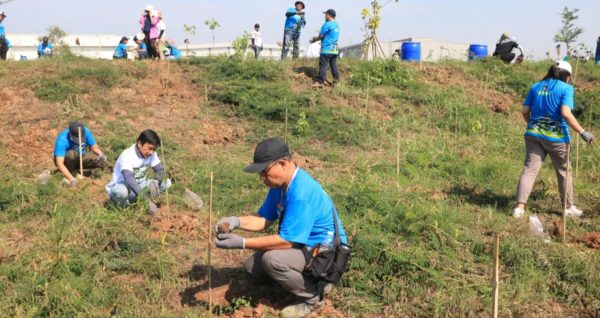
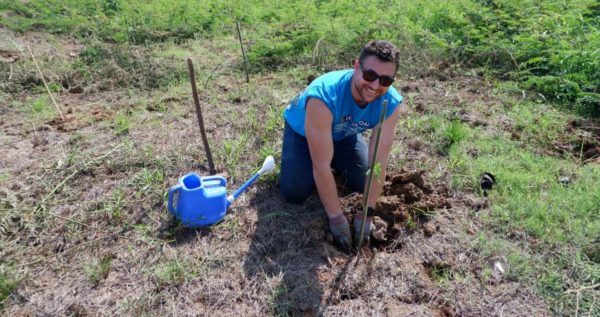
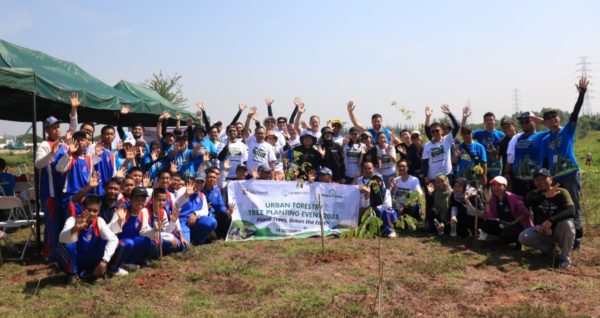
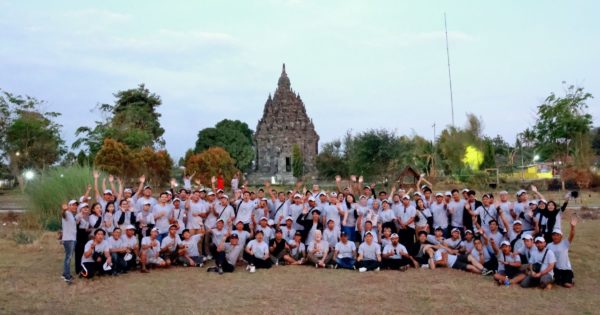
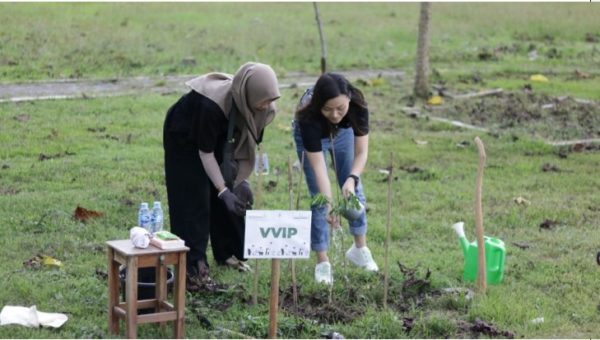
On December 12, 2023, 550 trees were planted in Trate Village, as part of a tree planting program based on the following theme: Let’s Green the Planet, Growing a Better World. The event featured members of Trees4Trees and the local community, along with around 20 volunteers comprising staff members from AOI and ITS.  

This is our contribution to the planet,” commented Cleomar Panno, AOI’s National Agronomy Manager, during the event. “It won’t change the world completely, but at least it will be beneficial for this area, including the local community. And the most important thing is they will be able to harvest the results later.”  

Tree planting in Bojonegoro
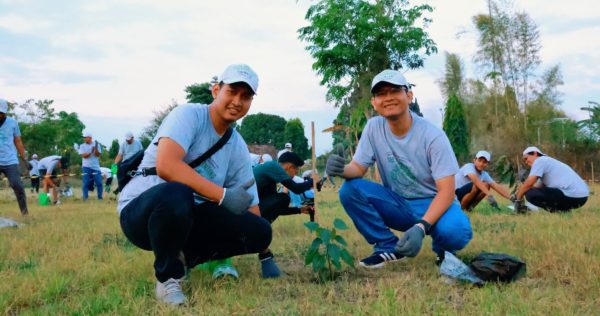
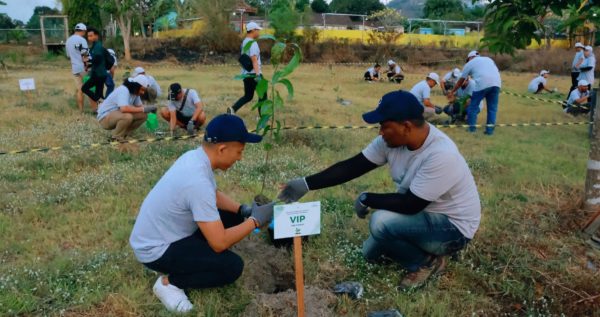
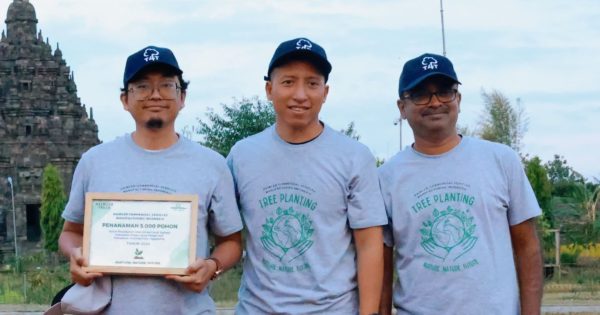
550 trees were successfully planted by volunteers and the local community (above).  Cleomar Panno (left) receives a tree-planting certificate from Trees4Trees(below).

CSR Program in Bojonegoro

This tree planting initiative reflects the companies’ commitment within the tobacco industry to contribute to preserving nature and support the local communities who partner with them as tobacco producers.  

Iba Swasono is the Operational Manager of Bojonegoro Regency for PT. AOI, who emphasizes the importance of environmental restoration to both companies. “We recognize that every business, including ours, contributes to environmental degradation,” said Iba while volunteering in Trate. “This tree planting initiative is our responsible action to give back what we have taken from nature. Through this activity, we aim to restore balance by giving back, working to minimize the effects of environmental degradation,” Iba added. 

Restoring the environment, empowering farmers 

In addition to the initial event in Trate, 5,000 more trees are scheduled for planting in early 2024.  

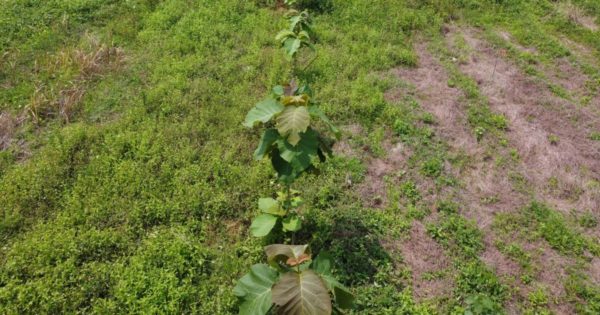
Khoirum Minan is the Trees4Trees Pati Unit Manager overseeing this regional program, which will involve planting avocado, teak, and indigofera trees. Another initiative will introduce four more tree types – kaliandra, petai, water apple, and elephant thorn (locally known as klampis) – selected for their ability to improve soil and conserve water. 

“After our initial assessments, Trate Village and the three other villages were identified as having soil prone to dryness,” explains Khoirum. “As a result, we opted for trees that are well-suited to these soil conditions and can address water scarcity concerns. Teak, for example, thrives in dry-prone areas, and water apples contribute to water conservation,” he explained.  

According to Khoirum, these types of trees bring environmental benefits but also offer economic value:. “Avocado trees provide fruits that local communities can enjoy, while indigofera, in addition to improving soil conditions during drought, yields leaves rich in protein that serve as fodder for the cattle raised by the local community.” 

CSR event program
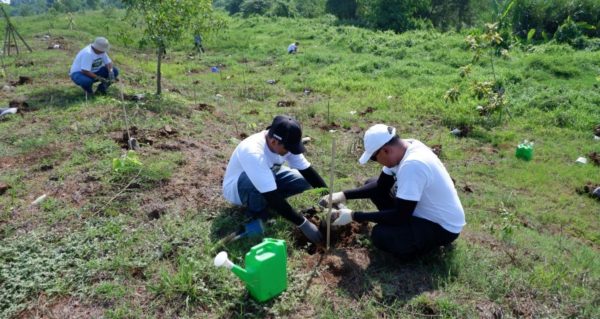
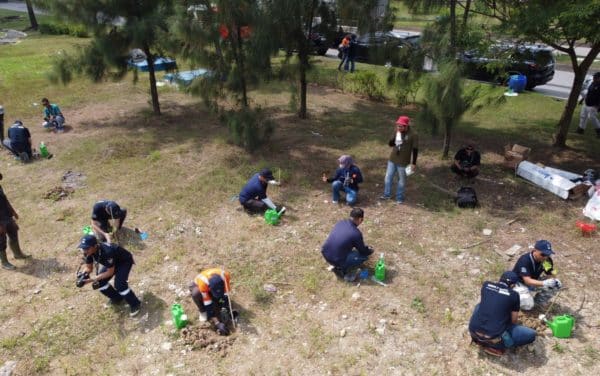
(Above) Staff from AOI and ITS roll up their sleeves and get involved in the tree planting activities

Sustainable tree planting program 

AOI and ITS are committed to building on these positive benefits, with a target of 53,000 trees planted in Bojonegoro by 2030.  

This sustainable tree planting initiative aims to combat climate change as a global concern, reduce carbon emissions, address environmental issues in villages around the district (particularly water scarcity and drought), and support local community livelihoods. 
CSR Event with AOI and ITS
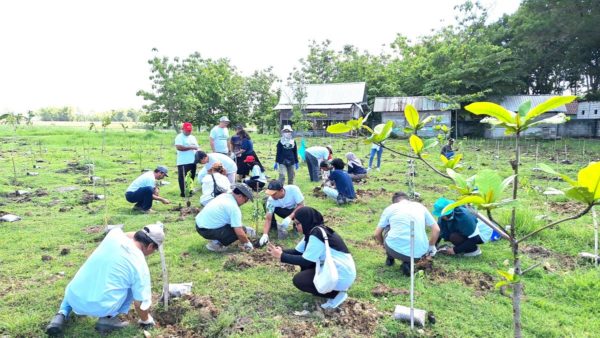
(Above) Volunteers plant seedlings in Trate Village, as part of AOI’s ESG activities

Yossy Zahra is the Environmental and Social Governance (ESG) Assistant Manager at AOI. She confirmed that the company’s tree planting program forms part of a wider scheme designed to generate long-term benefits for both the environment and society. In addition to conservation, AOI is aiming to bolster the incomes of local community members through products that come from the new trees. 

“This initiative is a component of our ESG program, which covers crops, environment, and people, with a specific focus on the environment,” explains Yossy, before adding that carbon offsetting, and crop diversification are their main areas of focus. “Through these efforts, our goal is to provide our farmer partners with tree products that they can either sell or utilize to meet their needs., 

At the beginning of a New Year, the residents of Bojonegoro Regency can look forward to a new era of productivity, landscape stability, and availability of resources. With support from AOI and ITS, Trees4Trees is planting the seeds of a more sustainable future in East Java. 

Growing Green: Microsoft’s Continued Urban Forestry Initiative

Microsoft tree-planting

Microsoft Tree Planting event

(Microsoft; Growing Green) It was only 8 AM, but already hot as an oven in the GIIC industrial area in Bekasi, just east of Jakarta. Sweltering days are par for the course around here, in one of West Java’s largest and busiest industrial centers, where buildings and factories are scattered all around, and trees are hard to come by.  

But all that is beginning to change. Microsoft Operations Indonesia has teamed up with Trees4Trees and One Tree Planted to launch a tree planting program that will bring shade to the industrial estate and a range of benefits to the surrounding landscape and communities.  

CSR Tree Planting event
(Above) Seedlings planted in 2022 have taken root and are beginning to grow (Photo: Kemas Duga Muis/Trees4Trees)

Balancing development with environment 

This program kicked off in 2022 – 2023, when 22,800 trees were planted. Following the success of that pilot project, 19,000 more trees are being planted in 2024.  

“Together with Microsoft, our goal is to enhance the greenery and create a healthier environment in industrial areas,” explains Pandu Budi Wahono, Trees4Trees’ Program Manager.  

Trees chosen for the program include gmelina and rain trees, which can provide some much-needed shade. Other, multipurpose trees like petai, durian, and jackfruit have also been chosen, as they can provide fruit and other resources for the local community. 

 tree-planting event

Read also: Regreening Jakarta’s Concrete Jungle through Urban Forest

Regreening the urban jungle 

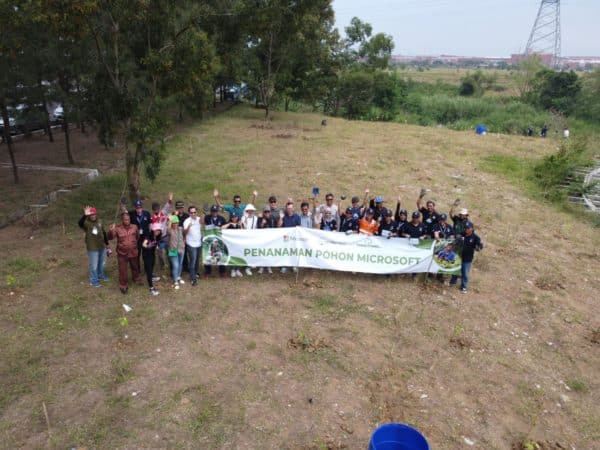
In December 2023, 500 new trees were planted in GIIC by a team of volunteers made up of Microsoft staff, partners, and clients marking the starting of the tree-planting initiative. 

Microsoft Tree-planting
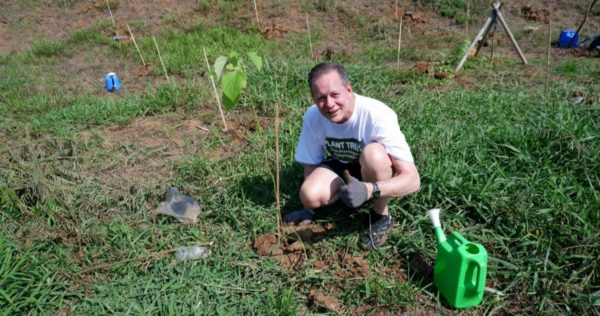
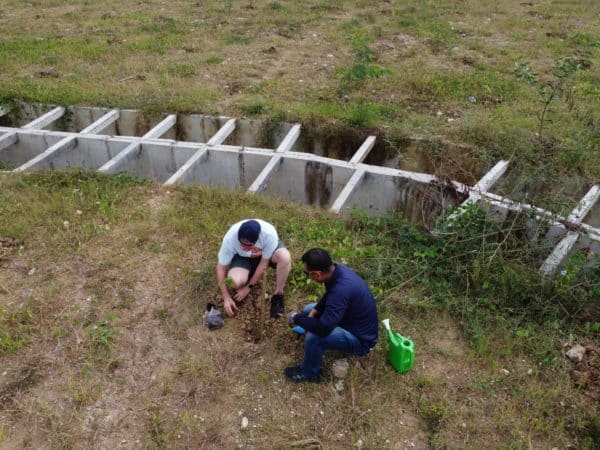
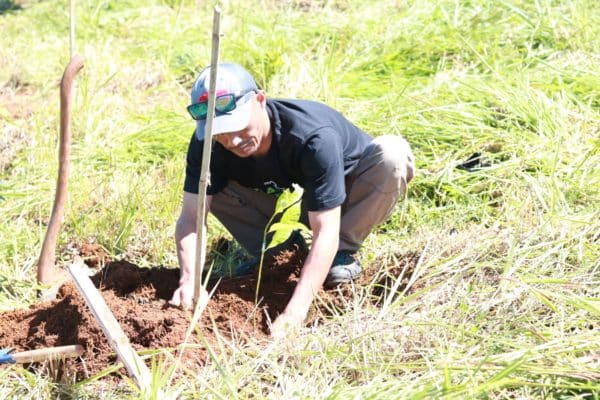
(Above and below) Volunteers from Microsoft plant trees under the hot sun in Bekasi (Photo: Trees4Trees/V. Arnila Wulandani)

photo session with microsoft team

“This tree planting event serves as a reminder for those of us, who work in the technology field, about the significance of environmental protection,” said Elizabeth Simatupang, who is the Data Center Operations Manager at Microsoft Operation Indonesia.  

She also revealed that volunteering had made her more aware of the many benefits trees can offer. “I hope the trees we’ve planted will produce more oxygen and be beneficial to the environment, aligning with our motto: Technology should not cost the Earth,” she added. 

Gavin Hodge is DCD Project Manager at Microsoft Operations Indonesia. This was his second time volunteering with Trees4Trees, and he felt energized to see so many people working to support the environment. 

“It is great to see so many people get involved,” said Gavin, referring to the various Microsoft partners and team members onboard with the project. “I hope big trees will stay here for a long time and remove carbon dioxide, making it a better place to live,” he added.  

Microsoft team
(Above) Gavin Hodge during the tree planting event (Photo: Trees4Trees/V. Arnila Wulandani)

A watershed moment for urban replanting 

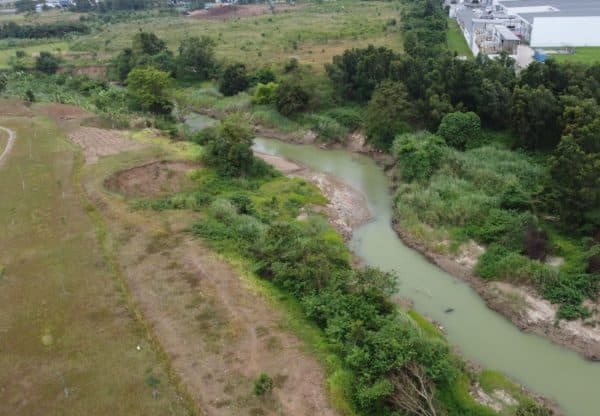
Although the program  focuses on creating an urban forest, improving degraded land and providing tree cover, its goals go even further. The industrial areas are located downstream of the Citarum river, specifically alongside the Cipamingkis and Cikalapa rivers., The program aims to restore the watershed and return forest cover to the region, addressing a range of complex challenges triggered by developmental pressures. 

Microsoft tree-planting
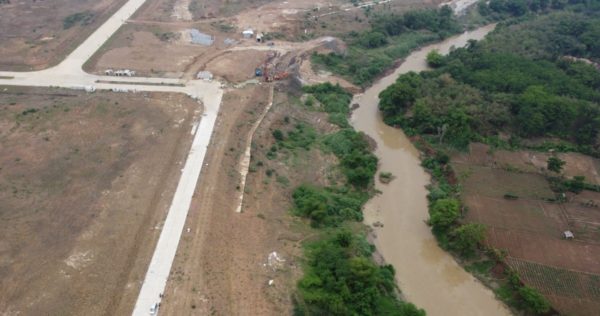
(Above) An aerial view of the Cipamingkis River (Photo: Trees4Trees/Kemas Duga Muis)

Amung is a local farmer and one of the project partners, who helps out by growing trees for the planting activities. In recent times, he’s seen the dangers of deforestation and land degradation firsthand: “Recently, when the river burst its banks and flowed into my field, many of my plants were lost.” He blames excessive upstream development for the flood, noting that severe river siltation left the rainwater with nowhere else to go. 

The benefits of Microsoft’s extended planting program spread beyond the industrial estate and into the surrounding landscape, impacting lives and livelihoods in unexpected ways. In addition to providing shade and restoring the watershed, planting trees here can help prevent flooding and protect local farmers from potential ruin. Technology shouldn’t cost the Earth. Thanks to the latest initiatives by Microsoft and partners, development is headed in a more positive direction.  

Watch the video: Urban Forestry Tree-planting with Microsoft

Writer: V. Arnila Wulandani. Editor: Christopher Alexander

Preserving Cultural and Environmental Treasures: Greening Yogyakarta with Daimler Indonesia

Tree-planting event in Yogyakarta with Daimler Indonesia
Greening Yogyakarta with Daimler Indonesia
Photo: Trees4Trees/Yulianisa Dessenita

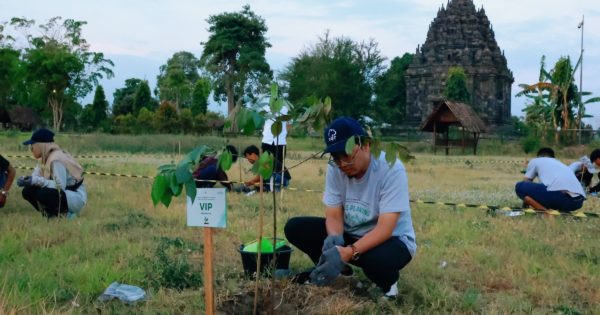
Centuries ago, kepel and sawo kecik trees were highly prized by the royal Mataram court of Central Java. Kepel fruits were the perfume of princesses at Yogyakarta Palace, while sawo kecik became a symbol of kindness that was recognized throughout the realm. Today, kindness returns to the soil of Central Java, with a planting activity born out of reverence for the region’s heritage. 

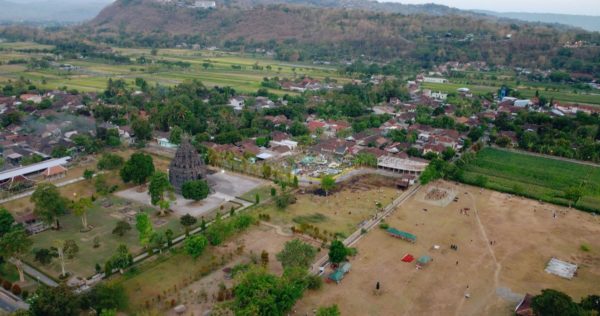
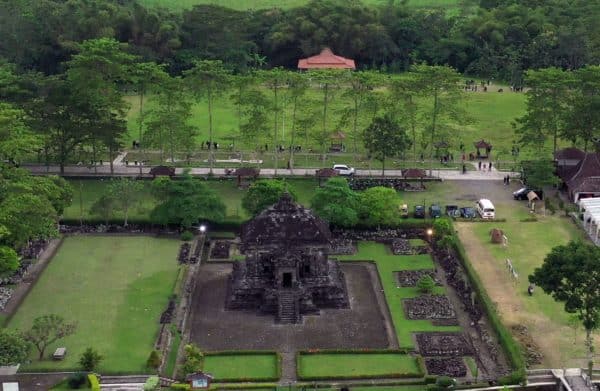
Sojiwan Temple (Candi Sojiwan) is a relic from this era. Located in Kebon Dalem Kidul Village, just over a mile from the more famous Prambanan temple, this ancient monument remains an important site for local communities.  

Every day, many people come to visit. With hardly any shade, this temple and its pilgrims are blasted by the midday sun. To provide some respite, Trees4Trees has been busy restoring the area to its former glory. 

Preserving Cultural and Environmental Treasures
With hardly tree covers, this temple and its pilgrims are lack of shades by the midday sun. Photo: Trees4Trees/Haryadi

New trees provide shelter and shade 

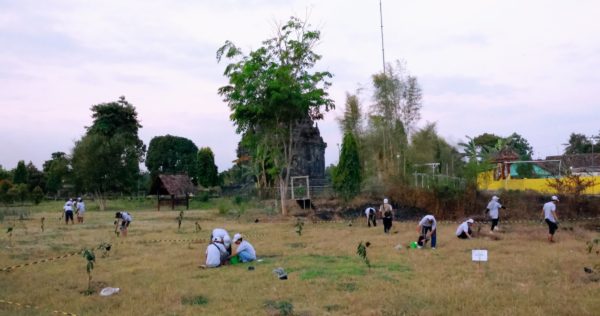
In early September 2023, Trees4Trees teamed up with 250 volunteers from PT Daimler Commercial Vehicles Indonesia (DCVMI) to plant trees around Sojiwan. The event was a golden opportunity to raise awareness and develop skills.  

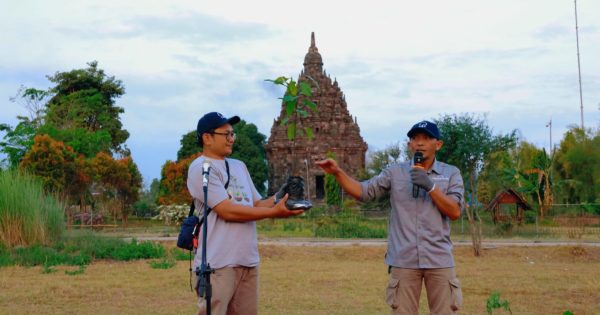
“Before planting, we provided an educational session to teach proper tree planting techniques,” explains Erni Setyaningrum, Trees4Trees Office Manager. “In total, we successfully planted 300 trees with DCVMI and helped to increase tree cover.” 

Greening Yogyakarta with Daimler Indonesia
(Above) Trees4Trees experts share tips on tree planting with the DCVMI team. Photo: Trees4Trees/Yulianisa Dessenita

Rizki Pradhitya, Trees4Trees Kebumen Unit Manager overseeing the event, added:, “We planted 55 trembesi (rain trees) to provide shade and cool down the area, addressing the lack of trees as shade. Additionally, we planted Gayam trees to conserve water sources and prevent drought, aligning with the local community’s ecological needs.” 

Fun facts about trembesi trees 

  1. Also known as the ‘rain tree’ or ‘monkey pod tree’ 
  2. They can absorb up to 10 times as much CO2 as other species.  
  3. Their leaves fold up in the rain, allowing more water to reach the ground.  
  4. Their roots suck up large amounts of ground water, which helps prevent flooding and soil erosion during the wet season.  
  5. In 2010, Indonesia planted more than 1 billion trembesi trees as part of a nationwide conservation program.

Reconnecting with royal roots 

In addition to trembesi and other shady species, various trees were planted that hold cultural significance for the area. As Rizki explains, “we planted three species closely tied to Yogyakarta’s cultural heritage and indigenous to the region: duku, kepel, and sawo kecik trees.” 

Duku in particular is beloved by the local community and has a special place in Yogyakarta society, due to its popularity as a local fruit. 

Preserving Cultural and Environmental Treasures
Photo: Trees4Trees/Yulianisa Dessenita
Greening Yogyakarta with Daimler Indonesia
(Above) Volunteers gather to plant trees around the Sojiwan Temple. Photo: Trees4Trees/Yulianisa Dessenita

Growth and transformation: Paying tribute to Buddhist heritage 

Another tree chosen for the event was the Bodhi, also known as ‘the tree of awakening.’ This variety was chosen for its religious significance and close association with Sojiwan as a Buddhist temple. 

“There were already a few Bodhi trees in the temple area,” said Rizki. “We’ve added 55 new Bodhi trees (because they are) considered sacred by local communities and have a strong connection to Buddhist history,” he added.  

Greening Yogyakarta with Daimler Indonesia
(Above) Tree of awakening: Trees4Trees plant sacred Bodhi trees in deference to Sojiwan as a Buddhist site. (Below) Mango trees are planted due to their service as shades and production of fruits. Photo: Trees4Trees/Yulianisa Dessenita
Tree-planting event in Yogyakarta with Daimler Indonesia
Greening Yogyakarta with Daimler Indonesia

Next steps: Branching out to Gunung Kidul, Yogyakarta  

Following the success of Daimler Indonesia’s tree-planting project, an additional 4,700 trees will soon be planted in various villages around Semanu District, Gunung Kidul, Yogyakarta. With support from Daimler Indonesia, Trees4Trees, will continue working to heal the land and promotes water conservation. 

Tree-planting event in Yogyakarta with Daimler Indonesia
(Above) Daimler management representatives Adriana Sukmana P (left), Aditia Satrio Putro (center), and Sathish S (right) joined the planting efforts and were presented with Trees4Trees certificates. Photo: Trees4Trees/Yulianisa Dessenita

“Drought and water scarcity are common problems in Gunung Kidul, especially during the dry season,” explains Haryadi, Trees4Trees GIS Officer. “This area also has a significant amount of degraded land. That’s why, we will plant trees – to help improve the environment.”  

Rizki added that many local farmers have already requested new tree species for the area. They requested a mix of teak, Albizia, burflower, guava, mango, kelengkeng, and rambutan to enhance the environment. According to Rizki, “these tree species contribute to improving the livelihoods of local residents, due to their economic value through the production of fruits, leaves, and other tree products.” 

From economic value to environmental impact and from shade to religious tribute, these new trees will provide a wide range of services to the area surrounding Sojiwan Temple. Together, Trees4Trees and Daimler Indonesia are paying tribute to the past, while also building for a greener, more sustainable future. 

Writer: V. Arnila Wulandani. Editor: Christopher Alexander

A Monument to Cooperation: AstraZeneca Puts Down Roots in Java

(Above) Volunteers join the tree planting activities, part of AstraZeneca Indonesia’s CSR program

To the east of Yogyakarta city, Banyunibo stands alone; an island of stone, marooned in a sea of green farmland. Unlike most buildings from the ancient Mataram kingdom – like nearby Prambanan and Ratu Boko – this ninth-century temple leads a solitary life. 

Out on these sunbaked plains, there are hardly any trees to provide shade. Particularly in the dry season, the area can become very hot and arid during the day, chasing people back to their cars and villages. But all that is about to change. 

A Shade Better: AstraZeneca Program Targets Tree Cover Density  

In February 2023, a joint tree-planting program kicked off in Cepit sub-village, where Banyunibo is located. Implemented by AstraZeneca and with support from Trees4Trees, the program will expand tree cover and provide more shade at the site.  

AstraZeneca Indonesia is working to deliver social and economic benefits to the local community, as part of an overarching goal to improve the environment.

AstraZeneca Indonesia's top management volunteering at the tree-planting event, including Se Whan Chon, Country President (fifth from the left); and Rizwan Abudaeri, Director of Market Access, Government Affairs and Regulatory Affairs (fifth from the right)
(Above) AstraZeneca Indonesia’s top management volunteering at the tree-planting event, including Se Whan Chon, Country President (fifth from the left); and Rizwan Abudaeri, Director of Market Access, Government Affairs and Regulatory Affairs (fifth from the right)

Providing Benefits for People and Nature 

The program provided a number of benefits to the local environment: restoring bare land, increasing water availability, supporting biodiversity, and mitigating environmental problems in various locations.

“The tree-planting event also included the riverbanks,” says Novita, Assistant Planning Manager at Trees4Trees. She explains that the trees planted will protect the rivers from erosion. “They will also increase rainwater absorption in the ground, preventing rainwater from flowing directly into the river,” she added.  

The program chose trees that will benefit communities. Species like mahogany, teak, damar, and trembesi, provide shade, support water availability, and produce a vast amount of oxygen; while fruit trees such as avocado, durian, and sapodilla can offer a source of income to local enterprises. 

(Above) Ms. Belinda Aw, Cluster Procurement Manager at AstraZeneca Singapore & Indonesia, plants a tree with the help of a Trees4Trees forester.

The Program in Numbers  

The program involved many different people, working together to provide a range of environmental and social benefits, while also raising awareness in local communities about the importance of trees. 

  • 260 trees planted 
  • 2,500 square meters of land 
  • 500 volunteers from AstraZeneca Indonesia 
  • 25 groups, led by 18 experts from Trees4Trees 
  • 3 local communities 

“We hope everyone will benefit from the trees we have planted in this area,” says Novita. “Especially the local communities in the village, who can enjoy the shade provided by the trees and the oxygen they provide.,” Trees planted during the project will grow to provide shade for the temple, ecosystem benefits for the surrounding area, and livelihood opportunities for the people who live and work here. 

AstraZeneca Program : member of the Trees4trees planting team
Members of the Trees4Trees planting team

In the fertile heartland of Java, history and traditions run deep. Banyunibo is a symbol of this proud heritage. In the local language, the temple’s name means ‘dripping water’. With every drop of sweat shed during the recent tree-planting program, and every drop of rain that falls from now on, a forest will spring up around the temple; a living monument to the power of cooperation, shading the temple and its visitors for generations to come. 

For more information, and to find out how Trees4Trees is working together with AstraZeneca to restore forests around Indonesia, visit our website. 

Writer: V. Arnila Wulandani. Photo: Yulianisa Dessenita.

Regreening Jakarta’s Concrete Jungle through Urban Forestry

Regreening Jakarta’s Concrete Jungle
With support from Microsoft, and in collaboration with local farmers, schools, and communities, Trees4Trees will continue replanting urban areas around Jakarta.

In terms of urban area, Jakarta is the second biggest city in the world. And it’s still growing; areas on the outskirts are quickly swallowed by the urban sprawl, and the increasing number of industrial centers is already having an environmental impact. But in the satellite towns of Bekasi and Karawang, locals are finding ways to push back against the concrete tide: by planting more trees. 

Replanting urban forests offers all kinds of benefits. Trees combat pollution and lower temperatures. They provide habitats for animals and livelihoods for people. They filter drinking water, protect against flooding and prevent soil erosion. On a larger scale, urban forests are proven to mitigate the negative impacts of climate change by sucking carbon dioxide out of the atmosphere.  

Going Green in Greenland: Trees4Trees’ Replanting Program   

Recognizing the importance of urban forests, and with support from Microsoft and One Tree Planted, Trees4Trees kicked off a tree-planting initiative in the Greenland International Industrial Center (GIIC) in Bekasi and the Karawang International Industrial Center (KIIC) in Karawang. The program, which began in November 2022, has already covered an area of 25 hectares.  

Regreening Jakarta’s Concrete Jungle
(Above) Since November 2022, Trees4Trees has planted 17,778 new trees around Bekasi and Karawang

“With this project, our goal is to plant 25,000 trees in GIIC and KIIC,” explains Anto Wartono, Planning Manager at Trees4Trees. “We hope these trees will soon grow into urban forests.”  

According to Anto, Trees4Trees has already planted 17,778 trees around GIIC and KIIC. Around 8,000 more trees are expected to be planted in the area over the next few weeks.  

The program actually went beyond planting. To raise public awareness about the importance of green spaces in urban areas, Trees4Trees engaged with local women farmers and ran an environmental campaign in local schools and communities.  

Rehabilitating the Riverbanks 

One of the main goals of the project is to restore areas around rivers. In recent years, the riverbanks have been eroding away due to land conversion. Trees4Trees focused on areas either side of the Cipamingkis and Cikalapa rivers, which flow through the GIIC area in Bekasi and the KIIC in Karawang, respectively.   

Regreening Jakarta’s Concrete Jungle
(Above) The Cipamingkis River in Bekasi, where Trees4Trees has been active recently

In Jakarta, temporary shelters are a common sight on the city’s riverbanks. During the rainy season, rising water levels can lead to floods and landslides. Adding trees to the banks of rivers is an effective defense against these dangers. 

“Many riverbanks have been converted into residential areas and semi-permanent buildings,” says Anto, who has experienced plenty of obstacles to urban planting. “Unlike in rural areas, planting trees in urban areas is more challenging – there are only a few spaces we can use as green areas.”    

Greening Industrial Areas, Supporting Farmers 

The process of urbanization and land conversion is also squeezing farmers off their land. As part of the urban forest project, Trees4Trees has been working with displaced farmers, helping them establish plantations in the newly reforested areas. By planting trees with high economic value – like durian, avocado, and caqui – we are helping devise new and sustainable ways to support local livelihoods. 

“We have planted 3,085 trees in two villages around KIIC, Puseurjaya and Margamulya village,” says Anto. “While in the GIIC buffer zone, we have planted 2,300 trees in Pasirtanjung village by involving local farmers,” he added.   

Preserving Biodiversity  

Trees4Trees’ work in KIIC also covered the Telaga Desa conservation area; an educational park that provides a precious green oasis in Karawang. As part of the project, more than 3,000 trees were planted here. Trees species chosen for this purpose included kemang (white mango), buni (currant), pulai (blackboard tree), mundu (yellow mangosteen), genitri (rudraksha), puspa (needlewood), and gandaria (mango plum).  

Regreening Jakarta’s Concrete Jungle
(Above) Microsoft’s Gavin Hodge (left) helps plant trees in the GIIC in Bekasi

“These trees will grow 20 meters high in 5 years,” explains Gavin Hodge, the DCD Project Manager at Microsoft. He joined the activity in GIIC and KIIC area as a volunteer tree planter, and believes this project will offer a range of benefits. “(It’s) going to protect our environment and improve the estate, while also improving the situation for the community. So it’s good that Microsoft can be a part of it.” 

With support from Microsoft, and in collaboration with local farmers, schools, and communities, Trees4Trees will continue replanting urban areas around Jakarta. Every sapling holds enormous potential. In time, they could change the landscape in one of the world’s biggest urban areas.   

To find out more about our ongoing replanting programs, and to see how you can help, visit devtrees4trees.portopaper.com 

Writer: V. Arnila Wulandani. Editor: Christopher Alexander

Planted 1000 Trees to Restore the Soil Fertility in Tanjungwangi Village

planted 1000 trees
Trees4Trees collaborated with Barekurve

In the series of 2022 planting season, Trees4Trees collaborated with Barekurve planted 1,000 trees in a tree-planting event. The event aimed to restore soil fertility in Tanjungwangi Village, which is in Cicalengka District, Bandung Regency.  

The tree-planting event is also part of the environmental improvement effort around the Citarik river watershed, which was one of Trees4Trees’ new planting areas. Five types of tree seedlings were planted during the tree-planting event, which was conducted in a land of 10,000-meter squares in Tanjungwangi Village.  

“We planted eucalyptus, manglid, mahogany, avocado, and coffee. This event also involved seven farmers and three local workers,” said Ahdan Ramdani, the Trees4Trees Citarik site coordinator.   

Planting trees for conservation purpose 

The land where trees were planted has been unproductive for the past five years. Long ago, the lands were planted with various kinds of crops but later abandoned and have not been planted with any plants. As the result, the lands become barren and poor in nutrients. 

Like any other village in Cicalengka District, most residents in Tanjungwangi work as factory workers. Most of them were farmers before. However, since the factories began to be established around the village, there has been a change in the people’ livelihood. Most farmers switched their job to become factory workers.  

“The condition of the lands is very poor. Therefore, the main purpose of this planting event is for conservation, that is to restore the soil fertility,” Ahdan revealed. 

CSR program with the help of Trees4Trees
planted 1000 trees

Ahdan also said that besides restoring soil fertility, the trees planted in the tree-planting event were also expected to maintain the water sources and prevent erosion as well as floods which often happen in this area. 

The tree planting event was supported by CSR program of Barekurve  

On the tree-planting event, which was held last December 2022, more than 600 seedlings were planted with the help of Barekurve staff as tree planter volunteers. While the rest of the seedlings were planted by local farmers. 

Barekurve representative, Sheila, revealed all of the staff are excited to be involved in the tree-planting event. Barekurve as an apparel company was also proud to be part of the environmental improvement around Citarik watershed through a tree-planting event.  

planted 1000 trees
CSR program with the help of Trees4Trees

“We are aware that in this modern day, the number of tree covers in Indonesia is declining day by day. Especially in Java Island as the center of the economics of this country. We think that planting trees can be a solution, so we initiated this tree-planting event as part of our CSR program with the help of Trees4Trees. Through the event, we want to contribute to environmental improvement, starting from this village. We’re hoping with this tree-planting event, we can help a little to make a green impact on the environment,” Sheila said.