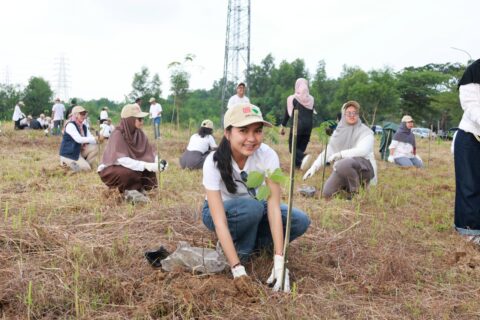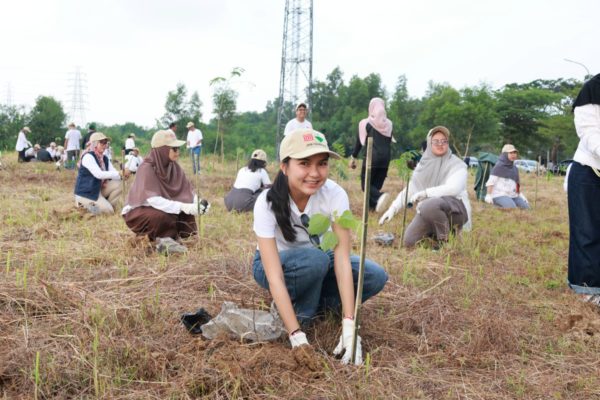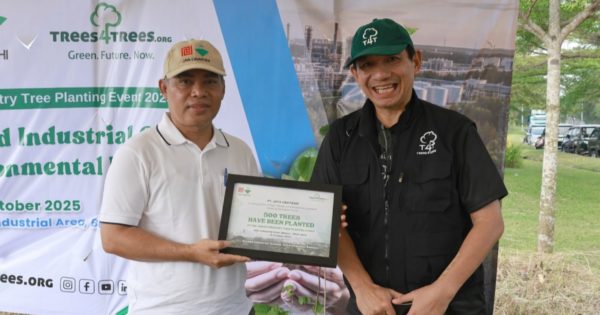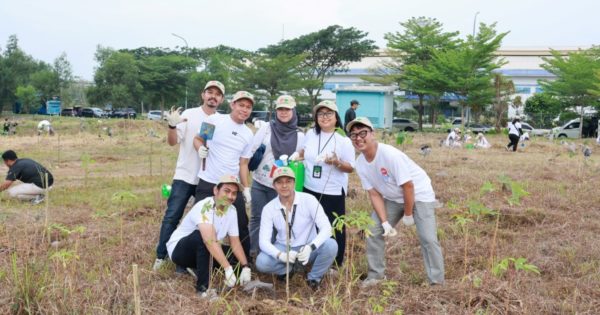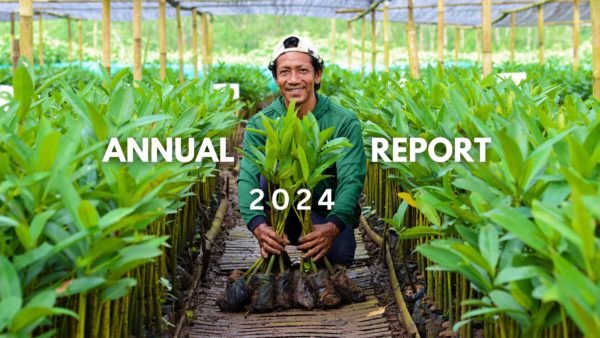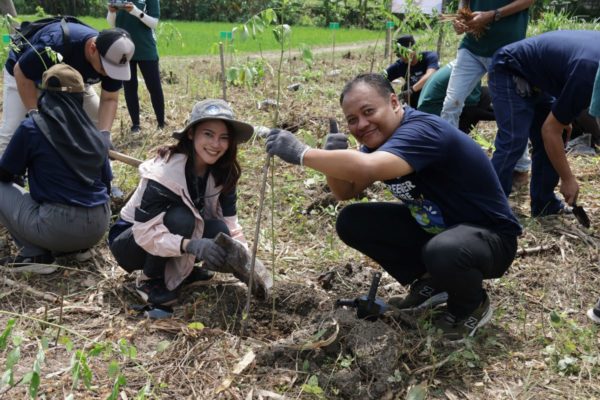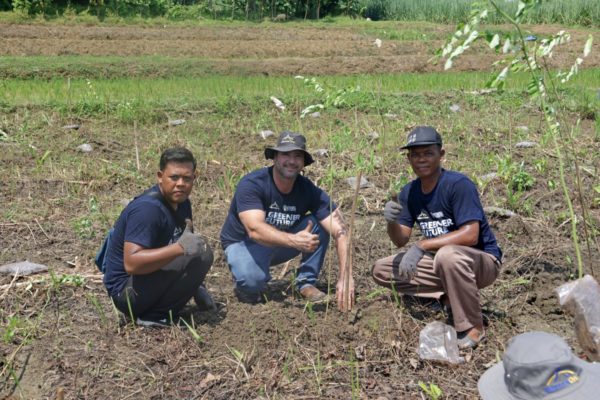
In 2024, we celebrate 17 years of impact. Marking the year of growth, collaboration, and meaningful progress, we are pleased to share our 2024 Annual Report. This report presents the financial results for 2024 and tree-planting operations from April 2024 to March 2025.
Throughout 2024 planting season, Trees4Trees successfully planted 4.65 million trees across 15 regions in Indonesia, bringing our total to over 15 million trees planted since 2008. This milestone is more than just numbers – it represents ecosystems revitalized and thousands of farming families gaining access to sustainable livelihoods through reforestation and education. Looking forward to 2025, our tasks are clear: scale our efforts, restore degraded landscapes, protect biodiversity, and uplift communities through inclusive, sustainable development.
We thank you to our partners, sponsors, and especially the local communities who are the heart of our tree-planting mission. Your continued support our vision for a greener, more resilient Indonesia.
As we move into our 18th year, we also reflect on how collaboration has shaped our journey. Partnerships with local governments, companies, schools, and farmers have been the driving force behind our achievements. Every seedling planted carries with it a story of cooperation — between people and planet — and a shared hope for a healthier environment.
In 2024, we strengthened our monitoring systems and data transparency, ensuring that every tree planted is tracked and nurtured to maturity. We also expanded our educational outreach to empower youth and communities with knowledge about climate resilience and sustainable land management.
These steps are part of our long-term vision to create lasting change — not just planting trees, but cultivating a culture of stewardship and care for the environment. Together, we are growing a legacy that will continue to thrive for generations to come.
When people think of Bali, they often picture a world-famous tourist destination with stunning beaches, majestic mountains and hills, and a rich cultural heritage showcased through traditional dances, art performances, and iconic architectures. And while that’s all true, Bali is much more than just a tourist destination.
This island is home to vibrant marine and coastal ecosystems, protected forests, thriving agriculture, and centuries-old traditions deeply rooted in local wisdom. It includes Subak, a traditional irrigation system which reflects the deep connection between nature, community, and tradition.
However, Bali now faces growing environmental threats, including population growth and deforestation caused by land conversion and excessive land use. These threats not only lead to environmental degradation but also put local livelihoods and traditional practices like Subak at risk, including in the western part of the island, specifically in Melaya District of Jembrana Regency.
Agricultural Practice and Subak Irrigation System in Melaya
Unlike other regions of Bali, where tourism dominated, Melaya communities depend primarily on agriculture. Rice, coconut, and cacao are the district’s key agricultural products.
“Cacao production, in particular, has made one of villages in Melaya District, Ekasari Village, renowned as the largest and best cacao producer in Bali,” said Rusmanto Manulang, the Trees4Trees Field Coordinator for Bali.
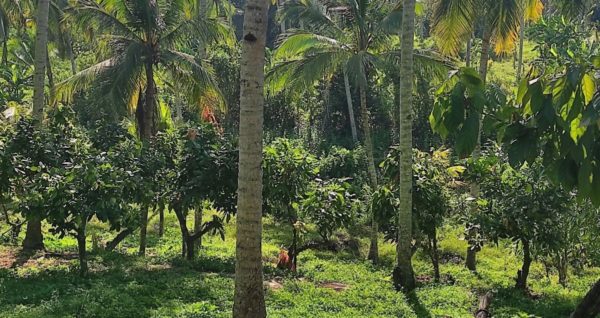
Cacao trees grow alongside coconut trees in agroforestry systems in Ekasari Village, both key agricultural products in Melaya.
Melaya, where also a home to West Bali National Park and traversed by Sangiang Gede river, practices organic farming and as much of Bali, the agriculture is deeply intertwined with Subak, a traditional irrigation system recognized as a UNESCO World Heritage Site since 2012. The district has 19 Subak sites, spanning over villages, sustaining this centuries-old irrigation system.
Believed to date back to 9th century, the Subak system follows sustainable and rotational methods, where local farmers work in organized groups, taking turns irrigating rice fields while others grow alternative crops. Water is distributed through irrigation water tunnels network, ensuring equitable access and making water availability crucial.
“In Melaya, local farmers uphold this practice, working together hand in hand, not only to secure their livelihoods, but also preserve the cultural traditions,” Rusmanto added.
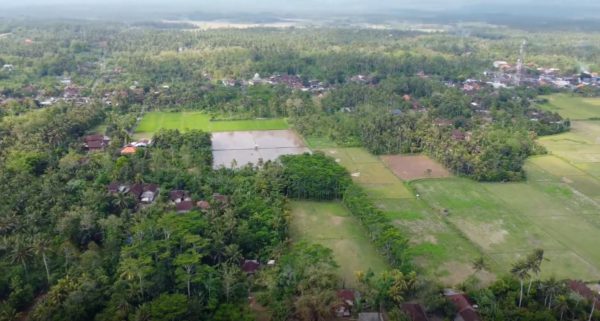
Rice fields span Tuwed Village, one of Trees4Trees’ tree-planting locations.
Land Degradation in Melaya and the Role of Forest in Water Conservation
Among Bali’s regencies, Jembrana has the largest forest area, with 49% – approximately 41,307-hectare of its land, covered in forest, according to Ministry of Environment and Forestry (MOEF) in 2021. Most of these are protected forests, serving as habitats for diverse wildlife and sustaining water resources in the region.
The regency is also traversed by 40 rivers, some flowing into Melaya district, playing a vital role in supporting the Subak irrigation system. This includes the Sangiang Gede river (Tukad Sangiang Gede in Balinese), the longest river in Jembrana, stretching 25,000 meters.
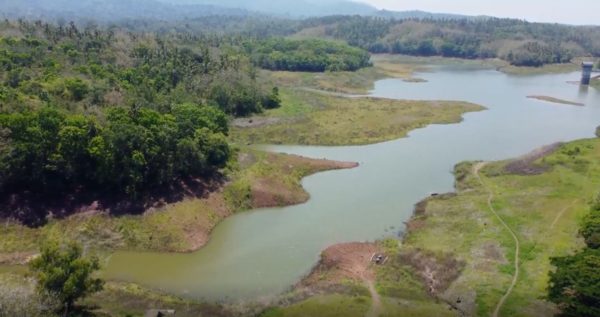
Palasari Reservoir in Ekasari Village stores water of the Sangiang Gede river.
Despite the crucial link between intact forest and water availability, the Sangiang Gede watershed in Melaya district has experienced increasing environmental degradation in recent years, putting water sources at risk. Rapid population growth has led to land conversion for residential and agricultural expansion, resulting in deforestation, erosion that increases river sedimentation, flooding, and water shortages. These challenges threaten both local ecosystems and traditional farming practices.
“Some areas in Melaya Village experience flooding, especially after heavy rain. Meanwhile, in the neighboring Ekasari Village, residents struggle with water shortages during the dry season,” said Rusmanto.
Based on Trees4Trees’ spatial analysis, currently, over 29% of the land in Melaya district, especially in the Sangiang Gede river, has been affected by degradation. It highlights the urgent need for conservation and sustainable land management efforts.
Trees4Trees Tree Planting: Restoring Nature, Strengthening Communities
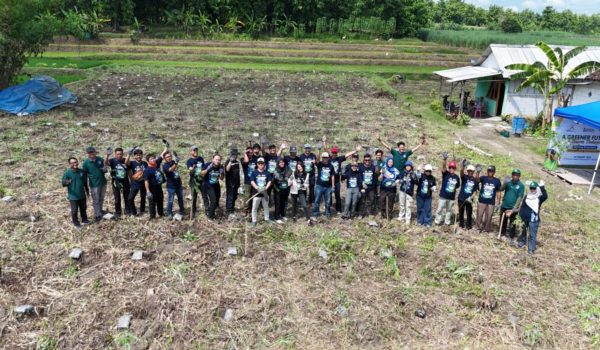
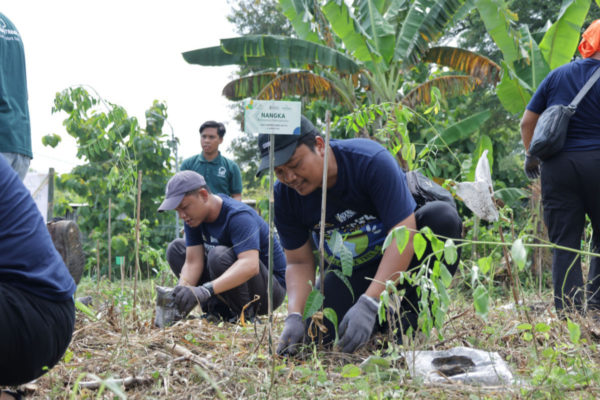
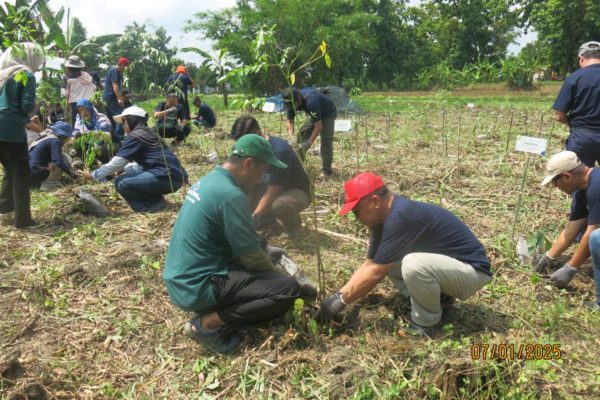
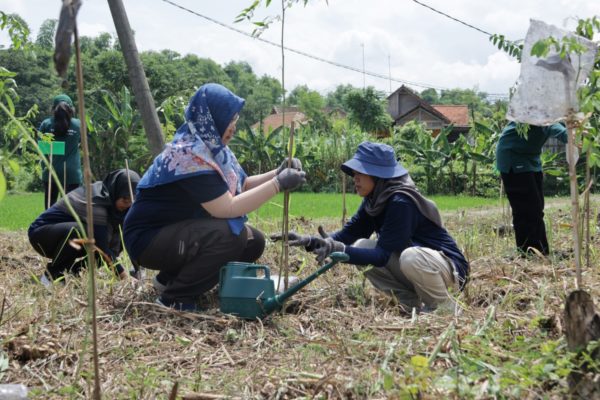
To help local communities address environmental challenges, protect livelihoods, and preserve Bali’s rich agricultural heritage, Trees4Trees is expanding its reforestation efforts on the island. Together with its supporters, Trees4Trees has recently planted over 17,000 trees across two villages in Melaya District: Tuwed and Ekasari.
Focusing on cacao and albizia trees, the initiative spans approximately 25 hectares. It aims to support local farmers and protect forests bordering the villages, which are vital in sustaining the river supplies water to the Subak. With a long-term vision of restoring ecological balance, strengthening local economies, and safeguarding cultural traditions in Bali, Trees4Trees is committed to expanding this initiative in the years ahead.
You can also participate in this reforestation program! Make a lasting impact on the environment, agriculture, and local communities in Bali by planting trees together with us.
Mount Salak in Bogor, part of the Halimun-Salak National Park in West Java, serves as a key water catchment area, a significant carbon sink, and a habitat for at least 200 species of flora and fauna. This includes the Javan hawk eagle, a bird of prey that is threatened by extinction. Spanning over 113,000 hectares of conservation land, Mount Salak’s ecosystem not only protects the largest lowland rainforest in the region and supports biodiversity but also provides for communities in the surrounding area.
However, heavy rainfall on the mountain can make its slopes highly susceptible to erosion, which can cause disastrous landslides and flooding. The surrounding Tamansari District is one of Mount Salak’s buffer areas most affected and is especially at risk during the rainy season. While the landscape may appear green at first glance, several open areas in and around the villages lack tree cover, leaving them vulnerable to environmental degradation.
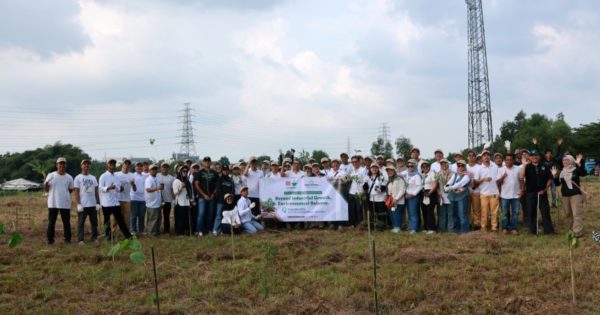
To help local communities address these issues and mitigate future impacts, and as part of their ongoing corporate sustainability program. Sumitomo Electric Group Indonesia teamed up with Trees4Treesto implement a tree-planting project in the region.
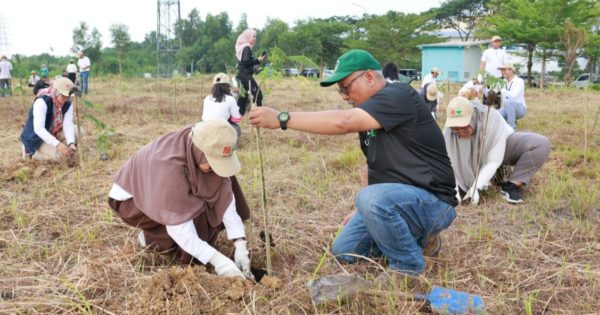
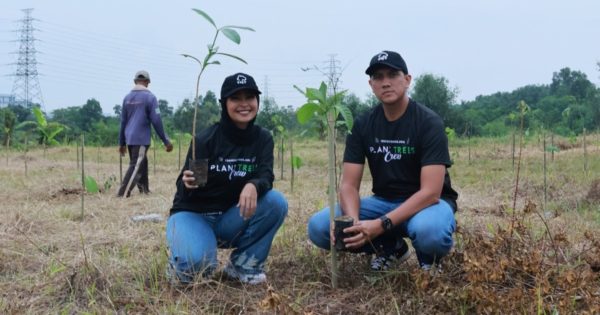
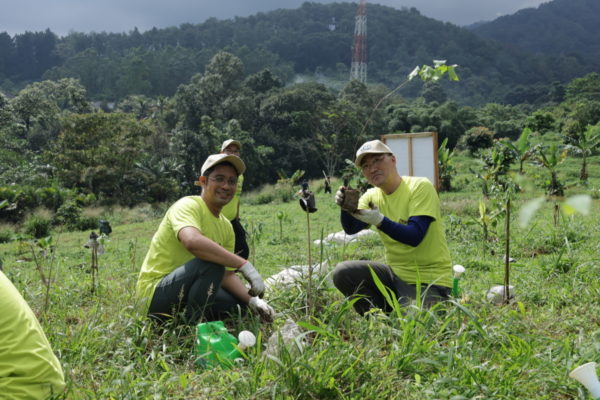
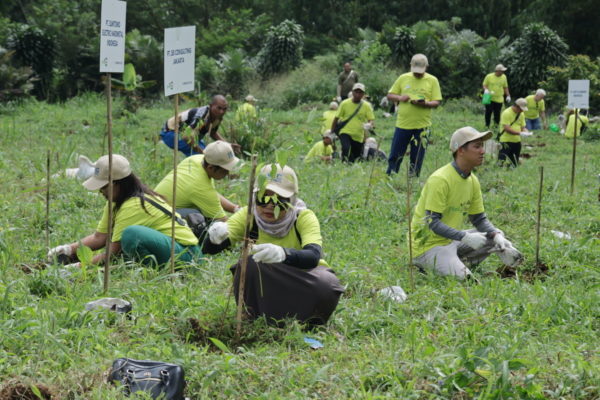
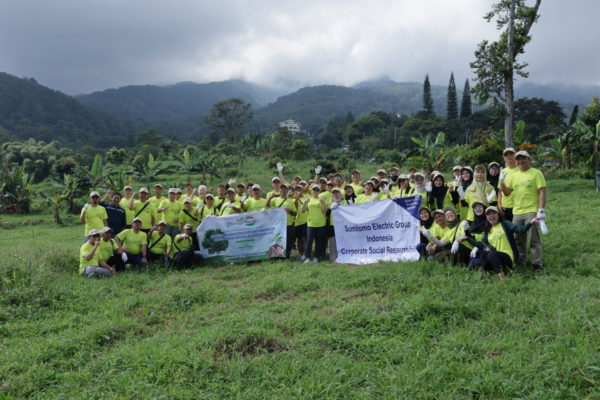
Over 50 Sumitomo Electric Group Indonesia employees planted trees to help prevent erosion in Tamansari Village, a Mount Salak buffer zone.
Erosion Control and Improved Carbon Sequestration
These actions are both timely and sorely needed. Just last year, Tamansari District was hit by a major landslide and flash flood. This followed similar disasters in 2021 and 2023, which seriously threatened the lives of villagers and uprooted local livelihoods.
In response, Sumitomo Electric Group Indonesia has committed to planting 2,000 trees around Tamansari Village in Tamansari District. This project aims to increase tree cover and reduce the risk of future landslides by controlling the erosion that can trigger potentially deadly disasters.
Five tree species including eucalyptus, burflower-tree, avocado, jackfruits, and langsat tree, were planted to enhance the environment and support local communities’ livelihoods.
“We chose the slopes of Mount Salak, part of the Citiis River watershed, due to their critical condition,” explains Adi Gani, Trees4Trees’ Project Manager, noting that several degraded open lands need to be restored. “We hope the trees we have planted will help reduce disaster risks, improve water catchment, and benefit local communities,” he says.
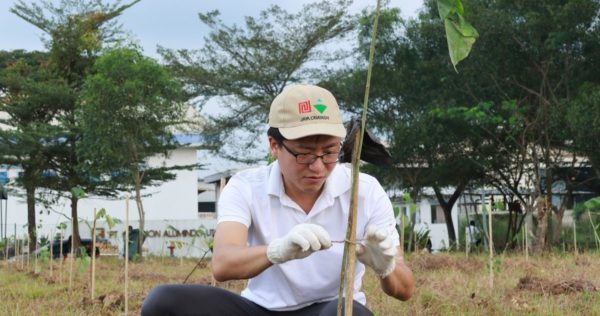
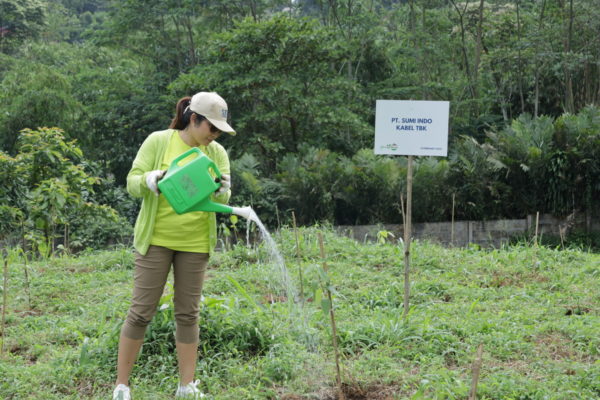
Joining as volunteers, the employees gain valuable knowledge on proper tree planting techniques, including watering and fertilizing.
Another major benefit of this program is its support for Mount Salak’s environmental role as a major carbon sink, thereby contributing to climate change mitigation in line with Sumitomo Group’s corporate sustainability goals.
“We have a goal to reduce CO₂ emissions,” says Koji Imakita, President Director of Sumiden Serasi Wire Product, a subsidiary of Sumitomo Electric Group Indonesia, who participated as a tree-planting volunteer. “While we recognize that the number of trees we have planted is relatively small, this is a significant step forward in our mission to reduce greenhouse gas emissions.”
Plant a Planet: Seeding a More Sustainable Future
Various employees of Sumitomo Electric Group Indonesia and its subsidiaries joined together to volunteer in tree-planting activities coordinated by Trees4Trees. The program, themed ‘Plant a Planet’, demonstrates the company’s dedication to environmental sustainability as part of its corporate responsibility commitments.
Hand in hand, Sumitomo Electric Group Indonesia successfully planted 800 trees, while another 1,200 trees were planted with the involvement of local communities.
“Previously, we planted mangroves, and now we’re expanding to tree planting in a different location,” said Mulyadi, a volunteer and HR Community Representative from one of Sumitomo Electric Group Indonesia’s subsidiaries. “We hope this initiative will make positive impacts, because a healthy planet is the greatest legacy we can leave behind for future generations.”
Mario Eko Cumentas is the Chairperson of Sumitomo Electric Group Indonesia Area Committee. He confirmed that the current initiative forms part of the company’s global commitment to environmental preservation and its support for local communities. “Our main goal is to contribute to environmental sustainability so that nature, in turn, continues to support life for future generations,” said Mario. “This includes local communities living in the vicinity,” he added.
Gohoyoshi: A Commitment to Positive Community Impact
As a company with Japanese roots, Sumitomo Group upholds a core principle of Gohoyoshi, also known as the ‘five-way win’ approach, which represents the company’s commitment to create positive outcomes for all stakeholders. This includes employees, suppliers, customers, stockholders, and socially vulnerable communities. A key aspect of this tree-planting initiative is the central role of local communities.
“This tree-planting initiative is very important to us,” explains Koji Imakita. “At Sumitomo Group Indonesia, we follow Gohoyoshi, or the Five-Way Win, as our business philosophy, which prioritizes community well-being. And that’s why we strive to contribute as much as we can to the local communities around us.”
Guided by the spirit of Gohoyoshi, the company’s sustainability programs not only aim to benefit stakeholders, including local communities, but also to support a healthier environment. This, in turn, supports long-term success and business sustainability. Together with Trees4Trees, Sumitomo Group is helping turn these commitments into tangible impacts for people and planet.
Writer: V. Arnila Wulandani. Editor: Chris Alexander. Photos: Yulianisa Dessenita
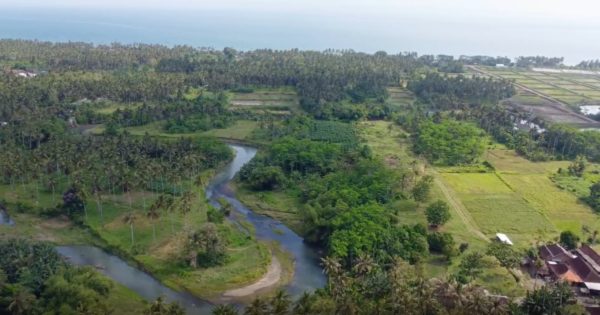
As our 2024-2025 planting season officially began in December 2024, the seedlings distribution process is now in full swing. New green leaves flourishing in our nurseries, reflecting the dedicated and meticulous work of our nurseries’ team. Together with our field team, they are currently busy distributing those seedlings to thousands of local farmers who serve as our tree-growing partners.
This season, we aim to plant over 5.3 million trees by engaging nearly 20,000 local farmers across 17 regencies, covering over 200 villages. Additionally, we are also expanding our tree-planting efforts to Bali Island and the Citanduy watershed in West Java, while further advancing mangrove forest restoration in Cilacap, Central Java.
Together with our supporters, we are focusing on tree-planting initiatives that help restore river watersheds, combat drought and water scarcity, enhance urban areas, and rehabilitate degraded mangrove forests. This season, 34 tree species are being planted, which are expected to improve the environment and benefit local communities. Below are our tree-planting initiatives for this season and the environmental challenges we aim to address through these efforts.
(Above) Our nursery team is busy loading seedlings. (Below) The enthusiastic local community in Kebumen receives seedlings.
Expanding Watershed Restoration
River pollution and watershed degradation pose significant environmental challenges, significantly affecting those who rely on these critical resources. This is especially true for the Citarum River, where we have been actively engaged in reforestation efforts.
Since 2020, we have planted nearly 8 million trees in the Citarum watershed to support government-led restoration initiatives. “Our goal is to plant 20 million trees by 2028 across five Citarum sub-watersheds: Cisangkuy, Ciwidey, Cirasea, Ciminyak, and Citarik,” said Trees4Trees Director, Pandu Budi Wahono.
Over 2.5 million trees have been planted since early January, with a goal of 4.6 million trees in total this year. These efforts, supported by 17,000 local farmers, aim to reforest 177 villages across Bandung, West Bandung, and Sumedang Regency. The ten species being planted include both fruit and shade trees, contributing to watershed restoration, revitalizing greenery, and preventing disasters, especially landslides.
This season, our restoration efforts are expanding beyond the Citarum watershed to new areas. These include planting over 50,000 trees in the Citanduy watershed in Tasikmalaya and over 18,000 in the Sangianggede watershed in Jembrana Regency, West Bali, to protect water sources essential for the traditional Subak irrigation system.
Seedlings are prepared carefully in one of our nurseries to reforest the Citarum watershed.
Restoring the Degraded Cilacap Mangrove Forest
In the 1990s, Ujung Alang Village in Cilacap Regency, Central Java, faced massive mangrove deforestation due to irresponsible land conversion for aquaculture ponds. To help the mangrove forests recover, local communities have been replanting mangroves for these past two decades. During 2022 to 2024, we contributed to the efforts by planting 24,750 mangroves across 7.4 hectares in the Kampung Laut District.
This season, we plan to extend the initiative by planting 120,000 mangroves across 50 hectares. Four mangrove species consist of Avicennia, Rhizophora, Bruguiera, and Ceriops will be planted, as they naturally thrive in the area. The planting will follow the silvofishery concept, integrating fishery with mangrove reforestation.
“This approach aims to provide economic benefits to local communities, with mangrove crab farming scheduled to coincide with this year’s planting efforts, as most local communities are interested in mangrove crab farming,” Yoga, the Trees4Trees Cilacap Unit Manager revealed.
Mangrove seedlings are grown in our nursery partner managed by the local community. These seedlings are ready for Cilacap mangrove planting project.
Combating Drought and Water Scarcity
Many of our planting areas experienced annual drought and water scarcity, significantly impacting the well-being of local communities living nearby. Villages in Kebumen, Pati, and Boyolali Regency in Central Java, Gunungkidul in Yogyakarta, Cidaun in West Java, and Bojonegoro in East Java are among our planting areas frequently affected by these issues, especially during the dry season.
“When the dry season arrives, many areas, including our tree-planting sites in Bojonegoro, suffer from water scarcity as most water sources dry up. We aim to help local communities address this issue by planting treesthat thrive in dry-prone areas,” said Khoirum Minan, the Trees4Trees Unit Manager responsible for the Bojonegoro project.
Despite the scorching day, the tree-planting in Bojonegoro recently have successfully conducted supported by companies to combat water scarcity and drought.
To continue in combating these challenges, this season we plan to plant 530,000 trees across 40 villages in five regencies in Central Java, Yogyakarta, and East Java, engaging over 2,000 local farmers. Additionally, in Cianjur Regency, West Java, we are building on last year’s success of planting 50,000 trees by adding 15,000 more trees to support local communities in developing long-term solutions to combat water scarcity and drought.
The exciting face of local communities in Kebumen (above) and Boyolali (below) receiving seedlings during planting season this year.
More Green Spaces in Urban and Industrial Areas
The presence of urban forests amidst the bustling of cities and industrial areas offers numerous benefits. Tree-lined parks, greenways, sidewalks, and other vegetation in urban settings improve the air, water, and soil quality, reduce noise and pollution, and mitigate the effects of global warming. These improvements help prevent disasters like flooding and maintain the overall health of the urban environment.
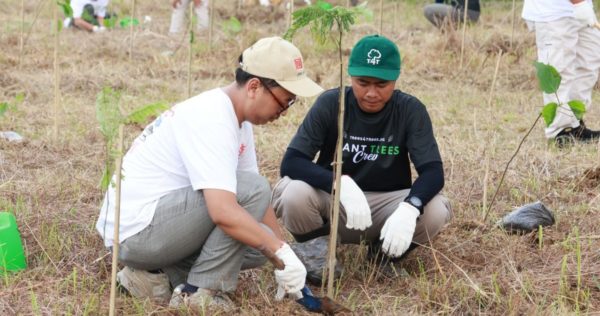
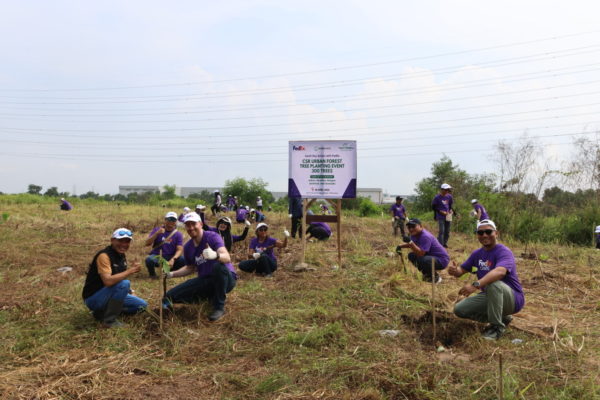
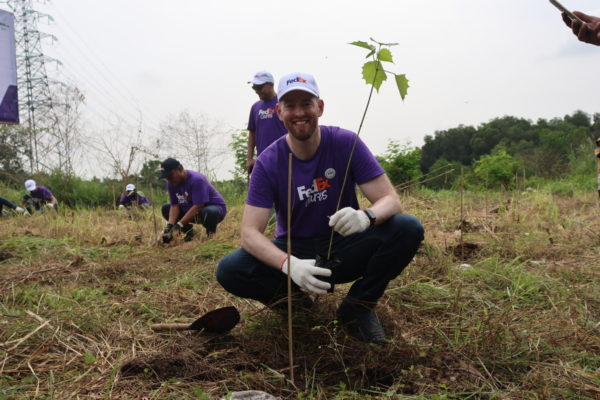
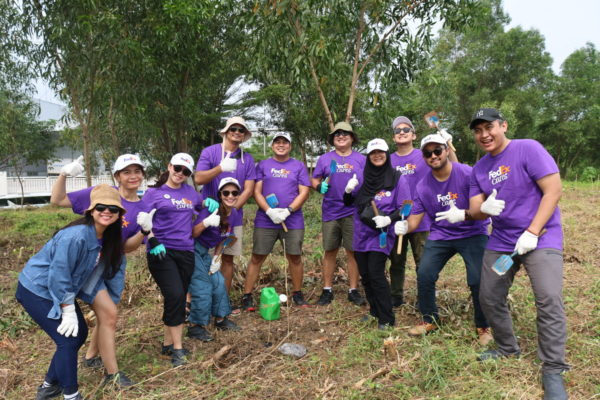
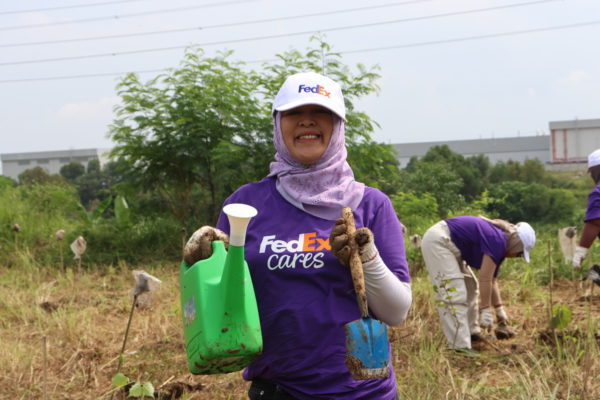
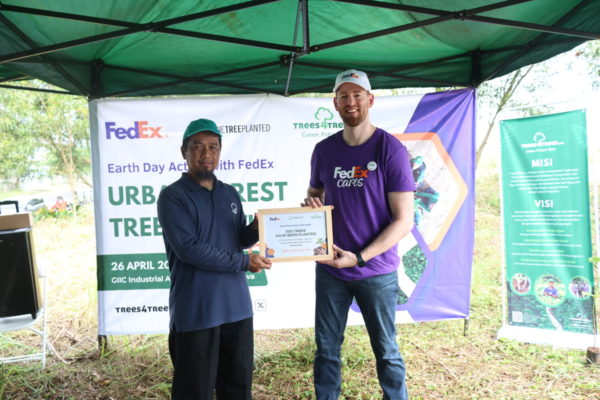
Recognizing these significant benefits, we launched our urban forestry tree-planting initiative in 2022 and have since planted over 60,000 trees. This season, we are focusing on increasing green spaces in urban and industrial areas. Since December 2024, we have planted 22,300 trees in the Bekasi and Karawang industrial regions, with more to come throughout the season. This initiative is expected to help reduce temperatures, combat air pollution, and enhance water and soil quality in these industrial zones.
“As the soil around industrial areas is marginal, our initial step is to plant fast-growing trees before introducing other tree species. We collaborate with companies in the urban forestry initiatives this year and hope to inspire others to contribute,” said Pandu Budi Wahono.
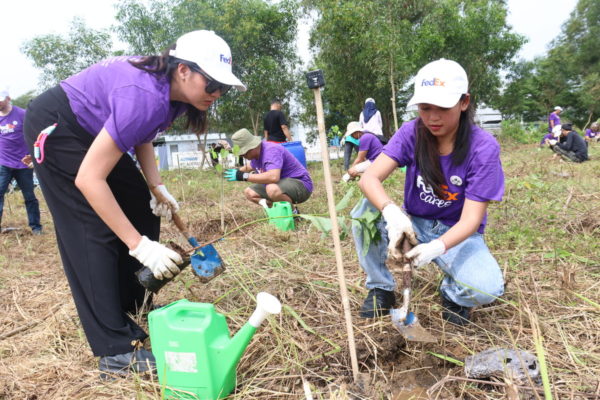
Urban forest tree-planting in the industrial area of GIIC, Bekasi.
Working Together with Partners and Local Communities
This season, we are deeply grateful for the support of companies partnering with us in our reforestation mission. Together with local communities, we are working toward a shared vision of a healthier Earth. “Over eight companies are supporting us this season, and we hope more will join,” said Pandu Budi Wahono. Companies play a crucial role in reforestation efforts, not only helping to restore the environment but also demonstrating their commitment to sustainability, aligning with their core values.
Tree-planting volunteers from companies helped to plant trees in urban areas of GIIC in Bekasi, West Java.
As climate change reaches alarming levels, collective action is more important than ever. With collective efforts ofindividuals, governments, organizations, and companies in tackling this crisis, we can address environmental challenges and create a healthier planet for future generations. Trees4Trees invite you to join us in this mission! You can donate trees, plan a tree-planting event, orsupportour tree-planting initiative to make a lasting impact on the environment.
Writer: V. Arnila Wulandani. Photos: Kemas Duga Muis, Yulianisa Dessenita, Trees4Trees Field Team
(Above) Local volunteers at the tree-planting program in Bojong Nangka Village, Gunung Putri District
Gunung Putri District is located near Bantar Gebang, home to West Java’s largest landfill site. Like many other areas on the outskirts of Jakarta, Gunung Putri struggles with a range of environmental problems, from air pollution caused by traffic jams to overpopulation, unchecked residential development, and the disappearance of green spaces. During the dry season, a lack of tree cover makes the region unbearably hot, and when the rains arrive there is flooding caused by poor drainage and soil erosion.
But look a little closer, and green shoots of progress are beginning to break through the concrete of Gunung Putri. Supported by One Tree Planted (OTP), Trees4Trees has teamed up with local communities to rejuvenate the local environment with an urban forestry program. By replanting and raising awareness, these activities are helping mother nature in Gunung Putri (meaning ‘Princess Mountain’ in Indonesian), rediscover her former beauty.
(Above) A key feature of the program was outreach in schools, designed to engage the younger generation in nature preservation and demonstrate the benefits of a greener environment.
Nurturing the next generation
Earlier this year, the urban forestry program from Trees4Trees and One Tree Planted kicked off in nine villages spanning Gunung Putri District. Planting activities targeted public spaces, privately owned land, schools, and universities. The aim was to regreen the local environment, while also helping reduce pollution and provide some relief from the heat. Another key objective was raising awareness of environmental issues in local communities.
“Today we planted trees at SD Negeri Nagrak 04 (a local elementary school),” says Agus Susanto, one of several local volunteers in Nagrak Village who helped to plant teak, jabon, durian, jackfruit, and mango trees. “We would like to thank One Tree Planted and Trees4Trees for their support in planting trees in this village, including in this school,” he added.
Focusing on schools was a key feature of the program. The objective was to instill the younger generation with a passion for nature preservation and demonstrate the benefits offered by greener surroundings. “Hopefully the trees we have planted will grow strong and make this school a greener place to be,” said Agus. “I hope the students can also see the benefits, making the school shadier and cooler, so they can study in comfort.”
Planting activities covered a range of places in Gunung Putri District, including schools, private lands, and public park. Providing community benefits.
In nearby Bojong Nangka Village, the joint planting program mixed timber and multi-purpose trees, including mahogany, trembesi, pulai, jabon, and gmelina, which have wide canopies and are able to provide shade in public spaces. Other multi-purpose trees included durian, mango, clove, avocado, and petai, which have the potential to provide local communities with an alternative source of income.
“This afternoon was amazing,” explains Amir Arsyad, the head of the village, following the planting activities. “On behalf of the residents of Bojong Nangka Village, we would like to thank Trees4Trees for providing assistance in the form of seedlings – hopefully they will grow well and provide benefits to the environment around us.”
(Above) Keep on truckin’: T4T and OTP have delivered 12,000 new trees to locations in Gunung Putri District, including here, on the campus of Trisakti Nagrak
The multiple benefits of tree planting
The One Tree Planted program has already planted around 12,000 trees in Gunung Putri District this year. With support from Trees4Trees and local communities, this urban forestry project aims to rejuvenate local ecosystems, reduce air pollution, provide shade, reduce soil erosion, improve water retention, sequester carbon, and build the awareness of environmental protection among local communities.
Amir Arsyad is one of many participants in the program who has seen the benefits of this development and is now committed to nature restoration. “When we protect nature, nature will protect us,” he explains, before noting it is the community’s responsibility to care for their surroundings. “If not us,” he says, “who else will protect the nature around us?”
Writer: V. Arnila Wulandani. Editor: Chris Alexander. Photos: Rusmanto Manulang/Trees4Trees
It still resonates in our minds that last 2023 was marked by unusually hot days. According to several studies, it was recorded as the hottest year in global temperature since this data was first recorded in 1850. The year was also impacted by El Niño, a natural climate warming phenomenon that can affect global weather. Climate change exacerbated the effects of El Nino in 2023 leading to prolonged droughts and heatwaves, which triggered severe wildfires in various regions, including Indonesia.
One of the major events linked to the phenomenon was the wildfires that devastated several forests in Indonesia’s mountainous areas, with over 140 incidents recorded throughout the year. Merbabu Mountain in Central Java Province suffered some of the worst damage, with over 480 hectares of forest burned.The fire was allegedly caused by natural leaves friction, although human actions like discarded cigarette butts or burning trash may have also played a role.
A Year After the Wildfire: Youth Community Reforests Fire-Damaged Area
One year has passed since the devastating wildfire on Merbabu Mountain in October 2023. It destroyed much of the forest cover, including valuable vegetation, such as edelweiss, cantigi, and tree species like puspa, pines, cinnamon, and wilodo. While some parts of the forests have been reforested, other fire-affected areas remain barren. This has motivated the youth community of the Executive Student Board (BEM) Diponegoro University to take action, mobilizing youth communities to restore the land by planting trees.
Diponegoro University students went to an altitude of 1,500 meters above sea level together to plant 500 trees in the fire-affected area of Merbabu Mountain.
Collaborating with Trees4Trees, they organized a tree-planting event through an annual environmental program, Gerakan Aksi Tanam Pohon (GESIT) or the Tree Planting Action Movement. The event took place on October 20, 2024 – exactly one year after the wildfires struck.
“Aligned with our program in conservation, we initiated this tree-planting activity. In total, 70 volunteers from twelve faculties joined as tree-planting volunteers to help the environment, particularly by reforesting fire-affected areas,” said Jania, a student of Diponegoro University and coordinator of the tree-planting activity.
Three species of trees were planted in the area: puspa, cinnamon, and wilodo, all the characteristic trees of Merbabu.
A Green Collaboration to Recover the Environment
Together with Trees4Trees, the Gen Z volunteers planted 500 trees along the Thekelan hiking trail on the slope of Merbabu Mountain, in Getasan District, Semarang Regency.
“This tree-planting aims to support ecosystem recovery, allowing the trees to produce more oxygen to benefit all living beings. This small action reflects our care as young generations for the environment,” said Izza, a Diponegoro University student and leader of the Conservation and Disaster Division.
As part of its mission in education and sustainability promotion, Trees4Trees provided volunteers with essential training on tree-planting techniques and preparations a week before the event. Danang Pambudi, a Trees4Trees forester who led the training, emphasized the importance of sharing tree-planting knowledge with young people. “We hope this education encourages them not only to plant trees at this event but to continue planting more in the future, wherever they can,” he said.
Trees4Trees’ forester was presenting the tree-planting technique to the tree-planting volunteers.
Why Is It Important to Plant Trees in the Fire-Affected Area?
Danang revealed, Trees4Trees supported the tree-planting event by providing three species of trees: puspa, cinnamon, and wilodo, all of which are characteristic of Merbabu Mountain. Some of them were diminished during the wildfire.
“We selected the trees to fit the existing ecosystem. Merbabu is the natural habitat for these species, and by planting them, we help restore the ecosystem. In fact, the puspa tree is even fire-resistant,” said Danang. He also emphasized that if fire-affected areas are left neglected, they will eventually recover on their own. Birds and wind will disperse the seeds of native trees naturally, encouraging regrowth, but it takes time. “By planting these characteristic trees in their natural habitat, we help to accelerate ecosystem recovery. Additionally, we also help enhance carbon sequestration, contributing to fight climate change,” he explained.
Each tree was planted in 30 cm depth with 3 meters distance from each other to ensure their growth.
Empowering Youth through Trees4Trees Youth4Change
Trees4Trees‘ involvement in this collaborative tree-planting event was backed with the aim to raise awareness about environmental preservation among the young generation. This initiative is part of the Trees4Trees Youth4Change program, designed to empower youth to express their concerns and take action for a greener planet.
Trees4Trees Youth4Change collaborates with 70 students of Diponegoro University to make an environmental impact in the Merbabu tree-planting
Hatta Iskandar, the Trees4Trees Fundraising Manager, noted that Youth4Change offers opportunities for youth to engage in impactful actions for environmental preservation. “We are excited to collaborate with young communities, especially in tree-planting activities. We hope to continue this collaboration in the future and involve more youth in the green movement,” he stated.
In the other hand, Danang emphasized the younger generation holds the key to a sustainable future. “It’s vital to cultivate a sense of environmental responsibility in young people. By supporting positive initiatives and sharing knowledge, we can inspire a deep commitment to protecting our planet,” he said.
Writer: V. Arnila Wulandani. Photo: Yulianisa Dessenita & Doc. BEM UNDIP
Lorem ipsum dolor sit amet, consectetur adipiscing elit, sed do eiusmod tempor incididunt ut labore et dolore magna aliqua. Ut enim ad minim veniam, quis nostrud exercitation ullamco laboris nisi ut aliquip ex ea commodo consequat. Duis aute irure dolor in reprehenderit in voluptate velit esse cillum dolore eu fugiat nulla pariatur. Excepteur sint occaecat cupidatat non proident, sunt in culpa qui officia deserunt mollit anim id est laborum.