Fairventures Worldwide Visited Trees4Trees for a Comparative Study 

fairventures worldwide visited trees4trees nursery in pati central java for reforestation comparative study in pati central java

fairventures worldwide visited trees4trees for reforestation comparative study in pati central java

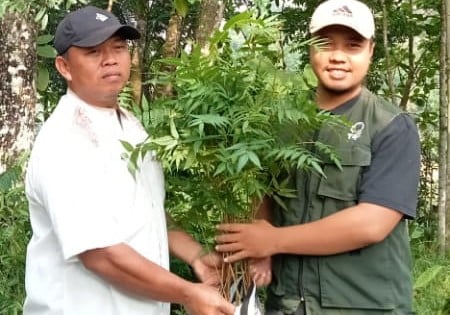
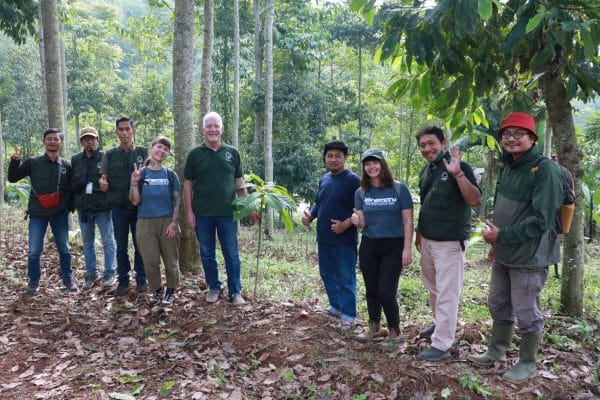
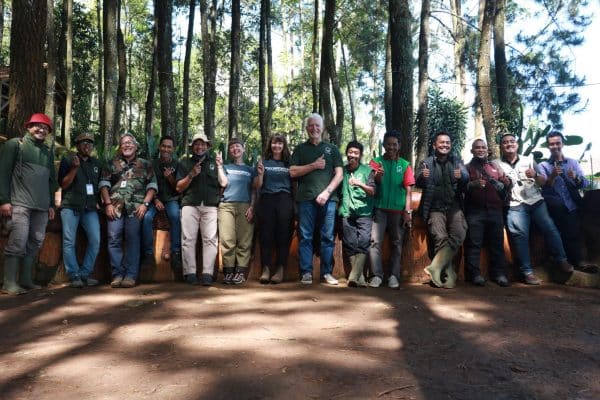
A few weeks ago, Trees4Trees was visited by Fairventures Worldwide, a non-profit organization that is also focused on reforestation and environmental restoration activities. The visit was carried out in Pati Central Java and aimed to conduct a comparative study from the Trees4Tres reforestation program.  

Learning Agroforestry Through Comparative Study

The purpose of the comparative study especially was to learn about the cultivation of sengon trees (Paraserianthes falcataria), community empowerment and mentoring techniques of the tree planting program, collaboration with off-takers and factories, also agroforestry systems developed by Trees4Trees and farmers as well as the marketing strategies. 

fairventures worldwide visited trees4trees nursery in pati central java for reforestation comparative study in pati central java

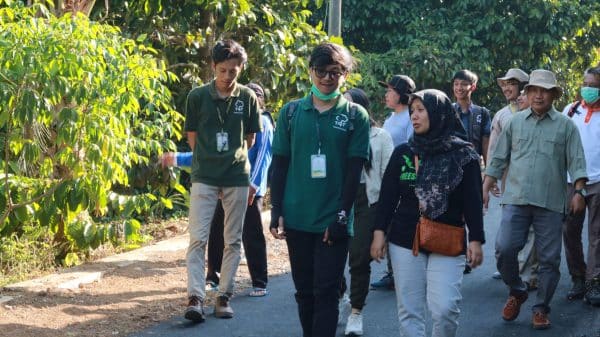
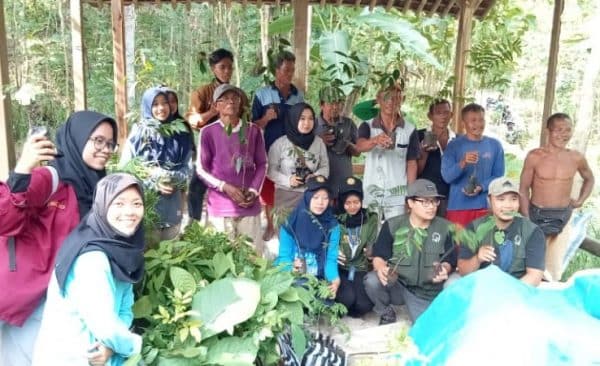
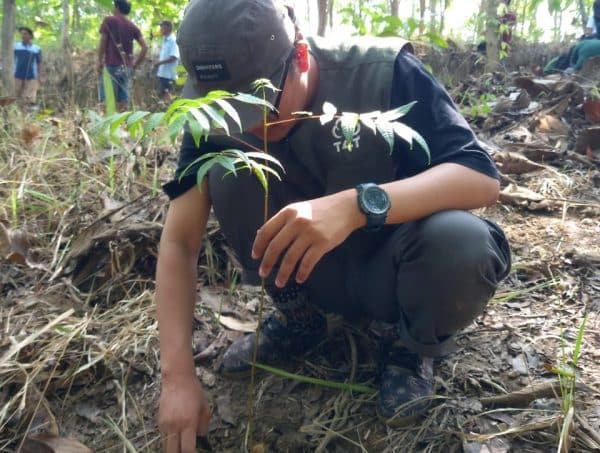
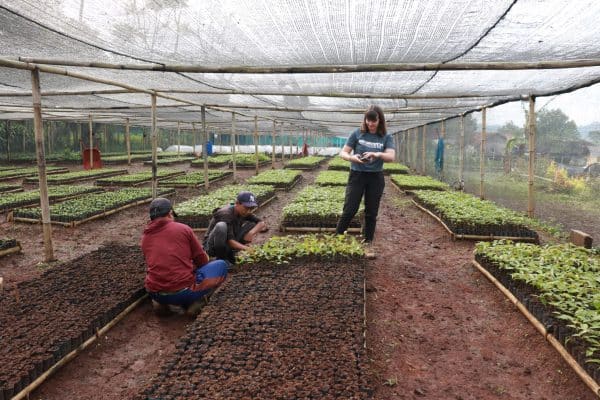
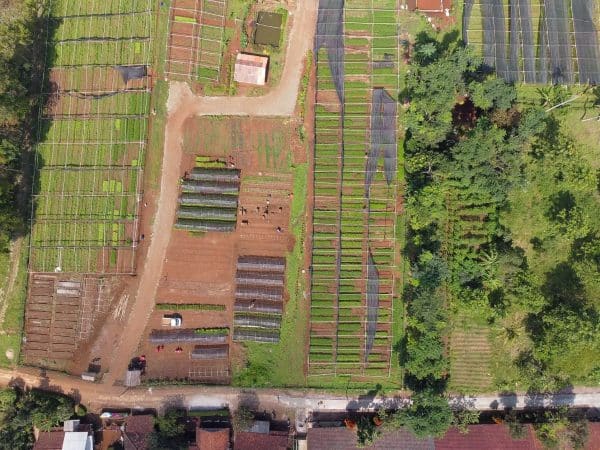
During the three-day visit, the team had the opportunity to visit Pati nursery to see how tree seedlings were grown and treated until they were ready to be distributed to farmers and planted. 

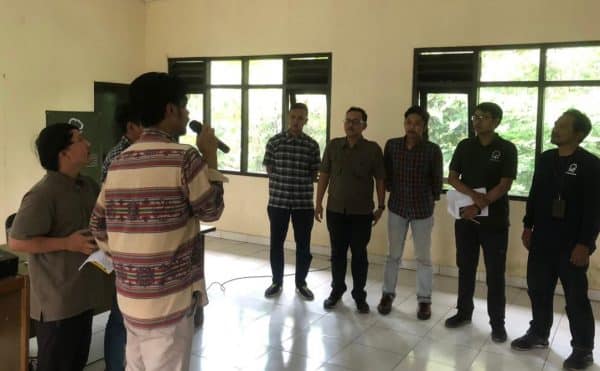
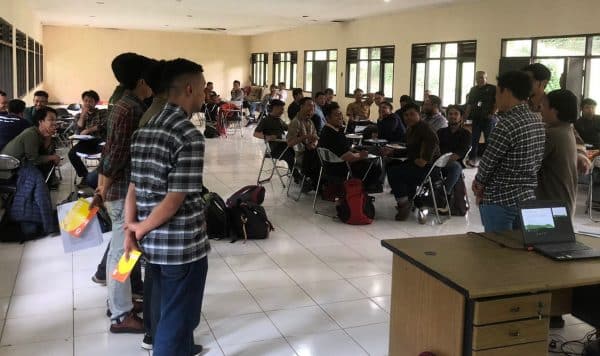
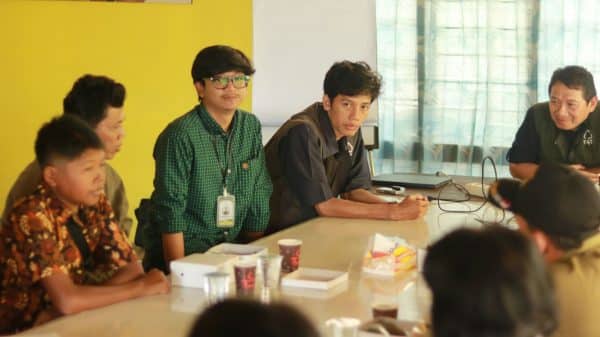
Through the discussion sessions, Trees4Trees shared stories, experiences, and efforts in environmental restoration as well as education, involvement, and empowerment of local farmers in planting trees.  

The team also visited the farmers’ field and observe the agroforestry patterns that have been applied to the farmers’ field. One of the patterns shown was by combining sengon trees, fruit, and coffee plants in one area. Sengon trees and fruits act as shades for the coffee plants. 
fairventures worldwide visited trees4trees for reforestation comparative study in pati central java

“We have a lot of things to learn from this visit and we thank Trees4Trees for the opportunity. From this trip, we can take new things that have not yet been applied in Central Kalimantan. We will bring the new knowledge and experiences that we already got from Trees4Trees to be implemented with our farmers and our staff in Central Kalimantan,” said Raya, Fairventures Worldwide Country Manager of Indonesia.  

Sharing Knowledge for Greener Earth

This comparative study also not only aims to share knowledge and experience to achieve the same goal of making the environment healthier but also marks that the two organizations support each other for environmental restoration through planting trees.  

“We hope this comparative study can be a good reference to the program run by Fairventures Worldwide in Central Kalimantan. Hopefully, the reforestation we have conducted not only provides a great impact on the environment and local communities but also brings more benefits to the farmers. It is important to share good things for a greener earth and for a more prosperous society”, Novita, Trees4Trees Forestry Coordinator revealed.

Author: V. Arnila Wulandani 

Sundanese Language Training to Strengthen Communication Skill to Local Communities

trees4trees sundanese language training 1

trees4trees sundanese language training 1

West Java is one of Trees4trees’ work areas where most of the population speaks Sundanese as their first language. Although Bahasa Indonesia is used as a formal language, Sundanese as a local language is deeply attached in their daily life and daily conversation.  

Interaction and communication skills with local communities are one of the most important things to achieve successful program implementation in the villages. For this reason, field coordinators need to have good skills to communicate with them using the local language as one of effective approaches.  

Regarding the importance of mastering local language skills, Trees4Trees West Java work area held a training of communication and interaction with Suge ndanese Languaand Culture in Arjasari, Bandung. The activity aimed to improve the communication skills of the field coordinators using language properly and correctly while working around the local communities. It was also purposed to enhance the ability of field coordinators to deliver program materials to villagers in Sundanese language. 

Read also: One Tree Planted Visited Trees4Trees’ West Java Nursery

The activity was held for two days and attended by 96 staff members of West Java Trees4Trees. The workshop was delivered interactively by Elis Mia, a Widyaswara Sundanese Language Expertise. 

trees4trees sundanese language training 

“The Sundanese language skill is very important in the implementation of Trees4Trees program in areas where people speak Sundanese. It will be easier for our team in the field to communicate and to convey program information using the everyday language of farmers or the local community. It is a good way to approach them. In the Sundanese language test during the training, we had a participant who got a perfect score of 100, and two participants got a good score of 95. We really appreciated them. We hope more field coordinators will have a good skill in mastering culture after this training,” said Rahmat Syamsudin, Social Forestry of Trees4Trees.  

Rahmat also revealed that this training was expected to be a basic skill for field coordinators who work closely to local communities. In the future, capacity building trainings in communicating and interacting with local communities will continue to be carried out.  

Planting One Hundred Trees with Students and Villagers in Kalibeji Village

Planting one hundred trees in kalibeji village kebumen

Planting one hundred trees in kalibeji village kebumen

Trees4Trees Kebumen area collaborated with Soedirman University students in a tree planting activity last July 30, 2022. This tree planting activity was conducted in Kalibeji Village. It is located in Sempor District, Kebumen Regency. This activity did not only involve Soedirman University students who were undergoing Kuliah Kerja Nyata (KKN) program or Community Service Program, but also villagers of Kalibeji Village. 

One thousand trees in total were planted on an area of 5.000 m2 owned by villagers. The planting location was determined due to the area lack of trees cover. Villagers of Kalibeji hoped that by planting more trees, the environment around the area would be greener, lusher, and denser.  

Planting One Hundred Trees with Sudirman University in Kalibeji Village Kebumen

This activity itself was one of the real actions that aimed to educate communities about the importance of environmental restoration. It is also expected to contribute to improving the livelihoods of villagers in the future through the results from trees planted.

After planting, periodic monitoring will be carried out to ensure trees can survive and grow well. Meanwhile, the results from these trees later can be harvested by villagers and can be used to meet their needs.  

The types of trees planted in the activity included 500 suren trees (toona sureni), 90 teak trees, 100 durian trees, 190 kelengkeng trees (longan), 80 petai trees (bitter beans), and 40 duku trees.  

Planting One Hundred Trees with Sudirman University in Kalibeji Village Kebumen

“All trees planted came from the Trees4Trees Kebumen nursery and were given away free of charge. The trees are planted on villagers’ lands that lacked tree cover. We initiated this activity with Soedirman University students who were undergoing the KKN program (Community Service Program) because their program has the same vision and mission as what we do which aimed at reforestation and supporting villagers. That is why we agreed to collaborate with each other to conduct this tree planting activity,” said Faris Ardika, Unit Manager of Trees4Trees Kebumen area.  

It is also hoped that by conducting tree planting activity which involved various levels of society from students to villagers, it will emerge more awareness and initiative to wider communities to do tree replanting on critical lands.

Author: V. Arnila Wulandani
One Tree Planted Visited Trees4Trees’ West Java Nursery

One Tree Planted Visit to Bandung Trees4Trees_1

One Tree Planted Visit to Bandung Trees4Trees_1

Trees4Trees and One Tree Planted have committed to be partnered in environmental renewal and local community support through tree planting programs. As part of the commitment, One Tree Planted visited Trees4Trees West Java area last 18 – 19 July 2022. The visit was represented by Beth Dalgleish, One Tree Planted Asia Pacific Director and Talia Liney, One Tree Planted Asia Pacific Project Manager.

During the visit, the two representatives visited Trees4Trees nursery in Arjasari, Bandung Regency to see the tree seedlings growth and nursery activities. They also visited several tree planting locations on the farmers’ lands in Nagrak Village, Patrolsari Village, Pasirmulya Village, Campakamulya Village, and Lamajang Village in Bandung Regency, West Jawa.  

One Tree Planted Visit to Bandung Trees4Trees

In these villages, the two met Trees4Trees’ best farmers. They talked about the progress of trees planted by farmers. Some of trees are burflower, eucalyptus, coffee, avocado, gmelina, dammar, bitter bean, cinnamon, iron redwood, and more. Those trees were not only contribute in absorbing carbon and preventing erosion, but also brings economic benefits for farmers from the trees ‘ yield. 

“We came here from Australia to visit the Trees4Trees nursery, where they grow trees for 10 million trees planting project funded by Astra Zeneca. These trees are going to be planted in the Citarum watershed. So it’s great to see these baby trees growing and being well cared in this nursery,” said Beth Dalgleish. 

One Tree Planted Visit to Bandung Trees4Trees 
The 10 million trees planting project itself has been addressed for the rehabilitation of the Citarum Watershed (DAS) in West Java. It has started since 2020 and funded by Astra Zeneca which collaborates with One Tree Planted and Trees4Trees. This project targets to plant 10 million trees by the end of 2025 in four sub areas of watershed, including Ciminyak, Ciwidey, Cirasea, and Cisangkuy watershed. At the same time, it also targets agroforestry development and planting erosion control plants on an area of 8,900 hectares. 

One Tree Planted Visit to Bandung Trees4Trees

During the tree planting program, it is estimated to be able to absorb 1.8 million billion kg of carbon dioxide (CO2). It will also raise the function of watershed and the stability of water flow. Therefore, this program is expected to give contribution in reducing negative impact of forest degradation around the Citarum watershed as well as increasing the local community’s awareness to protect the forest and provide alternative income sources for local people. Around 38,000 families who live near watershed are expected to get the benefit environmentally and economically from this program.  

One Tree Planted Visit to Bandung Trees4Trees

“With the collaboration of Astra Zeneca, One Tree Planted, and Trees4Trees in the reforestation effort, we hope to convey a wider message to more people around the world to understand that every environmental changes have consequences including environmental degradation that need our collective actions to deal with it. Everyone should take a role and contribute to improve and maintain environments to be healthier. Planting trees and growing them is an example of small actions that can bring immense benefits to human life in the future,” said Tomi Bustomi, Regional Forestry Manager of Trees4Trees. 

Author: V Arnila Wulandani

Photos: Kemas Duga Muis

Mangroves Planting Program with EcoMatcher Inspires Villagers to Plant More Mangroves Trees

planting mangrove inspire more locals to plant more mangrove trees

planting mangrove in pati central java 

Pati Regency, located in northern Central Java, is one of the many mangrove-growing areas in Indonesia. This regency has approximately 8,000 hectares of potential mangrove areas. Nearly 25% of Pati’s total coastline was forested with mangroves. Unfortunately, the mangrove cover in this area is degraded and in poor condition.  In 2017, a survey in Pati showed that around 60% of mangrove cover had been lost in some districts.

Mangrove Cover in Poor Condition

Coastal erosion and land over-use are the most common causes of mangrove destruction in this area, making many mangrove areas become critical lands, including in Dukuhseti Village. Mangrove ecosystems play an important role in climate stabilization, coastal protection, biodiversity richness, local community’s economy, and supporting fishery.

Read also: Incredible Benefits of Mangrove Ecosystem

“In the past, our village had mangrove forests, but they were exposed to tremendous coastal erosion. After that, there was an expansion of the fishponds that cut down mangroves excessively. Consequently, now our village has no wave barriers around the coast,” said Mustofa, leader of the Tani Makmur farmer group in Dukuhseti Village.

Most of the villagers of Dukuhseti make their living as fish farmers and fishermen. They have fishponds near the coast. Their main products are tilapia and milkfish.

Mustofa said the most significant impact after the mangrove forest was drastically reduced is that now the village does not have any wave barriers, thus endangering small fishponds near the coast owned by local farmers.

“When the big waves come, our fishponds are often hit and destroyed by the waves. Big waves sometimes also bring runti pests (barnacles) in large numbers. They not only can injure fish farmers because they are sharp but also can infect young mangrove tree trunks,” Mustofa added.

planting mangroves in Pati Central Java

Planting Mangroves Program with Trees4Trees and EcoMatcher

When Trees4Trees and EcoMatcher came to Dukuhseti Village and invited them to join the mangrove tree planting program, Mustofa and other members of the Tani Makmur group welcomed the project enthusiastically.

“The community was very supportive and excited when they knew the program was being implemented in our village. We hope that many mangrove trees can be planted so that erosion can be prevented, and our fishponds can be protected from waves,” said Mustofa. In addition, mangroves also benefit fishermen because they do not have to go to sea far to catch fish. The fish become more abundant around mangroves.

planting mangroves in Pati Central Java

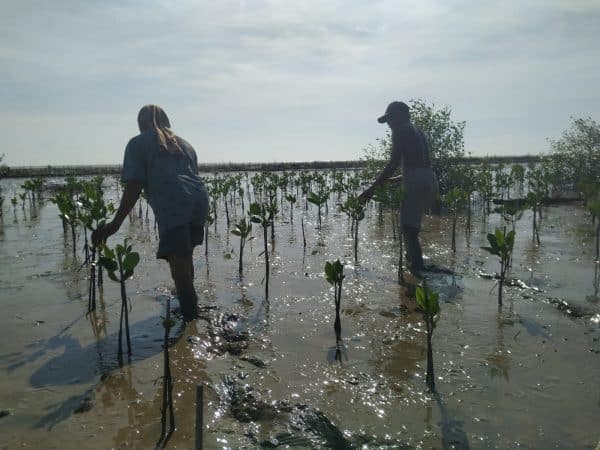
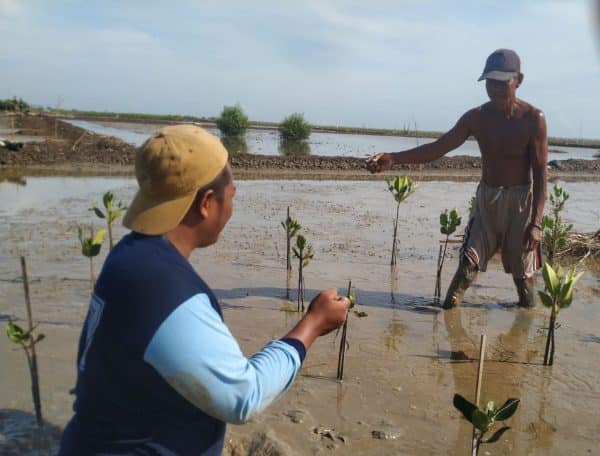
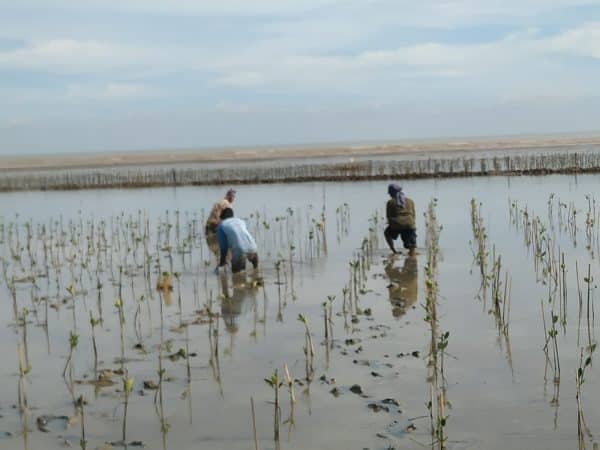
Since November 2021, Trees4Trees and EcoMatcher have planted 30,000 mangrove seedlings on the coast of Dukuhseti village in partnership with the fish farmers from the Tani Makmur farmer group. The mangroves planted covered an area of ​​3.8 hectares. The fish farmers are employed in producing seedlings, planting, and installing breakwater walls to protect the young seedlings.

“Before planting mangroves, the land was considered by the government to be critically degraded land. There were only a few mangrove trees left. We planted Avicennia and Rhizophora mangrove species because these two types were the original natural forest. We hope to restore the mangrove cover in this area completely,” Fauzan, Unit Manager of Trees4Trees Pati, said.

Inspire Local People to Plant More Mangrove Trees

Interestingly, the Trees4Trees and EcoMatcher mangrove planting program also inspires and motivates locals to plant more mangrove trees around the village coast. Shortly after the planting project with Trees4Trees and EcoMatcher was completed, the villagers planted mangrove trees voluntarily around the planting area. They sow the Avicennia seedlings directly on the shore and around the fishponds while the waves are low.  

planting mangroves in Pati Central Java

“Actually, some villagers whose ponds are close to the coast had planted mangroves voluntarily a long time ago. However, this program motivates and inspires more people to plant more mangroves. We think it is because people are starting to realize the importance of mangroves’ existence in the village,” said Mustofa. The villagers thank Trees4Trees and EcoMatcher for the mangroves planting program. They also hope to plant more mangroves in the future.

This year, Trees4Trees has been partnering with EcoMatcher for five years, a moment to celebrate! Both are keen on their commitment to supporting local communities and environmental restoration by planting trees. Trees4Trees and EcoMatcher use technology to monitor the locations of the planted trees. Anyone can visit the trees they have planted through the EcoMatcher website.  Each tree planted by Trees4Trees and EcoMatcher is recorded with the TreeCorder application developed by EcoMatcher. With this technology, anyone can track and plant trees via a smartphone and get information about the trees and the farmers who care for them.

Author: V. Arnila Wulandani
Grandpa Wasis And His Dedication to Planting Coffee


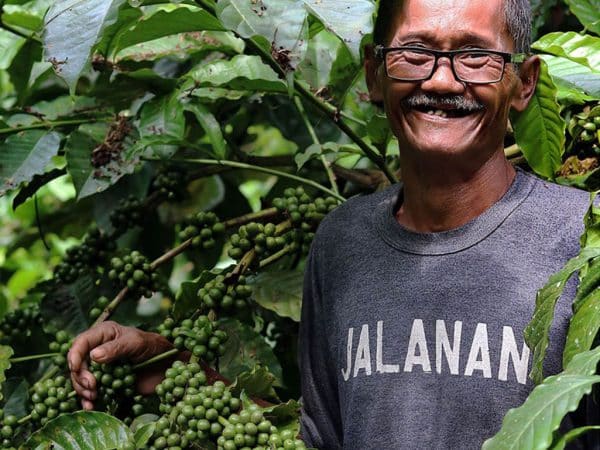
In a hamlet called Wonosari in Kalirejo Village, Kebumen – Central Java, there is a small hut far from the settlement, surrounded by coffee trees and there lives an old man named Grandpa Wasis. He lives alone in the hut, inside the hut there’s only one lamp and an old radio. Grandpa Wasis calls it home. Meanwhile, his wife chose to live with her eldest child in the neighboring village. 

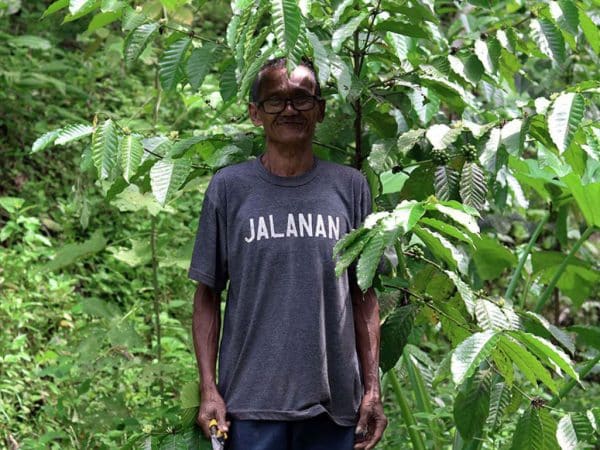
That afternoon Grandpa Wasis was waiting for us in front of his house. He made time for us in the middle of his work. He is very friendly and always has a smile -maybe Grandpa Wasis hasn’t been visited by guests in a long time.  

We were impressed with the coffee plantations that he takes care of, they are lush and fruitful. We asked him what is the secret of it? And he answered ”experience” with a little laugh. 

Grandpa Wasis explained that he does not have secret method but just follows the usual ways of taking care of his trees, only that he monitors his plants every day to make sure each tree gets the care it needs. That’s why he chose to stay on his land. 

He shared that he had planted coffee trees when he was very young. He has grown coffee in several areas in Indonesia such as Lampung, Palembang and Central Java. Grandpa Wasis really likes coffee and understands which coffee has good quality. He chose to return to his village because he felt that living in Palembang was not safe for himself and his family. 

”In Palembang… for example, if there was rice in the hut, the rice was gone”. 

”I thought about the safety of my family so I chose to come back here and make my own coffee plantation…. Alhamdullilah, we were offered coffee seedlings from TREE Ltd and Trees4Trees”. 

With such fertile land we are wondering who’s going to manage it in the future? Grandpa Wasis was silent for a moment. He had no idea about it yet, he doesn’t want to force his son to follow his steps, the most important thing is that right now he is happy to take care of his trees. His coffee trees are his only treasure. He hopes that young people will start learning to plant because the number of farmers in the future will decrease.  

He told us that he feels supported by our tree planting program and for that, he thanks the donor TREE Ltd who’s supporting the program and cares about small-scale farmers like him. Grandpa Wasis hopes he is eligible to get more seedlings next year because planting and taking care of the trees are a pleasure for him. Grandpa Wasis admits that the income he gets from his trees are not much because his land area is not very large but he is very grateful. 

“When my land is green, I’m happy… I don’t ask for anything else”. He smiled. 

Doesn’t feel lonely living alone here? We asked. He said he was used to being alone and this was a form of his dedication as a coffee farmer. 

We believe trees that are cared for with love always have the best results and we are sure these trees are in good hands, to the man who dedicates his life to planting. 

We thank Grandpa Wasis for his dedication. Know this Grandpa, you play a very important role in the environment and society. We wish you always health and happiness Grandpa! 

Author: Yulianisa Dessenita