Planting in Kebumen UNESCO Geopark: Supporting Nature and Communities

Planting in Kebumen

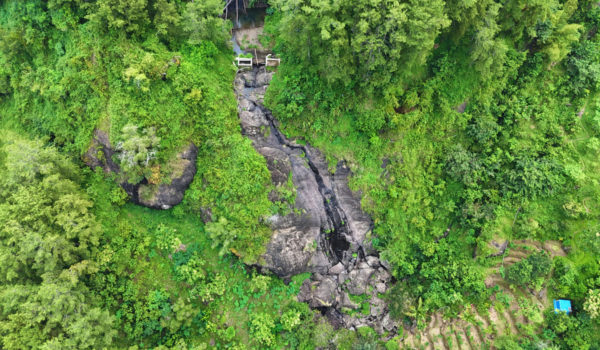
When exploring the northern part of Kebumen Regency in Central Java, you will see something that can’t be found anywhere else on Java. The rocks here are actually ancient sea beds, which are packed with marine fossils of corals and radiolarian plankton. 

This landscape, now surrounded by forests, is part of the Kebumen Geopark – an area recognized by UNESCO in 2024 as a Global Geopark, in recognition of its remarkable natural, cultural, and historical value. This landscape is a living testament to the natural history of our planet. 

“Over 80 million years ago,” explains Suparmin, one of the park’s caretakers, “a tectonic collision between the Indo-Australian Plate and the Eurasian Plate triggered a massive earthquake that lifted the seabed to sea level, forming the karst landscapes we see today.” 

The story of this amazing geopark is still being written. Trees4Trees has been working here since 2008, planting trees to help support ecosystem health, protect biodiversity, and sustain the communities who depend on the land for their livelihoods.  
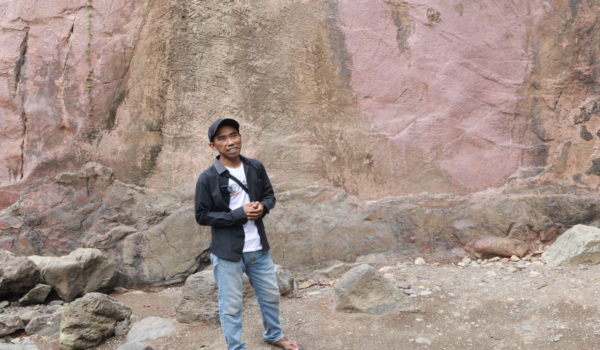
(Above) Suparmin, a local caretaker in Kebumen Geopark, stands in front of a massive basalt rock formation – an ancient sea floor.

Kebumen Geopark: A Biodiversity Hotspot 

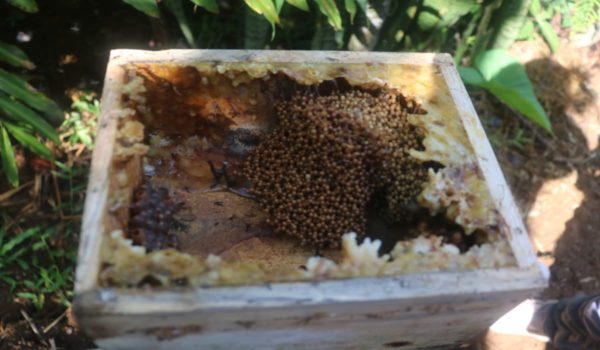
The Kebumen Geopark is home to abundant natural and cultural wonders, including 42 geo sites, 24 cultural sites, and eight biological sites. This includes terrestrial and mangrove forests, a sea turtle conservation center, and cultivation areas for local species, like the dwarf honeybee (or klanceng) and native genjah entog coconut. 

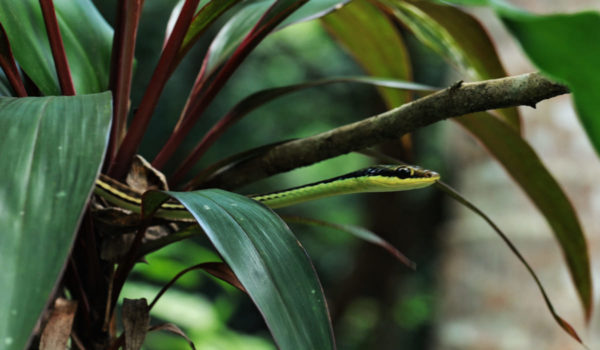
These sites provide habitats for wildlife, including rare and protected species. Among them are the endangered Javan hawk-eagle, Javan slow loris, and Javan leopard. “Our forests are home to diverse species, from birds and mammals to reptiles,” says Suparmin, before adding that there are also species of snakes like cobra, python, and tiger snakes here. “This area also shelters the endangered Javan slow loris, which is often targeted by illegal wildlife hunters,” he added. 
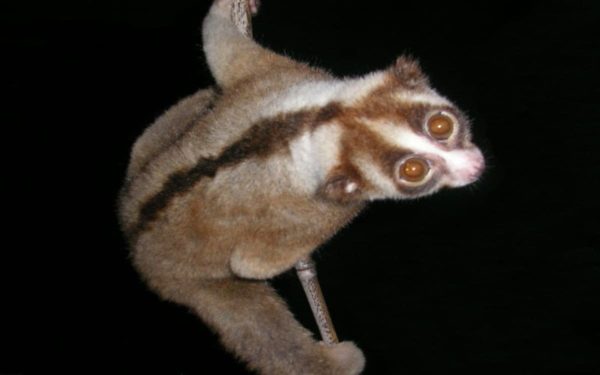
(Above) The Javan slow loris is one of several Endangered species that finds a refuge in the geopark. (Below) A snake spotted in the Watukelir geo site, which is home to various reptile species.

Planting in Kebumen

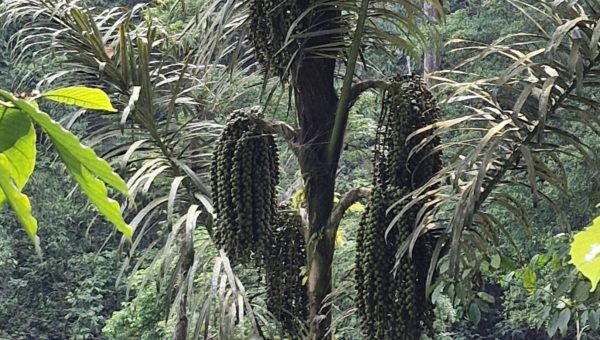
In addition to abundant animal species, the geopark is also home to a range of native and vulnerable plant species, such as Indian sandalwood, valued for its aromatic wood and bark. Other native species include the yellow cheese wood, pangi (or kluwak), bayur, and sugar palm. Some of these species’ feature in Trees4Trees’ ongoing planting program for the region. 
Planting in Kebumen
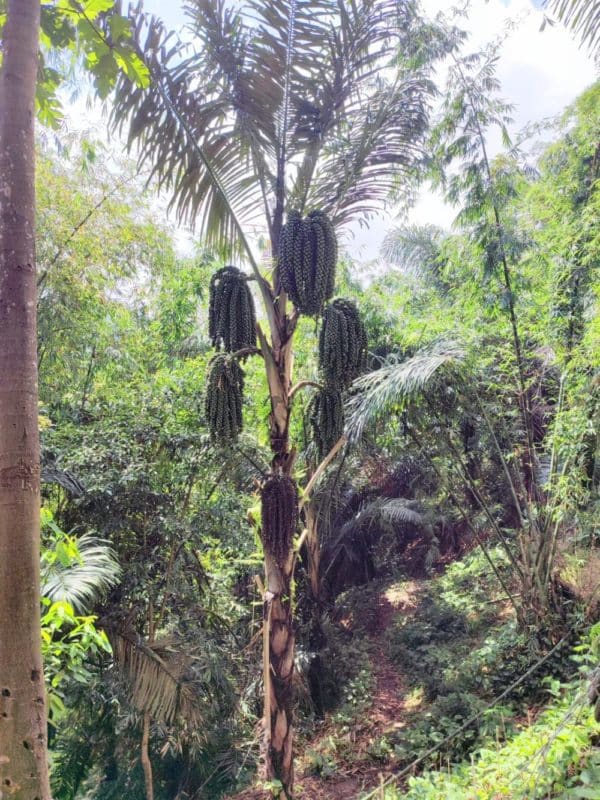
(Above) Sugar palms, one of several species planted in Kebumen by Trees4Trees, which are central to local livelihoods and help to mitigate the impacts of drought by conserving water.

Natural Heritage Meets Local Wisdom 

This area is just as rich in cultural diversity as it is in geological history. Spanning over 100,000 hectares of land (and 2,000 hectares of sea), the geopark spans valleys, hills, and coastal areas. These places are home to a variety of flora and fauna, as well as centuries-old cultural practices, rituals, and arts, underpinned by a deep respect for nature.  

“Sites in the geopark are sacred to local communities,” explains Suparmin. “Traditional wisdom prohibits exploitation and helps protect this heritage.” He also notes that local communities are actively engaged in nature preservation efforts that are strengthened by government regulations and stakeholders’ support. 
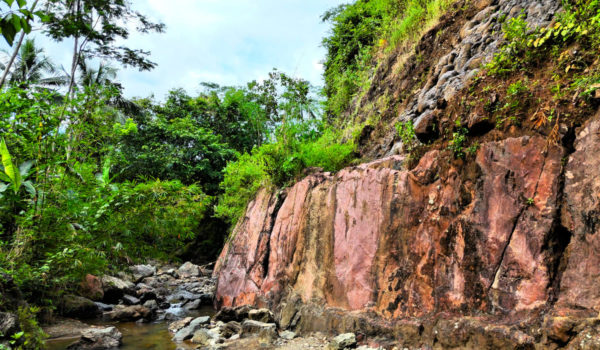
(Above) The distinctive rock formations of the Kebumen Geopark are actually ancient sea beds, brought up from the depths by tectonic activity over 80 million years ago.

Tree Planting in the Geopark  

Over the past 16 years, Trees4Trees has planted more than 1.2 million trees within the geopark. “We’ve worked across 24 villages in four districts within the geopark,” explains Henning Ilmi, Trees4Trees’ Field Coordinator in Kebumen. “This includes planting shade, fruit, and water-conserving tree species to help address drought,” she added.  

Henning also notes that many of these trees offer a mix of environmental and economic benefits. “Genitri trees, for example, are incredibly good at purifying air and their seeds can be made into beautiful beads that provide a source of local income.” According to her, pangi trees (kluwak) are also excellent at conserving water and produce fruits that are highly valuable, as they are central to Indonesian culinary traditions. 

Supporting Biodiversity, Strengthening Local Community Resilience 

Healthy ecosystems support more than just biodiversity – they can also sustains cultural traditions and local livelihoods. For example, in Kebumen Geopark, the landscape supports practices like the tapping of sugar palm sap, a tradition passed down through generations and a key source of income for many families. Sugar palms also help conserve water in drought-prone areas within Kebumen. 

Nature also provides for communities in other ways. Hanafi, a local farmer, relies on a healthy forest to cultivate dwarf honeybees. “Bees get their food from forest trees,” he explains, “without them, I couldn’t raise my honeybees. 

Henning says the long-term tree planting initiative from Trees4Trees has been designed and implemented to improve ecosystems and environmental quality, protect biodiversity, and strengthen local livelihoods. “The geopark is a center for geological heritage conservation and promotes sustainable development,” she explains. “Our tree-planting program supports this effort and aligns with the wider mission of the geopark.”   

The tree-planting program in Kebumen Geopark is a collaborative effort. You too can play your part and help secure its survival by donating trees to the project. This will not only help sustain the ancient ecosystems that protect biodiversity, but also help to support the local communities who depend on them for survival. To find out more, please visit our website. 


Writer: V. Arnila Wulandani. Editor: Chris Alexander. Interview, source compiling & photos:  Yulianisa Dessenita & Henning Ilmi. 


Planting Trees, Preserving Biodiversity and Heritage in West Java

Planting Trees

One of our main tree-planting locations in West Java is the Citarum River basin, home to over 1,000 tree species and 3,000 flowering plants. These plants are central to ecosystem health and form the basis for many livelihoods in the region. However, in the wake of rapid development, many of these tree species are now threatened by deforestation. In response, a local forest farmer named Sutajaya is determined to reverse the damage. 

Six years ago, Sutajaya was granted free leasehold by the government to manage 2 hectares of land in the foothills of Sangar Mountain near Mekarjaya Village, the village in Bandung Regency that he calls home. “We are allowed to plant crops and manage the land,” says Sutajaya. “But the mandate is that we must plant hardwood trees that we never cut down.”  

Traditional roots, bearing new fruits 

At first, Sutajaya planted coffee trees. However, he quickly noticed that many of the trees he remembered from his childhood were becoming more scarce. He started planting native Indonesian species like rasamala, saninten, damar, kisireum, and tarum areuy. And this process reconnected him to his roots. 

Saninten trees
Figure 1 The Saninten tree, one of several native species making a comeback in West Java. Figure 2 The fruit and branches of Saninten tree.

fruits

“This land used to be the home of the powerful Tarumanegara kingdom,” explains Sutajaya, remembering a story passed down from his ancestors. “Their name came from the tarum areuy tree, which used to grow all around – the tree. also gave its name to the river that flows through the region, the Citarum.”. The kingdom was known throughout Southeast Asia for their production of distinctive blue fabrics, made using dye from tarum areuy trees.  

Today, the blue cloth is long forgotten, and the trees are disappearing too. “I don’t want my children to grow up without seeing the native trees so deeply rooted in our culture. So I will do all I can to stop them from disappearing,” said Sutajaya. 

Tarum Tree
Figure 3 Leaves of the tarum tree

Planting the seeds of knowledge 

Unlike most forest farmers in Mekarjaya Village, who manage the land primarily to plant crops and then reap the results, Sutajaya’s main goal in planting native trees is to create an educational forest, or arboretum. “My intention is to safeguard native trees, particularly those of West Java, and prevent further loss in the future,” he explains. “With the arboretum, I want to preserve biodiversity and educate people about the abundance of native trees that form part of our shared culture,” he added. 

sangar mountain
Figure 4 Sangar Mountain, the location of Sutajaya’s arboretum

He plants these trees in the foothills of Sangar Mountain, a popular hiking track among  young hikers, especially at weekends. He hopes these groups will stop by his arboretum to learn more about native tree species. 

Support from Trees4Trees and TREEO 

Sutajaya is well on his way towards his goal. In 2021, he took a big step forward by joining a tree-planting project with Trees4Trees in collaboration with TREEO. “That was a great opportunity for me to add to my tree collection,” he remembers, “and I really thank Trees4Trees for helping me realize my dream.” 

Planting Trees
Figure 5 Sutajaya, on the ancestral lands he has almost single-handedly helped to re-green.

Together with Trees4Trees, he planted 1,600 sawo, damar, rasamala, and avocado trees, most of which have survived and are growing well to this day. From the sawo and avocado trees, he can harvest fruits to sell. From the damar trees, he collects sap, which also has economic value. The tarum areuy he planted provides leaves for organic fertilizer and fodder for his cattle. But the real value of these trees is something that can’t be bought or sold: a connection to heritage, and a glimpse of a greener future in the Citarum River basin. 

In spite of everything he has achieved, Sutajaya is not satisfied. “There are still many native trees out there that I haven’t inventoried yet,” he says. “I hope I can find them soon.”  

Trees4Trees is working closely with local forest farmers like Sutajaya to restore biodiversity and preserve natural heritage in West Java and beyond. To learn more about our tree-planting activities and get involved, please visit the Trees4Trees website.  


A Hub of Biodiversity: Exploring the Citarum

A Hub of Biodiversity: Exploring the Citarum
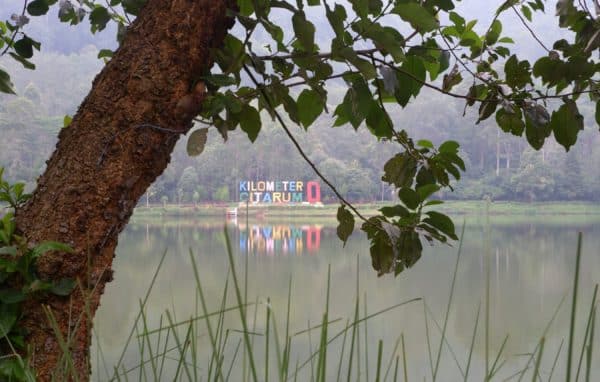
Situ Cisanti or 0 Kilometer Citarum, a lake, where the stream of Citarum river starts (photo: Trees4Trees/V. Arnila Wulandani)

The longest river in West Java, the Citarum is home to thousands of plant species and hundreds of different types of birds and fish. This thriving ecosystem also holds immense cultural and economic value for local communities, but recent losses in biodiversity are impacting lives and livelihoods. Now, with help from Trees4Trees, local people are helping restore the river and secure a more sustainable future for those who rely on the resources it provides. 

In this article, we take a closer look at the plants and animals that make the Citarum River Basin such an important hub for biodiversity in West Java. We’ll also explore some of the work being done to preserve these natural treasures and meet the people working on the frontline of conservation. 

A Connection to Nature and Culture 

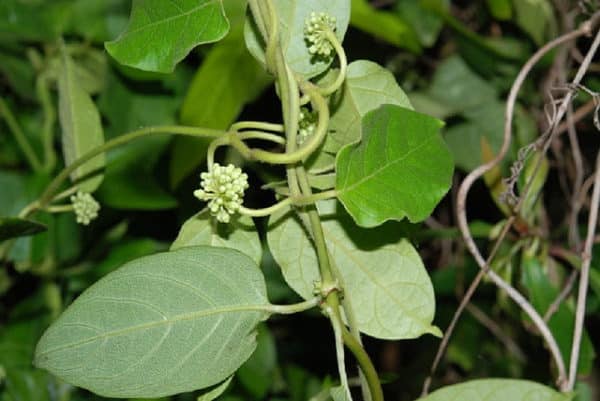
The name “Citarum” comes from “ci,” meaning water, and “tarum,” which refers to the indigo tree (known locally as tarum areuy). This species was once a common sight along the banks of the river, where its network of roots helped to stop soil erosion. The tree was also used by local people as an organic fertilizer and a natural dye, giving batik fabrics from West Java a distinctive blueish hue.  

However, a combination of development and environmental degradation have made this species increasingly rare. Replaced by synthetic dyes, it has been slowly disappearing from the banks of the river that bears its name. 

The Tarum areuy tree
(Above) The Tarum areuy tree, which gives the Citarum its name. Photo: Earth.com

Flora and Fauna: Natural Beauty, Economic Bounty 

The Citarum basin is home to over 3,000 flowering plants and 1,000 tree species, many of which are used by local people to make a living. This, includes teak, rasamala, Java olive tree (or kepuh), jamuju, bayur, puspa, and kosambi trees. The sugar palm tree (known locally as tangkal kawung) provides communities with income derived from its sap, fruit, palm fibers, and leaves.

A Hub of Biodiversity: Exploring the Citarum
(Above) The sugar palm or ‘tangkal kawung’ tree, which supports a variety of local livelihoods. Photo: Trees4Trees/Mark Schmidt

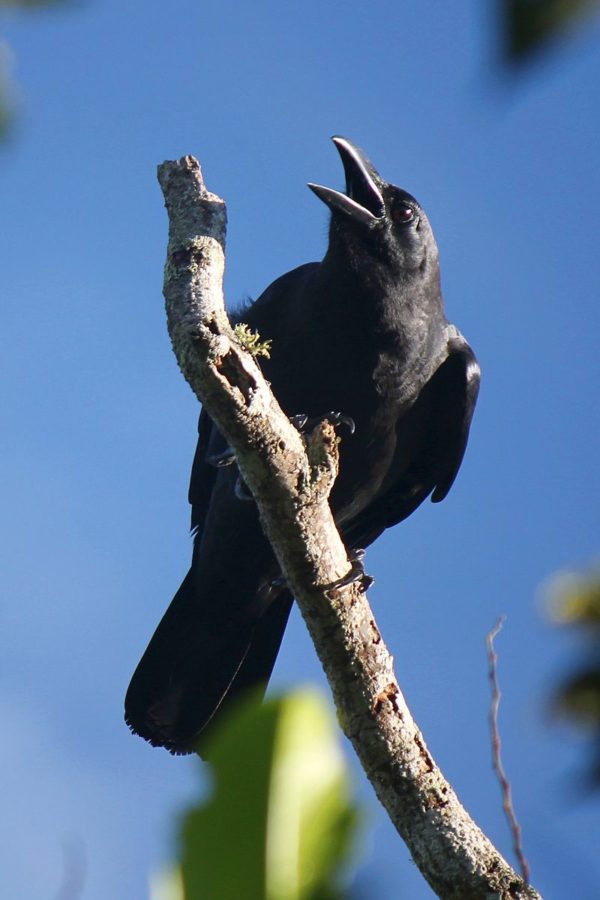
The Citarum river is a haven for around 314 bird species, including the rare, black-crowned night heron, locally known as kowak malam. This unique animal shares its home with other bird species such as the slender-billed crow, the common iora, zebra dove, little spiderhunter, cattle egret, and the Javan pond heron. In the river itself, out of the 23 native fish species, only nine remain: hampal, lalawak, beunteur, tagih, kebogerang, lais, lele, lempuk, and gabus. Invasive species like carp and tilapia are increasingly replacing their native cousins. 

A Hub of Biodiversity: Exploring the Citarum
(Above) The slender-billed crow. Photo: Wikipedia/A.S Kono

Biodiversity Bouncing Back: Replanting Trees, Restoring the Citarum  

“I was born and raised in one of the villages on the riverbanks of Citarum, and I have personally witnessed the transformation of the Citarum basin,” reveals Tomi Bustomi, Trees4Trees’ West Java Regional Manager and a local resident. According to Tomi, during his childhood, there was an abundance of local fish species here. Nowadays, it is hard to find them in any tributary of the Citarum. 

With funding from AstraZeneca and additional support from One Tree Planted, The Trees4Trees is working to rejuvenate degraded lands surrounding the Citarum River. This will involve planting 10 million trees by the end of 2025. As Tomi explains, “This program focuses on rehabilitating degraded lands, particularly in areas prone to landslides, floods, erosion, and water scarcity. 

A Hub of Biodiversity: Exploring the Citarum
(Above) Members of the Trees4Trees team at work on the Citarum replanting program. Photo: Trees4Trees/Kemas Duga Muis.

Armin Mubarok is Trees4Trees Impact Officer. He says the program will help reduce erosion rates, mitigate sedimentation, stabilize water flow, and enhance biodiversity. “By planting trees in critical areas devoid of fauna, we expect the return of animal species, such as insects, birds, reptiles, and amphibianes within five to 10 years,” explains Armin. As the vegetation grows in the riverbanks and the food chain flourishes, biodiversity will thrive.”  

The overarching aim of the planting program is to regenerate the region, using biodiversity as barometer of progress. As Tomi explains, “biodiversity is an indicator of ecosystem recovery; our tree planting efforts represent a significant step towards restoring the Citarum to its former glory.” 

Writer: V. Arnila Wulandani. Editor: Christopher Alexander