Activity Highlights: Commitment in Combating Climate Change Through Carbon Value Training

The training also offered insights into the opportunities and advantages of harnessing the economic value of carbon – benefiting both the organization and local communities, projects implementation mechanisms, and government regulations related to carbon value initiatives. Beyond its environmental impact of reducing greenhouse gas emissions, Trees4Trees’ upcoming carbon projects also provide an economic boost to local communities by growing trees.

A carbon footprint represents the total amount of greenhouse gases emissions produced by an individual, organization, event, or product. These emissions are a primary driver of global warming, exacerbating climate change. To address this pressing issue, carbon offsetting provides a way for companies, organizations, and individuals to offset their emissions by funding initiatives that either reduce emissions or store carbon in other locations, such as reforestation projects. 

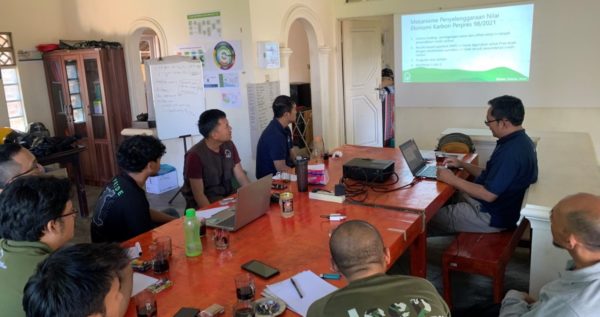
Trees4Trees has been actively implementing carbon measures through its tree-planting program. In alignment with this initiative, we recently conducted a Training of Trainers (ToT) program, with a focus on enhancing the understanding of carbon sinks and their economic value among field teams in Bandung area. This program engaged participants from various sites, totaling 90 participants. 

This training initiative, held from September 27th to October 3rd, is a fundamental component of our groundwork for the forthcoming Trees4Trees carbon economics value project. The project is dedicated to supporting Indonesian government’s efforts to reduce greenhouse gases emissions in the forest and other land uses (FOLU) sector, serving as carbon sink to mitigate the impacts of climate change.  

Take a closer look at the activities related to the training of trainers about carbon economics value in these images below! 
Commitment in Combating Climate Change Through Carbon Value Training

The training features extensive knowledge-sharing sessions covering topics related to carbon sinks and the economic value of carbon in Indonesia, particularly in the connection in reducing greenhouse gas emissions and fostering a green economy as part of efforts to combat climate change.  
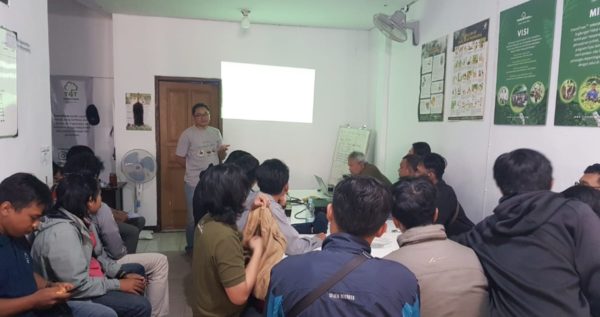

Commitment in Combating Climate Change Through Carbon Value Training

The training also offered insights into the opportunities and advantages of harnessing the economic value of carbonbenefiting both the organization and local communities, projects implementation mechanisms, and government regulations related to carbon value initiatives. Beyond its environmental impact of reducing greenhouse gas emissions, Trees4Treesupcoming carbon projects also provide an economic boost to local communities by growing trees. 

Commitment in Combating Climate Change Through Carbon Value Training

The training entailed conducting comprehensive forest surveys to identify and analyze vegetation types. The information gained from the forest identification served as the foundation for the process and methodology used to estimate carbon absorption. The calculation of carbon stored in the forest relies on five carbon pools, including biomass above the soil (such as stems, branches, and leaves), below the soil (roots), forest litter (fallen leaves or branches), dead trees and woods, and soil organic materials. 

Commitment in Combating Climate Change Through Carbon Value Training

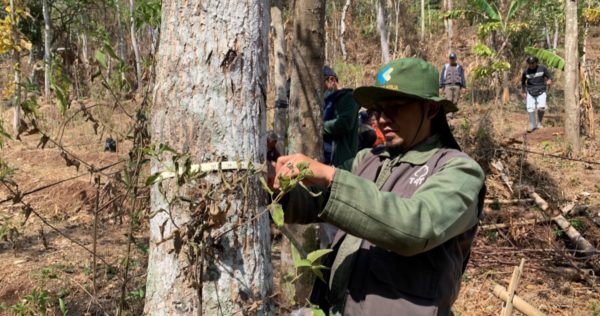
Measuring the diameter of a tree’s stems is used to estimate the amount of carbon that a single tree can absorb. It is estimated that a tree’s stem contains a significant carbon biomass. 

Commitment in Combating Climate Change Through Carbon Value Training

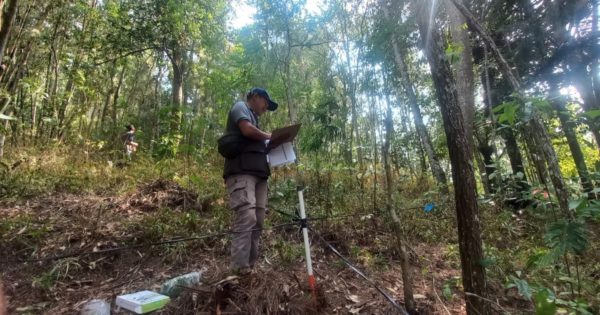
Our team set up a measuring plot sample. This sample plot served as a representative model for other plots. Through this sample plot, we can efficiently estimate the total carbon content of an area. The plot is designed to define the area for measurement and estimate the potential carbon absorption capacity. 

The training also offered insights into the opportunities and advantages of harnessing the economic value of carbon – benefiting both the organization and local communities, projects implementation mechanisms, and government regulations related to carbon value initiatives. Beyond its environmental impact of reducing greenhouse gas emissions, Trees4Trees’ upcoming carbon projects also provide an economic boost to local communities by growing trees.
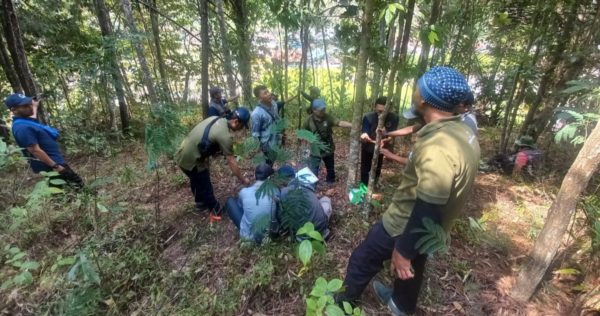
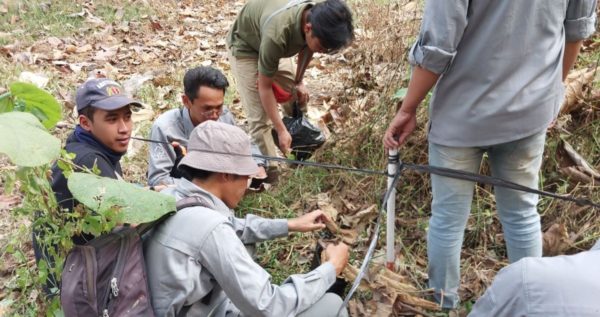
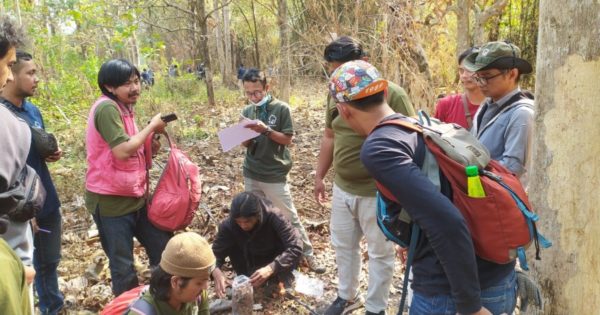
Data obtained during the process of measurement in the forest survey and identification must be documented. The data will be utilized to develop the methodology for calculating carbon absorption capacity in a sampling plot. (Above) Our team documented the tree species within the sampling plot. (Below) Our team weighed and documented the forest litter found in the surrounding sampling plot. 
Commitment in Combating Climate Change Through Carbon Value Training

Trees That Absorb the Most Carbon Dioxide

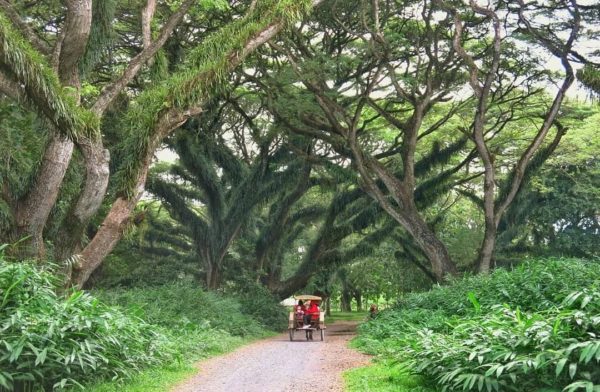
Trembesi trees absorb the highest carbon dioxide
Trembesi trees. Photo: V. Arnila Wulandani

This November, the world celebrates World Tree Day on November 21st to commemorate the great service of trees for all living beings on earth.  

As we know, trees have a significant role in supporting life on earth. Trees not only provide water, home, food, and oxygen which are essential things to live. More broadly, trees have made a great contribution combating climate change. With their ability to sequester and store carbon dioxide, trees keep the stability of the world’s climate. Without trees, probably the earth will only be a lifeless planet.  

Several species of that have immense abilities to sequester a vast amount of carbon dioxide and make a major contribution to life on earth. Some of the tree also can be found in Indonesia. Let us find out what trees absorb the most carbon dioxide!

Trembesi Tree (Samanea saman) 

Local people call this tree species Ki Hujan or pohon hujan which means rain tree. The trembesi tree has an exceptionally large canopy like a giant umbrella. The width of each tree canopy can reach 30 meters. It originates from South America but then spread over tropical countries, including Indonesia.  

Trembesi is more popular as a rain tree due to the water drips from the leaves. In their natural habitat, trembesi tree act as shade tree. Compared to other tree species, a Trembesi tree could absorb a vaster amount of carbon dioxide (CO2), reaching 28,5 tons per year.  

Read also: Indonesian Forest, One of The Largest in the World 

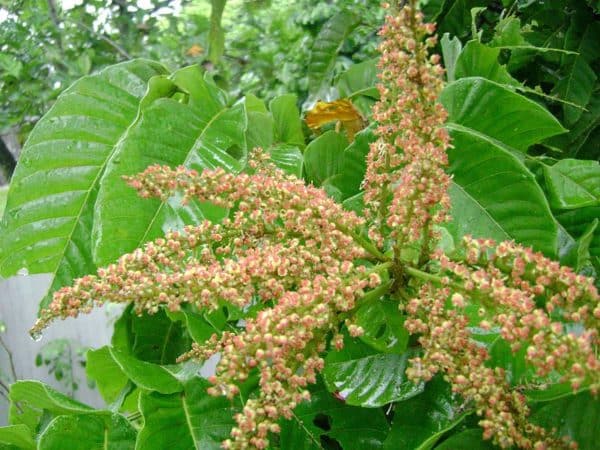
Cassia Tree (Cassia sp.)  

Cassia tree absorbs vast amount of carbon dioxide.
Cassia tree. Photo: wikipedia.

The cassia tree is included in leguminous species. They have beautiful colored flowers such as pink, peach, mauve, and orange. Therefore, they are widely used as ornamental garden trees. Cassia trees can reach 15 meters in height. Several types of cassia trees are also often to be used for reforestation and to combat desertification. Each cassia tree has the ability to absorb at least 5,3 tons of carbon dioxide (CO2) per year. 

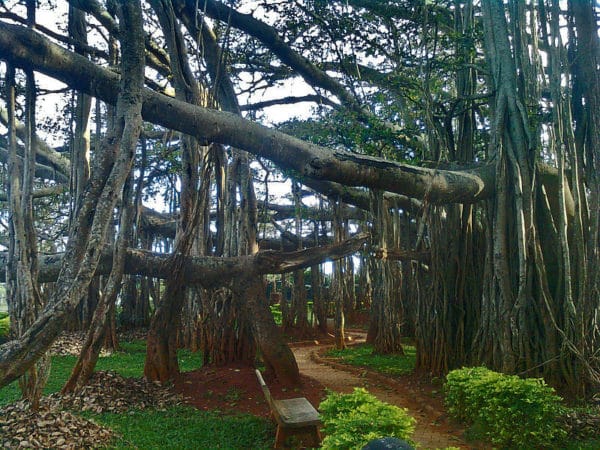
Beringin or Banyan Tree (Ficus benjamina) 

Beringin or banyan tree, synonymous as a haunted tree which has a great benefit for environment.
Beringin or banyan tree, synonymous as a haunted tree which has a great benefit for environment. Photo: Wikipedia.

Although in Indonesia it is known as a haunted tree and synonymous with mystical things, the beringin or banyan tree has extraordinary benefits for the environment. The tree has a high ability to absorb and store water. They also have hanging roots from the branches as their respiration system.
The height of a banyan tree can reach 15 to 25 meters and its age can reach hundred years. In absorbing carbon dioxide, one banyan tree can absorb around 540 kilograms of carbon dioxide (CO2) per year. 

Trees Matoa (Pometia pinnata)  

Matoa tree or pometia pinnata, Papuan tree which absorbs a lot of CO2.
Matoa tree or pometia pinnata, Papuan tree which absorbs a lot of CO2. Photo: Wikipedia.

The matoa tree originates from Papua. The tree can be found in almost all of the lowlands on Papua island. However, this tree species has spread to other areas such as Sulawesi, Maluku, to Java. The height of a Matoa tree is 18 meters on average but can reach up to 50 meters. Matoa fruit has a round oval shape and it has sweet taste. Each matoa tree can absorb around 330 kg of carbon dioxide (CO2) per year. 

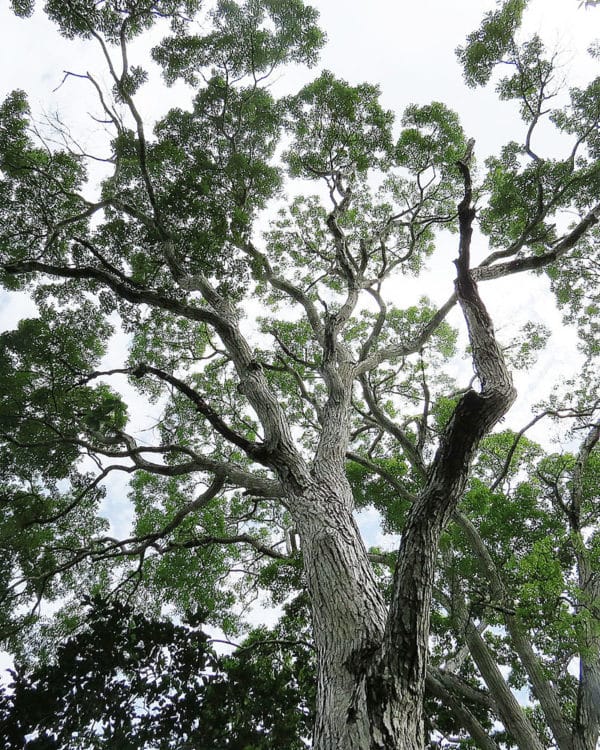
Mahoni or Mahogany (Swietenia macrophylla) 

Mahogany tree
Mahogany tree. Photo: Wikipedia.

The origin of mahogany trees is from Central America and South America. The tree can reach 35 meters in height with a diameter of up to 125 centimeters. The mahogany trees act as shade trees in their natural habitat.  However, they are also well-known for their good ability in storing groundwater. Mahogany trees can absorb up to 296 kilograms of carbon dioxide (CO2) per year. 


Source: antara news, dpmg banda aceh portal kabupaten bangka , jurnal asia, muspera mlhk