Community Culture, Interwoven with Mangrove Conservation
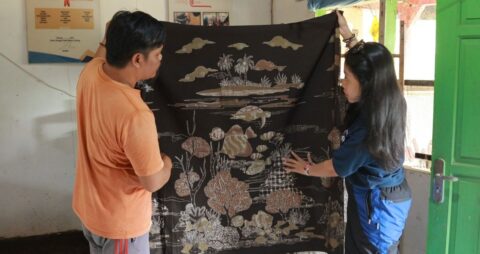
Community Culture

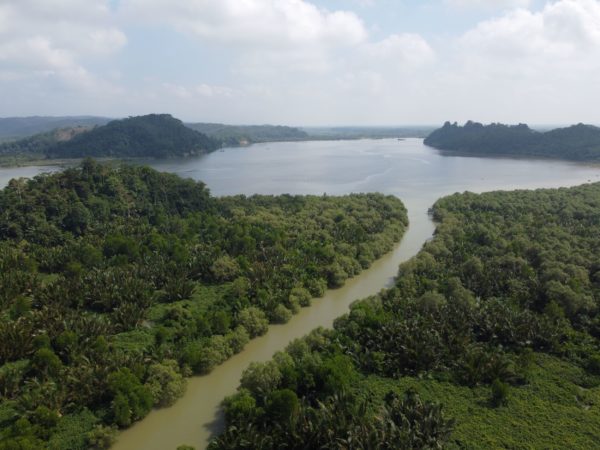
Surrounded by over 8,000 hectares of coastal trees and wetlands, Kampung Laut Village is home to the largest mangrove ecosystem in Central Java. This verdant water world in Cilacap Regency supports a rich variety of biodiversity, including over 50 distinct mangrove species.  

For the communities of Kampung Laut (a name which means ‘ocean village’ in the Indonesian language), mangroves are essential. Most of the people here work as fishers and recognize the importance of these trees to ecosystem health and productivity. 

But the mangroves’ value goes further still, with roots reaching deep into local culture; the trees provide natural dyes which can be used in the traditional art of batik textiles, thereby transforming nature’s bounty into both cultural heirlooms and economic opportunities. 

In this article, we explore a nascent artisan industry that has emerged in Kampung Laut, inspired by nature and intrinsically connected to land and culture. 

The Birth of Kampung Laut Batik 

The story of Kampung Laut batik began in 2015 when Sodiqin, leader of the Mekar Canting Batik Group, was inspired by a batik-making program on national television. Together with two neighbors, he began to experiment with techniques and materials until they found the right formula. 

“At first, we used natural dyes from ketapang leaves and jengkol tree bark,” Sodiqin recalls. “But I wanted something unique that represents Kampung Laut. I noticed the fallen Rhizopora mangrove fruits scattered on the roads. We were curious to see if they could be used as natural dyes, as many people had claimed.” 

Sodiqin and his friends started collecting Rhizopora fruits, cutting and crushing them, then drying them under the sun for three days before boiling them. “The entire process of producing the natural dye takes about a week,” he says, “and dyeing the cloth needs another three days to a week; it takes a while, but the results are worth the wait.” 
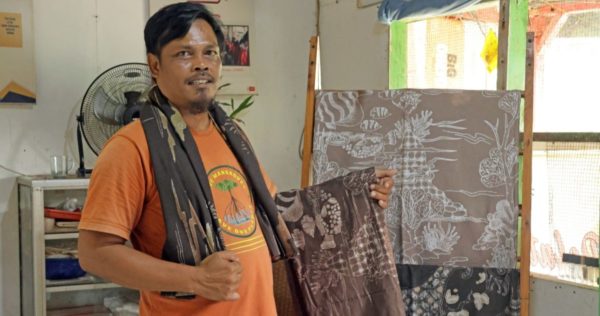
Sodiqin
(Above) Sodiqin, founder of the Mekar Canting Batik Group, which is creating mangrove-inspired fabrics.

Motifs and Materials Inspired by Nature 

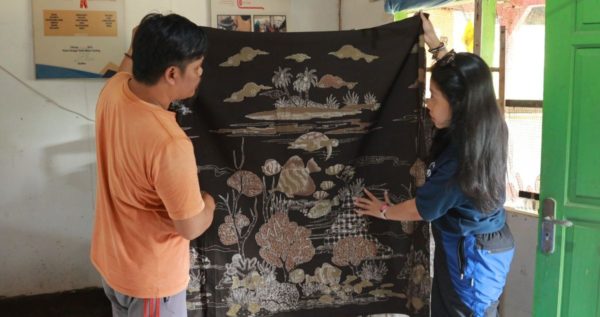
In addition to the distinctive brown hues of Rhizophora mangroves, blended with colors from other local trees, batik designs from Kampung Laut are brought to life through patterns and motifs inspired by the sea and the richness of coastal life. 

As Sodiqin explains, “when we asked ourselves what best reflects Kampung Laut, the answer was simple: mangroves and fisheries.” Designs from the Mekar Canting Batik Group feature fish, crabs, shells, shrimp, mangrove fruits, and underwater scenes. 

Most of their batik fabrics are made using a traditional stamping technique, whereby hot wax is applied to cloth using engraved copper stamps before it is dyed. This method allows the artisans to produce batik more efficiently and replicate patterns more consistently. 

“We also use the hand-drawn technique, but only by special order,” Sodiqin said. “Hand-drawn pieces take longer and require more skill.” This technique involves drawing patterns using a traditional drawing tool called a canting, which is filled with hot wax. It can take months just to complete one piece of batik cloth using this method. 
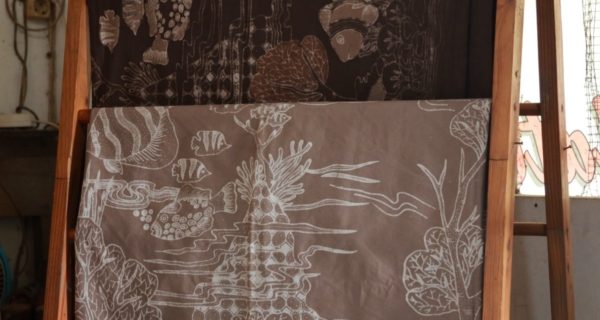
Community Culture
(Above) several of the fabrics produced by the group, which feature ocean-inspired motifs.

Sustainable Livelihoods, Interwoven with Women’s Empowerment 

What began as the passion project of three individuals has grown into a 20-strong collective, made up mostly of women. Training programs provided by the government and corporate CSR initiatives have strengthened their skills and encouraged more women to join. “It started with women inviting others to learn batik,” says Sodiqin. “Then, through word of mouth, more women have become involved.”  

The rise in popularity of Kampung Laut batik has opened new income opportunities for women in coastal communities. Batik-making provides much-needed earnings, especially during exhibitions or when orders come in. “The income can help women to cover their children’s needs or support other family expenses,” Sodiqin says. 

Nevertheless, marketing remains a challenge. Located in a remote area, accessible only by crossing a lagoon, Kampung Laut has limited access to markets. Most sales come from exhibitions in cities like Jakarta, Yogyakarta, and Semarang. “We tried e-commerce, but delivery is very difficult from here,” he said. 
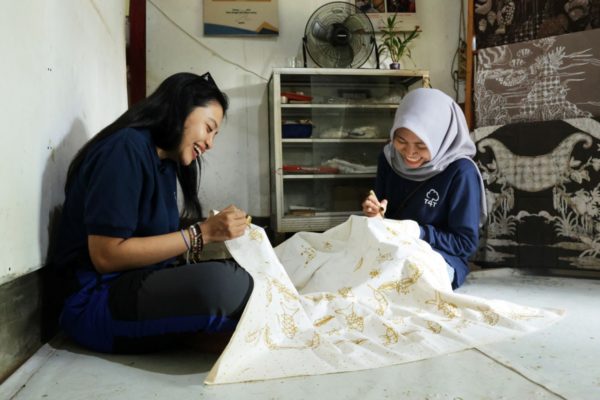
Community Culture
Members of the T4T team try their hand and making batik patterns during a recent visit to the Mekar Canting Batik Group studio.

From Ecology to Economy: Healthy Nature Helps Communities to Thrive 

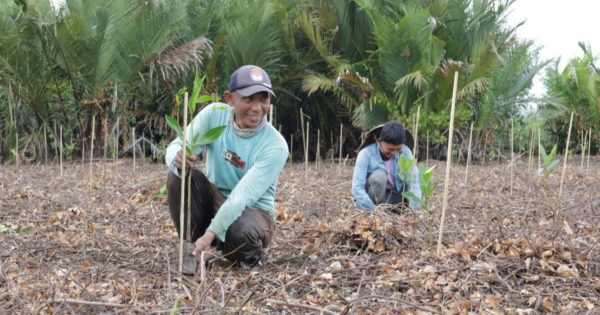
In 2022, Trees4Trees began replanting mangroves in Kampung Laut to restore areas degraded by deforestation. From 2022 to 2023, over 24,000 individual trees were successfully planted. In 2024-2025, with support from our partner, EcoMatcher, 125,000 trees were planted. In October 2025, together with EcoMatcher and GRAB, we are planting an additional 50,000 mangroves in the area. 

“By expanding mangrove cover, our mangrove planting program helps local communities thrive, sustain their livelihoods, and keep their culture alive, including the mangrove batik,” explains Yoga Septian, Trees4Trees Unit Manager of the Cilacap site. “The local community relies on fisheries and mangroves for their living; beyond fishing, they process mangrove fruits into snacks and produce mangrove batik as additional sources of income,” he added. 
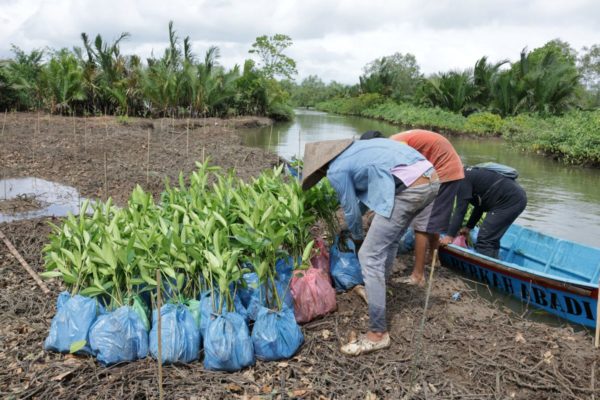
Planting mangrove
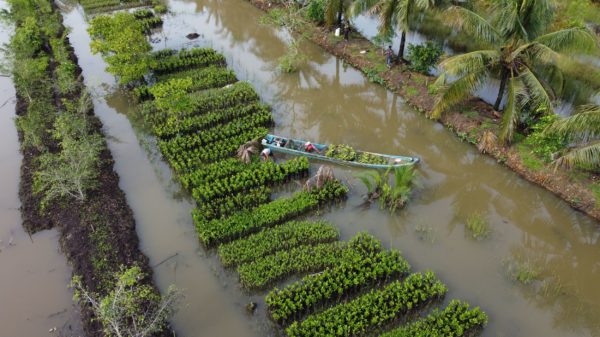
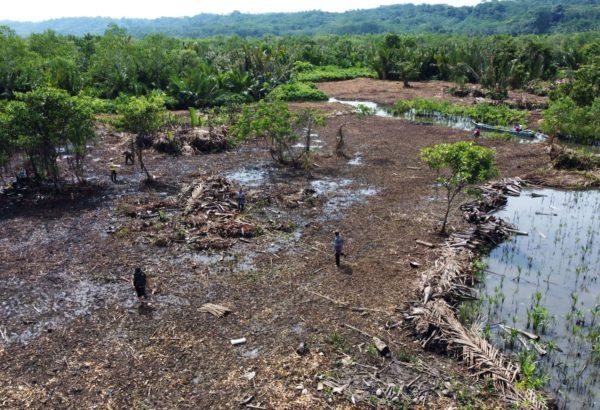
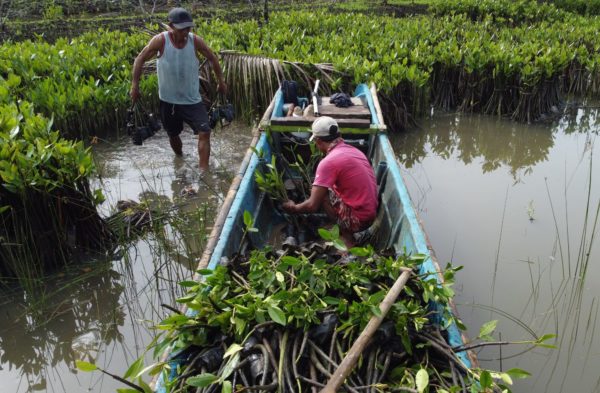
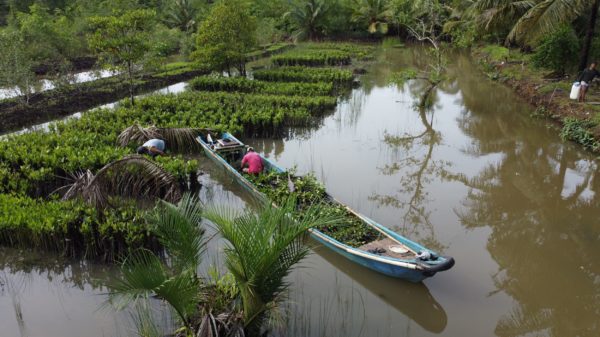
(above) Local fishermen load their boats with mangrove seedlings ready for planting. (Below) Together with local fishermen, T4T team members plant new trees in mangrove areas that had previously been severely degraded.


Community Culture

Healthy mangroves provide numerous benefits to people, nature, and the planet. They produce oxygen, absorb CO2, prevent coastal erosion, and provide essential nurseries for fish. For local people like Sodiqin and his group, these trees also provide materials, livelihoods, and cultural value. 

With that in mind, Sodiqin insists that sustainability is key. “Every time we harvest resources provided by the mangroves, we must also replenish them,” he says, “so they won’t vanish like they did before. The more we plant, the better our lives will be.” 

Writer: V. Arnila Wulandani. Editor: Chris Alexander. Photos: Yulianisa Dessenita for Trees4Trees 


Restoring Mangroves in Cilacap, Central Java

Restoring Mangroves in Cilacap, Central Java
Photo: Trees4Trees/Haryadi

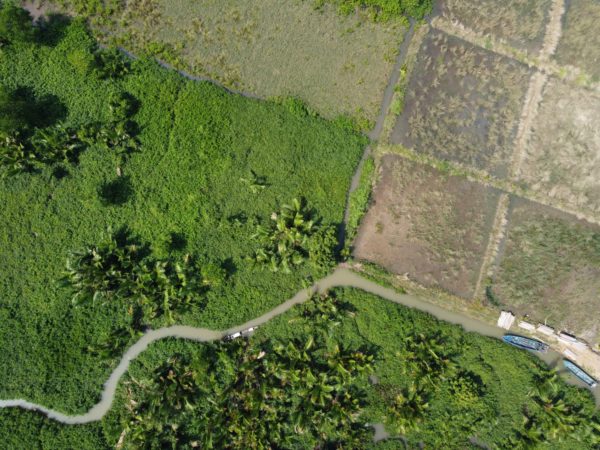
Located close to Segara Anakan lagoon in Java’s Cilacap Regency, Ujung Alang Village was once covered in mangroves. In the 1990s, the region experienced massive deforestation, mostly because of land being converted for aquaculture ponds. 

In the last two decades, local residents have been helping the mangroves bounce back. A conservation area has been set up and has since become a hub for studies and research into the natural world.  

Now, with support from Trees4Trees, mangrove restoration in Cilacap is going up a gear. An ambitious new replanting project has provided the investment and manpower needed to give the ecosystem a new lease of life. 

Healing the wounds of the past 

Before 1994, Ujung Alang and was covered with mangrove forests. These trees were then cleared by investors to make way for shrimp and milkfish ponds. This venture lasted just four years; by 1998, the ponds had been abandoned.,  

Virtually overnight, the investors cut their losses and left town. But not before leaving their mark on the landscape. Thousands of hectares of mangrove forests had been cut down and turned into barren land.  

In 2000, local communities decided to act, and made a plan to restore the mangroves to their former state.  

Restoring mangrove in Ujung Alang Cilacap
(Above) Abandoned shrimp ponds, overgrown with weeds. Photo: Trees4Trees/Haryadi

Working together to restore mangroves 

Over the past decade, local communities, with the support of the government and various other supporters, have successfully planted 56 different species of mangroves in an area covering approximately 400 hectares. Trees4Trees has committed to supporting these ongoing efforts. 

In early 2023, working in collaboration with the Tani Krida Wana Lestari farmer group, Trees4Trees began replanting an area of 2.4 hectares around Ujung Alang. So far, we have planted more than 7,600 trees together. 

Planting mangrove in Ujung Alang Cilacap
(Above) Segara Anakan Lagoon. Photo: Trees4Trees/Kemas Duga Muis

“Deforestation of mangrove forests in Segara Anakan has led to a significant reduction in mangrove area and caused a decline in fish catches,” explains Armin Agung Mubarok, the Trees4Trees Impact Officer and coordinator of the mangrove project. “By restoring the mangrove ecosystem, we aims to restore the habitat as a nursery ground for crustaceans and other animals, thereby enhancing biodiversity in the region,” he added. 

Haryadi is the Trees4Trees GIS officer on the project., He experienced a number of challenges in clearing away the old growth to make way for new mangroves. As he explains, “clearing the areas of weeds is crucial, as they hinder the growth of the mangroves.”  

Planting mangrove in Ujung Alang Cilacap
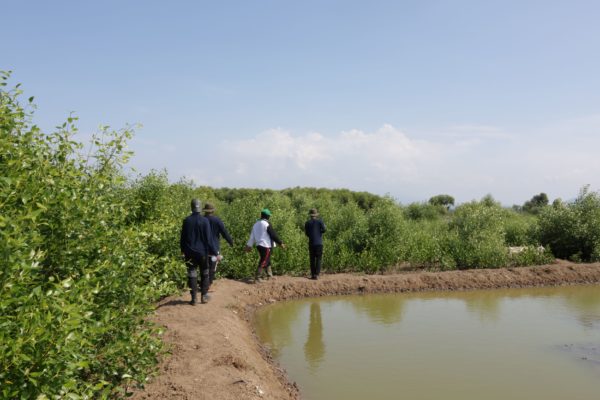
(Above) Invasive weeds are cleared before replanting can begin. Photo: Trees4Trees/Haryadi

Restoring natural balance to the ecosystem  

After the weeds had been cleared, Trees4Trees focused on planting four different mangrove tree species, each one chosen to match the unique conditions of their environment.  

In areas less affected by the tide, large-leafed orange mangroves (Bruguiera gymnorrhiza) were chosen, due to their ability to thrive in areas where there’s not much saltwater. They can also do well in both shady and sun-baked areas. 

In tidal areas that are regularly flooded, tall-stilt mangroves (Rhizophora apiculate) were planted, as they thrive in wet, muddy soil. Red mangroves (Rhizophora mucronata) were chosen for inundated areas, where they can grow and thrive. 

Finally, seedlings of spotted mangroves (Rhizophora stylosa) were planted throughout the area, to improve the diversity of species.  

Planting mangrove in Ujung Alang Cilacap
(Above) Working together with local communities, Trees4Trees replants the mangrove forest. Photo: Trees4Trees/Haryadi

Next steps: Taking replanting to the next level 

This small-scale pilot project, was an opportunity to test out planting methods before launching a more ambitious program. Over the next five years, Trees4Trees intends to scale up these efforts and continue planting mangroves to restore mangrove cover.  

“Based on the trial we conducted, we were able to plant 3,500 trees per hectare,” says Haryadi, who is working to turn initial impact into long-term reforestation. “Over the next few years, our goal is to plant mangroves over an area of 1,000 hectares.

Writer: V. Arnila Wulandani. Editor: Christopher Alexander

Blue Carbon: Coastal Forests on the Frontline of Climate Change

A Trees4Trees mangrove project planted in 2021


Photo: Trees4Trees/Yulianisa Dessenita

How can we combat global warming? Planting trees is a good place to start. Forests are the lungs of our planet. They produce oxygen and absorb the emissions we produce, while also keeping potentially harmful carbon in the ground, where it belongs. 

But when you think of forests, you probably don’t think of coastal and marine ecosystems, right? And yet, these ecosystems store more carbon than anywhere else on Earth. Carbon absorbed and stored here is called “blue carbon”. And blue carbon could be the key to a greener future.  

What is blue carbon and why is it important? 

Blue carbon is the carbon stored in coastal and marine ecosystems. Most of it is carbon dioxide (CO2) that has dissolved directly into the ocean. Lots of blue carbon is stored in underwater sediment, coastal vegetation, and coastal soils. 

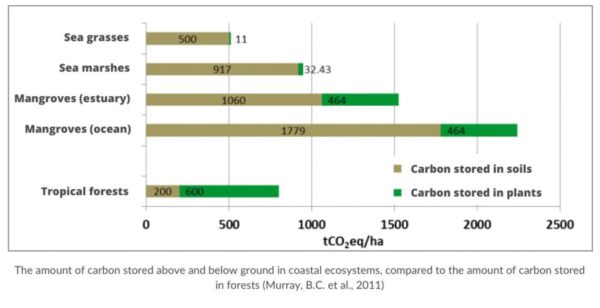
Coastal ecosystems can be sea grasses, mangroves, and salt marshes. They all play a crucial role in capturing and retaining carbon. It is for this reason that they’re sometimes called ‘carbon sinks. Although coastal ecosystems are smaller than terrestrial forests, they actually  sequester and store more carbon. 

Unlike in tropical forests, where carbon is stored in above-ground plants, blue carbon is stored below the ground., Some blue carbon can be thousands of years old.  

Did you know? Coastal ecosystems store more carbon per hectare than terrestrial forests. 

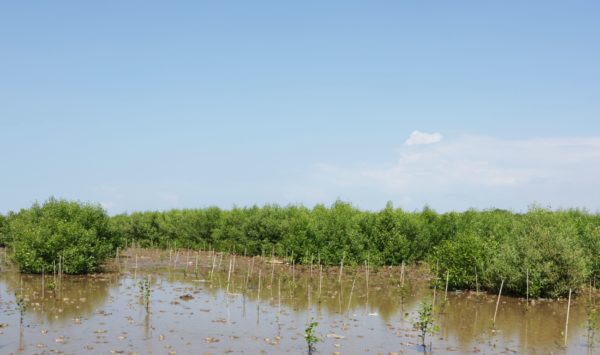
A Trees4Trees mangrove project planted in 2021
(Above) A Trees4Trees mangrove project planted in 2021. Photo: Trees4Trees/Yulianisa Dessenita

Coastal ecosystems: Our first line of defense 

Every year, mangroves and coastal wetlands suck ten times more carbon out of the atmosphere than tropical forests. They also store three to five times more carbon.  

When these habitats are damaged or destroyed, all that carbon is released into the atmosphere as harmful greenhouse gases. This makes protecting and restoring coastal habitats essential to combating climate change.  

Healthy coastal ecosystems give us loads of other benefits besides carbon. They offer protection from storms and erosion, provide nurseries for commercial fisheries, and are beautiful places for us to explore and enjoy. 

Did you know? Coastal habitats make up less than 2% of total ocean area, but store around 50% of the carbon sequestered in ocean sediments 

Carbon stored in mangroves ecosystem comparation
The graphic is modified from the original source IUCN

Coastal ecosystems in Indonesia 

In case you didn’t know, Indonesia is huge. This enormous archipelago is home to nearly a quarter of the world’s mangroves, which cover about 3.2 million hectares.

Together with 3 million hectares of sea grasses, these areas store about 3.4 billion metric tons of carbon – that’s 17% of all the blue carbon in the world. 

But despite their massive importance, Indonesian mangroves are under serious threat. Every year, more of these areas are converted into ponds or swallowed up by urban expansion. 

Indonesia emits 190 million tons of CO2-eq every year. That’s 42% of the world’s annual emissions from the destruction of coastal ecosystem services. 

Read more: Five types of mangrove in Indonesia and their benefits 

Trees4Trees mangrove restoration program  

As part of our commitment to support the Indonesian government’s efforts to restore mangrove cover and preserve blue carbon stored in coastal ecosystems, Trees4Trees has been busy replanting mangroves in Central Java. 

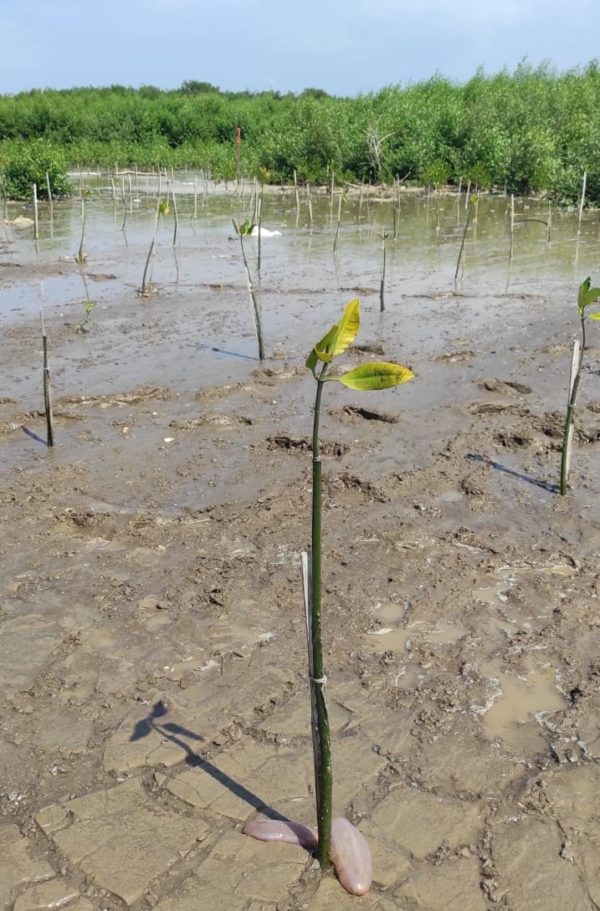
A sea cucumber and mangrove seedling in Dukuhseti coastal area, Pati.
(Above) A sea cucumber and mangrove seedling. Photo: Trees4Trees/V. Arnila Wulandani

“From 2021 to 2022, we successfully planted more than 100,000 seedlings in seven coastal villages in Pati,” explains Khoirum Minan, Trees4Trees Pati Unit Manager. “We aim to prevent tidal surges that can erode shorelines and pose a threat to residential areas and fishponds owned by local communities,” he added

The benefits of Trees4Trees mangrove planting mission in Central Java can already be clearly seen. “Mangroves we planted in 2021 have formed a green belt,” says Mustofa, the farmer group leader in Dukuhseti village in Pati. The ecosystem has taken shape, and we often observe birds, fish, and crustaceans in these newly restored mangrove areas.”  

Did you know? It’s estimated that 83% of the global carbon cycle is circulated through the ocean. 

Elsewhere in Central Java, Trees4Trees recently planted 7,600 plants in an area of mangroves spanning 2.4 hectares in Segara Anakan, Cilacap., This previously degraded mangrove ecosystem is now thriving.  

This small-scale pilot project was a chance for us to try out our planting methods before the time came to tackle a bigger challenge. And that time has now arrived.  By 2027, Trees4Trees aims to plant 3.5 million trees in an area covering 1,000 ha in Cilacap, Central Java. 

Read more: Replanting mangroves rebuilding future in Central Java 

“Our project aims to restore the degraded mangrove ecosystems, enhance mangrove species diversity, promote fish populations and biodiversity, and eliminate invasive weeds that disrupt the mangrove growth,.” says Armin Mubarok, the Trees4Trees Impact Officer leading the mangrove planting program in Cilacap. 

Mangrove planting in Cilacap
(Above) Mangrove planting in Cilacap. Photo: Trees4Trees/Haryadi

Through our mangrove planting efforts, Trees4Trees is working to restore degraded mangrove ecosystems and build new green belts along Indonesia’s precious coastlines.  

Together with our local partners, we’re working to preserve blue carbon, and provide lasting benefits to people and nature.  

Writer: V. Arnila Wulandani. Editor: Christopher Alexander