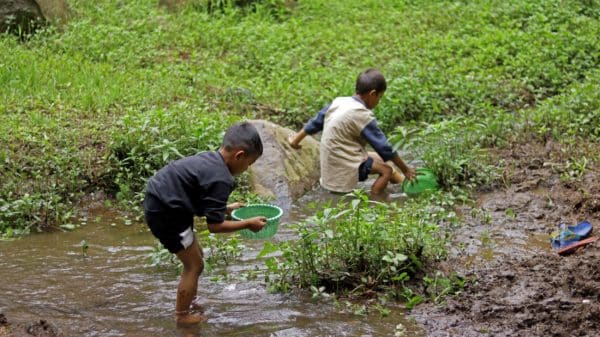
Minister Luhut Binsar Pandjaitan Inspects Trees4Trees’ Citarum Revitalization Project

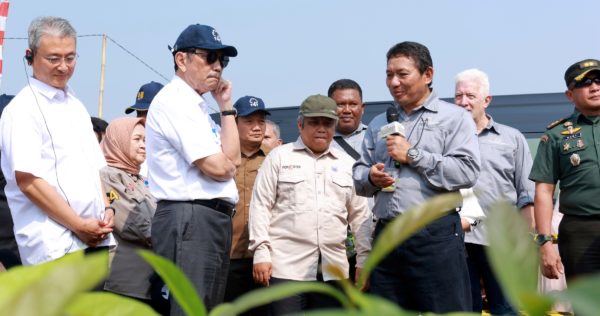
Minister Luhut visited Trees4trees


Minister Luhut visited Trees4trees in Ciminyak Nursery

The Indonesian government is determined to revitalize the Citarum River. Since 2018, they have been working to address environmental challenges and achieve this goal through Citarum Harum, a program which is helping breathe new life into one of Indonesia’s most important waterways. 

In 2021, AstraZeneca teamed up with Trees4Trees and One Tree Planted to support this program and deliver the government’s targets. On August 29, 2023, we welcomed a delegation of honored guests to inspect the progress of our own Citarum River Revitalization Project, which contributes to Citarum Harum. This group included representatives from government ministries, program directors, and the country president of AstraZeneca.   

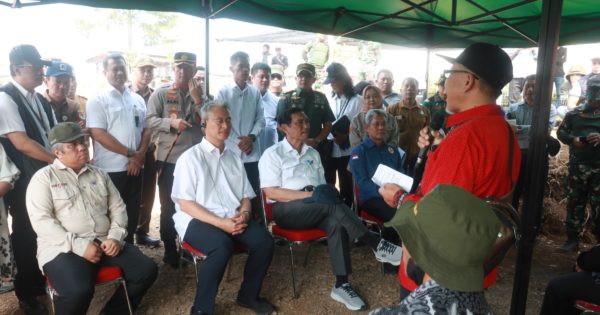
Leading the delegation was Luhut Binsar Pandjaitan, Indonesia’s Coordinating Minister for Maritime and Investment. Together with his team, he inspected Trees4Trees’ Ciminyak Nursery, held discussions with local stakeholders, and checked on seedlings that will help reach a target of 20 million trees planted by the end of 2027. 
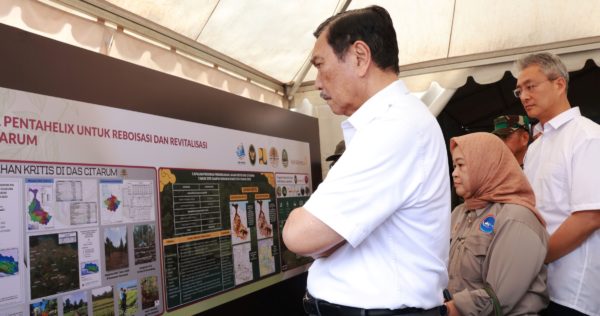
Minister Luhut visited Trees4trees in Ciminyak Nursery
(Above) Luhut Binsar Pandjaitan, Indonesia’s Coordinating Minister for Maritime and Investment

Accelerating Citarum watershed revitalization 

The Citarum watershed is home to around 160,000 hectares of degraded land, two thirds of which is found outside of forest areas. If left untended, degraded lands can become a source of environmental problems like erosion, floods, and droughts. An environmental and humanitarian crisis is already beginning to unfold. Action is needed now to reverse these worrying trends. 

To prevent disaster, these areas should be the focus of revitalization efforts – a point emphasized by Saparis Soeharjanto from the Ministry of Environment, Forestry, and Climate Change (MoEF) during the official visit. As the Director of Watershed Planning, Evaluation, and Control, he committed his support to driving this development forwards.  
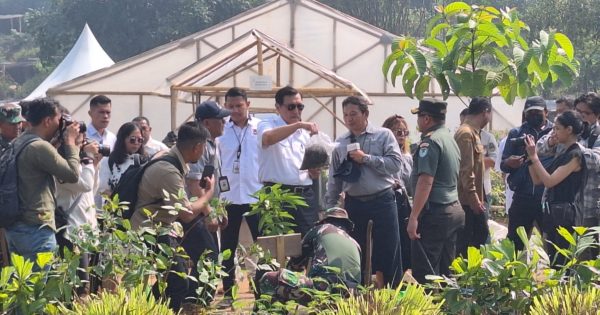
Minister Luhut visited Trees4trees in Ciminyak Nursery
(Above) Minister Luhut and Trees4Trees’ program manager plant ceremonial trees in West Java

Working with farmers to rehabilitate degraded land 

The program, which is funded by AstraZeneca Forest, is helping rehabilitate degraded land within five sub-watersheds of the Citarum: Cisangkuy, Ciwidey, Cirasea, Ciminyak, and Citarik. So far, more than 42,000 local farmers have joined up as tree grower partners.  

According to Se Whan Chon, who is the President of AstraZeneca Indonesia, the program focuses on ecosystem restoration and clean water access within the watershed, as well as creating new livelihoods through agroforestry.  
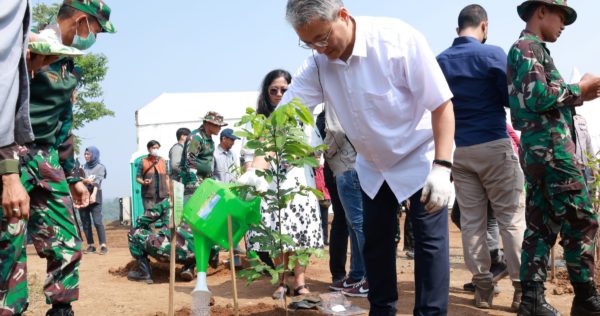
Minister Luhut visited Trees4Trees in Ciminyak Nursery
(Above) Se Whan Chon, Country President of AstraZeneca Indonesia, plants a tree during his official visit

“AstraZeneca wants to be a part of the journey to help Indonesia improve its environment, particularly in the context of the Citarum River Reforestation Project,” explained Se Whan Chon during a discussion with Minister Luhut and other parties during the visit. “Trees4Trees, our local partner, has been working closely with farmers to educate and engage them,” he added. 

Last year, this program successfully planted 4.5 million trees. A total of 20 million are expected to take root by 2027. Trees4Trees’ nurseries have been – and will continue to be – crucial to delivering these targets. “We operate three nurseries with a combined capacity of over 5 million seedlings to support the 2023 tree-planting initiative,” explains Pandu Budi Wahono, Trees4Trees’ Program Manager.  

“This year, we aim to plant 4.5 million more trees to rehabilitate the degraded lands of Citarum,” explains Trees4Trees’ West Java Regional Manager, Tomi Bustomi. “We’ll be working with 21,000 farmers to achieve this goal by early next year,” he added.  

Minister Luhut visited Trees4Trees in Ciminyak Nursery
(Above) Trees4Trees program manager showcases seedlings’ progress during the recent visit by Government Minister Luhut Binsar Pandjaitan.
Minister Luhut visited Trees4Trees in Ciminyak Nursery
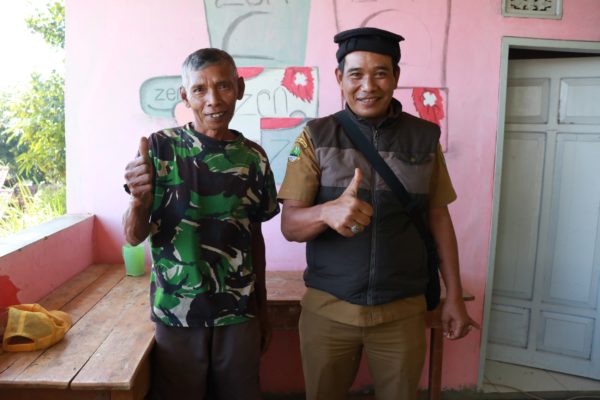
(Below) A local farmer shares his experience with Minister Luhut and offers advice for how to achieve positive impacts

Turning local impacts into global benefits 

During the visit, Minister Luhut pointed out the bigger picture of these replanting operations, describing tree planting as one of the best defenses we have in the fight against global heating. 

“We are witnessing severe pollution, not only in Indonesia but around the world,” said the minister. “Planting trees is an effective solution to sequester carbon emissions and combat pollution,” he added. 

The minister also highlighted the crucial role farmers have to play in this fight, as they are on the frontline of reforestation efforts. “Farmers,” said the minister, “make a significant contribution to emissions reduction through tree planting, and we should take pride in their efforts.” 

Through continuous recruitment, empowerment and planting support, Trees4Trees and our partners will continue to help farmers revitalize the Citarum watershed. By regreening at the local level, we are helping them make a difference on a global scale.  

To learn more about Trees4Trees replanting programs, and to find out how you can get involved, go to trees4trees.org. 

Read more:

A Hub of Biodiversity: Exploring Citarum

Travels in Java: Situ Cisanti and the Source of Citarum River

Ayi: Preserving Water Sources Through Tree Planting

Ayi, a tree grower from Drawati Village Bandung_Trees4Trees
Preserving Water Sources Through Tree Planting
Ayi, a tree grower from Drawati Village Bandung_Trees4Trees

Drawati Village, nestled in Paseh District, Bandung Regency. This hillside community rests close to an upstream river—a tributary of the Citarum river watershed. As a result, vital springs dot the area, serving as crucial water sources for the local populace’s daily needs. 

Given the significance of the existing springs, safeguarding the surrounding environment becomes imperative. The preservation of water sources requires rehabilitation and reforestation efforts. To this end, the Drawati village government has been actively promoting reforestation activities among its residents through socialization and various programs. 

Trees4Trees Tree-Planting Program Contributes the Water Spring Conservation 

When the Trees4Trees team introduced a tree planting program funded by AstraZeneca in collaboration with Trees4Trees and One Tree Planted, both the village government and the villagers responded positively. This initiative aligned well with the village’s mission to advance reforestation efforts. 

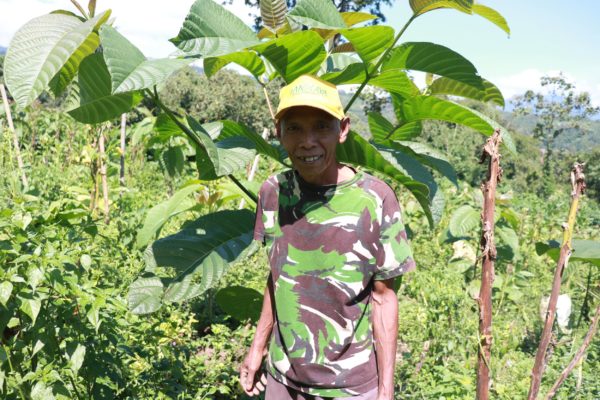
Later, the tree planting program gained the participation of farmer groups in the village, composed of individuals dedicated to reforestation endeavors. Among these farmers, Ayi emerged as the best farmer of Drawati village due to his unwavering commitment to tree planting and reforestation. Ayi’s accomplishments are a testament to his long-standing dedication to his environment. 

Prior to joining this tree planting initiative, Ayi was actively engaged in reforestation activities alongside fellow villagers. He pointed out that accessing clean water in his village has become increasingly challenging, despite its proximity to the river’s source. This challenge fueled his determination to revitalize the village’s surroundings, ensuring a more abundant flow of water. He also aspires to enhance underutilized lands through increased tree planting. 

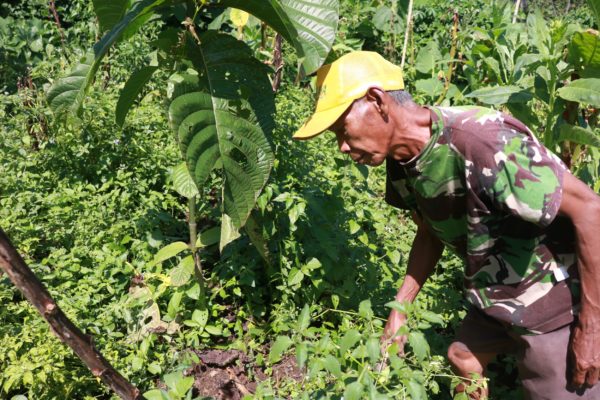
Ayi, a tree grower from Drawati Village Bandung is taking care of his trees_Trees4Trees

Planting Trees to Rejuvenate the Environment and Anticipate the Fruitful Yield 

“I plant trees for a better life and a brighter future for this village, not just for myself and my family, but for the entire community. Most importantly, it’s about nurturing a healthy environment around the village” Ayi said.  

He also revealed that many lands around his village are suffering and have been faced a shortage of clean water. This drives his motivation to plant more trees, hoping to rejuvenate our surroundings and ensure the abundant flow of water.  

“Water is a fundamental necessity for human life, making this endeavor worth every effort,” Ayi expressed. 

Furthermore, Ayi emphasized that tree planting not only fosters a healthier environment but also yields fruitful crops. When he joined the tree planting program, Ayi opted for jabon trees (burflower-tree) due to their rapid growth compared to other tree species. 

In addition, Ayi cultivated food crops such as corn, cassava, and various fruits, including orange trees. 

“I’ve also planted orange trees, anticipating a fruitful yield in the future. My aim is to harvest these crops. Planting trees holds immense benefits – it adds greenery to the environment and allows me to save for my future by selling the crops,” Ayi shared. 

Ayi, a tree grower from Drawati Village Bandung with head of village_Trees4Trees
Ayi was visited by Drawati Head Village dur to his dedication in reforestation and water sources preservation efforts.

Recognized for the Environmental Conservation Efforts 

Due to the unwavering dedication to tree planting and reforestation, Ayi and the farmer groups were acknowledged and commended by the head of Drawati Village. According to the village head, the present era mandates a life philosophy centered on nature preservation, as nature has nurtured and sustained us. Therefore, it is our responsibility to reciprocate this care. Ayi and the farmer group’s actions stand as a commendable example in this regard. 

“Greening initiatives contribute to the preservation and conservation of water, a crucial element for sustaining human life. We must prevent our water sources from depleting. We must ensure that our future generations do not shed tears due to a lack of springs. Let us unite to prevent such a future!” emphasized the village head during his encounter with Ayi and the farmer group of Drawati Village. 

Travels in Java: Situ Cisanti and the Source of the Citarum River

Travels in Java: Situ Cisanti and the Source of the Citarum River
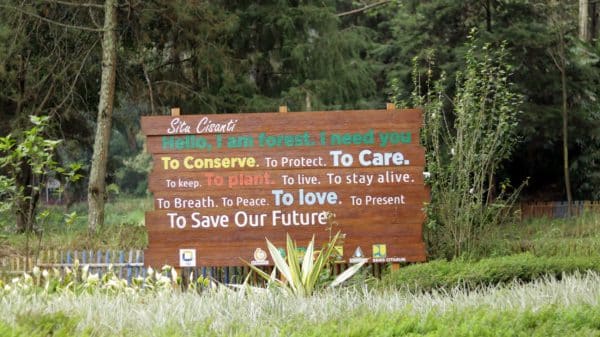
The zero-kilometer marker for the Citarum River, Situ Cisanti. Photo: Trees4Trees/Yulianisa Dessenita

The Citarum is the longest and largest river in West Java, providing water for over 27 million people and irrigation for nearly 40% of regional rice production. In recent years, it has achieved notoriety as one of the world’s most polluted water courses. But there is another side to the Citarum. Trees4Trees followed the river upstream and discovered something truly beautiful. 

Back to Square One: The Birthplace of the Citarum 

Walking through the main entrance of the village, we are welcomed by a thick blanket of trees. In the distance, we can hear the trickle of water and the sound of birds singing – a sure a sign the ecosystem here is in good health. It also means we’re nearing our destination. 

Upstream from the noise and pollution of the coastal urban areas, the Citarum River begins life in a quiet lake called Situ Cisanti. Located 37 miles (60 km) from the center of Bandung in Tarumajaya Village, this five-hectare lake sits at an altitude of nearly 5,000 feet (1,500 m) above sea level. Up here, the mornings are misty and quiet, and the views are breathtaking. 

Situ Cisanti and the Source of the Citarum River
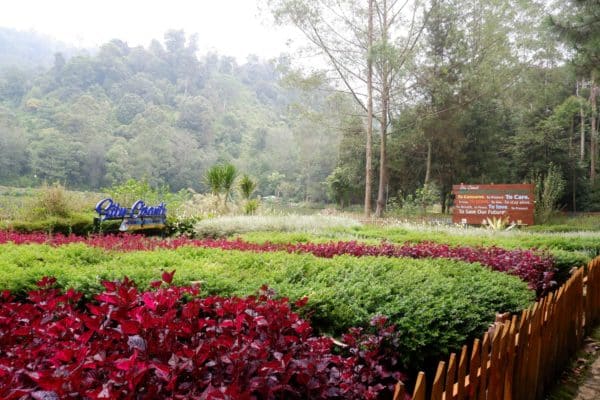
(Above) Misty and quiet: Situ Cisanti in Bandung Regency. Photo: Trees4Trees/Kemas Duga Muis.

A Walk on the Wild Side of West Java 

The lake itself is hidden away at the end of a long and winding road – a network of paths that wriggles uphill through Bandung Regency. They fan out through an endless landscape of farmland and fields, which includes Kertasari – one of Java’s oldest tea plantations, set up in 1906.

Travels in Java: Situ Cisanti
(Above and below) Local residents are committed to protecting the forest and the precious waters of Situ Cisanti. Photo: Trees4Trees/Yulianisa Dessenita (above) & V. Arnila Wulandani (below)
Citarum River
Travels in Java: Situ Cisanti and the Source of the Citarum River

There’s plenty to do here too. Visitors can explore the scenery surrounding Situ Cisanti, with activities such as fishing, boat rides, and photography. Or they can just soak in the peace and quiet of this tranquil place.  

Located in the shadow of Wayang mountain, the area is a great spot for hiking, or for jogging around the lake. Facilities include a large parking lot, toilets, and food stalls. Best of all, admission is just Rp 15,000 (US$ 1) per person. 

Travels in Java: Situ Cisanti and the Source of the Citarum River
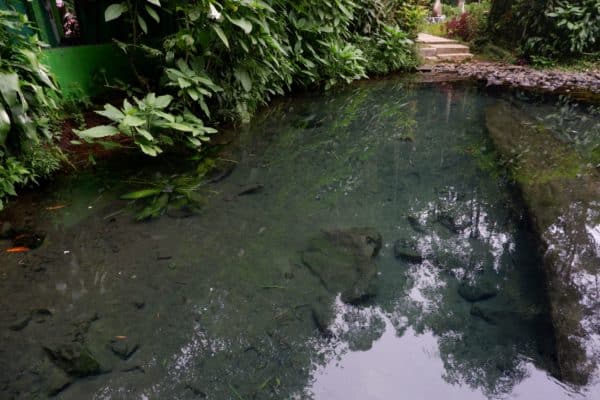
(Above) A natural spring where the Citarum River begins. Photo: V. Arnila Wulandani.

Spring into Life: The Birthplace of the Citarum 

“Our ancestors left us a message,” explains Atep, who has been working to protect this area since he was young.  “From generation to generation, (we must) protect the springs according to local wisdom in our village.”  

The springs he is referring to are the Citarum, Cikahuripan, Cikoleberes, Cihanuwung, Cisadane, Cikawudukan, and Cisanti. Most of the water that fills Situ Cisanti and flows downstream through the Citarum River comes from these seven springs, which are so vital to life and livelihoods in West Java. 

“We can drink the water directly from these springs. “The rules even restrict visitors wearing shoes when entering this pond to keep it clean,” says Atep, who adds that the Citarum and Cikahuripan springs provide drinking water for his village. 

children in Situ Cisanti and the Source of the Citarum River
(Above) Children fishing in a river that flows from Situ Cisanti. Photo: Trees4Trees/Yulianisa Dessenita

Read also: A Watershed Moment Planting Begins at the Citarum River

Trees4Trees: A Cleaner, Greener Future for the Citarum 

In 2021, Trees4Trees set out on a tree planting program in Cibereum village, close to Situ Cisanti. In the most recent planting season (2022), more trees were planted here, as well as in the neighboring villages of Tarumajaya and Santosa. Much of the farmland in these hilly areas is poorly designed, which can lead to environmental problems such as erosion, flooding, and siltation of the rivers. 

“This can have a long-term impact on water availability,” explains Jeje Sutarja, Trees4Trees’ Unit Manager in the Cirasea 3-unit area. “By planting trees, we hope to enlarge the water catchment area around the upstream, conserve the water springs and preserve the beauty of this lake,” he added. 

The Citarum is famed as one of the dirtiest and most polluted rivers in the world. But up here, in the mountains where it was born, the river has a different story to tell. The birds are singing around Situ Cisanti, the water is clean enough to drink, and local people are working to conserve these waters according to the wisdom of their ancestors. The birthplace of the Citarum is a glimpse of what the river once was, but also a vision of what it could be; with enough support, and a shared commitment to clean and protect it, the Citarum could become famous for all the right reasons. 

Writer: V. Arnila Wulandani. Editor: Christopher Alexander