Sar’an: Preserving His Land and Planting Trees for Greater Benefits

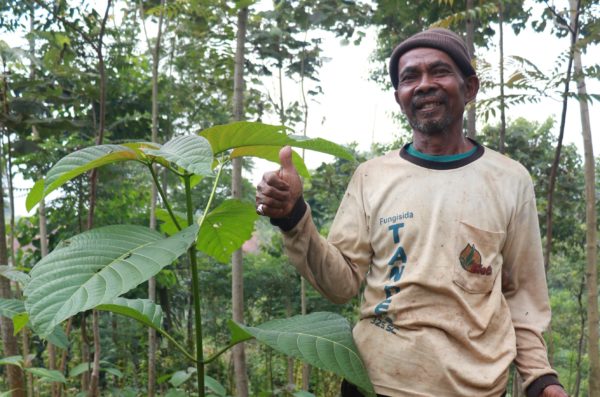
Even though he is 72 years old, Sar’an is still active to do farming activities. He started farming five years ago. At that time, there was a tree planting program from the government that provided tree seedlings to be planted on villagers’ land, including in his field.
Sar’an lives in Sukanagara village. It is located in Soreang District, Bandung Regency. Prior to his farming activity today, Sar’an was a goat breeder. He decided to farm due to his expectation to be able to improve his well-being more. At the same time, he also wants to restore the soil fertility around his village.
Preserving the Land He Owns for the Long-term Profit
“So many lands in this village have been converted into plantations, offices, and residents. There are also lands owned by villagers which was initially rented out at the beginning but later sold. The result, villagers find it difficult to earn income. That’s because their land that normally can be cultivated on their own has changed function or changed ownership. I am regretting that many people in this village have sold their land. So, when they want to farm, they have to rent the land because they do not have anymore,” Sar’an said.
Sar’an also revealed, in his village, there are many farmers who used to own their land, now only become sharecroppers because their land has been sold. Some sold their land to companies, some sold it to housing developers. Although many farmers in his village sold their land, Sar’an never wanted to sell his own land. It is because for him, planting in his own land is much more profitable in the long run.
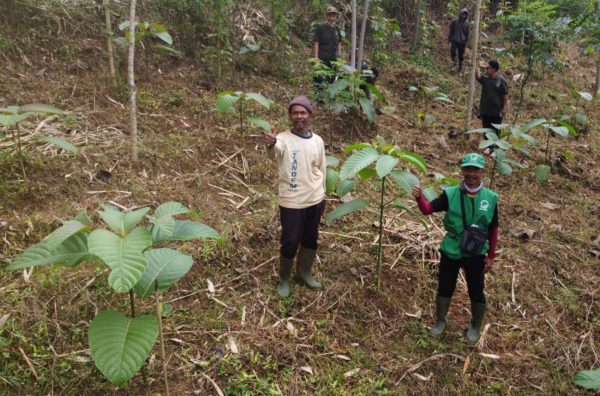
From the previous government program, Sar’an received several trees. They were mindi, mahoni (mahogany), gmelina, and suren trees. Unfortunately, the mindi tree was not suitable with the soil and the condition on his land, so the mindi tree planting was failed. When he joined to a tree planting program funded by Astra Zeneca and collaborates with Tree4Trees and One Tree Planted, Sar’an planted jabon (burflower-tree) and manglid trees. Unlike mindi tree which was failed before, these two type of trees can thrive and growing well on his field.
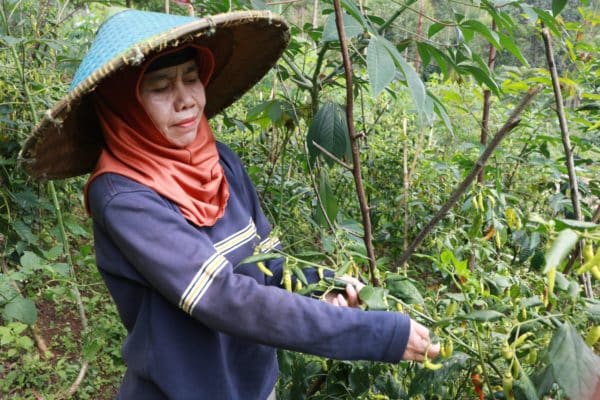
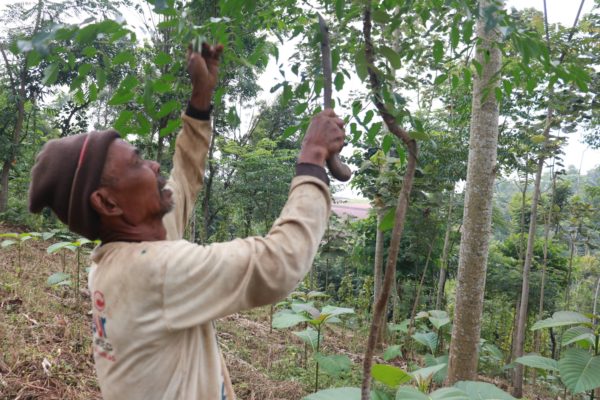
Besides, Sar’an also planted kinds of vegetables in his field. “There are chili, beans, and peanuts that I have planted by my own. Before joining to this program, I have also planted cloves, suren, and mahogany trees by myself,” Sar’an told.
Read also: Reviving Clean Water Access in Lebak Muncang: Elis’ Tree Planting Initiative
Replanting Trees He Harvested
From trees he planted, he plans to sell the timber after his trees entering the harvest period. However, he will plant new trees to prevent his land being damaged. “After trees are old enough to be harvested, then I will replant new trees to keep the soil stable. Beside, replanting trees will also swift the waterflow. If we do not replant, I am worried landslides will be occurred. Water can also get harder. I do not want that happen,” he said.
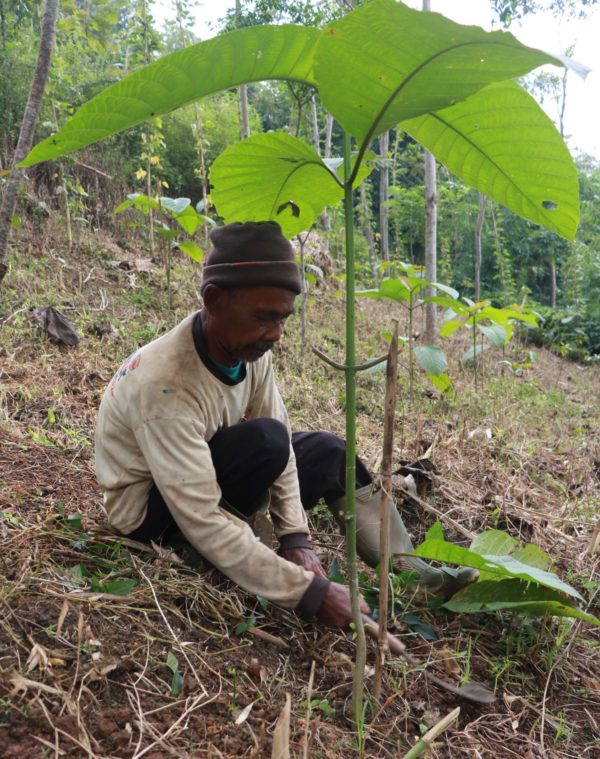
Sar’an thanks to the tree planting program that provide him trees. He hopes the tree planting program he joined will bring him good results and can support his livelihood in the long term. He also hopes both vegetables and other trees he planted can provide economic and environmental benefits. In his village, Sar’an also actively persuades other villagers to plant trees and advise them not to be easily tempted by offers to sell their land. He is sure that they will get greater benefits by having his own land that they can cultivate themselves.
Writer: V. Arnila Wulandani. Photo: Kemas Duga Muis