Amung and Tami: Regreening the Concrete Jungle

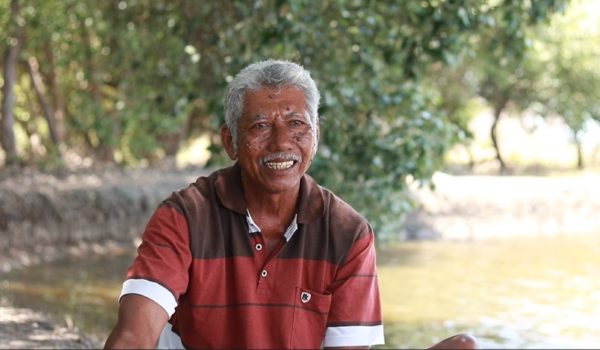
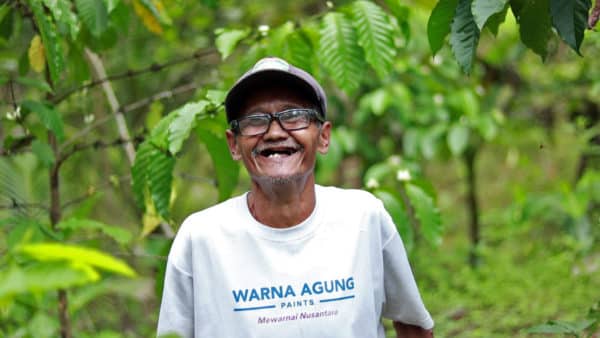
Amung and Tami
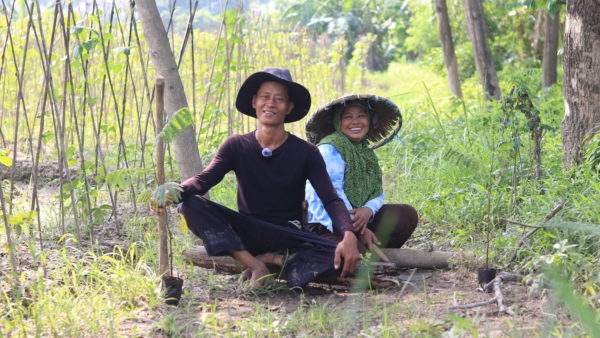
(Above) Amung and Tami

The Greenland International Industrial Center (GIIC) in Cikarang is one of Jakarta’s biggest industrial zones. And yet, even here, pockets of nature continue to proliferate. Through the enlightened approach of the GIIC management, and with critical support from local people, these patches of green within the estate are being stitched together. 

Trees4Trees, One Tree Planted (OTP) and Microsoft have teamed up with local farmers to help catalyze the regreening process. Amung and his wife, Tami, are two of many who are ensuring ‘Greenland’ remains an integral part of the GIIC. In the process, they’re bringing relief to the area, finding a connection to the past, and planting hope for the future.  

Nature and nurture 

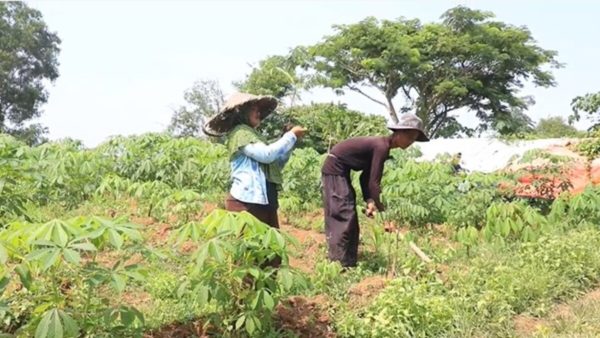
For as long as he can remember, Amung has had an affinity with farming – nurturing plants to nourish his family. Together with his wife, he grows vegetable crops and fruit trees on disused industrial land in the GIIC.  

I’ve been farming here since 2014,” he explains. “It’s been about 10 years now. The land I work on provides us with vegetables, cassava, and many other crops and fruits.”   

Income from his farming has allowed Amung to provide for his family, while also covering school expenses for his two children. “Although it’s not a lot, we’re grateful,” he says.
Amung and Tami
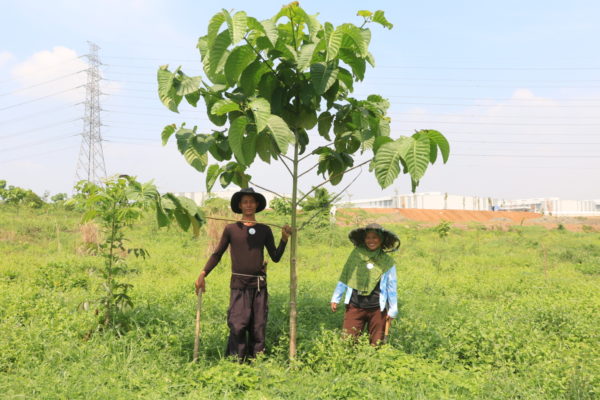
(Above) Amung and Tami, in the shade of one of many trees they have planted on the GIIC industrial estate in Cikarang, West Java.

Staying connected to their roots 

For Tami, working the land brings back memories. Before this area became an industrial zone, it was the site of her ancestral home. “One day, I visited and found the land where my house used to be had been abandoned. I told my husband and asked him to farm here,” she explained.  

Before long, Tami and Amung brought the land back to life. “I used to farm in other locations, but this land is the best,” says Amung. “Most plants can grow easily here. It is also close to the river for irrigation.” 
local Farmer
Above) With support from Microsoft, Trees4Trees and One Tree Planted, Tami and Amung have reconnected with their ancestral lands and helped keep the GIIC green.

Tree-planting support from Microsoft  

In 2022, Trees4Trees, with funding from Microsoft and support from One Tree Planted, launched a tree-planting program around the GIIC. The aim was to restore degraded land and increase tree cover to create an urban forest.  

“In 2022, we got 350 seedlings in total, consisting of fruit trees like mango, petai, and durian, as well as timber like mahogany, teak, and jabon,” says Amung. “We’re thankful to be able to plant them and benefit from them in the future. This program really supports us.”  

The program successfully planted 21,000 trees in public spaces and on local community lands. In 2023, Microsoft added another 19,000 trees. This year, the initiative will continue, expanding tree cover throughout the industrial zone. 

Amung and Tami hope all their trees will survive and bear fruit such as mangoes and petai, which they can sell. They are also looking forward to planting more new trees in future and contributing to the regreening of the local area. 
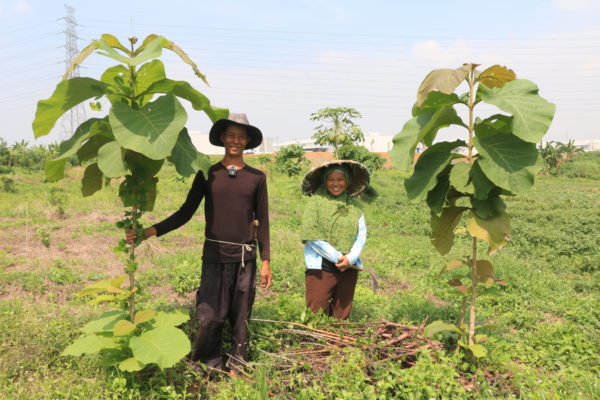
GIIC Farmers
(Above) It’s been a year since the planting activities, and now the trees are nearly 2 meters tall.
Progress towards a greener future 

In just over a year, Amung and Tami have already transformed around 0.5 hectares of unused land in the GIIC area into a lush, green space that is filled with teak, jabon, and mango. Amung attributes this success to nature: “I think the soil is perfect for these trees to thrive, even without special treatment,” he says. 

Amung and Tami’s actions have played a vital role in keeping the GIIC green. In addition to providing shade, clean air, and water to the surrounding environment, the green spaces of the GIIC also deliver sustainable livelihood opportunities to local farmers. This also provides a blueprint for a more sustainable, more equitable future; a collaborative model that benefits local communities, business, and nature. 

Writer: V. Arnila Wulandani. Editor: Chris Alexander. Photos: Kemas Duga Muis/Trees4Trees

Replanting Mangroves, Rebuilding Futures in Central Java

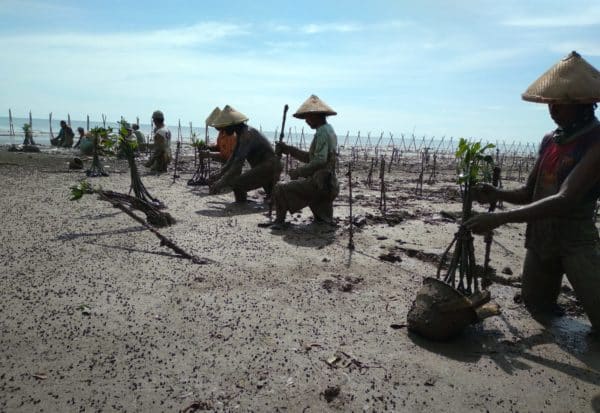
Trees4Trees has been working with local communities to replant mangroves in Central Java
Trees4Trees has been working with local communities to replant mangroves in Central Java. Photo: Doc. Trees4Trees

On New Year’s Eve, Pati Regency in Central Java was inundated by heavy rains. This caused flooding that destroyed more than 600 hectares of agricultural land and damaged thousands of homes. But there was one silver lining to the black clouds that surrounded Pati in December – residents noticed that the areas least affected by the floods were also places with the highest coverage of mangrove forests.  

From the wreckage came the green shoots of a solution. Now, with support from local government and outside help from investors like EcoMatcher, Trees4Trees is working with communities in Pati to restore mangrove forests and rebuild for the future.  

Read also: Mangrove Planting Program with EcoMatcher Inspires Villagers to Plant More Mangrove Trees

A Rising Tide: Building Awareness of Mangroves 

“In recent years, local people’s awareness of mangroves has increased,” says Fauzan Timurlang, who is the Trees4Trees Unit Manager in Pati. He believes the benefits provided by mangroves have become clearer since the recent floods, with many people ready to take action. “They have seen that mangroves can act as barriers that break the waves and reduce the damaging impact,” he explains.  

Andi Lestari is a mangrove activist in Pati, working alongside Trees4Trees. He too has noticed an increase in community awareness. “Many people have seen for themselves the great benefits of mangroves,” he explains. “They have seen that areas with mangrove cover suffer less damage compared to areas that did not have any,” he added. 

Read also: The Incredible Benefits of Mangroves Ecosystem  

Root and Branch: Combining Community Action with Government Support 

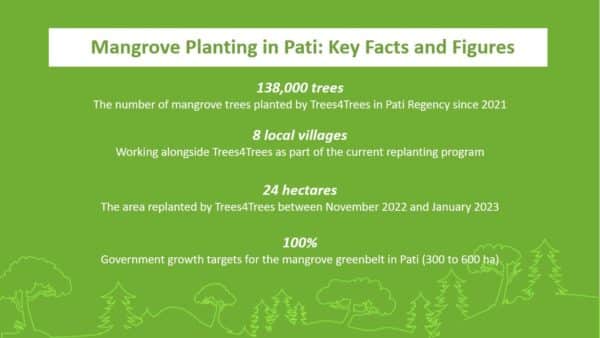
Pati Regency stretches 37 miles (60 km) along the coastline of Central Java. Officials here have decided to double mangrove coverage from 300 to 600 hectares, effectively creating a natural barrier that can prevent coastal erosion and protect local homes and livelihoods from flooding. 

“We want to create a green belt from Pencangaan to Puncel,” explains Edy Martanto, Head of the Maritime Affairs and Fisheries Service (DKP) for Pati, in a recent interview with Muria News. “The green belt will function like a beach embankment – if there are waves, the mangroves will form a barrier – when the mangroves are strong, the ponds are also safe.”  

(Above) In areas like Kalikalong village in Pati Regency, Trees4Trees has been working to double mangrove cover

Planning into Planting: Trees4Trees Takes Action in Pati 

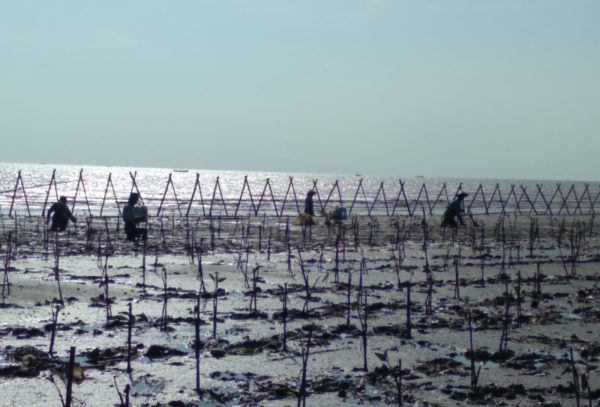
To help bring this green belt to fruition, Trees4Trees began planting mangroves along the Pati coastline from November 2022 to January 2023, as part of the recent planting season. By employing members of the community from eight local villages, Trees4Trees has already planted a total of 108,000 mangrove trees in an area covering 24 hectares.  

These seedlings (consisting of Red Mangrove or Rhizophora mucronata and White Mangrove or Avicennia marina), are endemic to the area, so will help replenish wild populations. They are currently being monitored to ensure they stay healthy and continue to grow. Back in 2021, and with support from EcoMatcher, Trees4Trees also planted around 30,000 mangrove seedlings across 3.8 hectares surrounding Dukuhseti village.

Read also: Mangrove Types in Indonesia and Their Benefits


Trees4Trees has planted more than 138,000 mangrove trees in Pati since 2021.

“The thicker the mangrove cover, the safer our fishponds will be – that’s why we’re so keen to be a part of the Trees4Trees mangrove planting program.”  Musthofa, Tani Makmur farmers’ group 


Local Communities on the Frontline of Mangrove Restoration 

To ensure mangrove restoration takes root in Pati, Trees4Trees has also involved local village officers and members of the forestry service. Six groups of local fishpond farmers have also been employed as mangrove planters.  

“Farmers in our group have become aware of the benefits provided by healthy mangrove ecosystems,” explains Musthofa, leader of the Tani Makmur farmer group. “The thicker the mangrove cover, the safer our fishponds will be; that’s why we’re so keen to be a part of the Trees4Trees mangrove planting program,” he added. 

(Above) Parmi is one of many fishpond farmers joining in the Trees4Trees planting program in Dukuhseti village

Another of the fishpond farmers who joined the mangrove planting program is Parmi. Like many people here, he makes a living by farming fish and shrimp. With support from Trees4Trees, he is looking forward to a safer and more prosperous future. 

“Thick mangrove cover helps to protect our fishponds from strong waves, resulting in a higher abundance of fish,” explains Parmi. “I hope the mangroves we plant now will grow into a full forest like before, so they can continue to provide benefits for us and future generations.”  

Trees4Trees™ is a non-profit foundation focused on renewing the environment and empowering local communities through reforestation and education. For more information about the work we do, and to make a donation in planting mangroves, please go to devtrees4trees.portopaper.com. 

Writer: V.Arnila Wulandani. Editor: Christopher Alexander.

The Story of Wasis: How A Tree Grower is Making a Difference in Water Conservation

Wasis, The Spring Warrior from Kalirejo Village
Photo: Trees4Trees/Yulianisa Dessenita

Wasis had never thought before that his decision to join the tree planting program initiated by Trees4Trees and Tree Ltd three years ago would be a blessing for many people around him. At the time, Wasis decided to join the tree planting program solely to expand his coffee field’s productivity. However, the trees he has grown not only provide him with a good result but also help preserve the water spring that provides clean water for his fellow villagers 

Wasis lives by himself in a hut not far from his field in Kalirejo Village, Kebumen Regency. There is a water spring established in his field and he is grateful for having it. Although it is little, the water spring is the only clean water source for his daily needs. He also believes the water spring is the key to his fertile field that never runs dry.

Water spring in Wasis’ field produce more clean water after he planted many coffee trees. Photo: Trees4Trees/Yulianisa Dessenita

Growing Coffee is Wasis’ Specialty 

Before returning to his home village eight years ago, Wasis had worked in coffee plantations in Sumatera for more than twenty years. Therefore, growing coffee has been his specialty for years. One day, he decided to come home and brought a few coffee seedlings to be planted in his own field. Although his field is not wide, he has managed it persistently since the beginning.  

Formerly, Wasis planted some timbers, a few coffee trees, and cassava in his field. Unfortunately, cassava did not grow well in his field. Then in 2019, when Wasis received around 200 Robusta coffee seedlings from the tree planting program conducted by Trees4Trees and Tree Ltd, soon, he replaced all cassava planted in his field with Robusta coffee trees he received.  

Harvesting Coffee, Making a Good Income  

After three years growing coffees, a few months ago finally he harvested them for the first time. Deciding to replace cassava with coffee trees was the best decision he ever made. “I got seven kilograms of Robusta coffee beans, and I sold them at Rp27.000 per kilogram,” he said proudly.   

Besides Robusta, Wasis also planted Arabica and Liberica coffee which he brought the seedlings from a plantation where he worked once. Wasis said the selling price of Liberica is higher than the other. “Liberica can reach Rp30.000 per kilogram,” he said.  

To make his coffee trees lush and fruitful, Wasis makes organic fertilizer from cow dung by himself. He believes that the organic fertilizer he applied causes his coffee trees to grow well and fruitful. “I get the cow dung from my neighbors who raise cows. I prefer cow dung better than goat dung because it makes my trees lusher,” he said.  

Coffee beans in Wasis’ field. Photo: Trees4Trees/V. Arnila Wulandani

Planting Trees, Preserving the Water Spring, Helping Local Residents

Wasis has been more than just proud of himself because the coffee trees he planted also made the water spring in his field produces more water than before. According to Wasis, now the spring not only can fulfill his clean water daily need but also other villagers’.  

“Around ten families in a neighboring village not far from here have been lacking clean water,” Wasis revealed. According to him, the local people have tried to dig wells but there was no water coming out. It has been very struggle for them to get clean water for a long time. When they heard the water spring in Wasis’ field has produced more water than before, they asked him permission to take water from there.  

“Water is the most essential thing in life, and they have had a hard time getting it for a long time. I cannot bear not to help them, so I allowed them to take water as much as they need from the spring in my field,” Wasis said.  

The Trees He Grows Bring Fortune 

Wasis said every neighbor who takes water from the spring, then they barter it with food crop yields or other essential things as a thank you.  

“They often barter it with rice grain in return. Usually, I get 50 kilograms of rice grains as a thank you,” Wasis told us. Some people also barter the water with vegetables or other food crops, making him does not need to buy groceries for his daily food. “The water is not only bartered with food. Sometimes, when I need cow dung to make organic fertilizer, they are willing to barter it with water,” he added.  

Wasis said he is so grateful because the spring can help many people and bring such fortune for him. “This spring is getting better because of trees from Trees4Trees and Tree Ltd that I have grown,” he said.  

Now, his biggest hope is to grow more and more trees, especially coffee trees. He wants to get good results to increase his income as well as to preserve the water spring that many people rely on to get clean water.