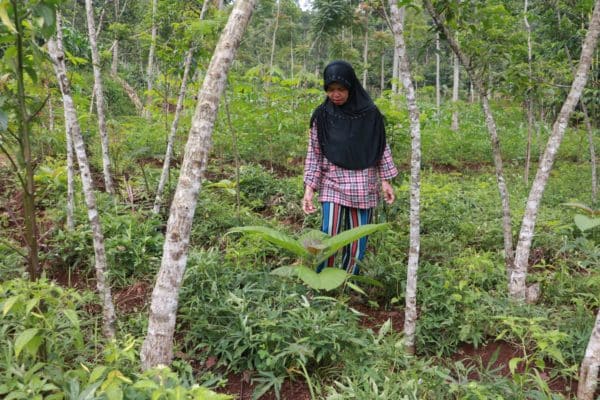
Sar’an: Preserving His Land and Planting Trees for Greater Benefits

Preserving Land and Planting Trees around Citarum Watershed for Greater Benefits
Sar’an: Preserving His Land and Planting Trees for Greater Benefits

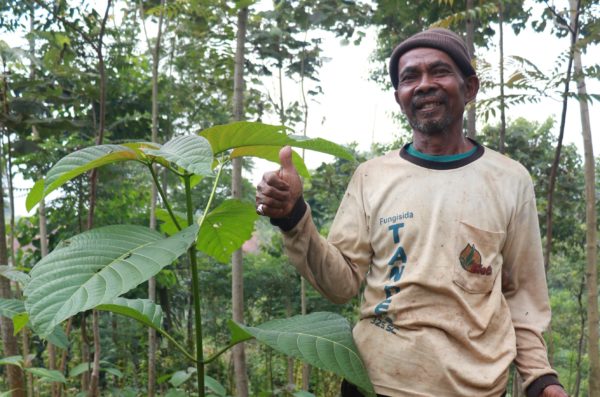
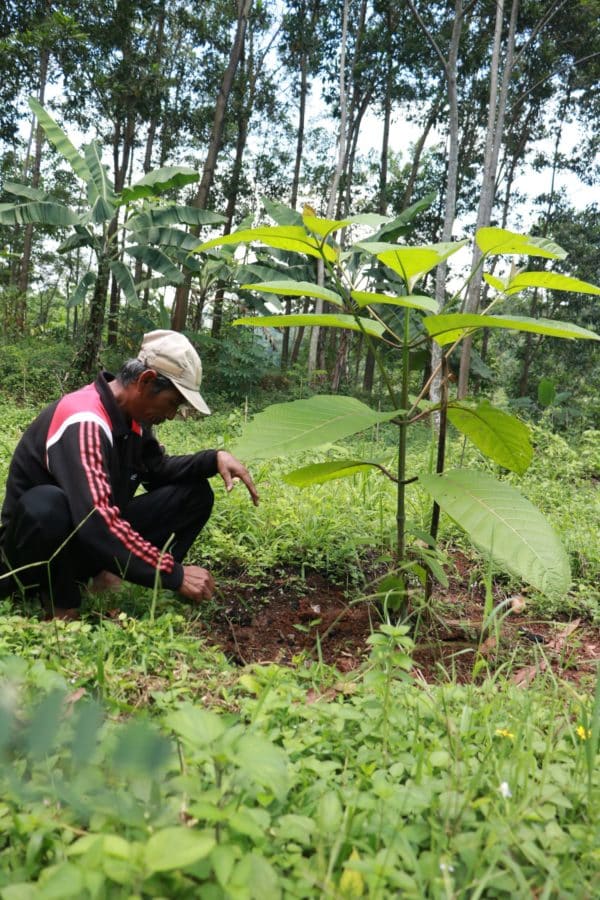
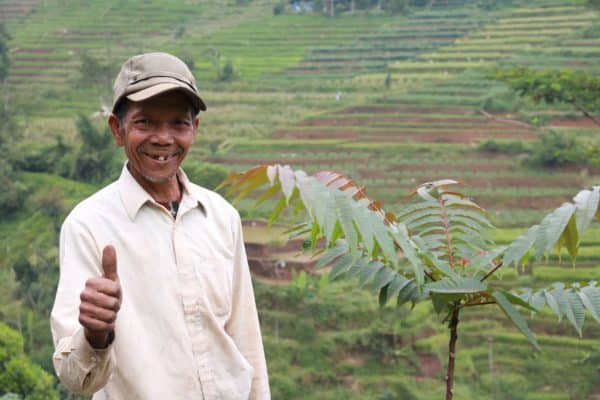
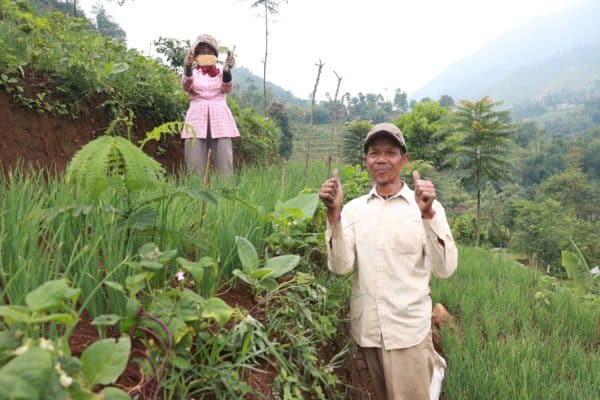
Even though he is 72 years old, Sar’an is still active to do farming activities. He started farming five years ago. At that time, there was a tree planting program from the government that provided  tree seedlings to be planted on villagers’ land, including in his field. 

Sar’an lives in Sukanagara village. It is located in Soreang District, Bandung Regency. Prior to his farming activity today, Sar’an was a goat breeder. He decided to farm due to his expectation to be able to improve his well-being more. At the same time, he also wants to restore the soil fertility around his village.  

Preserving the Land He Owns for the Long-term Profit 

“So many lands in this village have been converted into plantations, offices, and residents. There are also lands owned by villagers which was initially rented out at the beginning but later sold. The result, villagers find it difficult to earn income. That’s because their land that normally can be cultivated on their own has changed function or changed ownership. I am regretting that many people in this village have sold their land. So, when they want to farm, they have to rent the land because they do not have anymore,” Sar’an said.  

Sar’an also revealed, in his village, there are many farmers who used to own their land, now only become sharecroppers because their land has been sold. Some sold their land to companies, some sold it to housing developers. Although many farmers in his village sold their land, Sar’an never wanted to sell his own land. It is because for him, planting in his own land is much more profitable in the long run.  
Preserving Land and Planting Trees around Citarum Watershed for Greater Benefits
Sar’an: Monitoring Trees with Farmer

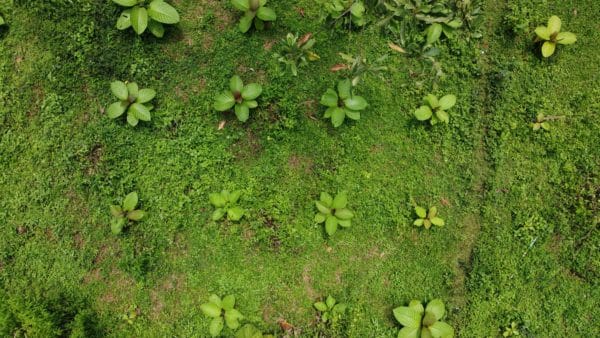
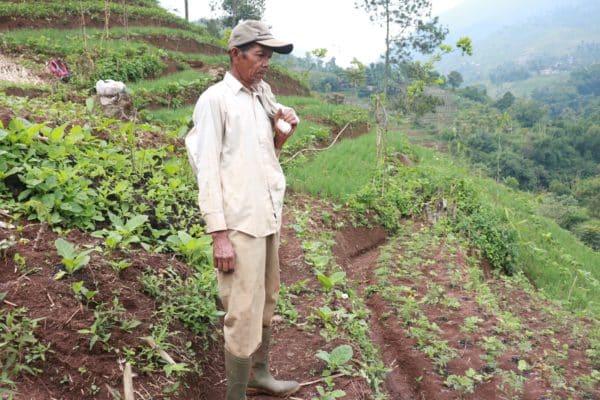
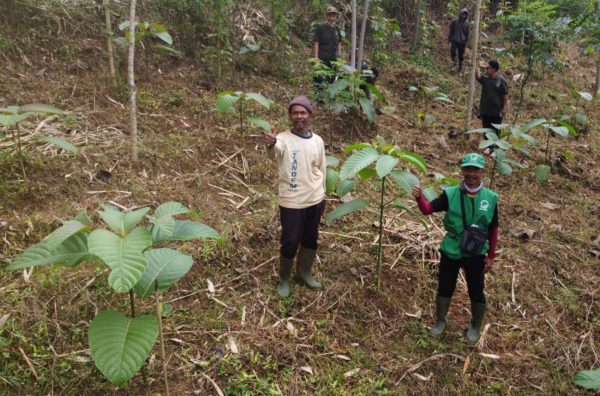
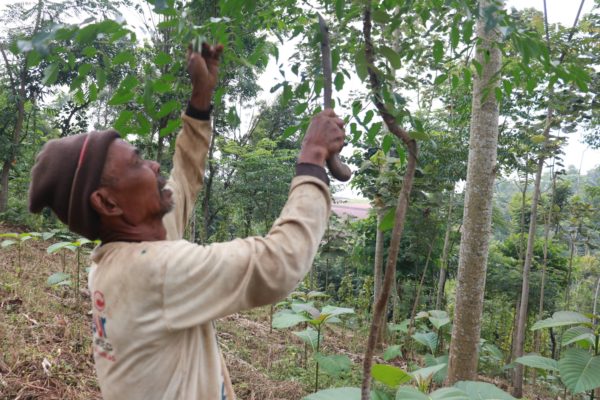
From the previous government program, Sar’an received several trees. They were mindi, mahoni (mahogany), gmelina, and suren trees. Unfortunately, the mindi tree was not suitable with the soil and the condition on his land, so the mindi tree planting was failed. When he joined to a tree planting program funded by Astra Zeneca and collaborates with Tree4Trees and One Tree Planted, Sar’an planted jabon (burflower-tree) and manglid trees. Unlike mindi tree which was failed before, these two type of trees can thrive and growing well on his field.  

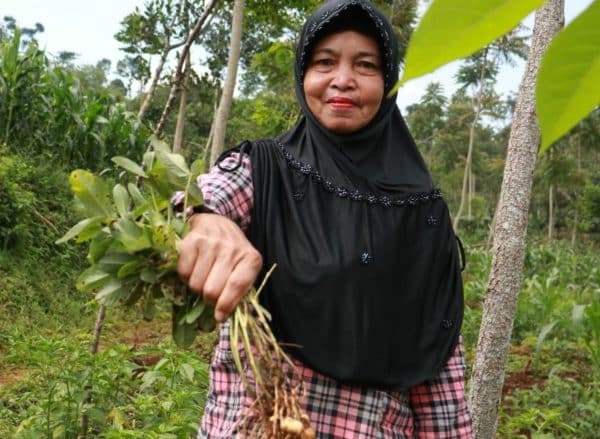
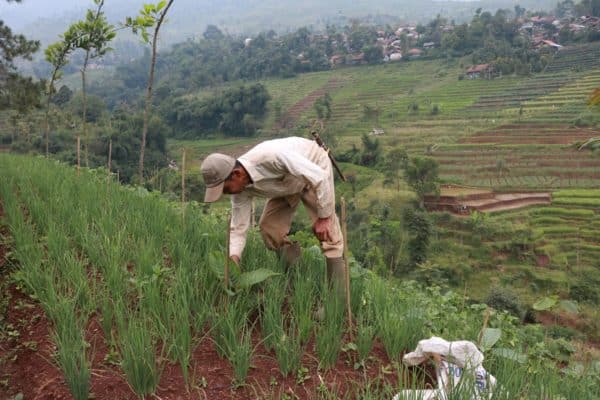
Besides, Sar’an also planted kinds of vegetables in his field. “There are chili, beans, and peanuts that I have planted by my own. Before joining to this program, I have also planted cloves, suren, and mahogany trees by myself,” Sar’an told.  
Sar'an: Preserving Land and Planting Trees around Citarum Watershed for Greater Benefits
Sar’an and his Trees

Read also: Reviving Clean Water Access in Lebak Muncang: Elis’ Tree Planting Initiative 

Replanting Trees He Harvested  

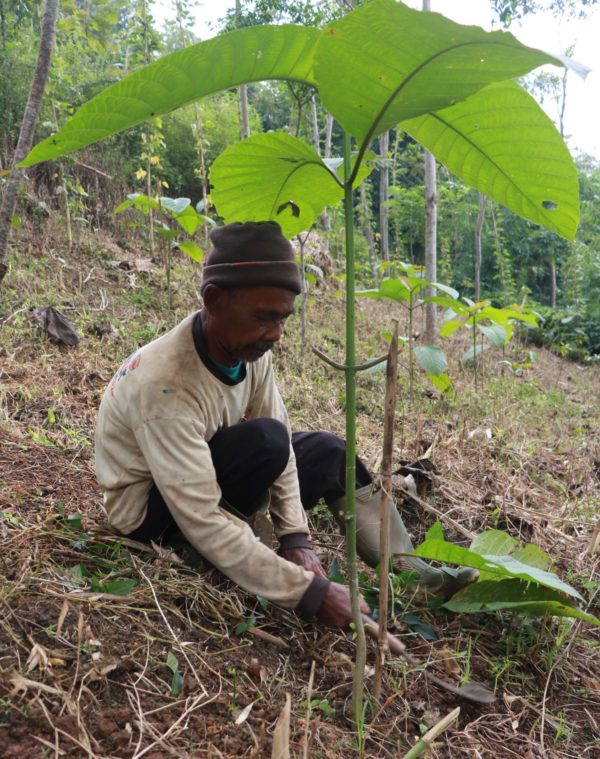
From trees he planted, he plans to sell the timber after his trees entering the harvest period. However, he will plant new trees to prevent his land being damaged. “After trees are old enough to be harvested, then I will replant new trees  to keep the soil stable. Beside, replanting trees will also swift the waterflow. If we do not replant, I am worried landslides will be occurred. Water can also get harder. I do not want that happen,” he said. 
Sar'an: Preserving Land and Planting Trees around Citarum Watershed for Greater Benefits

Sar’an thanks to the tree planting program that provide him trees. He hopes the tree planting program he joined will bring him good results and can support his livelihood in the long term. He also hopes both vegetables and other trees he planted can provide economic and environmental benefits. In his village, Sar’an also actively persuades other villagers to plant trees and advise them not to be easily tempted by offers to sell their land. He is sure that they will get greater benefits by having his own land that they can cultivate themselves.   

Writer: V. Arnila Wulandani. Photo: Kemas Duga Muis

Rohmanudin’s Vision: Why Planting Trees is a Better Legacy Than Selling Land 

why Planting Trees is a Better Legacy
Photo: Trees4Trees/Kemas Duga Muis.

Rohmanudin, 53, has been familiar with farming activities since his childhood, as his parents were farmers who often brought him to the fields. However, Rohmanudin only began farming his own land in 2015. His land, located in Nagrak Village, Cangkuang District in Bandung Regency, was planted with various crops, including several types of trees, fruits, and vegetables. 

“From 2015 to 2016, I began working on my own field, planting various kinds of crops. In 2015, the Indonesia government initiated an agricultural program that led me to grow vegetables for the first time. Thank God, I have been growing different types of plants ever since,” he revealed. 

As part of the government agricultural program, a farmer group was established in Nagrak village, which still exists today. Rohmanudin is one of the most active members of this group.  

Joining to the Tree Planting Program to Improve the Result 

In 2021, Rohmanudin was offered the opportunity to join a tree planting program funded by Astra Zeneca, in collaboration with Trees4Trees and One Tree Planted. He proposed planting tree species that were suitable for his land’s conditions. 

Why Planting Trees is a Better Legacy Than Selling Land 
Rohmanudin maintains his land and plants various type of crops and trees. Photo: Trees4Trees/Kemas Duga Muis.

“I proposed then planted jabon (burflowers), sengon (Chinese albizia), and suren (red cedar) because they thrive in this area. I also planted other trees such as stinky beans, as well as fruit trees like sapodilla and rambutan,” Rohmanudin said. 

Since joining the tree planting program, he has noticed significant differences compared to his previous farming activities. He stated that the implementation of the program has improved significantly, and he feels that it is much better now than in the past. 

“In the past, the planting system was not as structured. Now, we have a more structured approach, and I can say that the way we do is the correct one,” Rohmanudin added. 

Read also: A Watershed Moment: Planting Begins at the Citarum River

Effort to Restore the Former Forest in the Village

Rohmanudin is deeply concerned about the vast deforestation that has taken place in his village, where forests have been cleared and replaced with residential areas. As such, he strongly believes that the tree planting program can have a positive impact if implemented effectively, and is therefore highly motivated to care for the trees. 

Planting Trees is a Better Legacy
Planting Trees is a Better Legacy; Rohmanudin with the burflower tree he has grown. Photo: Trees4Trees/Kemas Duga Muis.

“In the past, this area was full of rare birds and big trees. The mornings were beautiful and so refreshing. The land was more fertile than today. But now, look, they’re gone! There’s a lot of dry land, and water is scarce. Why did this happen? Because the land was sold out, and housing was built. In the area behind my house, eight hectares were sold out, and now, ten more hectares are gone! Housing has been built there again,” Rohmanudin lamented. 

Planting Trees Instead of Selling Land for a Better Future

Seeing the reality that is happening in his village, Rohmanudin feels agitated. He worries that if all the land in his village is sold and turned into housing, there will be nothing left for future generations, and not enough land to cultivate. 

“Imagine what will happen to our children and grandchildren in the next 10-20 years? They will have nothing left. Moreover, if everyone builds houses here and there, we will get more pollution and disease,” he said. 

Planting Trees is a Better Legacy
Planting Trees is a Better Legacy; Rohmanudin’s trees grow bigger and greener. Photo: Trees4Trees/Kemas Duga Muis.

He also believes that cutting down a lot of trees will interrupt the process of producing clean air that is essential for human beings. That is why he thinks this tree planting program is necessary. He believes there are advantages that villagers can get, and even planting trees on a little land for the next generations is essential. 

Rohmanudin expects this program will make farmers in his village more aware of protecting their land and keeping it fertile so that more trees could be planted and more results could be harvested. Therefore, they can make a living from the results instead of selling their land to the land developer. 

Writer: V. Arnila Wulandani. Photo: Kemas Duga Muis.

The Story of Euis Maryati: Widowed and Planting Trees to Support Her Family

Euis Maryati
Euis Maryati: Widowed and Planting Trees to Support Her Family

For a woman with four children, it is never easy being a single parent. This is how Euis Maryati (57) feels. She is one of the farmers in Patrolsari Village, Arjasari District. Since a few years ago, she had to be a mother and also head of the family.

As a widower, her life is struggling. Even though, she keeps herself motivated to be a strong woman for the sake of her family. Unlike common life of most women in her village, her daily life is not only about taking care of the household things, but also making income to fulfill her family’s needs. Otherwise, she has to work harder than anyone else. 

Farming Crops is not Enough to Fulfill Her Family’s Daily Needs

Fortunately, Euis Maryati has a field that she can plant many kinds of plants. Most of them are seasonal food crops. Through her field, she can depend her life to the crops’ yield. “Here, I planted various kind of food crops. I planted chilies, cassava, ground nuts, and red bean. There is also corn. Usually, I harvest my seasonal crops once in every two to three months,” said Euis Maryati.  

Afterwards, she sells her crops in a traditional market around her village. Some of the crops are also self-consumed by her family. According to Euis Maryati, by planting crops, at least she does not have to worry if some days she does not have enough money to buy food. Still, she can pick some food crops from her field for her own family consumption.  

Euis Maryati: Widowed and Planting Trees to Support Her Family
Euis Maryati has harvested crops from her field. Photo: Trees4Trees/Kemas Duga Muis

Even though, to meet her family’s daily needs, she cannot avoid doing double jobs at one time. Besides farming, she also sells snacks. “If I do not farm, I cannot support my family’s needs. However, farming crops is not enough. So, I have also opened a small business selling snacks. It is to increase my income to meet my family’s daily needs,” she conveyed. 

Planting Trees: Cultivating a Better Future for Her Family

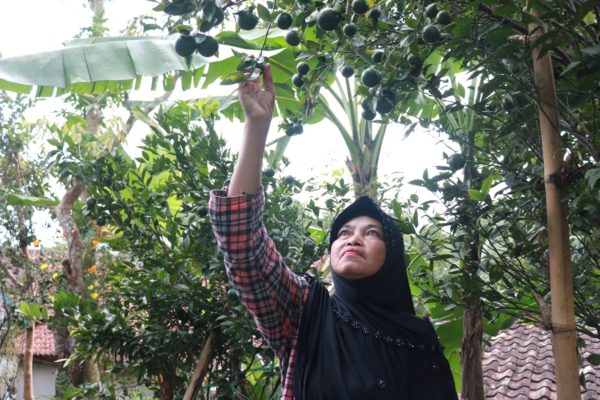
In 2021, when she was offered a partnership program of tree planting funded by Astra Zeneca collaborated with Trees4Trees and One Tree Planted, Euis Maryati planted burflower-tree, avocado, mango, and orange. She planted those trees among her seasonal crops in her field. She admitted that she was lucky to get plants from the tree planting program. She hopes a lot from trees she planted for the future of her family. 

She has been persevering in taking care of her trees. She cleans the grass every day so that all the plants grow well. She also applies her plants with organic fertilizer that she made herself from animal dung. 

Euis Maryati: Widowed and Planting Trees to Support Her Family
Euis Maryati is checking her jabon trees planted in her field along with various crops.

She expects, by taking good care of those trees, she will be able to harvest the good results. Moreover, now plants in her field are more varied. With more types of trees planted, she hopes she can sell more yields in the future, then she can fulfil her family’s needs much better than today. 

“My life has been difficult for years. So I am hoping that it does not get any harder. If not myself, who else will  support my family? I realize that I am both the mother and the head of the family. It is not easy. But for my children and their future, I will continue to work harder,” she stated.  

She thanks to the tree planting program and she hopes it can bring more prosperity and a better future for women farmers and single parents like her. 

Iju’s Passion for Planting Trees: Beyond the Harvest

Farmer story: Iju, one of Trees4Trees best farmers from Neglasari village
Iju, one of Trees4Trees best farmers from Neglasari village, Bandung Regency. Photo: Trees4Trees/Kemas Duga Muis

Since returning to his home village in Neglasari Village a few years ago, Iju (60) has decided to manage his family’s land. His home village is located in Ibun District, Bandung Regency. Before, he had worked in a rubber and oil palm plantation in Sumatera Island for years. However, his longing for his home village made him decide to return home.  

After returning from Sumatra, Iju began to plant bamboo trees. Unfortunately, the results were not good and the price was not favorable. Meanwhile, he had to support his family. His four children were married, while one of the youngest was still in senior high school and he needed income to meet his family’s daily needs. 

Switching From Growing Bamboo to Polyculture Planting System 

In the midst of his struggle in planting bamboo trees, he was offered to join planting trees program which initiated by Astra Zeneca and collaborates with Trees4Trees and One Tree Planted. He was excited to join the program and received support and training in agriculture from the Trees4Trees team. He did not only receive trees for free, but also obtained trainings and more knowledge of agriculture he needed from the team. 

Iju also got a suggestion and assistance from the team to manage his land by applying a polyculture or intercropping system. Indonesian called the system as tumpang sari. This system works by planting several types of trees and crops in a field. It allows farmers to reap short-term and long-term yields from several different trees and crops. Through this system, he potentially can get greater results than planting just one type of tree.

Based on the suggestion, Iju then decided to plant several food crops on his land whose results could be harvested in short term, such as onions, cassava, sweet potatoes, and chilies. Meanwhile, from the tree planting program with Trees4Trees, Iju received burflower-tree, gmelina, durian, and avocado trees. He can reap the long-term benefit from those types of trees.

Farmer story: Iju, one of Trees4Trees best farmers from Neglasari village
Iju is taking care of onion in his field. Photo: Trees4Trees/Kemas Duga Muis

Planting Trees to Restore the Former Forest in the Village

According to Iju, he intended to dedicate the long term-harvested trees he planted for his next generation. He said those trees will be his legacy for them. “I will not harvest or cut down these trees. I will pass them to my children and my grandchildren, so they will be able to enjoy the result and the benefit of trees I planted,” Iju said.  

For Iju, planting trees is beyond harvesting and using the result to meet his family daily needs. He believes that trees have much bigger role than that. Trees provide clean air to breathe, water, shelter, and preserve the life to all of living creature on earth. He realizes clean air and water are the most essential needs of human beings, including for the next generations. 

Planting Trees to Restore the Former Forest in the Village
Iju is applying polyculture system in his field. Photo: Trees4Trees/Kemas Duga Muis

“I plant trees because it provides great benefits not only for myself and my family. But also for the environment. They also produce oxygen and store water that keeps us alive. I want my children and grandchildren will have a good life in the future, so I plant trees,” he added.

Iju’s strong will to plant trees was also fueled by the disappearance of the former forest around her village years ago.  

Planting trees: Iju, one of Trees4Trees best farmers from Neglasari village
Iju and his wife are working in their field. They thank Trees4Trees along with the support of Astra Zeneca and One Tree Planted for tree seedlings and agricultural support they have received. Photo: Trees4Trees/Kemas Duga Muis.

“In the past, this village had a dense and natural forest. But the forest is lost and now it becomes a critical land due to excessive use. I have a dream to return the forest back. Who knows, if I keep planting trees, I may see the forest return to the way it was before,” said Iju optimistic. 

Rasito, Optimizing His Field with Coffee Trees

Rasito were proud of the sengon trees he grows. They reach more than 10-meters in height now.

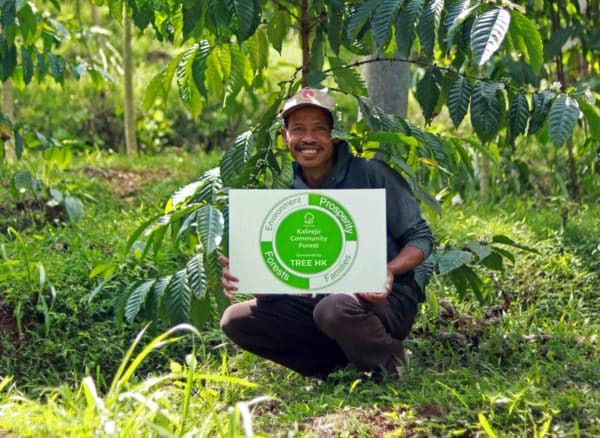
In 2019, Rasito (53) joined the tree planting program initiated by Trees4Trees and Tree Ltd. At that time, he proposed various types of tree seedlings such as sengon, indigofera, and coffee to be planted in his field. He cannot help but feel grateful for the free seedlings he received. His decision to register and join the tree planting program three years ago was actually because of his strong will to optimize the yield of the field he owned. 

Fortunately, Rasito has a more fertile field compared to the fields in other villages. His field is located not far from his home in Kalirejo Village, Kebumen Regency.    

“I can say my field is fertile and easy to plant with any kind of crops and timbers. I think it is because the location is near the spring and river. So, when the dry season comes, it does not ever experience a drought,” Rasito said.  

Manage Pests is the Biggest Challenge

While strolling around his field, he seemed to trim the yellow leaves occasionally. According to Rasito, the biggest challenge to manage plants in his field is because of pests. “These yellow pests are very troublesome. They make leaves turn yellow, wilt, then die. Many sengon trees from Trees4Trees that I planted here were attacked by this kind of pest and could not survive. Auspiciously, there are still around 20 sengon trees that survive and grow well,” Rasito continued. He was pointing us to the sengon trees which now have reached 10 meters in height.  

Rasito, Optimizing His Field with Coffee Trees
Rasito thanks Trees4Trees and Tree HK for providing him various kinds of tree seedling, including coffee.

Since returning to his village twenty years ago, Rasito has chosen to focus on agriculture. He used to work in the coffee plantation in Lampung, Sumatera. However, he decided to return to his village because his heart felt heavy to leave his 7-years old son at that time. 

From the coffee plantation he used to work at previously, he has learnt a lot about agriculture and how to grow coffee. From his parents, he inherited traditional agriculture knowledge. He used them to manage his field area of more than 1.000 square meters until now.  

Unsatisfied with The Result of His Field

Before joining the tree planting program, most of his field was planted with cassava and taro. There were also turmeric and Kaempferia galanga or aromatic ginger. He also planted stinky beans, papaya, and kelor trees. All the yields to be sold as his income to support his family’s daily needs. He also raised goats as his saving.  

Regrettably, the price of cassava as his main yield is less competitive in the market. “One kilogram of cassava that has been cleaned costs around 1.700 rupiahs. If I don’t clean the skin, the price is only 1.500 rupiahs per kilogram. Taro’s price is much better. It is more stable, around 2.000 rupiahs per kilogram,” Rasito revealed. When the price drops or does not sell well in the market, then Rasito must give up the cassava he grew to be used as his cattle’s feed.  

For that reason, when he heard that there was a tree planting program and free seedlings distribution, he was enthusiastic. “At that time, I heard that coffee seedlings would be distributed to farmers. I was interested. I always want to apply the knowledge I have learned from the coffee plantation where once I worked in my own field,” told Rasito. 

Rasito, Optimizing His Field with Coffee Trees
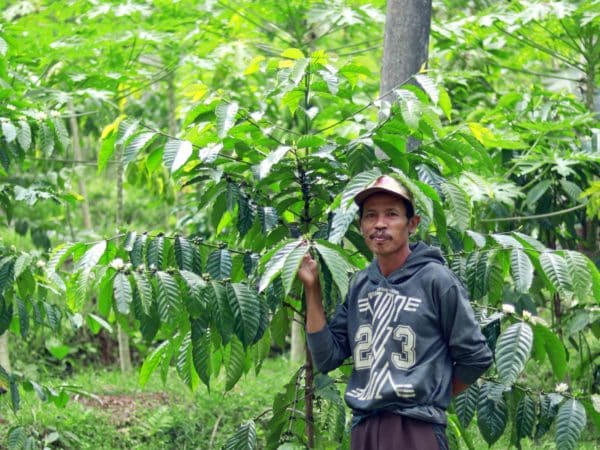
Rasito with Robusta coffee trees that he has grown since 2019.

Growing Coffee Trees, Increasing His Field’s Productivity

He was thrilled to know that of the 180 Robusta coffee seedlings he received in 2019, he managed to grow well 150 coffee trees. Over the last three years, he has already harvested twice. “In one harvesting time, there may be about 5 kilograms. But it has not been sold yet. I am still testing my coffee trees, grinding the beans, and consuming them by myself. I have compared the taste with the Robusta coffee sold in the market and even with coffee sold in a cafe. I am sure that this coffee can compete with them,” he said confidently.  

Compared with cassava, Rasito believes coffee is more prospective. He also said it is not difficult to grow coffee trees. According to his survey, ground Robusta coffee’s price in the market can reach 30.000 rupiahs per kilogram. That interested him. Therefore, Rasito intends to replace cassava and taro with coffee in the future. “These cassavas are temporary. When I can grow more coffee trees, I will replace all of cassava and taro with coffee in order to make my field more productive as well as my income,” he was hoping.  

In addition to coffee, Rasito also grows pepper which is planted as vines on other trees. He is quite satisfied with the result of pepper. He can sell them for 80,000 rupiahs per kilogram.  

Rasito expects he we will be allowed to join the next tree planting program with Trees4Trees. He hopes he can receive durian and avocado seedlings. “I have tried planting durian and it is growing well in my field. If there will be another program, I intend to apply durian seedlings as well as avocado,” said Rasito. 

Writer: V. Arnila Wulandani. Photo: Yulianisa Dessenita

The Story of Wasis: How A Tree Grower is Making a Difference in Water Conservation

Wasis, The Spring Warrior from Kalirejo Village
Photo: Trees4Trees/Yulianisa Dessenita

Wasis had never thought before that his decision to join the tree planting program initiated by Trees4Trees and Tree Ltd three years ago would be a blessing for many people around him. At the time, Wasis decided to join the tree planting program solely to expand his coffee field’s productivity. However, the trees he has grown not only provide him with a good result but also help preserve the water spring that provides clean water for his fellow villagers 

Wasis lives by himself in a hut not far from his field in Kalirejo Village, Kebumen Regency. There is a water spring established in his field and he is grateful for having it. Although it is little, the water spring is the only clean water source for his daily needs. He also believes the water spring is the key to his fertile field that never runs dry.

Water spring in Wasis’ field produce more clean water after he planted many coffee trees. Photo: Trees4Trees/Yulianisa Dessenita

Growing Coffee is Wasis’ Specialty 

Before returning to his home village eight years ago, Wasis had worked in coffee plantations in Sumatera for more than twenty years. Therefore, growing coffee has been his specialty for years. One day, he decided to come home and brought a few coffee seedlings to be planted in his own field. Although his field is not wide, he has managed it persistently since the beginning.  

Formerly, Wasis planted some timbers, a few coffee trees, and cassava in his field. Unfortunately, cassava did not grow well in his field. Then in 2019, when Wasis received around 200 Robusta coffee seedlings from the tree planting program conducted by Trees4Trees and Tree Ltd, soon, he replaced all cassava planted in his field with Robusta coffee trees he received.  

Harvesting Coffee, Making a Good Income  

After three years growing coffees, a few months ago finally he harvested them for the first time. Deciding to replace cassava with coffee trees was the best decision he ever made. “I got seven kilograms of Robusta coffee beans, and I sold them at Rp27.000 per kilogram,” he said proudly.   

Besides Robusta, Wasis also planted Arabica and Liberica coffee which he brought the seedlings from a plantation where he worked once. Wasis said the selling price of Liberica is higher than the other. “Liberica can reach Rp30.000 per kilogram,” he said.  

To make his coffee trees lush and fruitful, Wasis makes organic fertilizer from cow dung by himself. He believes that the organic fertilizer he applied causes his coffee trees to grow well and fruitful. “I get the cow dung from my neighbors who raise cows. I prefer cow dung better than goat dung because it makes my trees lusher,” he said.  

Coffee beans in Wasis’ field. Photo: Trees4Trees/V. Arnila Wulandani

Planting Trees, Preserving the Water Spring, Helping Local Residents

Wasis has been more than just proud of himself because the coffee trees he planted also made the water spring in his field produces more water than before. According to Wasis, now the spring not only can fulfill his clean water daily need but also other villagers’.  

“Around ten families in a neighboring village not far from here have been lacking clean water,” Wasis revealed. According to him, the local people have tried to dig wells but there was no water coming out. It has been very struggle for them to get clean water for a long time. When they heard the water spring in Wasis’ field has produced more water than before, they asked him permission to take water from there.  

“Water is the most essential thing in life, and they have had a hard time getting it for a long time. I cannot bear not to help them, so I allowed them to take water as much as they need from the spring in my field,” Wasis said.  

The Trees He Grows Bring Fortune 

Wasis said every neighbor who takes water from the spring, then they barter it with food crop yields or other essential things as a thank you.  

“They often barter it with rice grain in return. Usually, I get 50 kilograms of rice grains as a thank you,” Wasis told us. Some people also barter the water with vegetables or other food crops, making him does not need to buy groceries for his daily food. “The water is not only bartered with food. Sometimes, when I need cow dung to make organic fertilizer, they are willing to barter it with water,” he added.  

Wasis said he is so grateful because the spring can help many people and bring such fortune for him. “This spring is getting better because of trees from Trees4Trees and Tree Ltd that I have grown,” he said.  

Now, his biggest hope is to grow more and more trees, especially coffee trees. He wants to get good results to increase his income as well as to preserve the water spring that many people rely on to get clean water.  

Writer: V. Arnila Wulandani