Sumeri, Find Happiness Through Farming
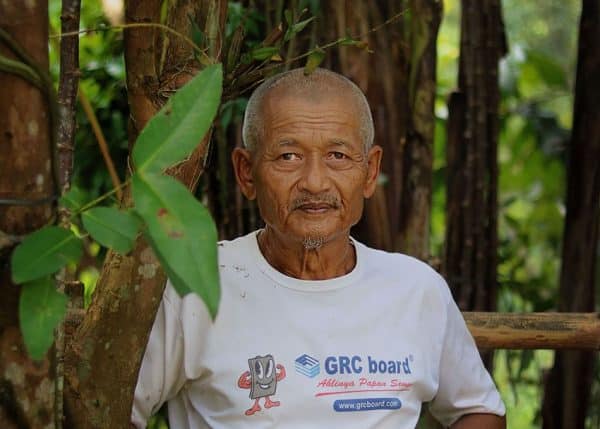
Sumeri, Farmer in Kalirejo Village, Kebumen

Sumeri, Farmer in Kalirejo Village, Kebumen

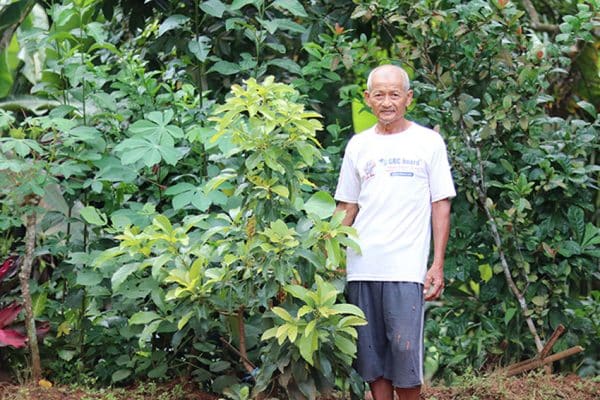
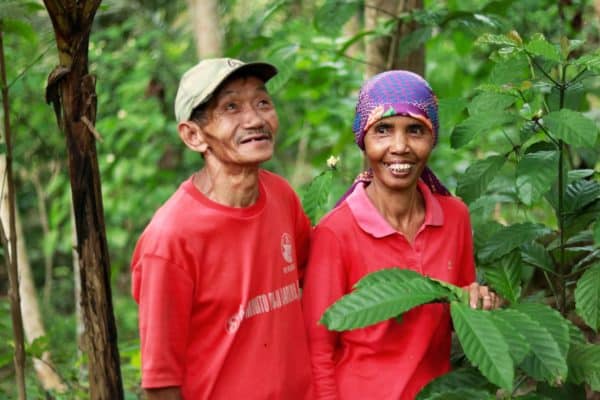
That afternoon, when we visited Kalirejo Village in Kebumen Regency, Sumeri (75) and his wife had just returned from their field. Although he is old, Sumeri is still farming actively. Every day, he begins his routine in his field starting from 8 AM to 3 PM. His fields are in two locations. The one is right behind his house. While the other one is in a higher location, around one kilometer away from his house. Each of them covers an area of 7.000 meters square.   

Sumeri took us walking around his field behind his house. His fields are quite fertile because their locations are near the water spring which is also the main clean water source for the villagers. According to Sumeri, this water spring never recedes even in the dry season.  

Planting Coffee Trees 

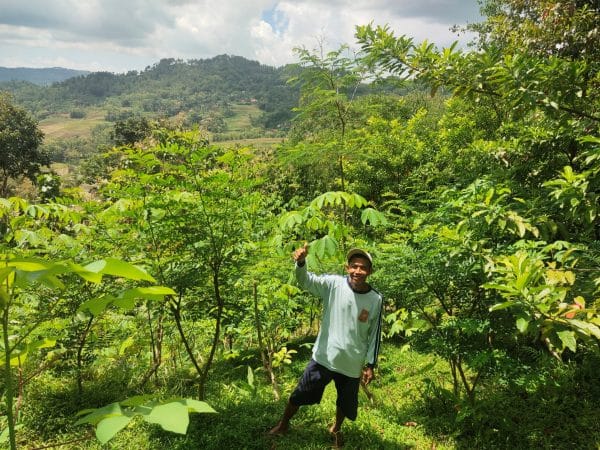
At the moment, most of his fields are planted with coffee trees. However, he also plants sengon trees, cassava, taro, corn, peanuts, and any kind of rhizomes such as curcuma, ginger, turmeric, and aromatic ginger. 

“Some of the coffee trees I planted came from tree planting program of Trees4Trees and Tree Ltd in 2019. While some others are the result of saplings from coffee seedlings I brought from Sumatra,” he revealed.  

Sumeri once migrated to Palembang and Central Lampung in Sumatra Island to work in the coffee plantations for more than 16 years. It was a long journey for him. “I worked there since 1988. Then I decided to come home because I wanted to farm in my own field. From the plantations I worked on, I know how to grow coffee trees in the right way,” said the father of six.  
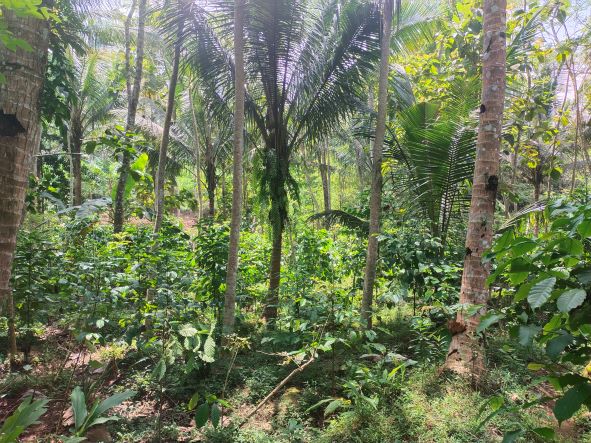
Coffee trees planted in farmer's field in kalirejo village, kebumen

He remembered when he heard about the tree planting program and tree seedlings distribution last 2019, he applied for it immediately because he really wanted to get various seedlings especially coffee. At that time, he intended to increase coffee trees in his fields, which previously were planted with cassava, corn, and coconut. 

Read also: Aan and Sugiman, Young People from Kalirejo Village Who Left the City for Farming 

“In fact, the demand for cassava is always high because many people use them as the main ingredient of various traditional food and snacks. But sadly, the price is not quite competitive. The highest price for cassava is only 2.000 per kilogram. When coffee and cassava are compared, coffee can bring more income for sure. The price of ground coffee can reach 30.000 rupiahs,” Sumeri added. 

Harvesting coffee 

Since being planted three years ago, now coffee trees he received from the tree planting program reached more than 1,5 meters in height. With his skillful hand, he has successfully grown most of the coffee seedlings he received. However, he was disappointed because a few of them died attacked by pests and eaten by bats. Sumeri has harvested it once this year. Based on his calculation, around February next year he can harvest his coffee trees for the second time. He also has sold his ground coffee at the price of 25.000 per kilogram.  

His wife greatly supports him in farming  

His success in growing trees is also because of his wife’s great support. Every day, his wife helps Sumeri after she has finished her household chores. “Every day, I pull the weeds around the plants. Sometimes, I help my husband to put tree seedlings into planting holes he digs. I cannot bear not to help him because he is old now. Even though he is old, I like to see him very enthusiastic every time he works in his field and takes care of his plants,” she admitted. 
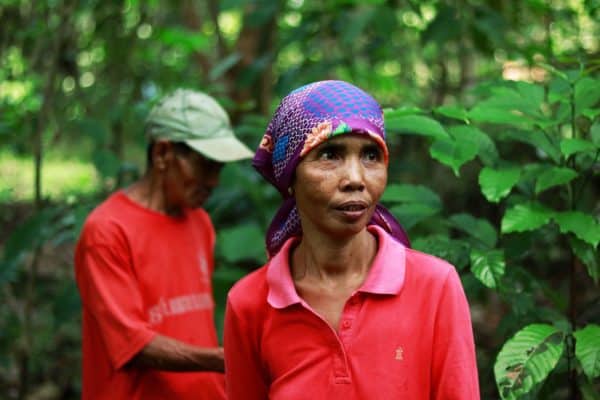
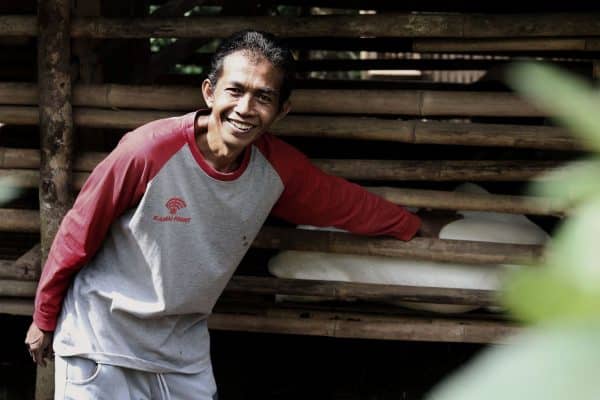
Sumeri, a farmer from kalirejo village, kebumen 

In their village, there are only a few women who are interested in farming. Sumeri’s wife realizes that farming is not an easy job for women. However, she enjoys farming with her husband and feels grateful because she learns a lot of farming knowledge.  

She hopes her husband is healthy enough to keep working in his fields. She knows that her husband wants to take care of his fields as best as he can until his children come home later to take over. 

Always Find a Joy through Farming
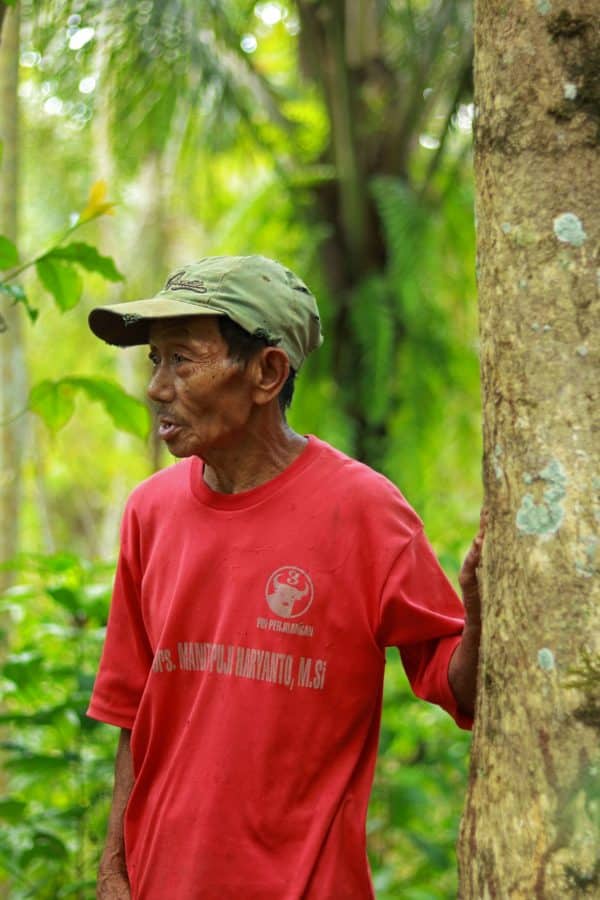
Sumeri, a farmer from kalirejo village kebumen

Sumeri pointed out the 15 meters in height of sengon trees in his field. He said he will pass them to his youngest son. Likewise with the coffee trees he planted. “In the future, these fields will be handled by my youngest son. But now, he is still working in Jakarta. So, I am taking care of trees during waiting my son come back home. Among my six children, he has the most knowledge of how to grow trees,” he said.

robusta coffee from kalirejo village, kebumen

Sumeri also revealed that he keeps farming in his old age because he always find a joy by working in his field. “Farming is always be my happiness from I was young until today, in my old age. But I am getting older and weaker now. I am not as strong as before. I think in a few years ahead, I have to take a rest and pass it to my son,” he added. 

After walking around his field, Sumeri’s wife invited us to stop by their house. She served us a cup of homemade coffee and curcuma pudding that were grown by Sumeri himself. It seemed their sincerity in growing them makes the taste of both was really good!  

Writer: V. Arnila Wulandani. Photo: Yulianisa Dessenita

Aan and Sugiman, Young People from Kalirejo Village Who Left the City for Farming

Young people from Kebumen decided to farming 2
Young people from Kebumen decided to farming
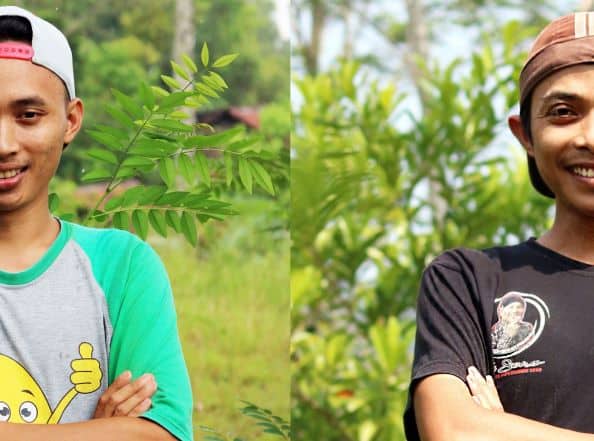
Aan and Sugiman, Young People from Kalirejo Village Who Left the City for Farming

Not many young people in Central Java, are interested to live in the village and engage themselves in farming. Based on data collected by the Trees4Trees team, farmers participating in the Trees4Trees program in Kebumen are mostly middle-aged and elderly farmers. Most of the youngsters choose to leave their rural homes and work in big cities. 

Like most youngsters in their village, Aan (26) and Sugiman (29) from Kalirejo village,  – who are close friends –  also decided to leave their village and migrate to the big cities. They thought that working in big cities was more promising to improve their living standard than in the villages.  

Unfortunately, reality was far from their expectation. Finding an ideal job in big cities was not as easy as they thought. Over the years, they jumped from one big city to another to find a better job. Life was getting tough. Finally, after years living in big cities the two decided to return to their village.  

Read also: Masimun is Not Just a Farmer. He’s a Puppet Craftsman 

“One day when we were far from home and life was tough, we remembered our village has great natural resource potential. We thought it would be better to develop what we already have in the village than to live in the city. We want to do something useful in our village,” both said.  

Young people from Kebumen decided to farming 2
Aan and Sugiman, Young People from Kalirejo Village Who Left the City for Farming

After returning to their home village, they did not know where to start for sure. Then one day, they discovered that many agricultural lands in their village were abandoned and had become barren. 

“At that time, we kept asking the question in our mind, why were the lands in our village turning barren, arid, and poorly managed? Those lands were productive and fertile before,” said Sugiman. “We also wonder, why did farmers leave their lands neglected and unproductive? These questions were spinning around in our mind for weeks,” Aan continued. 

Read also: Sarpin, Planting Trees are More Important than Money 

Later, they found the answer. The problem was because most of farmers in their village were getting older. They no longer have  the strength enough to manage their lands, so their lands became unproductive. Most of farmers also can’t expect their children to continue managing their lands because they already work and live in the city. 

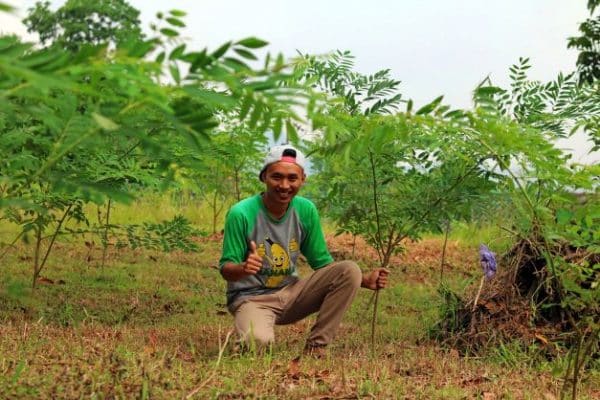
Realizing these problems, Aan and Sugiman then began to learn farming and growing crops in their village. When ONE HOPE and Trees4Trees came to their village and started the tree-planting program, they joined it immediately. These two young farmers then learned about agriculture more, including how agroforestry works, how to maximize their agricultural lands, manage crop yields, and make organic fertilizer.  

young people from kebumen decided to farming

Deciding to return to the village and being young farmers are new challenges for them. However, they thank Trees4Trees for supporting and encouraging them. Now, some of the barren lands in their village are turning green after they have planted various trees. As they look greener day by day, it makes them enormously proud and motivated.  

Currently, Aan and Sugiman are also supporting the Trees4Trees education program by working as field facilitators. They are also active in encouraging young people in the village to take part in the reforestation program. They want to spread knowledge and inspire more people, especially other young people in their village to keep farming and planting trees on their lands. 

Both said they will keep farming and not return to the city. Their village is their home and they will live there for the foreseeable future. They have a big dream, to create opportunities which can offer jobs to young people through agriculture, reforestation, and natural resources, so they do not need to leave the village to find a job. 

Aan and Sugiman also said, farmers are a principal element of agriculture practice, food security, and ecosystems restoration. It is an obligation for young people to take actions and continue what our previous generations have done before. They thank ONE HOPE and Trees4Trees in helping them to get started in the right way. 

Interview & photo: Yulianisa Dessenita

Author: V. Arnila Wulandani & Yulianisa Dessenita

How Planting Trees Help Grandpa Dulah Overcome Loneliness

Dulah plants tree

dulah plants trees in kebumen

It is not new for parents living in villages to let their children migrate to big cities to try to improve their lives. Some of their children returned to the village and some are chosen to stay there. Grandpa Dulah (64 years old) from Gunungsari village, Kebumen – Central Java, was no exception, his children were chosen to live overseas.  

For years, his children and grandchildren have not been able to return to the village because of Covid-19 case, it is not easy to meet them on this situation. He explained that usually his grandchildren come home once a year, but now he doesn’t know for sure. He hopes Ramadhan this year the whole family can be together again.  

At first, Granpa Dulah and his wife couldn’t handle how much they missed their daughters and grandchildren and were desperate to visit with them but because of pandemic they had to cancel it (covid-19 restriction). At that time Covid-19 was increased and old people were asked to be more concerned.  

”We miss them”.  

“The house feels lonely without them so I’d rather work even though I’m old,” he added.   

In the past, Grandpa Dulah retired to be a farmer but that made him even more lonely and his longing for his children and grandchildren was unstoppable. He decided to be active again planting on his abandoned landbecause there was no one to take care of it. 

Dulah plants trees in kebumen

”If I don’t work, my mind goes all over the place, but then they offered seedlings.” 

 ”I planted a few for the beginning then gradually it continued and now my land is full”, he offers. 

Currently he will continue to plant because by planting he can divert his longing and loneliness. He said he planted for his grandchildren, one day they will harvest it and every time they harvest it they will remember me who was planted the trees.   

Grandpa Dulah said that his grandchildren are very interested in agriculture because from a young age he often took them to the field.  

”I often took them (the grandchildren) to the field, to plant cassavas, corns, look for grasses”.  

”they were happy… and that moment will always be remembered”.  

Then we asked if he still wants seedlings next year knowing his land is already full? And grandpa Dulah hopes that he will be able to plant more trees in the future. He said that even though his land is full, he would plant trees on his neighbour’s arid lands. 

We learn that planting is something that helps Grandpa Dulah overcome with loneliness and build his memory of his loved ones as Grandpa Dulah is getting older and sometimes forgetful.   

Grandpa Dulah has a message for those who still have parents, he says ”don’t forget to ask how your parents are”.   

Sometimes the impact of our program is beyond our expectations and cannot be seen but felt. There’s a quote, who plants a tree, plants a hope, and we’re watching and listening to it right in front of us.  

Maybe if we hadn’t visited Grandpa Dulah and had a chat with him we wouldn’t have known what he’s been through. We were very lucky to have met him, we hope that Grandpa Dulah can be together with his whole family this year. 

Masimun is Not Just a Farmer. He’s a Puppet Craftsman!

masimun_kalirejo kebumen_trees4trees_jonas 3

masimun_kalirejo kebumen_trees4trees_jonas 3

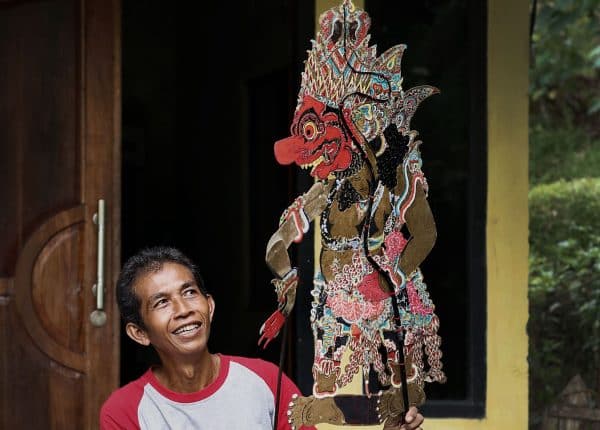
Our farmers are extraordinary! Who would have thought that one of them is also a cultural artist. He is Masimun, a farmer from Kalireja village, Kebumen, Central Java. Besides farming, he crafts traditional Javanese puppet or well-known as Wayang.  Yes, he is a farmer and puppet craftsman. Before, he lived from one place to another because of his job. Masimun told us his previous job made his life uneasy. His income from the previous jobs also could not cover his family expenses. Then, he decided to come back to his village and began to learn farming and pursue his passion as a Wayang craftsman at the same time.  

Why Farming and Crafting Wayang?  

He said, he started farming simply because farming can make a living for his family, and he loves to dedicate himself to Javanese traditional culture. 

Becoming a traditional puppet craftsman is a rare profession in this modern day. Not many people are interested in doing this job. However, Masimun thinks that Wayang is an important part of Indonesia cultural heritage, and he is summoned to take part to preserve it.  Now, his main income is coming from farming, while crafting Wayang becomes his part time job.  

masimun_kalirejo kebumen_trees4trees_jonas

When Trees4Trees dan Jonas Philantrophies came to his village and started a tree planting program, he was incredibly happy because this program has not only given him trees to be planted, but also the knowledge and training that he needs to do good farming.   

Masimun has a wife and two children who are still in school. They are his main motivation to keep working harder.  By planting trees, he hopes to get enough money to achieve his dreams; provide his two kids with a good education up to university level. 

”I want them to have a better education than me”. It is my responsibility as a father. To make sure they get  a better education,” he added.  

He was very happy when Trees4Trees and Jonas Philantrophies made a tree planting program in this village. He knew that this tree planting program was also included educating and uniting the community.  

masimun_kalirejo kebumen_trees4trees_jonas

Through tree planting programs, he is also able to gather with the farming community. Here, he’s not only possibly getting support and motivation to start over again, but also has an opportunity to introduce his Wayang masterpiece to the larger community. Masimun admited that by joining this program he has been known by the community as a puppet craftsman and most of his orders come from local people. 

”Life gives me a second chance to live a better life, meet good people,” he said.  

”It used to be difficult to live here again as a farmer… but now I have several goats,” he’s grateful.   

Masimun is very supportive of the tree planting program and he is proud to be a part of it. By this program, he is able to plant various trees and be able to introduce his masterpiece to the community. And maybe later the world will notice his masterpiece too.  

Thank you for being part of our program, keep up your good work! We are very proud of you! 

 Author: Yulianisa Dessenita

Sarpin: Planting Trees Are More Important Than Money

Sarpin plants trees not because of money

Sarpin plants trees not because of money

Gunungsari village, Kebumen, Central Java, is famous for its waterfall tourist attraction and the lives of one of our farmers, Sarpin. He owns the land next to waterfalls. In the past, he was just a paddy farmer, but the land he owned was not suitable for that so he switched to planting fruit trees supported by our tree planting program, Trees4Trees. 

Sarpin is one of our best farmers, he joined our program since 2019. There is a reason why he became our best farmer, he’s not only planting regularly, but he also educates young farmers about agriculture and gives them life lessons. 

For him, planting is a joy and a necessity. He doesn’t care how much money he gets from planting. He believes that we will never run out our fortunes as long as we are always grateful. When we asked him why did he choose to be a farmer? he literally could sell his land for tourist attraction and live a prosperous life. But he explained that he was not looking for material happiness. 

”I’m not after money, but money chasing me”, he laughs.  

”It’s true… whoever sows he will reap. You plant a tree, you can eat the fruit, you sell the fruits, the leaves can be used as animal feed.” 

Money is not everything for Sarpin. Having a lot of money does not guarantee him a happy and peaceful life. By planting trees, he was able to support his daily needs and provide adequate education to his children. Even though sometimes he doesn’t get a daily income, he can get vegetables and fruits from the field to cook.  

Read also: Grandpa Wasis and His Dedication to Planting Coffee

So even there is a developing tourist attraction around his land, he will not sell his land and maybe he will just rent it out some of it for small stalls to help the local economy.  

Sarpin then told us about his son who had worked in Korea and returned to the village to continue farming. He is very proud of his son’s decision to choose to return to the village and take care of the land and be active in community activities. 

”The salary is big (in Korea), but he didn’t feel peaceful… that’s why he came back here”.  

”He missed his beautiful, he missed home cook and he missed his parents”. he added.  

Sarpin explained that the villagers of Gunungsari live a simple life and help each other. They support activities that prosper the village and the environment. They are very happy to be involved in planting programs.  

”We don’t ask for money or basic needs”, he explains. ”give us seedlings and we can survive’’. 

We relized,  that the general understanding of most people is that giving money to people in need is a shortcut to help. But actually, the wiser way to help is to teach them to be independent and a chance to try again, they need this kind of support.   

He reminded us to always be grateful and says: if you want to feel rich, plant a tree. If you want a peace, plant a tree.   

We really enjoyed our time with Sarpin and we are very grateful for his contributions and support for our tree planting program. We hope that we will meet him again next year to see his trees grow and to share more stories. 

Author: Yulianisa Dessenita


Meet Grandpa Tameja : The Oldest Farmer Who Joined Our Program And This Is His Story.

Meet Grandpa Tameja : The Oldest Farmer Who Joined Our Program And This Is His Story.

Tameja is one of our farmers since 2019, and he has shared his life story as a farmer with us. Let’s read his story!

Tameja (72 years old) was born in Karangreja Village in Central Java, Indonesia and still lives there with his wife and 5 children. He became a farmer at a young age and helped his father work in the fields. 

“Being a farmer has been my way of life”, he said. 

“My father was a farmer too, I am proud to be able to continue his way until now”.

He told us about his concern, none of his children want to be a farmer like him. It means Tameja must take care of the field alone with his wife. He has many questions that keep popping up in his mind, like; Who’s going to continue my spirit to keep my field growing and green after me? What will happen to the trees I planted? He recalls that he planned to stop farming and empty his field because he’s too old to continue, but then someone from Trees4Trees offered seedlings and asked him to join their program.

“I remember when they reached out to me and said; “Congratulations, Grandpa Tameja, you are chosen to get seedlings from our donor”. 

“I think I will plant trees for the rest of my life”, he smiles.

Tameja has his own farming method. He grows coffee trees with an agroforestry system, where he combines other trees and spice plants in one field. He believes by implementing this method, farmers will benefit both environmentally and economically. He also likes it when his land is full of plants.

“In my experience it’s better to optimize the field, the denser the better”. 

We asked him which trees benefit him more, and he took us to his coffee tree field – showing off the coffee beans.

“I like to plant coffee trees because they do not require intensive care and do not take too long time to harvest so it’s profitable for an old farmer like me”, he said.

Thank you Grandpa Tameja for sharing your story! We are relieved that we are able to help and motivate you to make your field greener. We wish you the best of health and happiness!