Mekarjaya Village’s Farmers: Planting Forest, Sustaining Life

Mekarjaya Village’s

Nestled in the foothills of the Malabar Mountains in Bandung Regency – West Java, Mekarjaya Village lies surrounded by state forests and the towering 1,690-meter Sangar Mountain, which has drawn more visitors each year. This popularity has opened new opportunities of income for local communities through community-managed tourism. 

Yet, the beauty of the forest that visitors admire today exists thanks to the tireless dedication of local forest farmers who have spent years planting and nurturing trees to keep their land alive. Without their efforts, Mekarjaya’s forest could have suffered the same fate as many other parts of the Malabar range – degraded by land conversion and extensive logging. 
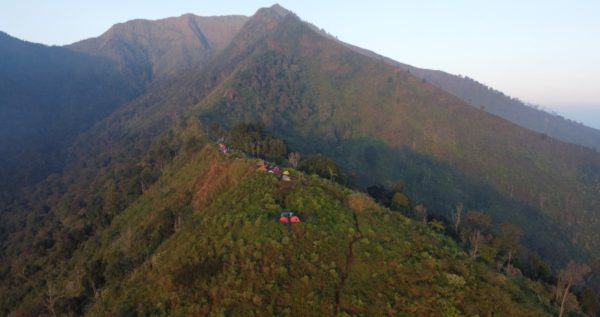
Sangar Mountain is located in the Mekarjaya Village in Bandung Regency, West Java.

Starting Greening Action Through Self-Reliance 

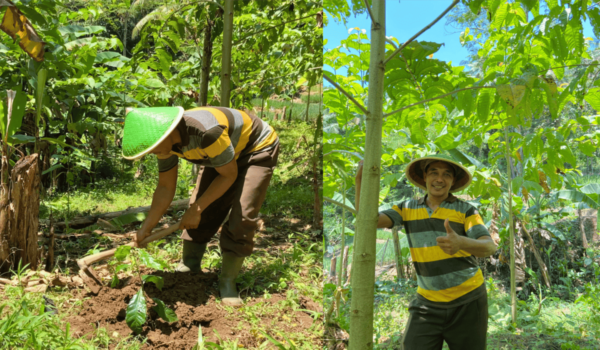
Asep, one of the village’s farmers, remembered how his journey began when he moved to Mekarjaya in 2018 and quickly joined the community’s reforestation mission. “I already had extensive experience in cultivating and planting trees since 2010,” he recalled. “Together with several local communities, we collected gmelina seeds from the streets to produce our own seedlings. Later, we grew thousands of trees and planted barren land around us.” 

With his experience, Asep became a strong supporter of Mekarjaya forest greening efforts. “Back then, we relied only on ourselves. We planted sandalwood, gmelina, eucalyptus – whatever we could – to protect the land we live, because much of the neighborhood forests were already gone,” he said. 
Mekarjaya Village’s
Asep, a forest farmer from Mekarjaya Village, began his green journey by cultivating seedlings on his own and taking the initiative to replant barren land.

Managing Forest Through Social Forestry 

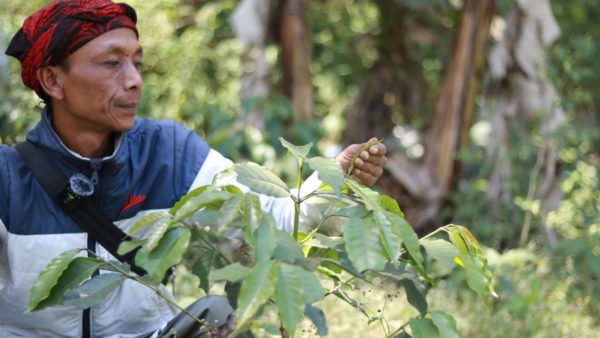
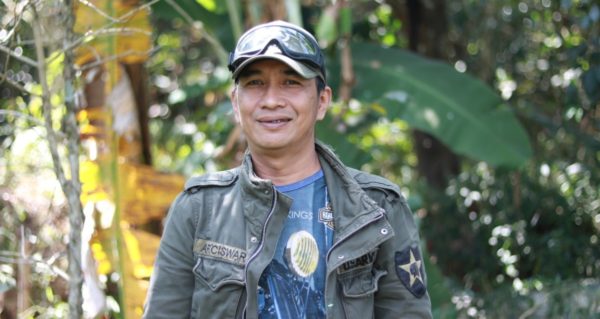
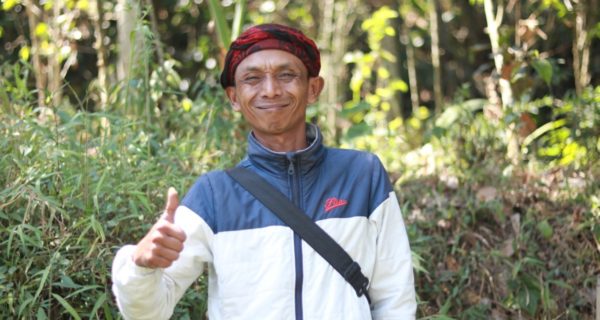
Alex, another forest farmer and leader of Mekarjaya Village’s social forestry group, shared how the community has taken collective responsibility to preserve the forest. Today, more than 100 villagers work together to manage around 140 hectares of state forest in their village.  

“We began looking after the forest in 2008, when the government first opened the opportunity for communities to manage it. But it was only in 2017 that we officially gained the right through the social forestry scheme,” Alex explained.  

Through this scheme, they hold a 35-year permit to manage the state forest – restoring and maintaining the land while being allowed to grow crops and fruit trees, but without cutting down forest trees. “Our responsibility is clear: restore and protect the forest by planting trees and keeping it healthy and lush,” Alex said. 

Since 2017, the villagers have held annual tree-planting activities as part of their commitment to forest preservation. “At first, we used our own seedlings,” Alex continued. “But over time, many nature lovers and hikers began donating trees. Their support has allowed us to continue planting new trees year after year.” 
Mekarjaya Village’s
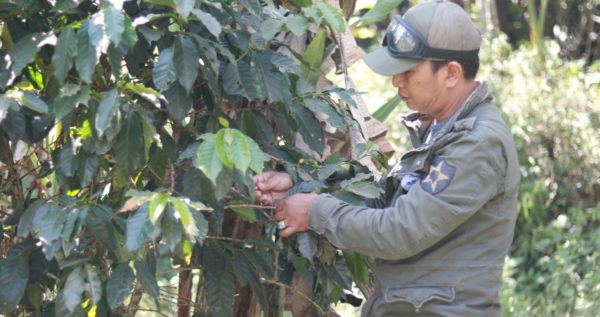
(Above) Alex, a social forestry community leader and forest farmer from Mekarjaya Village. (Below) Asep tending to his coffee trees.

Non-timber Harvesting and Preserving Native Tree Species 

The Mekarjaya forest is rich in native West Javan tree species. “We have puspa, rasamala, saninten, ki semut, and many other tree species,” Alex said. To protect ecological health, the farmers prioritize hardwood and native trees, while for economic benefits, they grow multipurpose and fruit species.  

“We mainly plant coffee to gain economic benefit, as it has high demand and this land is perfect for it,” Alex explained. “We also grow jackfruit, bitter bean, and avocado to harvest non-timber products.” Similarly, Asep focuses on cultivating non-timber trees such as coffee, sapodilla, and bananas. “I also grow damar pine trees – once they mature, they provide shade, while I can harvest their sap,” he added. 

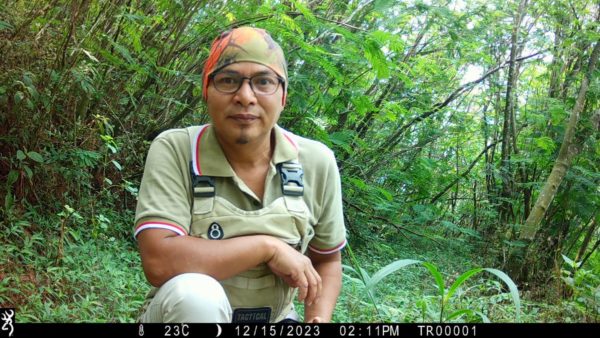
Another farmer, Sutajaya, has chosen a different path. He focuses on creating an arboretum of native trees to support tourism and education. “As Sangar Mountain attracts more hikers, I established an arboretum where visitors can learn about biodiversity while climbing to the mountain,” he explained. 
Mekarjaya Village’s
Sutajaya is preparing to take care of the trees he planted in the arboretum he established, deep in the forest.
Trees4Trees Support: Planting Trees Empowering Communities 

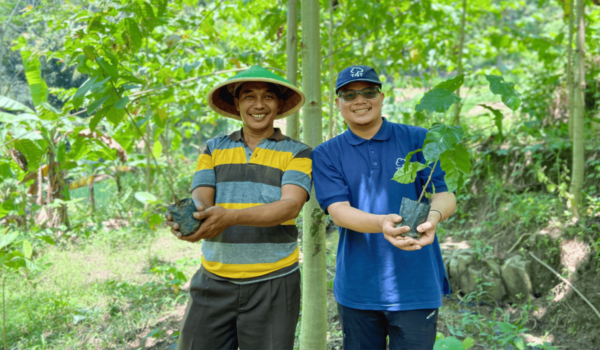
In 2021, when Trees4Trees and TREEO launched a tree-planting initiative, farmers in Mekarjaya eagerly joined the program. Around 30,000 trees were distributed, accelerating reforestation and creating a healthier and more resilient forest. 

“This program truly helps us, as the trees allow us to restore our forest more quickly and enhance economic benefit for local forest farmers,” Alex said. While for Sutajaya, the program goes beyond economic benefits. “As the trees grow bigger and stronger each day, they provide oxygen and restore balance to the ecosystem. Native species are thriving, creating habitats for wildlife while improving air and water quality. For me, that’s the most important benefit,” he reflected. 
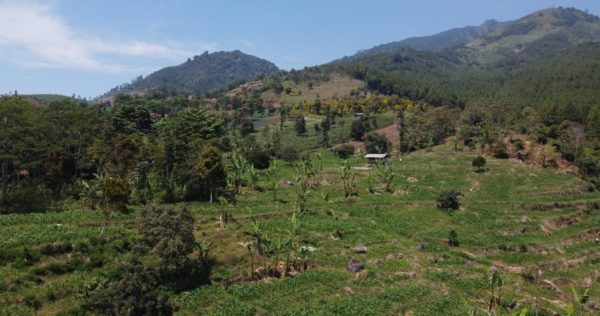
A view of the state forest in Mekarjaya Village from afar, where local farmers have planted trees.

Together, the dedication of local forest farmers and the support from initiatives like Trees4Trees and TREEO are breathing new life into Mekarjaya’s forests. What was once threatened by degradation is now transforming into a thriving ecosystem that not only safeguards biodiversity but also sustains the people who depend on it. “Those trees make our forest more abundant. They hold immense ecological and economic value that sustain our environment and strengthen the lives of our community,” Alex said.

Writer: V. Arnila Wulandani. 

Samino: Bringing Life Back to His Village Land

In this day and age, where everything moves fast and hyperconnected, people are drawn to validation. Many seek more recognition, more follows, more engagement, or simply acknowledgment in various aspects of life. So, it’s not surprising that a lot of people think value comes from recognition. But that’s not always true, is it?

Realistically, everyone wants to be known in one way or another. It’s easy to be drawn to those who do the bare minimum in front of a camera while overlooking those making a real impact away from the spotlight.

Meanwhile, in Kedungwringin Village, Kebumen, Central Java, far from the noise, rush of the city, even cameras, Samino had been working the land for over 20 years as a farmer. Each morning, he walks the same path to his fields, the earth beneath his feet familiar, the routine unchanged. “For me, farming is a calling and commitment to Mother Nature,” he said with his humble smile.

Becoming a Tree Grower and Facing Challenges of Farming

That day, the sky was clear, unlike usual when rain often poured down. With steady steps, Samino walked 300 meters to his field, just as he did every day. Behind him, the Trees4Trees team followed while observing his farm, taking notes, and preparing to document his story.

Samino, 45, is a father of three children who are still in school. In addition to farming, he also runs a carpentry business at home, making door frames to supplement his income. Although he only completed elementary school, his passion for farming and learning new things has never faded.

His strong spirit and dedication earned him with title of Best Farmer in Kebumen in 2023—an impressive achievement considering he had only joined as a partner farmer earlier that year. It was a clear sign that his care for the land and the trees wasn’t just for show. Still, farming in his village comes with its fair share of challenges.

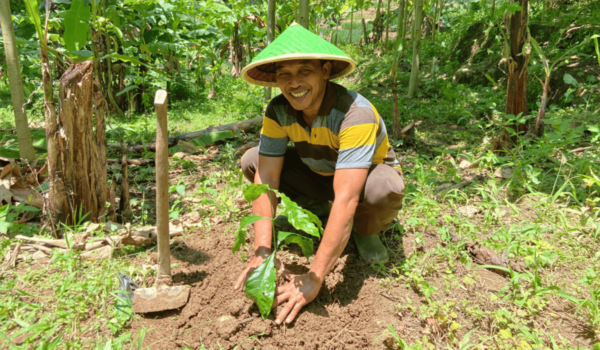
Samino has planted 230 tree seedlings with Trees4Trees — and he’s not stopping there. He’s ready to plant even more in the future.

The dry season often brings drought, and pest attacks can wipe out an entire harvest. But giving up isn’t in his nature. Alongside his fellow members in the Kapokan Kedungwringin farmer group, he keeps pushing forward, taking part in efforts like making organic fertilizer to enrich the soil and lessen their reliance on chemical solutions.

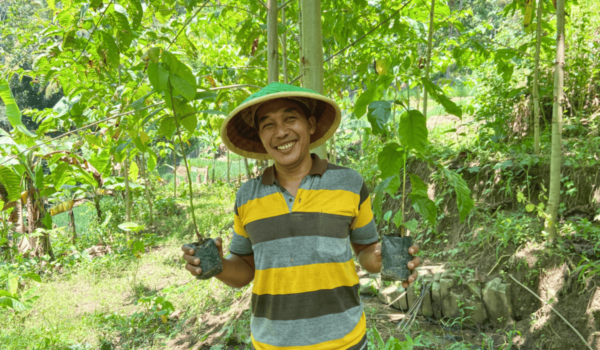
Samino proudly stands beside the Jabon tree he planted in 2023 with Trees4Trees. His biggest goal is to help restore the barren and neglected land in his village.

“Being a farmer is enjoyable; there’s a unique satisfaction in using the harvest we grow ourselves,” Samino shared with a warm, contented grin. 

Planting Trees: Reviving the Dry Land in His Village 

Samino has a big vision for his village. He doesn’t want to see empty land go to waste or the village turn barren. Because of this deep concern, he volunteered to become a field facilitator for Trees4Trees—helping spread the word about the program to other farmers and acting as a bridge between them and the field coordinator. As a tree grower, he’s received 230 seedlings, most of them jabon (Anthocepalus cadamba). That choice was intentional—he believes jabon will make his land more productive in the long run. 

Through the program, Samino also joined a training on making livestock feed to be used as a feed bank. It’s proven to be very useful, especially since he raises livestock himself. For him, farming is more than work—it’s something that speaks to his soul. He once tried his luck in Jakarta as a furniture worker, but city life, with all its noise and pollution, never felt like home. 

“I spent some time working in Jakarta, but my heart has always belonged to the village—with its clean air and the abundance of nature,” he said. 

When he returned home, he was shocked to see so much barren land. “What really struck me when I came back was how dry and empty the land had become. That’s when I felt the urge to do something about it,” he added. 

Planting with Purpose, Living with Heart 

When the Trees4Trees team came to visit, Samino proudly showed them the trees he had planted. He hopes that one day, these trees will not only improve his livelihood but also bring lasting benefits to his children and grandchildren. He often reminds others of the importance of caring for the trees properly to get the best results. 

Aziz Arifandi, the Field Coordinator for Kedungwringin Village, described him as a cooperative and passionate tree grower. “At first, he was shy and quiet, but once you get to know him, he’s actually really easy to talk to,” Aziz said. “He’s a peaceful, calm person—someone other farmers feel comfortable around when having discussions.” 

Samino with Aziz (right), Trees4Trees’ field coordinator. He was delighted by the team’s visit to monitor the trees that day.

According to Aziz, drought and pests remain the biggest challenges for farmers in the village. He hopes the tree growers will become more enthusiastic and communicative in facing these issues so the village can grow greener. Among them all, Samino stands out—he’s always the most excited whenever the Trees4Trees team visits. 

But there’s more to Samino than just his dedication to planting trees, when he’s tired from working in the fields, Samino has a simple way of unwinding—fishing and playing his guitar. The soft strum of the strings brings him a sense of peace. Through his dedication to farming and reforesting the land, Samino proves that when you work with heart and determination, it’s possible to create meaningful change for the environment and for the next generation. 

Writer: Teresia K. Miranti. Interview and compiled source: Aziz Arifandi. Photos: Henning Ilmi W