7 Forests Facts You Need to Know

Forests are vital to every aspect of our lives. They provide the air we breathe, the food we eat, the water we drink, and even the furniture we use. As nature’s greatest providers, forests offer invaluable benefits to all living beings on Earth. While forests may thrive without human intervention, we rely on them for essential elements of life. Oxygen and water.
Every March 21st, we celebrate the International Day of Forests. This celebration aims to raise awareness about protecting forests in our communities. In recognition of forests’ important role, we present fascinating forest facts to highlight the importance of forest conservation.
1. Approximately 31% land surface of Earth is forest cover
According to the UN, as of 2020, forests cover 31% of the total land surface on Earth. It is equivalent to around 4.06 billion hectares. More than a half of the world’s forest cover is spread across Russia, Brazil, Canada, USA, and China. The remaining forest cover is scattered across Australia, Congo, Indonesia, Peru, and India.
Compared to the previous decade, surprisingly, forest cover has decreased by an estimated 420 million hectares. This is equivalent with the total land mass of the European Union!
2. Different types of forests around the world
Globally, forests take on various forms influenced by factors such as rainfall, sunlight, latitude, and temperature, which shape their ecosystem. They are broadly classified into three main categories—boreal, temperate, and tropical. Each varying widely based on these factors.
The boreal or taiga forest lies between 50 and 60 degrees north latitude. With a cold climate and short growing season, it’s characterized by low species diversity, dominated by conifers. Temperate forests, found at mid-latitudes, experience four distinct seasons. They are less diverse than tropical forests, with typical trees including oak, maple, cottonwood, and willow. Tropical forests are at 23 degrees latitude near the equator. They are the warmest and wettest forests and represent the most diverse ecosystems on Earth.
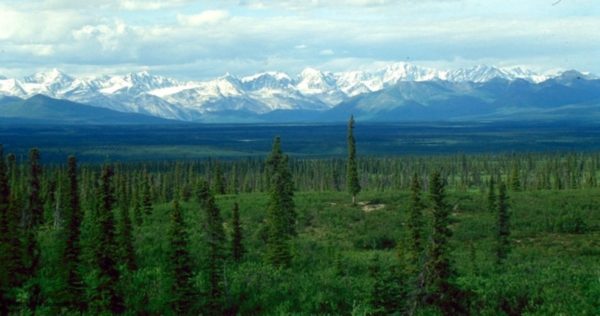
3. Forests support clean water
Healthy forests play a crucial role in providing clean water. They positively influence its quantity, quality, and filtration. They act as natural filters, preventing pollution from entering the global water system, while their strong roots combat soil erosion. However, when forests are disturbed or degraded, sediment flows into streams, polluting the water.
Forests also regulate the water cycle. The layers of forest canopy, branches, and roots store and release water vapor, influencing rainfall patterns. Furthermore, forests mitigate flood impacts by slowing runoff flow during storms. However, deforestation will disrupt this process, leading to irregular rainfall patterns, causing droughts and floods.
4. Forests are storehouses of biodiversity
Forests are home to over 50% of the world’s species of animals, plants, and insects. The highest biodiversity ever recorded on land is in the Amazone rainforest, which is also a home for 400 different indigenous groups.
Other biodiversity hotspots include forests in Borneo, Papua and New Guinea, northwestern South America, and Central America, and the Congo Basin. Some of these forests may be home to more than 300 species of trees per hectare.
Read also: A Hub of Biodiversity: Exploring Citarum
5. Amazon Rainforest: The largest forest in the world
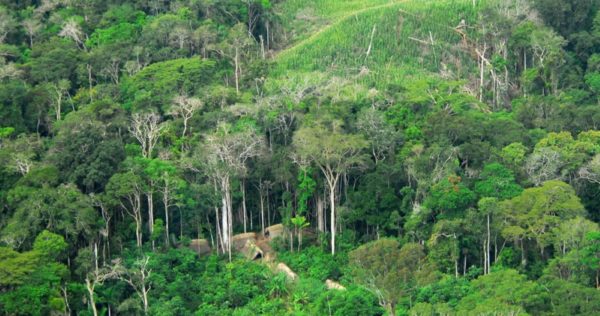
The Amazon River Basin, spanning over 6,600 km, hosts the world’s largest forest, the Amazon rainforest. Covering more than half of the total rainforests globally, it spans 6.7 million square kilometers, roughly twice the size of India.
Nearly 60% of this rainforest is in Brazil, with the remainder shared among eight countries—Bolivia, Colombia, Ecuador, Guyana, Peru, Suriname, Venezuela, and French Guiana.
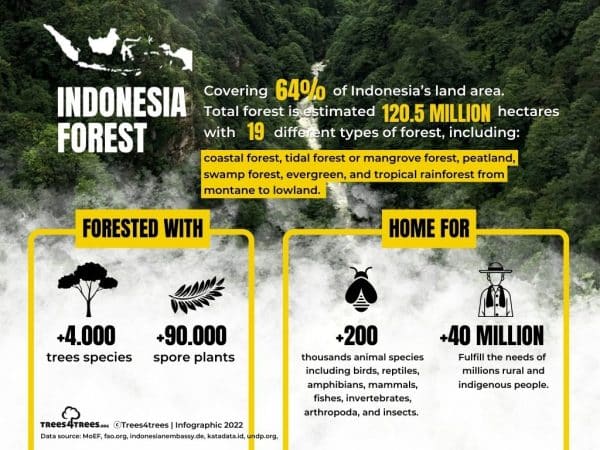
Read also: Indonesian Forest One of the Largest in the World
6. Forests as sources of food and medicine
Forests are home to a wide array of trees and plants that provide humans with fruits, nuts, seeds, leaves, roots, and barks. These make them crucial sources of food and medicine. In addition, forests provide habitats for insects and a wide range of animals, which also contribute to our sustenance and provide medicinal resources.
Indigenous communities living in forested areas consider these ecosystems to be their natural supermarkets, as they provide everything they need to survive. By extracting food and medicine from the forest, these communities possess traditional knowledge that has been passed down through generations. Therefore, protecting forests not only preserves biodiversity but also safeguards cultural heritage and improves food security.
7. Forests store massive amounts of carbon
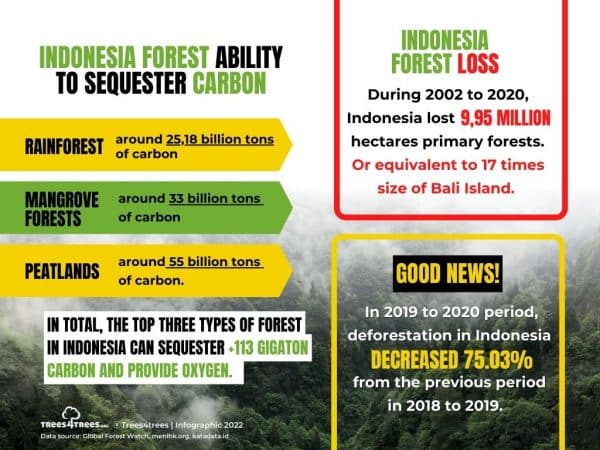
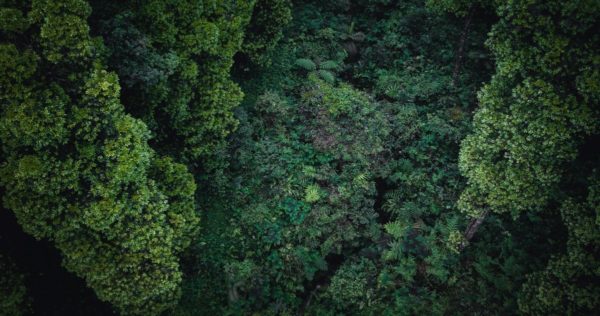
Forests serve as powerful carbon sinks. They play a crucial role in regulating the global climate by sequestering carbon from the atmosphere. Annually, the world’s forests absorb approximately 15.6 gigatonnes of carbon dioxide, contributing to global climate stabilization.
Tropical forests are renowned for their diversity and density, containing more kinds of trees compared to other forests. Research shows they are effective at carbon absorption, capable of sequestering four times more carbon than other forest types. However, when forests are burned or cleared, the stored carbon is released into the atmosphere, exacerbating global warming and climate change.
Read also: Trees That Absorb the Most Carbon Dioxide
Therefore, engaging in tree-planting initiatives in tropical regions, such as Indonesia where Trees4Trees operates, is vital. Tropical areas offer optimal conditions for tree growth, with extended daylight and conducive environments enabling faster and larger tree growth, aiding in climate change mitigation. Learn more about planting trees with us!