Travels in Java: Journey to Curug Kedondong Waterfall in Kebumen

Travels in Java: Journey to Curug Kedondong Waterfall in Kebumen

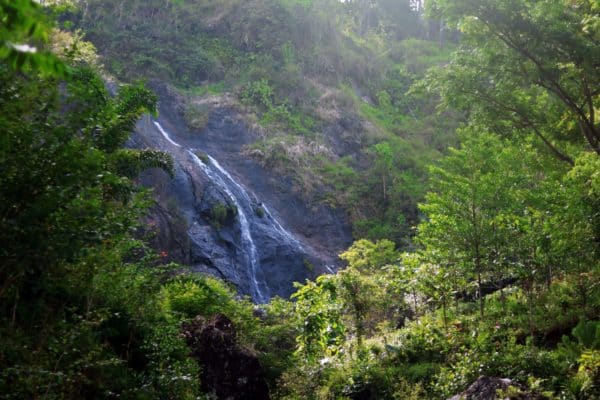
From beaches lining the southern shores of Java to the verdant hills inland, Kebumen is home to extraordinary natural beauty. For travelers, the landscape offers many treasures to be explored. During Trees4Trees’ recent planting excursions, we encountered one of the region’s hidden gems, tucked away in the forest. 

People in the nearby village of Gunungsari call it Curug Kedondong (kedondong is a type of fruit tree that grows locally, and this name is also given to the nearest sub-village). Surrounded by natural woodland, this breathtaking waterfall in Kebumen regency is a great example of why our mission to re-green Java is so important; a process of rehabilitating degraded areas, but also preserving the natural wonders we already have. 

How to Get There 

The waterfall is located around 15 miles (24 kilometers) southwest of downtown Kebumen. Traveling by car or motorbike, the road winds through idyllic pine forests and farmland along the way.   

At the end of the road, the entrance gate is less than 1500 feet (450 meters) from the nearest houses. Entrance costs just IDR 5,000 (US$ 0.33) per person.  

What Makes it Worth the Trip 

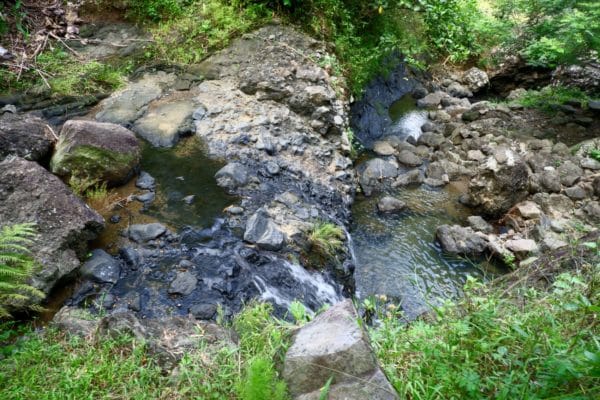
The waterfall itself stands around 82 feet (25m) tall. The water cascades into an ancient canyon of andesite rocks, framed by verdant jungle ferns. At the base of the falls there is a natural freshwater pool – the perfect spot for a refreshing dip after the long trek.  

And speaking of trekking, those with an adventurous streak can hike to the top of the falls. From up here, you can sit and enjoy panoramic views of the hills surrounding Gunungsari Village.  
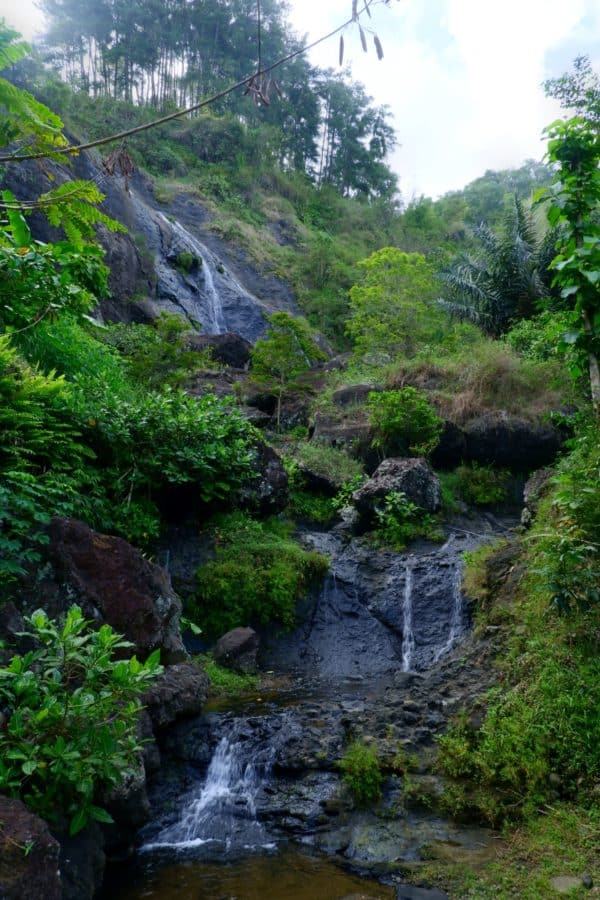
Curug Kedondong, Kebumen_3
(above) Kedondong Waterfall cascades over giant andesite rocks

Making a Splash: The Growing Popularity of Kedondong Waterfall  

For many years, this spot had been a well-kept secret, known only to the people of Gunungsari. But in 2018, a group of local youngsters decided it was time to put this place on the map – so they began promoting the falls as a unique tourist destination. 

In 2019, and with support from the village government, they officially unveiled the falls and began welcoming visitors from far and wide. Since then, the site has been made more accessible to the public, with new facilities like gazebos, bridges, toilets, a parking area, and food stalls.  

Jasmun is one of several young people in Gunungsari to have been actively involved in – and subsequently benefitted from – development of the falls. He lives nearby with his wife, and together they have converted their home into a food shop for tourists.   

“Previously, it was like our own private waterfall because the location was just behind our house,” says Jasmun. “Now, we’re grateful that many visitors come to this place, because we can make income from this shop.”  
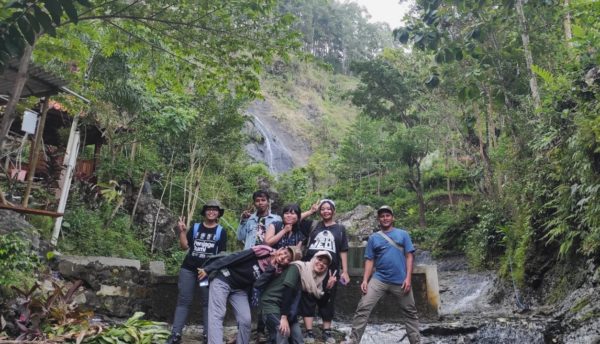
Travels in Java: Journey to Curug Kedondong Waterfall in Kebumen
(Above) “Our own private waterfall.” Young people in Gunungsari offer tours for visitors and help keep the falls clean. Photo: Trees4Trees/V. Arnila Wulandani. (Below) Stairs to pine forest. Photo: Trees4Trees/Yulianisa Dessenita.
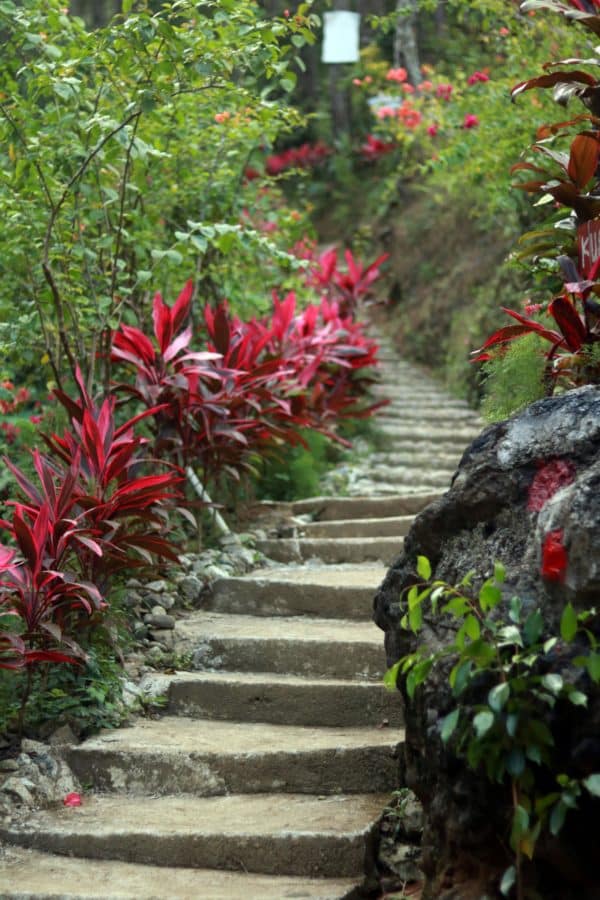
Stairs to pine forest in Curug Kedondong
Travels in Java: Journey to Curug Kedondong Waterfall in Kebumen

Putting Down Roots: Reforestation the Key to Future of the Falls 

“This waterfall originated from a source spring above,” explains Jasmun, who is part of a group that is working together to preserve the surrounding forests and keep the river system healthy. Recent years have given them cause for concern. 

“In the dry season, the rivers never fully dried up,” he says. “But lately, the water coming from the spring is dwindling. It’s a major worry for us.,” The natural spring feeds the waterfall, but also represents the main source of clean water for villagers in the area.   
Source water of Curug Kedondong in Kebumen
Crystal-clear spring water in the river above the falls. Photo: Trees4Trees/V. Arnila Wulandani

In an effort to protect the spring and preserve the waterfall, local people have planted trees in the area. This offers a range of ecosystem benefits: trees help intercept rainfall, thereby reducing soil erosion; they also support infiltration, which means rainfall reaches the water table; they store water in their roots and branches, which keeps wellsprings flowing; and they also help to improve the quality and cleanliness of drinking water.  

Trees4Trees has been supporting these efforts with a combination of resources and expertise. “In 2021, we helped the people plant 500 trees for spring conservation purposes,” explains Lailatul Khasanah, Field Coordinator of the Trees4Trees unit in Kebumen. “We planted sugar palm (aren), pangi (picung), and Tahitian chestnut (Gayam) trees, because they have a great ability to store water.”  

In the most recent planting season, Lailatul and her team  planted 500 more trees in the area – both on nearby farmland and in public areas around the waterfall. By working together with local people and giving nature a helping hand, Trees4Trees hopes to preserve the wonders of the waterfall for generations to come. 

“By planting trees, says Lailatul, “we hope the beauty of Kedondong waterfall will last forever.”  

Writer: V. Arnila Wulandani. Editor: Christopher Alexander

Rasito, Optimizing His Field with Coffee Trees

Rasito were proud of the sengon trees he grows. They reach more than 10-meters in height now.

In 2019, Rasito (53) joined the tree planting program initiated by Trees4Trees and Tree Ltd. At that time, he proposed various types of tree seedlings such as sengon, indigofera, and coffee to be planted in his field. He cannot help but feel grateful for the free seedlings he received. His decision to register and join the tree planting program three years ago was actually because of his strong will to optimize the yield of the field he owned. 

Fortunately, Rasito has a more fertile field compared to the fields in other villages. His field is located not far from his home in Kalirejo Village, Kebumen Regency.    

“I can say my field is fertile and easy to plant with any kind of crops and timbers. I think it is because the location is near the spring and river. So, when the dry season comes, it does not ever experience a drought,” Rasito said.  

Manage Pests is the Biggest Challenge

While strolling around his field, he seemed to trim the yellow leaves occasionally. According to Rasito, the biggest challenge to manage plants in his field is because of pests. “These yellow pests are very troublesome. They make leaves turn yellow, wilt, then die. Many sengon trees from Trees4Trees that I planted here were attacked by this kind of pest and could not survive. Auspiciously, there are still around 20 sengon trees that survive and grow well,” Rasito continued. He was pointing us to the sengon trees which now have reached 10 meters in height.  

Rasito, Optimizing His Field with Coffee Trees
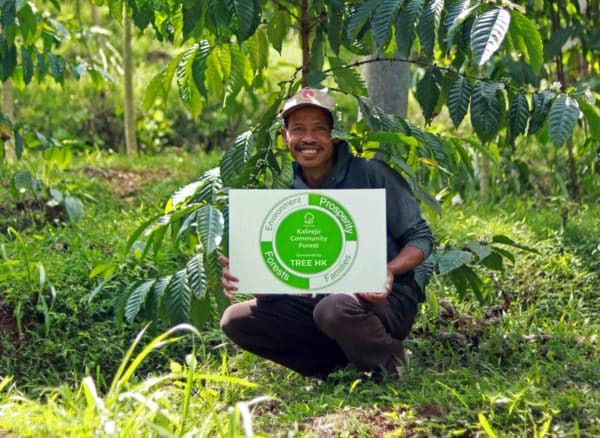
Rasito thanks Trees4Trees and Tree HK for providing him various kinds of tree seedling, including coffee.

Since returning to his village twenty years ago, Rasito has chosen to focus on agriculture. He used to work in the coffee plantation in Lampung, Sumatera. However, he decided to return to his village because his heart felt heavy to leave his 7-years old son at that time. 

From the coffee plantation he used to work at previously, he has learnt a lot about agriculture and how to grow coffee. From his parents, he inherited traditional agriculture knowledge. He used them to manage his field area of more than 1.000 square meters until now.  

Unsatisfied with The Result of His Field

Before joining the tree planting program, most of his field was planted with cassava and taro. There were also turmeric and Kaempferia galanga or aromatic ginger. He also planted stinky beans, papaya, and kelor trees. All the yields to be sold as his income to support his family’s daily needs. He also raised goats as his saving.  

Regrettably, the price of cassava as his main yield is less competitive in the market. “One kilogram of cassava that has been cleaned costs around 1.700 rupiahs. If I don’t clean the skin, the price is only 1.500 rupiahs per kilogram. Taro’s price is much better. It is more stable, around 2.000 rupiahs per kilogram,” Rasito revealed. When the price drops or does not sell well in the market, then Rasito must give up the cassava he grew to be used as his cattle’s feed.  

For that reason, when he heard that there was a tree planting program and free seedlings distribution, he was enthusiastic. “At that time, I heard that coffee seedlings would be distributed to farmers. I was interested. I always want to apply the knowledge I have learned from the coffee plantation where once I worked in my own field,” told Rasito. 

Rasito, Optimizing His Field with Coffee Trees
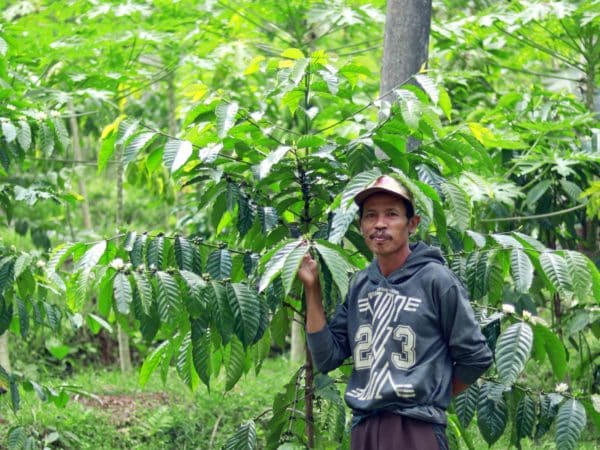
Rasito with Robusta coffee trees that he has grown since 2019.

Growing Coffee Trees, Increasing His Field’s Productivity

He was thrilled to know that of the 180 Robusta coffee seedlings he received in 2019, he managed to grow well 150 coffee trees. Over the last three years, he has already harvested twice. “In one harvesting time, there may be about 5 kilograms. But it has not been sold yet. I am still testing my coffee trees, grinding the beans, and consuming them by myself. I have compared the taste with the Robusta coffee sold in the market and even with coffee sold in a cafe. I am sure that this coffee can compete with them,” he said confidently.  

Compared with cassava, Rasito believes coffee is more prospective. He also said it is not difficult to grow coffee trees. According to his survey, ground Robusta coffee’s price in the market can reach 30.000 rupiahs per kilogram. That interested him. Therefore, Rasito intends to replace cassava and taro with coffee in the future. “These cassavas are temporary. When I can grow more coffee trees, I will replace all of cassava and taro with coffee in order to make my field more productive as well as my income,” he was hoping.  

In addition to coffee, Rasito also grows pepper which is planted as vines on other trees. He is quite satisfied with the result of pepper. He can sell them for 80,000 rupiahs per kilogram.  

Rasito expects he we will be allowed to join the next tree planting program with Trees4Trees. He hopes he can receive durian and avocado seedlings. “I have tried planting durian and it is growing well in my field. If there will be another program, I intend to apply durian seedlings as well as avocado,” said Rasito. 

Writer: V. Arnila Wulandani. Photo: Yulianisa Dessenita

The Story of Wasis: How A Tree Grower is Making a Difference in Water Conservation

Wasis, The Spring Warrior from Kalirejo Village
Photo: Trees4Trees/Yulianisa Dessenita

Wasis had never thought before that his decision to join the tree planting program initiated by Trees4Trees and Tree Ltd three years ago would be a blessing for many people around him. At the time, Wasis decided to join the tree planting program solely to expand his coffee field’s productivity. However, the trees he has grown not only provide him with a good result but also help preserve the water spring that provides clean water for his fellow villagers 

Wasis lives by himself in a hut not far from his field in Kalirejo Village, Kebumen Regency. There is a water spring established in his field and he is grateful for having it. Although it is little, the water spring is the only clean water source for his daily needs. He also believes the water spring is the key to his fertile field that never runs dry.

Water spring in Wasis’ field produce more clean water after he planted many coffee trees. Photo: Trees4Trees/Yulianisa Dessenita

Growing Coffee is Wasis’ Specialty 

Before returning to his home village eight years ago, Wasis had worked in coffee plantations in Sumatera for more than twenty years. Therefore, growing coffee has been his specialty for years. One day, he decided to come home and brought a few coffee seedlings to be planted in his own field. Although his field is not wide, he has managed it persistently since the beginning.  

Formerly, Wasis planted some timbers, a few coffee trees, and cassava in his field. Unfortunately, cassava did not grow well in his field. Then in 2019, when Wasis received around 200 Robusta coffee seedlings from the tree planting program conducted by Trees4Trees and Tree Ltd, soon, he replaced all cassava planted in his field with Robusta coffee trees he received.  

Harvesting Coffee, Making a Good Income  

After three years growing coffees, a few months ago finally he harvested them for the first time. Deciding to replace cassava with coffee trees was the best decision he ever made. “I got seven kilograms of Robusta coffee beans, and I sold them at Rp27.000 per kilogram,” he said proudly.   

Besides Robusta, Wasis also planted Arabica and Liberica coffee which he brought the seedlings from a plantation where he worked once. Wasis said the selling price of Liberica is higher than the other. “Liberica can reach Rp30.000 per kilogram,” he said.  

To make his coffee trees lush and fruitful, Wasis makes organic fertilizer from cow dung by himself. He believes that the organic fertilizer he applied causes his coffee trees to grow well and fruitful. “I get the cow dung from my neighbors who raise cows. I prefer cow dung better than goat dung because it makes my trees lusher,” he said.  

Coffee beans in Wasis’ field. Photo: Trees4Trees/V. Arnila Wulandani

Planting Trees, Preserving the Water Spring, Helping Local Residents

Wasis has been more than just proud of himself because the coffee trees he planted also made the water spring in his field produces more water than before. According to Wasis, now the spring not only can fulfill his clean water daily need but also other villagers’.  

“Around ten families in a neighboring village not far from here have been lacking clean water,” Wasis revealed. According to him, the local people have tried to dig wells but there was no water coming out. It has been very struggle for them to get clean water for a long time. When they heard the water spring in Wasis’ field has produced more water than before, they asked him permission to take water from there.  

“Water is the most essential thing in life, and they have had a hard time getting it for a long time. I cannot bear not to help them, so I allowed them to take water as much as they need from the spring in my field,” Wasis said.  

The Trees He Grows Bring Fortune 

Wasis said every neighbor who takes water from the spring, then they barter it with food crop yields or other essential things as a thank you.  

“They often barter it with rice grain in return. Usually, I get 50 kilograms of rice grains as a thank you,” Wasis told us. Some people also barter the water with vegetables or other food crops, making him does not need to buy groceries for his daily food. “The water is not only bartered with food. Sometimes, when I need cow dung to make organic fertilizer, they are willing to barter it with water,” he added.  

Wasis said he is so grateful because the spring can help many people and bring such fortune for him. “This spring is getting better because of trees from Trees4Trees and Tree Ltd that I have grown,” he said.  

Now, his biggest hope is to grow more and more trees, especially coffee trees. He wants to get good results to increase his income as well as to preserve the water spring that many people rely on to get clean water.  

Writer: V. Arnila Wulandani

Planting Trees to Improve Farmers’ Livelihood in Kenteng Village

Planting Trees at Kenteng Village Farmers

Kenteng Village Farmers

Planting trees is important because most of the villagers in Kenteng Village, Central Java, work as farmers. They grow food crops such as corn, cassava, and rhizomes such as ginger and turmeric to meet their daily needs. However, the selling price of food crops is not competitive in the market. One kilogram of cassava, for example, is sold at a price of about 1,500 rupiahs (around US$0.10). 

This condition forces farmers to do side jobs to fulfill their needs. Besides farming, most farmers also raise goats to support their families. Recently, many farmers even also make woven crafts from pandan leaves as their side job because the produce from farming is not enough to make a living. 

The villagers are hoping that they can plant trees that can improve their livelihood and rehabilitate their environment at the same time.  

Kenteng Village Farmers_2

Planting tree to rehabilitate the environment 

The soil structure in the village is prone to landslides. But when the dry season comes, drought and clean water shortages threatened this village. In response to this, Faris, Kebumen Trees4Trees Unit Manager is conducting a tree-planting program in Kenteng Village in the 2022 planting season which starts in November. 

Faris revealed that the large number of critically degraded lands and environmental problems that exist  in this village were the main motivations to do  the tree-planting program in this area. 

“Trees4Trees is supporting the village by planting trees in an area of approximately 10 hectares. We intend to plant teak around the village because of the dry soil characteristic. It is most suitable for teak because it doesn’t need a lot of water to grow. Besides, there are also quite a lot of teak trees successfully grown in this area,” said Faris.  

Read also: Preventing Clean Water Shortages and Landslides in Kenteng Village 

Improving the livelihood through planting trees  

The condition of the soil in the village, which is seasonally arid and prone to landslides and drought, makes the life of the people in the village even more difficult. Once these conditions occur, they will disrupt the activity in the village. Farmers must stop their farming activities because collecting water has become the most urgent thing to do.  

Ginardi, the secretary of Kenteng Village revealed that villagers’ biggest hope is they can plant trees that are more valuable than the food crops they are currently growing and can help their environment. 

“We are hoping to be able to plant trees that can maintain the water availability and prevent landslides as well as increase the income of villagers. So, the result of the trees can improve the livelihood of villagers. The result of fruits or other valuable trees like petai or jengkol certainly will greatly benefit the villagers,” Ginardi said. 

Planting fodder trees which fertilize the dry soil  

Apart from relying on agricultural produce, villagers also depend on goats as livestock for their livelihood. Unfortunately, they often have difficulties finding fodder. When the dry season comes, they have to go farther to find it.  

Kenteng Village_donate tree

“Most of the farmers here raise goats as their investment. Currently, they feed their livestock with cassava leaves. But it is still not enough. They have to go some distance away to find more grasses and leaves for their livestock. It takes so much time. So, if we plant trees that are also can be used as animal feed, it will certainly help the villagers,” said Rokhimin, the farmer community leader of Kenteng Village. 

He said that most of the villagers are now interested to plant trees that also can be used as animal feed. Considering the needs of villagers, Faris said that Trees4Trees will plant kaliandra and indigofera trees in Kenteng village beside teak and fruit tree. He said that both trees are also qualified for environmental improvement.  

“Both are not only beneficial as fodder but also improve soil fertility. The village has much barren and fallow land. By planting kaliandra and indigofera, their fallen leaves can amend the topsoil and will increase soil fertility,” he said.  

To help the villagers to plant trees in the village, Trees4Trees is inviting you to take part in #GivingTuesdayForTree campaign and DONATING TREES for Kenteng village until November 29, 2022. You can donate trees through GIVING TUESDAY   

Sumeri, Find Happiness Through Farming

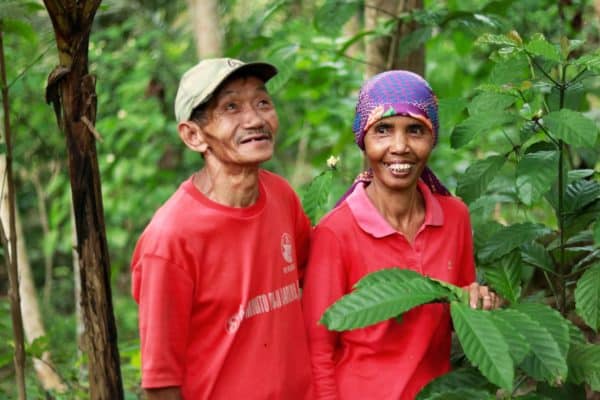
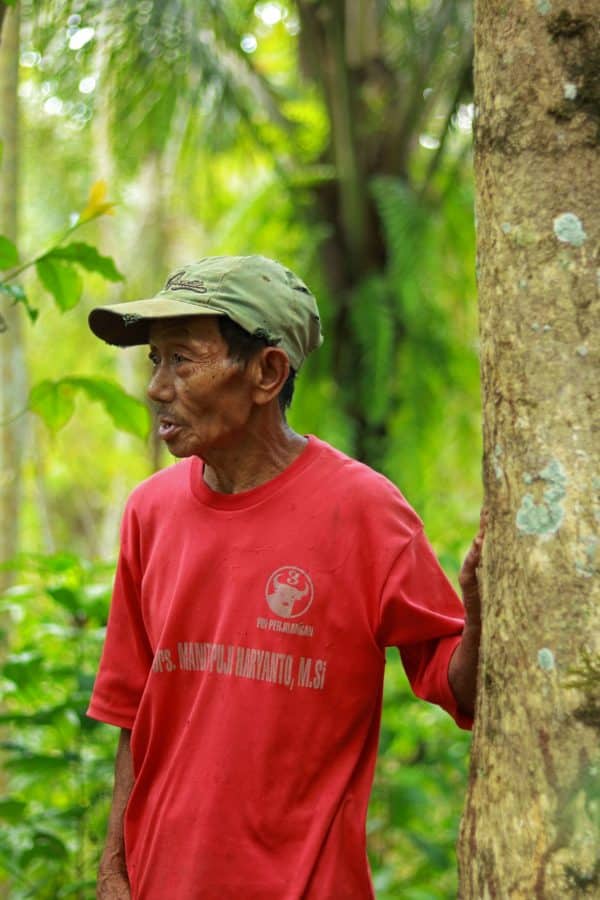
Sumeri, Farmer in Kalirejo Village, Kebumen

Sumeri, Farmer in Kalirejo Village, Kebumen

That afternoon, when we visited Kalirejo Village in Kebumen Regency, Sumeri (75) and his wife had just returned from their field. Although he is old, Sumeri is still farming actively. Every day, he begins his routine in his field starting from 8 AM to 3 PM. His fields are in two locations. The one is right behind his house. While the other one is in a higher location, around one kilometer away from his house. Each of them covers an area of 7.000 meters square.   

Sumeri took us walking around his field behind his house. His fields are quite fertile because their locations are near the water spring which is also the main clean water source for the villagers. According to Sumeri, this water spring never recedes even in the dry season.  

Planting Coffee Trees 

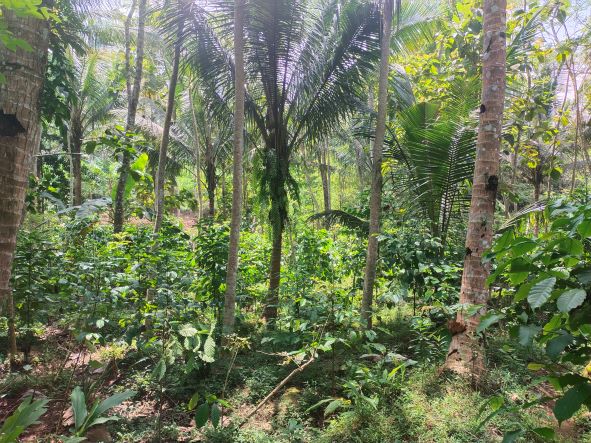
At the moment, most of his fields are planted with coffee trees. However, he also plants sengon trees, cassava, taro, corn, peanuts, and any kind of rhizomes such as curcuma, ginger, turmeric, and aromatic ginger. 

“Some of the coffee trees I planted came from tree planting program of Trees4Trees and Tree Ltd in 2019. While some others are the result of saplings from coffee seedlings I brought from Sumatra,” he revealed.  

Sumeri once migrated to Palembang and Central Lampung in Sumatra Island to work in the coffee plantations for more than 16 years. It was a long journey for him. “I worked there since 1988. Then I decided to come home because I wanted to farm in my own field. From the plantations I worked on, I know how to grow coffee trees in the right way,” said the father of six.  

Coffee trees planted in farmer's field in kalirejo village, kebumen

He remembered when he heard about the tree planting program and tree seedlings distribution last 2019, he applied for it immediately because he really wanted to get various seedlings especially coffee. At that time, he intended to increase coffee trees in his fields, which previously were planted with cassava, corn, and coconut. 

Read also: Aan and Sugiman, Young People from Kalirejo Village Who Left the City for Farming 

“In fact, the demand for cassava is always high because many people use them as the main ingredient of various traditional food and snacks. But sadly, the price is not quite competitive. The highest price for cassava is only 2.000 per kilogram. When coffee and cassava are compared, coffee can bring more income for sure. The price of ground coffee can reach 30.000 rupiahs,” Sumeri added. 

Harvesting coffee 

Since being planted three years ago, now coffee trees he received from the tree planting program reached more than 1,5 meters in height. With his skillful hand, he has successfully grown most of the coffee seedlings he received. However, he was disappointed because a few of them died attacked by pests and eaten by bats. Sumeri has harvested it once this year. Based on his calculation, around February next year he can harvest his coffee trees for the second time. He also has sold his ground coffee at the price of 25.000 per kilogram.  

His wife greatly supports him in farming  

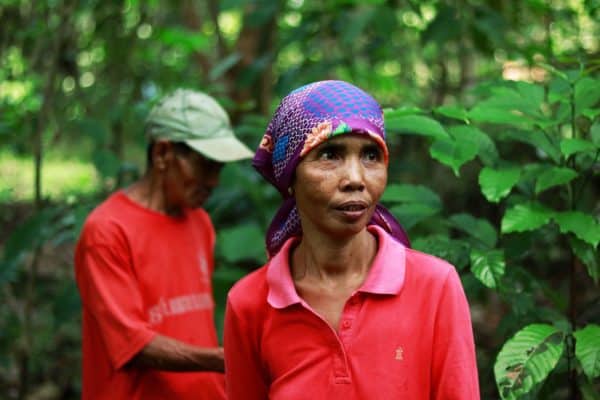
His success in growing trees is also because of his wife’s great support. Every day, his wife helps Sumeri after she has finished her household chores. “Every day, I pull the weeds around the plants. Sometimes, I help my husband to put tree seedlings into planting holes he digs. I cannot bear not to help him because he is old now. Even though he is old, I like to see him very enthusiastic every time he works in his field and takes care of his plants,” she admitted. 

Sumeri, a farmer from kalirejo village, kebumen 

In their village, there are only a few women who are interested in farming. Sumeri’s wife realizes that farming is not an easy job for women. However, she enjoys farming with her husband and feels grateful because she learns a lot of farming knowledge.  

She hopes her husband is healthy enough to keep working in his fields. She knows that her husband wants to take care of his fields as best as he can until his children come home later to take over. 

Always Find a Joy through Farming

Sumeri, a farmer from kalirejo village kebumen

Sumeri pointed out the 15 meters in height of sengon trees in his field. He said he will pass them to his youngest son. Likewise with the coffee trees he planted. “In the future, these fields will be handled by my youngest son. But now, he is still working in Jakarta. So, I am taking care of trees during waiting my son come back home. Among my six children, he has the most knowledge of how to grow trees,” he said.

robusta coffee from kalirejo village, kebumen

Sumeri also revealed that he keeps farming in his old age because he always find a joy by working in his field. “Farming is always be my happiness from I was young until today, in my old age. But I am getting older and weaker now. I am not as strong as before. I think in a few years ahead, I have to take a rest and pass it to my son,” he added. 

After walking around his field, Sumeri’s wife invited us to stop by their house. She served us a cup of homemade coffee and curcuma pudding that were grown by Sumeri himself. It seemed their sincerity in growing them makes the taste of both was really good!  

Writer: V. Arnila Wulandani. Photo: Yulianisa Dessenita

Preventing Clean Water Shortages and Landslides in Kenteng Village

Preventing clean water shortage and landslides in Kenteng Village Kebumen

Preventing clean water shortage and landslides in Kenteng Village Kebumen

Water is important for living. However, not everyone accessible to get clean water. Even though it is located not far from a dam and rivers, ironically, Kenteng Village always experiences drought and lacks clean water every during the dry season.  

In addition, the village which is located in Kebumen Regency, Central Java, Indonesia is also prone to landslides during the rainy season. 

Hard to get clean water during the dry season 

Ginardi, the secretary of Kenteng Village said that drought always occurs in his village during the dry season.  “When the dry season lasts more than two months, the water will be harder to get. People must go to the nearest springs to get clean water for their daily needs. Most of springs are located about two kilometers away,” he said.  

Arif, a villager of Kenteng also told the same story about the clean water problem he has been experiencing for the last ten years. He has lived in the village since 2012. For a decade living in the village, Arif must queue for hours to get clean water like other villagers when the dry season comes. “In the long dry season, usually we don’t sleep at night because we must queue in the water spring to get clean water. I can queue from 10 PM to 3 AM,” Arif said.  

Preventing clean water shortages and landslide in Kenteng Village, Kebumen, Central Java

The location of the springs is not easily accessible making the effort to get clean water to become much harder. “During the dry season, not many springs have much water coming out. From the nearest springs that have water availability, we have to carry the water manually on our shoulders to the village’s main road. Then we transport the water by motorcycle to our house. If the dry season is longer, it is even more difficult, but we do not have another choice,” he said. 

Threatened by landslides during the rainy season  

The clean water might be easier to get when the rainy season comes. However, this does not mean that the village free from other environmental problems. A landslide is also a potential disaster that endangers the village during the rainy season.  

Farmer group leader of the village, Rokhimin revealed that several areas in the village are prone to landslides due to the soil structure. In 2017, a tremendous landslide destroyed houses, a mosque, and cattle in the village.  “We are worried that landslides will occur again. Because not just one location that is prone to landslide in the village, but there are many,” added Rokhimin.

Although the villagers have planted trees and crops in the former landslide area, there has been no ecological prevention of landslide recurrences. Most of the farmers do not know what types of trees they have to plant that can prevent landslides. 
Preventing Clean Water Shortages and Landslides in Kenteng Village, Kebumen, Central Java

“The results from our study and survey show that Kenteng Village has a large critical area. The stakeholder of the village also conveyed that there are environmental problems. A destructive landslide occurred in 2017 and droughts in every dry season. That’s why we need to plant trees here. Trees4Trees targets to plant 20,000 trees in this village, “said Faris, unit manager of Trees4Trees Kebumen. 

Planting 20.000 trees for environmental rehabilitation 

preventing clean water shortages and landslides in kenteng village, kebumen, central java

The two ecological problems are very affecting the villagers’ life, especially to meet their daily needs. So the villagers hope they can plant trees that are able to prevent erosion and maintain the availability of water as well as improve their income by harvesting the results. 

“The villagers are enthusiastic about the tree-planting plan. We are hoping by planting more trees, the problems in this village are slowly solved,” concluded Ginardi.

Arif also expects tree species that have the ability to store a lot of water can be planted around the springs to restore the water sources. “I hope there will be no more problems with accessing clean water in this village, even in the dry season.”

To help the villagers to plant trees in the village, Trees4Trees is inviting you to take part in #GivingTuesdayForTree campaign and GIVING TREES for Kenteng village from 7 to 29 November 2022. You can donate trees through GIVING TUESDAY 

Author: V. Arnila Wulandani

Photos: Yulianisa Dessenita