Community Culture, Interwoven with Mangrove Conservation
Community Culture

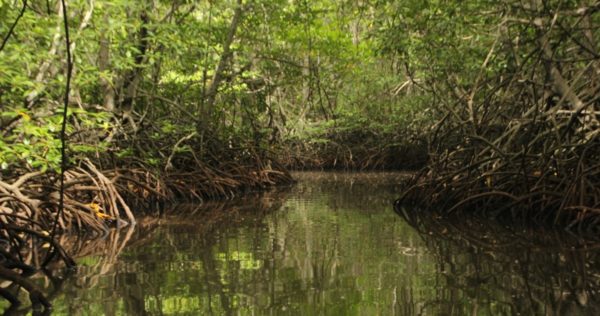
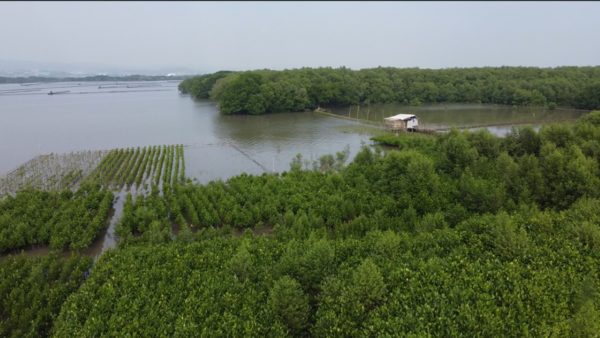
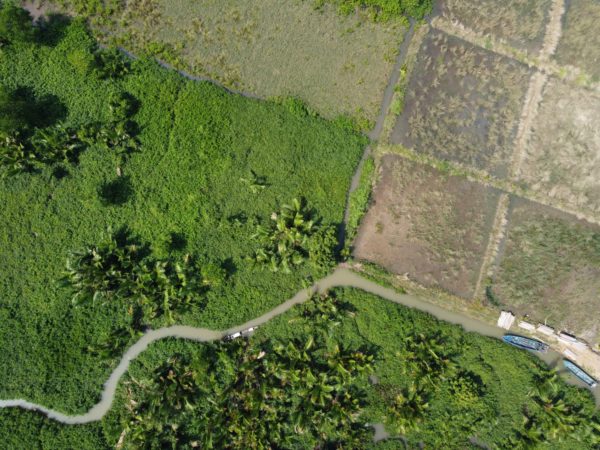
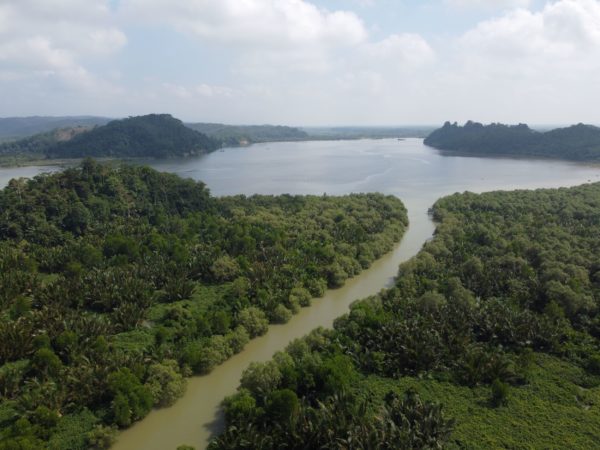
Surrounded by over 8,000 hectares of coastal trees and wetlands, Kampung Laut Village is home to the largest mangrove ecosystem in Central Java. This verdant water world in Cilacap Regency supports a rich variety of biodiversity, including over 50 distinct mangrove species.  

For the communities of Kampung Laut (a name which means ‘ocean village’ in the Indonesian language), mangroves are essential. Most of the people here work as fishers and recognize the importance of these trees to ecosystem health and productivity. 

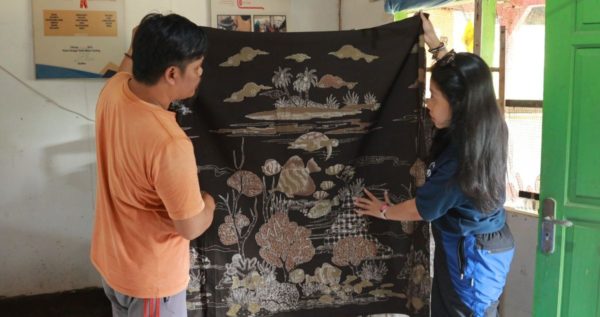
But the mangroves’ value goes further still, with roots reaching deep into local culture; the trees provide natural dyes which can be used in the traditional art of batik textiles, thereby transforming nature’s bounty into both cultural heirlooms and economic opportunities. 

In this article, we explore a nascent artisan industry that has emerged in Kampung Laut, inspired by nature and intrinsically connected to land and culture. 

The Birth of Kampung Laut Batik 

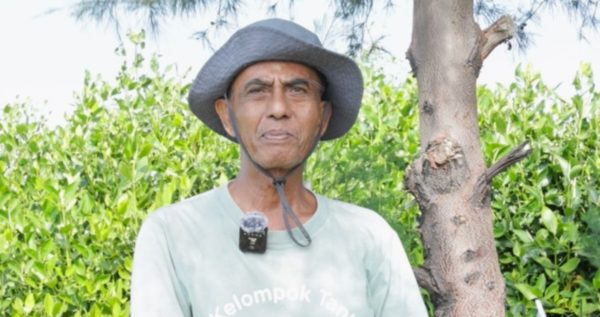
The story of Kampung Laut batik began in 2015 when Sodiqin, leader of the Mekar Canting Batik Group, was inspired by a batik-making program on national television. Together with two neighbors, he began to experiment with techniques and materials until they found the right formula. 

“At first, we used natural dyes from ketapang leaves and jengkol tree bark,” Sodiqin recalls. “But I wanted something unique that represents Kampung Laut. I noticed the fallen Rhizopora mangrove fruits scattered on the roads. We were curious to see if they could be used as natural dyes, as many people had claimed.” 

Sodiqin and his friends started collecting Rhizopora fruits, cutting and crushing them, then drying them under the sun for three days before boiling them. “The entire process of producing the natural dye takes about a week,” he says, “and dyeing the cloth needs another three days to a week; it takes a while, but the results are worth the wait.” 
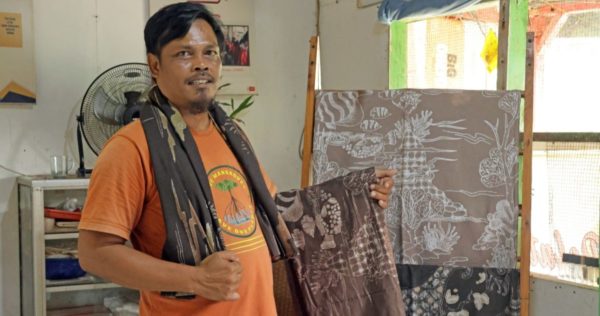
Sodiqin
(Above) Sodiqin, founder of the Mekar Canting Batik Group, which is creating mangrove-inspired fabrics.

Motifs and Materials Inspired by Nature 

In addition to the distinctive brown hues of Rhizophora mangroves, blended with colors from other local trees, batik designs from Kampung Laut are brought to life through patterns and motifs inspired by the sea and the richness of coastal life. 

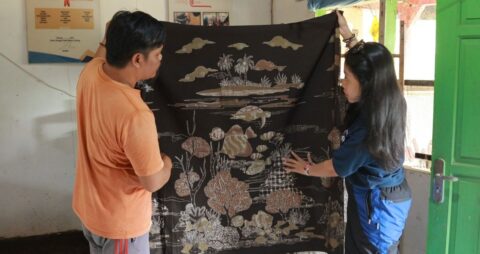
As Sodiqin explains, “when we asked ourselves what best reflects Kampung Laut, the answer was simple: mangroves and fisheries.” Designs from the Mekar Canting Batik Group feature fish, crabs, shells, shrimp, mangrove fruits, and underwater scenes. 

Most of their batik fabrics are made using a traditional stamping technique, whereby hot wax is applied to cloth using engraved copper stamps before it is dyed. This method allows the artisans to produce batik more efficiently and replicate patterns more consistently. 

“We also use the hand-drawn technique, but only by special order,” Sodiqin said. “Hand-drawn pieces take longer and require more skill.” This technique involves drawing patterns using a traditional drawing tool called a canting, which is filled with hot wax. It can take months just to complete one piece of batik cloth using this method. 
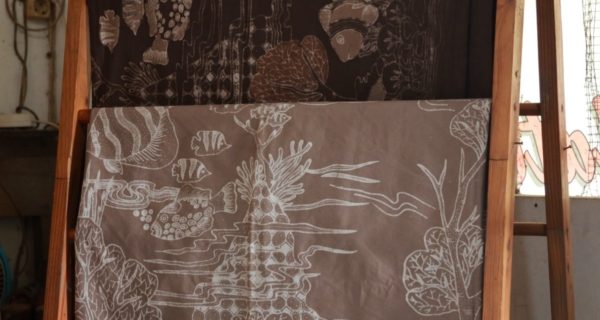
Community Culture
(Above) several of the fabrics produced by the group, which feature ocean-inspired motifs.

Sustainable Livelihoods, Interwoven with Women’s Empowerment 

What began as the passion project of three individuals has grown into a 20-strong collective, made up mostly of women. Training programs provided by the government and corporate CSR initiatives have strengthened their skills and encouraged more women to join. “It started with women inviting others to learn batik,” says Sodiqin. “Then, through word of mouth, more women have become involved.”  

The rise in popularity of Kampung Laut batik has opened new income opportunities for women in coastal communities. Batik-making provides much-needed earnings, especially during exhibitions or when orders come in. “The income can help women to cover their children’s needs or support other family expenses,” Sodiqin says. 

Nevertheless, marketing remains a challenge. Located in a remote area, accessible only by crossing a lagoon, Kampung Laut has limited access to markets. Most sales come from exhibitions in cities like Jakarta, Yogyakarta, and Semarang. “We tried e-commerce, but delivery is very difficult from here,” he said. 
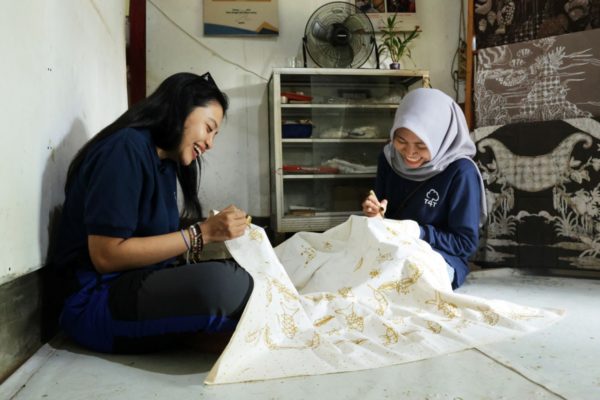
Community Culture
Members of the T4T team try their hand and making batik patterns during a recent visit to the Mekar Canting Batik Group studio.

From Ecology to Economy: Healthy Nature Helps Communities to Thrive 

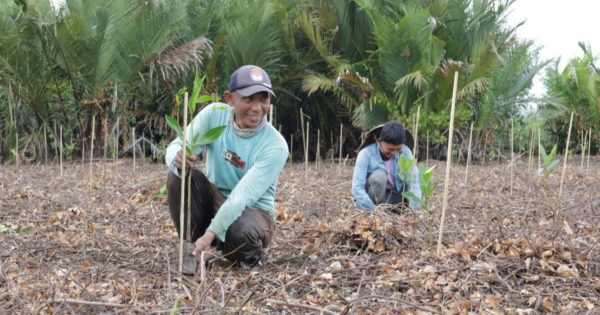
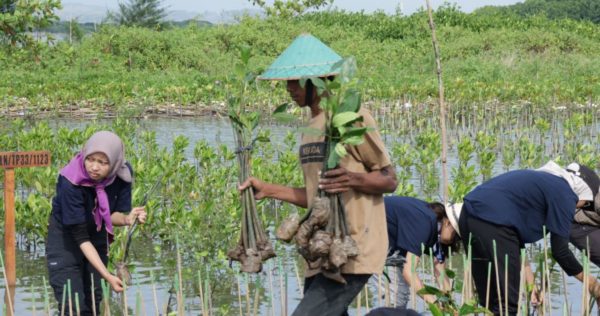
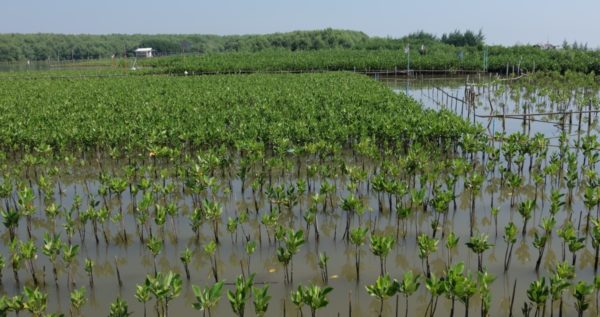
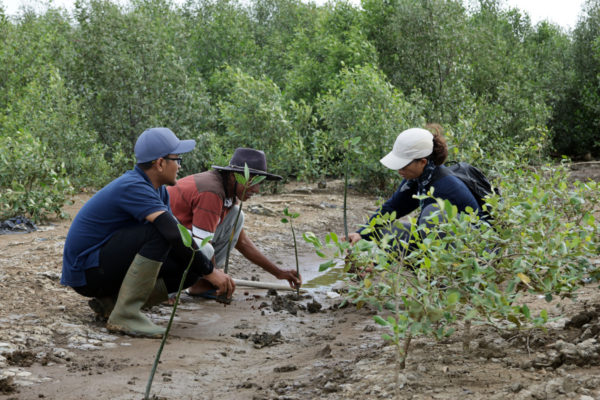
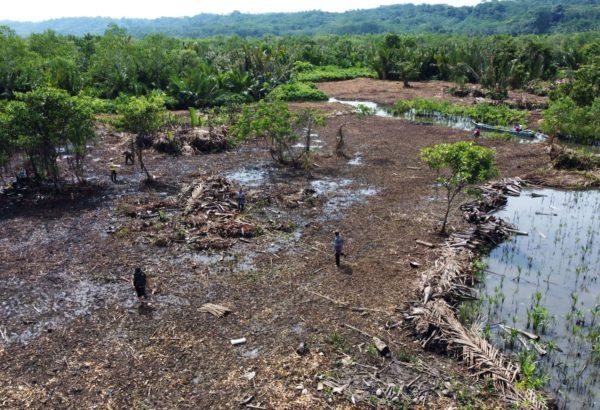
In 2022, Trees4Trees began replanting mangroves in Kampung Laut to restore areas degraded by deforestation. From 2022 to 2023, over 24,000 individual trees were successfully planted. In 2024-2025, with support from our partner, EcoMatcher, 125,000 trees were planted. In October 2025, together with EcoMatcher and GRAB, we are planting an additional 50,000 mangroves in the area. 

“By expanding mangrove cover, our mangrove planting program helps local communities thrive, sustain their livelihoods, and keep their culture alive, including the mangrove batik,” explains Yoga Septian, Trees4Trees Unit Manager of the Cilacap site. “The local community relies on fisheries and mangroves for their living; beyond fishing, they process mangrove fruits into snacks and produce mangrove batik as additional sources of income,” he added. 
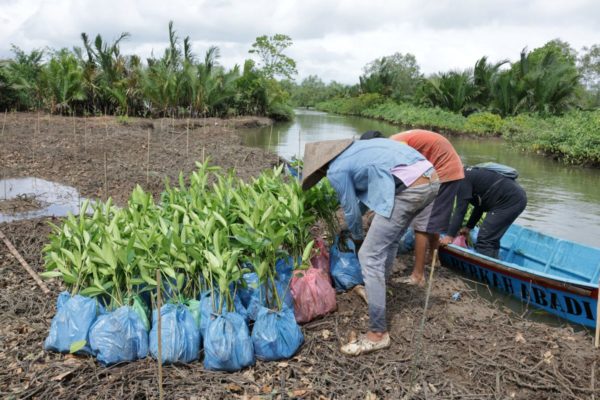
Planting mangrove
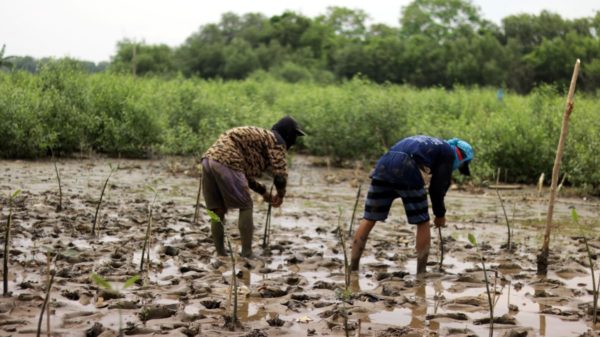
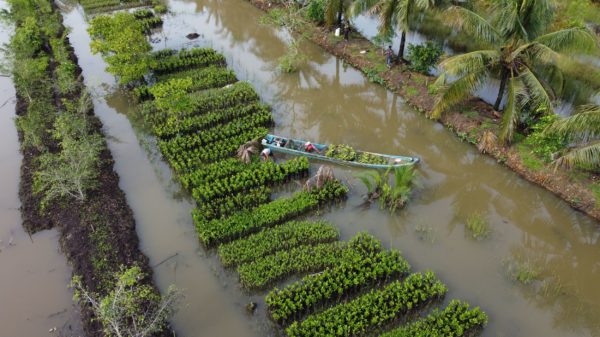
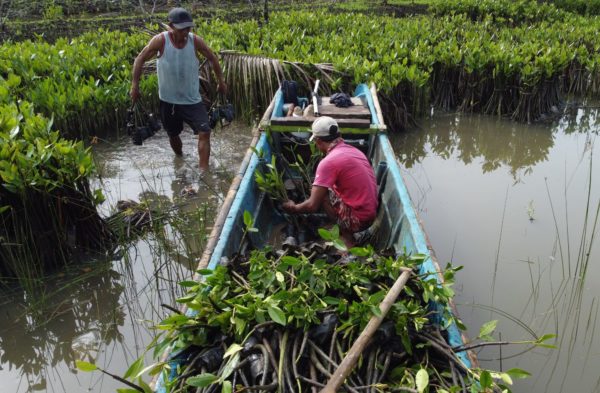
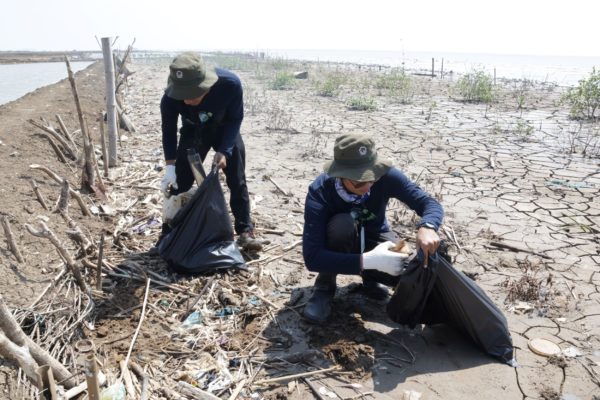
(above) Local fishermen load their boats with mangrove seedlings ready for planting. (Below) Together with local fishermen, T4T team members plant new trees in mangrove areas that had previously been severely degraded.


Community Culture

Healthy mangroves provide numerous benefits to people, nature, and the planet. They produce oxygen, absorb CO2, prevent coastal erosion, and provide essential nurseries for fish. For local people like Sodiqin and his group, these trees also provide materials, livelihoods, and cultural value. 

With that in mind, Sodiqin insists that sustainability is key. “Every time we harvest resources provided by the mangroves, we must also replenish them,” he says, “so they won’t vanish like they did before. The more we plant, the better our lives will be.” 

Writer: V. Arnila Wulandani. Editor: Chris Alexander. Photos: Yulianisa Dessenita for Trees4Trees 


Sururi’s Story: Rejuvenating Mangroves in Semarang

Sururi, Penerima penghargaan Kalpataru 2024

Sururi, Penerima penghargaan Kalpataru 2024

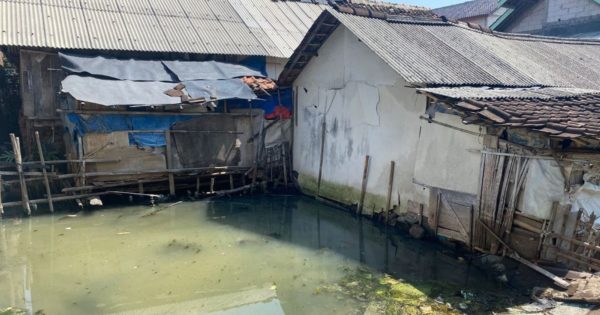
Mangunharjo Wetan is a quiet little village on the north coast near Semarang in Central Java. Here, many local residents earn their living from fishponds. However, these industries have become increasingly vulnerable to flooding caused by coastal erosion and subsidence, rising sea levels, and a lack of coastal barriers. 

These problems are directly impacting lives and livelihoods. For local fishpond farmers like Sururi, solutions are sorely needed. Back in 1995, he started planting mangroves around the village, creating a natural greenbelt that also acts as a flood barrier. 

Sururi’s Story
Flooding is a regular occurrence in Mangunharjo. Photo: Naila Kamalia/Trees4Trees

Starting from Scratch: Building Nature-based Solutions 

When Sururi began planting mangroves almost three decades ago, the area was a coastal sea. “In the past we had no natural barriers. The shoreline was directly exposed to the sea, causing coastal erosion because the shoreline was hit with the waves again and again,” he remembers. “But after we started planting mangroves, they held soil and sands behind the mangroves and slowed down the erosion.” Pointing to the thriving mangrove forest behind him, he explains that, as the mangroves grow bigger, they encourage the land held behind the mangroves to collect and form a natural defense against coastal erosion that triggers tidal floods. 

During the past 29 years, Sururi has seen his fair share of difficulties. The first two years were the hardest,” he explains. Finding seedlings was very difficult, and I had no one to teach me,” he says. In 1997, this changed when Sururi met a professor who mentored him on the proper way to plant mangroves 

Sururi’s Story
Sururi, sitting in front of the mangrove forest he helped to create .

Read also: Five Facts About Mangrove You Need to Know

Recognition for Reforestation: Sururi Receives a Prestigious Kalpataru Award 

Sururi’s efforts have not gone unnoticed. In May 2024, he was awarded the prestigious Kalpataru Award by the Ministry of Environment and Forestry. “I’m grateful, after nearly 30 years of effort, we have achieved the Kalpataru Award. It motivates us to preserve the coastal area better,” he says. 

But despite the personal accolade, Sururi maintains he could not have achieved anything by working alone; for replanting activities to really take root, it takes a village. Having worked together to make it happen, the communities are also enjoying the dividends of this collective endeavor, as the return to ecosystem health has impacted positively on the local economy.  

“Now, local communities can reap the benefit,” says Sururi. “There is a green mussel nursery here, providing an additional source of income for fishermen.”  

Planting mangrove in Mangunharjo coastal area
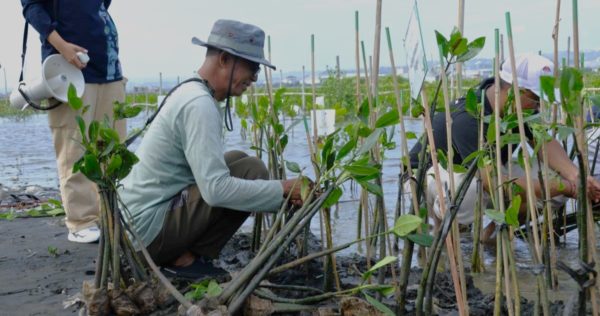
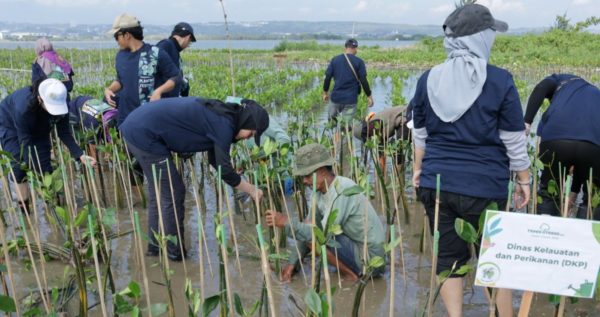
‘It takes a village’. Local volunteers help plant new mangrove seedlings in Mangunharjo

Trees4Trees Support for Mangrove Restoration in Mangunharjo  
While the mangroves in Mangunharjo have certainly helped prevent a repeat of recent disasters, the area needs more trees to sure up its defenses. To support these efforts, Trees4Trees teamed up with 90 local volunteers, including Sururi and his Mangrove Lestari Farmer Group, to plant 2,000 new mangrove seedlings and 100 Australian pine trees over an area covering 1200 square meters. The activities formed part of the Trees4Trees Planting Festival, held on June 11, 2024. 
Read also: Trees4Trees Planting Festival Celebrating 16th Reforestation Journey 
“We’ve noticed many areas are losing their natural mangrove habitats and their ecological functions,” explains Adi Gani, Project Manager at Trees4Trees. “By planting mangroves and Australian pines together, we aim to enhance the greening of this coastal area; this effort is our contribution to coastal ecosystem restoration in Mangunharjo, and we plan to continue expanding it in the future,” he added. 

Mangrove planting in Mangunharjo_Trees4Trees
Some of the 90 volunteers who took part in Trees4Trees’ Planting Festival

For Sururi, the benefits of these activities are clear: “Biodiversity has flourished, including shrimp and fish. Birds are more abundant in the evenings now too. In the past, we needed the military to protect this area, but now the thriving habitat safeguards itself.”  

Sururi sends his thanks to Trees4Trees, along with hopes for the future:. “We hope this initiative will continue and expand to other locations as well.”  

Writer: V. Arnila Wulandani. Editor: Christopher Alexander. Photos: Yulianisa Dessenita

5 Facts About Mangrove You Need to Know

mangrove roots store vast amount of carbon

mangrove roots store vast amount of carbon

Mangrove forests are among the most important ecosystems on Earth. They are crucial for protecting life on Earth. Alongside salt marshes and seagrass beds, mangroves are part of the “big three” coastal ecosystem that is incredibly powerful at saving the planet. With their dense coverage, mangroves act as natural coastal barriers, protecting communities and serving as nursery grounds for biodiversity.  

Their remarkable ability to sequester vast amounts of carbon helps stabilize the planet’s temperature. It makes them as key weapons in the fight against climate change and preventing global warming from worsening. However, global mangroves populations have been threatened by overexploitation and coastal development, leading to significant losses in recent decades.  

Here are some fascinating facts about mangroves and their spectacular ability! These facts are also highlighting the importance of why we should pay more attention to protecting them from damage and disappearance.  

Mangrove forests store greater carbon than terrestrial forests 

Mangroves cover only 0.1 percent of the planet’s surface. However, latest studies suggest that mangrove forests can sequester carbon 10 times greater than mature tropical forests annually. Scientists also estimate that mangroves store an average of three to five times more carbon than tropical forests in the same size of area. Most of the carbon is stored in the sediment beneath the trees. It can remain bound there for decades, centuries, or even millennia. 

However, when these habitats are destroyed, they will lose their capacity in sequestering carbon. Additionally, they will also release a huge amount of carbon, increasing greenhouse gas levels in the atmosphere.  

Mangrove covers in Mangunharjo coastal area, Semarang Indonesia
Mangroves flourish in the Semarang coastal area, helping the community in preventing tidal floods and erosion.

Coastal defense against floods and tidal waves  

Mangroves have a strong and intricate root system which helps to bind the soil and prevent coastal erosion. These roots also intertwine to form a dense brush above the water that can break waves and absorb wave energy. It is including the hurricane-generated waves or tsunamis.  

Mangrove forests reduce the impact of tidal waves and floods by decreasing the height and velocity of incoming waves. They distribute water among the creeks and canals within the mangroves. This way will reduce the inundation level and the power of waves striking residential areas, farms, or ponds owned by coastal communities. 

A study found that during the deadly 2004 Indian Ocean tsunami, areas with coastal forests, including mangroves, suffered less damage.  

Planting mangroves in Dukuhseti coastal area, Pati, Indonesia
In collaborating with local communities, Trees4Trees plants mangroves in Pati, Semarang, and Cilacap coastal areas.

Incredibly adaptable to the harsh condition and can grow in salty water 

Mangroves are naturally adapted to thrive in coastal zones and harsh coastal conditions. They are highly salt-tolerant, able to survive in water up to 100 times saltier than most plants. Mangroves can filter out up to 90% of the salt in seawater. Furthermore, some species have leaves that excrete excess salt. 

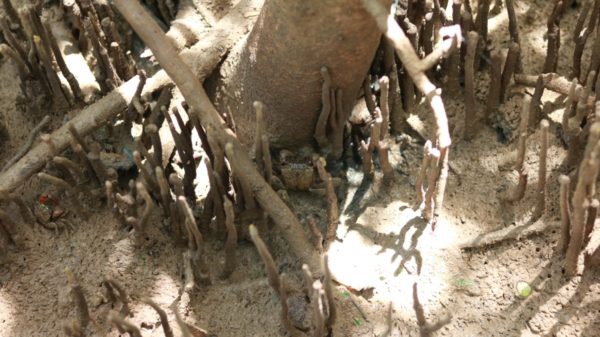
Some mangroves have special roots called pneumatophores that extend above the water to absorb oxygen. These roots, with tiny openings take the oxygen in. However, these parts can easily get clogged by pollutants like oil, be damaged by parasites, or be affected by prolonged flooding. Over time, these environmental stresses can kill large areas of mangrove forests. 

5 Facts About Mangrove
The mangrove root systems make the mangroves can tolerate salty water and harsh coastal condition.

Mangrove ecosystems are among the most biologically diverse on Earth 

It is estimated that there are about 80 mangrove species, making this ecosystem highly diverse. Mangroves thrive in tropical and subtropical latitudes. They range in height from small shrubs to 40-meter-tall trees above the water. Despite their differences, all mangroves grow in low-oxygen, high-salinity coastal environments. Each species has its own unique characteristics suited to its native ecological habitat. Therefore, planting the wrong type in the wrong place will prevent the mangrove from surviving. 

5 Facts About Mangrove
(Above) Young rhizophora (red mangroves) planted in Semarang, Indonesia. (Below) Avicennia (white mangrove) planted in Pati, Indonesia, bearing fruits.

5 Facts About Mangrove

Indonesia boasts the largest mangrove cover in the world 

Indonesia, where Trees4Trees focuses its reforestation efforts, boasts the world’s largest mangrove population. The country accounts for 23% of the global mangrove coverage, with 3 million hectares of mangroves. As the comparation, the size is over 40 times the size of Singapore. Indonesia is home to approximately 45 of the world’s 75 true mangrove species. Some of them are growing as tall as 50 meters. 

However, Indonesia also experiences the highest rate of mangrove destruction globally. From the 1970s to 2007, the FAO reported that around 40% of Indonesia’s mangrove forests were lost. Residential development, agriculture, and aquaculture are the most factors that caused the degradation. 

Read more: Mangrove Types in Indonesia and Their Benefits

Mangrove Cilacap_Trees4Trees
Trees4Trees team monitored one-year mangrove trees that planted in Ujung Alang Village, Cilacap.

Contributing to the mangrove restoration in Indonesia, Trees4Trees has been planting mangroves since 2021. Trees4Trees has planted mangroves in various areas of the Java Islands, including Pati, Semarang, and Cilacap. Over 150,000 mangroves have already been planted, with more to come. In Cilacap, Trees4Trees aims to plant 16,000 mangroves to restore the degraded forests of Ujung Alang Village this year. This village has suffered from land conversion into shrimp ponds. Our mission is to revive the mangrove ecosystem and support the livelihoods of local communities. 

Read also: Restoring Mangrove in Cilacap, Central Java

We invite you to join our mangrove restoration efforts. By partnering with us to plant mangroves, you or your company can make a positive impact on both the environment and the community.

Contact us to get involved in this program! 

Restoring Mangroves in Cilacap, Central Java

Restoring Mangroves in Cilacap, Central Java
Photo: Trees4Trees/Haryadi

Located close to Segara Anakan lagoon in Java’s Cilacap Regency, Ujung Alang Village was once covered in mangroves. In the 1990s, the region experienced massive deforestation, mostly because of land being converted for aquaculture ponds. 

In the last two decades, local residents have been helping the mangroves bounce back. A conservation area has been set up and has since become a hub for studies and research into the natural world.  

Now, with support from Trees4Trees, mangrove restoration in Cilacap is going up a gear. An ambitious new replanting project has provided the investment and manpower needed to give the ecosystem a new lease of life. 

Healing the wounds of the past 

Before 1994, Ujung Alang and was covered with mangrove forests. These trees were then cleared by investors to make way for shrimp and milkfish ponds. This venture lasted just four years; by 1998, the ponds had been abandoned.,  

Virtually overnight, the investors cut their losses and left town. But not before leaving their mark on the landscape. Thousands of hectares of mangrove forests had been cut down and turned into barren land.  

In 2000, local communities decided to act, and made a plan to restore the mangroves to their former state.  

Restoring mangrove in Ujung Alang Cilacap
(Above) Abandoned shrimp ponds, overgrown with weeds. Photo: Trees4Trees/Haryadi

Working together to restore mangroves 

Over the past decade, local communities, with the support of the government and various other supporters, have successfully planted 56 different species of mangroves in an area covering approximately 400 hectares. Trees4Trees has committed to supporting these ongoing efforts. 

In early 2023, working in collaboration with the Tani Krida Wana Lestari farmer group, Trees4Trees began replanting an area of 2.4 hectares around Ujung Alang. So far, we have planted more than 7,600 trees together. 

Planting mangrove in Ujung Alang Cilacap
(Above) Segara Anakan Lagoon. Photo: Trees4Trees/Kemas Duga Muis

“Deforestation of mangrove forests in Segara Anakan has led to a significant reduction in mangrove area and caused a decline in fish catches,” explains Armin Agung Mubarok, the Trees4Trees Impact Officer and coordinator of the mangrove project. “By restoring the mangrove ecosystem, we aims to restore the habitat as a nursery ground for crustaceans and other animals, thereby enhancing biodiversity in the region,” he added. 

Haryadi is the Trees4Trees GIS officer on the project., He experienced a number of challenges in clearing away the old growth to make way for new mangroves. As he explains, “clearing the areas of weeds is crucial, as they hinder the growth of the mangroves.”  

Planting mangrove in Ujung Alang Cilacap
(Above) Invasive weeds are cleared before replanting can begin. Photo: Trees4Trees/Haryadi

Restoring natural balance to the ecosystem  

After the weeds had been cleared, Trees4Trees focused on planting four different mangrove tree species, each one chosen to match the unique conditions of their environment.  

In areas less affected by the tide, large-leafed orange mangroves (Bruguiera gymnorrhiza) were chosen, due to their ability to thrive in areas where there’s not much saltwater. They can also do well in both shady and sun-baked areas. 

In tidal areas that are regularly flooded, tall-stilt mangroves (Rhizophora apiculate) were planted, as they thrive in wet, muddy soil. Red mangroves (Rhizophora mucronata) were chosen for inundated areas, where they can grow and thrive. 

Finally, seedlings of spotted mangroves (Rhizophora stylosa) were planted throughout the area, to improve the diversity of species.  

Planting mangrove in Ujung Alang Cilacap
(Above) Working together with local communities, Trees4Trees replants the mangrove forest. Photo: Trees4Trees/Haryadi

Next steps: Taking replanting to the next level 

This small-scale pilot project, was an opportunity to test out planting methods before launching a more ambitious program. Over the next five years, Trees4Trees intends to scale up these efforts and continue planting mangroves to restore mangrove cover.  

“Based on the trial we conducted, we were able to plant 3,500 trees per hectare,” says Haryadi, who is working to turn initial impact into long-term reforestation. “Over the next few years, our goal is to plant mangroves over an area of 1,000 hectares.

Writer: V. Arnila Wulandani. Editor: Christopher Alexander

Taking Out the Trash: Combating Plastic Pollution in Java


Beach clean up by Trees4Trees team
Taking Out the Trash: Combating Plastic Pollution in Java

Plastic waste on shorelines and riverbanks can be a depressing sight. But the trash we see is just the tip of the iceberg. It’s estimated that 400 million tons of plastic are produced annually. And around 14 million tons of it ends up in the ocean. That’s the equivalent of two garbage trucks of plastic dumped into the sea, every minute of every day. For a year. 

This tide of trash doesn’t just come from the coast. Garbage from inland is swept into waterways and rivers by rain and wind (and people), then transported to the sea. But its journey doesn’t end there.  

When plastic waste enters the ocean, it also enters the food chain. Plastics are eaten by marine life, causing severe injuries and death.  

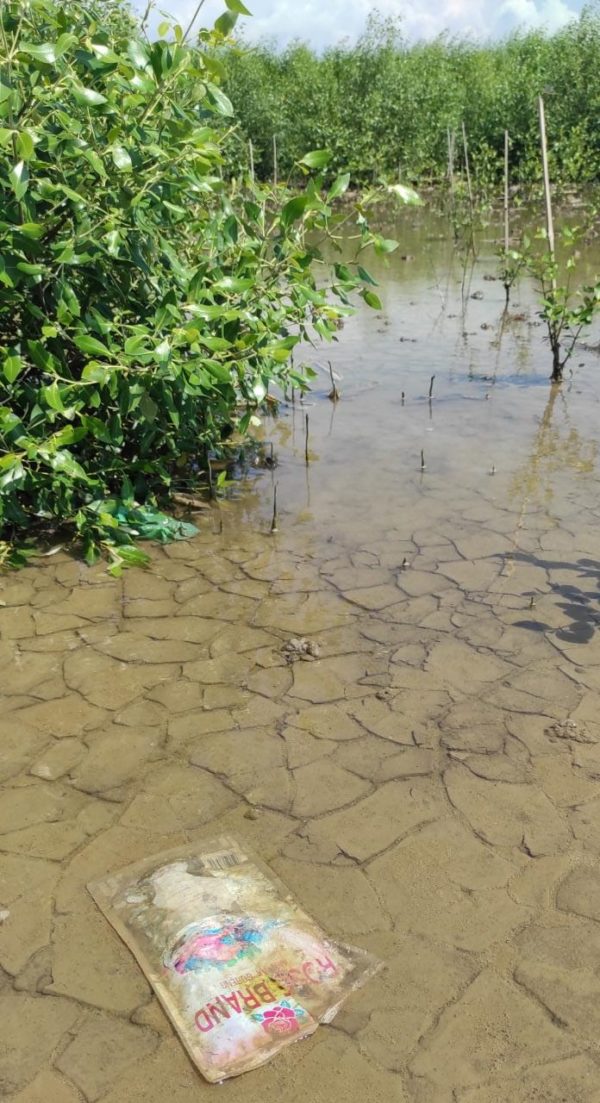
Plastics also poison the environment itself. These materials are especially deadly to mangrove forests, as they entangle and choke the roots, reducing oxygen levels in the soil and causing the slow demise of plants and the animals that rely on them for food and shelter.

Turning the Tide on Trash 

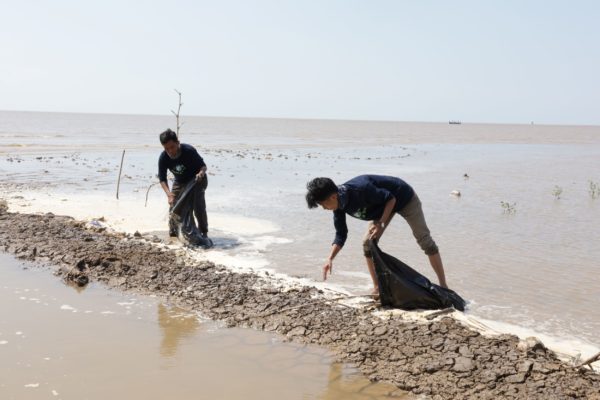
Tackling plastic waste is a big challenge. But solutions are out there, and every little helps. Working with a team of partners and volunteers, Trees4Trees recently got to work on a beach clean-up program spanning 1.2 miles (2 km) of mangroves and coastal ecosystems near Dukuhseti Village in Central Java’s Pati Regency. The activity was part of Trees4Trees’ 15th anniversary celebrations and were timed to coincide with World Ocean Day and World Environment Day. 

Mustofa is one of Trees4Trees’ local partners. During the clean-up operations, he revealed the impact plastic continues to have on Dukuhseti. “This pollution not only damages the soil,” he explains. “I worry that the huge amounts of plastic waste we see here will also damage the mangroves cover in the area and break up the green belt we have created.”   

Khoirum Minan is the Pati area Unit Manager for Trees4Trees. He agrees that something needs to be done to protect mangroves and restore ecosystem health. “Plastic waste hinders the growth of mangroves and leads to their death, so we have to do something to protect them,” he said. 

During their clean-up operations, Khoirum and Mustofa recovered a diverse array of waste items, which collectively illustrate the scale of the problem. Their haul included countless plastic bottles and items of food packaging, along with weird and less-than-wonderful items like sandals, diapers, sanitary pads, and even a mattress (not the kind of seabed that marine conservationists are used to). 

plastics waste in beach
(Above) Unpacking the problem. Food packaging and other plastics are a common sight in the rivers, waterways, and coastal regions of Java, where pollution is reaching a crucial tipping point.
Taking Out the Trash: Combating Plastic Pollution in Java
(Above) Clean-up operations by Trees4Trees mobilized a team of volunteers and partners along more than a mile of coastline in Pati Regency

Cleaning Up Tourism Hotspots 

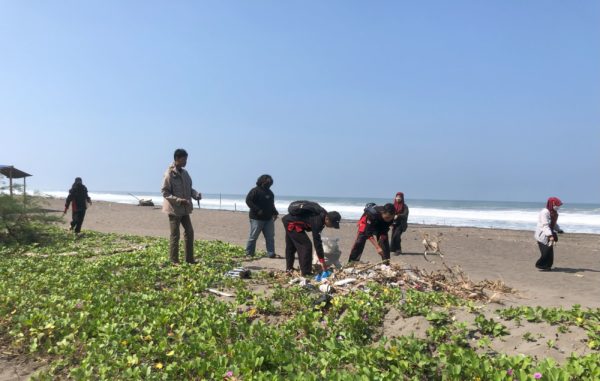
Another location where Trees4Trees has been busy recently is Cemara Sewu beach, a popular tourism destination that’s in danger of being ruined by plastics. “During our clean-up activities, we discovered loads of food and drink packaging left by visitors,” explains Rizky Praditya, Trees4Trees’ Kebumen area Unit Manager. “If we don’t clean up the waste here, the pollution will soon affect other areas too,” he warned. 

Taking Out the Trash: Combating Plastic Pollution in Java
(Above) Members of the Trees4Trees team, cleaning up Cemara Sewu beach in Kebumen, Central Java

Changing Attitudes on the Citarum River 

To really make a difference to plastic pollution, you need to go to the source. This means traveling upriver. As Mustofa explains, “so long as people keep throwing trash into the river, the shore will always be polluted with plastic waste and so will the ocean.” 

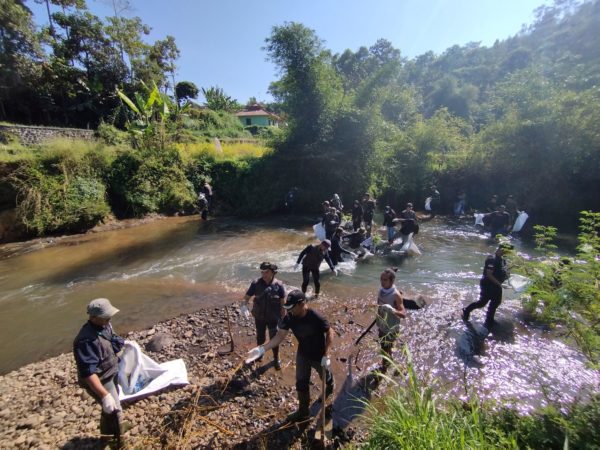
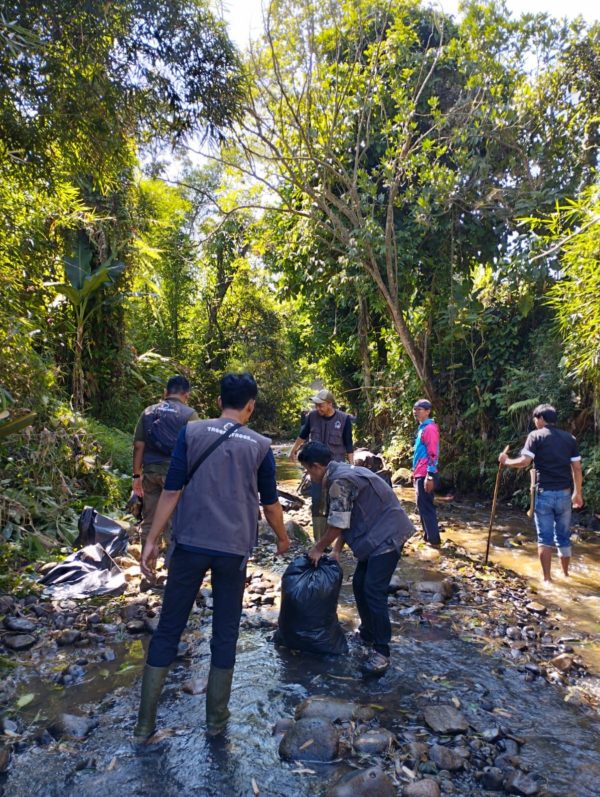
With that in mind, Trees4Trees began working on clean-up operations in the tributaries of the Citarum River, which is sadly famous for its polluted waters. Focusing on the Cidadap and Rawabogo rivers. Trees4Trees got to work alongside local communities, village officials, and young environmental activists. 

Read also: Travels in Java: Situ Cisanti and the Source of the Citarum River

Taking Out the Trash: Combating Plastic Pollution in Java
(Above) Working with local communities to clean up the Cidadap River in West Java


Taking Out the Trash: Combating Plastic Pollution in Java
(Above) Filling sacks with plastics and other trash, removed from the Rawabogo River

“Cidadap river flows near residential areas,” says Asep Denis, the Ciminyak 3 Unit Manager. “The residents here have a habit of throwing their waste into the river,” he added. According to Mahesa, the Ciwidey Unit Manager, this makes community involvement an essential part of clean-up operations.  

“We’re working to raise awareness in local communities, encouraging their involvement in keeping the river clean,” he said.  

The problem of plastics can sometimes seem like a mountain to climb. But with various clean-up actions already being carried out in locations across Java, Trees4Trees and partners are taking steps in the right direction. Whether cleaning beaches, clearing rivers, or changing attitudes in local communities, the only way is up. 

Writer: V. Arnila Wulandani. Editor: Christopher Alexander

“Trendy and Engaging”: Yutaka Farm Makes Mangroves Fun

“Trendy and Engaging”: Yutaka Farm Makes Mangroves Fun
Photo: Doc. Yutaka Farm

Located in Pasucen Village, some 8 miles (13 km) from the center of Pati Regency, Yutaka Farm is an outdoor café with a connection to nature. From the moment visitors set foot inside, they are greeted with lush greenery and plenty of photo-friendly corners. Artfully arranged bamboo decorations add to the beauty of gardens bursting with plants, flowers, and trees.  

At Yutaka Farm, visitors can grab a bite to eat or get some refreshment in delicious dishes and beverages, capture stunning photos, and enjoy live music performances. There’s also plenty of fun activities to explore, which reveal the magic of plants. 

A place where reforestation education takes centerstage 

The founder of Yutaka Farm is Andi Lestari. From day one, his dream was to build an educational center that grew tree seedlings and helped children and young people get involved in conservation. In the beginning, youngsters were non-plussed by the farming concept. Andi knew he had to jazz things up a bit. 

“This place is a part of our mission to introduce the concepts of reforestation and agriculture in a trendy and engaging way,” explains Andi. “By adopting this approach, we aim to grab the public’s attention, particularly children and young people.”  

“Trendy and Engaging”: Yutaka Farm Makes Mangroves Fun
(Above) Yutaka Farm café – a place of recreation, relaxation, and restoration. Photo: Doc. Yutaka Farm

Andi believes that by grabbing kids’ attention first, he can spark their interest in planting trees. “This also involves the preservation of the mangrove ecosystem in Pati, which needs serious protective measures,” explains Andi. 

At Yutaka, Andi introduces visitors to plants in some creative ways. With an emphasis on play and entertainment, Yutaka Farm has become a hub for the local community since it opened in 2019. Now, every weekend and on public holidays, the farm is packed with visitors. 

Restoring mangroves along the Pati coastline 

Andi is deeply concerned about the recent decline in Pati’s mangroves. Yutaka Farm was born out of his dedication to their preservation and restoration. Since 2009, he has been cultivating mangrove seedlings and then replanting them in the wild. 

mangrove seedling
(Above) Mangrove seedlings are integral to the future health of people and nature in Pati. Photo: Trees4Trees/V. Arnila Wulandani

In addition to cultivating mangrove seedlings, Andi is an activist and educator who is involved in many mangrove restoration projects and activities, both as a founder and as a volunteer. Yutaka Farm is just one of many ways in which he is working to protect mangroves in Pati. 

He believes the future of these important ecosystems depends on local kids becoming interested and getting involved in conservation. He also believes the well-being of the community is directly linked to the health of mangroves. 

“Mangroves are essential to coastal areas in Pati, because they prevent erosion,” Andi explains. “When powerful waves struck the shores of Pati in 2022, places without mangrove coverage were hit harder compared to those with mangroves.” 

Working with Trees4Trees  

To really make a difference, Andi and his Yutaka Farm need help. “We cannot accomplish this task alone,” he says. “Local communities, institutions, and the government need to work together to raise awareness of mangroves and their importance to places like Pati.” 

“In 2021, we partnered with Yutaka Farm to produce 30,000 mangrove seedlings,” says Khoirum Minan, the Trees4Trees Unit Manager in Pati. “The following year, our production increased significantly, surpassing 100,000 seedlings – we have now successfully planted them at several locations in the coastal areas of Pati.” 

Mangrove replanting in Pati is an integral part of Trees4Trees’ long-term commitment to supporting the government’s vision for the region. Working alongside Yutaka Farm, Trees4Trees is creating a green belt along the coast, helping to restore natural ecosystems while also protecting the well-being of local communities inland. 

“Trendy and Engaging”: Yutaka Farm Makes Mangroves Fun
(Above) Andi Lestari at Yutaka Farm in Pati Regency. (below) Mangrove planted in Pati coastal areas. Photo: Trees4Trees/Yulianisa Dessenita
mangrove
“Trendy and Engaging”: Yutaka Farm Makes Mangroves Fun