Restoring Mangroves in Cilacap, Central Java

Restoring Mangroves in Cilacap, Central Java
Photo: Trees4Trees/Haryadi

Located close to Segara Anakan lagoon in Java’s Cilacap Regency, Ujung Alang Village was once covered in mangroves. In the 1990s, the region experienced massive deforestation, mostly because of land being converted for aquaculture ponds. 

In the last two decades, local residents have been helping the mangroves bounce back. A conservation area has been set up and has since become a hub for studies and research into the natural world.  

Now, with support from Trees4Trees, mangrove restoration in Cilacap is going up a gear. An ambitious new replanting project has provided the investment and manpower needed to give the ecosystem a new lease of life. 

Healing the wounds of the past 

Before 1994, Ujung Alang and was covered with mangrove forests. These trees were then cleared by investors to make way for shrimp and milkfish ponds. This venture lasted just four years; by 1998, the ponds had been abandoned.,  

Virtually overnight, the investors cut their losses and left town. But not before leaving their mark on the landscape. Thousands of hectares of mangrove forests had been cut down and turned into barren land.  

In 2000, local communities decided to act, and made a plan to restore the mangroves to their former state.  
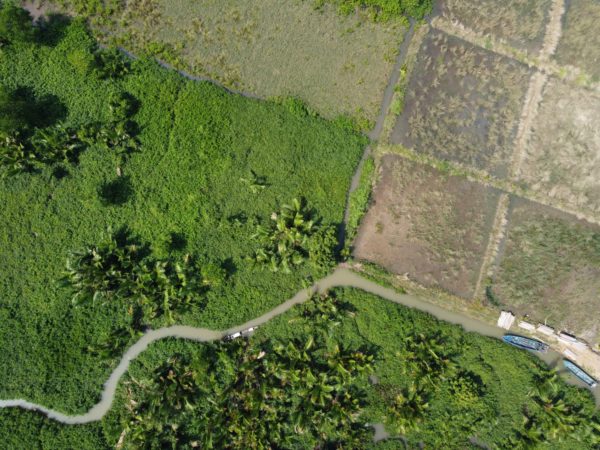
Restoring mangrove in Ujung Alang Cilacap
(Above) Abandoned shrimp ponds, overgrown with weeds. Photo: Trees4Trees/Haryadi

Working together to restore mangroves 

Over the past decade, local communities, with the support of the government and various other supporters, have successfully planted 56 different species of mangroves in an area covering approximately 400 hectares. Trees4Trees has committed to supporting these ongoing efforts. 

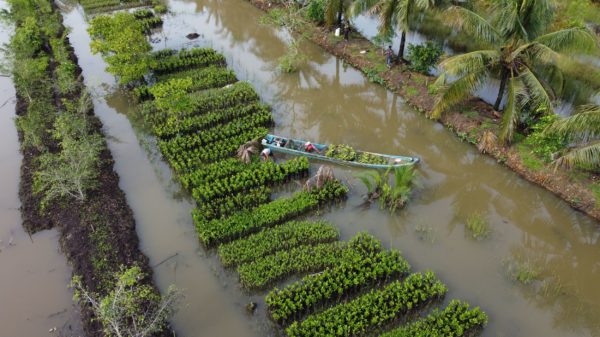
In early 2023, working in collaboration with the Tani Krida Wana Lestari farmer group, Trees4Trees began replanting an area of 2.4 hectares around Ujung Alang. So far, we have planted more than 7,600 trees together. 
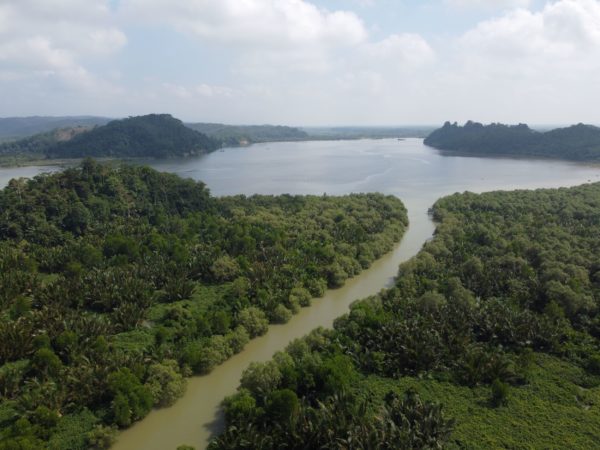
Planting mangrove in Ujung Alang Cilacap
(Above) Segara Anakan Lagoon. Photo: Trees4Trees/Kemas Duga Muis

“Deforestation of mangrove forests in Segara Anakan has led to a significant reduction in mangrove area and caused a decline in fish catches,” explains Armin Agung Mubarok, the Trees4Trees Impact Officer and coordinator of the mangrove project. “By restoring the mangrove ecosystem, we aims to restore the habitat as a nursery ground for crustaceans and other animals, thereby enhancing biodiversity in the region,” he added. 

Haryadi is the Trees4Trees GIS officer on the project., He experienced a number of challenges in clearing away the old growth to make way for new mangroves. As he explains, “clearing the areas of weeds is crucial, as they hinder the growth of the mangroves.”  
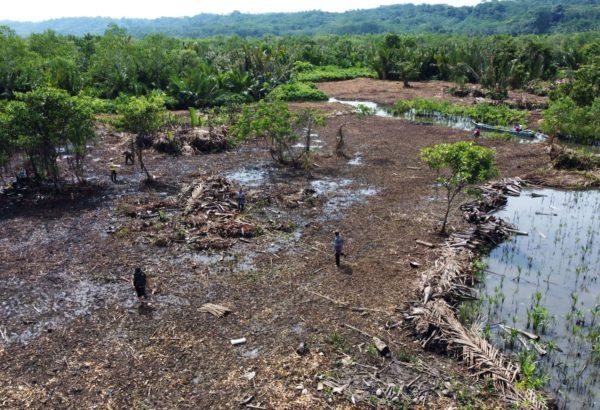
Planting mangrove in Ujung Alang Cilacap
(Above) Invasive weeds are cleared before replanting can begin. Photo: Trees4Trees/Haryadi

Restoring natural balance to the ecosystem  

After the weeds had been cleared, Trees4Trees focused on planting four different mangrove tree species, each one chosen to match the unique conditions of their environment.  

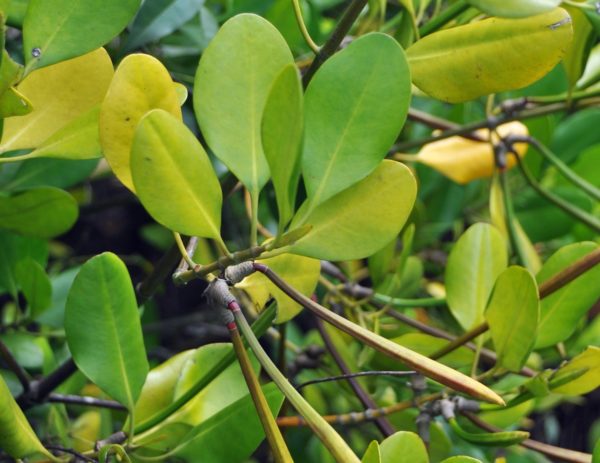
In areas less affected by the tide, large-leafed orange mangroves (Bruguiera gymnorrhiza) were chosen, due to their ability to thrive in areas where there’s not much saltwater. They can also do well in both shady and sun-baked areas. 

In tidal areas that are regularly flooded, tall-stilt mangroves (Rhizophora apiculate) were planted, as they thrive in wet, muddy soil. Red mangroves (Rhizophora mucronata) were chosen for inundated areas, where they can grow and thrive. 

Finally, seedlings of spotted mangroves (Rhizophora stylosa) were planted throughout the area, to improve the diversity of species.  
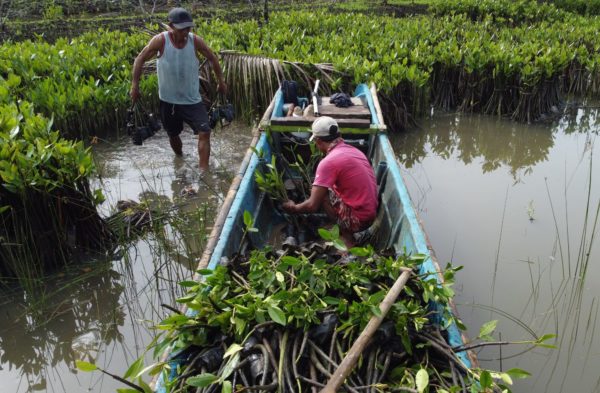
Planting mangrove in Ujung Alang Cilacap
(Above) Working together with local communities, Trees4Trees replants the mangrove forest. Photo: Trees4Trees/Haryadi

Next steps: Taking replanting to the next level 

This small-scale pilot project, was an opportunity to test out planting methods before launching a more ambitious program. Over the next five years, Trees4Trees intends to scale up these efforts and continue planting mangroves to restore mangrove cover.  

“Based on the trial we conducted, we were able to plant 3,500 trees per hectare,” says Haryadi, who is working to turn initial impact into long-term reforestation. “Over the next few years, our goal is to plant mangroves over an area of 1,000 hectares.

Writer: V. Arnila Wulandani. Editor: Christopher Alexander

Mangroves Types in Indonesia and Their Benefits

Rhizophora in the coast of Dukuhseti village, Pati regency
Mangroves in Indonesia and Their Benefits
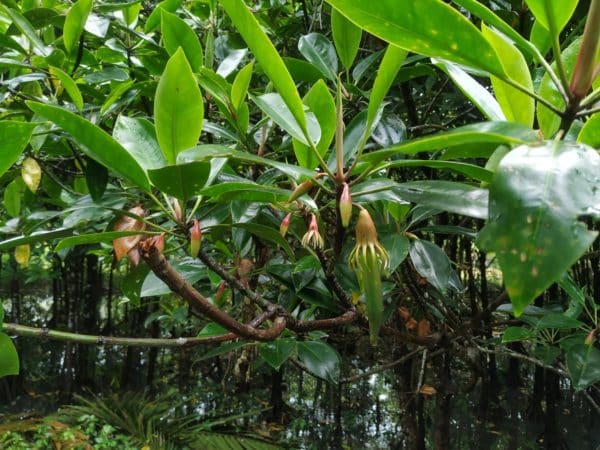
Rhizophora in the coast of Dukuhseti village, Pati regency. Photo: Trees4Trees

Mangroves have enormous benefits for the environment and the economy. From preventing coastal erosion, storing a large amount of carbon and fighting climate change, providing a home and nursery ground for a wide range of animals, to providing multi-benefit for human life.   

Indonesia is home to one of the largest mangrove populations in the world with around 3.2 million hectares of mangrove covers. In this archipelago country, there are five mangrove types (genera) and around 202 species that are commonly found in coastal areas. Each type of mangrove has its own characteristic, and the most important thing is, they have amazing benefits. 

Let’s find out what types of mangroves can be found around Indonesia’s coastal areas and what are their benefits!

Rhizophora Mangrove

In Indonesia, Rhizophora is also known as bakau and it has three species; Rhizopora apiculata, Rhizophora mucronata, and Rhizophora stylosa.  Rhizophora has taproots that plunge into the forest floor. This type of root is growing above the surface of the soil. These roots stick out from the tree trunks and extended outwards.  

Rhizopora mucronata’s leaf, bark, and propagule waste can produce a natural brown dye to color fabrics and is one of the natural dyes for batik (Indonesian traditional fabrics). The young leaf is also beneficial as a mouth antiseptic. Ecologically, Rhizophora is effective to protect coastal areas from erosion. It is commonly planted along the shore and the edge of the fishponds to protect it from big waves.  

Avicennia Mangroves 

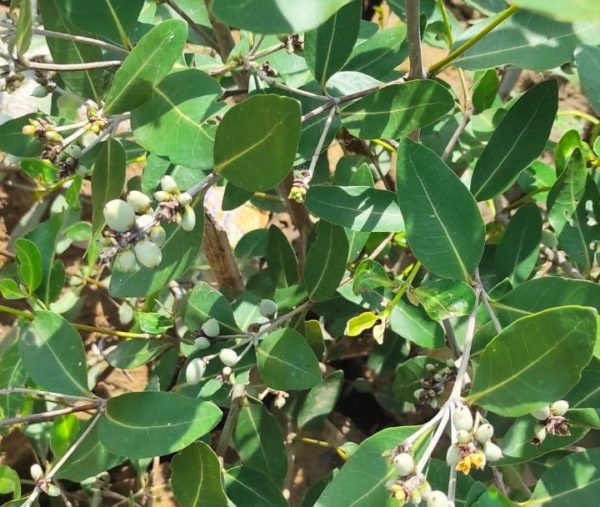
Avicennia is popular in Indonesia with its local name, api-api. Avicennia has pencil-shaped roots. They are embedded in the forest floor, protruding from the surface of the water, and scattered in very large numbers around the tree trunk. These roots serve as breath roots.  

Mangroves in Indonesia and Their Benefits
Avicennia which begun to bear fruits in Trees4Trees Mangrove planting area. Photo: Trees4Trees

It has five species; Avicennia alba, Avicennia eucalyptifolia, Avicennia lanata, Avicennia marina, and Avicennia officinalis. Even though, Avicennia marina is the most species found in Indonesia.  

Almost all parts of Avicennia are beneficial, from its roots, barks, tree trunks, stems, leaves, and flowers to its seeds. The fruits contain a high level of protein and various vitamins, like B and C, and can be processed into various foods which can increase the coastal community’s income by selling them. The leaves are used as fodder as well as a traditional medicine to treat skin burns and other skin diseases due to their anti-bacterial content. The strong tree trunks are often utilized as boat frames.  

Besides its ability to prevent coastal erosion and store carbon, based on research, Avicennia has a special ability to reduce metal toxic materials in mangrove forests through a dilution process.  

Read also: The Incredible Benefits of Mangroves Ecosystem 

Bruguiera Mangrove 

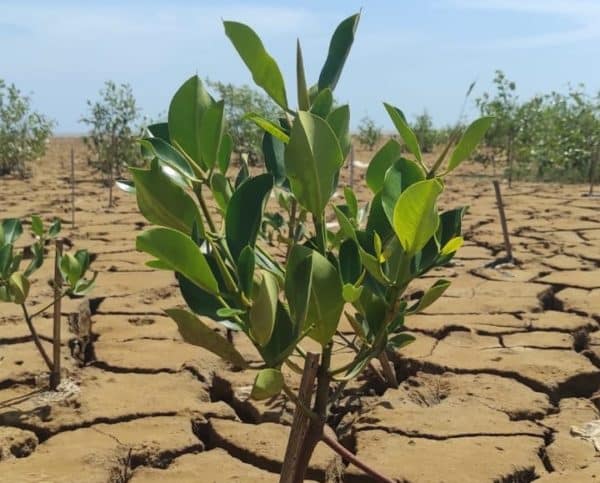
Bruguiera has the most species compared to other mangrove types. It has six mangrove species; Bruguiera cylindryca, Bruguiera exaristata, Bruguiera gymnorrhiza, Bruguiera haenessii,  Bruguiera parviflora, and Bruguiera sexangula. Generally, it has pointed-shaped leaves with strong stems and thick roots which look like bent knees as its characteristic.  

Mangroves in Indonesia and Their Benefits
Bruguiera gymnorrhiza. Photo: Trees4Trees/Armin Mubarok

Like other mangrove, Bruguiera has numerous benefits. Besides preventing coastal erosion and storing carbon, most parts of Bruguiera trees are beneficial. Bruguiera gymnorrhiza young leaves can be processed into food. The barks are often used as a traditional medicine to treat diarrhea, fever, and skin burns, and are believed to prevent malaria. Bruguiera sexangular has a high economic value. Its fruit can be processed into herbal drinks too. 

Ceriops Mangrove 

Mangroves in Indonesia and Their Benefits
Ceriops. Photo: Wikipedia.

Ceriops mangrove is also known as tengar tree in Indonesia. It has pencil-shaped roots, elongated fruits, and bubbling stems as its characteristics. The appearance of Ceriops is like Rhizophora but smaller. It is usually found in dry parts of Rhizophora mangrove forests. The tree bark produces tannin which is beneficial as a natural dye to produce a yellow color. Ceriops has two species that exist in Indonesia; Ceriops decandra and Ceriops tagal 

Read also: Putting Down the Roots: Trees4Trees Planting Season 2022

Sonneratia Mangroves

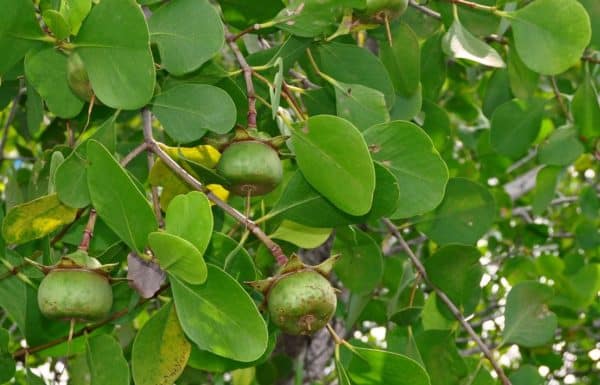
Sonneratia has a pencil-shaped root system, and its appearance looks like Avicennia, but they have a different shape of flower, fruit, and leaf. There are three species of Sonneratia in Indonesia; Sonneratia alba, Sonneratia caseolaris, and Sonneratia ovata. Sonneratia caseolaris’s fruit contains a high level of Vitamin C. It also contains Vitamin B1, B2, and antioxydant. Sonneratia tree trunks are often used as a raw material for firewood and charcoal.  

Sonneratia alba
Sonneratia alba. Photo: Wikipedia

Mangroves accommodate incredible benefits and impacts for nature and human beings. Unfortunately, mangroves have experienced loss and degradation worldwide. As part of the contribution to restore mangrove covers, Trees4Trees started planting 36.000 mangroves in 2021 on the coast of Dukuhseti Village in Pati regency, Central Java. It aimed to prevent coastal erosion and protect fishponds owned by local farmers.  

This planting season, Trees4Trees expands the mangrove planting to five villages in Pati regency and in Cilacap regency, Central Java. The main aim of planting mangroves is to prevent coastal erosion and restore the original mangrove forests. By broadening the mangrove planting area, it is expected to contribute to the mangrove ecosystem restoration in Indonesia.