Restoring Mangroves in Cilacap, Central Java

Restoring Mangroves in Cilacap, Central Java
Photo: Trees4Trees/Haryadi

Located close to Segara Anakan lagoon in Java’s Cilacap Regency, Ujung Alang Village was once covered in mangroves. In the 1990s, the region experienced massive deforestation, mostly because of land being converted for aquaculture ponds. 

In the last two decades, local residents have been helping the mangroves bounce back. A conservation area has been set up and has since become a hub for studies and research into the natural world.  

Now, with support from Trees4Trees, mangrove restoration in Cilacap is going up a gear. An ambitious new replanting project has provided the investment and manpower needed to give the ecosystem a new lease of life. 

Healing the wounds of the past 

Before 1994, Ujung Alang and was covered with mangrove forests. These trees were then cleared by investors to make way for shrimp and milkfish ponds. This venture lasted just four years; by 1998, the ponds had been abandoned.,  

Virtually overnight, the investors cut their losses and left town. But not before leaving their mark on the landscape. Thousands of hectares of mangrove forests had been cut down and turned into barren land.  

In 2000, local communities decided to act, and made a plan to restore the mangroves to their former state.  
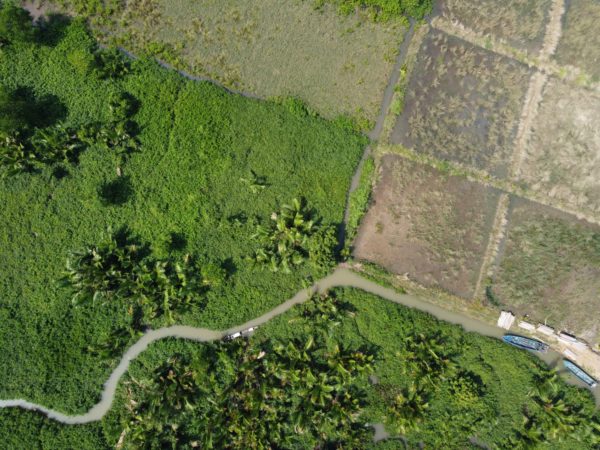
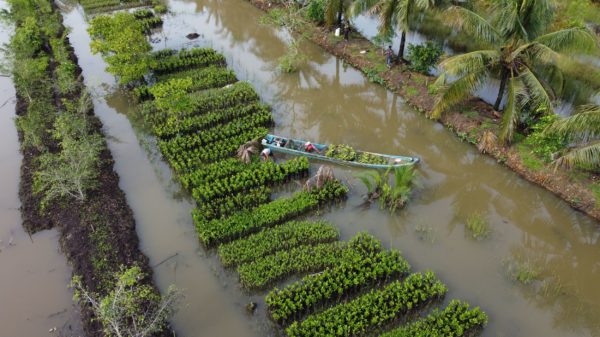
Restoring mangrove in Ujung Alang Cilacap
(Above) Abandoned shrimp ponds, overgrown with weeds. Photo: Trees4Trees/Haryadi

Working together to restore mangroves 

Over the past decade, local communities, with the support of the government and various other supporters, have successfully planted 56 different species of mangroves in an area covering approximately 400 hectares. Trees4Trees has committed to supporting these ongoing efforts. 

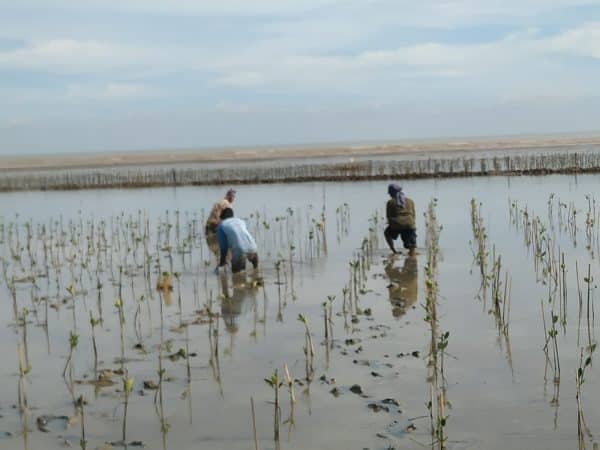
In early 2023, working in collaboration with the Tani Krida Wana Lestari farmer group, Trees4Trees began replanting an area of 2.4 hectares around Ujung Alang. So far, we have planted more than 7,600 trees together. 
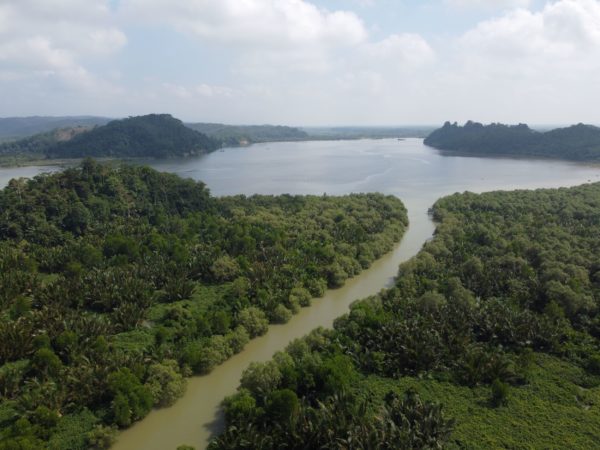
Planting mangrove in Ujung Alang Cilacap
(Above) Segara Anakan Lagoon. Photo: Trees4Trees/Kemas Duga Muis

“Deforestation of mangrove forests in Segara Anakan has led to a significant reduction in mangrove area and caused a decline in fish catches,” explains Armin Agung Mubarok, the Trees4Trees Impact Officer and coordinator of the mangrove project. “By restoring the mangrove ecosystem, we aims to restore the habitat as a nursery ground for crustaceans and other animals, thereby enhancing biodiversity in the region,” he added. 

Haryadi is the Trees4Trees GIS officer on the project., He experienced a number of challenges in clearing away the old growth to make way for new mangroves. As he explains, “clearing the areas of weeds is crucial, as they hinder the growth of the mangroves.”  
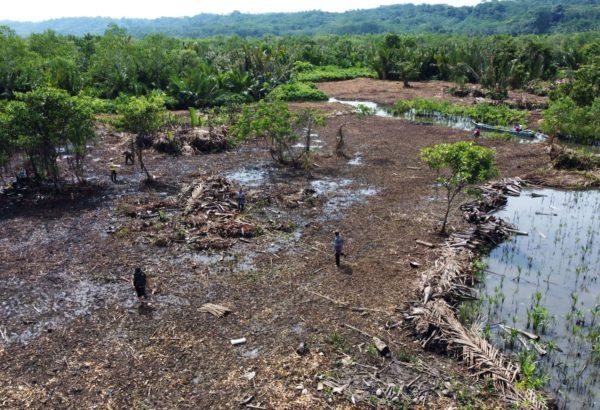
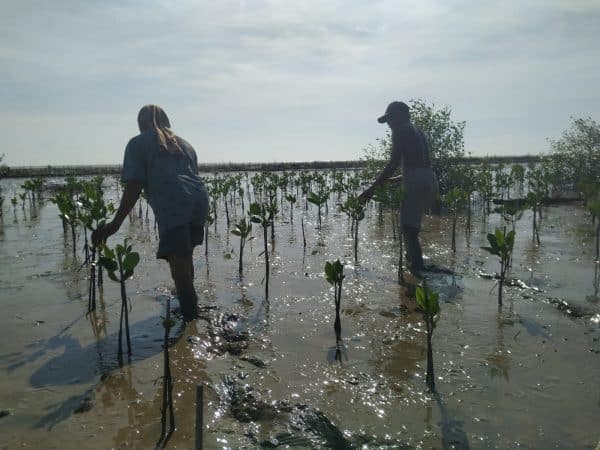
Planting mangrove in Ujung Alang Cilacap
(Above) Invasive weeds are cleared before replanting can begin. Photo: Trees4Trees/Haryadi

Restoring natural balance to the ecosystem  

After the weeds had been cleared, Trees4Trees focused on planting four different mangrove tree species, each one chosen to match the unique conditions of their environment.  

In areas less affected by the tide, large-leafed orange mangroves (Bruguiera gymnorrhiza) were chosen, due to their ability to thrive in areas where there’s not much saltwater. They can also do well in both shady and sun-baked areas. 

In tidal areas that are regularly flooded, tall-stilt mangroves (Rhizophora apiculate) were planted, as they thrive in wet, muddy soil. Red mangroves (Rhizophora mucronata) were chosen for inundated areas, where they can grow and thrive. 

Finally, seedlings of spotted mangroves (Rhizophora stylosa) were planted throughout the area, to improve the diversity of species.  
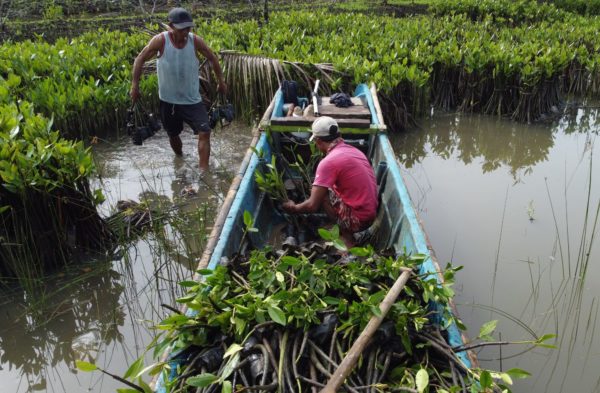
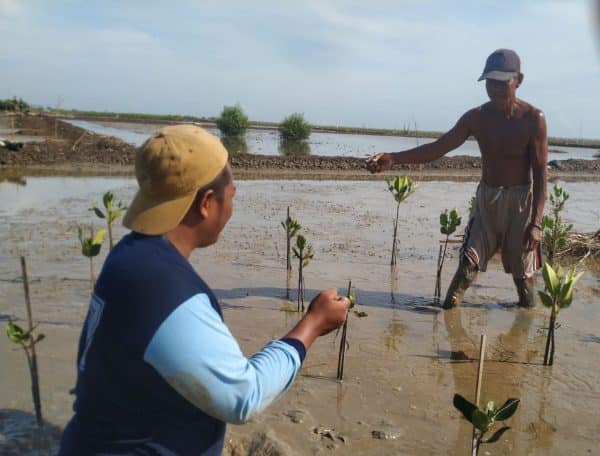
Planting mangrove in Ujung Alang Cilacap
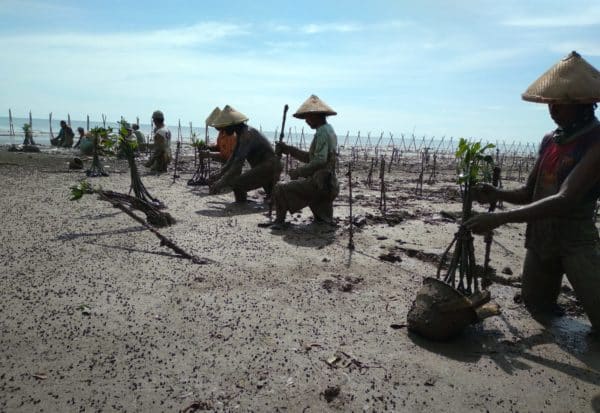
(Above) Working together with local communities, Trees4Trees replants the mangrove forest. Photo: Trees4Trees/Haryadi

Next steps: Taking replanting to the next level 

This small-scale pilot project, was an opportunity to test out planting methods before launching a more ambitious program. Over the next five years, Trees4Trees intends to scale up these efforts and continue planting mangroves to restore mangrove cover.  

“Based on the trial we conducted, we were able to plant 3,500 trees per hectare,” says Haryadi, who is working to turn initial impact into long-term reforestation. “Over the next few years, our goal is to plant mangroves over an area of 1,000 hectares.

Writer: V. Arnila Wulandani. Editor: Christopher Alexander

Replanting Mangroves, Rebuilding Futures in Central Java

Trees4Trees has been working with local communities to replant mangroves in Central Java
Trees4Trees has been working with local communities to replant mangroves in Central Java. Photo: Doc. Trees4Trees

On New Year’s Eve, Pati Regency in Central Java was inundated by heavy rains. This caused flooding that destroyed more than 600 hectares of agricultural land and damaged thousands of homes. But there was one silver lining to the black clouds that surrounded Pati in December – residents noticed that the areas least affected by the floods were also places with the highest coverage of mangrove forests.  

From the wreckage came the green shoots of a solution. Now, with support from local government and outside help from investors like EcoMatcher, Trees4Trees is working with communities in Pati to restore mangrove forests and rebuild for the future.  

Read also: Mangrove Planting Program with EcoMatcher Inspires Villagers to Plant More Mangrove Trees

A Rising Tide: Building Awareness of Mangroves 

“In recent years, local people’s awareness of mangroves has increased,” says Fauzan Timurlang, who is the Trees4Trees Unit Manager in Pati. He believes the benefits provided by mangroves have become clearer since the recent floods, with many people ready to take action. “They have seen that mangroves can act as barriers that break the waves and reduce the damaging impact,” he explains.  

Andi Lestari is a mangrove activist in Pati, working alongside Trees4Trees. He too has noticed an increase in community awareness. “Many people have seen for themselves the great benefits of mangroves,” he explains. “They have seen that areas with mangrove cover suffer less damage compared to areas that did not have any,” he added. 

Read also: The Incredible Benefits of Mangroves Ecosystem  

Root and Branch: Combining Community Action with Government Support 

Pati Regency stretches 37 miles (60 km) along the coastline of Central Java. Officials here have decided to double mangrove coverage from 300 to 600 hectares, effectively creating a natural barrier that can prevent coastal erosion and protect local homes and livelihoods from flooding. 

“We want to create a green belt from Pencangaan to Puncel,” explains Edy Martanto, Head of the Maritime Affairs and Fisheries Service (DKP) for Pati, in a recent interview with Muria News. “The green belt will function like a beach embankment – if there are waves, the mangroves will form a barrier – when the mangroves are strong, the ponds are also safe.”  

(Above) In areas like Kalikalong village in Pati Regency, Trees4Trees has been working to double mangrove cover

Planning into Planting: Trees4Trees Takes Action in Pati 

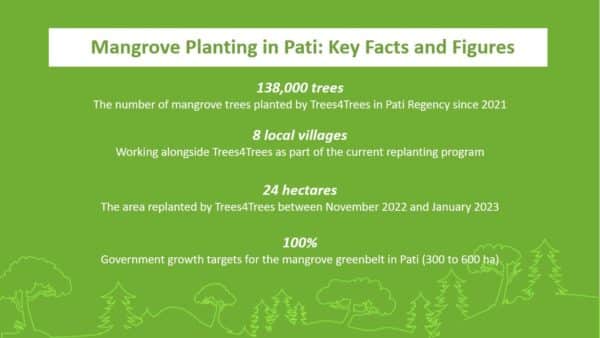
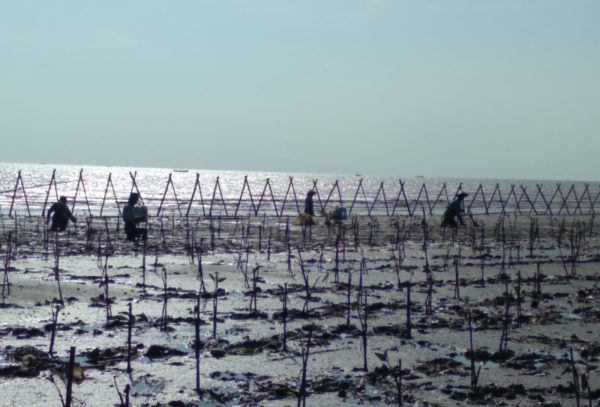
To help bring this green belt to fruition, Trees4Trees began planting mangroves along the Pati coastline from November 2022 to January 2023, as part of the recent planting season. By employing members of the community from eight local villages, Trees4Trees has already planted a total of 108,000 mangrove trees in an area covering 24 hectares.  

These seedlings (consisting of Red Mangrove or Rhizophora mucronata and White Mangrove or Avicennia marina), are endemic to the area, so will help replenish wild populations. They are currently being monitored to ensure they stay healthy and continue to grow. Back in 2021, and with support from EcoMatcher, Trees4Trees also planted around 30,000 mangrove seedlings across 3.8 hectares surrounding Dukuhseti village.

Read also: Mangrove Types in Indonesia and Their Benefits


Trees4Trees has planted more than 138,000 mangrove trees in Pati since 2021.

“The thicker the mangrove cover, the safer our fishponds will be – that’s why we’re so keen to be a part of the Trees4Trees mangrove planting program.”  Musthofa, Tani Makmur farmers’ group 


Local Communities on the Frontline of Mangrove Restoration 

To ensure mangrove restoration takes root in Pati, Trees4Trees has also involved local village officers and members of the forestry service. Six groups of local fishpond farmers have also been employed as mangrove planters.  

“Farmers in our group have become aware of the benefits provided by healthy mangrove ecosystems,” explains Musthofa, leader of the Tani Makmur farmer group. “The thicker the mangrove cover, the safer our fishponds will be; that’s why we’re so keen to be a part of the Trees4Trees mangrove planting program,” he added. 

(Above) Parmi is one of many fishpond farmers joining in the Trees4Trees planting program in Dukuhseti village

Another of the fishpond farmers who joined the mangrove planting program is Parmi. Like many people here, he makes a living by farming fish and shrimp. With support from Trees4Trees, he is looking forward to a safer and more prosperous future. 

“Thick mangrove cover helps to protect our fishponds from strong waves, resulting in a higher abundance of fish,” explains Parmi. “I hope the mangroves we plant now will grow into a full forest like before, so they can continue to provide benefits for us and future generations.”  

Trees4Trees™ is a non-profit foundation focused on renewing the environment and empowering local communities through reforestation and education. For more information about the work we do, and to make a donation in planting mangroves, please go to devtrees4trees.portopaper.com. 

Writer: V.Arnila Wulandani. Editor: Christopher Alexander.

Mangroves Planting Program with EcoMatcher Inspires Villagers to Plant More Mangroves Trees

planting mangrove inspire more locals to plant more mangrove trees

planting mangrove in pati central java 

Pati Regency, located in northern Central Java, is one of the many mangrove-growing areas in Indonesia. This regency has approximately 8,000 hectares of potential mangrove areas. Nearly 25% of Pati’s total coastline was forested with mangroves. Unfortunately, the mangrove cover in this area is degraded and in poor condition.  In 2017, a survey in Pati showed that around 60% of mangrove cover had been lost in some districts.

Mangrove Cover in Poor Condition

Coastal erosion and land over-use are the most common causes of mangrove destruction in this area, making many mangrove areas become critical lands, including in Dukuhseti Village. Mangrove ecosystems play an important role in climate stabilization, coastal protection, biodiversity richness, local community’s economy, and supporting fishery.

Read also: Incredible Benefits of Mangrove Ecosystem

“In the past, our village had mangrove forests, but they were exposed to tremendous coastal erosion. After that, there was an expansion of the fishponds that cut down mangroves excessively. Consequently, now our village has no wave barriers around the coast,” said Mustofa, leader of the Tani Makmur farmer group in Dukuhseti Village.

Most of the villagers of Dukuhseti make their living as fish farmers and fishermen. They have fishponds near the coast. Their main products are tilapia and milkfish.

Mustofa said the most significant impact after the mangrove forest was drastically reduced is that now the village does not have any wave barriers, thus endangering small fishponds near the coast owned by local farmers.

“When the big waves come, our fishponds are often hit and destroyed by the waves. Big waves sometimes also bring runti pests (barnacles) in large numbers. They not only can injure fish farmers because they are sharp but also can infect young mangrove tree trunks,” Mustofa added.

planting mangroves in Pati Central Java

Planting Mangroves Program with Trees4Trees and EcoMatcher

When Trees4Trees and EcoMatcher came to Dukuhseti Village and invited them to join the mangrove tree planting program, Mustofa and other members of the Tani Makmur group welcomed the project enthusiastically.

“The community was very supportive and excited when they knew the program was being implemented in our village. We hope that many mangrove trees can be planted so that erosion can be prevented, and our fishponds can be protected from waves,” said Mustofa. In addition, mangroves also benefit fishermen because they do not have to go to sea far to catch fish. The fish become more abundant around mangroves.

planting mangroves in Pati Central Java

Since November 2021, Trees4Trees and EcoMatcher have planted 30,000 mangrove seedlings on the coast of Dukuhseti village in partnership with the fish farmers from the Tani Makmur farmer group. The mangroves planted covered an area of ​​3.8 hectares. The fish farmers are employed in producing seedlings, planting, and installing breakwater walls to protect the young seedlings.

“Before planting mangroves, the land was considered by the government to be critically degraded land. There were only a few mangrove trees left. We planted Avicennia and Rhizophora mangrove species because these two types were the original natural forest. We hope to restore the mangrove cover in this area completely,” Fauzan, Unit Manager of Trees4Trees Pati, said.

Inspire Local People to Plant More Mangrove Trees

Interestingly, the Trees4Trees and EcoMatcher mangrove planting program also inspires and motivates locals to plant more mangrove trees around the village coast. Shortly after the planting project with Trees4Trees and EcoMatcher was completed, the villagers planted mangrove trees voluntarily around the planting area. They sow the Avicennia seedlings directly on the shore and around the fishponds while the waves are low.  

planting mangroves in Pati Central Java

“Actually, some villagers whose ponds are close to the coast had planted mangroves voluntarily a long time ago. However, this program motivates and inspires more people to plant more mangroves. We think it is because people are starting to realize the importance of mangroves’ existence in the village,” said Mustofa. The villagers thank Trees4Trees and EcoMatcher for the mangroves planting program. They also hope to plant more mangroves in the future.

This year, Trees4Trees has been partnering with EcoMatcher for five years, a moment to celebrate! Both are keen on their commitment to supporting local communities and environmental restoration by planting trees. Trees4Trees and EcoMatcher use technology to monitor the locations of the planted trees. Anyone can visit the trees they have planted through the EcoMatcher website.  Each tree planted by Trees4Trees and EcoMatcher is recorded with the TreeCorder application developed by EcoMatcher. With this technology, anyone can track and plant trees via a smartphone and get information about the trees and the farmers who care for them.

Author: V. Arnila Wulandani