Trees4School: Empowering Children to Protect Semarang’s Coastal Ecosystem

Trees4School

Mangunharjo and Mangkang Wetan are two villages in the Tugu District of Semarang City, located in the northern coastal area of Central Java. Situated on the edge of coastal areas facing the Java Sea, the villages frequently experience tidal flooding.  

During the rainy season, or when tidal waves rise and strong winds blow, the villages are inundated by floodwaters. Sometimes, the flooding reaches the chest height of adult people, making children particularly vulnerable as the environment around them becomes unsafe for playing or even going to school. 

Modern development exacerbates tidal flooding 

In the past, the coastal areas of Semarang were dominated by agricultural land and surrounded by mangrove forests. However, with the onset of modern development, excessive exploitation and land conversion into industrial and residential areas have placed a heavy burden on the coastal area.  

The expansion of industrial areas causes land subsidence and the loss of natural barriers, as mangrove forests have been deforested. These issues then triggered coastal erosion and tidal flooding, harming the well-being of the local communities living nearby, including children.   
Mangrove Planting
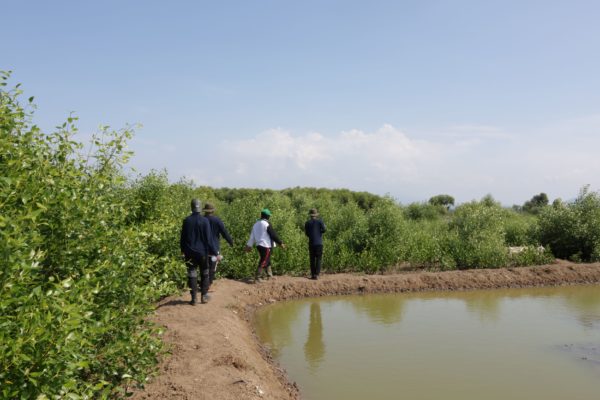
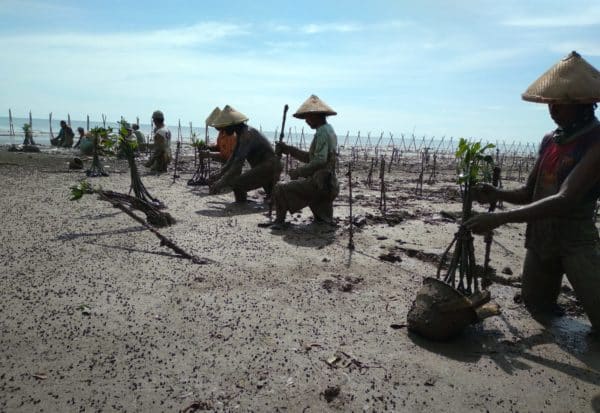
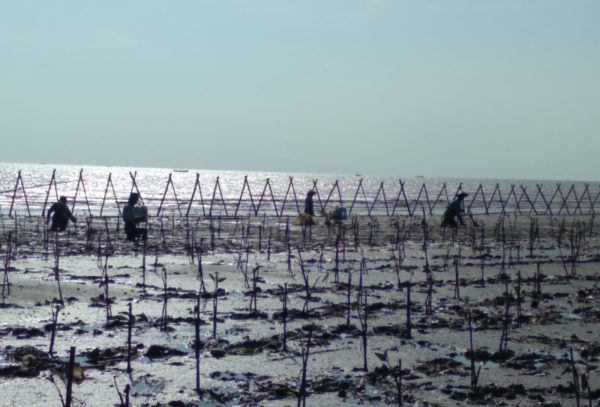
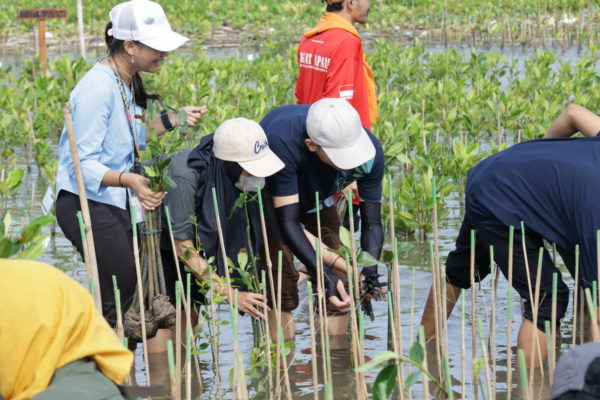
Trees4Trees along with volunteers from universities, companies, and government officials planted mangroves to support mangrove restoration in Mangunharjo coastal area.

Children vulnerable to tidal flooding’s impact  

Living in the midst of a tidal disaster-prone area, children are the most vulnerable group affected by these conditions. When tidal flooding occurs, inundated houses, roads, and even schools disrupt their studies, hinder their way to school, and limit their freedom to play around.  

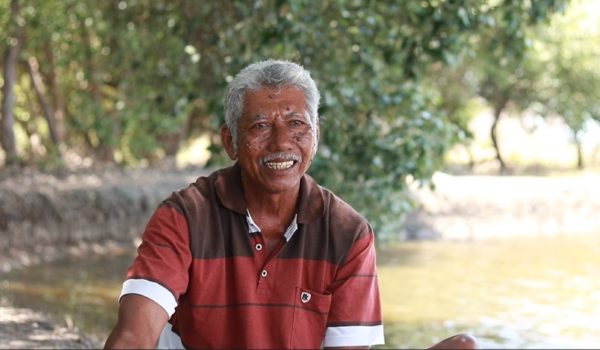
“When the tidal flood high, there many students who cannot attend the class for days because their homes inundated with flood as well as the access from their homes to school,” Slamet, the headmaster of Mangkang Wetan 01 Elementary School revealed. 

Slamet believes that coastal environmental protection should be taught to children from an early age to prepare them with the knowledge and skills needed to mitigate the impact of tidal flooding and reduce its severity. 
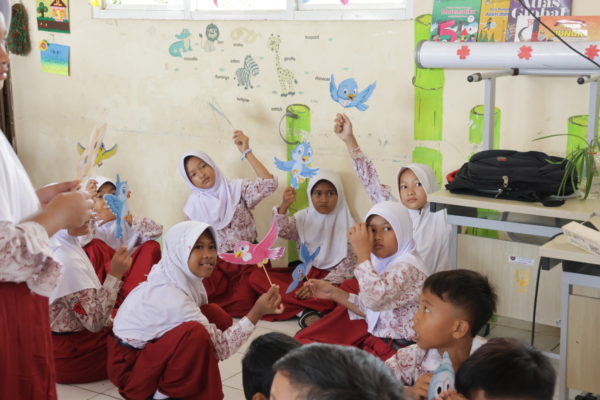
Trees4School
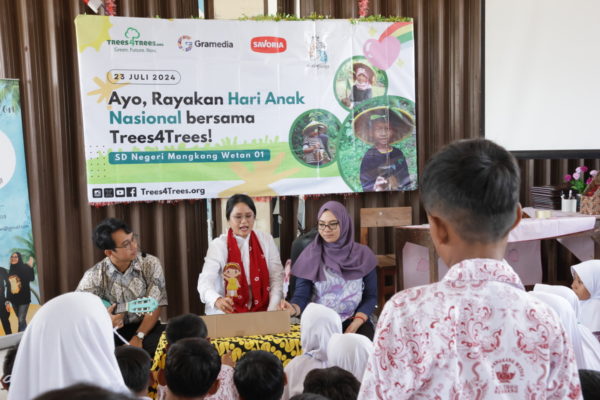
Students at Mangkang Wetan 01 Elementary School were engaged in the mangrove education session led by Trees4Trees and the Lanang Wadon community.

Trees4School

Trees4Trees initiated a coastal protection and mangrove education at school  

To provide children in both villages with essential knowledge on coastal protection and mangrove conservation, Trees4Trees organized an educational event through its Trees4School program. Coinciding with National Children’s Day on July 23rd, the event was held at Mangkang Wetan 01 Elementary School. 

The event was also part of the Trees4Trees Planting Festival, held in June 2024, where 2,000 mangroves and 100 coastal pine trees were planted in the Mangunharjo coastal area. This initiative supports the local community’s efforts to restore mangrove forests as natural barriers against tidal flooding. 
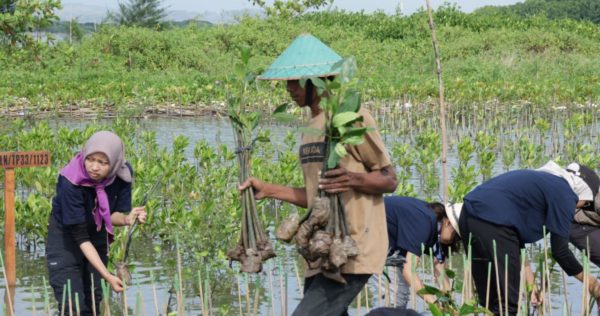
planting mangrove
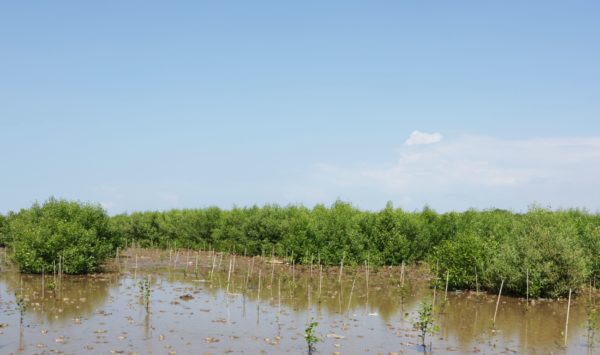
The planting of mangroves brings renewed hope to the Mangunharjo coastal area, as they protect against tidal surges.

“Most of the children in Mangunharjo and Mangkang Wetan villages attend this elementary school. Since this area is prone to tidal flooding and is surrounded by mangrove covers planted by the local community in recent years, we believe it’s important for children to understand the value of caring for mangroves as natural barriers for their homes,” said Slamet. 

In collaboration with the Lanang Wadon Storytelling community, Trees4School included a storytelling session about the superpowers of mangroves. The session highlighted how mangroves sequester carbon dioxide at a rate 10 times greater than other trees, help stabilize the Earth’s temperature to prevent the worsening of global warming, provide habitat for coastal biodiversity, and most importantly, protect coastal areas from storm, erosion, and tidal flooding, which the children experience annually. 
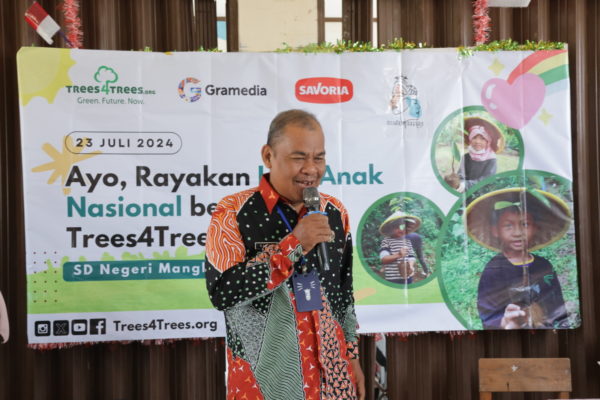
Trees4School
Slamet, the headmaster of Mangkang Wetan 01 Elementary School, thanked Trees4Trees for educating the students on coastal issues.

“Through the Trees4School program’s coastal ecosystem and mangrove education, we aim to instill an early understanding of coastal preservation in children. Previously, we planted mangroves along the shoreline, and by engaging children in interactive activities such as games, storytelling, and short films, we hope to inspire them to protect mangroves and coastal ecosystems. Healthy mangrove forests contribute to robust coastal ecosystems, safeguarding their homes, schools, and their parents’ livelihoods,” said Adi Gani, Trees4Trees Project Manager. 

Read Also:Trees4Trees Planting Festival, Celebrating 16th Reforestation Journey 

Interested in supporting environmental education for the next generation? Sponsor the Trees4School program along with your tree donations. In addition to implementing Trees4School in our project areas, Trees4Trees offers hands-on tree-planting experiences and valuable environmental knowledge to students in public and private schools. Contact us to get involved! 

Writer: V. Arnila Wulandani. Photos: Yulianisa Dessenita  

Blue Carbon: Coastal Forests on the Frontline of Climate Change

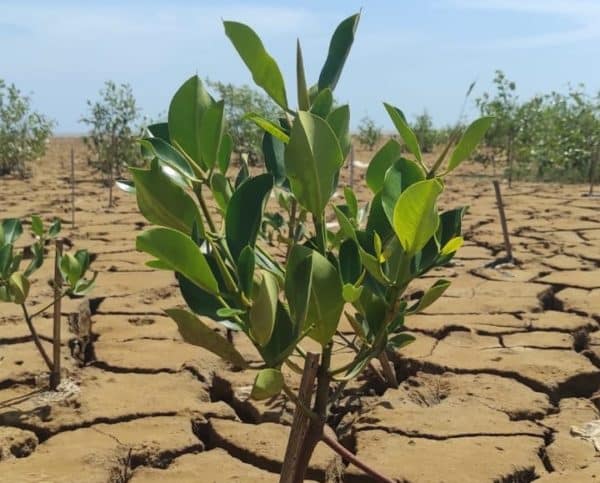
A Trees4Trees mangrove project planted in 2021


Photo: Trees4Trees/Yulianisa Dessenita

How can we combat global warming? Planting trees is a good place to start. Forests are the lungs of our planet. They produce oxygen and absorb the emissions we produce, while also keeping potentially harmful carbon in the ground, where it belongs. 

But when you think of forests, you probably don’t think of coastal and marine ecosystems, right? And yet, these ecosystems store more carbon than anywhere else on Earth. Carbon absorbed and stored here is called “blue carbon”. And blue carbon could be the key to a greener future.  

What is blue carbon and why is it important? 

Blue carbon is the carbon stored in coastal and marine ecosystems. Most of it is carbon dioxide (CO2) that has dissolved directly into the ocean. Lots of blue carbon is stored in underwater sediment, coastal vegetation, and coastal soils. 

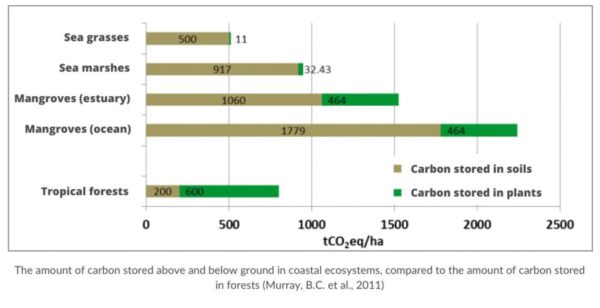
Coastal ecosystems can be sea grasses, mangroves, and salt marshes. They all play a crucial role in capturing and retaining carbon. It is for this reason that they’re sometimes called ‘carbon sinks. Although coastal ecosystems are smaller than terrestrial forests, they actually  sequester and store more carbon. 

Unlike in tropical forests, where carbon is stored in above-ground plants, blue carbon is stored below the ground., Some blue carbon can be thousands of years old.  

Did you know? Coastal ecosystems store more carbon per hectare than terrestrial forests. 

A Trees4Trees mangrove project planted in 2021
(Above) A Trees4Trees mangrove project planted in 2021. Photo: Trees4Trees/Yulianisa Dessenita

Coastal ecosystems: Our first line of defense 

Every year, mangroves and coastal wetlands suck ten times more carbon out of the atmosphere than tropical forests. They also store three to five times more carbon.  

When these habitats are damaged or destroyed, all that carbon is released into the atmosphere as harmful greenhouse gases. This makes protecting and restoring coastal habitats essential to combating climate change.  

Healthy coastal ecosystems give us loads of other benefits besides carbon. They offer protection from storms and erosion, provide nurseries for commercial fisheries, and are beautiful places for us to explore and enjoy. 

Did you know? Coastal habitats make up less than 2% of total ocean area, but store around 50% of the carbon sequestered in ocean sediments 

Carbon stored in mangroves ecosystem comparation
The graphic is modified from the original source IUCN

Coastal ecosystems in Indonesia 

In case you didn’t know, Indonesia is huge. This enormous archipelago is home to nearly a quarter of the world’s mangroves, which cover about 3.2 million hectares.

Together with 3 million hectares of sea grasses, these areas store about 3.4 billion metric tons of carbon – that’s 17% of all the blue carbon in the world. 

But despite their massive importance, Indonesian mangroves are under serious threat. Every year, more of these areas are converted into ponds or swallowed up by urban expansion. 

Indonesia emits 190 million tons of CO2-eq every year. That’s 42% of the world’s annual emissions from the destruction of coastal ecosystem services. 

Read more: Five types of mangrove in Indonesia and their benefits 

Trees4Trees mangrove restoration program  

As part of our commitment to support the Indonesian government’s efforts to restore mangrove cover and preserve blue carbon stored in coastal ecosystems, Trees4Trees has been busy replanting mangroves in Central Java. 

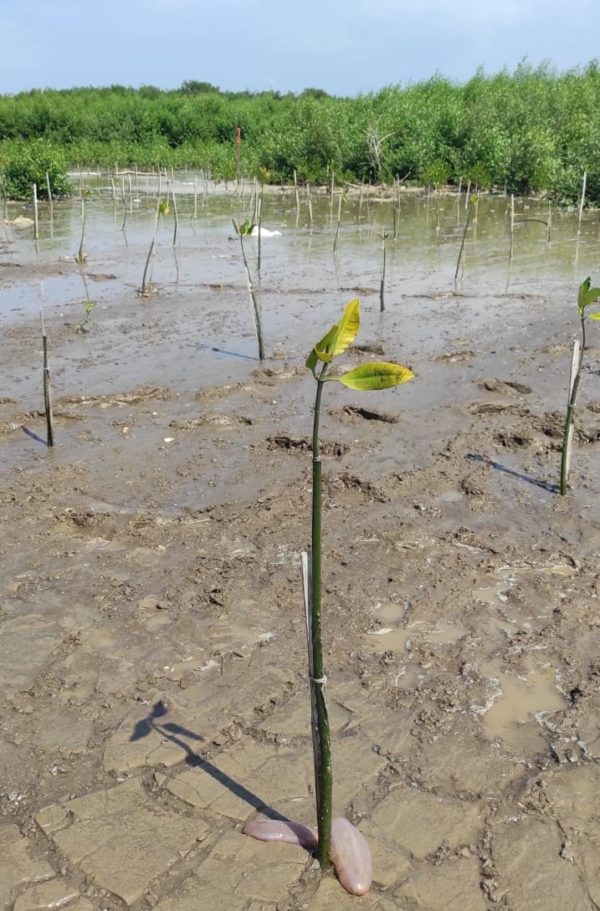
A sea cucumber and mangrove seedling in Dukuhseti coastal area, Pati.
(Above) A sea cucumber and mangrove seedling. Photo: Trees4Trees/V. Arnila Wulandani

“From 2021 to 2022, we successfully planted more than 100,000 seedlings in seven coastal villages in Pati,” explains Khoirum Minan, Trees4Trees Pati Unit Manager. “We aim to prevent tidal surges that can erode shorelines and pose a threat to residential areas and fishponds owned by local communities,” he added

The benefits of Trees4Trees mangrove planting mission in Central Java can already be clearly seen. “Mangroves we planted in 2021 have formed a green belt,” says Mustofa, the farmer group leader in Dukuhseti village in Pati. The ecosystem has taken shape, and we often observe birds, fish, and crustaceans in these newly restored mangrove areas.”  

Did you know? It’s estimated that 83% of the global carbon cycle is circulated through the ocean. 

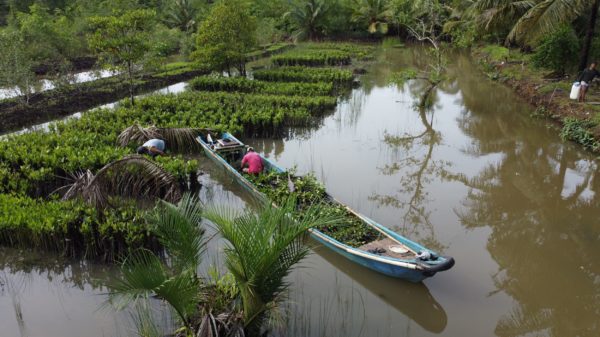
Elsewhere in Central Java, Trees4Trees recently planted 7,600 plants in an area of mangroves spanning 2.4 hectares in Segara Anakan, Cilacap., This previously degraded mangrove ecosystem is now thriving.  

This small-scale pilot project was a chance for us to try out our planting methods before the time came to tackle a bigger challenge. And that time has now arrived.  By 2027, Trees4Trees aims to plant 3.5 million trees in an area covering 1,000 ha in Cilacap, Central Java. 

Read more: Replanting mangroves rebuilding future in Central Java 

“Our project aims to restore the degraded mangrove ecosystems, enhance mangrove species diversity, promote fish populations and biodiversity, and eliminate invasive weeds that disrupt the mangrove growth,.” says Armin Mubarok, the Trees4Trees Impact Officer leading the mangrove planting program in Cilacap. 

Mangrove planting in Cilacap
(Above) Mangrove planting in Cilacap. Photo: Trees4Trees/Haryadi

Through our mangrove planting efforts, Trees4Trees is working to restore degraded mangrove ecosystems and build new green belts along Indonesia’s precious coastlines.  

Together with our local partners, we’re working to preserve blue carbon, and provide lasting benefits to people and nature.  

Writer: V. Arnila Wulandani. Editor: Christopher Alexander

Replanting Mangroves, Rebuilding Futures in Central Java

Trees4Trees has been working with local communities to replant mangroves in Central Java
Trees4Trees has been working with local communities to replant mangroves in Central Java. Photo: Doc. Trees4Trees

On New Year’s Eve, Pati Regency in Central Java was inundated by heavy rains. This caused flooding that destroyed more than 600 hectares of agricultural land and damaged thousands of homes. But there was one silver lining to the black clouds that surrounded Pati in December – residents noticed that the areas least affected by the floods were also places with the highest coverage of mangrove forests.  

From the wreckage came the green shoots of a solution. Now, with support from local government and outside help from investors like EcoMatcher, Trees4Trees is working with communities in Pati to restore mangrove forests and rebuild for the future.  

Read also: Mangrove Planting Program with EcoMatcher Inspires Villagers to Plant More Mangrove Trees

A Rising Tide: Building Awareness of Mangroves 

“In recent years, local people’s awareness of mangroves has increased,” says Fauzan Timurlang, who is the Trees4Trees Unit Manager in Pati. He believes the benefits provided by mangroves have become clearer since the recent floods, with many people ready to take action. “They have seen that mangroves can act as barriers that break the waves and reduce the damaging impact,” he explains.  

Andi Lestari is a mangrove activist in Pati, working alongside Trees4Trees. He too has noticed an increase in community awareness. “Many people have seen for themselves the great benefits of mangroves,” he explains. “They have seen that areas with mangrove cover suffer less damage compared to areas that did not have any,” he added. 

Read also: The Incredible Benefits of Mangroves Ecosystem  

Root and Branch: Combining Community Action with Government Support 

Pati Regency stretches 37 miles (60 km) along the coastline of Central Java. Officials here have decided to double mangrove coverage from 300 to 600 hectares, effectively creating a natural barrier that can prevent coastal erosion and protect local homes and livelihoods from flooding. 

“We want to create a green belt from Pencangaan to Puncel,” explains Edy Martanto, Head of the Maritime Affairs and Fisheries Service (DKP) for Pati, in a recent interview with Muria News. “The green belt will function like a beach embankment – if there are waves, the mangroves will form a barrier – when the mangroves are strong, the ponds are also safe.”  

(Above) In areas like Kalikalong village in Pati Regency, Trees4Trees has been working to double mangrove cover

Planning into Planting: Trees4Trees Takes Action in Pati 

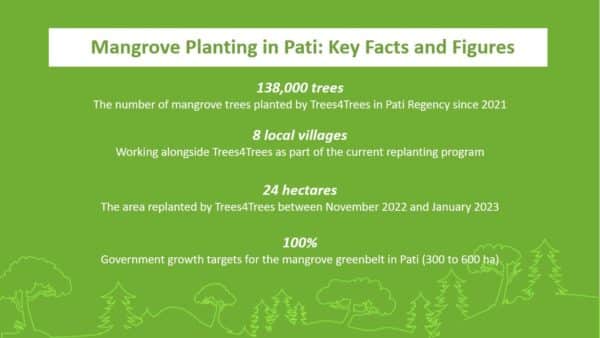
To help bring this green belt to fruition, Trees4Trees began planting mangroves along the Pati coastline from November 2022 to January 2023, as part of the recent planting season. By employing members of the community from eight local villages, Trees4Trees has already planted a total of 108,000 mangrove trees in an area covering 24 hectares.  

These seedlings (consisting of Red Mangrove or Rhizophora mucronata and White Mangrove or Avicennia marina), are endemic to the area, so will help replenish wild populations. They are currently being monitored to ensure they stay healthy and continue to grow. Back in 2021, and with support from EcoMatcher, Trees4Trees also planted around 30,000 mangrove seedlings across 3.8 hectares surrounding Dukuhseti village.

Read also: Mangrove Types in Indonesia and Their Benefits


Trees4Trees has planted more than 138,000 mangrove trees in Pati since 2021.

“The thicker the mangrove cover, the safer our fishponds will be – that’s why we’re so keen to be a part of the Trees4Trees mangrove planting program.”  Musthofa, Tani Makmur farmers’ group 


Local Communities on the Frontline of Mangrove Restoration 

To ensure mangrove restoration takes root in Pati, Trees4Trees has also involved local village officers and members of the forestry service. Six groups of local fishpond farmers have also been employed as mangrove planters.  

“Farmers in our group have become aware of the benefits provided by healthy mangrove ecosystems,” explains Musthofa, leader of the Tani Makmur farmer group. “The thicker the mangrove cover, the safer our fishponds will be; that’s why we’re so keen to be a part of the Trees4Trees mangrove planting program,” he added. 

(Above) Parmi is one of many fishpond farmers joining in the Trees4Trees planting program in Dukuhseti village

Another of the fishpond farmers who joined the mangrove planting program is Parmi. Like many people here, he makes a living by farming fish and shrimp. With support from Trees4Trees, he is looking forward to a safer and more prosperous future. 

“Thick mangrove cover helps to protect our fishponds from strong waves, resulting in a higher abundance of fish,” explains Parmi. “I hope the mangroves we plant now will grow into a full forest like before, so they can continue to provide benefits for us and future generations.”  

Trees4Trees™ is a non-profit foundation focused on renewing the environment and empowering local communities through reforestation and education. For more information about the work we do, and to make a donation in planting mangroves, please go to devtrees4trees.portopaper.com. 

Writer: V.Arnila Wulandani. Editor: Christopher Alexander.

Mangroves Types in Indonesia and Their Benefits

Rhizophora in the coast of Dukuhseti village, Pati regency
Mangroves in Indonesia and Their Benefits
Rhizophora in the coast of Dukuhseti village, Pati regency. Photo: Trees4Trees

Mangroves have enormous benefits for the environment and the economy. From preventing coastal erosion, storing a large amount of carbon and fighting climate change, providing a home and nursery ground for a wide range of animals, to providing multi-benefit for human life.   

Indonesia is home to one of the largest mangrove populations in the world with around 3.2 million hectares of mangrove covers. In this archipelago country, there are five mangrove types (genera) and around 202 species that are commonly found in coastal areas. Each type of mangrove has its own characteristic, and the most important thing is, they have amazing benefits. 

Let’s find out what types of mangroves can be found around Indonesia’s coastal areas and what are their benefits!

Rhizophora Mangrove

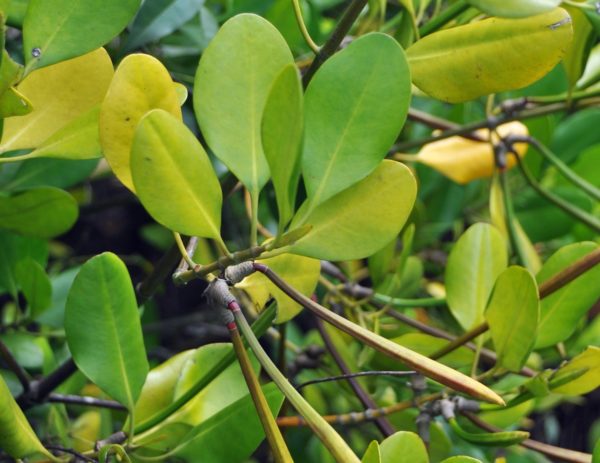
In Indonesia, Rhizophora is also known as bakau and it has three species; Rhizopora apiculata, Rhizophora mucronata, and Rhizophora stylosa.  Rhizophora has taproots that plunge into the forest floor. This type of root is growing above the surface of the soil. These roots stick out from the tree trunks and extended outwards.  

Rhizopora mucronata’s leaf, bark, and propagule waste can produce a natural brown dye to color fabrics and is one of the natural dyes for batik (Indonesian traditional fabrics). The young leaf is also beneficial as a mouth antiseptic. Ecologically, Rhizophora is effective to protect coastal areas from erosion. It is commonly planted along the shore and the edge of the fishponds to protect it from big waves.  

Avicennia Mangroves 

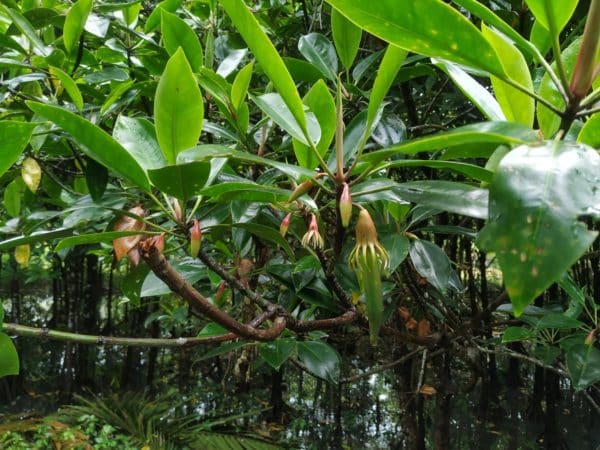
Avicennia is popular in Indonesia with its local name, api-api. Avicennia has pencil-shaped roots. They are embedded in the forest floor, protruding from the surface of the water, and scattered in very large numbers around the tree trunk. These roots serve as breath roots.  

Mangroves in Indonesia and Their Benefits
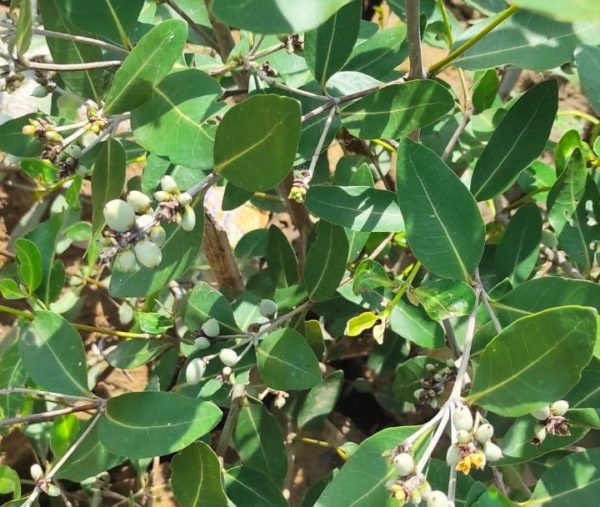
Avicennia which begun to bear fruits in Trees4Trees Mangrove planting area. Photo: Trees4Trees

It has five species; Avicennia alba, Avicennia eucalyptifolia, Avicennia lanata, Avicennia marina, and Avicennia officinalis. Even though, Avicennia marina is the most species found in Indonesia.  

Almost all parts of Avicennia are beneficial, from its roots, barks, tree trunks, stems, leaves, and flowers to its seeds. The fruits contain a high level of protein and various vitamins, like B and C, and can be processed into various foods which can increase the coastal community’s income by selling them. The leaves are used as fodder as well as a traditional medicine to treat skin burns and other skin diseases due to their anti-bacterial content. The strong tree trunks are often utilized as boat frames.  

Besides its ability to prevent coastal erosion and store carbon, based on research, Avicennia has a special ability to reduce metal toxic materials in mangrove forests through a dilution process.  

Read also: The Incredible Benefits of Mangroves Ecosystem 

Bruguiera Mangrove 

Bruguiera has the most species compared to other mangrove types. It has six mangrove species; Bruguiera cylindryca, Bruguiera exaristata, Bruguiera gymnorrhiza, Bruguiera haenessii,  Bruguiera parviflora, and Bruguiera sexangula. Generally, it has pointed-shaped leaves with strong stems and thick roots which look like bent knees as its characteristic.  

Mangroves in Indonesia and Their Benefits
Bruguiera gymnorrhiza. Photo: Trees4Trees/Armin Mubarok

Like other mangrove, Bruguiera has numerous benefits. Besides preventing coastal erosion and storing carbon, most parts of Bruguiera trees are beneficial. Bruguiera gymnorrhiza young leaves can be processed into food. The barks are often used as a traditional medicine to treat diarrhea, fever, and skin burns, and are believed to prevent malaria. Bruguiera sexangular has a high economic value. Its fruit can be processed into herbal drinks too. 

Ceriops Mangrove 

Mangroves in Indonesia and Their Benefits
Ceriops. Photo: Wikipedia.

Ceriops mangrove is also known as tengar tree in Indonesia. It has pencil-shaped roots, elongated fruits, and bubbling stems as its characteristics. The appearance of Ceriops is like Rhizophora but smaller. It is usually found in dry parts of Rhizophora mangrove forests. The tree bark produces tannin which is beneficial as a natural dye to produce a yellow color. Ceriops has two species that exist in Indonesia; Ceriops decandra and Ceriops tagal 

Read also: Putting Down the Roots: Trees4Trees Planting Season 2022

Sonneratia Mangroves

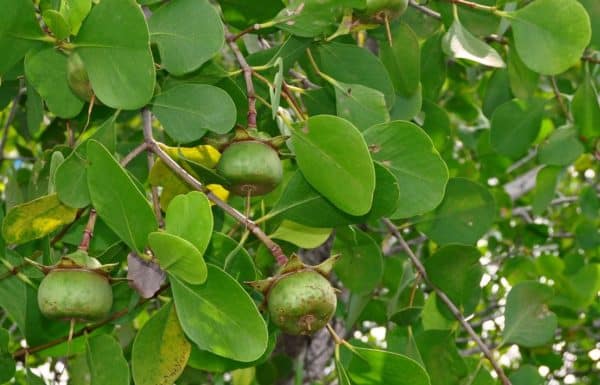
Sonneratia has a pencil-shaped root system, and its appearance looks like Avicennia, but they have a different shape of flower, fruit, and leaf. There are three species of Sonneratia in Indonesia; Sonneratia alba, Sonneratia caseolaris, and Sonneratia ovata. Sonneratia caseolaris’s fruit contains a high level of Vitamin C. It also contains Vitamin B1, B2, and antioxydant. Sonneratia tree trunks are often used as a raw material for firewood and charcoal.  

Sonneratia alba
Sonneratia alba. Photo: Wikipedia

Mangroves accommodate incredible benefits and impacts for nature and human beings. Unfortunately, mangroves have experienced loss and degradation worldwide. As part of the contribution to restore mangrove covers, Trees4Trees started planting 36.000 mangroves in 2021 on the coast of Dukuhseti Village in Pati regency, Central Java. It aimed to prevent coastal erosion and protect fishponds owned by local farmers.  

This planting season, Trees4Trees expands the mangrove planting to five villages in Pati regency and in Cilacap regency, Central Java. The main aim of planting mangroves is to prevent coastal erosion and restore the original mangrove forests. By broadening the mangrove planting area, it is expected to contribute to the mangrove ecosystem restoration in Indonesia.