When Tradition Preserves Nature: Indigenous Wisdom from West Java

When Tradition Preserves Nature

Indonesia, the world’s largest archipelago, is rich in cultural heritage and ethnic diversity. Here, more than 1,300 ethnic groups form a vibrant mosaic of traditions, many of which are deeply rooted in nature. This connection to nature is especially apparent in the Sundanese Indigenous villages of West Java, where many of our tree-planting programs are based. 

Where Tradition and Nature Intertwine 

Heri is a resident of Legok Kiara, a cultural hamlet in Rawabogo Village, Bandung Regency. He explains, “we have a proverb passed down through generations: There’s no separation between us and nature – only unity in life. Without nature, where would we live?”  
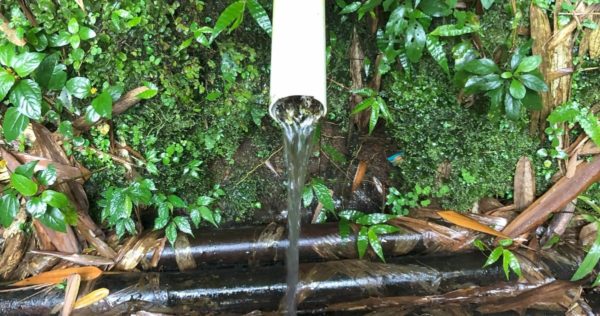
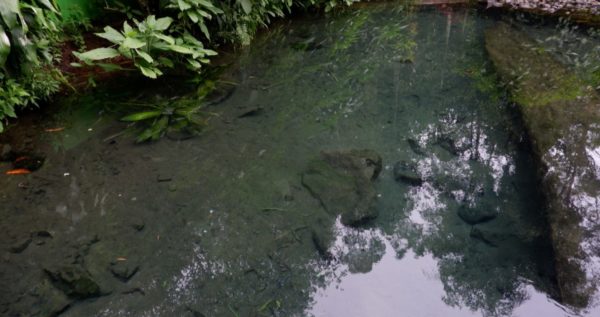
Legok Kiara Water Spring
Natural springs like this one in Legok Kiara Hamlet are a vital supply of clean water for the community.

According to Heri, the forest is the village’s lifeline. “Our clean water flows from forest springs. If trees are cleared, drought and floods will follow, so we work hard to protect it.”  

In the neighboring Cikondang hamlet in Lamajang Village, Wawan shares a similar perspective. “We take wood from our forest only for houses or rituals,” he says, “and always in accordance with customary rules; no one dares to cut down trees without getting permission from the elders first.” For people like Heri and Wawan, respect for nature is enshrined in local laws and practices, underpinning many aspects of daily life. 

Cikondang itself is known for its strong culture, pristine nature, and reverence for tradition. The hamlet is home to one of the oldest known Sundanese traditional houses in Indonesia which, like the community itself, has stood the test of time and continues to stand proud in the modern era. 
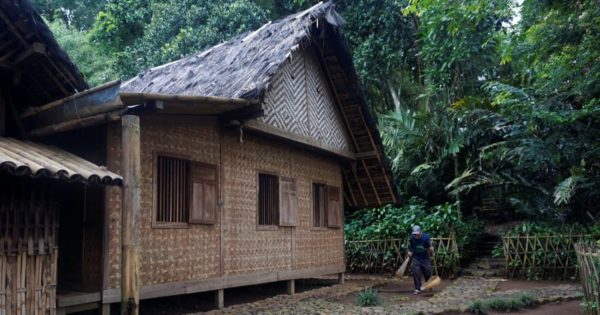
Rumah Adat Cikondang
Located in the midst of the forest, this traditional house in Cikondang is built from wood and bamboo. It is around 370 years old.

“Here, we believe following traditional rules is the same as obeying God’s law,” says Abah Anom, guardian of the Cikondang traditional house.Anyone who violates them – for example, by cutting trees illegally or selling farmland – will be punished by God.”  
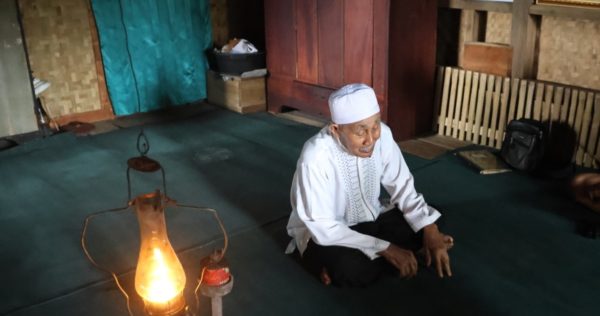
Rumah Adat Cikondang
Abah Anom (center) sits inside the Cikondang traditional house, which has remained largely unchanged for almost four centuries.

Rituals and Rites of Passage: Living in Harmony with Nature 

For generations, local wisdom has guided the Sundanese and helped them to live in harmony with nature. “We still practice traditional rituals today,” says Abah Anom. “By continuing them, we believe our lives will be spared from misfortune.” 

Abah Anom goes on to explain a few of his community’s customs in greater detail: “Each year, we hold a traditional irrigation ritual to water 140 hectares of farmland along the Cisangkuy River, ensuring land is irrigated fairly,” he says. “We also perform a clean water ritual at Ciruntah spring, which is a vital water source for the community; we keep it clean and pray to preserve its providence.”  

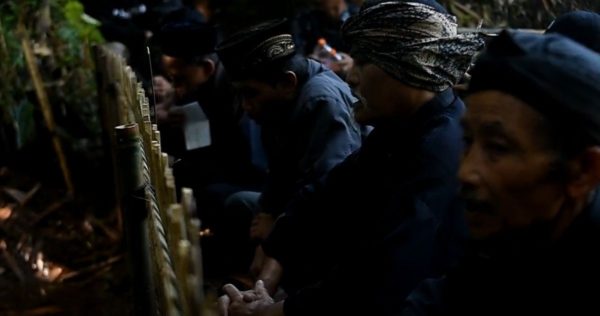
In Legok Kiara, a similar ritual called Ngalokat Cai (preserving water) begins with cleaning water channels and is followed by prayers over collected spring water. “These rituals reflect our gratitude and responsibility to protect water sources,” says Heri.  
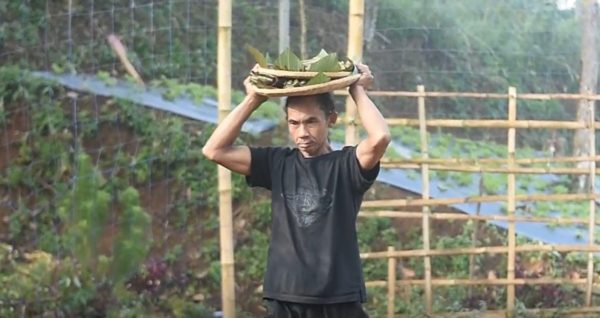
Ritual budaya Sunda
(Above) A Sundanese man carries ritual offerings on his head. (Below) Local communities gather at a spring in Legok Kiara for a water ritual, praying for abundant water.

Nature As the Inspiration for Art and Culture 

In addition to being a spiritual foundation for daily life, nature can also be a source of artistic inspiration. Vandik, a painter from Jelekong Art Hamlet in Baleendah Village, seeks to reflect Indonesia’s natural beauty in his work. “My first teacher was nature,” he explains. “It’s impossible to paint – in form or color – without studying it closely.” 
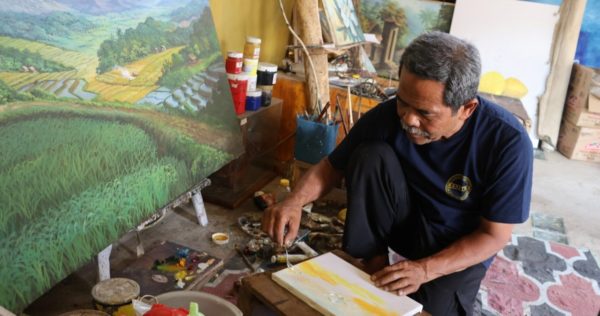
Lukisan Vandik
Vandik paints landscapes inspired by the nature around his village, bringing Indonesia’s beauty to his canvas. His works have been exhibited internationally, including in the Netherlands and the US.

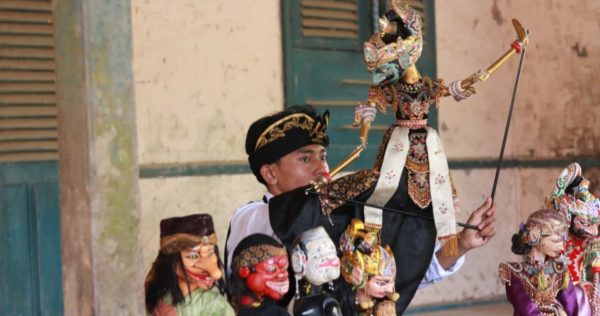
Jelekong is home to a long and proud tradition of artists who have taken their inspiration from nature. As Vandik explains, “the early efforts of our elders earned this place the title Art Village,” and to this day the region is still famed for its songs, dances, paintings, and wayang golek (a traditional form of wooden puppetry).” 

Meanwhile, in Legok Kiara, Sundanese arts are often showcased through tourism. “We perform pencak silat, the traditional martial art, along with music like tarawangsa, angklung, and calung performances. All are linked to nature,” says Heri. 

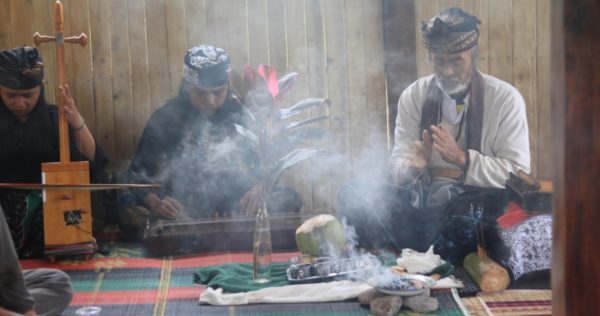
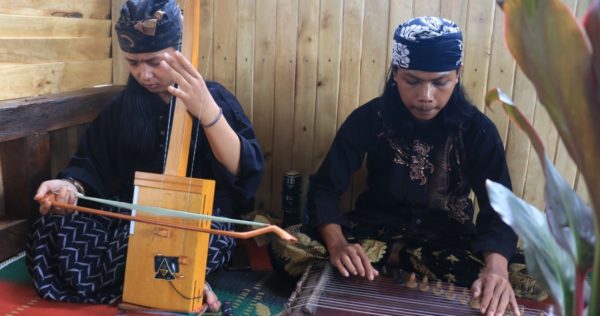
Heri also reveals that the intricate movements of the pencak silat dance are an embodiment of forest animals. Moreover, Tarawangsa music is rooted in rituals that give thanks to nature – even the musical instruments themselves are crafted from wood and bamboo sourced from the forest. 
When Tradition Preserves Nature
(Above) Sundanese men play the traditional instruments tarawangsa (left) and jentreng (right) during a sacred ritual of thanksgiving for the harvest. The sound of the tarawangsa is believed to summon the ancestors. (Below) Wayang golek, wooden puppetry, remains one of the most popular forms of Sundanese performing arts.

When Tradition Preserves Nature

Restoring Forests, Preserving Tradition 

With support from AstraZeneca and One Tree Planted, Trees4Trees has already planted 12 million trees throughout the Citarum watershed in West Java, which is home to many cultural villages. “With trees planted in our village, the Trees4Trees program helps us protect the forest,” says Heri. He adds that, in 2024 alone, over 300,000 trees were planted in his village, with more than 500,000 in Lamajang and Baleendah, where the cultural hamlets of Cikondang and Jelekong are located. “We are very grateful for every one of these precious trees,” he added. 

This initiative not only restores ecosystems but also sustains the natural resources Indigenous communities depend on. By planting trees, Trees4Trees is preserving both culture and nature – ensuring they remain intertwined and continue to flourish together for many more generations to come. 
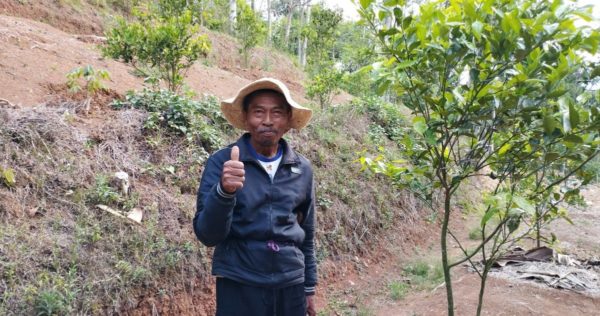
Petani farmer Trees4Trees
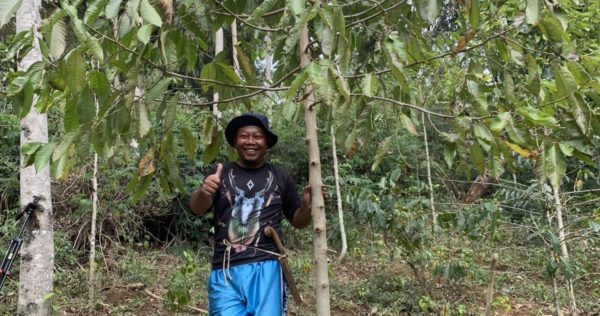
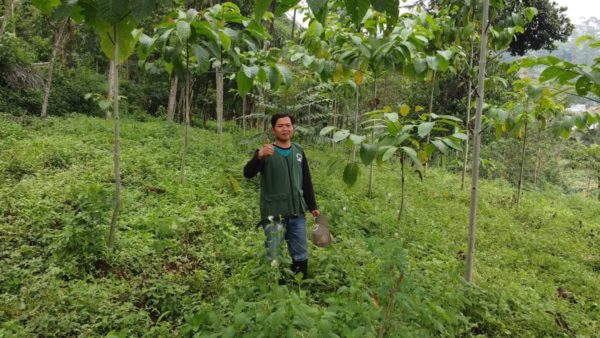
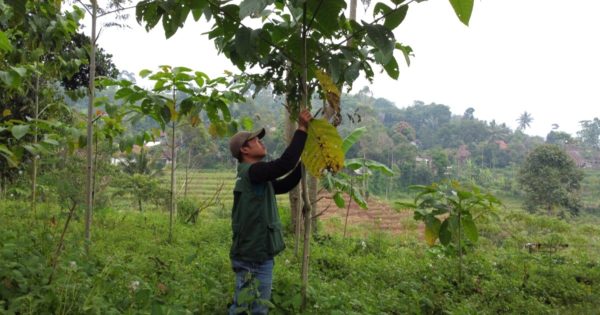
Trees we planted together with farmers in Rawabogo Village in 2023 have flourished and grown healthily.

When Tradition Preserves Nature

Writer: V. Arnila Wulandani. Editor: Chris Alexander. Photos: Kemas Duga Muis, Reza Alwiandhi for Trees4Trees 

Supporting Women Farmers Through Reforestation in the Citarum Watershed

Supporting Women Farmers

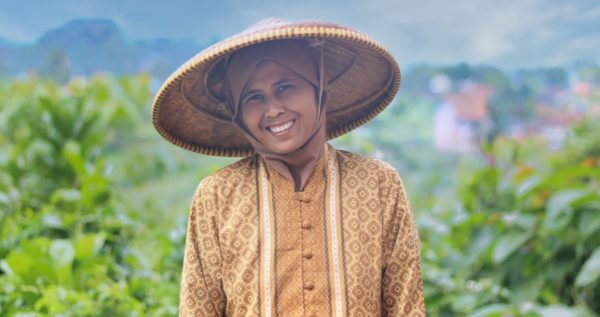
Most people living upstream of the Citarum watershed, which spans West Bandung Regency in West Java, make their living from farming. For Sundanese – the main ethnic group in West Java – this is more than just a source of income. It is a tradition passed down through generations. Many of the farming community here are women, most of whom have been working the land from an early age. 

Over 5,000 woman farmers have participated in tree-planting activities since Trees4Trees first began its Citarum watershed reforestation efforts in 2021 (around a quarter of the total turnout). With funding support from AstraZeneca and One Tree Planted, these women have been able to preserve family traditions and improve their economic independence; their participation also highlights the key role women must play in restoring the environment and strengthening communities.  

Read also: The Story of Euis Maryati: Widowed and Planting Trees to Support Her Family

Family, Farming and Tradition: Continuing the Legacy in West Java  

“I’ve never left my village and have worked the soil with my family since I was a teenager,” explains Aisha (60), from Ancolmekar Village. She is one of many local women who have dedicated their lives to farming.  

Aisha joined Trees4Trees as a grower in 2021 and quickly demonstrated her exceptional skills. In 2022, she was recognized as one of the best farmers in the area. “My farming skills have improved over time,” she explains, “because farming has been my habit for decades, sharpening my ability to nurture every plant I grow.” 

Iis Hasanah (47), from Cijambu Village, spent 11 years working abroad as a household servant in Saudi Arabia before returning home to settle down and continue her family legacy of farming.  “After elementary school, my mother often brought me to the field,” she remembers, “which showed me how to sow seeds and grow trees and crops.” She now splits her time between farming and caring for her son, passing her skills on to the next generation. 

Iis Hasanah and Aisyah
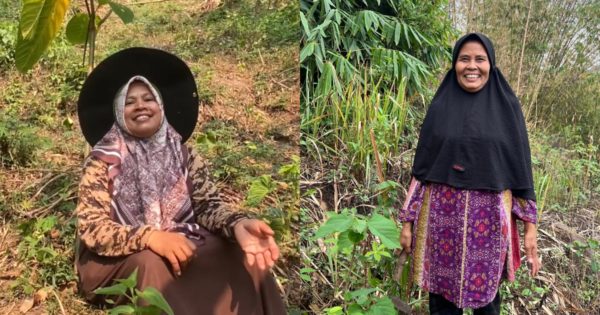
Iis Hasanah (left) and Aisah (right) have determined to work the land and continue their family legacy.

Nurturing Families by Caring for Nature 

For some women, farming offers a connection to their roots. For others, it is a way to provide for their families. Maryati (43) from Kutawaringin Village began farming in her 20s to supplement her family’s income and put her two children through school.   

“In addition to shade trees, I chose to plant fruit and coffee trees due to their competitive prices,” says Maryati. “This way, I can help my husband earn additional income and save more money to secure our family’s economy.”  

Supporting Women Farmers
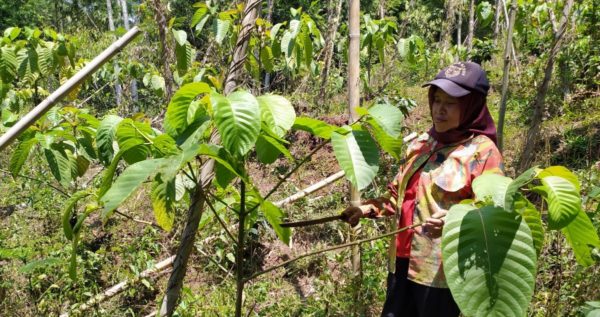
Maryati prunes the leaves of a burflower-tree, part of her daily commitment to care for trees she has planted.

Kokom, from Mekarjaya Village, has been farming for 10 years. On her plot measuring 700 sqm, she grows cassava and peanuts, along with fruit trees. “I sell fruits like avocado, along with coffee and cloves, to cover my children’s needs,” she says. “Crops like cassava, peanuts, and vegetables are for family consumption, which helps us save money on food.”  

Read also: Reviving Clean Water Access in Lebak Muncang Tourism Village: Elis’ Tree Planting Initiative

Women’s Empowerment: The Key to Environmental Preservation  

The active participation of women in Trees4Trees’ Citarum watershed restoration efforts demonstrate their determination to be productive. Andini Mulyani, a woman farmer from Mekarjaya Village, believes women are equally capable of contributing to their communities as men. “It’s not about competing with men,” she says, “but having equal opportunities and roles. Farming isn’t only for men, women can do it too.” 

Supporting Women Farmers
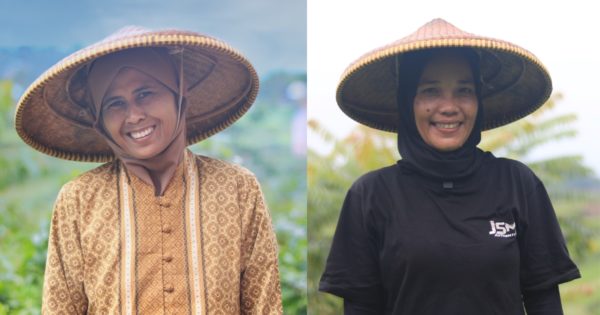
Kokom (left) and Andini Mulyani (right) believe women farmers are equally capable in contributing to both the community and environment.

Through the Citarum watershed reforestation initiative, women are given equal opportunities in tree-planting, including access to seedlings, training and capacity building, and various other benefits. These resources empower them, not only to contribute to their community and families, but to positively impact the surrounding environment. “We receive free seedlings, the yield is ours, and the training sessions help women farmers like us improve our knowledge,” says Iis. 

Despite living near the watershed, many areas in the Citarum watershed face drought and water scarcity. Aisha believes tree-planting activities enable women to collectively address these environmental challenges.  

“Drought, landslides, and water shortages are common issues here,” she says. “The planting initiative from Trees4Trees gives us the chance to preserve water, prevent disasters, and develop our livelihoods while improving the surrounding environment.” 

By empowering women farmers as tree-growing partners, Trees4Trees’ Citarum watershed reforestation program is restoring degraded lands and building community resilience to the impacts of climate change. Crucially, these positive impacts are rooted in local tradition and the principles of gender equality within sustainable social forestry practices. 

Writer: V. Arnila Wulandani. Editor: Chris Alexander. Photos: Zaki Luqman, Giri Satriyo, Adia Mufidz, Kemas Duga Muis for Trees4Trees 
Sutajaya: Planting Trees, Preserving Biodiversity and Heritage in West Java

Planting Trees

One of our main tree-planting locations in West Java is the Citarum River basin, home to over 1,000 tree species and 3,000 flowering plants. These plants are central to ecosystem health and form the basis for many livelihoods in the region. However, in the wake of rapid development, many of these tree species are now threatened by deforestation. In response, a local forest farmer named Sutajaya is determined to reverse the damage. 

Six years ago, Sutajaya was granted free leasehold by the government to manage 2 hectares of land in the foothills of Sangar Mountain near Mekarjaya Village, the village in Bandung Regency that he calls home. “We are allowed to plant crops and manage the land,” says Sutajaya. “But the mandate is that we must plant hardwood trees that we never cut down.”  

Traditional roots, bearing new fruits 

At first, Sutajaya planted coffee trees. However, he quickly noticed that many of the trees he remembered from his childhood were becoming more scarce. He started planting native Indonesian species like rasamala, saninten, damar, kisireum, and tarum areuy. And this process reconnected him to his roots. 

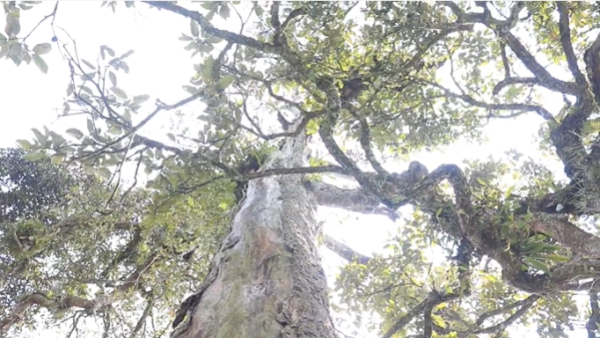
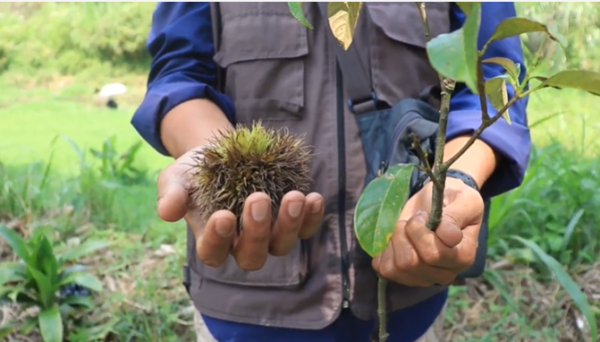
Saninten trees
Figure 1 The Saninten tree, one of several native species making a comeback in West Java. Figure 2 The fruit and branches of Saninten tree.

fruits

“This land used to be the home of the powerful Tarumanegara kingdom,” explains Sutajaya, remembering a story passed down from his ancestors. “Their name came from the tarum areuy tree, which used to grow all around – the tree. also gave its name to the river that flows through the region, the Citarum.”. The kingdom was known throughout Southeast Asia for their production of distinctive blue fabrics, made using dye from tarum areuy trees.  

Today, the blue cloth is long forgotten, and the trees are disappearing too. “I don’t want my children to grow up without seeing the native trees so deeply rooted in our culture. So I will do all I can to stop them from disappearing,” said Sutajaya. 

Tarum Tree
Figure 3 Leaves of the tarum tree

Planting the seeds of knowledge 

Unlike most forest farmers in Mekarjaya Village, who manage the land primarily to plant crops and then reap the results, Sutajaya’s main goal in planting native trees is to create an educational forest, or arboretum. “My intention is to safeguard native trees, particularly those of West Java, and prevent further loss in the future,” he explains. “With the arboretum, I want to preserve biodiversity and educate people about the abundance of native trees that form part of our shared culture,” he added. 

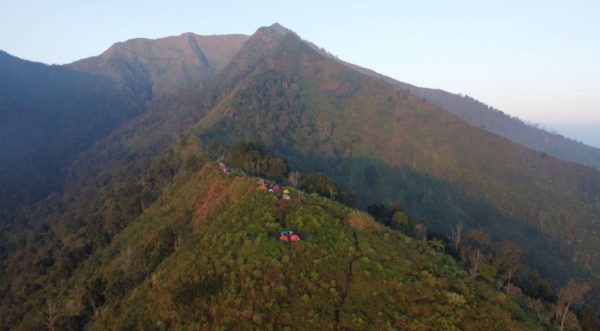
sangar mountain
Figure 4 Sangar Mountain, the location of Sutajaya’s arboretum

He plants these trees in the foothills of Sangar Mountain, a popular hiking track among  young hikers, especially at weekends. He hopes these groups will stop by his arboretum to learn more about native tree species. 

Support from Trees4Trees and TREEO 
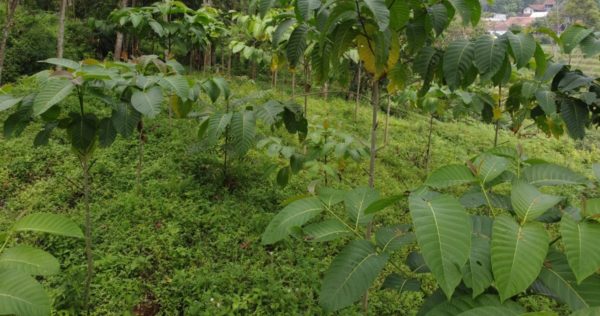
Sutajaya is well on his way towards his goal. In 2021, he took a big step forward by joining a tree-planting project with Trees4Trees in collaboration with TREEO. “That was a great opportunity for me to add to my tree collection,” he remembers, “and I really thank Trees4Trees for helping me realize my dream.” 
Planting Trees
Figure 5 Sutajaya, on the ancestral lands he has almost single-handedly helped to re-green.

Together with Trees4Trees, he planted 1,600 sawo, damar, rasamala, and avocado trees, most of which have survived and are growing well to this day. From the sawo and avocado trees, he can harvest fruits to sell. From the damar trees, he collects sap, which also has economic value. The tarum areuy he planted provides leaves for organic fertilizer and fodder for his cattle. But the real value of these trees is something that can’t be bought or sold: a connection to heritage, and a glimpse of a greener future in the Citarum River basin. 

In spite of everything he has achieved, Sutajaya is not satisfied. “There are still many native trees out there that I haven’t inventoried yet,” he says. “I hope I can find them soon.”  

Trees4Trees is working closely with local forest farmers like Sutajaya to restore biodiversity and preserve natural heritage in West Java and beyond. To learn more about our tree-planting activities and get involved, please visit the Trees4Trees website.  

 Writer: V. Arnila Wulandani. Photo: Kemas Duga Muis

10 Iconic Flora & Fauna of the Citarum River Basin: A Showcase of Biodiversity (Part 1)

10 Iconic Flora & Fauna of the Citarum River Basin

The Citarum River Basin in West Java, one of Trees4Trees’ tree-planting sites, encompasses diverse ecosystems ranging from mountainous regions to coastal areas, supporting a rich tapestry of flora and fauna. While the river shelters numerous fish species, the Citarum River Basin is a home to a wide variety of animals as well as an array of trees and flowering plants, some of which are endemic and iconic to West Java. 

Unfortunately, some of these species are listed as endangered and need our contribution to preserve them. Here are some of the iconic flora and fauna that contribute to the biodiversity of the Citarum River Basin. 

Animals

The Citarum River shelters over 20 fish species and is home to a wide variety of animals. Birds are the most abundant, with over 300 species residing in the forested areas of the basin. Additionally, the ecosystem also provides habitat for amphibians, reptiles, mammals, and insects.   

Javan hawk-eagle (Elang Jawa) 

The Javan hawk-eagle is a medium-sized raptor bird with dark brown feathers and a magnificent crest on its head. It holds the distinction of being Indonesia’s national bird and is the emblematic symbol of Garuda Pancasila. Commonly referred to as Garuda, reminiscent of the bird-like creature in Hindu and Buddhist mythology, this species is one of the rarest raptors and is classified as endangered. The Javan hawk-eagle prefers habitats with rasamala trees and primarily feeds on rats. 

Javan hawk-eagle (Elang Jawa) 

Black-crowned night heron  

This nocturnal bird is characterized by its black bluish head, resembling a crown. Its diet includes fish, frogs, water insects, small snakes, and rats, which reside in river streams, ponds, rice fields, and swamps. These birds commonly live alongside the Javan pond heron (blekok sawah) and cattle egret (kuntul kerbau), which also inhabit the Citarum Basin. Unfortunately, the species is now rarely found, and their existence cannot be traced due to habitat loss caused by the devastation surrounding the Citarum Basin. 

Sunda pangolin (Trenggiling) 

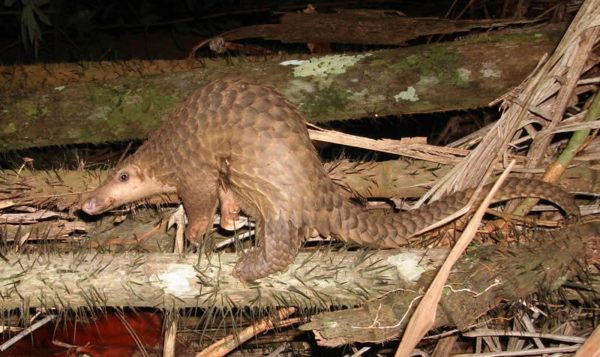
This mammal has distinctive keratin scales covering its skin, resembling armor. Its diet consists of insects, particularly ants and termites, and it lives in hollow trees or burrows, relying on tree cover for its habitat. The Sunda pangolin is currently classified as critically endangered due to facing dual threats: habitat loss and being highly hunted and eaten. 

Sunda pangolin (Trenggiling) 

Sunda slow loris  

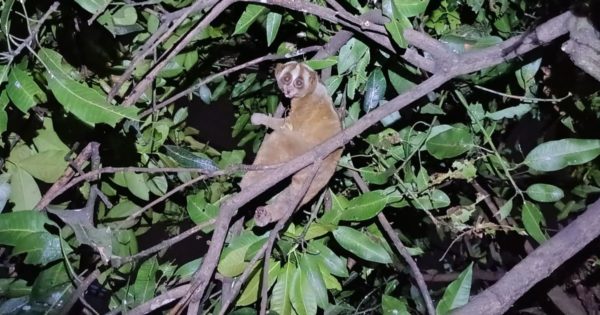
This mammal, the Sunda slow loris, is a protected primate listed as vulnerable by the IUCN. Its existence in the wild is primarily threatened by habitat loss and hunting for the pet trade. The species has a slow reproductive rate and prefers forests with high, dense canopies, such as rainforests, bamboo groves, and mangrove forests. As climbers, they are highly dependent on trees for their behavior and survival. 

sunda slow rosis

 Javan gibbon 

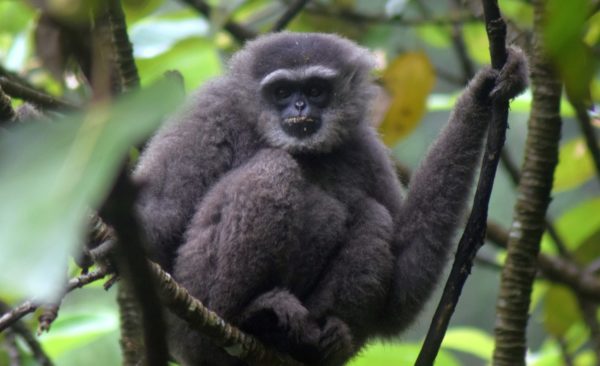
The silvery gibbon, or Javan gibbon, is a native primate to the island of Java, Indonesia. This species prefers to inhabit undisturbed rainforests at altitudes of up to 2,450 meters. It is listed as an endangered species. Habitat destruction on densely populated Java, including the Citarum Basin, continues to reduce the natural range of this species. Many gibbons are also lost to the illegal pet trade. 

10 Iconic Flora & Fauna in Citarum river


Continue to read the article on: 10 Iconic Flora & Fauna of the Citarum River Basin: A Showcase of Biodiversity (Part 2)

Farmer Story: Dayat Discovers a New Sense of Purpose in Saguling

Farmer story Partner of trees4Trees from Bandung

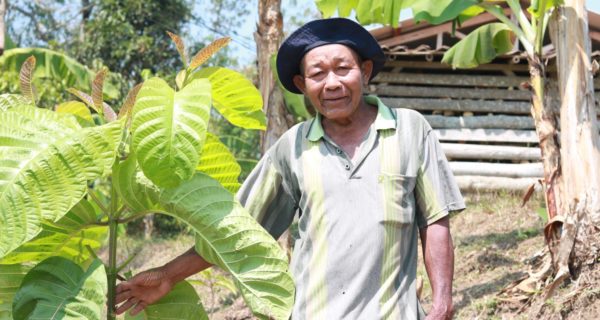
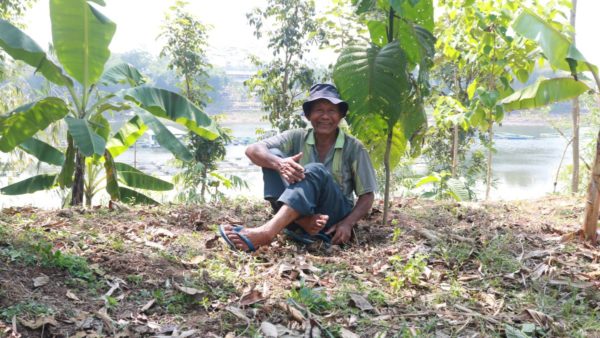
Farming is therapy for me when I am alone,” explains 75-year-old Dayat, as we explore his little plantation at the edge of Batulayang Village.  Since his wife passed away, Dayat spends most of his time alone nowadays. Most of his six children live far from home and rarely come to visit.  

Dayat owns a plot of land spanning about 0.12 hectares and overlooking the Saguling reservoir in Bandung, West Java. The bananas and Albizia trees he grows here have long been his main source of income. But this income is anything but certain. “As I am getting older, I want to find a more stable way to make a living,” he explains. 

Dayat recently joined the Trees4Trees planting program., He was given seeds, fertilizer, and training, and then began planting Jabon, Manglid, Gmelina, and Durian trees. “These plants thrive in my land and are worth more than bananas,” he says. Funded by AstraZeneca Forest and supported by Trees4Trees and One Tree Planted, this program is helping change lives and rejuvenate landscapes in West Java.

Branching out, but rooted in local tradition 

Dayat has been farming the fields around Cililin, Bandung, since he was a young man. Since then, he’s seen many people leave the village and head for the big city. But he prefers to stay put, caring for the land he inherited from his parents. He says the tree-planting program has given this land a new lease of life. 

“What I most appreciate is that all the tree seedlings and organic fertilizer I received were provided free of charge,” explains Dayat. I can’t help but wonder how I would have managed if I’d had to purchase them myself, as my income barely covers my daily living expenses,” he added. 

Daat and his tree

Farmer story; Dayat
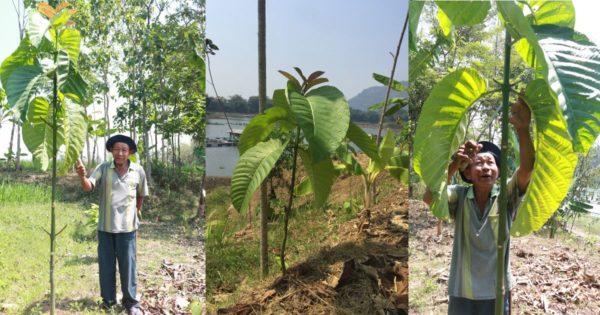
(Above) Dayat shows off his new crop of Burflower-tree (Jabon) 

New growth, new opportunities for development 

Of all the new seedlings, Dayat says jabon (Burflower) trees are best suited to his land,. as they grows quickly and offer income from timber. “After being cut, (the tree) regenerates from new shoots on the stems all by themselves,” says Dayat.  

Since witnessing the fruits of his recent labor, Dayat is already making big plans for the future. “If I’m fortunate enough to enjoy a longer life,” he says, “I look forward to harvesting and selling durian fruits.”  

Farmer story
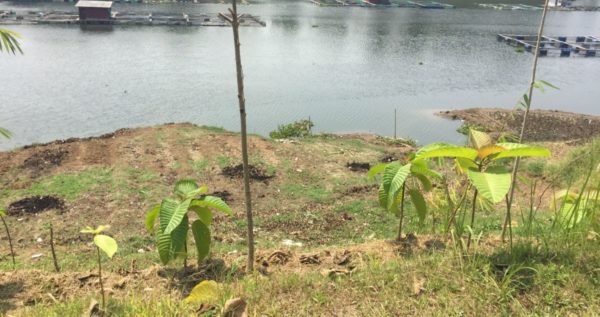
(Above) Dayat’s trees line the banks of West Java’s Saguling Reservoir

Providing benefits to the surrounding landscape 

Covering an area of over 5,000 hectares, the Saguling reservoir generates electricity that supplies power to Java and Bali. On its banks are agricultural lands owned by local communities and smallholders like Dayat. 

Over the years, erosion has become increasingly common in these lands, causing soil to be carried away by the current and increasing sedimentation within the dam. This has a knock-on effect for local fisheries and jeopardizes the energy supply. Dayat sees tree planting as a way to counter these issues. 

“My motivation for planting trees extends beyond the economic benefits,” says Dayat, whose new trees are helping combat erosion along the banks of the Saguling. “I believe I am making a meaningful contribution to the well-being of many people whose livelihoods depend on this dam,” he added. 

Waduk Saguling
(Above) The Saguling Dam, one of three reservoirs on the Citarum River, and (Below) Dayat is visited by the Trees4Trees Unit Manager.

Farmer story

Remarkable skill and valuable experience 

Ever since he joined the tree-planting program, Dayat has demonstrated his commitment to caring for trees. He’s also applied the knowledge gained from farmer training, which covered the use of organic fertilizers. 

“Out of the 375 trees Dayat received, more than 90% have gone on to thrive,” explains Dian Wardana, Trees4Trees Unit Manager for the Ciminyak 1 working area, where Dayat’s plantation is located. “This is a testament to his remarkable skill and dedication.”  

Dayat attributes this success to his meticulous care for all his trees. “I treat them like my own children and only use organic fertilizers that are gentle to my land,” he says. Being recognized as a top farmer is a great honor – I am grateful to Trees4Trees and their supporters, who have provided me with free seedlings, free organic fertilizers, and the knowledge, especially at my age,” he said. 

Writer: V. Arnila Wulandani. Editor: Christopher Alexander

Itang: A Young Farmer on a Mission to Pass Down Springs through Planting Trees

At 37 years old, Itang Zaenal stands out as a young farmer collaborating with Trees4Trees as a tree grower in Mandalahaji Village, Bandung Regency. In contrast to his peers who often seek employment outside the village, Itang has made a choice to remain within his community. He skillfully tends to his plot of land and has effectively generated income from its produce for several years. 

Become a farmer since his young age

Itang owns a parcel of land situated approximately 1 kilometer from the Cirasea sub-watershed, a tributary of the Citarum river. On this land, he cultivates both timber and various crops, aiming to secure both short-term and long-term income sources. The yields he generates from his land enable him to provide for his family, including his two children. 

However, Itang’s journey as a farmer commenced at a remarkably young age. At just seventeen years old, he decided to follow his passion and become a farmer.

“In those times, very few young individuals showed interest in farming. This was due to the mistaken belief that farming couldn’t lead to substantial earnings. I stood among the minority of young villagers who opted to remain in our community and pursue farming. Most of them preferred urban employment,” he revealed. 

Itang also acknowledged that prior to his decision to settle in Mandalahaji village, he had briefly worked in the city of Bandung. “City life didn’t resonate with me, I suppose. The rigid work hours left me with minimal opportunity to engage in activities I enjoyed,” Itang expressed. 

Benefiting from Trees4Trees’ Citarum rehabilitation tree planting program 

In 2022, Itang was presented with the opportunity in the tree-planting program initiated by Trees4Trees, sponsored by AstraZeneca and One Tree Planted. “The idea thrilled me, as I received tree seedlings completely free of charge and I get to keep all the results for myself. It was a significant help for me,” Itang expressed 

Focusing on planting bur-flower (Jabon) trees and coffee, Itang intends to gain long-term benefits. “Jabon is very well-suited to the soil conditions in my field, so it grows exceptionally well in this area. Jabon also regenerates new shoots automatically after being cut down, ensuring constant flourishing. Coffee, on the other hand, is a promising commodity. With more coffee trees, I can earn a better income,” Itang explained.

Applying organic farming  

Since his beginning, Itang has employed organic farming techniques in nurturing his trees. He has personally crafted fertilizer from the manure of his livestock. “Thank goodness, when I employ organic fertilizers made from the blend of manure and soil, the growth of the trees accelerates significantly,” he exclaimed while gesturing towards the flourishing trees around him.

Itang also expressed his gratitude for the organic fertilizers and pesticides provided by Trees4Trees. He noted that with these organic materials, he managed to foster Jabon trees that grew to around 2 meters in height in just eight months. “The outcome fills me with great excitement,” he confessed. He further added that these organic resources complemented the organic approach he had been practicing for years. 

Planting trees, passes down the Citarum springs to the next generation  

Itang’s land is situated approximately 15 kilometers from the source of the Citarum River. This location marks the origins of seven springs, which converge to form the Citarum River and its tributaries. 

“From these springs, the water flows into the Cirasea River – one of the Citarum’s tributaries that runs near my land. This river holds vital importance for the villagers, serving as a primary irrigation source and sustaining the trees I’ve planted. Thus, preserving both the river and its banks is essential,” Itang emphasized. 

He underscores that planting trees along the riverbanks plays a crucial role in curbing erosion and the siltation stemming from river sedimentation. 

“With the exceptional spring waters of the Citarum River, my endeavor in tree planting aims to pass on the legacy of healthy water sources to my children and the generations to come. I strive to pass down ‘mata air’ (water springs), not ‘air mata’ (tears). If we neglect our duty to care for it, all that remains to pass down would be tears – nothing of our natural heritage would be left,” Itang passionately conveyed. 

Writer: V. Arnila Wulandani. Photo: Kemas Duga Muis