Ayi: Preserving Water Sources Through Tree Planting

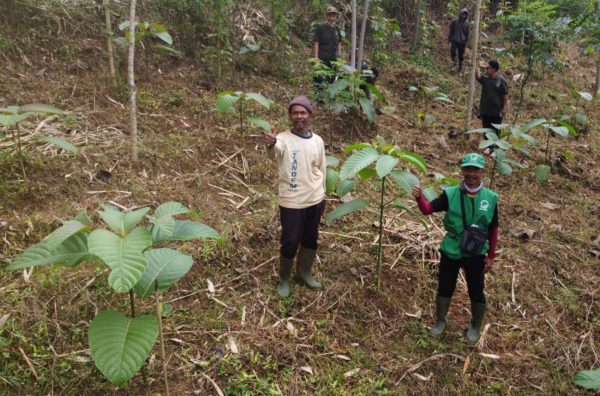
Ayi, a tree grower from Drawati Village Bandung_Trees4Trees
Preserving Water Sources Through Tree Planting
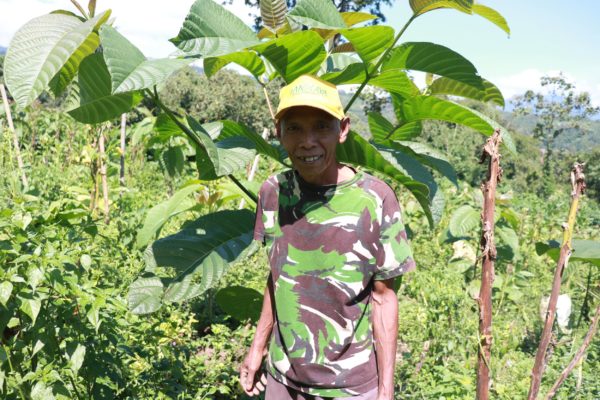
Ayi, a tree grower from Drawati Village Bandung_Trees4Trees

Drawati Village, nestled in Paseh District, Bandung Regency. This hillside community rests close to an upstream river—a tributary of the Citarum river watershed. As a result, vital springs dot the area, serving as crucial water sources for the local populace’s daily needs. 

Given the significance of the existing springs, safeguarding the surrounding environment becomes imperative. The preservation of water sources requires rehabilitation and reforestation efforts. To this end, the Drawati village government has been actively promoting reforestation activities among its residents through socialization and various programs. 

Trees4Trees Tree-Planting Program Contributes the Water Spring Conservation 

When the Trees4Trees team introduced a tree planting program funded by AstraZeneca in collaboration with Trees4Trees and One Tree Planted, both the village government and the villagers responded positively. This initiative aligned well with the village’s mission to advance reforestation efforts. 

Later, the tree planting program gained the participation of farmer groups in the village, composed of individuals dedicated to reforestation endeavors. Among these farmers, Ayi emerged as the best farmer of Drawati village due to his unwavering commitment to tree planting and reforestation. Ayi’s accomplishments are a testament to his long-standing dedication to his environment. 

Prior to joining this tree planting initiative, Ayi was actively engaged in reforestation activities alongside fellow villagers. He pointed out that accessing clean water in his village has become increasingly challenging, despite its proximity to the river’s source. This challenge fueled his determination to revitalize the village’s surroundings, ensuring a more abundant flow of water. He also aspires to enhance underutilized lands through increased tree planting. 
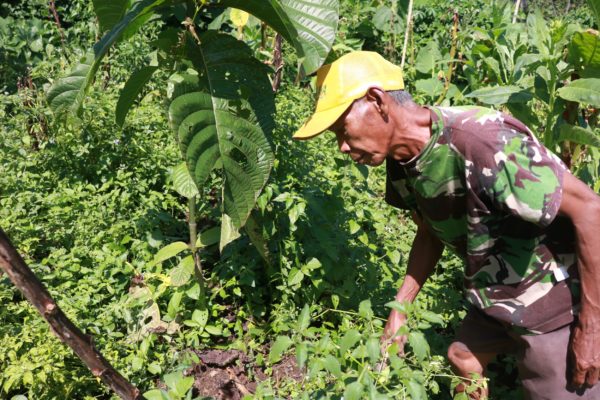
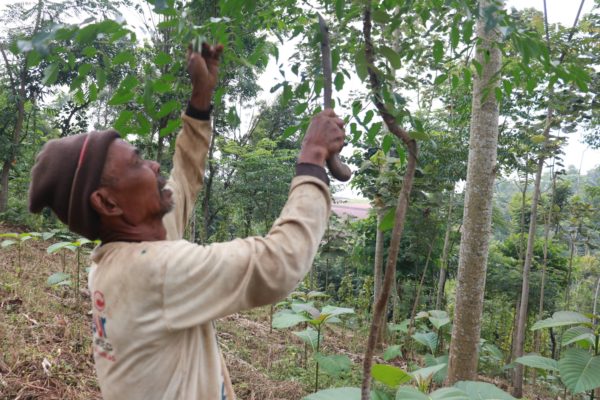
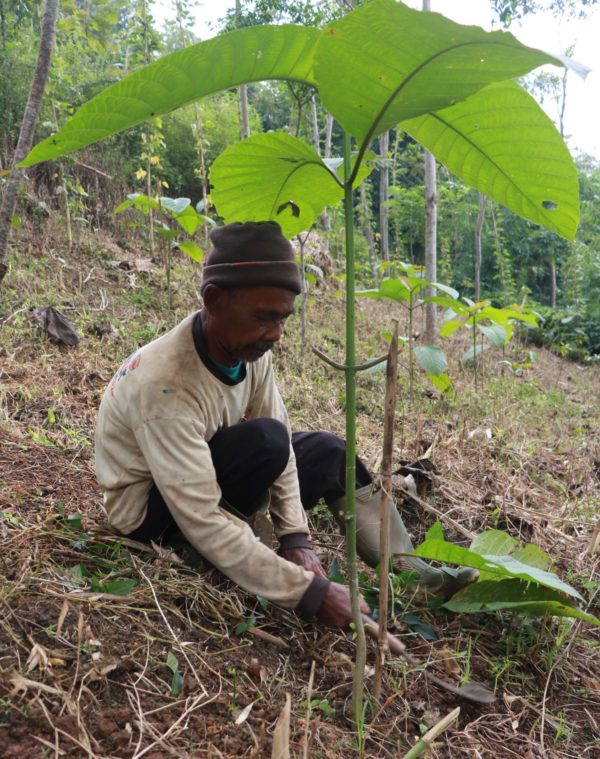
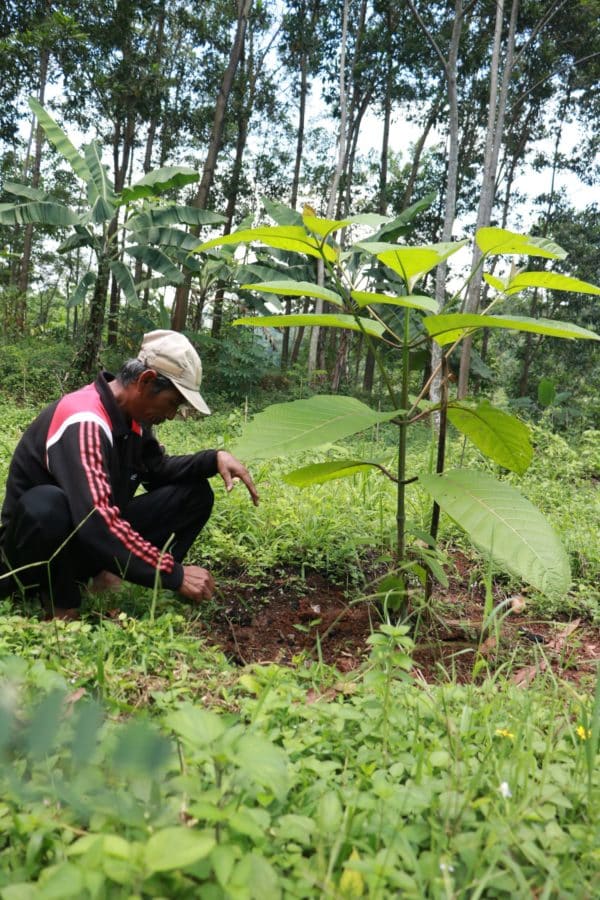
Ayi, a tree grower from Drawati Village Bandung is taking care of his trees_Trees4Trees

Planting Trees to Rejuvenate the Environment and Anticipate the Fruitful Yield 

“I plant trees for a better life and a brighter future for this village, not just for myself and my family, but for the entire community. Most importantly, it’s about nurturing a healthy environment around the village” Ayi said.  

He also revealed that many lands around his village are suffering and have been faced a shortage of clean water. This drives his motivation to plant more trees, hoping to rejuvenate our surroundings and ensure the abundant flow of water.  

“Water is a fundamental necessity for human life, making this endeavor worth every effort,” Ayi expressed. 

Furthermore, Ayi emphasized that tree planting not only fosters a healthier environment but also yields fruitful crops. When he joined the tree planting program, Ayi opted for jabon trees (burflower-tree) due to their rapid growth compared to other tree species. 

In addition, Ayi cultivated food crops such as corn, cassava, and various fruits, including orange trees. 

“I’ve also planted orange trees, anticipating a fruitful yield in the future. My aim is to harvest these crops. Planting trees holds immense benefits – it adds greenery to the environment and allows me to save for my future by selling the crops,” Ayi shared. 
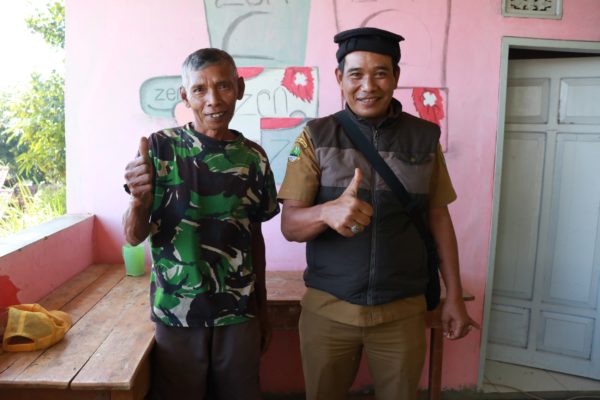
Ayi, a tree grower from Drawati Village Bandung with head of village_Trees4Trees
Ayi was visited by Drawati Head Village dur to his dedication in reforestation and water sources preservation efforts.

Recognized for the Environmental Conservation Efforts 

Due to the unwavering dedication to tree planting and reforestation, Ayi and the farmer groups were acknowledged and commended by the head of Drawati Village. According to the village head, the present era mandates a life philosophy centered on nature preservation, as nature has nurtured and sustained us. Therefore, it is our responsibility to reciprocate this care. Ayi and the farmer group’s actions stand as a commendable example in this regard. 

“Greening initiatives contribute to the preservation and conservation of water, a crucial element for sustaining human life. We must prevent our water sources from depleting. We must ensure that our future generations do not shed tears due to a lack of springs. Let us unite to prevent such a future!” emphasized the village head during his encounter with Ayi and the farmer group of Drawati Village. 

Writer: V. Arnila Wulandani. Photo: Kemas Duga Muis

Sar’an: Preserving His Land and Planting Trees for Greater Benefits

Preserving Land and Planting Trees around Citarum Watershed for Greater Benefits
Sar’an: Preserving His Land and Planting Trees for Greater Benefits

Even though he is 72 years old, Sar’an is still active to do farming activities. He started farming five years ago. At that time, there was a tree planting program from the government that provided  tree seedlings to be planted on villagers’ land, including in his field. 

Sar’an lives in Sukanagara village. It is located in Soreang District, Bandung Regency. Prior to his farming activity today, Sar’an was a goat breeder. He decided to farm due to his expectation to be able to improve his well-being more. At the same time, he also wants to restore the soil fertility around his village.  

Preserving the Land He Owns for the Long-term Profit 

“So many lands in this village have been converted into plantations, offices, and residents. There are also lands owned by villagers which was initially rented out at the beginning but later sold. The result, villagers find it difficult to earn income. That’s because their land that normally can be cultivated on their own has changed function or changed ownership. I am regretting that many people in this village have sold their land. So, when they want to farm, they have to rent the land because they do not have anymore,” Sar’an said.  

Sar’an also revealed, in his village, there are many farmers who used to own their land, now only become sharecroppers because their land has been sold. Some sold their land to companies, some sold it to housing developers. Although many farmers in his village sold their land, Sar’an never wanted to sell his own land. It is because for him, planting in his own land is much more profitable in the long run.  

Preserving Land and Planting Trees around Citarum Watershed for Greater Benefits
Sar’an: Monitoring Trees with Farmer

From the previous government program, Sar’an received several trees. They were mindi, mahoni (mahogany), gmelina, and suren trees. Unfortunately, the mindi tree was not suitable with the soil and the condition on his land, so the mindi tree planting was failed. When he joined to a tree planting program funded by Astra Zeneca and collaborates with Tree4Trees and One Tree Planted, Sar’an planted jabon (burflower-tree) and manglid trees. Unlike mindi tree which was failed before, these two type of trees can thrive and growing well on his field.  

Besides, Sar’an also planted kinds of vegetables in his field. “There are chili, beans, and peanuts that I have planted by my own. Before joining to this program, I have also planted cloves, suren, and mahogany trees by myself,” Sar’an told.  

Sar'an: Preserving Land and Planting Trees around Citarum Watershed for Greater Benefits
Sar’an and his Trees

Read also: Reviving Clean Water Access in Lebak Muncang: Elis’ Tree Planting Initiative 

Replanting Trees He Harvested  

From trees he planted, he plans to sell the timber after his trees entering the harvest period. However, he will plant new trees to prevent his land being damaged. “After trees are old enough to be harvested, then I will replant new trees  to keep the soil stable. Beside, replanting trees will also swift the waterflow. If we do not replant, I am worried landslides will be occurred. Water can also get harder. I do not want that happen,” he said. 

Sar'an: Preserving Land and Planting Trees around Citarum Watershed for Greater Benefits

Sar’an thanks to the tree planting program that provide him trees. He hopes the tree planting program he joined will bring him good results and can support his livelihood in the long term. He also hopes both vegetables and other trees he planted can provide economic and environmental benefits. In his village, Sar’an also actively persuades other villagers to plant trees and advise them not to be easily tempted by offers to sell their land. He is sure that they will get greater benefits by having his own land that they can cultivate themselves.   

Writer: V. Arnila Wulandani. Photo: Kemas Duga Muis
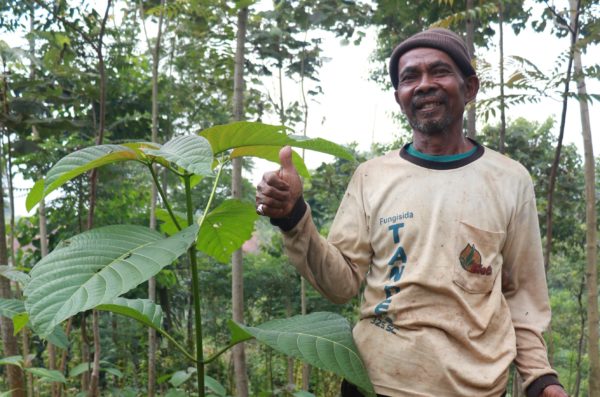
A Hub of Biodiversity: Exploring the Citarum

A Hub of Biodiversity: Exploring the Citarum
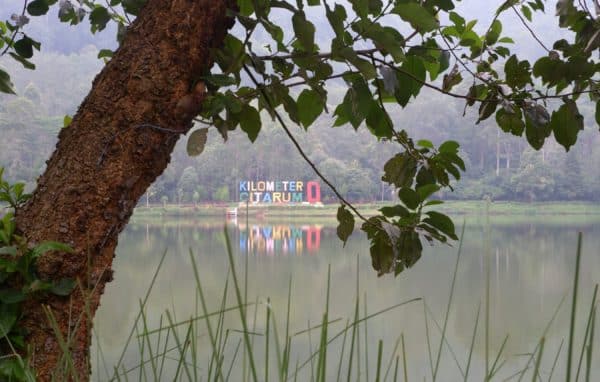
Situ Cisanti or 0 Kilometer Citarum, a lake, where the stream of Citarum river starts (photo: Trees4Trees/V. Arnila Wulandani)

The longest river in West Java, the Citarum is home to thousands of plant species and hundreds of different types of birds and fish. This thriving ecosystem also holds immense cultural and economic value for local communities, but recent losses in biodiversity are impacting lives and livelihoods. Now, with help from Trees4Trees, local people are helping restore the river and secure a more sustainable future for those who rely on the resources it provides. 

In this article, we take a closer look at the plants and animals that make the Citarum River Basin such an important hub for biodiversity in West Java. We’ll also explore some of the work being done to preserve these natural treasures and meet the people working on the frontline of conservation. 

A Connection to Nature and Culture 

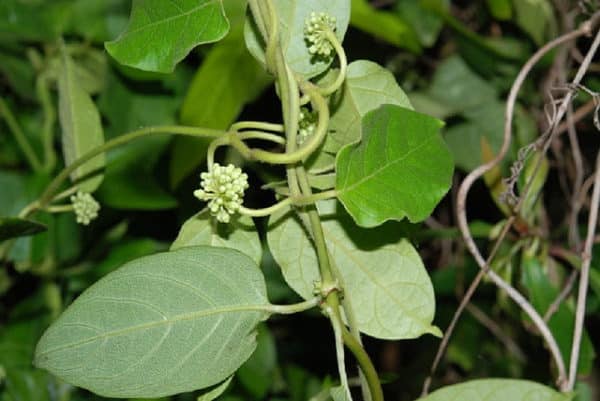
The name “Citarum” comes from “ci,” meaning water, and “tarum,” which refers to the indigo tree (known locally as tarum areuy). This species was once a common sight along the banks of the river, where its network of roots helped to stop soil erosion. The tree was also used by local people as an organic fertilizer and a natural dye, giving batik fabrics from West Java a distinctive blueish hue.  

However, a combination of development and environmental degradation have made this species increasingly rare. Replaced by synthetic dyes, it has been slowly disappearing from the banks of the river that bears its name. 

The Tarum areuy tree
(Above) The Tarum areuy tree, which gives the Citarum its name. Photo: Earth.com

Flora and Fauna: Natural Beauty, Economic Bounty 

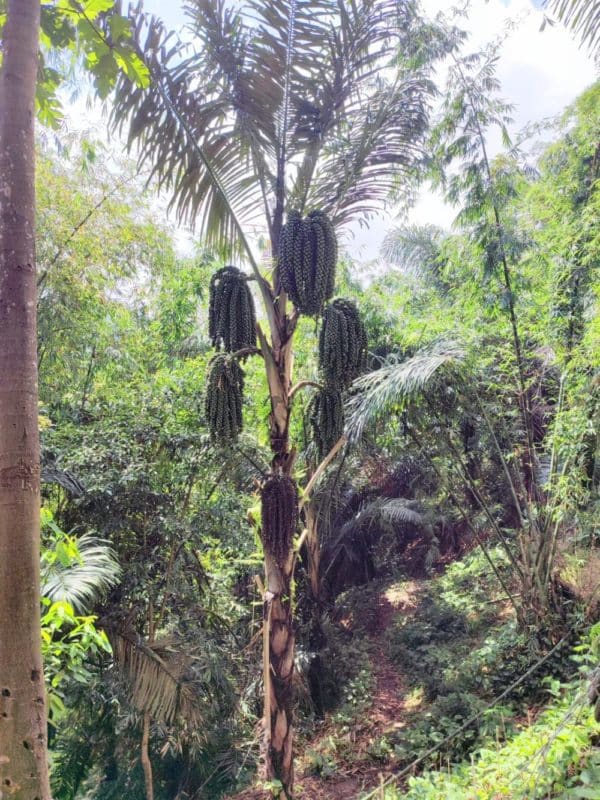
The Citarum basin is home to over 3,000 flowering plants and 1,000 tree species, many of which are used by local people to make a living. This, includes teak, rasamala, Java olive tree (or kepuh), jamuju, bayur, puspa, and kosambi trees. The sugar palm tree (known locally as tangkal kawung) provides communities with income derived from its sap, fruit, palm fibers, and leaves.

A Hub of Biodiversity: Exploring the Citarum
(Above) The sugar palm or ‘tangkal kawung’ tree, which supports a variety of local livelihoods. Photo: Trees4Trees/Mark Schmidt

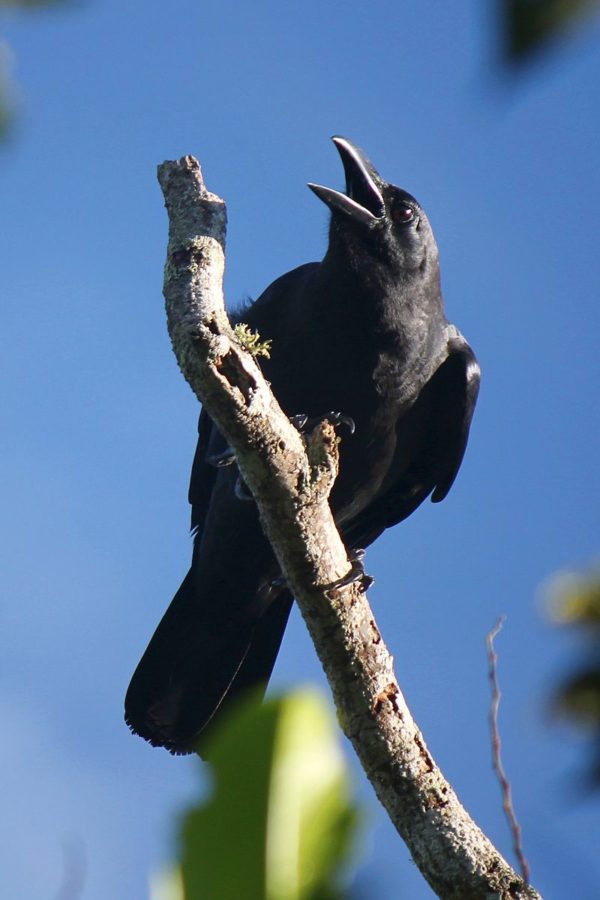
The Citarum river is a haven for around 314 bird species, including the rare, black-crowned night heron, locally known as kowak malam. This unique animal shares its home with other bird species such as the slender-billed crow, the common iora, zebra dove, little spiderhunter, cattle egret, and the Javan pond heron. In the river itself, out of the 23 native fish species, only nine remain: hampal, lalawak, beunteur, tagih, kebogerang, lais, lele, lempuk, and gabus. Invasive species like carp and tilapia are increasingly replacing their native cousins. 

A Hub of Biodiversity: Exploring the Citarum
(Above) The slender-billed crow. Photo: Wikipedia/A.S Kono

Biodiversity Bouncing Back: Replanting Trees, Restoring the Citarum  

“I was born and raised in one of the villages on the riverbanks of Citarum, and I have personally witnessed the transformation of the Citarum basin,” reveals Tomi Bustomi, Trees4Trees’ West Java Regional Manager and a local resident. According to Tomi, during his childhood, there was an abundance of local fish species here. Nowadays, it is hard to find them in any tributary of the Citarum. 

With funding from AstraZeneca and additional support from One Tree Planted, The Trees4Trees is working to rejuvenate degraded lands surrounding the Citarum River. This will involve planting 10 million trees by the end of 2025. As Tomi explains, “This program focuses on rehabilitating degraded lands, particularly in areas prone to landslides, floods, erosion, and water scarcity. 

A Hub of Biodiversity: Exploring the Citarum
(Above) Members of the Trees4Trees team at work on the Citarum replanting program. Photo: Trees4Trees/Kemas Duga Muis.

Armin Mubarok is Trees4Trees Impact Officer. He says the program will help reduce erosion rates, mitigate sedimentation, stabilize water flow, and enhance biodiversity. “By planting trees in critical areas devoid of fauna, we expect the return of animal species, such as insects, birds, reptiles, and amphibianes within five to 10 years,” explains Armin. As the vegetation grows in the riverbanks and the food chain flourishes, biodiversity will thrive.”  

The overarching aim of the planting program is to regenerate the region, using biodiversity as barometer of progress. As Tomi explains, “biodiversity is an indicator of ecosystem recovery; our tree planting efforts represent a significant step towards restoring the Citarum to its former glory.” 

Writer: V. Arnila Wulandani. Editor: Christopher Alexander

Travels in Java: Situ Cisanti and the Source of the Citarum River

Travels in Java: Situ Cisanti and the Source of the Citarum River
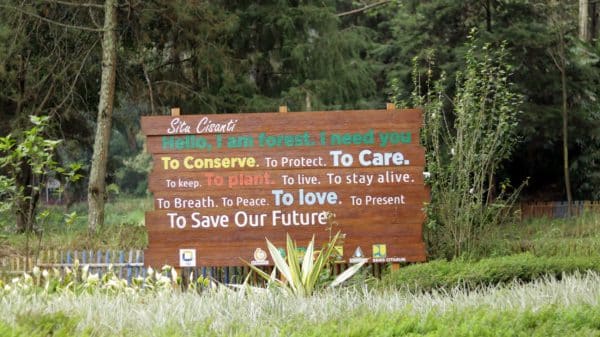
The zero-kilometer marker for the Citarum River, Situ Cisanti. Photo: Trees4Trees/Yulianisa Dessenita

The Citarum is the longest and largest river in West Java, providing water for over 27 million people and irrigation for nearly 40% of regional rice production. In recent years, it has achieved notoriety as one of the world’s most polluted water courses. But there is another side to the Citarum. Trees4Trees followed the river upstream and discovered something truly beautiful. 

Back to Square One: The Birthplace of the Citarum 

Walking through the main entrance of the village, we are welcomed by a thick blanket of trees. In the distance, we can hear the trickle of water and the sound of birds singing – a sure a sign the ecosystem here is in good health. It also means we’re nearing our destination. 

Upstream from the noise and pollution of the coastal urban areas, the Citarum River begins life in a quiet lake called Situ Cisanti. Located 37 miles (60 km) from the center of Bandung in Tarumajaya Village, this five-hectare lake sits at an altitude of nearly 5,000 feet (1,500 m) above sea level. Up here, the mornings are misty and quiet, and the views are breathtaking. 

Situ Cisanti and the Source of the Citarum River
(Above) Misty and quiet: Situ Cisanti in Bandung Regency. Photo: Trees4Trees/Kemas Duga Muis.

A Walk on the Wild Side of West Java 

The lake itself is hidden away at the end of a long and winding road – a network of paths that wriggles uphill through Bandung Regency. They fan out through an endless landscape of farmland and fields, which includes Kertasari – one of Java’s oldest tea plantations, set up in 1906.

Travels in Java: Situ Cisanti
(Above and below) Local residents are committed to protecting the forest and the precious waters of Situ Cisanti. Photo: Trees4Trees/Yulianisa Dessenita (above) & V. Arnila Wulandani (below)
Citarum River
Travels in Java: Situ Cisanti and the Source of the Citarum River

There’s plenty to do here too. Visitors can explore the scenery surrounding Situ Cisanti, with activities such as fishing, boat rides, and photography. Or they can just soak in the peace and quiet of this tranquil place.  

Located in the shadow of Wayang mountain, the area is a great spot for hiking, or for jogging around the lake. Facilities include a large parking lot, toilets, and food stalls. Best of all, admission is just Rp 15,000 (US$ 1) per person. 

Travels in Java: Situ Cisanti and the Source of the Citarum River
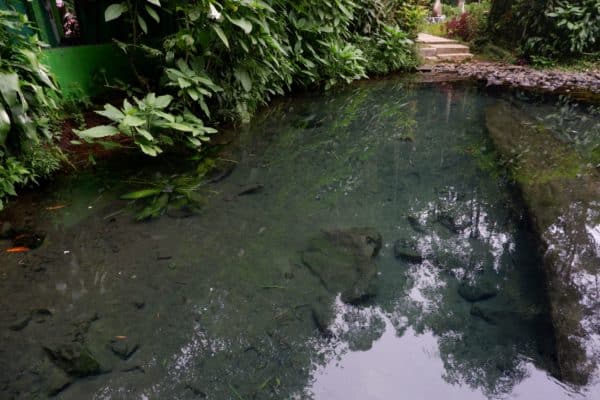
(Above) A natural spring where the Citarum River begins. Photo: V. Arnila Wulandani.

Spring into Life: The Birthplace of the Citarum 

“Our ancestors left us a message,” explains Atep, who has been working to protect this area since he was young.  “From generation to generation, (we must) protect the springs according to local wisdom in our village.”  

The springs he is referring to are the Citarum, Cikahuripan, Cikoleberes, Cihanuwung, Cisadane, Cikawudukan, and Cisanti. Most of the water that fills Situ Cisanti and flows downstream through the Citarum River comes from these seven springs, which are so vital to life and livelihoods in West Java. 

“We can drink the water directly from these springs. “The rules even restrict visitors wearing shoes when entering this pond to keep it clean,” says Atep, who adds that the Citarum and Cikahuripan springs provide drinking water for his village. 

children in Situ Cisanti and the Source of the Citarum River
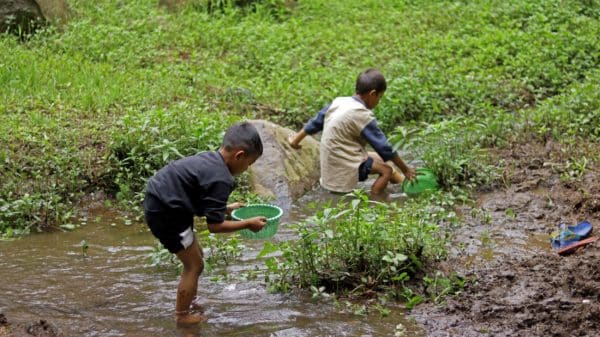
(Above) Children fishing in a river that flows from Situ Cisanti. Photo: Trees4Trees/Yulianisa Dessenita

Read also: A Watershed Moment Planting Begins at the Citarum River

Trees4Trees: A Cleaner, Greener Future for the Citarum 

In 2021, Trees4Trees set out on a tree planting program in Cibereum village, close to Situ Cisanti. In the most recent planting season (2022), more trees were planted here, as well as in the neighboring villages of Tarumajaya and Santosa. Much of the farmland in these hilly areas is poorly designed, which can lead to environmental problems such as erosion, flooding, and siltation of the rivers. 

“This can have a long-term impact on water availability,” explains Jeje Sutarja, Trees4Trees’ Unit Manager in the Cirasea 3-unit area. “By planting trees, we hope to enlarge the water catchment area around the upstream, conserve the water springs and preserve the beauty of this lake,” he added. 

The Citarum is famed as one of the dirtiest and most polluted rivers in the world. But up here, in the mountains where it was born, the river has a different story to tell. The birds are singing around Situ Cisanti, the water is clean enough to drink, and local people are working to conserve these waters according to the wisdom of their ancestors. The birthplace of the Citarum is a glimpse of what the river once was, but also a vision of what it could be; with enough support, and a shared commitment to clean and protect it, the Citarum could become famous for all the right reasons. 

Writer: V. Arnila Wulandani. Editor: Christopher Alexander

Rohmanudin’s Vision: Why Planting Trees is a Better Legacy Than Selling Land 

why Planting Trees is a Better Legacy
Photo: Trees4Trees/Kemas Duga Muis.

Rohmanudin, 53, has been familiar with farming activities since his childhood, as his parents were farmers who often brought him to the fields. However, Rohmanudin only began farming his own land in 2015. His land, located in Nagrak Village, Cangkuang District in Bandung Regency, was planted with various crops, including several types of trees, fruits, and vegetables. 

“From 2015 to 2016, I began working on my own field, planting various kinds of crops. In 2015, the Indonesia government initiated an agricultural program that led me to grow vegetables for the first time. Thank God, I have been growing different types of plants ever since,” he revealed. 

As part of the government agricultural program, a farmer group was established in Nagrak village, which still exists today. Rohmanudin is one of the most active members of this group.  

Joining to the Tree Planting Program to Improve the Result 

In 2021, Rohmanudin was offered the opportunity to join a tree planting program funded by Astra Zeneca, in collaboration with Trees4Trees and One Tree Planted. He proposed planting tree species that were suitable for his land’s conditions. 

Why Planting Trees is a Better Legacy Than Selling Land 
Rohmanudin maintains his land and plants various type of crops and trees. Photo: Trees4Trees/Kemas Duga Muis.

“I proposed then planted jabon (burflowers), sengon (Chinese albizia), and suren (red cedar) because they thrive in this area. I also planted other trees such as stinky beans, as well as fruit trees like sapodilla and rambutan,” Rohmanudin said. 

Since joining the tree planting program, he has noticed significant differences compared to his previous farming activities. He stated that the implementation of the program has improved significantly, and he feels that it is much better now than in the past. 

“In the past, the planting system was not as structured. Now, we have a more structured approach, and I can say that the way we do is the correct one,” Rohmanudin added. 

Read also: A Watershed Moment: Planting Begins at the Citarum River

Effort to Restore the Former Forest in the Village

Rohmanudin is deeply concerned about the vast deforestation that has taken place in his village, where forests have been cleared and replaced with residential areas. As such, he strongly believes that the tree planting program can have a positive impact if implemented effectively, and is therefore highly motivated to care for the trees. 

Planting Trees is a Better Legacy
Planting Trees is a Better Legacy; Rohmanudin with the burflower tree he has grown. Photo: Trees4Trees/Kemas Duga Muis.

“In the past, this area was full of rare birds and big trees. The mornings were beautiful and so refreshing. The land was more fertile than today. But now, look, they’re gone! There’s a lot of dry land, and water is scarce. Why did this happen? Because the land was sold out, and housing was built. In the area behind my house, eight hectares were sold out, and now, ten more hectares are gone! Housing has been built there again,” Rohmanudin lamented. 

Planting Trees Instead of Selling Land for a Better Future

Seeing the reality that is happening in his village, Rohmanudin feels agitated. He worries that if all the land in his village is sold and turned into housing, there will be nothing left for future generations, and not enough land to cultivate. 

“Imagine what will happen to our children and grandchildren in the next 10-20 years? They will have nothing left. Moreover, if everyone builds houses here and there, we will get more pollution and disease,” he said. 

Planting Trees is a Better Legacy
Planting Trees is a Better Legacy; Rohmanudin’s trees grow bigger and greener. Photo: Trees4Trees/Kemas Duga Muis.

He also believes that cutting down a lot of trees will interrupt the process of producing clean air that is essential for human beings. That is why he thinks this tree planting program is necessary. He believes there are advantages that villagers can get, and even planting trees on a little land for the next generations is essential. 

Rohmanudin expects this program will make farmers in his village more aware of protecting their land and keeping it fertile so that more trees could be planted and more results could be harvested. Therefore, they can make a living from the results instead of selling their land to the land developer. 

Writer: V. Arnila Wulandani. Photo: Kemas Duga Muis.

A Watershed Moment: Planting Begins at the Citarum River

The latest batch of seedlings sets off from Trees4Trees’ new nursery in Ciminyak
Our Ciminyak nursery for Citarum River
(Above) The latest batch of seedlings sets off from Trees4Trees’ new nursery in Ciminyak – part of our program to plant 10 million trees in the Citarum watershed by 2025. Photo: Trees4Trees/Kemas Duga Muis.

In 2018, the Citarum became famous for all the wrong reasons, when an environmental survey and medias reported it as the ‘World’s Dirtiest River’. In response, the Indonesian government decided it was high time to implement a comprehensive renewal program for the region. Now, with the help of Trees4Trees, the Citarum is ready to be reborn.

Working closely with the Government of Indonesia and One Tree Planted, and with funding from AstraZeneca, Trees4Trees has started an ambitious reforestation program in the Citarum watershed. A key part of our 2022 planting season, the project will plant a minimum of 10 million trees by 2025.

But how can trees help clean the world’s dirtiest river? What is being done to tackle the problem? And what is the bigger picture for environmental recovery in the region?  Trees4Trees has the answers.

Five Facts: A Closer Look at the World’s Most Infamous River

  1. The Citarum is the longest river in West Java, stretching 185 miles (297 km)
  2. It runs from Bandung, via Jakarta, to the Java Sea
  3. It provides electricity to most of Java and Bali
  4. Pollution comes from household, livestock, industry, agriculture, and fisheries waste
  5. The river contains dangerously high levels of lead, aluminum, manganese and iron

What are the Impacts of all this Pollution?

Disease flooding and citarum river
On People and On Nature

Studies by Indonesia’s Ministry of Environment and Forestry have revealed that pollution in the Citarum not only affects the river – the damage also extends to the surrounding landscape. This area, known as the Citarum watershed, supports hundreds of thousands of livelihoods.

Restoring the Citarum Watershed

The Citarum watershed covers degraded areas of 77,024 hectares in West Java with various problems like erosion and sedimentation occurring, dry soil, clean water shortages, and more. Over the years, the Indonesian government has been working to restore critically degraded lands in this region, which have been in steady decline.

“The Citarum watershed is a priority area in Indonesia for recovery,” explains Muhammad Silmi, from the West Java Forestry Service. “The collaboration of government with various elements in society is very helpful in accelerating the recovery effort,” he added.

Muhammad Rizki Fauzan from AstraZeneca inspects the latest crop of seedlings at our Ciminyak nursery
Muhammad Simi (right), a West Java Forestry Service representative, at Trees4Trees’ Ciminyak nursery in West Java. Photo: Trees4Trees/Kemas Duga Muis.

Taking a Root-and-Branch Approach to Pollution

So how can trees help with this recovery? In the short term, the reintroduction of forests along the banks of the Citarum River can help to increase water retention and reduce surface runoff during the heavy rains that hit West Java during the monsoon. This can dramatically reduce the amount of trash flowing into the river.

Looking to the future, a sturdy network of tree roots can also help bind soils together, preventing erosion and returning valuable nutrients to the earth. Healthy trees also store carbon, provide shelter for wildlife, and offer livelihood opportunities to local people.

Read also: Putting Down the Roots: Trees4Trees Planting Season 2022 

‘A Green Movement’: The Trees4Trees Planting Program

The cleaning and greening process has already begun. With funding from AstraZeneca, and  support from One Tree Planted, we are engaging more than 38,000 farmers in an area spanning 22,000 hectares of the Citarum watershed. Here, we aim to plant 12 million trees in the next three years, with a minimum of 10 million expected to survive past project completion in 2025.

“Trees4Trees will plant more than 10 million trees in the Citarum Basin by 2025”

Since 2020, we have already planted 1.2 million trees in tributary watersheds such as Ciwidey, Cisangkuy, and Cirasea. By focusing on private land, the program complements similar government schemes already underway in national forests.

“With the (Trees4Trees) program, we can collaborate and involve West Bandung residents to make a green movement for Citarum rehabilitation,” says Sanawinarti, a representative of the West Bandung Regency Environmental Service. “We are really thankful to this program,” she added.

Muhammad Rizki Fauzan from AstraZeneca inspects the latest crop of seedlings at our Ciminyak nursery- Citarum River
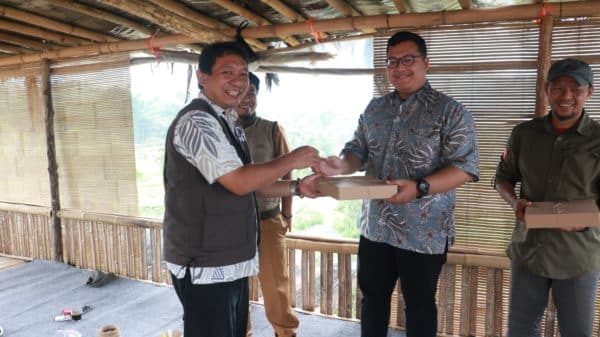
On December 6, Trees4Trees held an opening ceremony for the 2022 planting season at Ciminyak Nursery in West Bandung. The event was attended by representatives from Astra Zeneca Indonesia, the West Java Provincial Forestry Service, the Bandung and West Bandung Regency Environmental Service, and regents (Bupati) representative from both regions. Photo: Trees4Trees/Kemas Duga Muis.

Turning Over a New Leaf: The 2022 Planting Season

On November 24, Trees4Trees kicked off the 2022 planting season in the Citarum river watershed. Since then, more than 1.7 million seedlings have been distributed in the project areas.

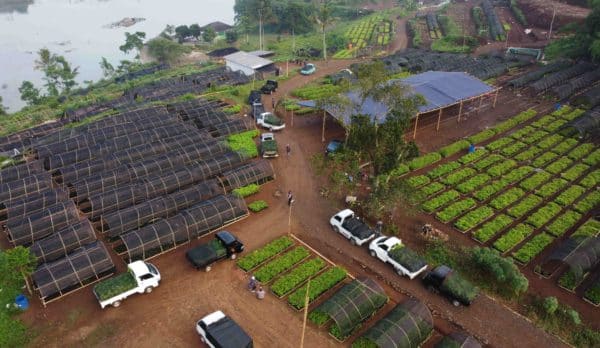
In December, we also celebrated the official opening of a new Trees4Trees nursery: the Ciminyak Nursery in Cililin Regency, West Bandung, which became our second nursery in the Bandung area (the other being Arjasari).

Muhammad Rizki Fauzan from AstraZeneca inspects the latest crop of seedlings at our Ciminyak nursery and CItarum River
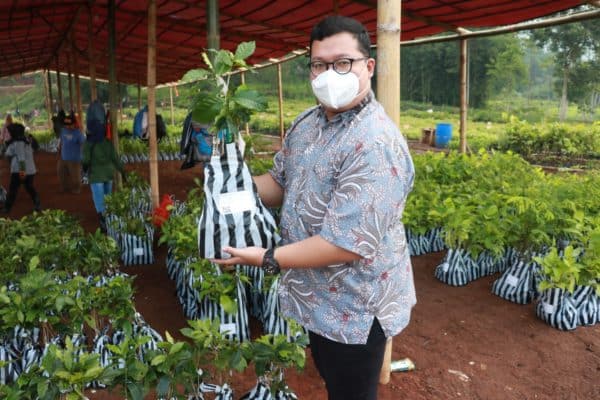
Muhammad Rizki Fauzan from AstraZeneca inspects the latest crop of seedlings at our Ciminyak nursery. Capable of producing around 2.3 million seedlings per year, the site will play a major role in supporting the Citarum watershed reforestation program. Photo: Trees4Trees/Kemas Duga Muis.

“We hope these seedlings will grow well,” said Muhammad Rizki Fauzan, a representative from AstraZeneca Indonesia in a statement during the opening ceremony. “AstraZeneca also hopes that Trees4Trees will continue collaborating with locals and the Forestry Service in the Citarum rehabilitation effort,” he added.

With the support of local farmers, growers, communities, and government officials, Trees4Trees will continue working to rehabilitate the Citarum watershed. Through collaboration and commitment, we will keep striving to reach our target of 10 million trees by 2025. For now, the future’s looking greener already.


Writer: V. Arnila Wulandani. Editor: Christopher Alexander.