All My Efforts Were Worth It: Planting Mangroves, Protecting Livelihoods in Pati

All My Effort

All My Efforts Were Worth It: Planting Mangroves, Protecting Livelihoods in Pati

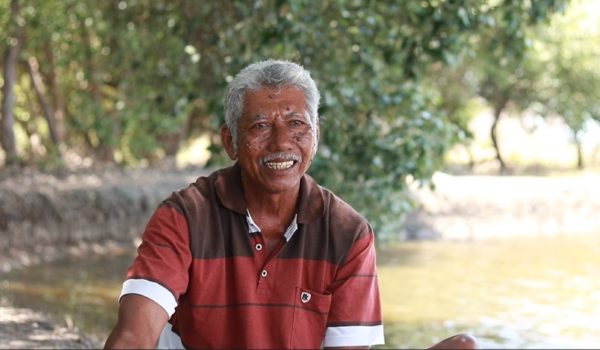
As the fifth of eleven siblings, Parmi missed out on a formal education in his youth. Instead, he and his two older brothers learned how to manage fishponds from their father. Parmi quickly turned this passion into a profession and now, more than 50 years later, continues to make a living in this way. 

Fishponds at the center of community life 

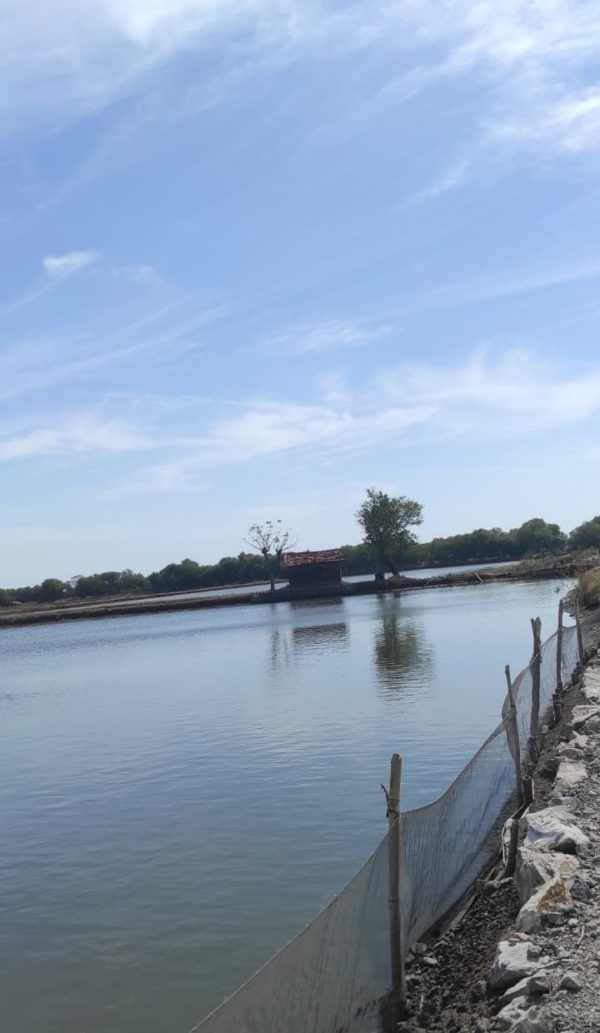
Central Java’s Pati Regency, where Parmi lives, is well known for its milkfish (ikan bandeng). “I manage two fishponds covering a total of 1.25 hectares,” he explains. “During the harvesting season, I can yield around a ton of milkfish per hectare, and we harvest two or three times a year.”  

With the income he makes from fishponds, Parmi can provide for his family. “This work allows me to give my son and daughter the education opportunities I never had,” he says.
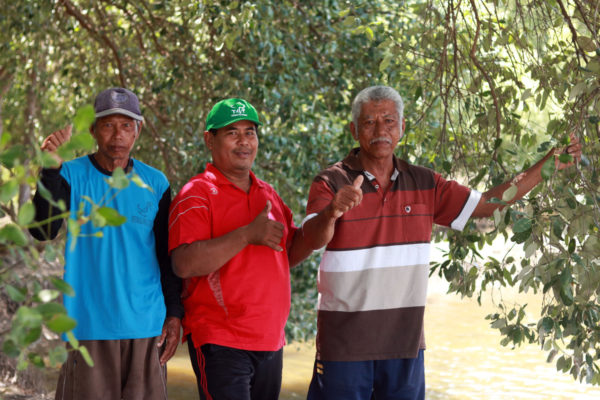
Farmer mangrove
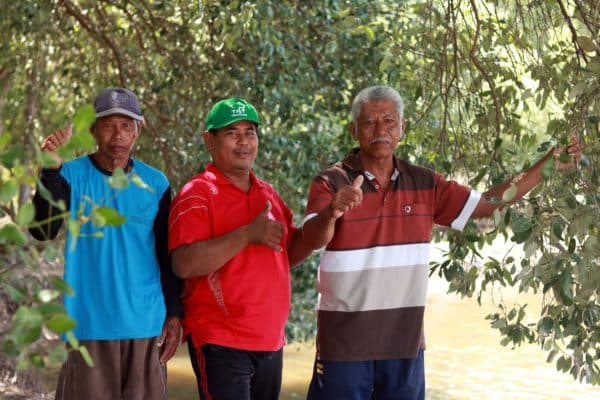
(Above) Parmi (right) with his fellow fishpond farmers, inspecting the mangroves he planted in 2001

Planting trees for protection 

Parmi’s fishponds are located in the coastal village of Dukuhseti, around 100 meters from the shoreline. In 2001, huge waves flooded the coast, destroying ponds and causing enormous damage. “I lost hundreds of millions of rupiahs,” he recalls. At that time, there were no protective barriers along the coast, leaving fishponds vulnerable to floods.  

In response, Parmi and his fellow fishpond farmers took steps to ensure this disaster would not happen again. They planted mangroves along the shoreline to provide a natural buffer against the waves. Now, 23 years later, those mangroves have grown big and strong. But there are not enough of them to guarantee protection. 

In 2022, there was another huge ocean surge. “I lost around 100 million rupiahs (USD 6,190),” Parmi remembers. But he was relatively unscathed, compared to other farmers further up the coast. “Our neighboring village suffered even greater losses because they didn’t have as many mangroves protecting their coast,” he explains. 
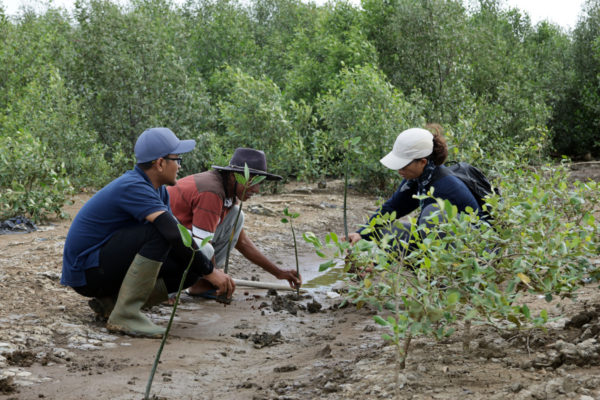
All My Efforts Were Worth It: Planting Mangroves
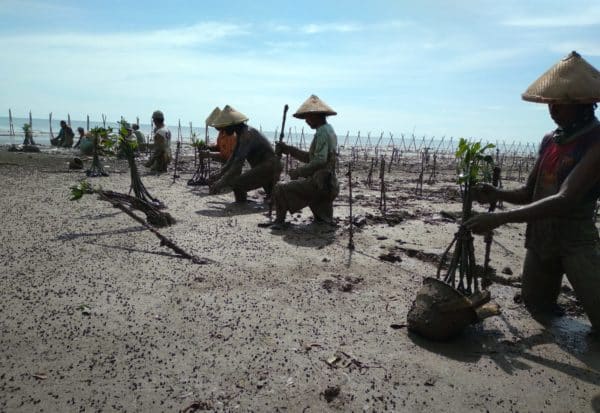
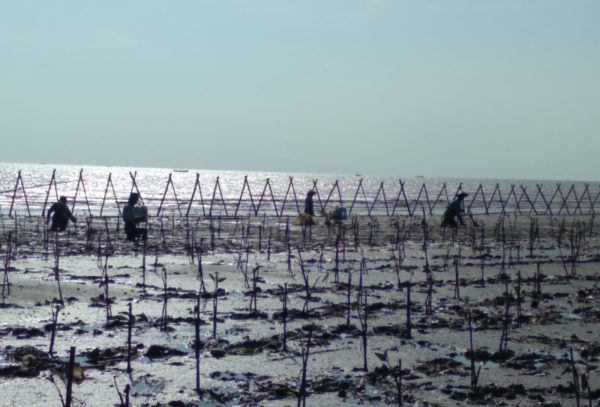
(above) Parmi plants new mangroves with members of the Trees4Trees team

Grab and EcoMatcher team up to plant mangroves 

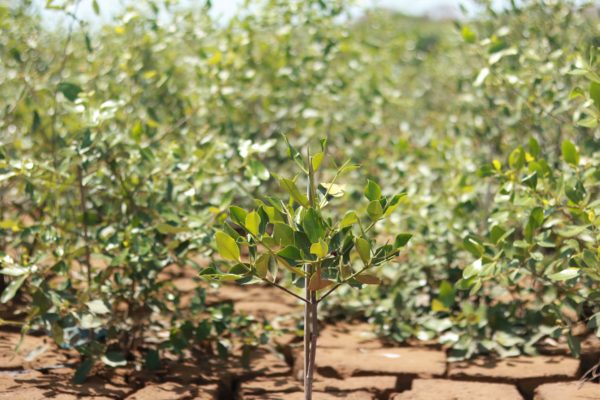
Back in 2021, Parmi and other members of the Tani Makmur Mandiri farmers’ group were invited to join a mangrove planting initiative run by Trees4Trees, EcoMatcher, and Grab. A total of 30,000 mangrove trees were planted, creating a green belt covering 3.8 hectares along the Dukuhseti shoreline. 

Now, three years later, Parmi and his fellow farmers are reaping the rewards of their efforts. “Planting mangroves is not easy,” he says, remembering how he and his team would work waist-deep in muddy ground. “But seeing these trees grow big and strong (almost all of them are now at least three meters tall), I feel all my efforts were worth it.”  

Ocean waves no longer threaten Parmi’s fishponds as they once did. And the flourishing mangroves offer a range of other, unexpected benefits to the community – the leaves provide a sustainable source of organic fertilizer for the fishponds and the fruits, known locally as brayuh or brayo, can be sold at markets. 

“Local people often come to pick the fruits,” explains Parmi, “which they can sell for 5,000 Rupiah (about thirty US cents) per bucket (500 grams). These fruits are highly in demand here, given their importance to local dishes.”  

Mangrove fruits

Parmi has seen first-hand the protective power and economic potential of mangroves in his community. He insists that caring for these trees and using them sustainably is essential to environmental health and social well-being. “Everyone in the village can freely pick the fruits or leaves, but cutting them down is strictly prohibited,” he says.  

“We would like to thank Grab, Trees4Trees, and EcoMatcher for providing us with these mangroves and the many benefits they offer,” says Parmi.We will continue working to protect and appreciate these mangroves, just as they protect our homes and safeguard our livelihoods.


 

Coastal Communities and Culinary Traditions: Mangrove Restoration in Pati

mangrove
Coastal Communities and Culinary Traditions: Mangrove Restoration in Pati
Fried bandeng presto (steamed milkfish) slices, an authentic culinary of Pati. Photo: Trees4Trees/V. Arnila Wulandani.

The uniqueness of bandeng presto (steamed milkfish) lies in its cooking technique. Steaming the fish at high pressure creates a delicate texture that locks in flavor and allows the meat to fall effortlessly off the bone. After being cooked in this way, even the soft spines of the fish can be eaten. From beachside pots to the kitchens of restaurants, local cooks have mastered this technique, and milkfish have become a dish that’s synonymous with Pati Regency of Central Java. 

This iconic fish puts food on the table in more ways than one. Many people living in Pati make their living as fishpond farmers, with milkfish being their main source of income. However, these industries are increasingly under threat from flooding. Now, with the help of Trees4Trees, farmers are finding that mangroves have the power to reverse the damage and protect their livelihoods. 

An Essential Resource for Local People 

In a year, fishpond farmers in Pati can harvest milkfish two or three times, depending on the weather. “We can sell one kilogram of milkfish for around 15,000 to 25,000 rupiah (US$ 1 to 1.60),” explains Djamari, one of the fishpond farmers from Dukuhseti village. He only cultivates milkfish, as this is the most reliable, most profitable commodity.  

Parmi, another fishpond farmer from Dukuhseti village, agrees. As he explains, “milkfish is the main component of authentic foods in Pati, so the demand is always high,” he added. 

Pati Beach
(Above) the mangroves that surround them. (Below) Fishponds in Dukuhseti village and. Photo: Trees4Trees/V. Arnila Wulandani

Fishponds in Dukuhseti village

Livelihoods Under Threat: Extreme Weather and High Waves  

Fishponds in Pati are increasingly under threat. Recently, when the tide is high, and the weather is bad, the surge can flood the fishponds and decimate stocks of the precious milkfish.  

“Virtually every year, our fishponds are threatened by waves,” explains Parmi. “Last year, when my pond was destroyed, only a few fish were left. I suffered losses of nearly 100 million rupiah due to the damage,” he revealed.  

Parmi’s story is familiar to many fishpond farmers in the region. Djamari added that he has experienced similar problems, which were disastrous to his business. “I estimate that my losses due to last year’s high tide were in the tens of million rupiah,” he said.  

However, Djamari and Parmi actually fared much better compared to their neighbors in other villages. This is because their ponds were protected by mangroves. “Even though there are not many, these mangroves protected our fishponds,” explained Parmi, pointing to the mangrove trees around him.  

Mangrove in Pati
(Above) In Pati, mangroves have proven to be an effective way of limiting the damage caused by annual floods. Photo: Trees4Trees/Yulianisa Dessenita.

The Many Benefits of Mangroves 

Musthofa is the leader of a group of fishpond farmers in Dukuhseti village. He laments that mangrove cover in Pati has been in decline in recent years. “Everything within a hundred meters of the shoreline should be a greenbelt area,” he explains, noting that this protection is largely absent. “Most farmers in our group are aware of the benefits offered by mangroves; we have seen ponds protected with mangroves suffer less damage than areas that are not,” he added.  

“The mangrove trees around our pond were planted in 1995 and stand up to 10 meters tall,” explains Parmi, who also revealed that these trees can offer multiple benefits to farmers. “They not only prevent erosion and waves – the fallen leaves also function as natural fertilizers to fishponds, which accelerates fish growth,” he said. 

Mangrove Farmers
(From left to right) Djamari, Musthofa and Parmi – fishpond farmers who have been helping T4T plant mangroves in Pati. Photo: Trees4Trees/Yulianisa Dessenita.

Restoring Coastal Areas, Supporting Farmers, and Preserving Traditions 

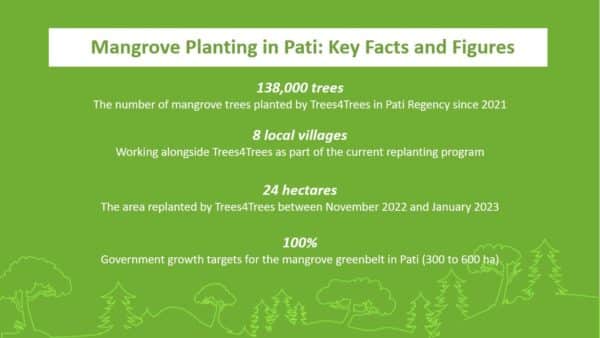
Djamari, Parmi and Musthofa are three of the many local farmers who have been helping Trees4Trees to restore coastal ecosystems and protect livelihoods in Pati. Since 2021, we’ve planted around 138,000 mangrove trees in an area covering 27.8 hectares; in the most recent planting season alone, we planted mangroves in eight coastal villages.  

“We hope the mangroves we have planted will grow tall and strong so they can protect fishponds and prevent coastal erosion in areas around our village,” said Parmi. He added that by planting mangroves, the authentic culinary traditions of Pati – such as bandeng presto – will also be preserved.  

Writer: V. Arnila Wulandani. Editor: Christopher Alexander

Replanting Mangroves, Rebuilding Futures in Central Java

Trees4Trees has been working with local communities to replant mangroves in Central Java
Trees4Trees has been working with local communities to replant mangroves in Central Java. Photo: Doc. Trees4Trees

On New Year’s Eve, Pati Regency in Central Java was inundated by heavy rains. This caused flooding that destroyed more than 600 hectares of agricultural land and damaged thousands of homes. But there was one silver lining to the black clouds that surrounded Pati in December – residents noticed that the areas least affected by the floods were also places with the highest coverage of mangrove forests.  

From the wreckage came the green shoots of a solution. Now, with support from local government and outside help from investors like EcoMatcher, Trees4Trees is working with communities in Pati to restore mangrove forests and rebuild for the future.  

Read also: Mangrove Planting Program with EcoMatcher Inspires Villagers to Plant More Mangrove Trees

A Rising Tide: Building Awareness of Mangroves 

“In recent years, local people’s awareness of mangroves has increased,” says Fauzan Timurlang, who is the Trees4Trees Unit Manager in Pati. He believes the benefits provided by mangroves have become clearer since the recent floods, with many people ready to take action. “They have seen that mangroves can act as barriers that break the waves and reduce the damaging impact,” he explains.  

Andi Lestari is a mangrove activist in Pati, working alongside Trees4Trees. He too has noticed an increase in community awareness. “Many people have seen for themselves the great benefits of mangroves,” he explains. “They have seen that areas with mangrove cover suffer less damage compared to areas that did not have any,” he added. 

Read also: The Incredible Benefits of Mangroves Ecosystem  

Root and Branch: Combining Community Action with Government Support 

Pati Regency stretches 37 miles (60 km) along the coastline of Central Java. Officials here have decided to double mangrove coverage from 300 to 600 hectares, effectively creating a natural barrier that can prevent coastal erosion and protect local homes and livelihoods from flooding. 

“We want to create a green belt from Pencangaan to Puncel,” explains Edy Martanto, Head of the Maritime Affairs and Fisheries Service (DKP) for Pati, in a recent interview with Muria News. “The green belt will function like a beach embankment – if there are waves, the mangroves will form a barrier – when the mangroves are strong, the ponds are also safe.”  

(Above) In areas like Kalikalong village in Pati Regency, Trees4Trees has been working to double mangrove cover

Planning into Planting: Trees4Trees Takes Action in Pati 

To help bring this green belt to fruition, Trees4Trees began planting mangroves along the Pati coastline from November 2022 to January 2023, as part of the recent planting season. By employing members of the community from eight local villages, Trees4Trees has already planted a total of 108,000 mangrove trees in an area covering 24 hectares.  

These seedlings (consisting of Red Mangrove or Rhizophora mucronata and White Mangrove or Avicennia marina), are endemic to the area, so will help replenish wild populations. They are currently being monitored to ensure they stay healthy and continue to grow. Back in 2021, and with support from EcoMatcher, Trees4Trees also planted around 30,000 mangrove seedlings across 3.8 hectares surrounding Dukuhseti village.

Read also: Mangrove Types in Indonesia and Their Benefits


Trees4Trees has planted more than 138,000 mangrove trees in Pati since 2021.

“The thicker the mangrove cover, the safer our fishponds will be – that’s why we’re so keen to be a part of the Trees4Trees mangrove planting program.”  Musthofa, Tani Makmur farmers’ group 


Local Communities on the Frontline of Mangrove Restoration 

To ensure mangrove restoration takes root in Pati, Trees4Trees has also involved local village officers and members of the forestry service. Six groups of local fishpond farmers have also been employed as mangrove planters.  

“Farmers in our group have become aware of the benefits provided by healthy mangrove ecosystems,” explains Musthofa, leader of the Tani Makmur farmer group. “The thicker the mangrove cover, the safer our fishponds will be; that’s why we’re so keen to be a part of the Trees4Trees mangrove planting program,” he added. 

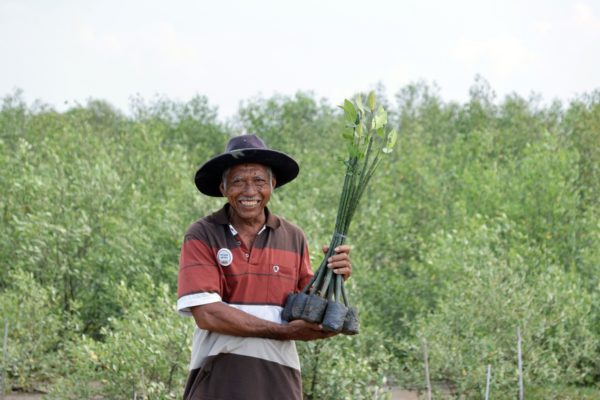
(Above) Parmi is one of many fishpond farmers joining in the Trees4Trees planting program in Dukuhseti village

Another of the fishpond farmers who joined the mangrove planting program is Parmi. Like many people here, he makes a living by farming fish and shrimp. With support from Trees4Trees, he is looking forward to a safer and more prosperous future. 

“Thick mangrove cover helps to protect our fishponds from strong waves, resulting in a higher abundance of fish,” explains Parmi. “I hope the mangroves we plant now will grow into a full forest like before, so they can continue to provide benefits for us and future generations.”  

Trees4Trees™ is a non-profit foundation focused on renewing the environment and empowering local communities through reforestation and education. For more information about the work we do, and to make a donation in planting mangroves, please go to devtrees4trees.portopaper.com. 

Writer: V.Arnila Wulandani. Editor: Christopher Alexander.