Planting in Kebumen UNESCO Geopark: Supporting Nature and Communities

Planting in Kebumen

When exploring the northern part of Kebumen Regency in Central Java, you will see something that can’t be found anywhere else on Java. The rocks here are actually ancient sea beds, which are packed with marine fossils of corals and radiolarian plankton. 

This landscape, now surrounded by forests, is part of the Kebumen Geopark – an area recognized by UNESCO in 2024 as a Global Geopark, in recognition of its remarkable natural, cultural, and historical value. This landscape is a living testament to the natural history of our planet. 

“Over 80 million years ago,” explains Suparmin, one of the park’s caretakers, “a tectonic collision between the Indo-Australian Plate and the Eurasian Plate triggered a massive earthquake that lifted the seabed to sea level, forming the karst landscapes we see today.” 

The story of this amazing geopark is still being written. Trees4Trees has been working here since 2008, planting trees to help support ecosystem health, protect biodiversity, and sustain the communities who depend on the land for their livelihoods.  
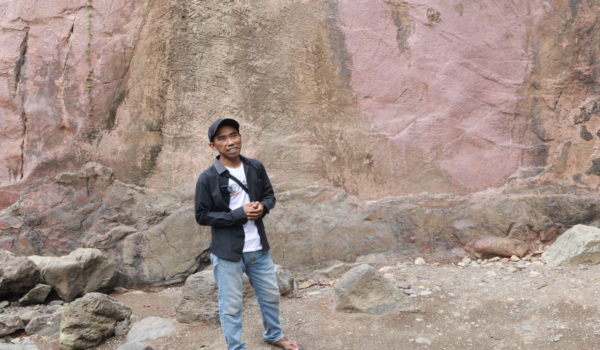
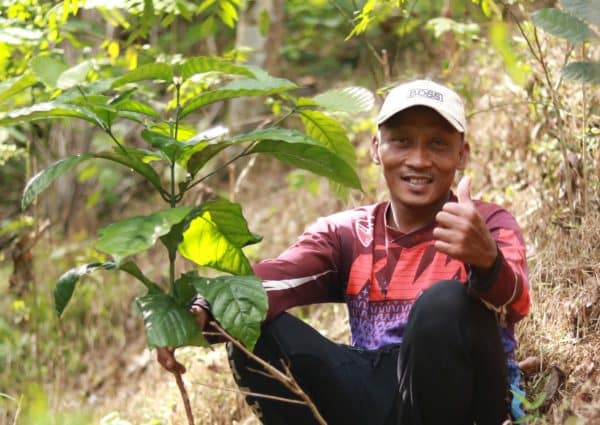
(Above) Suparmin, a local caretaker in Kebumen Geopark, stands in front of a massive basalt rock formation – an ancient sea floor.

Kebumen Geopark: A Biodiversity Hotspot 

The Kebumen Geopark is home to abundant natural and cultural wonders, including 42 geo sites, 24 cultural sites, and eight biological sites. This includes terrestrial and mangrove forests, a sea turtle conservation center, and cultivation areas for local species, like the dwarf honeybee (or klanceng) and native genjah entog coconut. 

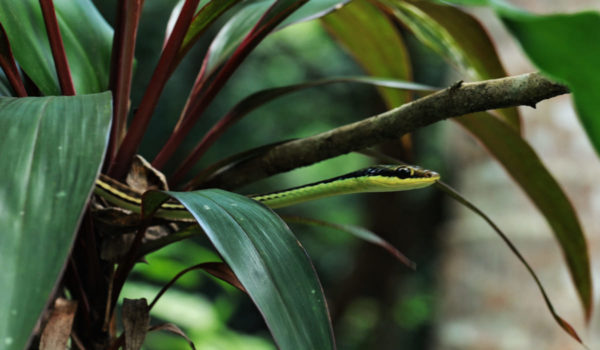
These sites provide habitats for wildlife, including rare and protected species. Among them are the endangered Javan hawk-eagle, Javan slow loris, and Javan leopard. “Our forests are home to diverse species, from birds and mammals to reptiles,” says Suparmin, before adding that there are also species of snakes like cobra, python, and tiger snakes here. “This area also shelters the endangered Javan slow loris, which is often targeted by illegal wildlife hunters,” he added. 
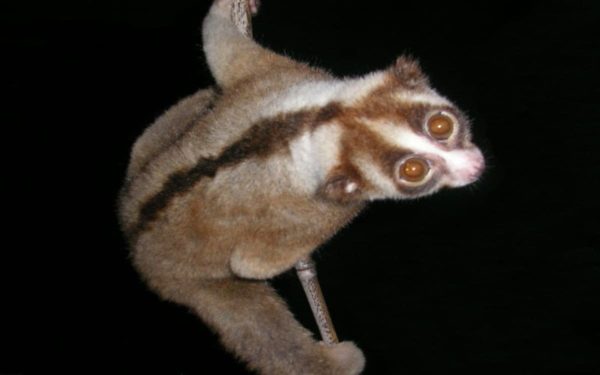
(Above) The Javan slow loris is one of several Endangered species that finds a refuge in the geopark. (Below) A snake spotted in the Watukelir geo site, which is home to various reptile species.

Planting in Kebumen

In addition to abundant animal species, the geopark is also home to a range of native and vulnerable plant species, such as Indian sandalwood, valued for its aromatic wood and bark. Other native species include the yellow cheese wood, pangi (or kluwak), bayur, and sugar palm. Some of these species’ feature in Trees4Trees’ ongoing planting program for the region. 
Planting in Kebumen
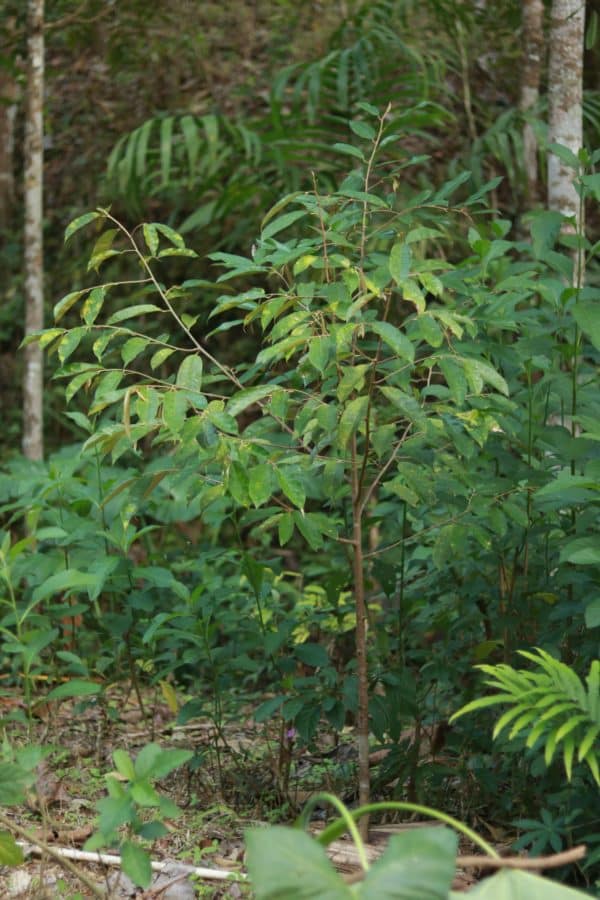
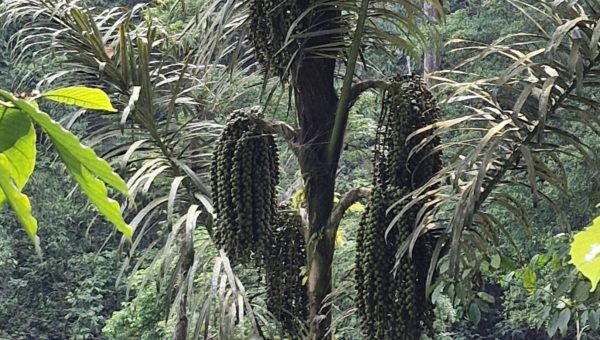
(Above) Sugar palms, one of several species planted in Kebumen by Trees4Trees, which are central to local livelihoods and help to mitigate the impacts of drought by conserving water.

Natural Heritage Meets Local Wisdom 

This area is just as rich in cultural diversity as it is in geological history. Spanning over 100,000 hectares of land (and 2,000 hectares of sea), the geopark spans valleys, hills, and coastal areas. These places are home to a variety of flora and fauna, as well as centuries-old cultural practices, rituals, and arts, underpinned by a deep respect for nature.  

“Sites in the geopark are sacred to local communities,” explains Suparmin. “Traditional wisdom prohibits exploitation and helps protect this heritage.” He also notes that local communities are actively engaged in nature preservation efforts that are strengthened by government regulations and stakeholders’ support. 
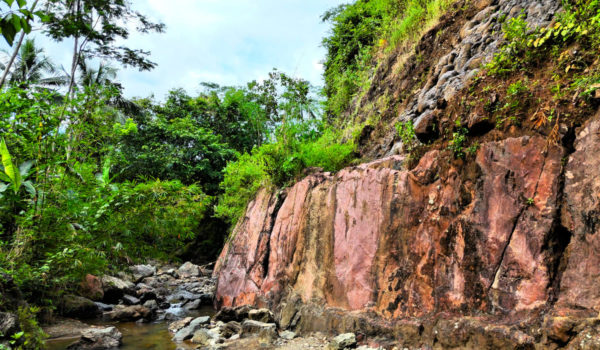
(Above) The distinctive rock formations of the Kebumen Geopark are actually ancient sea beds, brought up from the depths by tectonic activity over 80 million years ago.

Tree Planting in the Geopark  

Over the past 16 years, Trees4Trees has planted more than 1.2 million trees within the geopark. “We’ve worked across 24 villages in four districts within the geopark,” explains Henning Ilmi, Trees4Trees’ Field Coordinator in Kebumen. “This includes planting shade, fruit, and water-conserving tree species to help address drought,” she added.  

Henning also notes that many of these trees offer a mix of environmental and economic benefits. “Genitri trees, for example, are incredibly good at purifying air and their seeds can be made into beautiful beads that provide a source of local income.” According to her, pangi trees (kluwak) are also excellent at conserving water and produce fruits that are highly valuable, as they are central to Indonesian culinary traditions. 

Supporting Biodiversity, Strengthening Local Community Resilience 

Healthy ecosystems support more than just biodiversity – they can also sustains cultural traditions and local livelihoods. For example, in Kebumen Geopark, the landscape supports practices like the tapping of sugar palm sap, a tradition passed down through generations and a key source of income for many families. Sugar palms also help conserve water in drought-prone areas within Kebumen. 

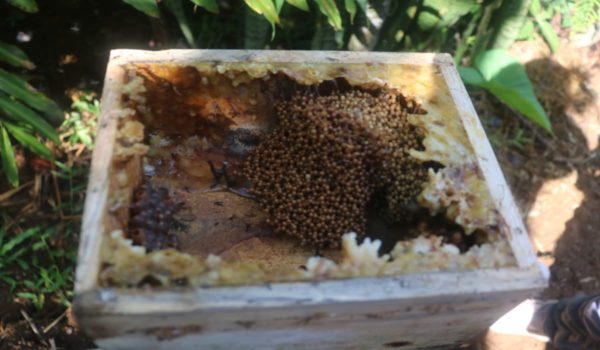
Nature also provides for communities in other ways. Hanafi, a local farmer, relies on a healthy forest to cultivate dwarf honeybees. “Bees get their food from forest trees,” he explains, “without them, I couldn’t raise my honeybees. 

Henning says the long-term tree planting initiative from Trees4Trees has been designed and implemented to improve ecosystems and environmental quality, protect biodiversity, and strengthen local livelihoods. “The geopark is a center for geological heritage conservation and promotes sustainable development,” she explains. “Our tree-planting program supports this effort and aligns with the wider mission of the geopark.”   

The tree-planting program in Kebumen Geopark is a collaborative effort. You too can play your part and help secure its survival by donating trees to the project. This will not only help sustain the ancient ecosystems that protect biodiversity, but also help to support the local communities who depend on them for survival. To find out more, please visit our website. 


Writer: V. Arnila Wulandani. Editor: Chris Alexander. Interview, source compiling & photos:  Yulianisa Dessenita & Henning Ilmi. 


Tasum: Growing Rudraksha Trees and Staying True to His Roots

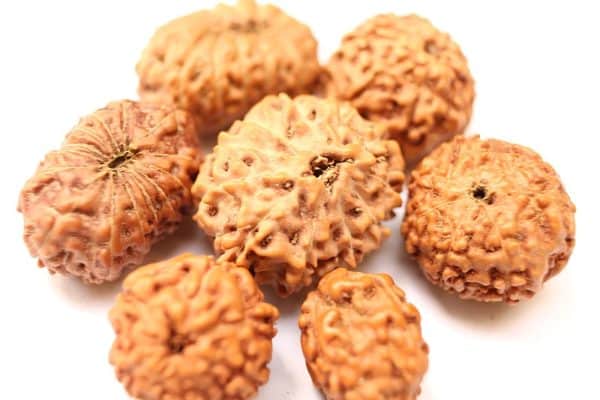
Rudaksha fruits
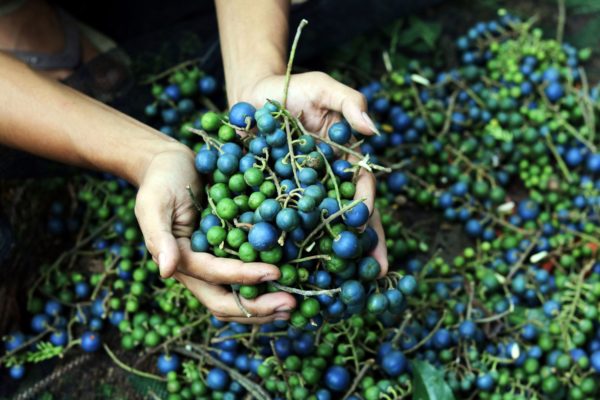
When ripe, rudraksha fruits are covered by an iridescent blue outer fruit, which gives them their other name: blueberry beads. Photo: Trees4Trees/Yulianisa Dessenita.

“I find my soul is at more peace in the village than in the big city.” For as long as he can remember, Tasum (45) has had his heart set on being a farmer. In his youth, most of his friends were attracted to the bright lights of the big city. Tasum briefly followed the same path and got a job in a hardware store in Jakarta. But before too long, he realized urban living was not for him, and went home to Selogiri Village in the greenery of Kebumen Regency, Central Java.  

What he found on his return was a sense of purpose. He set himself up on a plot of land belonging to his family and started cultivating rudraksha trees (Elaeocarpus ganitrus). Seedlings he planted grew and flourished, blossoming into the realization of a lifelong dream. 

Understanding the True Value of Trees 

Rudraksha trees are revered in India – the Sanskrit name comes from the hard, spherical stones of its fruit, which are commonly used as prayer beads by Hindus, Buddhists, and Sikhs. When ripe, they’re covered by an iridescent blue outer fruit, which gives them their other name: blueberry beads. 

Tasum: Growing Rudaksha Trees
(Above) Highly prized for their decorative swirls, sacred beads, and healing properties, seeds of the Rudraksha tree are also providing Central Java’s farmers with a sustainable source of income. Photo: Wikipedia

In Selogiri Village, the tree is known as the jenitri (or ganitri) tree. It is no less sacred to the people of Java, as it puts food on their table. The dried fruit seeds are highly prized commodities, used for necklaces, bracelets, and prayer beads.  

According to Tasum, the value of the seed lies in its distinctive whirling patterns (mukhi). “The more patterns on it, the more expensive it becomes,” he explains. The fruits are not only prized for their spiritual significance, but also for their medicinal properties (again, mukhi is the key: more swirls = stronger healing energy). 

Large quantities of Tasum’s crop go on to be sold abroad, with India being the most common destination, followed by Nepal and China. The income has been a blessing for local farmers, who have only recently begun to appreciate the potential – and the true value – of these trees.  

A single tree can produce around 6,000 to 10,000 seeds in a season, which can bring in an average of between $12 and $20. Sometimes, the trees provide more unique patterns that fetch a higher price. 2015-2017 was the golden period,” he remembers. “I sold some of these for as much as $2 to $6 per fruit!, Like the eventual buyers of his crop, Tasum sees these natural treasures as gifts from God. 

Tasum, a farmer from Silogiri village
Tasum, a farmer from Selogiri village, believes fruit tree farming offers a more sustainable way to go; it’s also more efficient, and potentially more profitable. Photo: Trees4Trees/Yulianisa Dessenita.

Hard Graft: Working Together to Find Sustainable Alternatives 

Many older farmers in Tasum’s village plant cash crops. But he believes fruit tree farming offers a more sustainable way to go; it’s also more efficient, and potentially more profitable.  

“If I plant fruit trees, I can harvest the fruits or seeds, while the trees remain intact,” he explains. “For me, cutting down even one tree is a great loss.”  

Rudraksha Trees
(Above) One of around 300 rudraksha trees in Tasum’s plantation. Photo: Trees4Trees/Yulianisa Dessenita.

By using grafting techniques, Tasum has been able to expand his plantation of rudraksha trees to around 300 individual plants. He also grows other fruits such as durian, avocado, and coffee. 

In 2021, with the support of Plant for The Planet (PFTP) as the sponsor, he joined Trees4Trees to help expand our reforestation efforts. Since then, he’s planted hundreds of seedlings. While profit he makes is a big bonus, Tasum values the long-term benefits trees provide to his village and the surrounding area.  

Having uprooted himself once from Selogiri, Tasum is more convinced than ever before that a farmer’s life is for him. Now, with the help of Trees4Trees, he’s putting down roots in more ways than one.  

Writer: V. Arnila Wulandani. Editor: Christopher Alexander

Travels in Java: Journey to Curug Kedondong Waterfall in Kebumen

Travels in Java: Journey to Curug Kedondong Waterfall in Kebumen

From beaches lining the southern shores of Java to the verdant hills inland, Kebumen is home to extraordinary natural beauty. For travelers, the landscape offers many treasures to be explored. During Trees4Trees’ recent planting excursions, we encountered one of the region’s hidden gems, tucked away in the forest. 

People in the nearby village of Gunungsari call it Curug Kedondong (kedondong is a type of fruit tree that grows locally, and this name is also given to the nearest sub-village). Surrounded by natural woodland, this breathtaking waterfall in Kebumen regency is a great example of why our mission to re-green Java is so important; a process of rehabilitating degraded areas, but also preserving the natural wonders we already have. 

How to Get There 

The waterfall is located around 15 miles (24 kilometers) southwest of downtown Kebumen. Traveling by car or motorbike, the road winds through idyllic pine forests and farmland along the way.   

At the end of the road, the entrance gate is less than 1500 feet (450 meters) from the nearest houses. Entrance costs just IDR 5,000 (US$ 0.33) per person.  

What Makes it Worth the Trip 

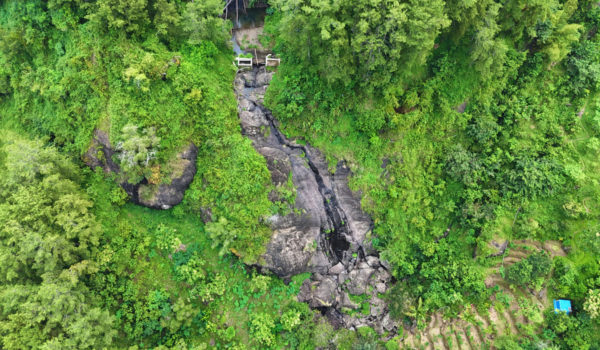
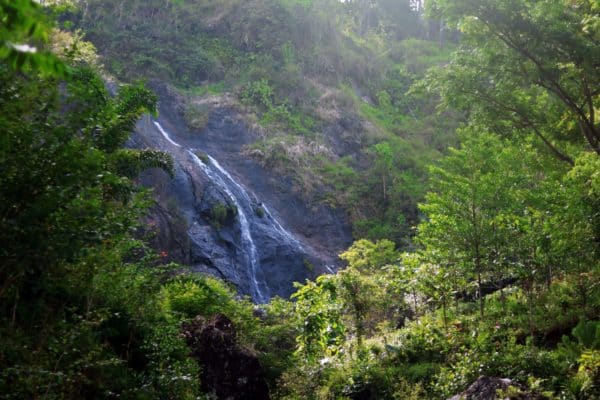
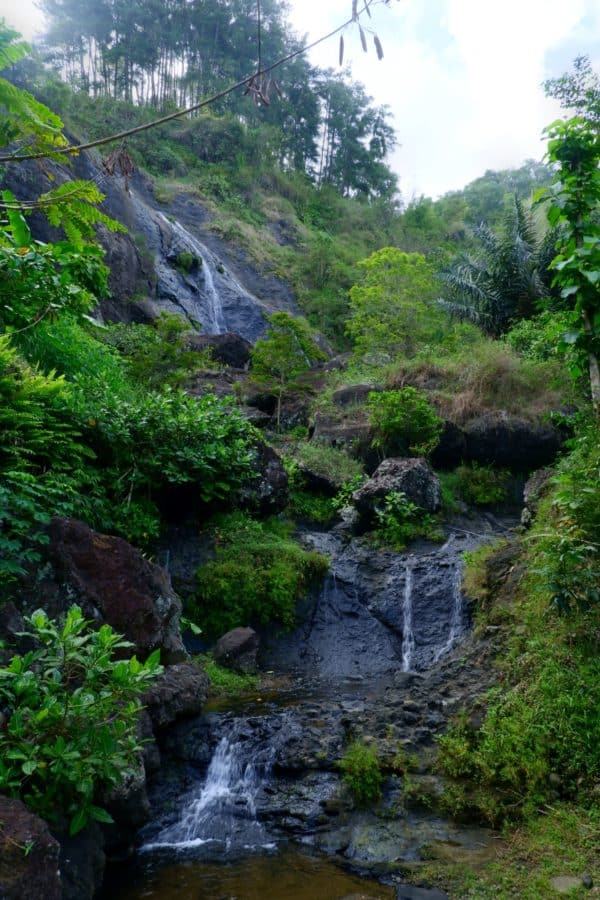
The waterfall itself stands around 82 feet (25m) tall. The water cascades into an ancient canyon of andesite rocks, framed by verdant jungle ferns. At the base of the falls there is a natural freshwater pool – the perfect spot for a refreshing dip after the long trek.  

And speaking of trekking, those with an adventurous streak can hike to the top of the falls. From up here, you can sit and enjoy panoramic views of the hills surrounding Gunungsari Village.  

Curug Kedondong, Kebumen_3
(above) Kedondong Waterfall cascades over giant andesite rocks

Making a Splash: The Growing Popularity of Kedondong Waterfall  

For many years, this spot had been a well-kept secret, known only to the people of Gunungsari. But in 2018, a group of local youngsters decided it was time to put this place on the map – so they began promoting the falls as a unique tourist destination. 

In 2019, and with support from the village government, they officially unveiled the falls and began welcoming visitors from far and wide. Since then, the site has been made more accessible to the public, with new facilities like gazebos, bridges, toilets, a parking area, and food stalls.  

Jasmun is one of several young people in Gunungsari to have been actively involved in – and subsequently benefitted from – development of the falls. He lives nearby with his wife, and together they have converted their home into a food shop for tourists.   

“Previously, it was like our own private waterfall because the location was just behind our house,” says Jasmun. “Now, we’re grateful that many visitors come to this place, because we can make income from this shop.”  

Travels in Java: Journey to Curug Kedondong Waterfall in Kebumen
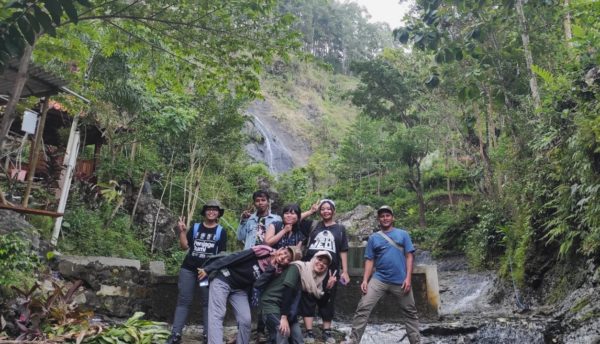
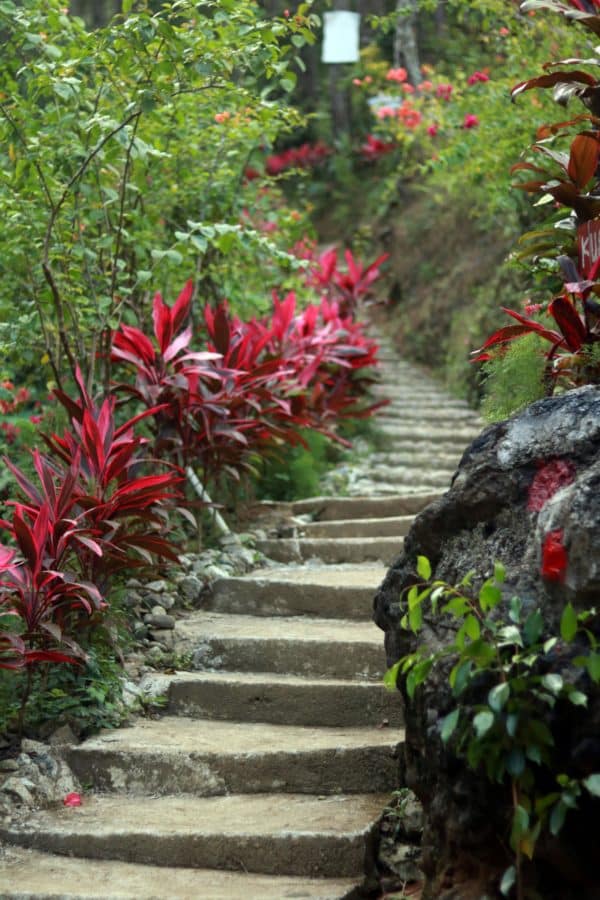
(Above) “Our own private waterfall.” Young people in Gunungsari offer tours for visitors and help keep the falls clean. Photo: Trees4Trees/V. Arnila Wulandani. (Below) Stairs to pine forest. Photo: Trees4Trees/Yulianisa Dessenita.
Stairs to pine forest in Curug Kedondong
Travels in Java: Journey to Curug Kedondong Waterfall in Kebumen

Putting Down Roots: Reforestation the Key to Future of the Falls 

“This waterfall originated from a source spring above,” explains Jasmun, who is part of a group that is working together to preserve the surrounding forests and keep the river system healthy. Recent years have given them cause for concern. 

“In the dry season, the rivers never fully dried up,” he says. “But lately, the water coming from the spring is dwindling. It’s a major worry for us.,” The natural spring feeds the waterfall, but also represents the main source of clean water for villagers in the area.   

Source water of Curug Kedondong in Kebumen
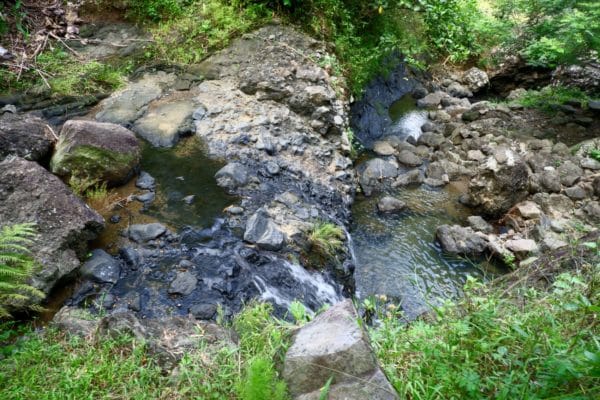
Crystal-clear spring water in the river above the falls. Photo: Trees4Trees/V. Arnila Wulandani

In an effort to protect the spring and preserve the waterfall, local people have planted trees in the area. This offers a range of ecosystem benefits: trees help intercept rainfall, thereby reducing soil erosion; they also support infiltration, which means rainfall reaches the water table; they store water in their roots and branches, which keeps wellsprings flowing; and they also help to improve the quality and cleanliness of drinking water.  

Trees4Trees has been supporting these efforts with a combination of resources and expertise. “In 2021, we helped the people plant 500 trees for spring conservation purposes,” explains Lailatul Khasanah, Field Coordinator of the Trees4Trees unit in Kebumen. “We planted sugar palm (aren), pangi (picung), and Tahitian chestnut (Gayam) trees, because they have a great ability to store water.”  

In the most recent planting season, Lailatul and her team  planted 500 more trees in the area – both on nearby farmland and in public areas around the waterfall. By working together with local people and giving nature a helping hand, Trees4Trees hopes to preserve the wonders of the waterfall for generations to come. 

“By planting trees, says Lailatul, “we hope the beauty of Kedondong waterfall will last forever.”  

Writer: V. Arnila Wulandani. Editor: Christopher Alexander