Activity Highlights: Farmer Training Initiative to Empower Local Communities

In Trees4Trees‘ tree-planting operation, our focus includes empowering and encouraging local communities – our partners as tree growers – to implement environmentally friendly farming methods. By doing so, we anticipate that the farming activities will not harm the surrounding environment, while also potentially benefiting local communities through the products of the trees, such as fruits, leaves, or bark. 

To achieve this goal, we conduct a series of farmer training sessions at each working site as part of our tree-planting initiatives. This year, various topics about organic farming methods have already been covered. These topics include how to make organic pesticide and herbicide, formulating liquid and granular organic fertilizers, and microbe’s decomposer.  

Additionally, there are also topics related to the cultivation techniques, such as applying organic cultivation pattern, increasing timbers and multipurpose tree species productivity, grafting and plant propagation through cutting techniques, and best practices to cultivate fruit trees in organic ways.  

Let’s delve into the recent establishment of Trees4Trees‘ farming training program!  
Farmer Training Initiative to Empower Local Communities

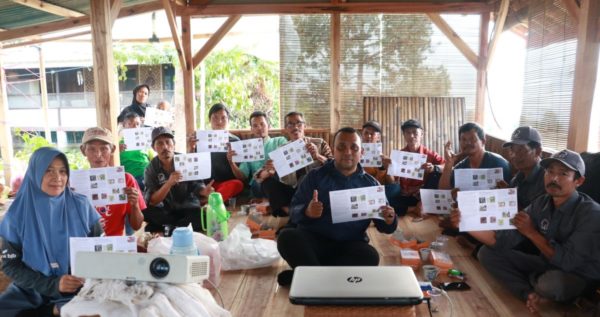
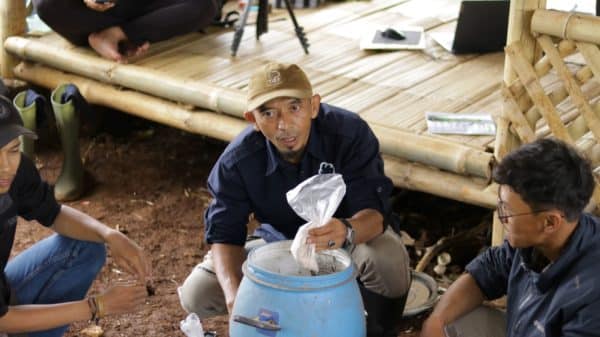
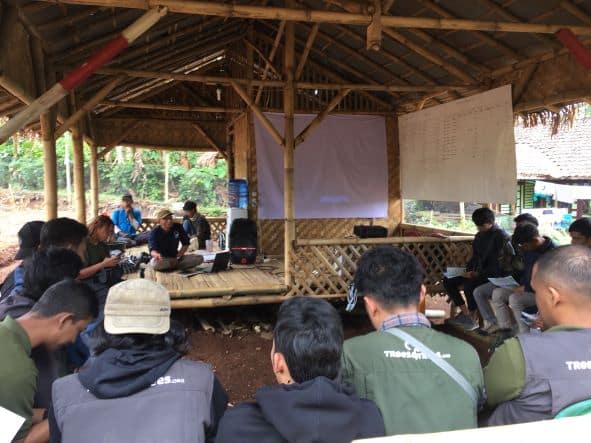
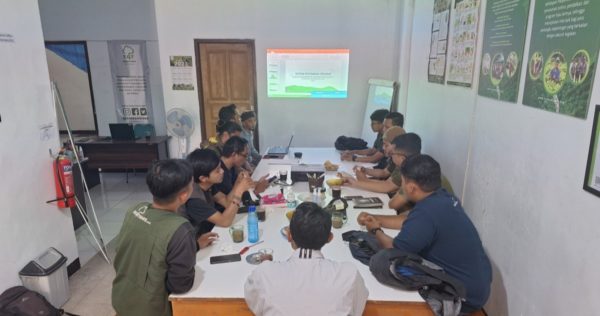
Our field team is at the forefront of engaging local communities to tree-planting programs Trees4Trees held a Training of Trainers to enhance the understanding of organic farming methods among our field team before delivering the knowledge to the tree growers participating in the program. Our field team will continue to disseminate this knowledge to tree growers in each planting area through mentoring and handson practice. 

Farmer Training Initiative to Empower Local Communities

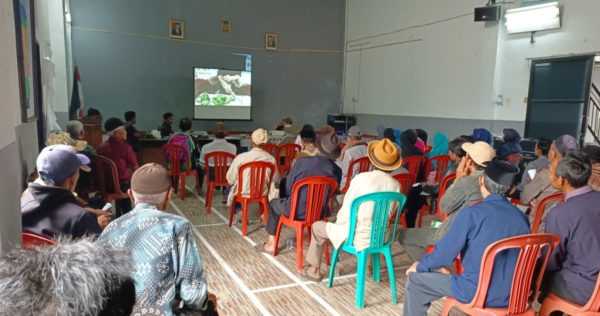
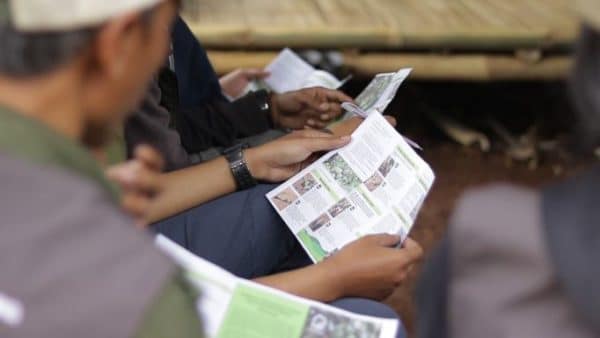
Trees4Trees provides its tree grower partners with brochures (above) and videos (below) as information and tutorial sources they can access for free. These information tools contain tutorials and steps in how to implement each organic farming method 

Farmer Training Initiative to Empower Local Communities

how to make organic liquid fertilizers

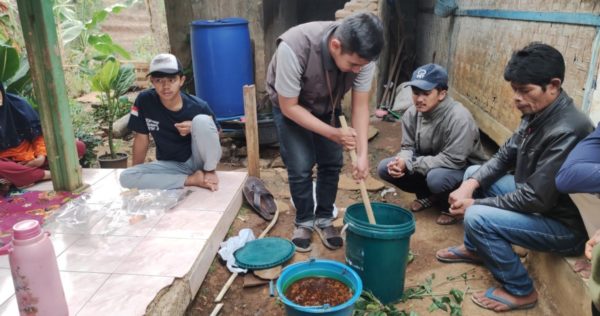
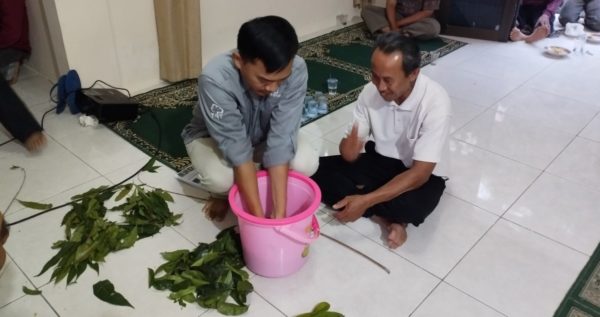
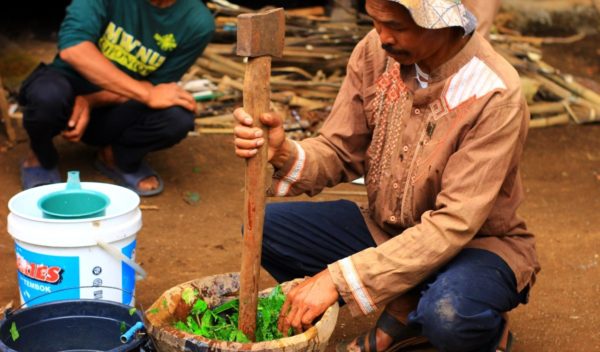
Organic biopesticide is useful to prevent and control pests and disease attack to the trees planted without leaving harmful residuals. Our field team showcases tutorials of organic biopesticide making in a hands-on practice to the local communities. The organic biopesticide is formulated from some tree leaves like suren, sirsak, and sirih leaves. They are mixed with turmeric, galangal, tobacco, molasses, and decomposer microbes.
Farmer Training Initiative to Empower Local Communities

how to make organic liquid fertilizers

In the process of making organic biopesticides, three kinds of leaves; sirsak, suren, and sirih leaves need to be pounded before they are mixed with other ingredients. Local farmers are pounding them with a traditional pestle and mortar made from wood.  
how to make organic liquid fertilizers

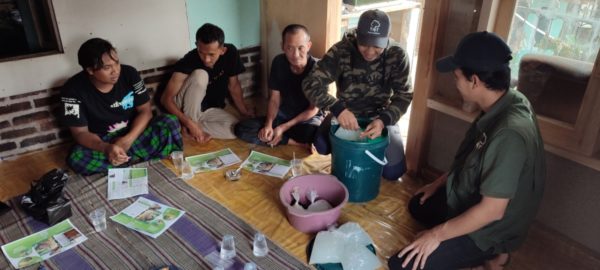
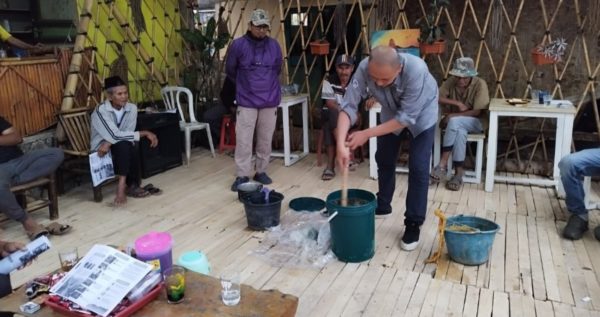
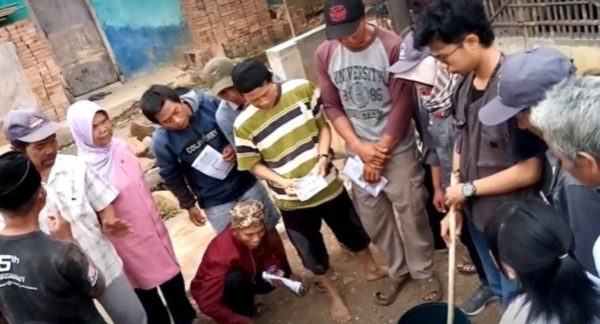
Fulfilling the high demand for knowledge about organic fertilizers in local communities, our field team conducts farming training on how to make organic liquid fertilizers. (Above) We utilize household waste like expired eggs and milk, rice washing water that are mixed with some other ingredients including sheep’s manure, volcanic ash, and spirulina. To apply this type of fertilizer, simply by spraying around the trunk of trees planted. (Below) The organic fertilizer training attracted many local people to directly witness the tutorials demonstration. 
Trees4trees team

Farmer Training Initiative to Empower Local Communities

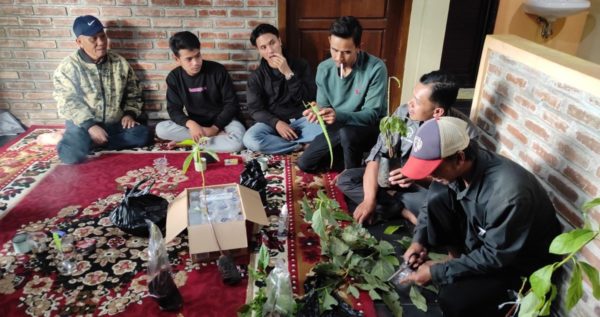
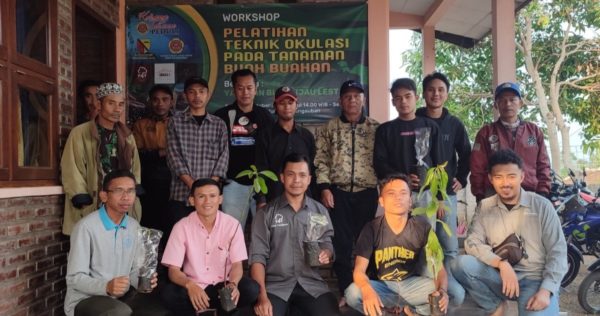
One of the farming training topics we cover is grafting techniques, a cultivation method that involves attaching one plant bud to another. This method aims to combine favorable characteristics from both plants to achieve a better variety of trees 

Trees4Trees' farmers

Farmer Training Initiative to Empower Local Communities

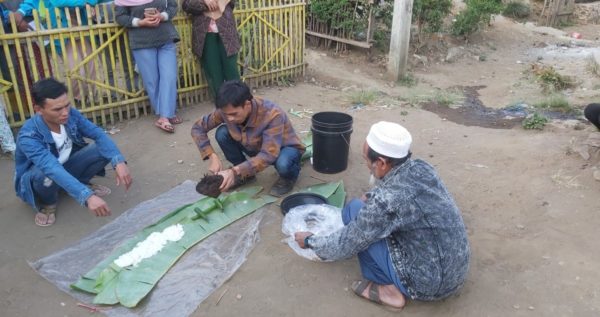
Decomposer microbes and soil fertilizers play a crucial role in the organic farming system due to their numerous functions in plants growth. They help compost plants and livestock waste to become nutrient for plants, reduce chemical waste in the soil, enhance soil fertility, and help to prevent pathogenic bacteria. Additionally, they significantly improve the chemical and biological function of soils. Considering these factors, we conduct training on decomposer microbe production using rotten rice, banana weevil, bamboo roots, molasse, and yeast that are fermented 

Farmer Training Initiative to Empower Local Communities

In one of our farmer training sessions, we presented a tutorial on making herbicide from organic ingredients, including coconut water, sugar, and yeast, followed by a fermentation process. Organic herbicide is useful for controlling and preventing weed growth that can disrupt the growth of trees.  

Encouraging Organic Farming Through Training of the Trainer 

Encouraging Organic Farming Through Training of the Trainer_1
Training participants learnt organic farming materials during the training session. Photo: Trees4Trees/Yulianisa Dessenita

Encouraging the planting season begins, Trees4Trees holds a Training of the Trainer (TOT). It is part of a series of tree planting programs. This year, Trees4Trees held the training from October 10 to 26, 2022 in all sites. The training itself aims to provide field coordinators with practical knowledge related to tree-planting. 

Through the training session, Trees4Trees’ training team train all field coordinators to mastering various materials related to organic farming. They are including planting patterns, fertilization, and planting techniques. After the training is completed, field coordinators then will transfer the knowledge to the farmers who are involved in the planting program with Trees4Trees. The training for farmers is conducted during the planting socialization stage, just after Trees4Trees distributes tree seedlings to farmers. 

Tailored to the needs of farmers 

The field coordinator will deliver the materials  to farmers in each village. They will provide material through training according to the materials requested by the farmers. 

“When it comes to the initial stage of the program, field coordinators have asked the farmers about what kind of training they would like to get. Once we know what kind of training they want to improve, we structure the training materials into tutorials. So, the training we provide basically will be tailored to the needs of farmers,” said Tedi Purnama, Trees4Trees Training Officer who was also a trainer of TOT training. 

Encouraging Organic Farming Through Training of the Trainer_3_IMG_5850

Tomi Bustomi, Trees4Trees West Java Regional Manager also said that one of the advantages of the Trees4Trees’ tree planting program is that it involves local farmers in planting trees and always considers the needs of farmers. 

“We always listen to the needs of the farmers. Not only for trees we distribute, but also training we provide. Our programs always tailor to the needs of farmers. Therefore, what we provide will bring real benefits to them,” Tomi added.

Encouraging using organic waste and other organic materials that are easy to find 

This year Trees4Trees delivers seven training materials through TOT. One of them is mandatory material. It is a timber and multipurpose tree species planting pattern. The other materials include how to make organic liquid fertilizers, organic congested fertilizers, organic pesticides, seedlings propagation techniques, and fruit cultivation techniques. Trees4Trees dedicates the training in fruit cultivation to farmers who are willing to increase their fruit production on a business scale.  

According to Tedi, before he delivers the material to the trainee, all materials have been tested first. “We made the simulation first to know the efficiency. Including the ingredients and cost estimation. We make sure that the ingredients and materials we use as references are the easiest, cheapest, and most efficient materials. We designed it in such a way that farmers can easily produce by themselves,” said Tedi. 

Encouraging Organic Farming Through Training of the Trainer_4_IMG_0156

For example, to make organic fertilizers, field coordinators were trained to use organic waste and other organic materials that are cheap and easy to find, such as eggs, expired milk, rotten fruits, moss, and animal dung.   

Encourage farmers to do organic farming 

Through this training, it is expected that field coordinators are able to understand all training materials. Afterwards they can deliver the training materials to farmers as well as reinforce and encouraging them to do organic farming. 

The purpose of TOT is to provide another perspective on cultivation patterns to farmers in 180 villages in Central Java and West Java as our partners. In West Java especially, most farmers still use chemicals in agriculture. Trees4Trees wants to encouraging all farmers to cultivate plants with organic farming techniques that are environmentally friendly. And the field coordinator will be the first who provides information and answers when farmers ask questions about how to implement an organic farming,” said Tedi. 

Writer: V. Arnila Wulandani