Activity Highlights: Educating Farmers through Community Engagement

Planting consultation

As part of Trees4Trees’ tree-planting process, our team in the field conducts community engagement sessions aimed at providing farmers with knowledge and information about tree-planting conditions and organic farming principles.

At this stage, our team also enters into partnership agreements with local farmers to establish them as tree grower partners in the upcoming reforestation program and ensuring the collection of data on farmers’ identities and land ownership details for the planting locations. 

Explore more about our tree-planting consultation and community engagement activities! 
Planting consultation stage Trees4Trees

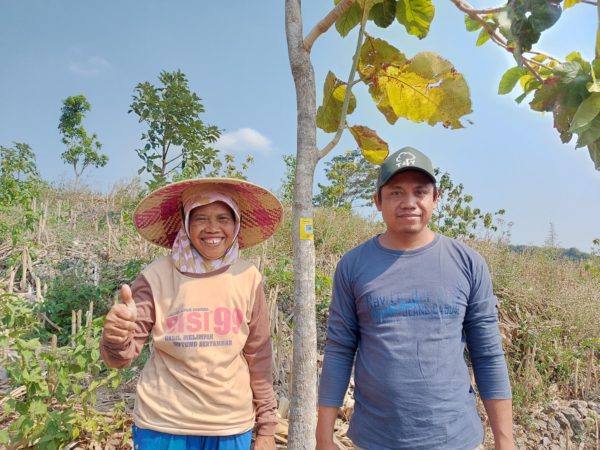
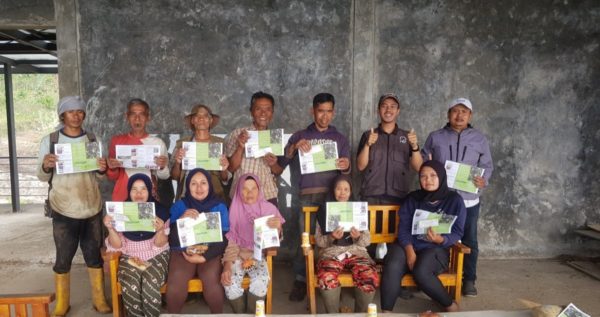
This year, we’re partnering with more women farmers in various tree-planting areas. Our team in the Cisangkuy site (below) has already finished the socialization stage in Mekarsari Village and the Pati site (above) recently completed the tree-planting socialization session in Jrahi Village. In Pati, around 40% of tree grower partners are women, while in Cisangkuy, it’s about 30%. We encourage women farmers to participate in our tree planting program as part of our commitment to promoting women’s empowerment in our tree-planting operations. 
Planting consultation_Trees4Trees

Planting consultation_Trees4Trees

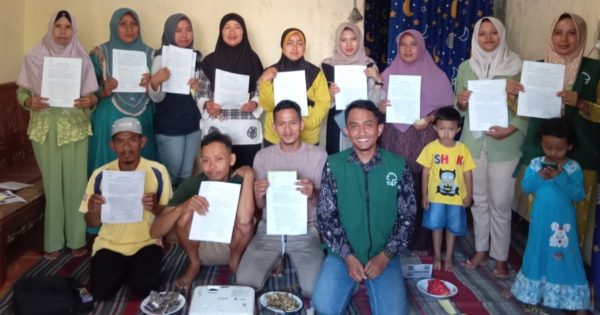
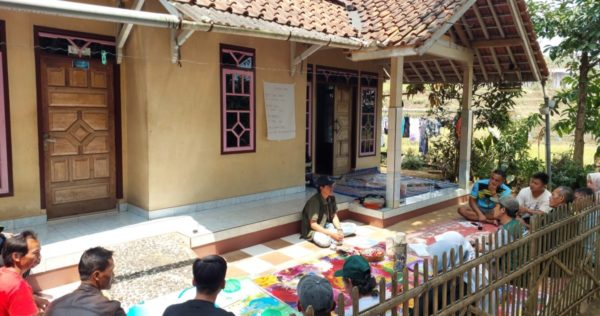
The tree-planting partnership entails an agreement between local farmers and Trees4Trees. Before signing the agreement paper, our teams in Kebumen (above) and Ciminyak 3 (below) sites provide a detailed explanation of the tree-planting conditions. The partnership is formed based on the local farmers’ willingness to join the program, with informed consent. 
Planting consultation_Trees4Trees

Planting consultation

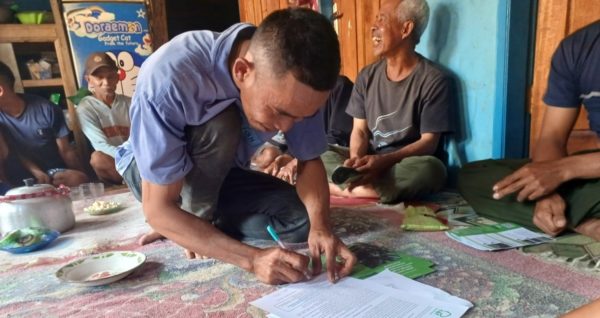
After comprehending and accepting the planting conditions and program partnership, local farmers in the Mandalahaji Village of Cirasea 3 planting site (above) and Sindangkerta Village within the Ciminyak 2 site (below) proceed to sign the agreement form. The agreement encompasses commitments to practicing sustainable farming, abstaining from the use of environmentally harmful chemicals, refraining from land clearing, not employing underage workers, and safeguarding the conservation areas surrounding the planting sites throughout the collaboration. 
Planting consultation

Planting consultation_Trees4Trees

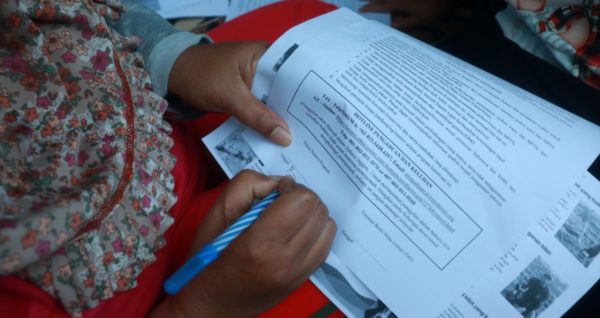
In Nagreg Village, which is part of the Citarik site, a tree grower partner is in the process of signing the planting agreement. Alongside distributing copies of the agreement letter and organic farming brochures as instructional materials, Trees4Trees also provide each farmer with a hotline number they can use to report issues and ask for help throughout the partnership. 
Planting consultation_Trees4Trees

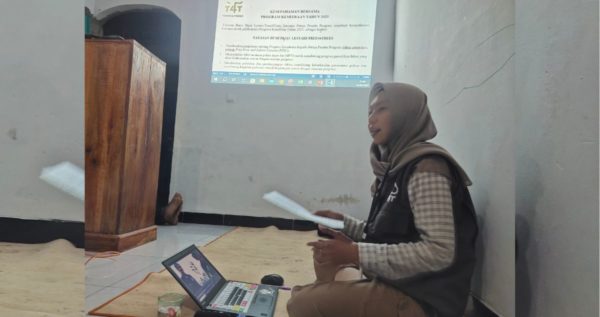
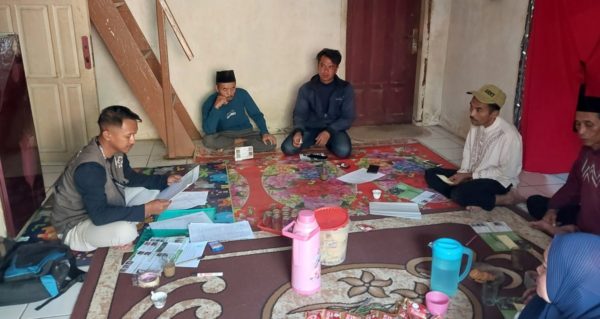
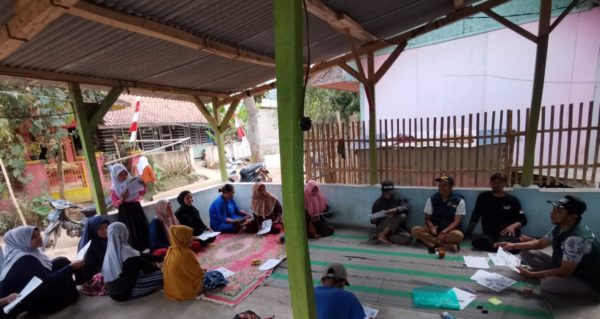
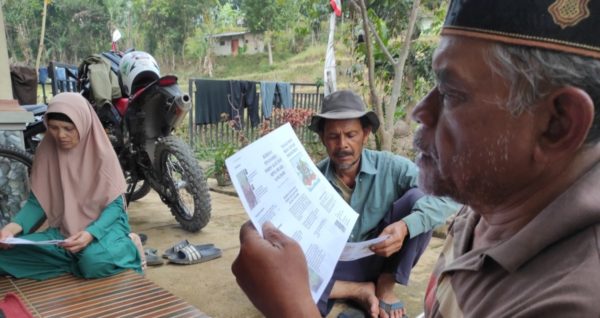
Our teams at the Cirasea 1 site (above) and Ciminyak 1 site (below) are actively sharing valuable insights and information with local farmers in Mekarwangi village and Tanjungwangi, respectively. This includes details about planting conditions, scheduling, and the principles of organic farming. The information covers aspects like estimating planting hole sizes, distributing tree seedlings, and setting up planting schedules.
Planting Consultation_Trees4Trees

Educating Farmers through Community Engagement

A participant from Cinangela Village, part of the Cirasea 3 site, is acquiring knowledge on the organic cultivation of timber and versatile trees like fruit trees. This valuable knowledge is being obtained from a brochure shared by the Trees4Trees team. The session also covers organic cultivation knowledge-sharing for a diverse range of trees, including timber and fruit trees. 
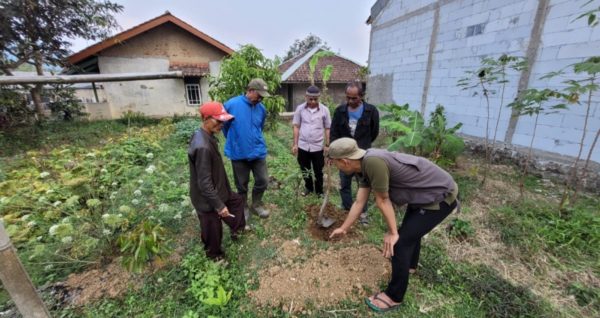
Planting consultation with Trees4trees Team

The knowledge-sharing session with farmers includes a demonstration of how to create planting holes. The Ciwidey team is providing a practical example of the proper size and depth for planting holes to farmers in the villages of Sukawening. 
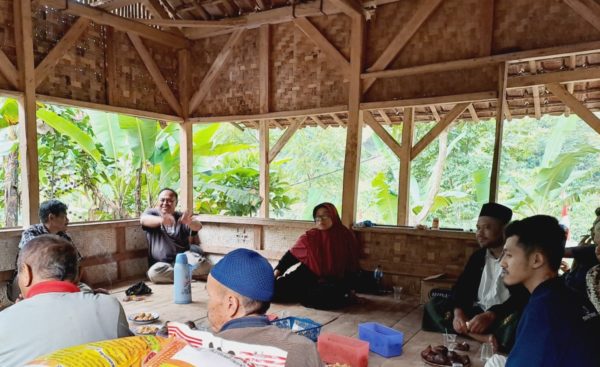
Educating Farmers through Community Engagement

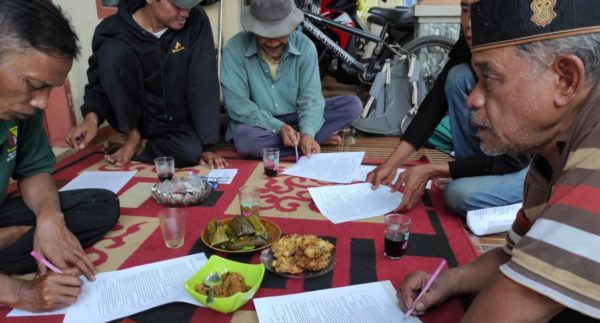
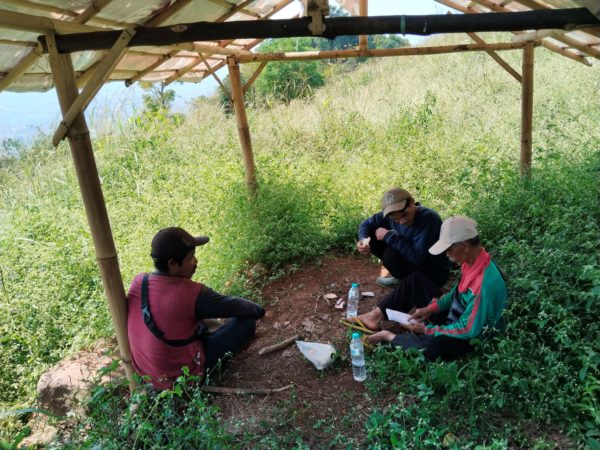
Our team from Cirasea 2 (above) is in discussions with farmers from Baleendah and Citarik team (below) is in discussion with farmers from Babakan Peteuy villages, regarding planting conditions. These discussions take place in a traditional Sundanese meeting house with an open-air design constructed from bamboo and wood. Sundanese traditional architecture is widely recognized in Indonesia for its eco-friendly design. 
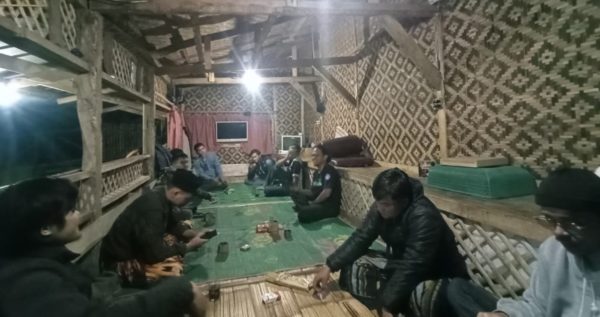
Educating Farmers through Community Engagement


Activity Highlights: Ensuring the Data Accuracy through Data Collection

Scanning planting location barcode through GEKO App_Trees4Trees

Our field team is currently in the process of data collection, a crucial stage within Trees4Trees tree-planting operation. This phase is dedicated to gathering accurate data, photographs, and essential information about our farmer partners as the tree growers and the designated planting locations. 

During this stage, our proprietary GEKO app is employed as a digital tool, allowing us to precisely document the farmers and planting locations. This technology is integral to our commitment to transparency and delivering accurate reports to our donors and sponsors. 

Witness our data collection efforts across various operational regions through the images provided below! 

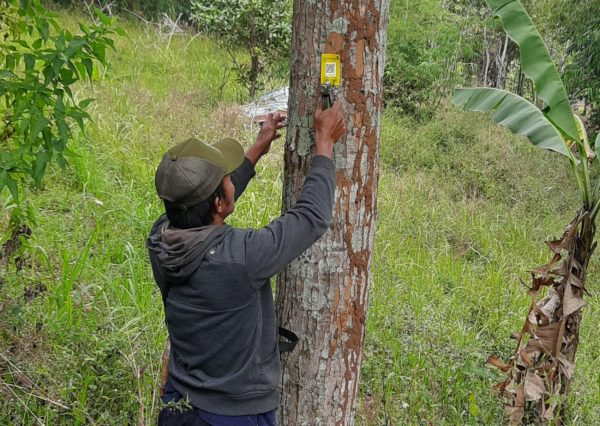
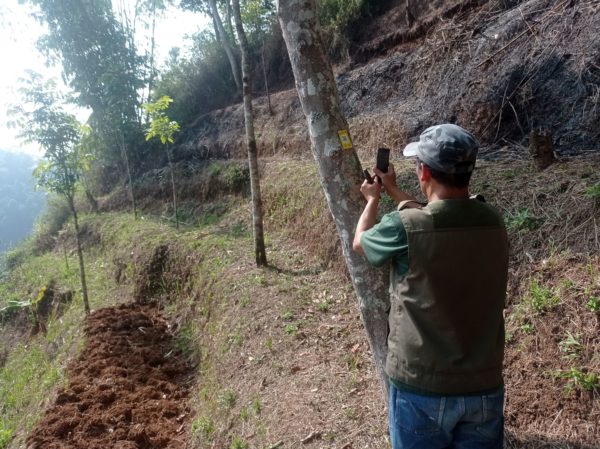
In the Trees4Trees Cirasea 3 site, our team is attaching barcodes in Pangauban Village, Bandung Regency

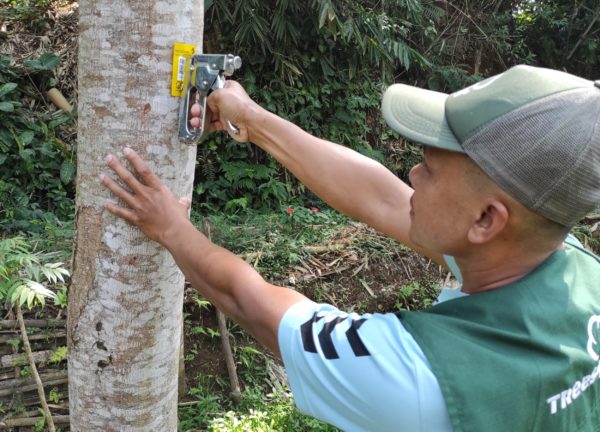
To identify the tree-planting sites, our field team affixes barcodes in each farmer’s field. In the Trees4Trees Cirasea 3 site (above), our team is attaching barcodes in Pangauban Village, Bandung Regency. Similarly, in the Trees4Trees Citarik site (below), our team is applying barcodes in Dampit Village, Bandung Regency. 

Scanning planting location barcode through GEKO App_Trees4Trees

The barcode has been successfully affixed to a tree in the field of one of our farmer partners in Beketel Village, Pati, Central Java_Trees4Trees

The barcode has been successfully affixed to a tree in the field of one of our farmer partners in Beketel Village, Pati, Central Java. This barcode serves to identify the specific tree-planting location on the farmer’s land. 

 team members at the Ciminyak 2 site is currently scanning the barcode in Mekarsari village, West Bandung_Trees4Trees

After attaching the barcode, our team will scan it using the GEKO app on a smartphone. This process collects accurate location coordinates for the designated planting site. One of our team members at the Ciminyak 2 site is currently scanning the barcode in Mekarsari village, West Bandung Regency. 

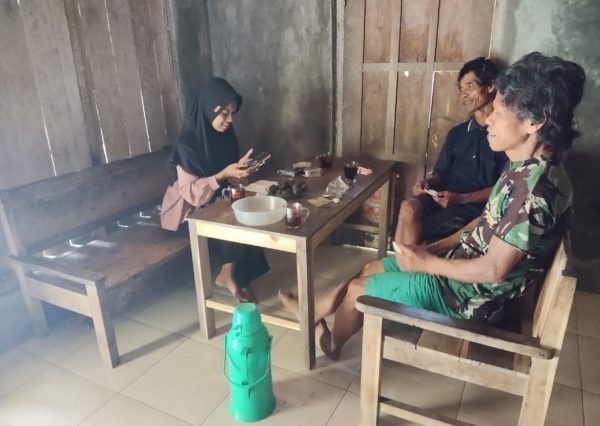
Trees4trees team at the Cisangkuy site engaged in discussions with the farmer_Trees4Trees

After affixing the barcode to a farmer’s planting location in Malasari village, Bandung Regency, our team at the Cisangkuy site engaged in discussions with the farmer who owns the field. This process involves finalizing the land’s data. 

Trees4Trees team at the Cirasea 2 site is currently enroute to collect data on planting locations_Trees4Trees

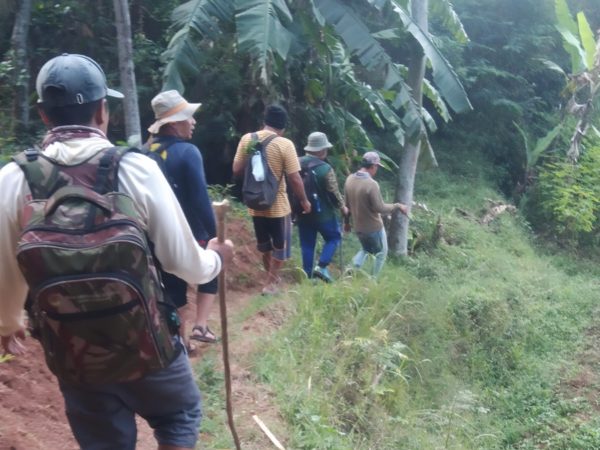
Reaching the planting locations and gathering precise data isn’t an easy task. At times, the tracks are challenging, featuring rocky and steep terrain. Our team often has to traverse these paths for hours. Together with farmers and local residents, our team at the Cirasea 2 site is currently enroute to collect data on planting locations. 

Trees4Trees team at the Ciminyak 3 site is capturing a barcode that has been affixed to one of the planting locations_trees4trees

Our team at the Ciminyak 3 site is capturing a barcode that has been affixed to one of the planting locations. Some of these planting sites feature steep inclines and are susceptible to erosion. This emphasizes the importance of planting more trees in these areas to mitigate the risk of landslides and erosion. 

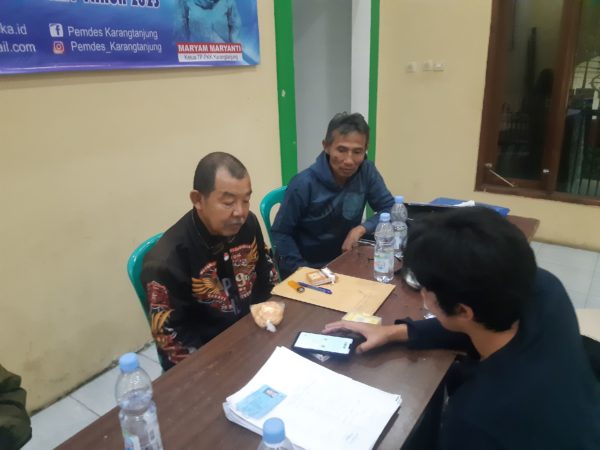
The team in Kebumen is verifying farmers' data_trees4trees

In addition to gathering planting location data, our field team is also tasked with collecting data from the farmers. The team in Kebumen (above) and at the Ciminyak 1 site (below) is verifying farmers’ data by conducting in-person meetings and interviews related to their identity and land data designated for planting areas. 

The team in Kebumen is verifying farmers' data_trees4trees

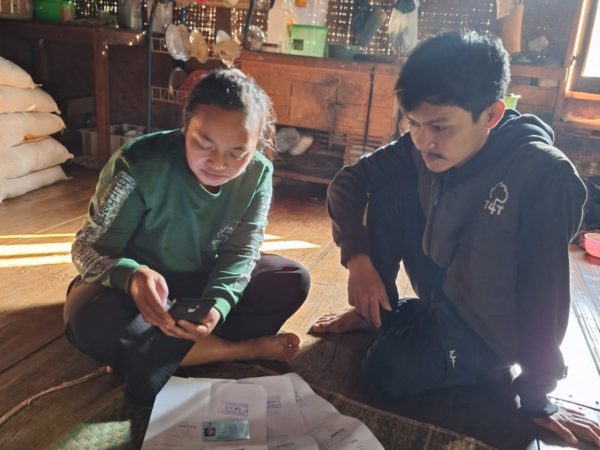
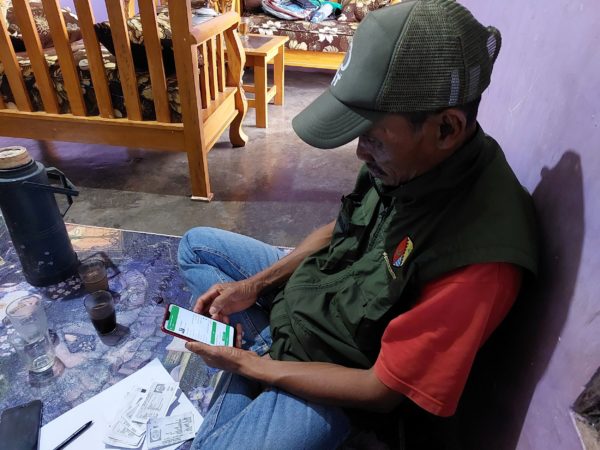
Trees4Trees team in Ciwidey inputs the data from Sukamulya village into the GEKO app

After gathering the farmers’ data, including identity documents and self-photographs of the farmers, our team in Ciwidey inputs the data from Sukamulya village into the GEKO app. 

Our team in Cirasea 1 is inputting farmers’ data into the GEKO app. Through technology, we record the data of farmers, planting locations, and all living trees. This information will be integrated with our website to display them on a digital map accessible to our supporters. This serves as a gesture of appreciation for their commitment to tree planting with us.  


Travels in Java: Situ Cisanti and the Source of the Citarum River

Travels in Java: Situ Cisanti and the Source of the Citarum River
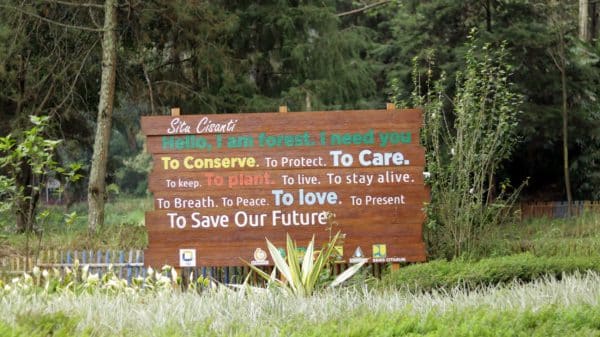
The zero-kilometer marker for the Citarum River, Situ Cisanti. Photo: Trees4Trees/Yulianisa Dessenita

The Citarum is the longest and largest river in West Java, providing water for over 27 million people and irrigation for nearly 40% of regional rice production. In recent years, it has achieved notoriety as one of the world’s most polluted water courses. But there is another side to the Citarum. Trees4Trees followed the river upstream and discovered something truly beautiful. 

Back to Square One: The Birthplace of the Citarum 

Walking through the main entrance of the village, we are welcomed by a thick blanket of trees. In the distance, we can hear the trickle of water and the sound of birds singing – a sure a sign the ecosystem here is in good health. It also means we’re nearing our destination. 

Upstream from the noise and pollution of the coastal urban areas, the Citarum River begins life in a quiet lake called Situ Cisanti. Located 37 miles (60 km) from the center of Bandung in Tarumajaya Village, this five-hectare lake sits at an altitude of nearly 5,000 feet (1,500 m) above sea level. Up here, the mornings are misty and quiet, and the views are breathtaking. 

Situ Cisanti and the Source of the Citarum River
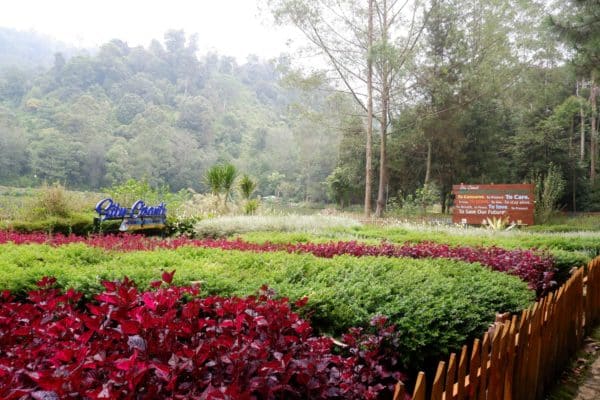
(Above) Misty and quiet: Situ Cisanti in Bandung Regency. Photo: Trees4Trees/Kemas Duga Muis.

A Walk on the Wild Side of West Java 

The lake itself is hidden away at the end of a long and winding road – a network of paths that wriggles uphill through Bandung Regency. They fan out through an endless landscape of farmland and fields, which includes Kertasari – one of Java’s oldest tea plantations, set up in 1906.

Travels in Java: Situ Cisanti
(Above and below) Local residents are committed to protecting the forest and the precious waters of Situ Cisanti. Photo: Trees4Trees/Yulianisa Dessenita (above) & V. Arnila Wulandani (below)
Citarum River
Travels in Java: Situ Cisanti and the Source of the Citarum River

There’s plenty to do here too. Visitors can explore the scenery surrounding Situ Cisanti, with activities such as fishing, boat rides, and photography. Or they can just soak in the peace and quiet of this tranquil place.  

Located in the shadow of Wayang mountain, the area is a great spot for hiking, or for jogging around the lake. Facilities include a large parking lot, toilets, and food stalls. Best of all, admission is just Rp 15,000 (US$ 1) per person. 

Travels in Java: Situ Cisanti and the Source of the Citarum River
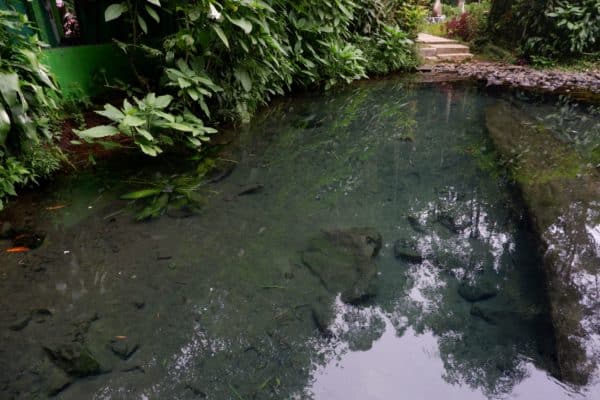
(Above) A natural spring where the Citarum River begins. Photo: V. Arnila Wulandani.

Spring into Life: The Birthplace of the Citarum 

“Our ancestors left us a message,” explains Atep, who has been working to protect this area since he was young.  “From generation to generation, (we must) protect the springs according to local wisdom in our village.”  

The springs he is referring to are the Citarum, Cikahuripan, Cikoleberes, Cihanuwung, Cisadane, Cikawudukan, and Cisanti. Most of the water that fills Situ Cisanti and flows downstream through the Citarum River comes from these seven springs, which are so vital to life and livelihoods in West Java. 

“We can drink the water directly from these springs. “The rules even restrict visitors wearing shoes when entering this pond to keep it clean,” says Atep, who adds that the Citarum and Cikahuripan springs provide drinking water for his village. 

children in Situ Cisanti and the Source of the Citarum River
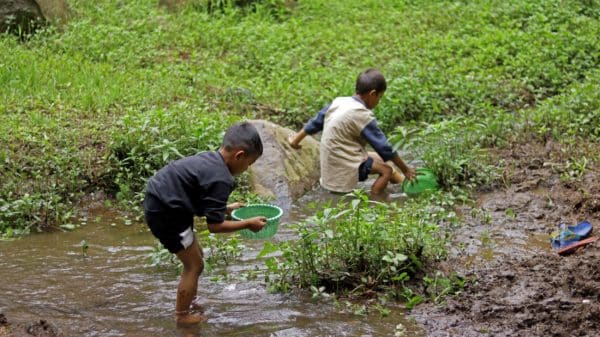
(Above) Children fishing in a river that flows from Situ Cisanti. Photo: Trees4Trees/Yulianisa Dessenita

Read also: A Watershed Moment Planting Begins at the Citarum River

Trees4Trees: A Cleaner, Greener Future for the Citarum 

In 2021, Trees4Trees set out on a tree planting program in Cibereum village, close to Situ Cisanti. In the most recent planting season (2022), more trees were planted here, as well as in the neighboring villages of Tarumajaya and Santosa. Much of the farmland in these hilly areas is poorly designed, which can lead to environmental problems such as erosion, flooding, and siltation of the rivers. 

“This can have a long-term impact on water availability,” explains Jeje Sutarja, Trees4Trees’ Unit Manager in the Cirasea 3-unit area. “By planting trees, we hope to enlarge the water catchment area around the upstream, conserve the water springs and preserve the beauty of this lake,” he added. 

The Citarum is famed as one of the dirtiest and most polluted rivers in the world. But up here, in the mountains where it was born, the river has a different story to tell. The birds are singing around Situ Cisanti, the water is clean enough to drink, and local people are working to conserve these waters according to the wisdom of their ancestors. The birthplace of the Citarum is a glimpse of what the river once was, but also a vision of what it could be; with enough support, and a shared commitment to clean and protect it, the Citarum could become famous for all the right reasons. 

Writer: V. Arnila Wulandani. Editor: Christopher Alexander