Expanding Green Spaces: Urban Forestry in Gunung Putri, Bogor

Expanding Green Spaces: Urban Forestry
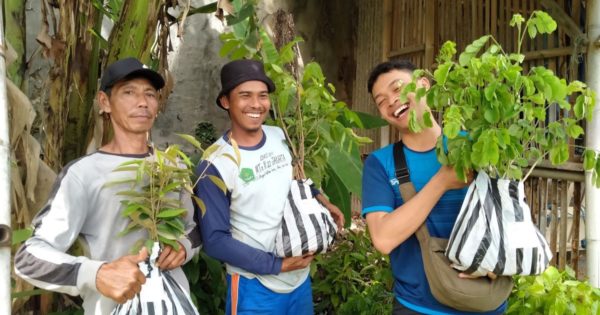
(Above) Local volunteers at the tree-planting program in Bojong Nangka Village, Gunung Putri District

Gunung Putri District is located near Bantar Gebang, home to West Java’s largest landfill site. Like many other areas on the outskirts of Jakarta, Gunung Putri struggles with a range of environmental problems, from air pollution caused by traffic jams to overpopulation, unchecked residential development, and the disappearance of green spaces. During the dry season, a lack of tree cover makes the region unbearably hot, and when the rains arrive there is flooding caused by poor drainage and soil erosion.  

But look a little closer, and green shoots of progress are beginning to break through the concrete of Gunung Putri. Supported by One Tree Planted (OTP), Trees4Trees has teamed up with local communities to rejuvenate the local environment with an urban forestry program. By replanting and raising awareness, these activities are helping mother nature in Gunung Putri (meaning ‘Princess Mountain’ in Indonesian), rediscover her former beauty. 
Planting Trees
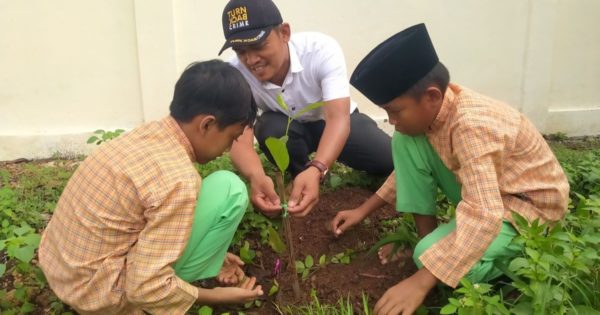
(Above) A key feature of the program was outreach in schools, designed to engage the younger generation in nature preservation and demonstrate the benefits of a greener environment.

Nurturing the next generation 

Earlier this year, the urban forestry program from Trees4Trees and One Tree Planted kicked off in nine villages spanning Gunung Putri District. Planting activities targeted public spaces, privately owned land, schools, and universities. The aim was to regreen the local environment, while also helping reduce pollution and provide some relief from the heat. Another key objective was raising awareness of environmental issues in local communities. 

“Today we planted trees at SD Negeri Nagrak 04 (a local elementary school),” says Agus Susanto, one of several local volunteers in Nagrak Village who helped to plant teak, jabon, durian, jackfruit, and mango trees. “We would like to thank One Tree Planted and Trees4Trees for their support in planting trees in this village, including in this school,” he added.  

Focusing on schools was a key feature of the program. The objective was to instill the younger generation with a passion for nature preservation and demonstrate the benefits offered by greener surroundings. “Hopefully the trees we have planted will grow strong and make this school a greener place to be,” said Agus. “I hope the students can also see the benefits, making the school shadier and cooler, so they can study in comfort.” 
Fsrmers
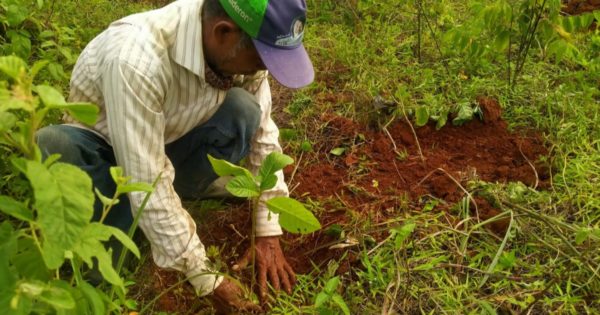
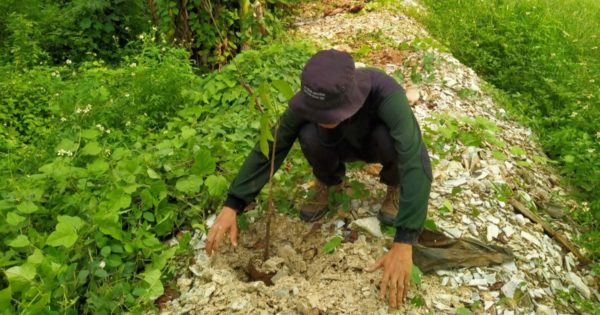
Planting activities covered a range of places in Gunung Putri District, including schools, private lands, and public park. Providing community benefits.

Expanding Green Spaces: Urban Forestry

In nearby Bojong Nangka Village, the joint planting program mixed timber and multi-purpose trees, including mahogany, trembesi, pulai, jabon, and gmelina, which have wide canopies and are able to provide shade in public spaces. Other multi-purpose trees included durian, mango, clove, avocado, and petai, which have the potential to provide local communities with an alternative source of income.  

“This afternoon was amazing,” explains Amir Arsyad, the head of the village, following the planting activities. “On behalf of the residents of Bojong Nangka Village, we would like to thank Trees4Trees for providing assistance in the form of seedlings – hopefully they will grow well and provide benefits to the environment around us.” 
Trees
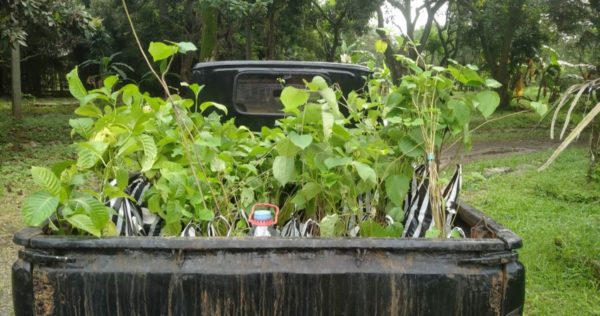
(Above) Keep on truckin’: T4T and OTP have delivered 12,000 new trees to locations in Gunung Putri District, including here, on the campus of Trisakti Nagrak

The multiple benefits of tree planting 

The One Tree Planted program has already planted around 12,000 trees in Gunung Putri District this year. With support from Trees4Trees and local communities, this urban forestry project aims to rejuvenate local ecosystems, reduce air pollution, provide shade, reduce soil erosion, improve water retention, sequester carbon, and build the awareness of environmental protection among local communities. 

Amir Arsyad is one of many participants in the program who has seen the benefits of this development and is now committed to nature restoration. “When we protect nature, nature will protect us,” he explains, before noting it is the community’s responsibility to care for their surroundings. “If not us,” he says, “who else will protect the nature around us?”   

Writer: V. Arnila Wulandani. Editor: Chris Alexander. Photos: Rusmanto Manulang/Trees4Trees

Regreening Jakarta’s Concrete Jungle through Urban Forestry

Regreening Jakarta’s Concrete Jungle
With support from Microsoft, and in collaboration with local farmers, schools, and communities, Trees4Trees will continue replanting urban areas around Jakarta.

In terms of urban area, Jakarta is the second biggest city in the world. And it’s still growing; areas on the outskirts are quickly swallowed by the urban sprawl, and the increasing number of industrial centers is already having an environmental impact. But in the satellite towns of Bekasi and Karawang, locals are finding ways to push back against the concrete tide: by planting more trees. 

Replanting urban forests offers all kinds of benefits. Trees combat pollution and lower temperatures. They provide habitats for animals and livelihoods for people. They filter drinking water, protect against flooding and prevent soil erosion. On a larger scale, urban forests are proven to mitigate the negative impacts of climate change by sucking carbon dioxide out of the atmosphere.  

Going Green in Greenland: Trees4Trees’ Replanting Program   

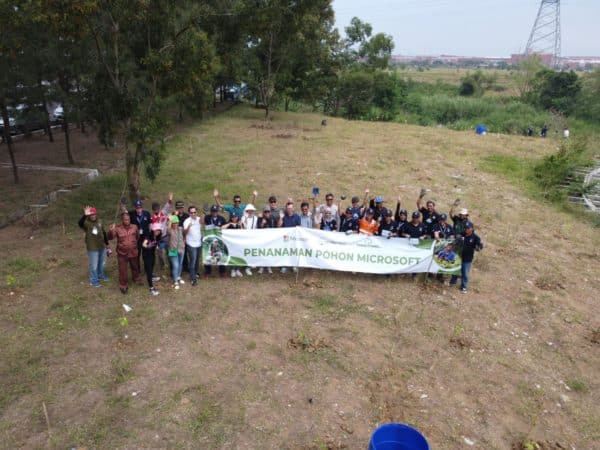
Recognizing the importance of urban forests, and with support from Microsoft and One Tree Planted, Trees4Trees kicked off a tree-planting initiative in the Greenland International Industrial Center (GIIC) in Bekasi and the Karawang International Industrial Center (KIIC) in Karawang. The program, which began in November 2022, has already covered an area of 25 hectares.  

Regreening Jakarta’s Concrete Jungle
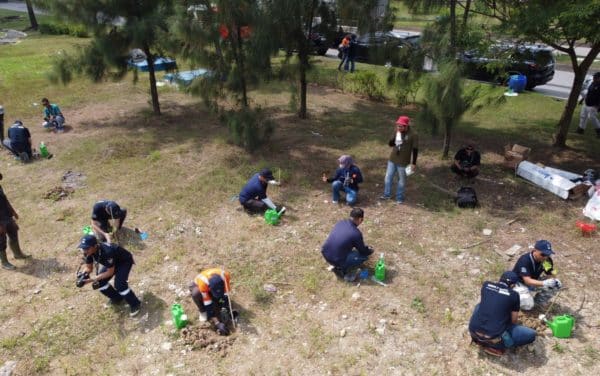
(Above) Since November 2022, Trees4Trees has planted 17,778 new trees around Bekasi and Karawang

“With this project, our goal is to plant 25,000 trees in GIIC and KIIC,” explains Anto Wartono, Planning Manager at Trees4Trees. “We hope these trees will soon grow into urban forests.”  

According to Anto, Trees4Trees has already planted 17,778 trees around GIIC and KIIC. Around 8,000 more trees are expected to be planted in the area over the next few weeks.  

The program actually went beyond planting. To raise public awareness about the importance of green spaces in urban areas, Trees4Trees engaged with local women farmers and ran an environmental campaign in local schools and communities.  

Rehabilitating the Riverbanks 

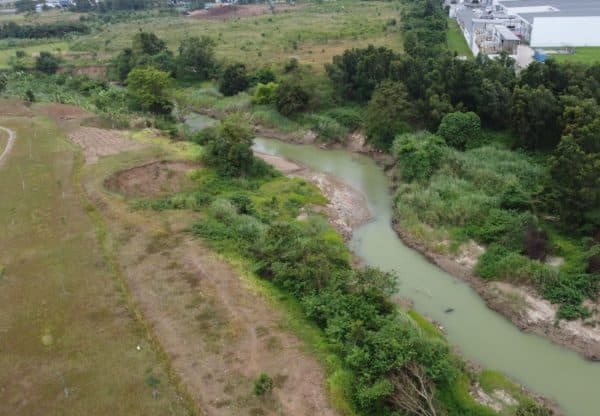
One of the main goals of the project is to restore areas around rivers. In recent years, the riverbanks have been eroding away due to land conversion. Trees4Trees focused on areas either side of the Cipamingkis and Cikalapa rivers, which flow through the GIIC area in Bekasi and the KIIC in Karawang, respectively.   

Regreening Jakarta’s Concrete Jungle
(Above) The Cipamingkis River in Bekasi, where Trees4Trees has been active recently

In Jakarta, temporary shelters are a common sight on the city’s riverbanks. During the rainy season, rising water levels can lead to floods and landslides. Adding trees to the banks of rivers is an effective defense against these dangers. 

“Many riverbanks have been converted into residential areas and semi-permanent buildings,” says Anto, who has experienced plenty of obstacles to urban planting. “Unlike in rural areas, planting trees in urban areas is more challenging – there are only a few spaces we can use as green areas.”    

Greening Industrial Areas, Supporting Farmers 

The process of urbanization and land conversion is also squeezing farmers off their land. As part of the urban forest project, Trees4Trees has been working with displaced farmers, helping them establish plantations in the newly reforested areas. By planting trees with high economic value – like durian, avocado, and caqui – we are helping devise new and sustainable ways to support local livelihoods. 

“We have planted 3,085 trees in two villages around KIIC, Puseurjaya and Margamulya village,” says Anto. “While in the GIIC buffer zone, we have planted 2,300 trees in Pasirtanjung village by involving local farmers,” he added.   

Preserving Biodiversity  

Trees4Trees’ work in KIIC also covered the Telaga Desa conservation area; an educational park that provides a precious green oasis in Karawang. As part of the project, more than 3,000 trees were planted here. Trees species chosen for this purpose included kemang (white mango), buni (currant), pulai (blackboard tree), mundu (yellow mangosteen), genitri (rudraksha), puspa (needlewood), and gandaria (mango plum).  

Regreening Jakarta’s Concrete Jungle
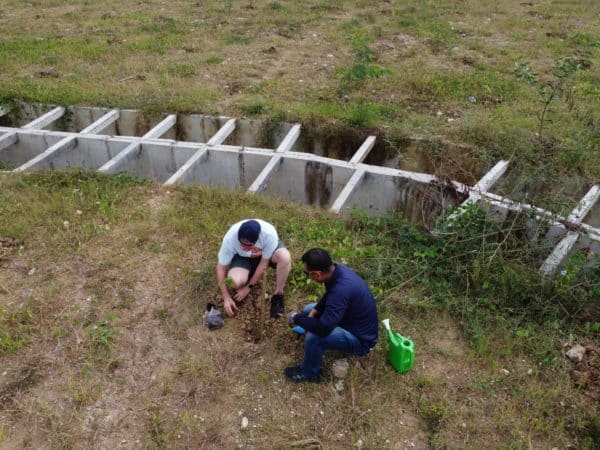
(Above) Microsoft’s Gavin Hodge (left) helps plant trees in the GIIC in Bekasi

“These trees will grow 20 meters high in 5 years,” explains Gavin Hodge, the DCD Project Manager at Microsoft. He joined the activity in GIIC and KIIC area as a volunteer tree planter, and believes this project will offer a range of benefits. “(It’s) going to protect our environment and improve the estate, while also improving the situation for the community. So it’s good that Microsoft can be a part of it.” 

With support from Microsoft, and in collaboration with local farmers, schools, and communities, Trees4Trees will continue replanting urban areas around Jakarta. Every sapling holds enormous potential. In time, they could change the landscape in one of the world’s biggest urban areas.   

To find out more about our ongoing replanting programs, and to see how you can help, visit devtrees4trees.portopaper.com 

Writer: V. Arnila Wulandani. Editor: Christopher Alexander