Weathering the Storm: Natural Solutions to El Niño

drought during el nino_trees4trees
Weathering the Storm
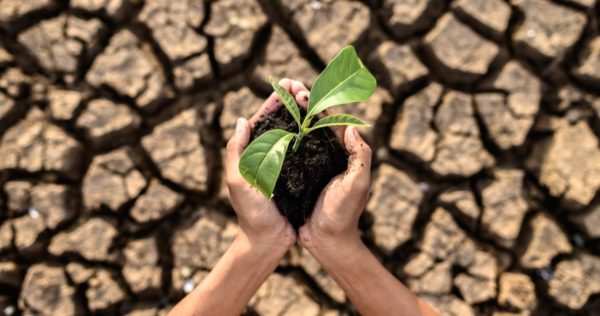
Photo: Freepik

This year we had the hottest July, August, and September ever recorded. Weather patterns around the world are in a state of flux, pushing temperatures up and stretching our planet’s life support systems to the limit. In tropical regions, like Indonesia, the impacts of climate change are clear to see. 

To make matters worse, extreme weather has been forecasted for Indonesia in the first quarter of 2024, due to the ongoing El Niño weather system. A combination of floods, cyclones, landslides, and disruption to food production could all be just around the corner.  

But what exactly is El Niño? What are its effects? And how can reforestation help to lessen its impact on people and planet? In this article, we’ll look for the answers. 

What is El Niño? 

El Niño, which means ‘little boy’ in Spanish, is a natural climate pattern. This name describes the seasonal warming of surface waters in the eastern tropical Pacific Ocean. El Niño is the warm phase of a larger weather cycle – the cool phase is called La Niña, which means ‘little girl’.  

El Niño / La Niña events don’t happen every year. They normally come around every two to seven years and typically last between nine and 12 months. Sometimes, they can even last for years at a time.  

So if El Niño and La Niña, are natural climate events, then what’s the problem? Unfortunately, recent studies have found that climate change is supercharging these weather systems, making them more frequent and more fierce. And the effects of this change can be deadly. 
Natural Solutions to  El Niño
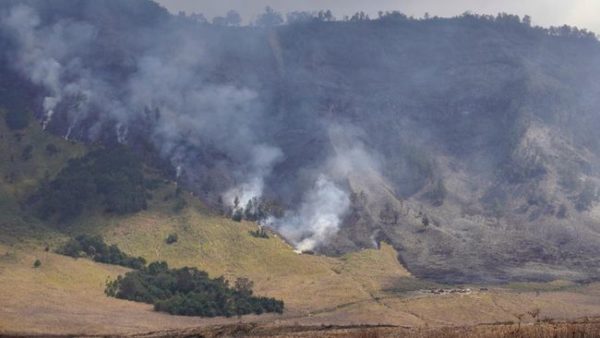
(Above) Wildfires at Mount Bromo in East Java, where an extended dry season left the savannah as dry as kindling. Photo: CNN Indonesia

What are the Impacts of El Niño? 

We may not realize it, but El Niño and La Niña play a major part in all our lives. These tempestuous twins affect everything from weather and wildlife to, food production, wildfires, and economics. Their impacts can take many different forms – and the differences between them can be extreme:  

  1. Temperatures. This September was the hottest on record, with temperatures 0.5 degrees (Celsius) higher than last year. 
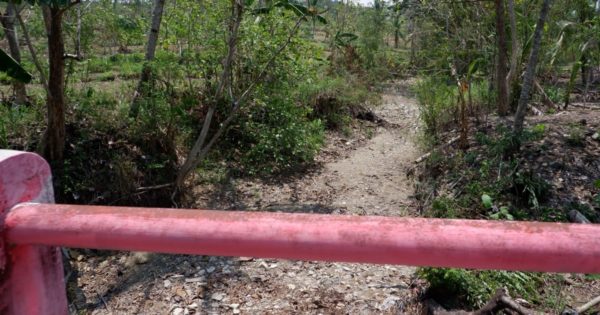
  2. Drought. Delayed rainfall leads to parched landscapes and dry rivers.  
  3. Food shortages. Severe drought means poor harvests, food shortages, and rising prices. 
  4. Wildfires. This year alone, there have been over 3,000 fires in Indonesia. 
  5. Ecosystem damage. From forests to coral reefs, animals and their habitats are feeling the heat. 
drying out river in boyolali_el nino_trees4trees_v arnila wulandani
(Above) A dried-up riverbed in Boyolali, Central Java (Photo: Trees4Trees / V. Arnila Wulandani)

How can we Minimize the Impacts of El Niño? 

El Niño may be a natural event that’s beyond our control, but there are steps we can take to lessen its impact:  

  1. Prevent fires. Around 99% of wildfires are caused by human activities like campfires, cigarette butts, or burning waste. Stopping these activities can help stop wildfires. 
  2. Eat local. Support your local greengrocer, or – even better – grow your own fruit and vegetables. 
  3. Raise awareness. Educate others and encourage them to be more eco-friendly.  
  4. Cut the carbon. Minimize your carbon footprint by taking public transport, walking, cycling, or saving energy at home. 
  5. Plant trees. Trees clean the atmosphere and can help prevent disasters, like erosion, floods, drought, and water shortages. More on this below: 

The Benefits of Planting Trees 

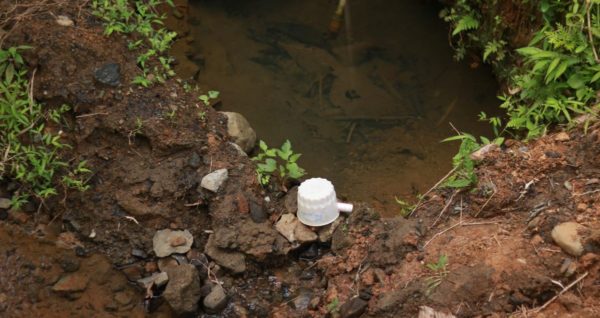
In Indonesia, Trees4Trees’ planting areas have experienced an extended dry season because of El Niño. One of many is Kenteng Village in Kebumen, Central Java. During the dry season, villagers here have to walk about two kilometers to reach the nearest water source.

Working in partnership with local people and international partners, Trees4Trees is helping to raise awareness and kick-start positive changes in Kenteng. Since 2022, weve planted more than 6,000 trees in the village, and there’s more to come too.  
water spring in kenteng village kebumen_el nino_trees4trees_yulianisa dessenita
(Above) The only spring in Kenteng Village, and (below) soil dried out by the extended dry season (Photos: Trees4Trees / Yulianisa Dessenita)
Weathering the Storm
Natural Solutions to El Niño

These trees have already had an impact, by helping retain moisture in the soil and providing shade for people and plants during the dry season, and then preventing erosion and flash floods when the rains finally arrived in November. Their fruits, like durian and avocado, provide a reliable source of income for local people, even during the worst of the seasonal weather. 

This year, through Giving Tuesday, we’re encouraging people to donate trees to support the ongoing planting operations in Kenteng, to protect the land from the worst of El Niño and promote agroforestry. And you can join us in this mission. By donating trees, we can combat climate change and create a more livable environment for the community. To learn more, click here or get in touch. 

Writer: V. Arnila Wulandani. Editor: Christopher Alexander

Planting Trees to Improve Farmers’ Livelihood in Kenteng Village

Planting Trees at Kenteng Village Farmers

Kenteng Village Farmers

Planting trees is important because most of the villagers in Kenteng Village, Central Java, work as farmers. They grow food crops such as corn, cassava, and rhizomes such as ginger and turmeric to meet their daily needs. However, the selling price of food crops is not competitive in the market. One kilogram of cassava, for example, is sold at a price of about 1,500 rupiahs (around US$0.10). 

This condition forces farmers to do side jobs to fulfill their needs. Besides farming, most farmers also raise goats to support their families. Recently, many farmers even also make woven crafts from pandan leaves as their side job because the produce from farming is not enough to make a living. 

The villagers are hoping that they can plant trees that can improve their livelihood and rehabilitate their environment at the same time.  

Kenteng Village Farmers_2

Planting tree to rehabilitate the environment 

The soil structure in the village is prone to landslides. But when the dry season comes, drought and clean water shortages threatened this village. In response to this, Faris, Kebumen Trees4Trees Unit Manager is conducting a tree-planting program in Kenteng Village in the 2022 planting season which starts in November. 

Faris revealed that the large number of critically degraded lands and environmental problems that exist  in this village were the main motivations to do  the tree-planting program in this area. 

“Trees4Trees is supporting the village by planting trees in an area of approximately 10 hectares. We intend to plant teak around the village because of the dry soil characteristic. It is most suitable for teak because it doesn’t need a lot of water to grow. Besides, there are also quite a lot of teak trees successfully grown in this area,” said Faris.  

Read also: Preventing Clean Water Shortages and Landslides in Kenteng Village 

Improving the livelihood through planting trees  

The condition of the soil in the village, which is seasonally arid and prone to landslides and drought, makes the life of the people in the village even more difficult. Once these conditions occur, they will disrupt the activity in the village. Farmers must stop their farming activities because collecting water has become the most urgent thing to do.  

Ginardi, the secretary of Kenteng Village revealed that villagers’ biggest hope is they can plant trees that are more valuable than the food crops they are currently growing and can help their environment. 

“We are hoping to be able to plant trees that can maintain the water availability and prevent landslides as well as increase the income of villagers. So, the result of the trees can improve the livelihood of villagers. The result of fruits or other valuable trees like petai or jengkol certainly will greatly benefit the villagers,” Ginardi said. 

Planting fodder trees which fertilize the dry soil  

Apart from relying on agricultural produce, villagers also depend on goats as livestock for their livelihood. Unfortunately, they often have difficulties finding fodder. When the dry season comes, they have to go farther to find it.  

Kenteng Village_donate tree

“Most of the farmers here raise goats as their investment. Currently, they feed their livestock with cassava leaves. But it is still not enough. They have to go some distance away to find more grasses and leaves for their livestock. It takes so much time. So, if we plant trees that are also can be used as animal feed, it will certainly help the villagers,” said Rokhimin, the farmer community leader of Kenteng Village. 

He said that most of the villagers are now interested to plant trees that also can be used as animal feed. Considering the needs of villagers, Faris said that Trees4Trees will plant kaliandra and indigofera trees in Kenteng village beside teak and fruit tree. He said that both trees are also qualified for environmental improvement.  

“Both are not only beneficial as fodder but also improve soil fertility. The village has much barren and fallow land. By planting kaliandra and indigofera, their fallen leaves can amend the topsoil and will increase soil fertility,” he said.  

To help the villagers to plant trees in the village, Trees4Trees is inviting you to take part in #GivingTuesdayForTree campaign and DONATING TREES for Kenteng village until November 29, 2022. You can donate trees through GIVING TUESDAY   

Preventing Clean Water Shortages and Landslides in Kenteng Village

Preventing clean water shortage and landslides in Kenteng Village Kebumen

Preventing clean water shortage and landslides in Kenteng Village Kebumen

Water is important for living. However, not everyone accessible to get clean water. Even though it is located not far from a dam and rivers, ironically, Kenteng Village always experiences drought and lacks clean water every during the dry season.  

In addition, the village which is located in Kebumen Regency, Central Java, Indonesia is also prone to landslides during the rainy season. 

Hard to get clean water during the dry season 

Ginardi, the secretary of Kenteng Village said that drought always occurs in his village during the dry season.  “When the dry season lasts more than two months, the water will be harder to get. People must go to the nearest springs to get clean water for their daily needs. Most of springs are located about two kilometers away,” he said.  

Arif, a villager of Kenteng also told the same story about the clean water problem he has been experiencing for the last ten years. He has lived in the village since 2012. For a decade living in the village, Arif must queue for hours to get clean water like other villagers when the dry season comes. “In the long dry season, usually we don’t sleep at night because we must queue in the water spring to get clean water. I can queue from 10 PM to 3 AM,” Arif said.  

Preventing clean water shortages and landslide in Kenteng Village, Kebumen, Central Java

The location of the springs is not easily accessible making the effort to get clean water to become much harder. “During the dry season, not many springs have much water coming out. From the nearest springs that have water availability, we have to carry the water manually on our shoulders to the village’s main road. Then we transport the water by motorcycle to our house. If the dry season is longer, it is even more difficult, but we do not have another choice,” he said. 

Threatened by landslides during the rainy season  

The clean water might be easier to get when the rainy season comes. However, this does not mean that the village free from other environmental problems. A landslide is also a potential disaster that endangers the village during the rainy season.  

Farmer group leader of the village, Rokhimin revealed that several areas in the village are prone to landslides due to the soil structure. In 2017, a tremendous landslide destroyed houses, a mosque, and cattle in the village.  “We are worried that landslides will occur again. Because not just one location that is prone to landslide in the village, but there are many,” added Rokhimin.

Although the villagers have planted trees and crops in the former landslide area, there has been no ecological prevention of landslide recurrences. Most of the farmers do not know what types of trees they have to plant that can prevent landslides. 
Preventing Clean Water Shortages and Landslides in Kenteng Village, Kebumen, Central Java

“The results from our study and survey show that Kenteng Village has a large critical area. The stakeholder of the village also conveyed that there are environmental problems. A destructive landslide occurred in 2017 and droughts in every dry season. That’s why we need to plant trees here. Trees4Trees targets to plant 20,000 trees in this village, “said Faris, unit manager of Trees4Trees Kebumen. 

Planting 20.000 trees for environmental rehabilitation 

preventing clean water shortages and landslides in kenteng village, kebumen, central java

The two ecological problems are very affecting the villagers’ life, especially to meet their daily needs. So the villagers hope they can plant trees that are able to prevent erosion and maintain the availability of water as well as improve their income by harvesting the results. 

“The villagers are enthusiastic about the tree-planting plan. We are hoping by planting more trees, the problems in this village are slowly solved,” concluded Ginardi.

Arif also expects tree species that have the ability to store a lot of water can be planted around the springs to restore the water sources. “I hope there will be no more problems with accessing clean water in this village, even in the dry season.”

To help the villagers to plant trees in the village, Trees4Trees is inviting you to take part in #GivingTuesdayForTree campaign and GIVING TREES for Kenteng village from 7 to 29 November 2022. You can donate trees through GIVING TUESDAY 

Author: V. Arnila Wulandani

Photos: Yulianisa Dessenita