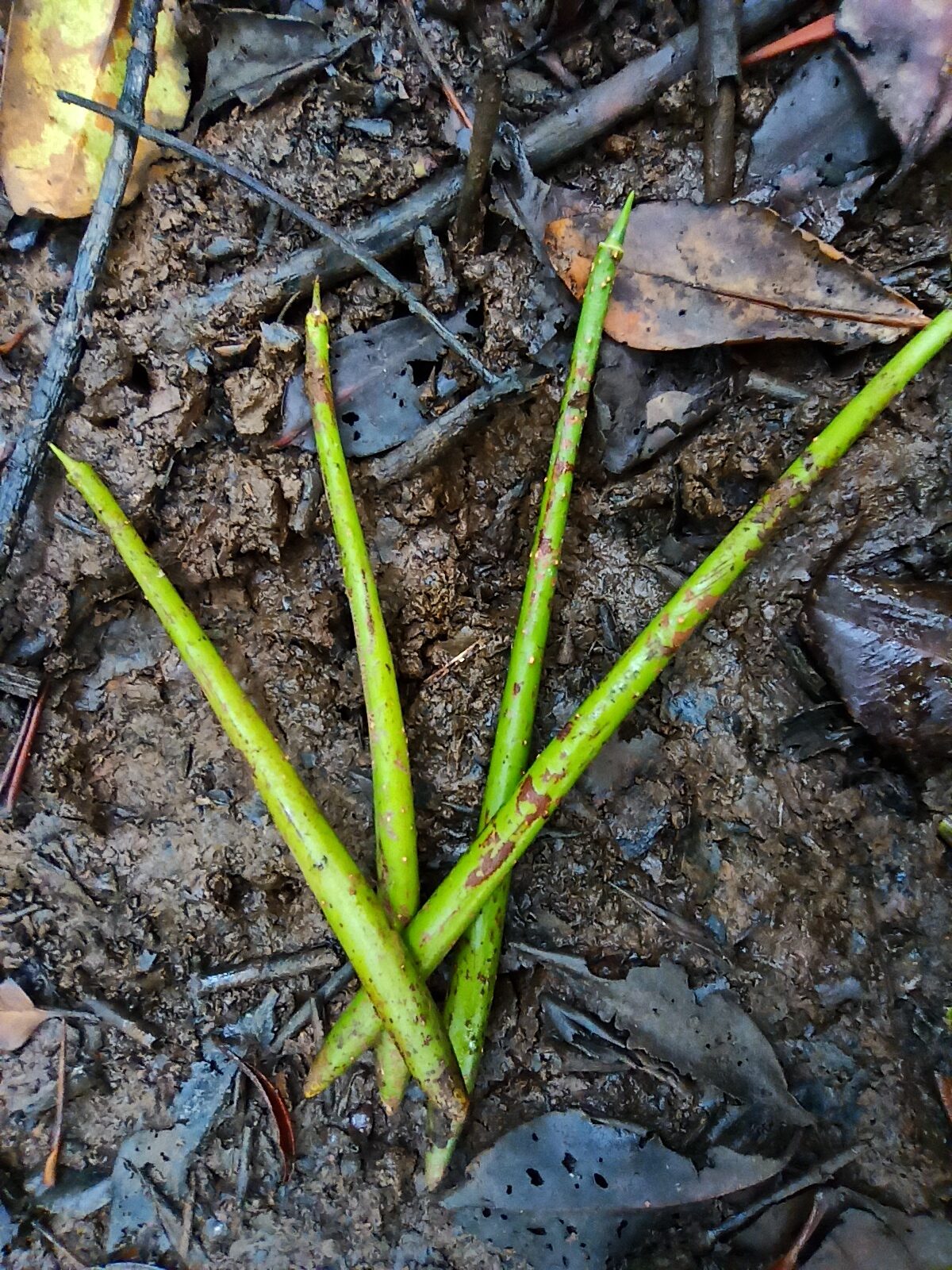
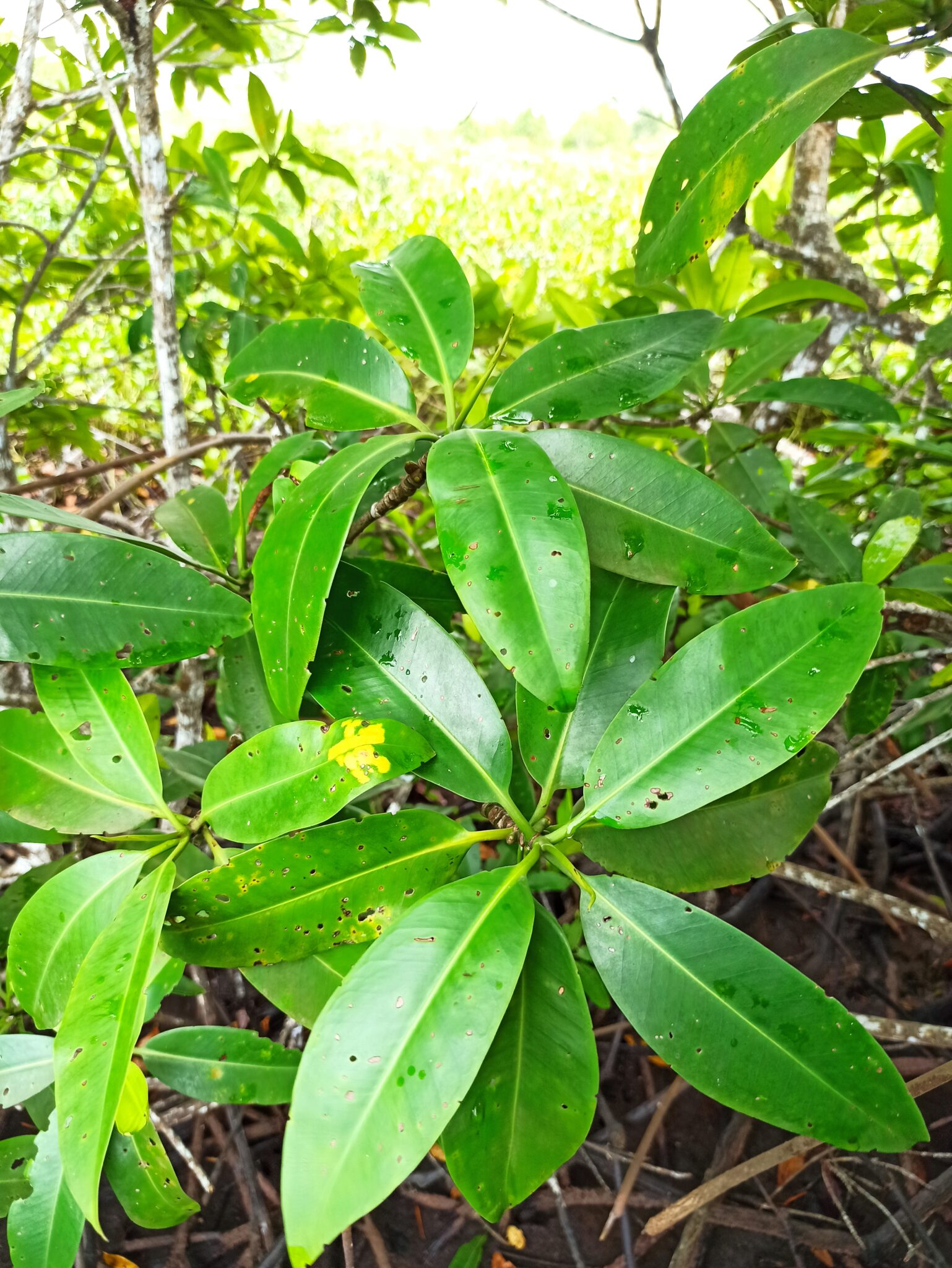
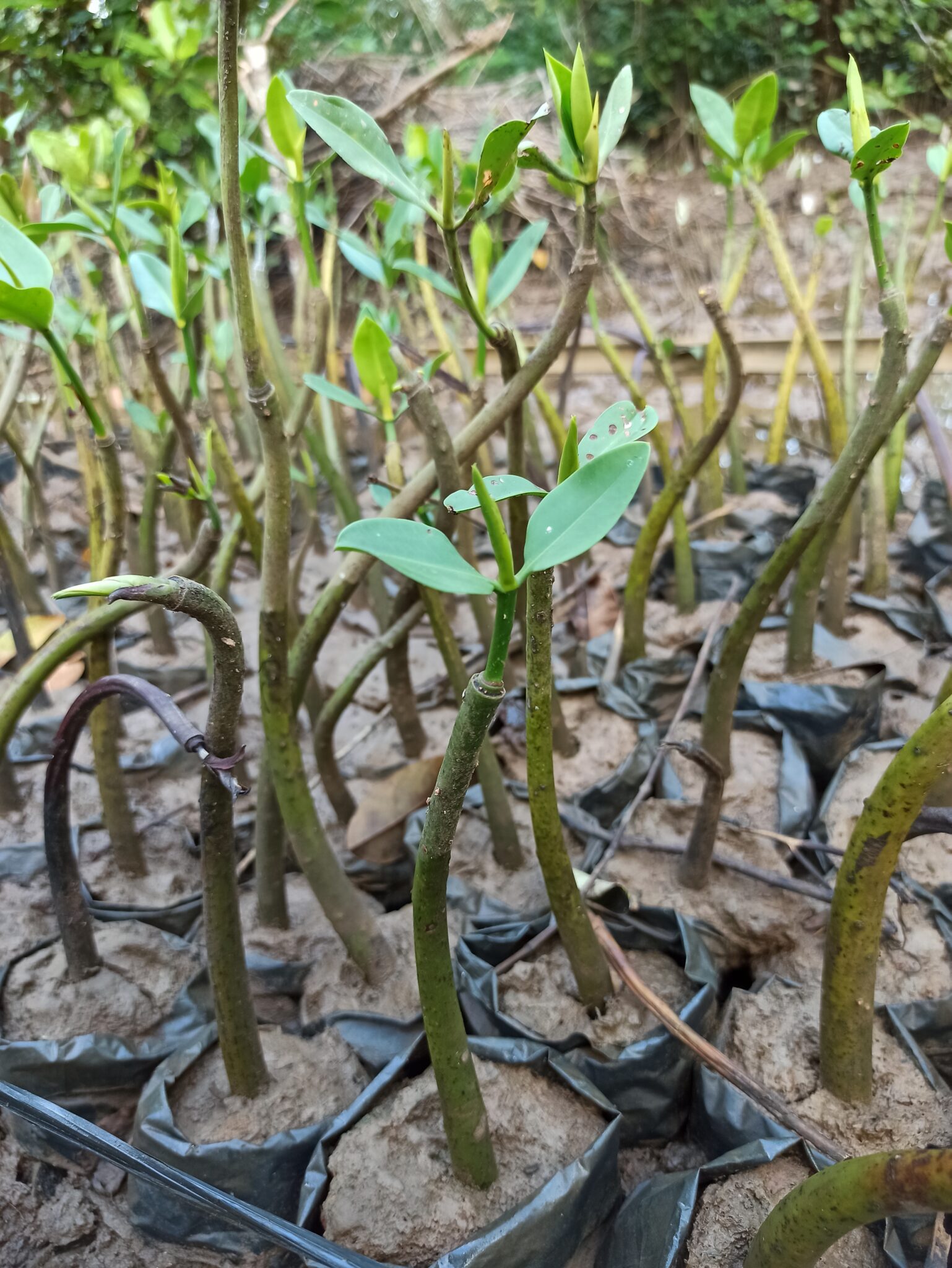
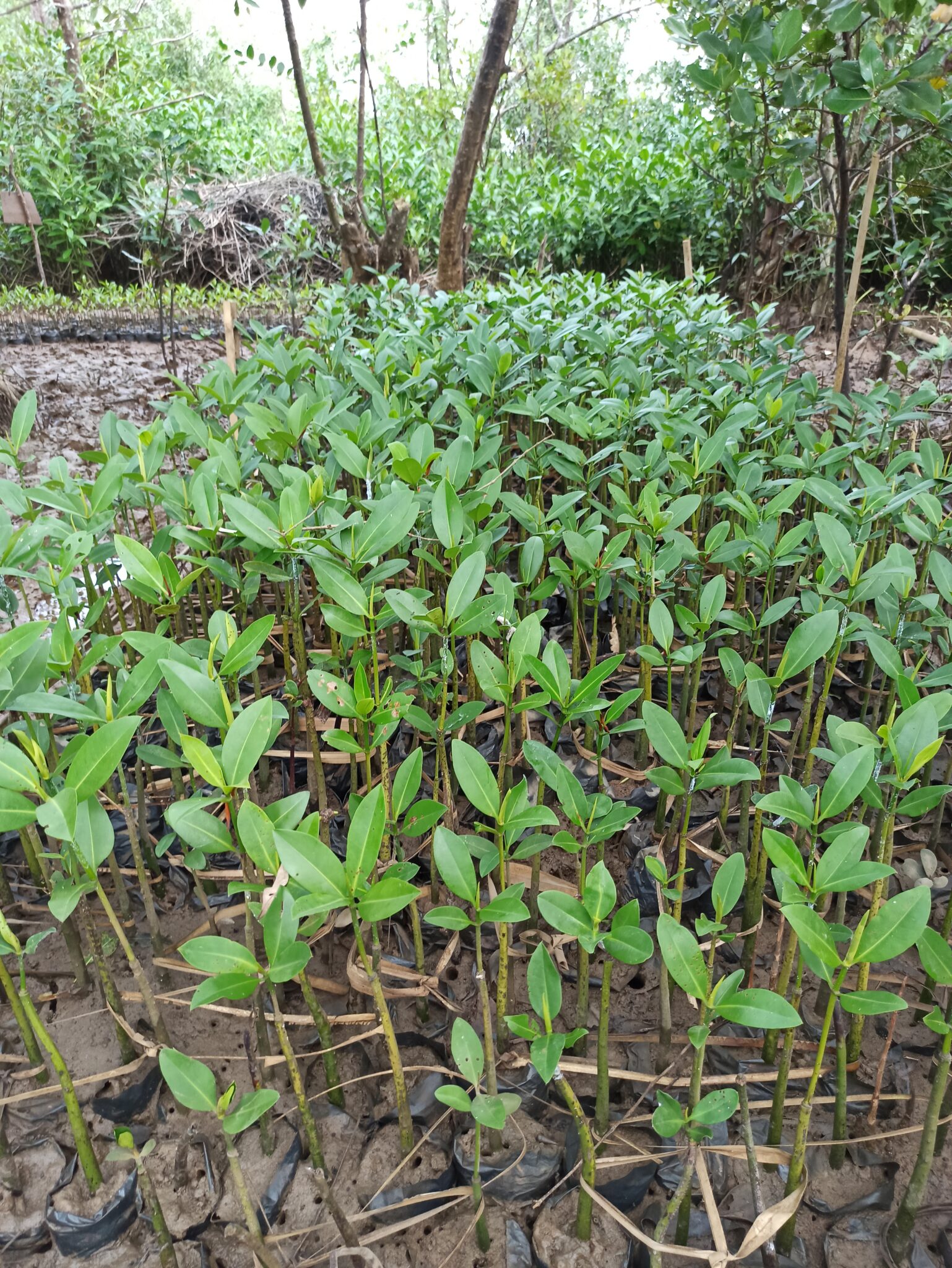
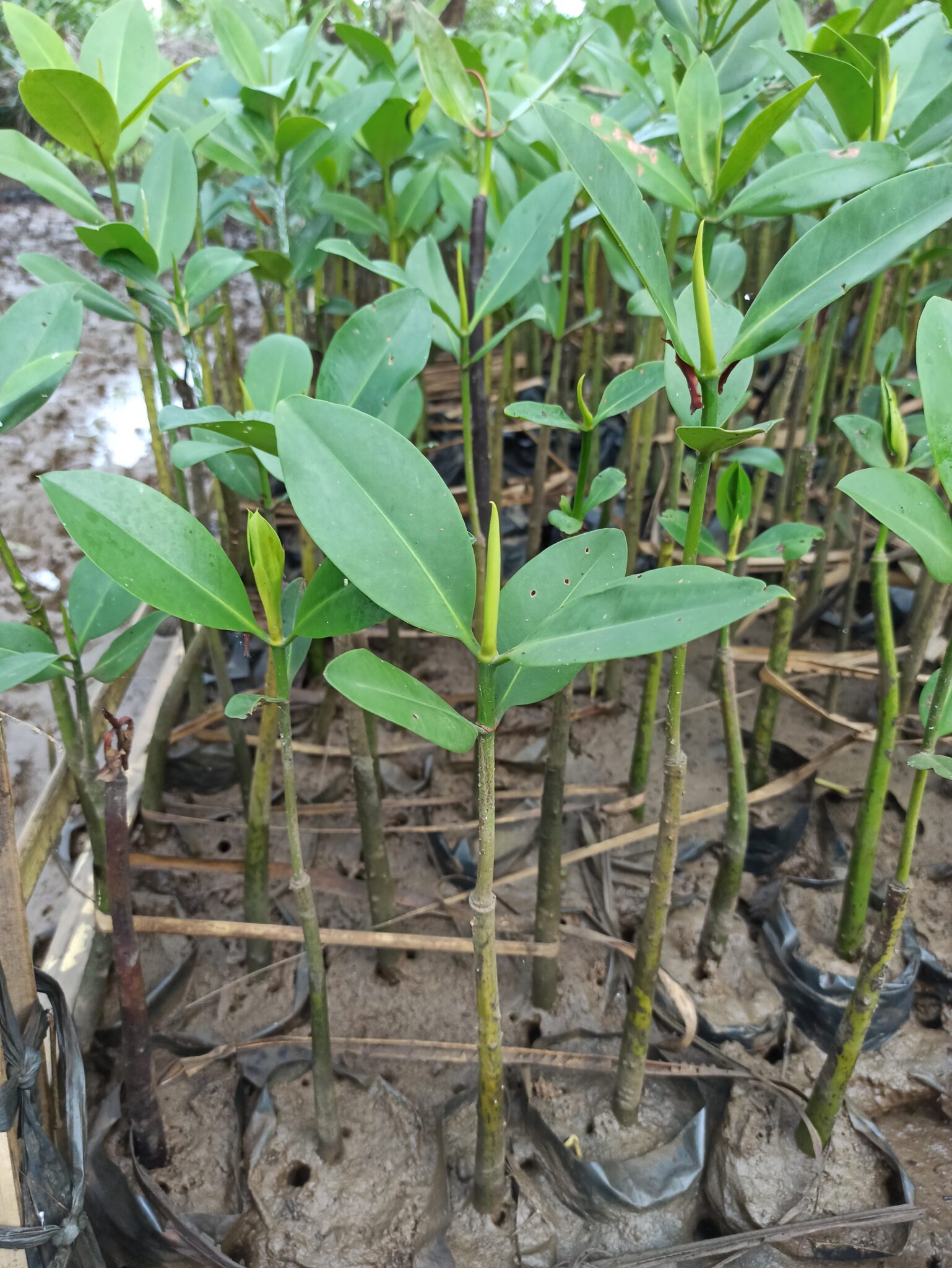
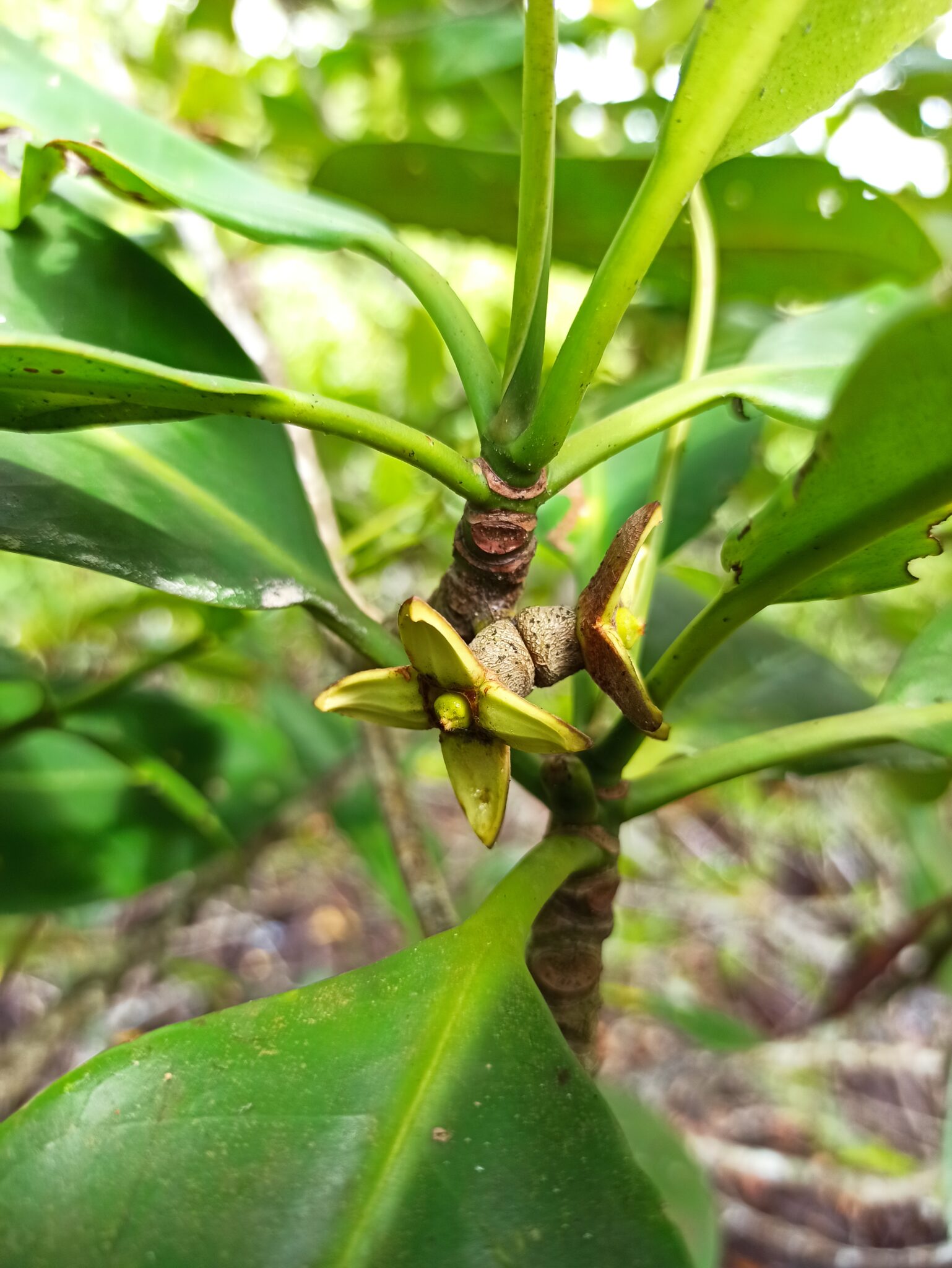
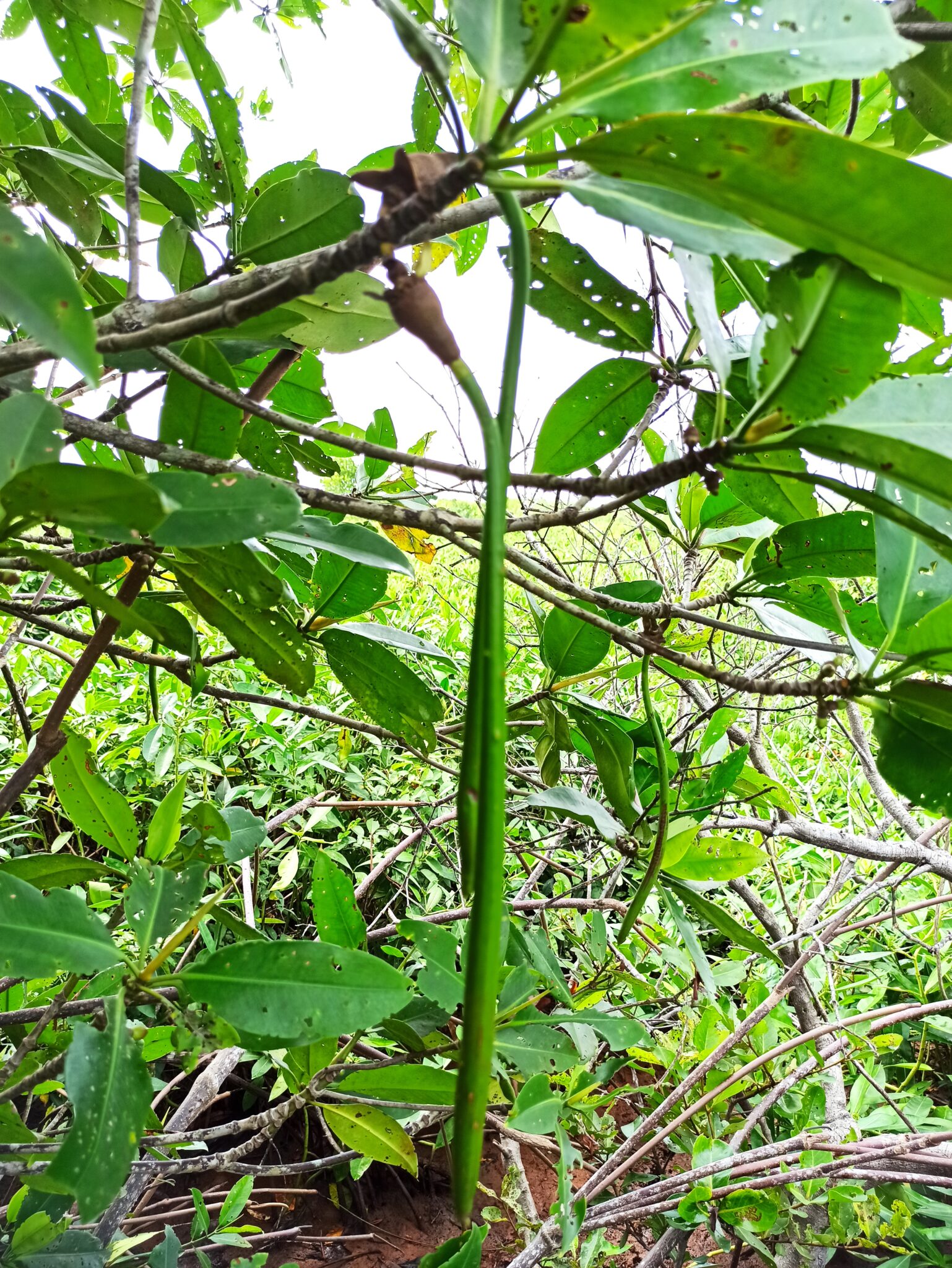
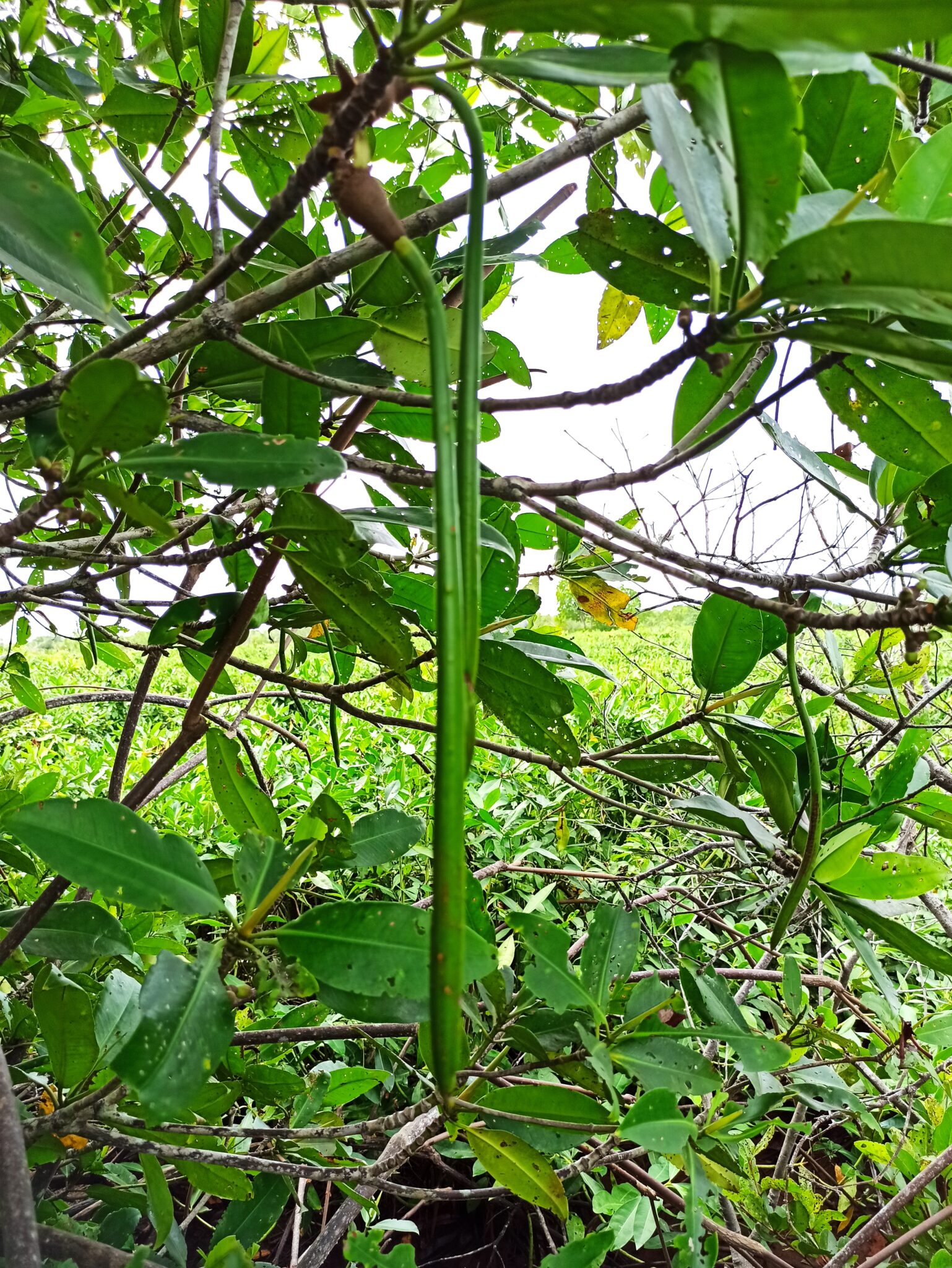
Tall-stilt Mangrove
Rhizopora apiculata
Tall-stilt Mangrove
Rhizopora apiculata
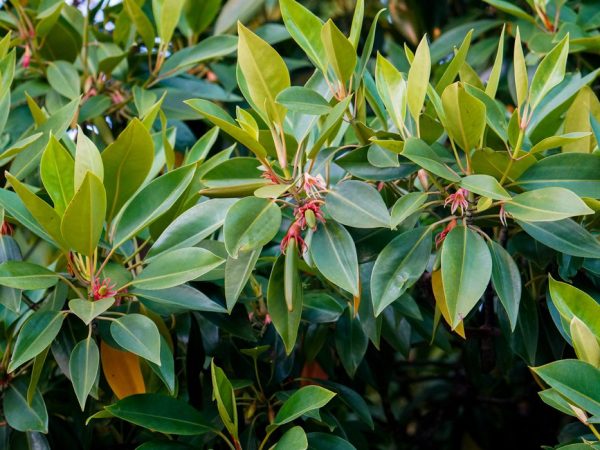
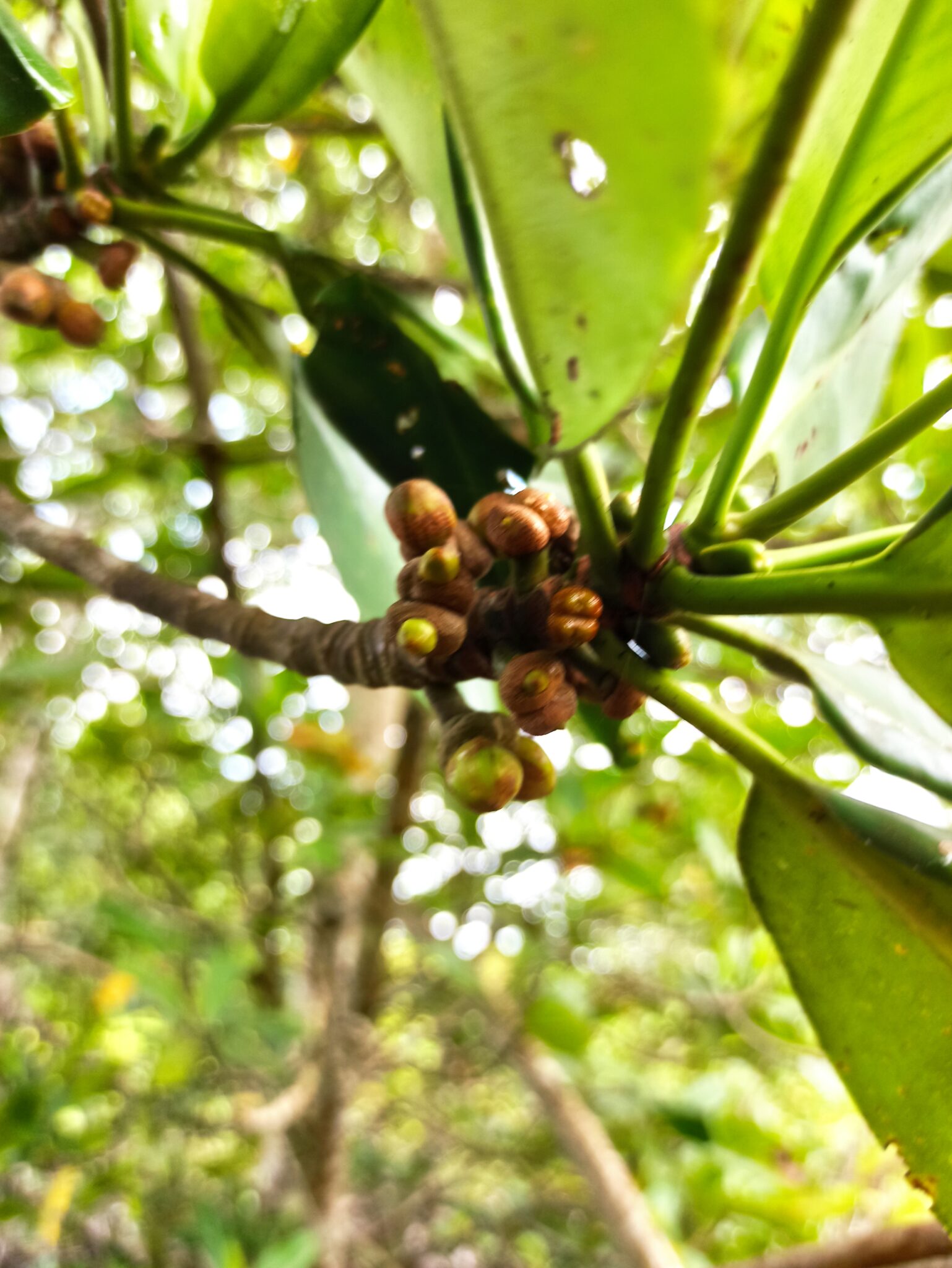
Rhizopora apiculata is thriving within mangrove ecosystem with humid climate, saline environment, waterlogged soils and capable of tolerating salinity ranging from 2-90%. It has flat yellow to white flower petals.
Environmental Impact
- ✔ Biodiversity Support, ✔ Carbon Sequestration, ✔ Coastal Protection, ✔ Windbreaker
Tree Usage
- Economic
Rhizopora apiculata
Tall-stilt mangrove, Asiatic mangrove
Bakauan-lalaki, Bakad, Asiatic mangrove, Bakau minyak
Rhizophoraceae
Least Concerned
Each mature tree can adsorb 141,42 Kg of carbon
Sri Lanka, Malaysia, Indonesia to Australia and Pacific
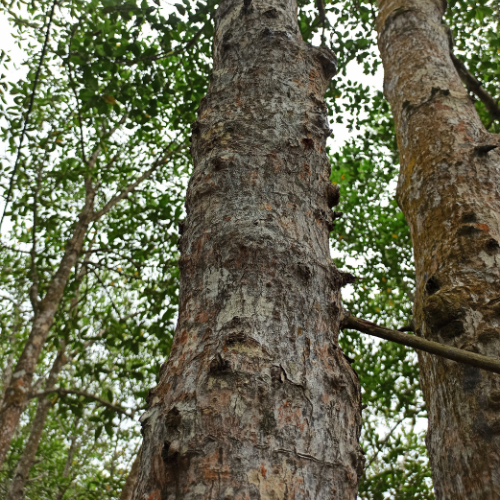
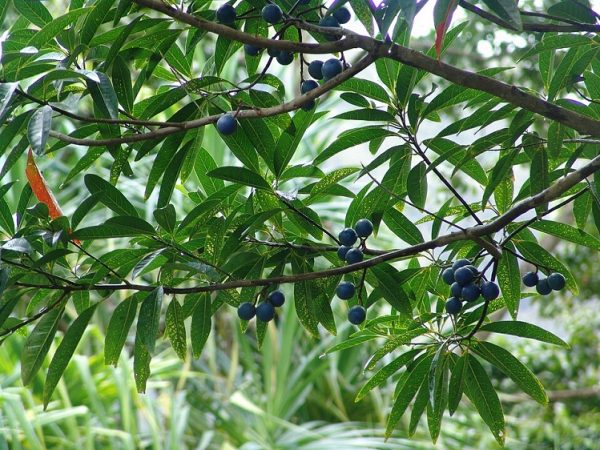
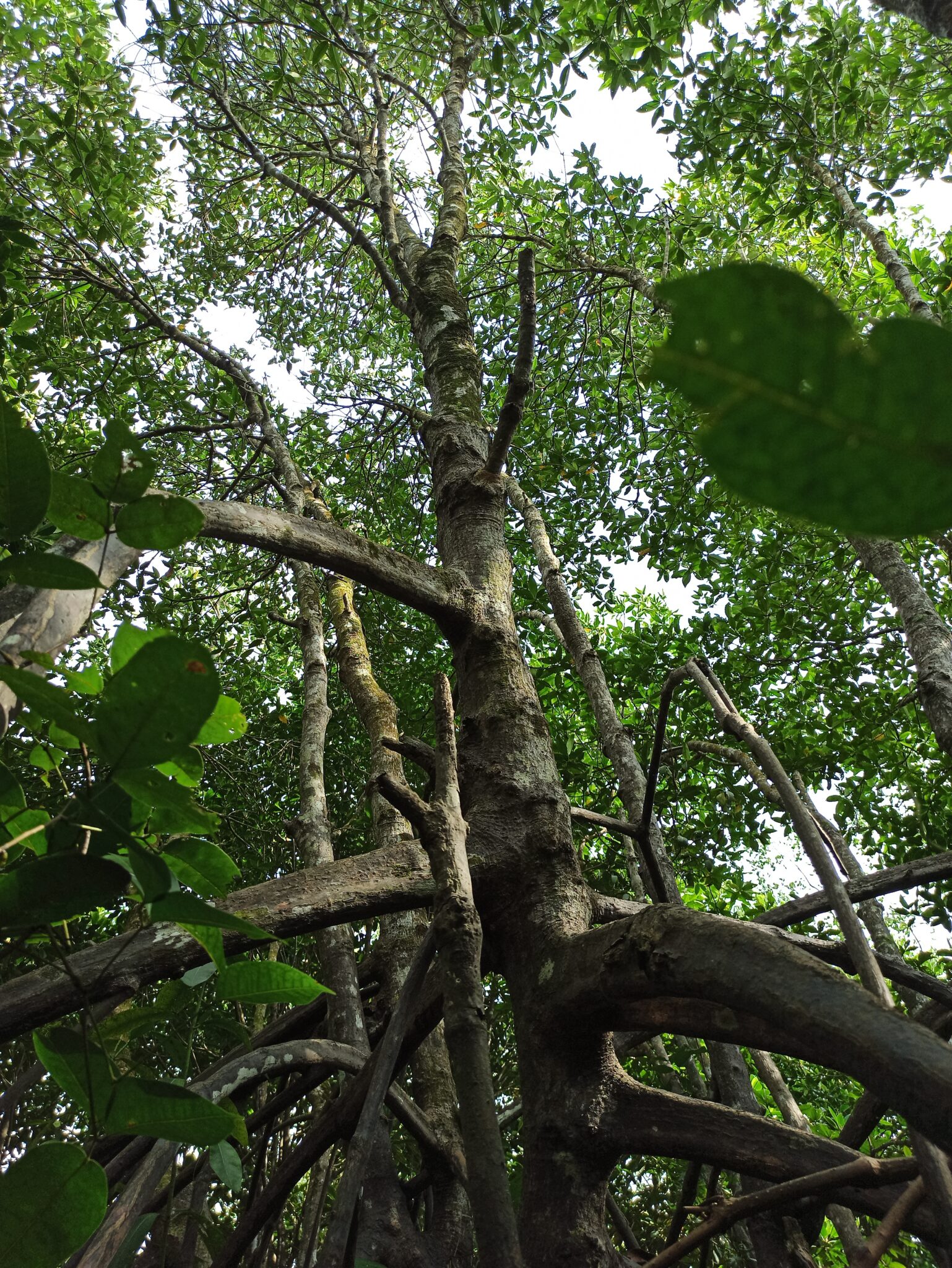
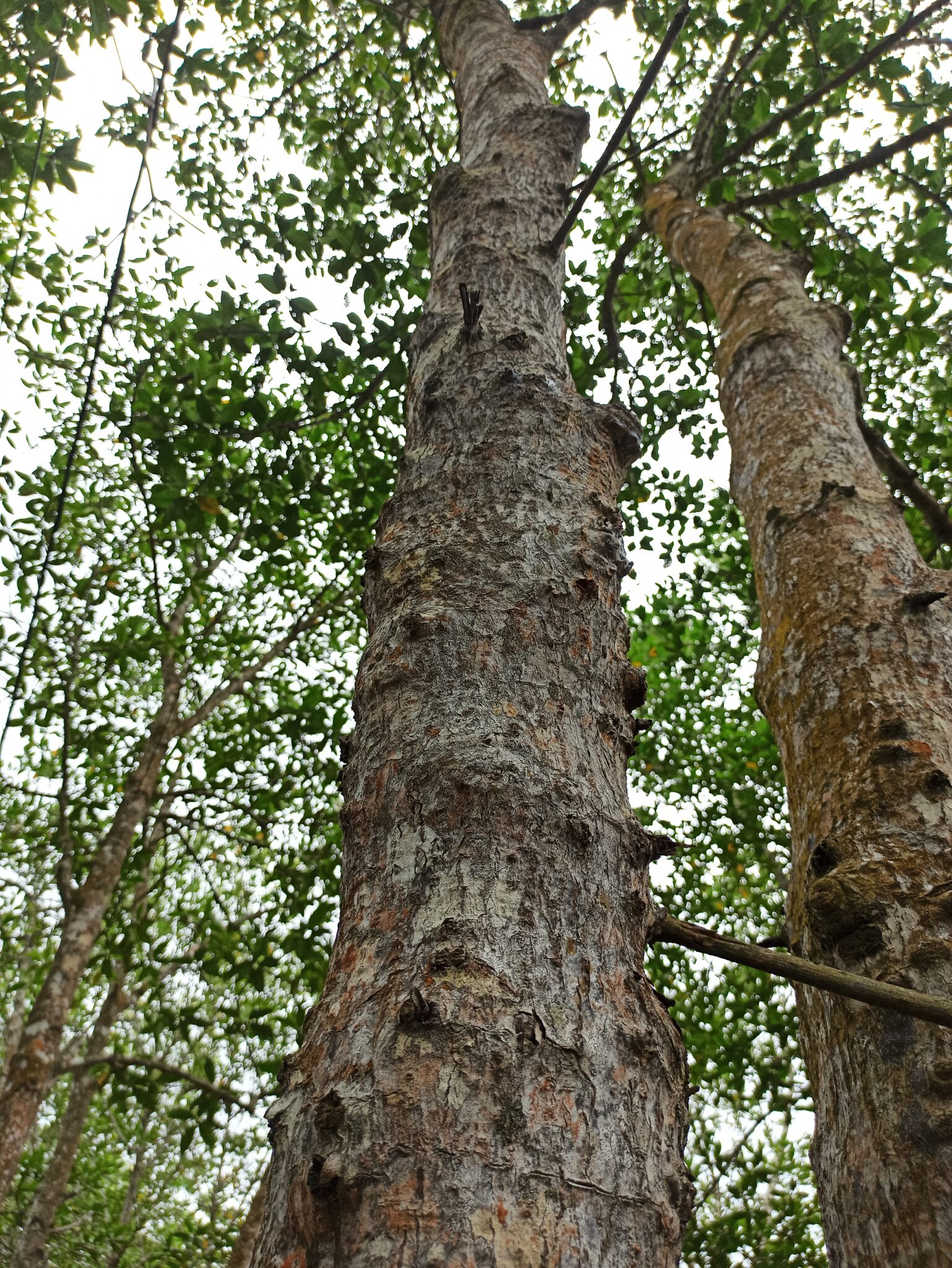
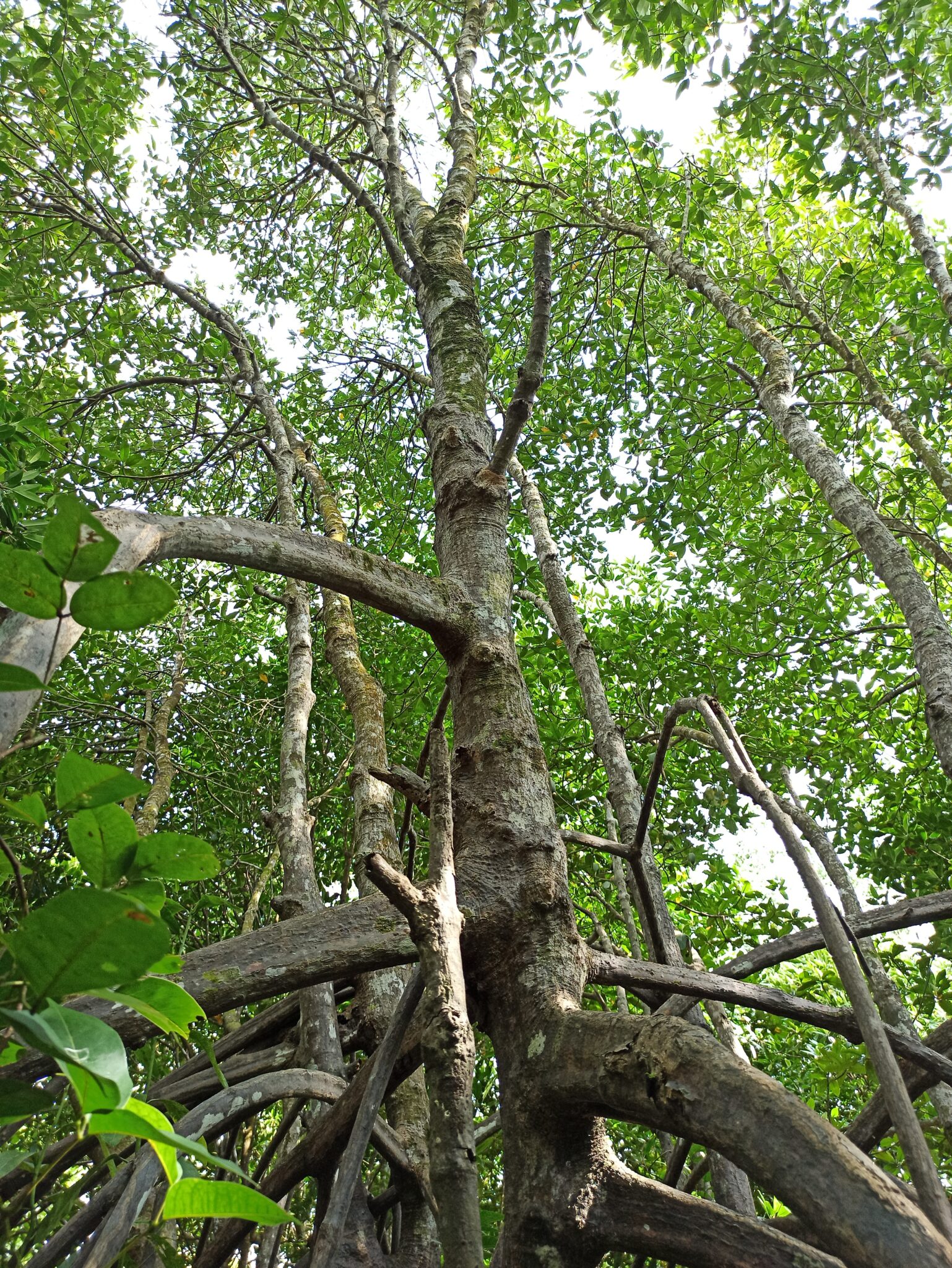
Rhizopora apiculata grows with height up to 30 meters. The trunk diameter of a mature tree can reach 50 meters. It has typically dark greyish color with distinctive root system that can reach 5 meters length. Sometimes, this species also has aerial roots that come out from the branches.
Rhizopora apiculata grows in soft-muddy soil in inundated areas during normal high tide. They prefer tidal areas with fresh water supply rather than sandy areas with hard substrate.

The wood of Rhizophora apiculata is used as a source of building material and fuel for cooking and heating by local coastal communities.
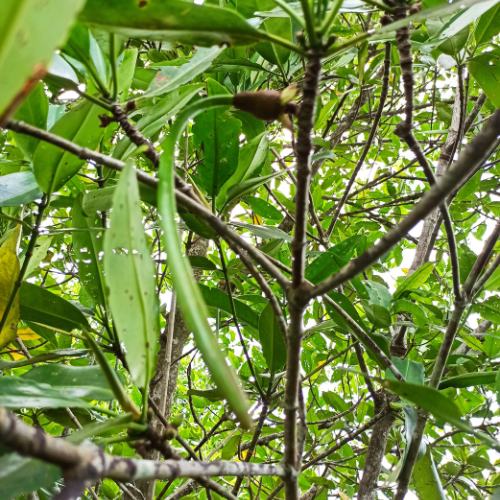
The roots-branch can be used as ship anchor.
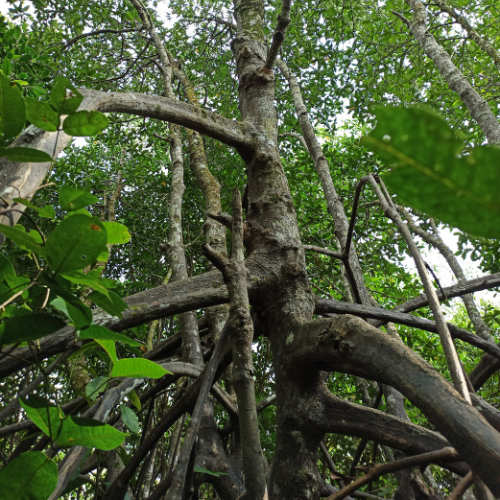
It has two types of roots, designed to resist large waves, rough tides, strong winds and tropical storms, making it a great natural barrier against tidal surge. Its roots also have filtration ability to enhance the water quality.
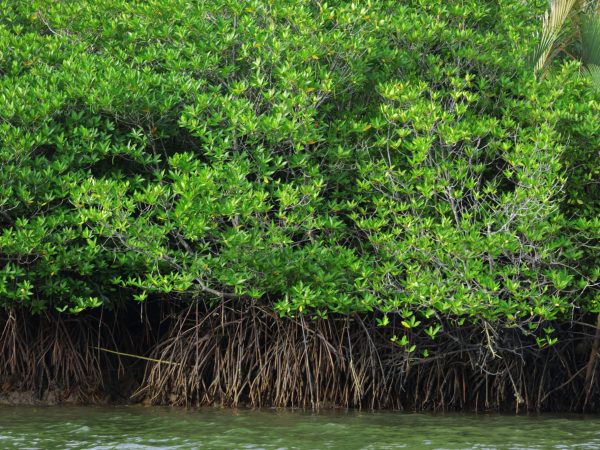
- They are slow-growing mangroves but the flowers bloom all year round
- The Rhizopora apiculata vegetation can dominate up to 90% of a mangrove area
- It is able to change the composition of mud crab gut microbiota, helping them live longer and healthier.
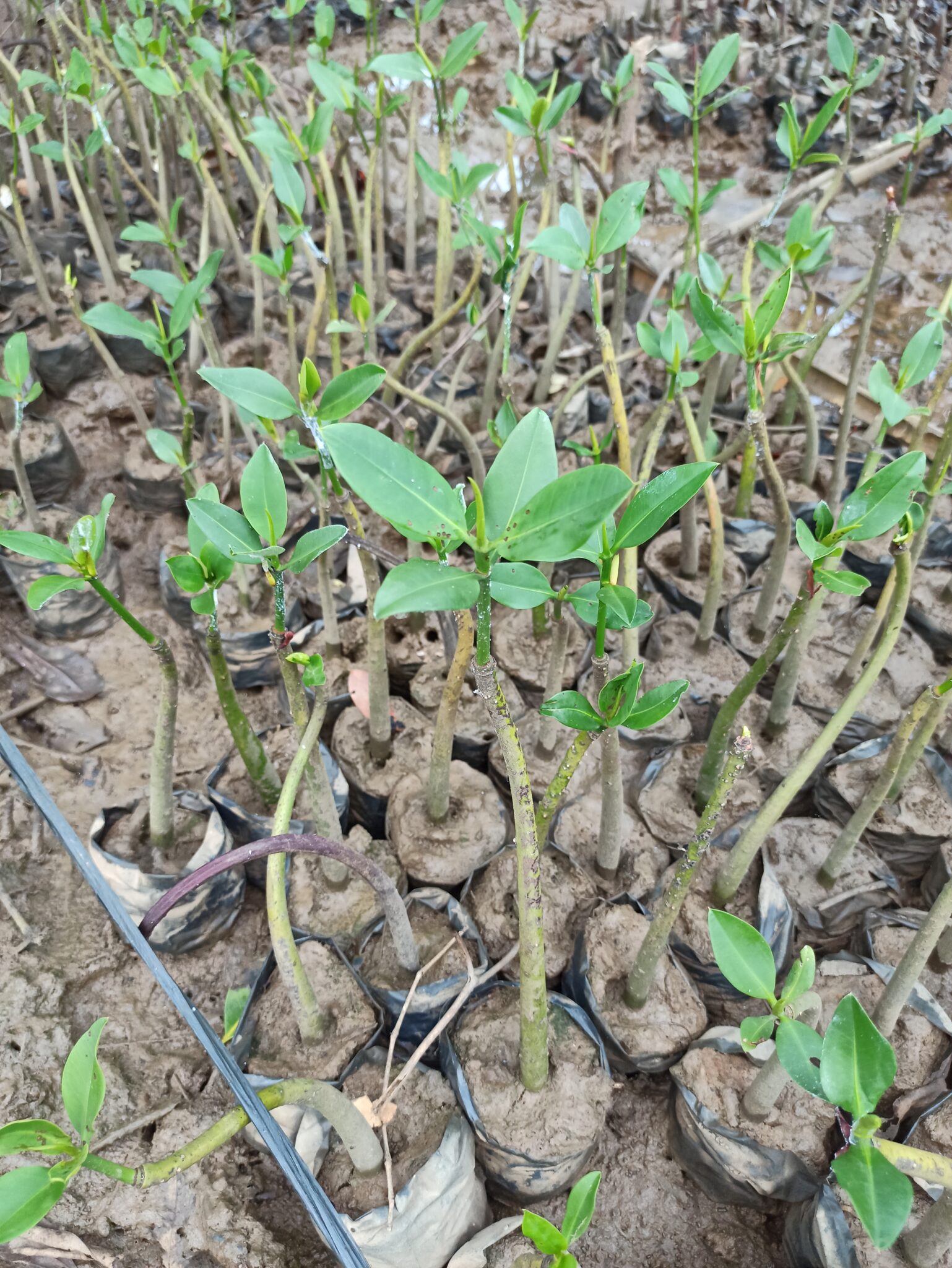
In Java, the trees are often planted around fishponds to protect them from high waves.