Sar’an: Preserving His Land and Planting Trees for Greater Benefits

Preserving Land and Planting Trees around Citarum Watershed for Greater Benefits
Sar’an: Preserving His Land and Planting Trees for Greater Benefits

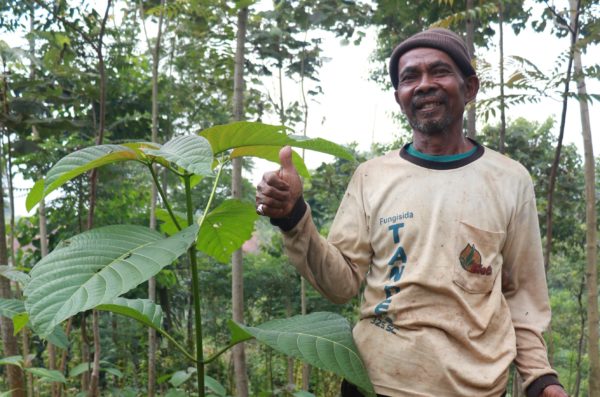
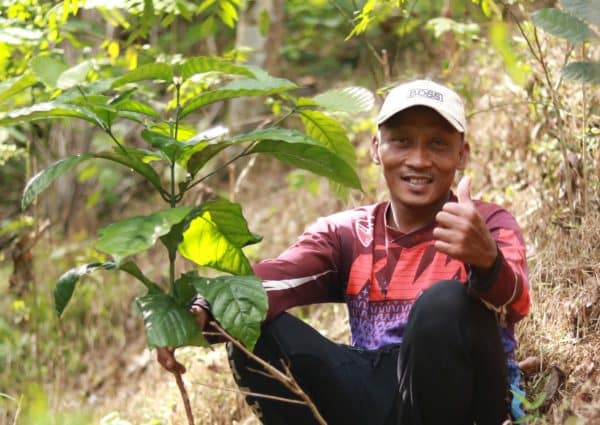
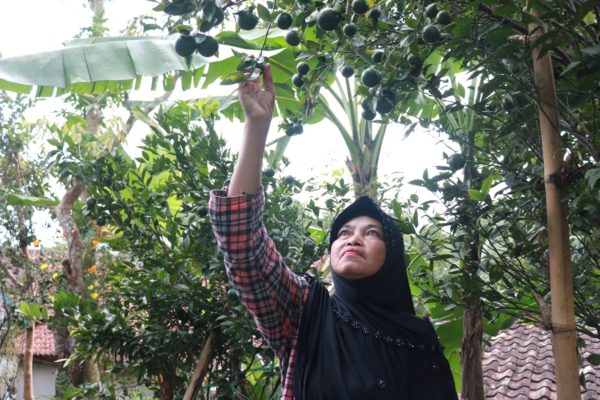
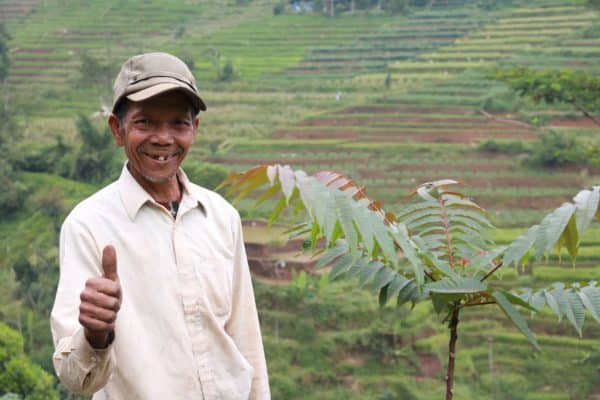
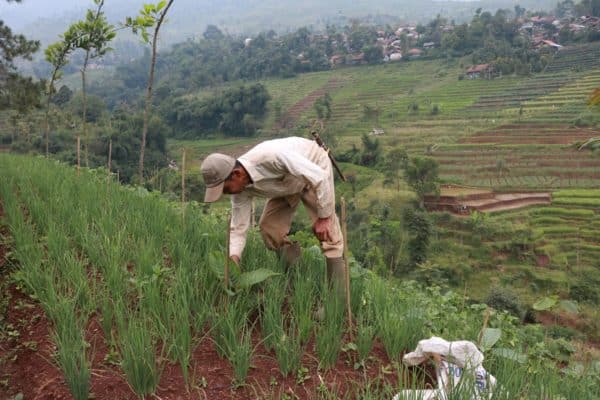
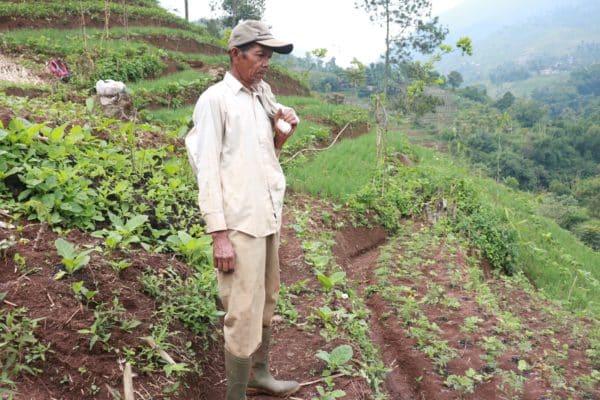
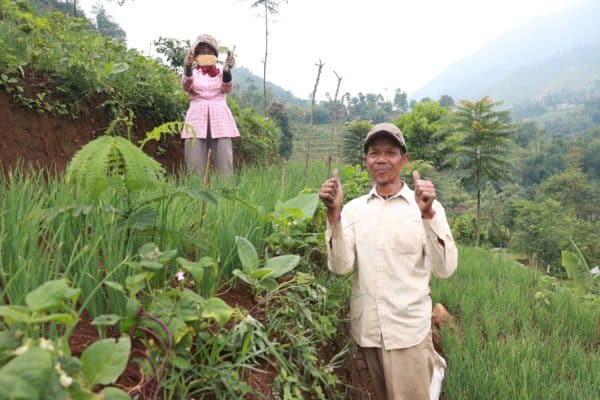
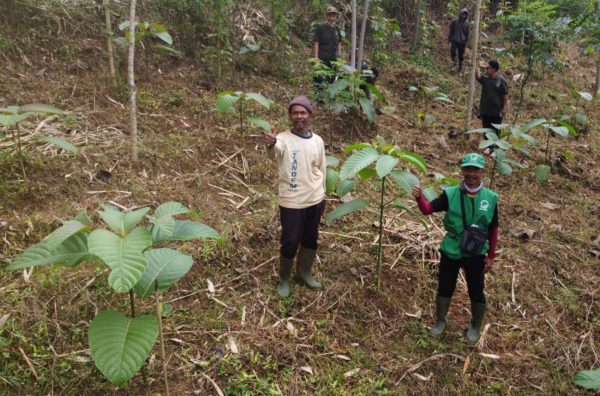
Even though he is 72 years old, Sar’an is still active to do farming activities. He started farming five years ago. At that time, there was a tree planting program from the government that provided  tree seedlings to be planted on villagers’ land, including in his field. 

Sar’an lives in Sukanagara village. It is located in Soreang District, Bandung Regency. Prior to his farming activity today, Sar’an was a goat breeder. He decided to farm due to his expectation to be able to improve his well-being more. At the same time, he also wants to restore the soil fertility around his village.  

Preserving the Land He Owns for the Long-term Profit 

“So many lands in this village have been converted into plantations, offices, and residents. There are also lands owned by villagers which was initially rented out at the beginning but later sold. The result, villagers find it difficult to earn income. That’s because their land that normally can be cultivated on their own has changed function or changed ownership. I am regretting that many people in this village have sold their land. So, when they want to farm, they have to rent the land because they do not have anymore,” Sar’an said.  

Sar’an also revealed, in his village, there are many farmers who used to own their land, now only become sharecroppers because their land has been sold. Some sold their land to companies, some sold it to housing developers. Although many farmers in his village sold their land, Sar’an never wanted to sell his own land. It is because for him, planting in his own land is much more profitable in the long run.  
Preserving Land and Planting Trees around Citarum Watershed for Greater Benefits
Sar’an: Monitoring Trees with Farmer

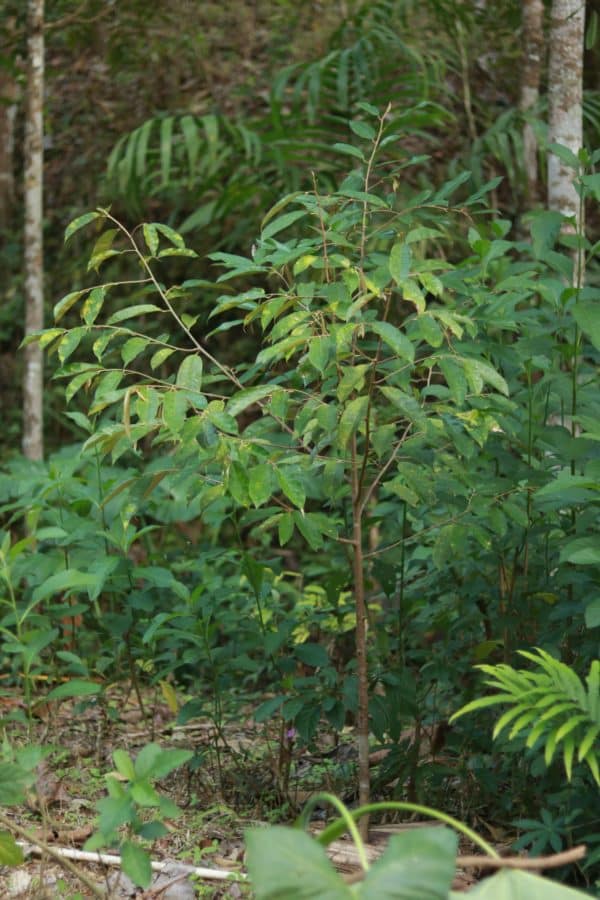
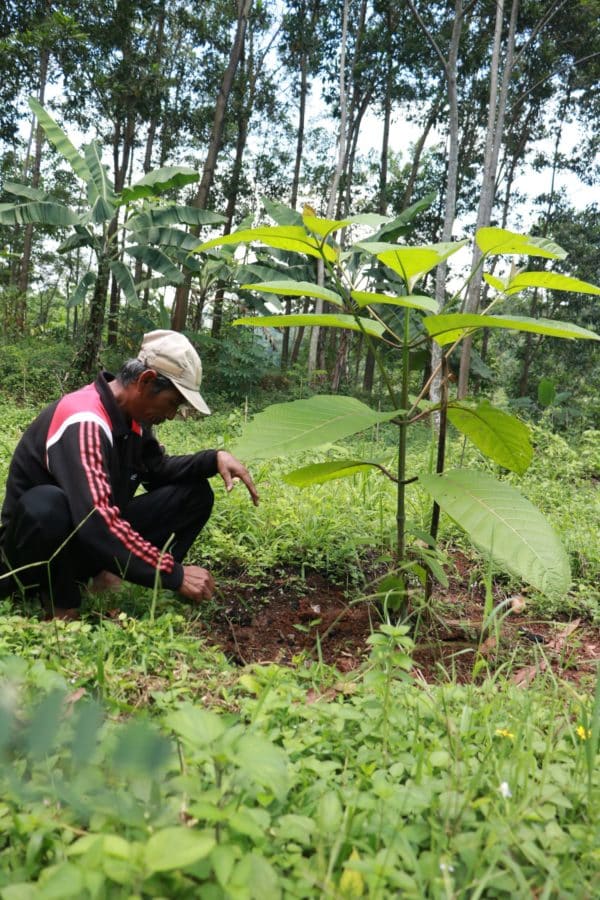
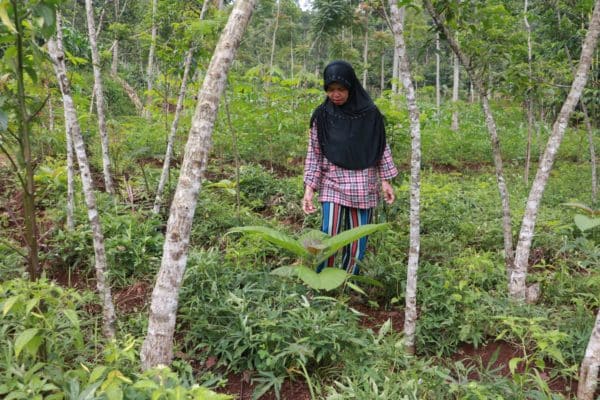
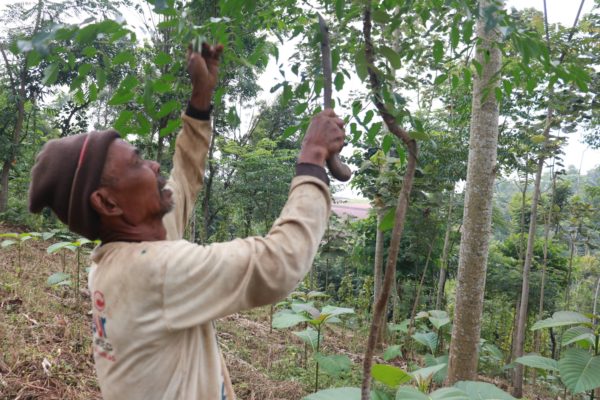
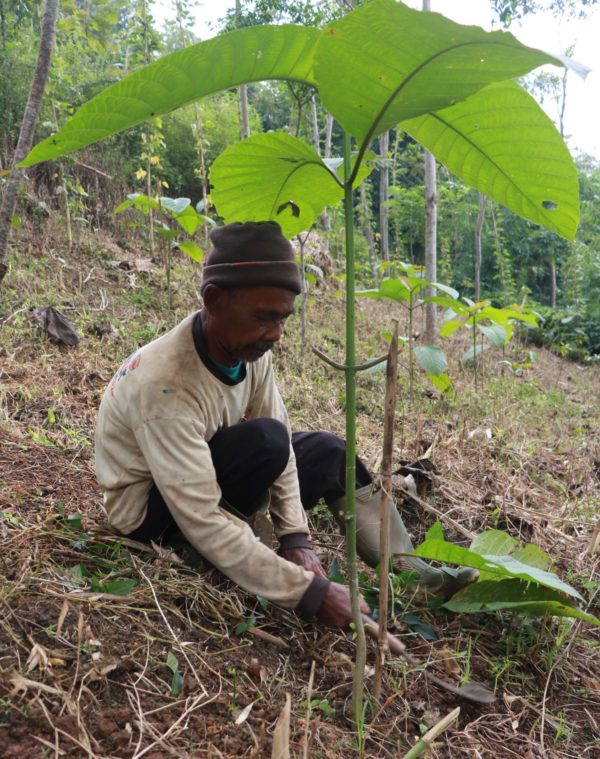
From the previous government program, Sar’an received several trees. They were mindi, mahoni (mahogany), gmelina, and suren trees. Unfortunately, the mindi tree was not suitable with the soil and the condition on his land, so the mindi tree planting was failed. When he joined to a tree planting program funded by Astra Zeneca and collaborates with Tree4Trees and One Tree Planted, Sar’an planted jabon (burflower-tree) and manglid trees. Unlike mindi tree which was failed before, these two type of trees can thrive and growing well on his field.  

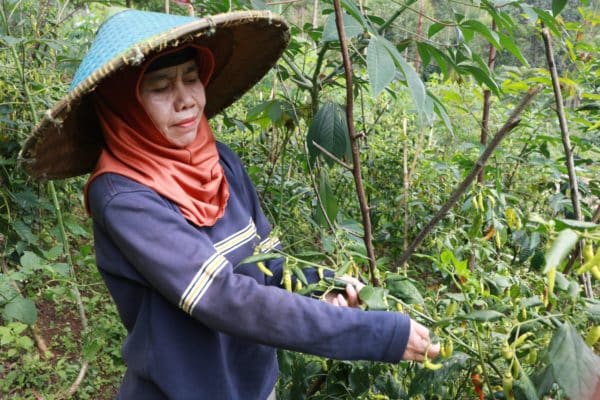
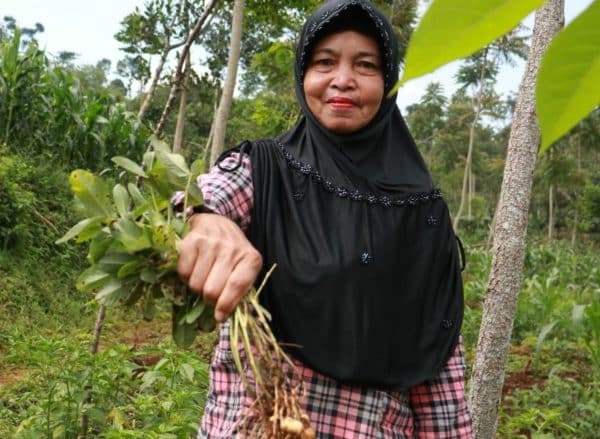
Besides, Sar’an also planted kinds of vegetables in his field. “There are chili, beans, and peanuts that I have planted by my own. Before joining to this program, I have also planted cloves, suren, and mahogany trees by myself,” Sar’an told.  
Sar'an: Preserving Land and Planting Trees around Citarum Watershed for Greater Benefits
Sar’an and his Trees

Read also: Reviving Clean Water Access in Lebak Muncang: Elis’ Tree Planting Initiative 

Replanting Trees He Harvested  

From trees he planted, he plans to sell the timber after his trees entering the harvest period. However, he will plant new trees to prevent his land being damaged. “After trees are old enough to be harvested, then I will replant new trees  to keep the soil stable. Beside, replanting trees will also swift the waterflow. If we do not replant, I am worried landslides will be occurred. Water can also get harder. I do not want that happen,” he said. 
Sar'an: Preserving Land and Planting Trees around Citarum Watershed for Greater Benefits

Sar’an thanks to the tree planting program that provide him trees. He hopes the tree planting program he joined will bring him good results and can support his livelihood in the long term. He also hopes both vegetables and other trees he planted can provide economic and environmental benefits. In his village, Sar’an also actively persuades other villagers to plant trees and advise them not to be easily tempted by offers to sell their land. He is sure that they will get greater benefits by having his own land that they can cultivate themselves.   

Writer: V. Arnila Wulandani. Photo: Kemas Duga Muis

Reviving Clean Water Access in Lebak Muncang Tourism Village: Elis’ Tree Planting Initiative

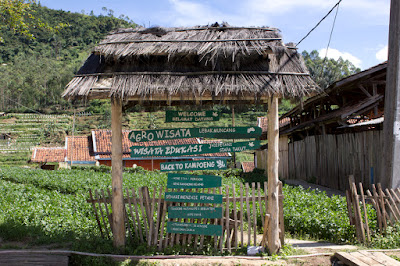
Lebak Muncang Village in Ciwidey District is predominantly characterized by agricultural areas, tea and coffee plantations, forests, and rice fields. Given that agriculture plays a vital role in supporting the livelihoods of the local community, the village has been selected by the Bandung Regency government as one of the ten pilot villages for nature-based tourism, particularly agro-tourism activities. 

Photo: Desa Wisata Lebak Muncang

Benefiting Planting Trees from Their Crops

The majority of Lebak Muncang villagers are engaged in vegetable and fruit farming. Among them is Elis (55), who has been involved in farming for the past 30 years. Her land is cultivated with a variety of crops, including coffee, cassava, seasonal vegetables, and chilies. Previously, Elis used to farm alongside her husband. Unfortunately, two years ago, her husband passed away, leaving her to face the challenges of life as a single parent. Despite the hardships, Elis persevered and continued farming to provide for her two children. 

“I am grateful for this tree planting program as it greatly benefits me as a farmer. The program team regularly visits to monitor the trees I planted, ensuring they are in good condition and growing healthily. I am also grateful because we are given ownership of the trees and their yields. This allows us to manage our crops to meet our daily needs and support our future,” expressed Elis. 

Planting Trees to Restore Water Availability

However, Elis’s motivation for tree planting extends beyond the economic benefits for her family. She is deeply concerned about the environment surrounding her village. She mentioned that there used to be a substantial forest in the area, which has unfortunately been converted into residential areas. Consequently, accessing clean water has become a challenge. 

“To access clean water, we have to install a hose from a spring located approximately 10 kilometers away from our village. In the past, when the forests were intact, clean water was readily available here, and we didn’t have to rely on distant springs,” she revealed. 

Elis hopes that by planting more trees, the forest’s original function of providing clean water can be restored. She also looks forward to participating in the tree planting program next year, enabling her to plant more trees on her remaining 1,600-meter square of her land. 

 Writer: V. Arnila Wulandani. Photo: Kemas Duga Muis
Tasum: Growing Rudraksha Trees and Staying True to His Roots

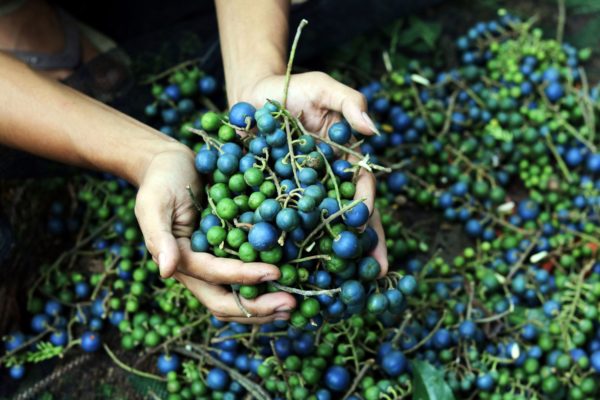
Rudaksha fruits
When ripe, rudraksha fruits are covered by an iridescent blue outer fruit, which gives them their other name: blueberry beads. Photo: Trees4Trees/Yulianisa Dessenita.

“I find my soul is at more peace in the village than in the big city.” For as long as he can remember, Tasum (45) has had his heart set on being a farmer. In his youth, most of his friends were attracted to the bright lights of the big city. Tasum briefly followed the same path and got a job in a hardware store in Jakarta. But before too long, he realized urban living was not for him, and went home to Selogiri Village in the greenery of Kebumen Regency, Central Java.  

What he found on his return was a sense of purpose. He set himself up on a plot of land belonging to his family and started cultivating rudraksha trees (Elaeocarpus ganitrus). Seedlings he planted grew and flourished, blossoming into the realization of a lifelong dream. 

Understanding the True Value of Trees 

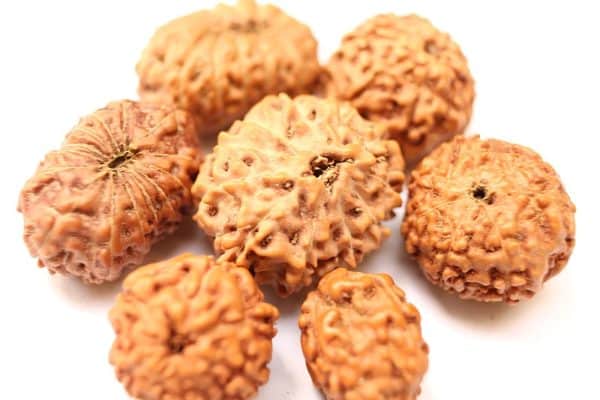
Rudraksha trees are revered in India – the Sanskrit name comes from the hard, spherical stones of its fruit, which are commonly used as prayer beads by Hindus, Buddhists, and Sikhs. When ripe, they’re covered by an iridescent blue outer fruit, which gives them their other name: blueberry beads. 

Tasum: Growing Rudaksha Trees
(Above) Highly prized for their decorative swirls, sacred beads, and healing properties, seeds of the Rudraksha tree are also providing Central Java’s farmers with a sustainable source of income. Photo: Wikipedia

In Selogiri Village, the tree is known as the jenitri (or ganitri) tree. It is no less sacred to the people of Java, as it puts food on their table. The dried fruit seeds are highly prized commodities, used for necklaces, bracelets, and prayer beads.  

According to Tasum, the value of the seed lies in its distinctive whirling patterns (mukhi). “The more patterns on it, the more expensive it becomes,” he explains. The fruits are not only prized for their spiritual significance, but also for their medicinal properties (again, mukhi is the key: more swirls = stronger healing energy). 

Large quantities of Tasum’s crop go on to be sold abroad, with India being the most common destination, followed by Nepal and China. The income has been a blessing for local farmers, who have only recently begun to appreciate the potential – and the true value – of these trees.  

A single tree can produce around 6,000 to 10,000 seeds in a season, which can bring in an average of between $12 and $20. Sometimes, the trees provide more unique patterns that fetch a higher price. 2015-2017 was the golden period,” he remembers. “I sold some of these for as much as $2 to $6 per fruit!, Like the eventual buyers of his crop, Tasum sees these natural treasures as gifts from God. 

Tasum, a farmer from Silogiri village
Tasum, a farmer from Selogiri village, believes fruit tree farming offers a more sustainable way to go; it’s also more efficient, and potentially more profitable. Photo: Trees4Trees/Yulianisa Dessenita.

Hard Graft: Working Together to Find Sustainable Alternatives 

Many older farmers in Tasum’s village plant cash crops. But he believes fruit tree farming offers a more sustainable way to go; it’s also more efficient, and potentially more profitable.  

“If I plant fruit trees, I can harvest the fruits or seeds, while the trees remain intact,” he explains. “For me, cutting down even one tree is a great loss.”  

Rudraksha Trees
(Above) One of around 300 rudraksha trees in Tasum’s plantation. Photo: Trees4Trees/Yulianisa Dessenita.

By using grafting techniques, Tasum has been able to expand his plantation of rudraksha trees to around 300 individual plants. He also grows other fruits such as durian, avocado, and coffee. 

In 2021, with the support of Plant for The Planet (PFTP) as the sponsor, he joined Trees4Trees to help expand our reforestation efforts. Since then, he’s planted hundreds of seedlings. While profit he makes is a big bonus, Tasum values the long-term benefits trees provide to his village and the surrounding area.  

Having uprooted himself once from Selogiri, Tasum is more convinced than ever before that a farmer’s life is for him. Now, with the help of Trees4Trees, he’s putting down roots in more ways than one.  

Writer: V. Arnila Wulandani. Editor: Christopher Alexander

Rohmanudin’s Vision: Why Planting Trees is a Better Legacy Than Selling Land 

why Planting Trees is a Better Legacy
Photo: Trees4Trees/Kemas Duga Muis.

Rohmanudin, 53, has been familiar with farming activities since his childhood, as his parents were farmers who often brought him to the fields. However, Rohmanudin only began farming his own land in 2015. His land, located in Nagrak Village, Cangkuang District in Bandung Regency, was planted with various crops, including several types of trees, fruits, and vegetables. 

“From 2015 to 2016, I began working on my own field, planting various kinds of crops. In 2015, the Indonesia government initiated an agricultural program that led me to grow vegetables for the first time. Thank God, I have been growing different types of plants ever since,” he revealed. 

As part of the government agricultural program, a farmer group was established in Nagrak village, which still exists today. Rohmanudin is one of the most active members of this group.  

Joining to the Tree Planting Program to Improve the Result 

In 2021, Rohmanudin was offered the opportunity to join a tree planting program funded by Astra Zeneca, in collaboration with Trees4Trees and One Tree Planted. He proposed planting tree species that were suitable for his land’s conditions. 

Why Planting Trees is a Better Legacy Than Selling Land 
Rohmanudin maintains his land and plants various type of crops and trees. Photo: Trees4Trees/Kemas Duga Muis.

“I proposed then planted jabon (burflowers), sengon (Chinese albizia), and suren (red cedar) because they thrive in this area. I also planted other trees such as stinky beans, as well as fruit trees like sapodilla and rambutan,” Rohmanudin said. 

Since joining the tree planting program, he has noticed significant differences compared to his previous farming activities. He stated that the implementation of the program has improved significantly, and he feels that it is much better now than in the past. 

“In the past, the planting system was not as structured. Now, we have a more structured approach, and I can say that the way we do is the correct one,” Rohmanudin added. 

Read also: A Watershed Moment: Planting Begins at the Citarum River

Effort to Restore the Former Forest in the Village

Rohmanudin is deeply concerned about the vast deforestation that has taken place in his village, where forests have been cleared and replaced with residential areas. As such, he strongly believes that the tree planting program can have a positive impact if implemented effectively, and is therefore highly motivated to care for the trees. 

Planting Trees is a Better Legacy
Planting Trees is a Better Legacy; Rohmanudin with the burflower tree he has grown. Photo: Trees4Trees/Kemas Duga Muis.

“In the past, this area was full of rare birds and big trees. The mornings were beautiful and so refreshing. The land was more fertile than today. But now, look, they’re gone! There’s a lot of dry land, and water is scarce. Why did this happen? Because the land was sold out, and housing was built. In the area behind my house, eight hectares were sold out, and now, ten more hectares are gone! Housing has been built there again,” Rohmanudin lamented. 

Planting Trees Instead of Selling Land for a Better Future

Seeing the reality that is happening in his village, Rohmanudin feels agitated. He worries that if all the land in his village is sold and turned into housing, there will be nothing left for future generations, and not enough land to cultivate. 

“Imagine what will happen to our children and grandchildren in the next 10-20 years? They will have nothing left. Moreover, if everyone builds houses here and there, we will get more pollution and disease,” he said. 

Planting Trees is a Better Legacy
Planting Trees is a Better Legacy; Rohmanudin’s trees grow bigger and greener. Photo: Trees4Trees/Kemas Duga Muis.

He also believes that cutting down a lot of trees will interrupt the process of producing clean air that is essential for human beings. That is why he thinks this tree planting program is necessary. He believes there are advantages that villagers can get, and even planting trees on a little land for the next generations is essential. 

Rohmanudin expects this program will make farmers in his village more aware of protecting their land and keeping it fertile so that more trees could be planted and more results could be harvested. Therefore, they can make a living from the results instead of selling their land to the land developer. 

Writer: V. Arnila Wulandani. Photo: Kemas Duga Muis.

The Story of Euis Maryati: Widowed and Planting Trees to Support Her Family

Euis Maryati
Euis Maryati: Widowed and Planting Trees to Support Her Family

For a woman with four children, it is never easy being a single parent. This is how Euis Maryati (57) feels. She is one of the farmers in Patrolsari Village, Arjasari District. Since a few years ago, she had to be a mother and also head of the family.

As a widower, her life is struggling. Even though, she keeps herself motivated to be a strong woman for the sake of her family. Unlike common life of most women in her village, her daily life is not only about taking care of the household things, but also making income to fulfill her family’s needs. Otherwise, she has to work harder than anyone else. 

Farming Crops is not Enough to Fulfill Her Family’s Daily Needs

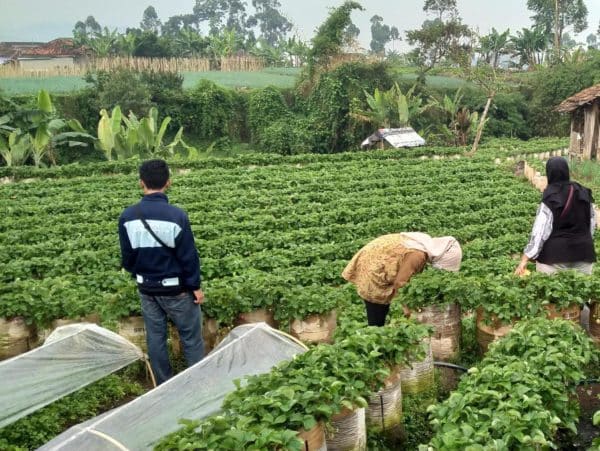
Fortunately, Euis Maryati has a field that she can plant many kinds of plants. Most of them are seasonal food crops. Through her field, she can depend her life to the crops’ yield. “Here, I planted various kind of food crops. I planted chilies, cassava, ground nuts, and red bean. There is also corn. Usually, I harvest my seasonal crops once in every two to three months,” said Euis Maryati.  

Afterwards, she sells her crops in a traditional market around her village. Some of the crops are also self-consumed by her family. According to Euis Maryati, by planting crops, at least she does not have to worry if some days she does not have enough money to buy food. Still, she can pick some food crops from her field for her own family consumption.  

Euis Maryati: Widowed and Planting Trees to Support Her Family
Euis Maryati has harvested crops from her field. Photo: Trees4Trees/Kemas Duga Muis

Even though, to meet her family’s daily needs, she cannot avoid doing double jobs at one time. Besides farming, she also sells snacks. “If I do not farm, I cannot support my family’s needs. However, farming crops is not enough. So, I have also opened a small business selling snacks. It is to increase my income to meet my family’s daily needs,” she conveyed. 

Planting Trees: Cultivating a Better Future for Her Family

In 2021, when she was offered a partnership program of tree planting funded by Astra Zeneca collaborated with Trees4Trees and One Tree Planted, Euis Maryati planted burflower-tree, avocado, mango, and orange. She planted those trees among her seasonal crops in her field. She admitted that she was lucky to get plants from the tree planting program. She hopes a lot from trees she planted for the future of her family. 

She has been persevering in taking care of her trees. She cleans the grass every day so that all the plants grow well. She also applies her plants with organic fertilizer that she made herself from animal dung. 

Euis Maryati: Widowed and Planting Trees to Support Her Family
Euis Maryati is checking her jabon trees planted in her field along with various crops.

She expects, by taking good care of those trees, she will be able to harvest the good results. Moreover, now plants in her field are more varied. With more types of trees planted, she hopes she can sell more yields in the future, then she can fulfil her family’s needs much better than today. 

“My life has been difficult for years. So I am hoping that it does not get any harder. If not myself, who else will  support my family? I realize that I am both the mother and the head of the family. It is not easy. But for my children and their future, I will continue to work harder,” she stated.  

She thanks to the tree planting program and she hopes it can bring more prosperity and a better future for women farmers and single parents like her. 

Iju’s Passion for Planting Trees: Beyond the Harvest

Farmer story: Iju, one of Trees4Trees best farmers from Neglasari village
Iju, one of Trees4Trees best farmers from Neglasari village, Bandung Regency. Photo: Trees4Trees/Kemas Duga Muis

Since returning to his home village in Neglasari Village a few years ago, Iju (60) has decided to manage his family’s land. His home village is located in Ibun District, Bandung Regency. Before, he had worked in a rubber and oil palm plantation in Sumatera Island for years. However, his longing for his home village made him decide to return home.  

After returning from Sumatra, Iju began to plant bamboo trees. Unfortunately, the results were not good and the price was not favorable. Meanwhile, he had to support his family. His four children were married, while one of the youngest was still in senior high school and he needed income to meet his family’s daily needs. 

Switching From Growing Bamboo to Polyculture Planting System 

In the midst of his struggle in planting bamboo trees, he was offered to join planting trees program which initiated by Astra Zeneca and collaborates with Trees4Trees and One Tree Planted. He was excited to join the program and received support and training in agriculture from the Trees4Trees team. He did not only receive trees for free, but also obtained trainings and more knowledge of agriculture he needed from the team. 

Iju also got a suggestion and assistance from the team to manage his land by applying a polyculture or intercropping system. Indonesian called the system as tumpang sari. This system works by planting several types of trees and crops in a field. It allows farmers to reap short-term and long-term yields from several different trees and crops. Through this system, he potentially can get greater results than planting just one type of tree.

Based on the suggestion, Iju then decided to plant several food crops on his land whose results could be harvested in short term, such as onions, cassava, sweet potatoes, and chilies. Meanwhile, from the tree planting program with Trees4Trees, Iju received burflower-tree, gmelina, durian, and avocado trees. He can reap the long-term benefit from those types of trees.

Farmer story: Iju, one of Trees4Trees best farmers from Neglasari village
Iju is taking care of onion in his field. Photo: Trees4Trees/Kemas Duga Muis

Planting Trees to Restore the Former Forest in the Village

According to Iju, he intended to dedicate the long term-harvested trees he planted for his next generation. He said those trees will be his legacy for them. “I will not harvest or cut down these trees. I will pass them to my children and my grandchildren, so they will be able to enjoy the result and the benefit of trees I planted,” Iju said.  

For Iju, planting trees is beyond harvesting and using the result to meet his family daily needs. He believes that trees have much bigger role than that. Trees provide clean air to breathe, water, shelter, and preserve the life to all of living creature on earth. He realizes clean air and water are the most essential needs of human beings, including for the next generations. 

Planting Trees to Restore the Former Forest in the Village
Iju is applying polyculture system in his field. Photo: Trees4Trees/Kemas Duga Muis

“I plant trees because it provides great benefits not only for myself and my family. But also for the environment. They also produce oxygen and store water that keeps us alive. I want my children and grandchildren will have a good life in the future, so I plant trees,” he added.

Iju’s strong will to plant trees was also fueled by the disappearance of the former forest around her village years ago.  

Planting trees: Iju, one of Trees4Trees best farmers from Neglasari village
Iju and his wife are working in their field. They thank Trees4Trees along with the support of Astra Zeneca and One Tree Planted for tree seedlings and agricultural support they have received. Photo: Trees4Trees/Kemas Duga Muis.

“In the past, this village had a dense and natural forest. But the forest is lost and now it becomes a critical land due to excessive use. I have a dream to return the forest back. Who knows, if I keep planting trees, I may see the forest return to the way it was before,” said Iju optimistic.