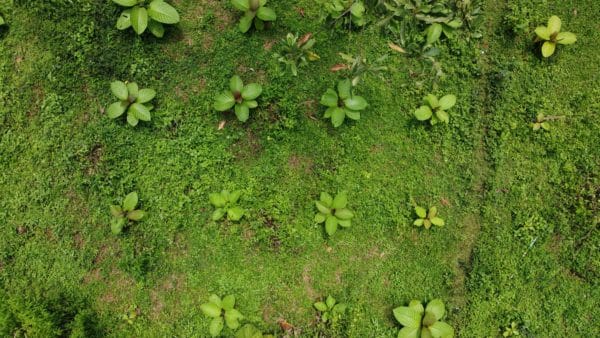
Itang: A Young Farmer on a Mission to Pass Down Springs through Planting Trees

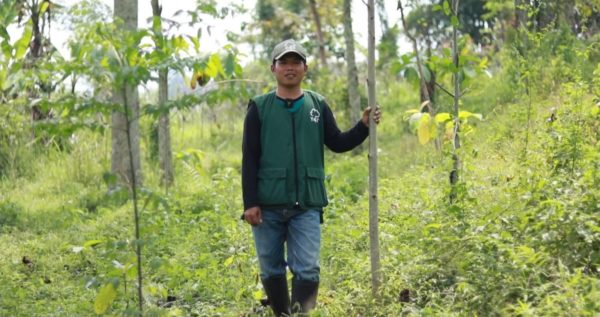
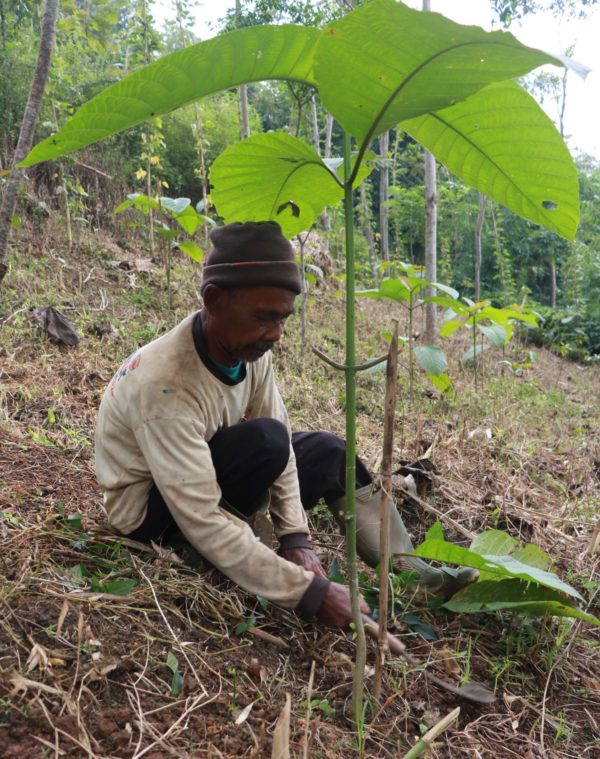
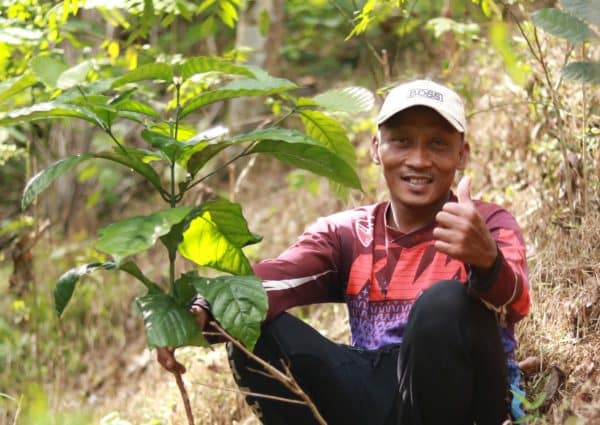
At 37 years old, Itang Zaenal stands out as a young farmer collaborating with Trees4Trees as a tree grower in Mandalahaji Village, Bandung Regency. In contrast to his peers who often seek employment outside the village, Itang has made a choice to remain within his community. He skillfully tends to his plot of land and has effectively generated income from its produce for several years. 

Become a farmer since his young age

Itang owns a parcel of land situated approximately 1 kilometer from the Cirasea sub-watershed, a tributary of the Citarum river. On this land, he cultivates both timber and various crops, aiming to secure both short-term and long-term income sources. The yields he generates from his land enable him to provide for his family, including his two children. 

However, Itang’s journey as a farmer commenced at a remarkably young age. At just seventeen years old, he decided to follow his passion and become a farmer.

“In those times, very few young individuals showed interest in farming. This was due to the mistaken belief that farming couldn’t lead to substantial earnings. I stood among the minority of young villagers who opted to remain in our community and pursue farming. Most of them preferred urban employment,” he revealed. 

Itang also acknowledged that prior to his decision to settle in Mandalahaji village, he had briefly worked in the city of Bandung. “City life didn’t resonate with me, I suppose. The rigid work hours left me with minimal opportunity to engage in activities I enjoyed,” Itang expressed. 
Benefiting from Trees4Trees’ Citarum rehabilitation tree planting program 

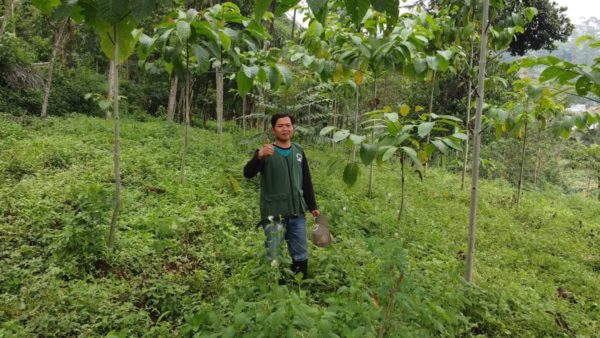
In 2022, Itang was presented with the opportunity in the tree-planting program initiated by Trees4Trees, sponsored by AstraZeneca and One Tree Planted. “The idea thrilled me, as I received tree seedlings completely free of charge and I get to keep all the results for myself. It was a significant help for me,” Itang expressed 

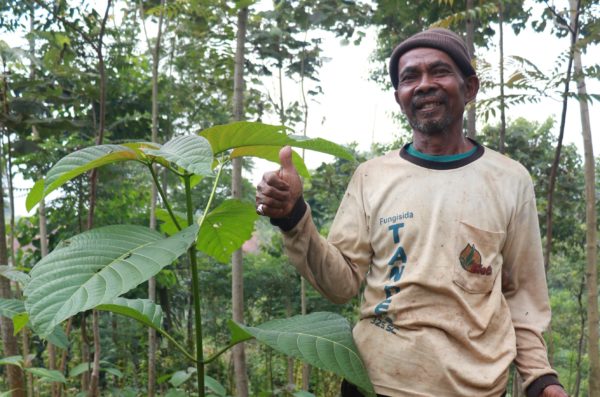
Focusing on planting bur-flower (Jabon) trees and coffee, Itang intends to gain long-term benefits. “Jabon is very well-suited to the soil conditions in my field, so it grows exceptionally well in this area. Jabon also regenerates new shoots automatically after being cut down, ensuring constant flourishing. Coffee, on the other hand, is a promising commodity. With more coffee trees, I can earn a better income,” Itang explained.
Applying organic farming  

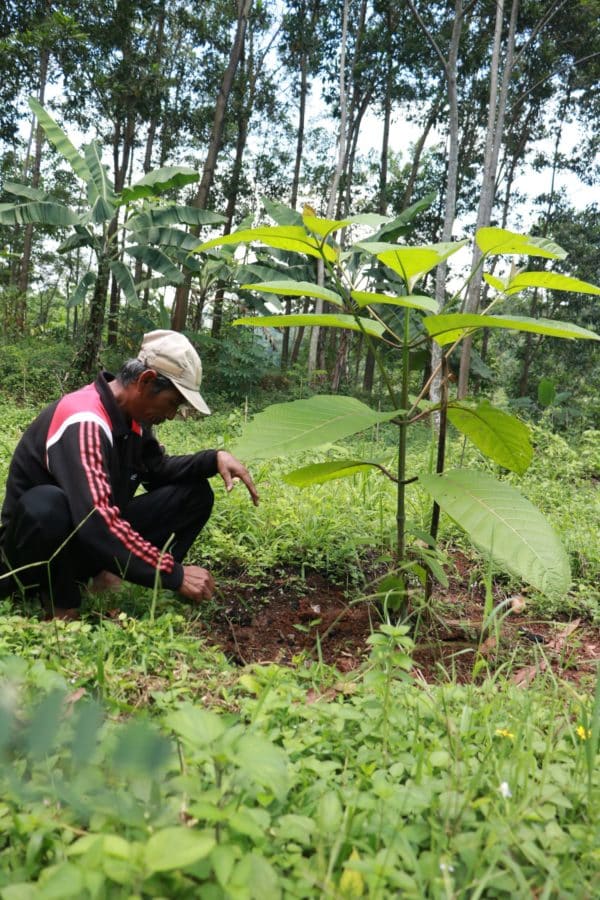
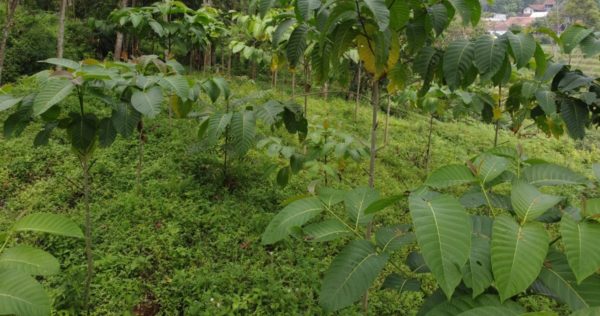
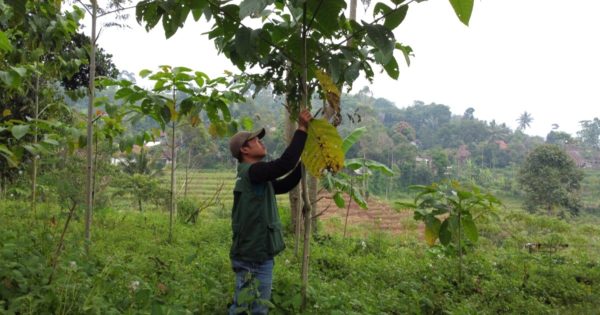
Since his beginning, Itang has employed organic farming techniques in nurturing his trees. He has personally crafted fertilizer from the manure of his livestock. “Thank goodness, when I employ organic fertilizers made from the blend of manure and soil, the growth of the trees accelerates significantly,” he exclaimed while gesturing towards the flourishing trees around him.

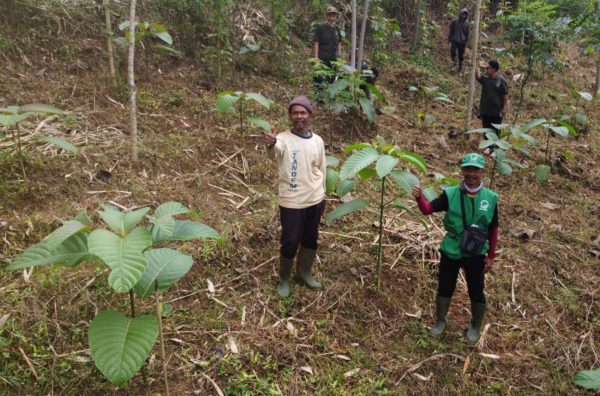
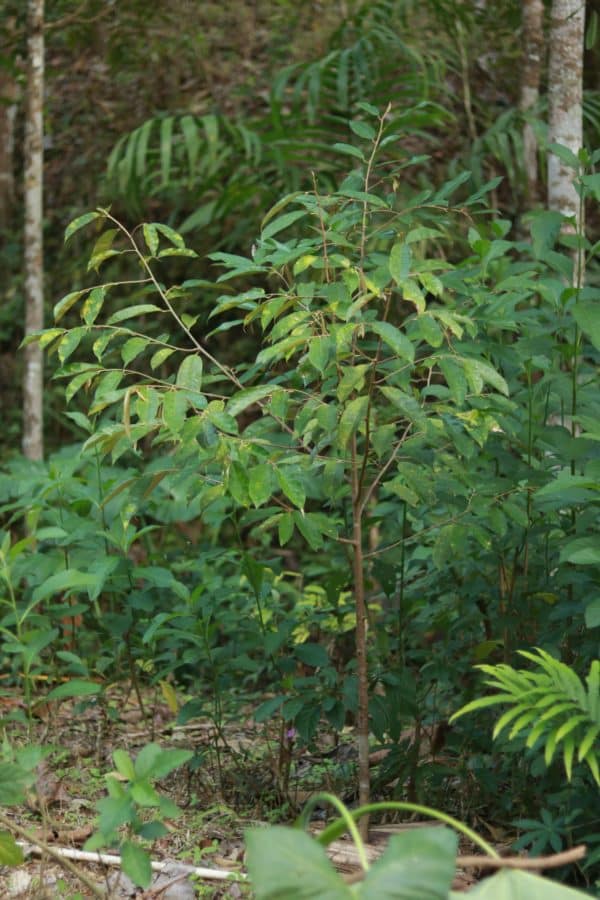
Itang also expressed his gratitude for the organic fertilizers and pesticides provided by Trees4Trees. He noted that with these organic materials, he managed to foster Jabon trees that grew to around 2 meters in height in just eight months. “The outcome fills me with great excitement,” he confessed. He further added that these organic resources complemented the organic approach he had been practicing for years. 
Planting trees, passes down the Citarum springs to the next generation  

Itang’s land is situated approximately 15 kilometers from the source of the Citarum River. This location marks the origins of seven springs, which converge to form the Citarum River and its tributaries. 

“From these springs, the water flows into the Cirasea River – one of the Citarum’s tributaries that runs near my land. This river holds vital importance for the villagers, serving as a primary irrigation source and sustaining the trees I’ve planted. Thus, preserving both the river and its banks is essential,” Itang emphasized. 
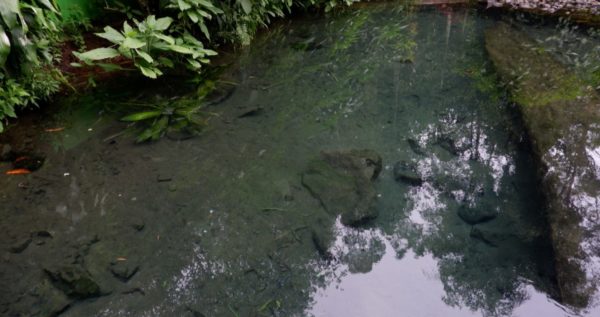
He underscores that planting trees along the riverbanks plays a crucial role in curbing erosion and the siltation stemming from river sedimentation. 

“With the exceptional spring waters of the Citarum River, my endeavor in tree planting aims to pass on the legacy of healthy water sources to my children and the generations to come. I strive to pass down ‘mata air’ (water springs), not ‘air mata’ (tears). If we neglect our duty to care for it, all that remains to pass down would be tears – nothing of our natural heritage would be left,” Itang passionately conveyed. 

Writer: V. Arnila Wulandani. Photo: Kemas Duga Muis

Ayi: Preserving Water Sources Through Tree Planting

Ayi, a tree grower from Drawati Village Bandung_Trees4Trees
Preserving Water Sources Through Tree Planting
Ayi, a tree grower from Drawati Village Bandung_Trees4Trees

Drawati Village, nestled in Paseh District, Bandung Regency. This hillside community rests close to an upstream river—a tributary of the Citarum river watershed. As a result, vital springs dot the area, serving as crucial water sources for the local populace’s daily needs. 

Given the significance of the existing springs, safeguarding the surrounding environment becomes imperative. The preservation of water sources requires rehabilitation and reforestation efforts. To this end, the Drawati village government has been actively promoting reforestation activities among its residents through socialization and various programs. 

Trees4Trees Tree-Planting Program Contributes the Water Spring Conservation 

When the Trees4Trees team introduced a tree planting program funded by AstraZeneca in collaboration with Trees4Trees and One Tree Planted, both the village government and the villagers responded positively. This initiative aligned well with the village’s mission to advance reforestation efforts. 

Later, the tree planting program gained the participation of farmer groups in the village, composed of individuals dedicated to reforestation endeavors. Among these farmers, Ayi emerged as the best farmer of Drawati village due to his unwavering commitment to tree planting and reforestation. Ayi’s accomplishments are a testament to his long-standing dedication to his environment. 

Prior to joining this tree planting initiative, Ayi was actively engaged in reforestation activities alongside fellow villagers. He pointed out that accessing clean water in his village has become increasingly challenging, despite its proximity to the river’s source. This challenge fueled his determination to revitalize the village’s surroundings, ensuring a more abundant flow of water. He also aspires to enhance underutilized lands through increased tree planting. 

Ayi, a tree grower from Drawati Village Bandung is taking care of his trees_Trees4Trees

Planting Trees to Rejuvenate the Environment and Anticipate the Fruitful Yield 

“I plant trees for a better life and a brighter future for this village, not just for myself and my family, but for the entire community. Most importantly, it’s about nurturing a healthy environment around the village” Ayi said.  

He also revealed that many lands around his village are suffering and have been faced a shortage of clean water. This drives his motivation to plant more trees, hoping to rejuvenate our surroundings and ensure the abundant flow of water.  

“Water is a fundamental necessity for human life, making this endeavor worth every effort,” Ayi expressed. 

Furthermore, Ayi emphasized that tree planting not only fosters a healthier environment but also yields fruitful crops. When he joined the tree planting program, Ayi opted for jabon trees (burflower-tree) due to their rapid growth compared to other tree species. 

In addition, Ayi cultivated food crops such as corn, cassava, and various fruits, including orange trees. 

“I’ve also planted orange trees, anticipating a fruitful yield in the future. My aim is to harvest these crops. Planting trees holds immense benefits – it adds greenery to the environment and allows me to save for my future by selling the crops,” Ayi shared. 

Ayi, a tree grower from Drawati Village Bandung with head of village_Trees4Trees
Ayi was visited by Drawati Head Village dur to his dedication in reforestation and water sources preservation efforts.

Recognized for the Environmental Conservation Efforts 

Due to the unwavering dedication to tree planting and reforestation, Ayi and the farmer groups were acknowledged and commended by the head of Drawati Village. According to the village head, the present era mandates a life philosophy centered on nature preservation, as nature has nurtured and sustained us. Therefore, it is our responsibility to reciprocate this care. Ayi and the farmer group’s actions stand as a commendable example in this regard. 

“Greening initiatives contribute to the preservation and conservation of water, a crucial element for sustaining human life. We must prevent our water sources from depleting. We must ensure that our future generations do not shed tears due to a lack of springs. Let us unite to prevent such a future!” emphasized the village head during his encounter with Ayi and the farmer group of Drawati Village. 

Writer: V. Arnila Wulandani. Photo: Kemas Duga Muis
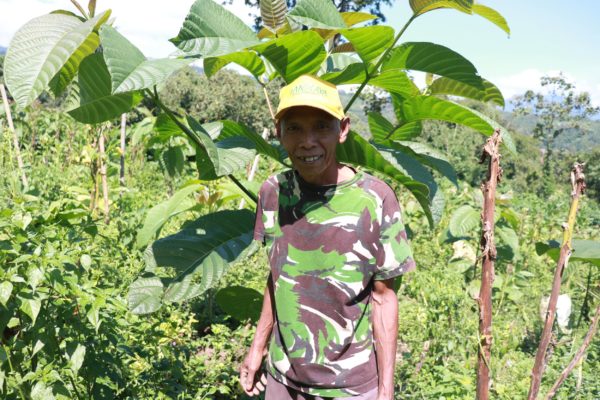
Sar’an: Preserving His Land and Planting Trees for Greater Benefits

Preserving Land and Planting Trees around Citarum Watershed for Greater Benefits
Sar’an: Preserving His Land and Planting Trees for Greater Benefits

Even though he is 72 years old, Sar’an is still active to do farming activities. He started farming five years ago. At that time, there was a tree planting program from the government that provided  tree seedlings to be planted on villagers’ land, including in his field. 

Sar’an lives in Sukanagara village. It is located in Soreang District, Bandung Regency. Prior to his farming activity today, Sar’an was a goat breeder. He decided to farm due to his expectation to be able to improve his well-being more. At the same time, he also wants to restore the soil fertility around his village.  

Preserving the Land He Owns for the Long-term Profit 

“So many lands in this village have been converted into plantations, offices, and residents. There are also lands owned by villagers which was initially rented out at the beginning but later sold. The result, villagers find it difficult to earn income. That’s because their land that normally can be cultivated on their own has changed function or changed ownership. I am regretting that many people in this village have sold their land. So, when they want to farm, they have to rent the land because they do not have anymore,” Sar’an said.  

Sar’an also revealed, in his village, there are many farmers who used to own their land, now only become sharecroppers because their land has been sold. Some sold their land to companies, some sold it to housing developers. Although many farmers in his village sold their land, Sar’an never wanted to sell his own land. It is because for him, planting in his own land is much more profitable in the long run.  

Preserving Land and Planting Trees around Citarum Watershed for Greater Benefits
Sar’an: Monitoring Trees with Farmer

From the previous government program, Sar’an received several trees. They were mindi, mahoni (mahogany), gmelina, and suren trees. Unfortunately, the mindi tree was not suitable with the soil and the condition on his land, so the mindi tree planting was failed. When he joined to a tree planting program funded by Astra Zeneca and collaborates with Tree4Trees and One Tree Planted, Sar’an planted jabon (burflower-tree) and manglid trees. Unlike mindi tree which was failed before, these two type of trees can thrive and growing well on his field.  

Besides, Sar’an also planted kinds of vegetables in his field. “There are chili, beans, and peanuts that I have planted by my own. Before joining to this program, I have also planted cloves, suren, and mahogany trees by myself,” Sar’an told.  

Sar'an: Preserving Land and Planting Trees around Citarum Watershed for Greater Benefits
Sar’an and his Trees

Read also: Reviving Clean Water Access in Lebak Muncang: Elis’ Tree Planting Initiative 

Replanting Trees He Harvested  

From trees he planted, he plans to sell the timber after his trees entering the harvest period. However, he will plant new trees to prevent his land being damaged. “After trees are old enough to be harvested, then I will replant new trees  to keep the soil stable. Beside, replanting trees will also swift the waterflow. If we do not replant, I am worried landslides will be occurred. Water can also get harder. I do not want that happen,” he said. 

Sar'an: Preserving Land and Planting Trees around Citarum Watershed for Greater Benefits

Sar’an thanks to the tree planting program that provide him trees. He hopes the tree planting program he joined will bring him good results and can support his livelihood in the long term. He also hopes both vegetables and other trees he planted can provide economic and environmental benefits. In his village, Sar’an also actively persuades other villagers to plant trees and advise them not to be easily tempted by offers to sell their land. He is sure that they will get greater benefits by having his own land that they can cultivate themselves.   

Writer: V. Arnila Wulandani. Photo: Kemas Duga Muis
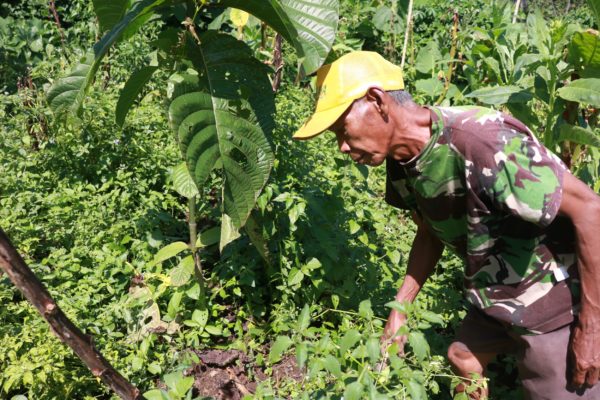
Reviving Clean Water Access in Lebak Muncang Tourism Village: Elis’ Tree Planting Initiative

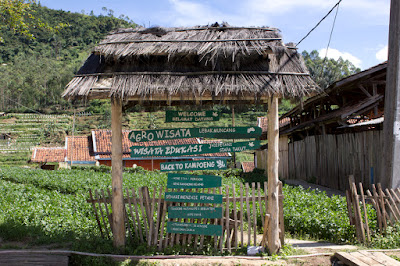
Lebak Muncang Village in Ciwidey District is predominantly characterized by agricultural areas, tea and coffee plantations, forests, and rice fields. Given that agriculture plays a vital role in supporting the livelihoods of the local community, the village has been selected by the Bandung Regency government as one of the ten pilot villages for nature-based tourism, particularly agro-tourism activities. 

Photo: Desa Wisata Lebak Muncang

Benefiting Planting Trees from Their Crops

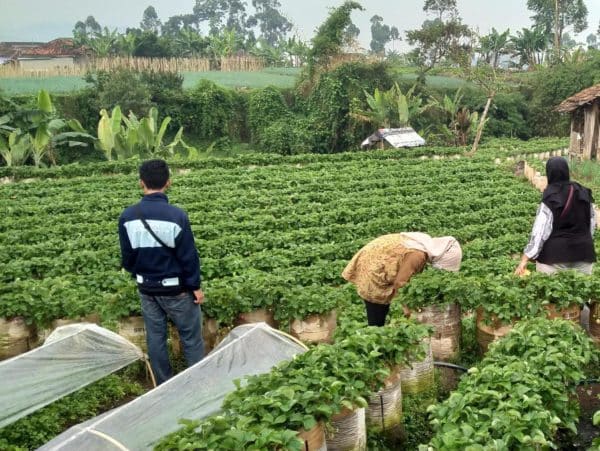
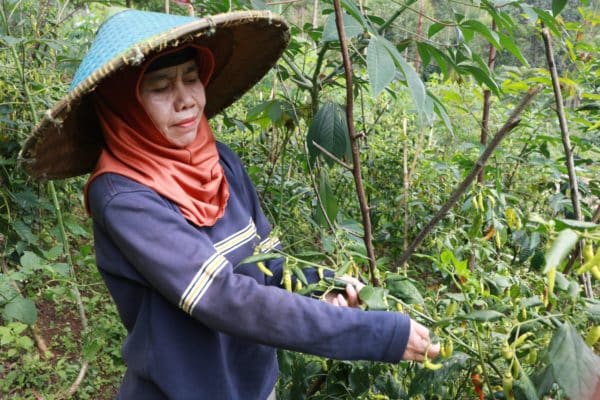
The majority of Lebak Muncang villagers are engaged in vegetable and fruit farming. Among them is Elis (55), who has been involved in farming for the past 30 years. Her land is cultivated with a variety of crops, including coffee, cassava, seasonal vegetables, and chilies. Previously, Elis used to farm alongside her husband. Unfortunately, two years ago, her husband passed away, leaving her to face the challenges of life as a single parent. Despite the hardships, Elis persevered and continued farming to provide for her two children. 

“I am grateful for this tree planting program as it greatly benefits me as a farmer. The program team regularly visits to monitor the trees I planted, ensuring they are in good condition and growing healthily. I am also grateful because we are given ownership of the trees and their yields. This allows us to manage our crops to meet our daily needs and support our future,” expressed Elis. 

Planting Trees to Restore Water Availability

However, Elis’s motivation for tree planting extends beyond the economic benefits for her family. She is deeply concerned about the environment surrounding her village. She mentioned that there used to be a substantial forest in the area, which has unfortunately been converted into residential areas. Consequently, accessing clean water has become a challenge. 

“To access clean water, we have to install a hose from a spring located approximately 10 kilometers away from our village. In the past, when the forests were intact, clean water was readily available here, and we didn’t have to rely on distant springs,” she revealed. 

Elis hopes that by planting more trees, the forest’s original function of providing clean water can be restored. She also looks forward to participating in the tree planting program next year, enabling her to plant more trees on her remaining 1,600-meter square of her land. 

 Writer: V. Arnila Wulandani. Photo: Kemas Duga Muis
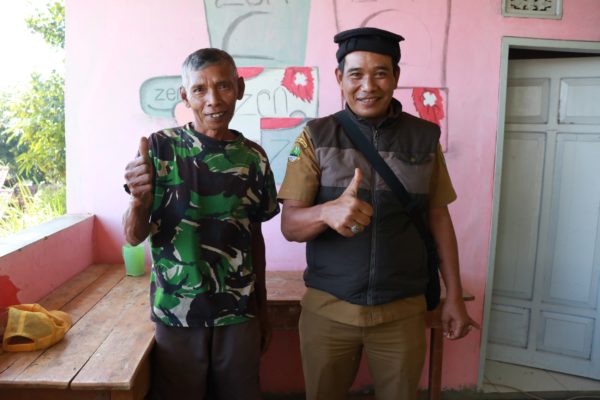
Tasum: Growing Rudraksha Trees and Staying True to His Roots

Rudaksha fruits
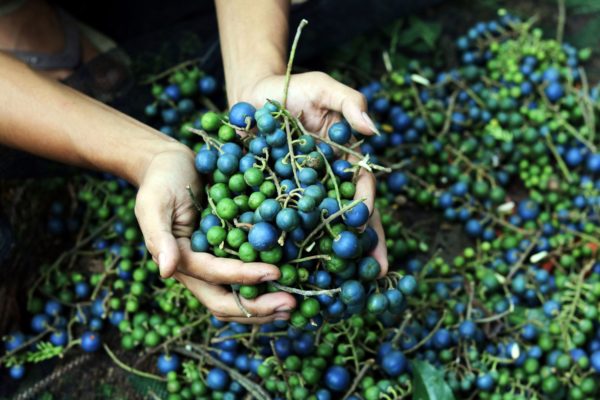
When ripe, rudraksha fruits are covered by an iridescent blue outer fruit, which gives them their other name: blueberry beads. Photo: Trees4Trees/Yulianisa Dessenita.

“I find my soul is at more peace in the village than in the big city.” For as long as he can remember, Tasum (45) has had his heart set on being a farmer. In his youth, most of his friends were attracted to the bright lights of the big city. Tasum briefly followed the same path and got a job in a hardware store in Jakarta. But before too long, he realized urban living was not for him, and went home to Selogiri Village in the greenery of Kebumen Regency, Central Java.  

What he found on his return was a sense of purpose. He set himself up on a plot of land belonging to his family and started cultivating rudraksha trees (Elaeocarpus ganitrus). Seedlings he planted grew and flourished, blossoming into the realization of a lifelong dream. 

Understanding the True Value of Trees 

Rudraksha trees are revered in India – the Sanskrit name comes from the hard, spherical stones of its fruit, which are commonly used as prayer beads by Hindus, Buddhists, and Sikhs. When ripe, they’re covered by an iridescent blue outer fruit, which gives them their other name: blueberry beads. 

Tasum: Growing Rudaksha Trees
(Above) Highly prized for their decorative swirls, sacred beads, and healing properties, seeds of the Rudraksha tree are also providing Central Java’s farmers with a sustainable source of income. Photo: Wikipedia

In Selogiri Village, the tree is known as the jenitri (or ganitri) tree. It is no less sacred to the people of Java, as it puts food on their table. The dried fruit seeds are highly prized commodities, used for necklaces, bracelets, and prayer beads.  

According to Tasum, the value of the seed lies in its distinctive whirling patterns (mukhi). “The more patterns on it, the more expensive it becomes,” he explains. The fruits are not only prized for their spiritual significance, but also for their medicinal properties (again, mukhi is the key: more swirls = stronger healing energy). 

Large quantities of Tasum’s crop go on to be sold abroad, with India being the most common destination, followed by Nepal and China. The income has been a blessing for local farmers, who have only recently begun to appreciate the potential – and the true value – of these trees.  

A single tree can produce around 6,000 to 10,000 seeds in a season, which can bring in an average of between $12 and $20. Sometimes, the trees provide more unique patterns that fetch a higher price. 2015-2017 was the golden period,” he remembers. “I sold some of these for as much as $2 to $6 per fruit!, Like the eventual buyers of his crop, Tasum sees these natural treasures as gifts from God. 

Tasum, a farmer from Silogiri village
Tasum, a farmer from Selogiri village, believes fruit tree farming offers a more sustainable way to go; it’s also more efficient, and potentially more profitable. Photo: Trees4Trees/Yulianisa Dessenita.

Hard Graft: Working Together to Find Sustainable Alternatives 

Many older farmers in Tasum’s village plant cash crops. But he believes fruit tree farming offers a more sustainable way to go; it’s also more efficient, and potentially more profitable.  

“If I plant fruit trees, I can harvest the fruits or seeds, while the trees remain intact,” he explains. “For me, cutting down even one tree is a great loss.”  

Rudraksha Trees
(Above) One of around 300 rudraksha trees in Tasum’s plantation. Photo: Trees4Trees/Yulianisa Dessenita.

By using grafting techniques, Tasum has been able to expand his plantation of rudraksha trees to around 300 individual plants. He also grows other fruits such as durian, avocado, and coffee. 

In 2021, with the support of Plant for The Planet (PFTP) as the sponsor, he joined Trees4Trees to help expand our reforestation efforts. Since then, he’s planted hundreds of seedlings. While profit he makes is a big bonus, Tasum values the long-term benefits trees provide to his village and the surrounding area.  

Having uprooted himself once from Selogiri, Tasum is more convinced than ever before that a farmer’s life is for him. Now, with the help of Trees4Trees, he’s putting down roots in more ways than one.  

Writer: V. Arnila Wulandani. Editor: Christopher Alexander

Rohmanudin’s Vision: Why Planting Trees is a Better Legacy Than Selling Land 

why Planting Trees is a Better Legacy
Photo: Trees4Trees/Kemas Duga Muis.

Rohmanudin, 53, has been familiar with farming activities since his childhood, as his parents were farmers who often brought him to the fields. However, Rohmanudin only began farming his own land in 2015. His land, located in Nagrak Village, Cangkuang District in Bandung Regency, was planted with various crops, including several types of trees, fruits, and vegetables. 

“From 2015 to 2016, I began working on my own field, planting various kinds of crops. In 2015, the Indonesia government initiated an agricultural program that led me to grow vegetables for the first time. Thank God, I have been growing different types of plants ever since,” he revealed. 

As part of the government agricultural program, a farmer group was established in Nagrak village, which still exists today. Rohmanudin is one of the most active members of this group.  

Joining to the Tree Planting Program to Improve the Result 

In 2021, Rohmanudin was offered the opportunity to join a tree planting program funded by Astra Zeneca, in collaboration with Trees4Trees and One Tree Planted. He proposed planting tree species that were suitable for his land’s conditions. 

Why Planting Trees is a Better Legacy Than Selling Land 
Rohmanudin maintains his land and plants various type of crops and trees. Photo: Trees4Trees/Kemas Duga Muis.

“I proposed then planted jabon (burflowers), sengon (Chinese albizia), and suren (red cedar) because they thrive in this area. I also planted other trees such as stinky beans, as well as fruit trees like sapodilla and rambutan,” Rohmanudin said. 

Since joining the tree planting program, he has noticed significant differences compared to his previous farming activities. He stated that the implementation of the program has improved significantly, and he feels that it is much better now than in the past. 

“In the past, the planting system was not as structured. Now, we have a more structured approach, and I can say that the way we do is the correct one,” Rohmanudin added. 

Read also: A Watershed Moment: Planting Begins at the Citarum River

Effort to Restore the Former Forest in the Village

Rohmanudin is deeply concerned about the vast deforestation that has taken place in his village, where forests have been cleared and replaced with residential areas. As such, he strongly believes that the tree planting program can have a positive impact if implemented effectively, and is therefore highly motivated to care for the trees. 

Planting Trees is a Better Legacy
Planting Trees is a Better Legacy; Rohmanudin with the burflower tree he has grown. Photo: Trees4Trees/Kemas Duga Muis.

“In the past, this area was full of rare birds and big trees. The mornings were beautiful and so refreshing. The land was more fertile than today. But now, look, they’re gone! There’s a lot of dry land, and water is scarce. Why did this happen? Because the land was sold out, and housing was built. In the area behind my house, eight hectares were sold out, and now, ten more hectares are gone! Housing has been built there again,” Rohmanudin lamented. 

Planting Trees Instead of Selling Land for a Better Future

Seeing the reality that is happening in his village, Rohmanudin feels agitated. He worries that if all the land in his village is sold and turned into housing, there will be nothing left for future generations, and not enough land to cultivate. 

“Imagine what will happen to our children and grandchildren in the next 10-20 years? They will have nothing left. Moreover, if everyone builds houses here and there, we will get more pollution and disease,” he said. 

Planting Trees is a Better Legacy
Planting Trees is a Better Legacy; Rohmanudin’s trees grow bigger and greener. Photo: Trees4Trees/Kemas Duga Muis.

He also believes that cutting down a lot of trees will interrupt the process of producing clean air that is essential for human beings. That is why he thinks this tree planting program is necessary. He believes there are advantages that villagers can get, and even planting trees on a little land for the next generations is essential. 

Rohmanudin expects this program will make farmers in his village more aware of protecting their land and keeping it fertile so that more trees could be planted and more results could be harvested. Therefore, they can make a living from the results instead of selling their land to the land developer. 

Writer: V. Arnila Wulandani. Photo: Kemas Duga Muis.