Planting Watersheds: A Step to Restore Bali’s Nature and Sustain Local Livelihoods
Planting

Trees4Trees planted trees in Bali

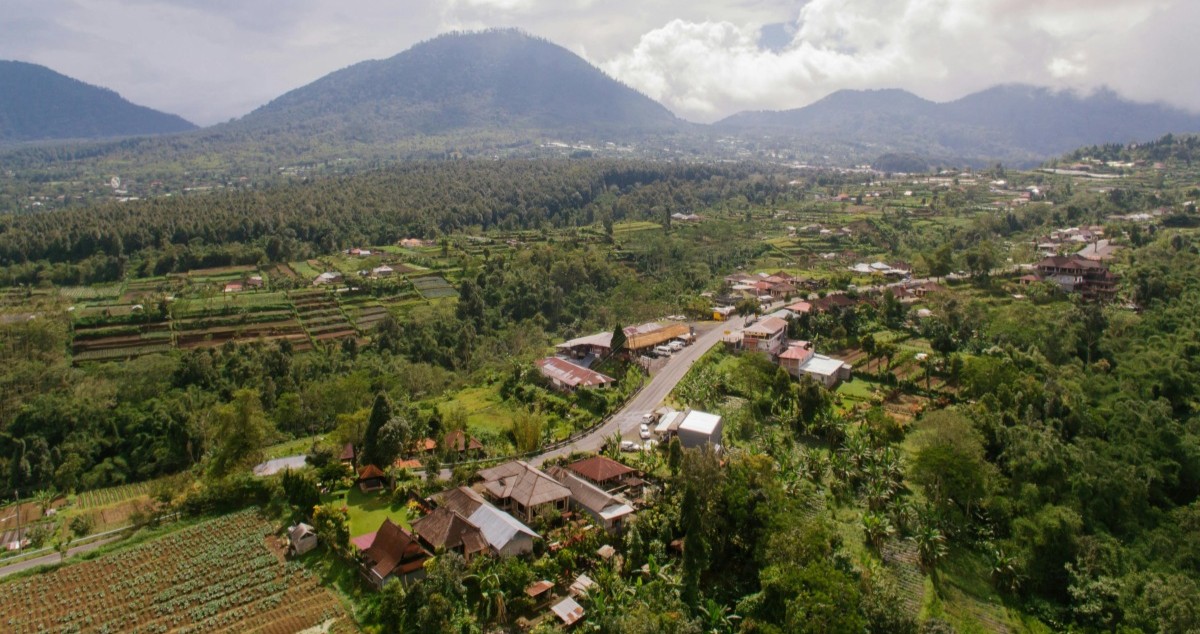
Tuwed and Tukadaya are two villages in Melaya District, Jembrana Regency, located within two important watersheds in Bali: Sangianggede and Tukad Melaya. Known for their strong agricultural tradition and tourism potential, these areas represent the richness of Bali’s rural landscape. Yet, like many parts of the island, they are increasingly facing pressure from rapid human-driven development. 

Significant land-use changes have occurred, converting forests for production purposes and agricultural expansion. Their strategic position along the Java–Bali logistics route has further accelerated development, with land increasingly transformed into residential and commercial areas. While development brings economic opportunity, it also poses risks to environmental health, local livelihoods, and food security. During the rainy season, communities in these villages, like others in Jembrana, are often affected by river flooding, a challenge linked to watersheds degradation. 

In response to these challenges, Faithfull, a Bali-based sustainable fashion company, initiated tree planting in these two villages this season to support ecosystem restoration and strengthen local livelihoods. 
Trees4Trees planted trees in Bali
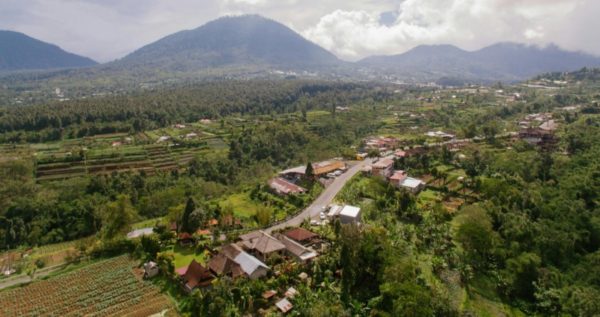
The Melaya landscape, with residential areas scattered among the greenery.

Planting Trees Together: Sharing Love for Bali and Part of a Sustainable Commitment 

Chrisma Aryanta, Faithfull Office and HR Manager, shared that the tree-planting initiative aligns with the company’s sustainability vision and mission and part of its corporate social responsibility program. As a fashion company, Faithfull believes their responsibility goes beyond creating products. “Fashion is deeply connected to nature – from the threads we use to the materials we source. Planting trees is our way to give something back to nature in return,” she explained. 

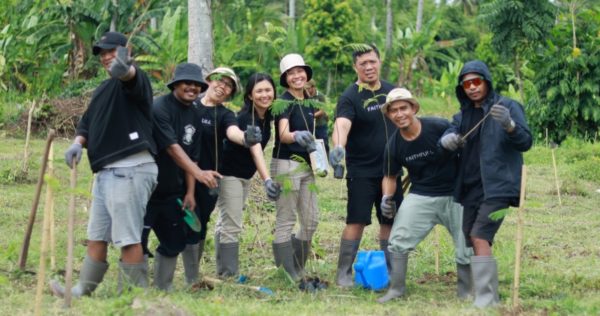
As an initial step in this renewed commitment, just before Valentine’s Day, Faithfull brought its team members together with local communities and Trees4Trees to plant trees in Tuwed Village. The initiative continues with 10,000 additional trees to be planted in Tuwed and neighboring Tukadaya, helping restore the greenery of Melaya, an area located near two of Bali’s important natural sites: West Bali National Park and the Melaya Protected Forest. 

The effort reflects the brand’s commitment as a Bali-based sustainable clothing company to share its love and give back to the island they call home. “Deforestation is getting more serious, not only in Indonesia but all over the world,” Chrisma said. “This season, we choose planting trees here in Bali because we are Bali-based, we love Bali and we want to make Bali even better.” 
Trees4Trees planted trees in Bali
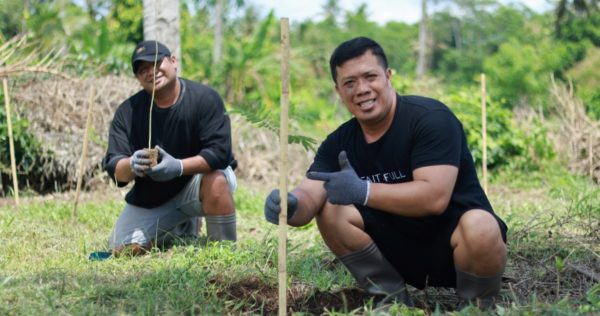
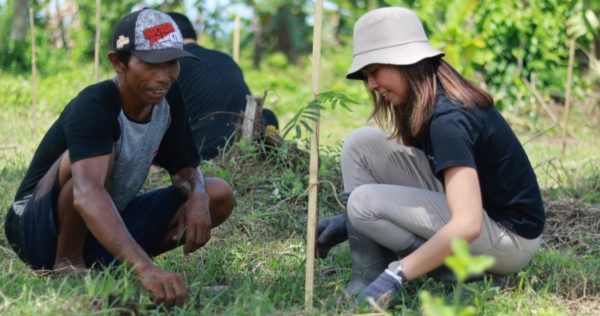
(Above) Chrisma Aryanta, Faithfull Office and HR Manager, joined the tree planting with local community. (Below) Faithfull team members worked to plant trees together.

Five Years of Growing Green Together  

The tree-planting initiative in Bali marks an important milestone in the long-standing collaboration between Faithfull and Trees4Trees, celebrating five years of tree-planting partnership. Since 2021, Faithfull has planted over 20,000 trees across Java and Bali together with Trees4Trees, addressing pressing environmental challenges, including drought, water scarcity, erosion, and landslides, while supporting local livelihoods. Around 140 farmers have been directly involved, integrating tree planting into their agricultural landscapes.  

“At Faithfull, we want to help ensure a better future for everyone and everything. We see the harmful effects of deforestation, and we know we need to take action,” Chrisma said. 

Continuing this shared effort, the Bali planting responds to the increasing land conversion in the Sangianggede and Tukad Melaya downstream watersheds. Khoirum Minan, Trees4Trees Project Manager, emphasized that the initiative goes beyond environmental restoration. 

“This program not only increases tree cover in Jembrana, but also strengthens local livelihoods, particularly through the cultivation and integration of cacao trees, which provide long-term economic benefits,” he explained. 
Trees4Trees planted trees in Bali
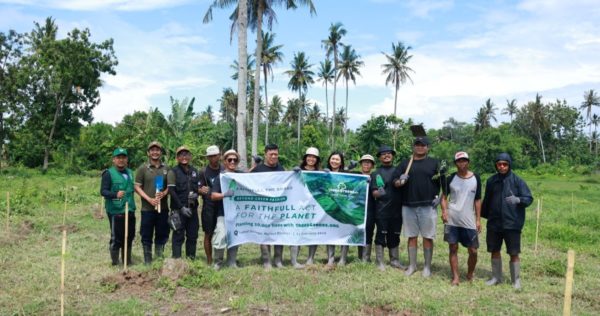
Together with Trees4Trees and local communities, Faithful plants 10,000 trees in Tuwed and Tukadaya Village.

Creating Impacts: Supporting the Environment and Communities 

Echoing this perspective, Rusmanto Manulang, Trees4Trees Bali Site Coordinator, highlighted that tree planting delivers meaningful environmental and social value. 

“The most important impact lies in the environmental benefits, especially in protecting water reserves and maintaining clean air, both of which are essential for long-term ecosystem health. However, at the same time, the economic potential is also significant,” he said. 
Trees4Trees planted trees in Bali
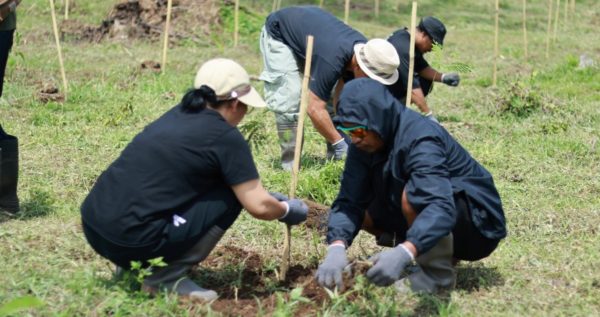
The scorching sun did not dampen the spirit of Faithfull team members to plant trees in Tuwed Village.

He explained that non-timber forest products, such as leaves, can be properly managed and used as livestock feed – a valuable resource for farmers who raise animals. Over time, products such as fruits, nuts, and timber can provide additional income streams, strengthen household economies, and enhance community resilience. 

“Beyond economic benefits, the initiative also motivates farmers to manage their land more effectively and sustainably, particularly degraded and unproductive areas,” said Rusmanto. By transforming empty land into productive agroforestry systems, farmers can secure both environmental restoration and future income. 

With more trees planted this season, Faithfull hopes its fashion business can contribute not only to social and economic development, but also to long-term environmental sustainability – ensuring that style and stewardship grow hand in hand, rooted in Bali’s soil for generations to come. 

Writer: V. Arnila Wulandani. Photos: Y. Dessenita
Rooted in Resilience: Women Farmers in Bali

Rooted in Resilience

Rooted in Resilience: Women Farmers in Bali

Located within two of critical Bali’s watersheds, Sangianggede and Tukad Melaya, Tuwed Village in Melaya District, Jembrana Regency is strong for its agricultural tradition closely tied to local culture. Many residents rely on farming for their livelihoods, cultivating trees and crops, such as paddy, coconut, cacao, and various vegetables.  

However, like many parts of Bali, this area is increasingly facing pressure from rapid human-driven development, transforming much land into residential and commercial areas, creating challenges for farming communities. Amid these changes, some villagers remain committed to preserving their agricultural traditions. Among them are Nurhayati and Sahliah, two women farmers who continue to cultivate the land while contributing to their families and communities. 

Breaking Village Tradition: Women as Farmers 

In Tuwed Village, farming is seen as men’s work as it requires much physical labor. Most women in the village are housewives, while some earn income by collecting coconut leaves. Only a few women choose to work directly in agriculture.  

Sahliah and Nurhayati are among the women who have broken this tradition by dedicating themselves to farming.  

“It’s rare to find women in Tuwed who farm as their main routine. Usually, women only help during harvest time,” said Nurhayati, one of the village’s woman farmers.  

Now in her forties, Nurhayati has been familiar with farming since her early marriage. “My husband is a farmer, so I have worked alongside him in the field since we got married,” she explained.   

Planting Trees
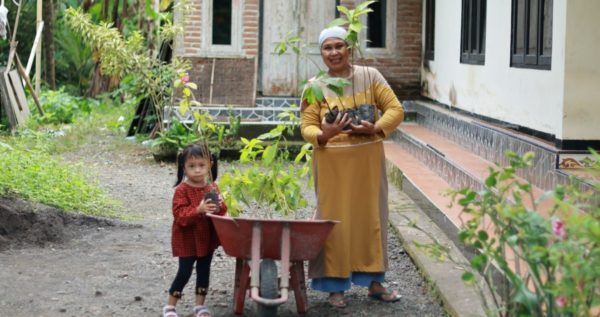
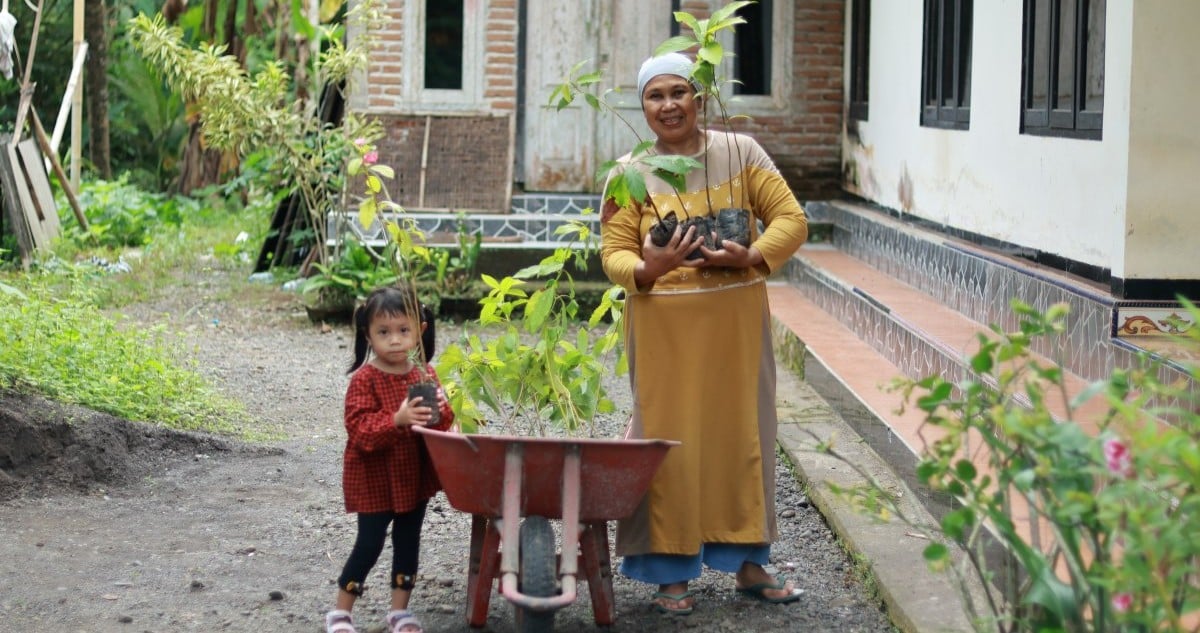
Nurhayati with tree seedlings she has already received from Trees4Trees and Faithfull tree planting program.

Together with her husband, Nurhayati manages a rice field and several plots of land where they grow corn, bananas, and vegetables. “After years of farming, I have seen how it can support my family’s needs,” she said. In 2024, they joined the Trees4Trees program receiving albizia, avocado, and cacao trees. “I hope these trees will become our savings for the future,” added Nurhayati.  

Another woman farmer, Sahliah, described farming as her side job, while her husband works as a full-time farmer managing rice fields and land planted with coconut trees and crops. Even so, Sahliah actively ensures their crops and coconut trees grow well and thrive. 

Like Nurhayati, Sahliah also received albizia, avocado, and cacao seedlings from a tree-planting program initiated by Faithfull in partnership with Trees4Trees in 2024.  “These trees are investments for the future. When I get older and am not strong enough to work, I can harvest the fruits along with crops we planted to support our needs,” she said. 

Woman planting trees
Sahliah, in front of her working place where she and other women pack young coconut leaves.

Independent and Self-sufficient Women 

Behind their persistence in farming lies a larger goal: becoming financially independence women who can contribute to their family.  

In addition to farming, Sahliah started a small business five years ago related to trees she grows: collecting young coconut leaves. The demand for young coconut leaves in Bali remains high because they are widely used in traditional ceremonies and rituals. The leaves are crafted into penjor, tall decorative bamboo poles adorned with young coconut leaves (janur), and banten, traditional Balinese Hindu offerings. 

“This business employs around 15 women who work with me to collect young coconut leaves, pack them, and send them to crafters in Denpasar,” Sahliah said. She emphasized that maintaining healthy coconut trees she has grown and continuing farming are essential to sustaining her business, as the quality of the leaves depends on the health of the trees and the ecosystem.  

“Through this business, I want more women in this village to work and earn their own income, instead of depending on their husband entirely to support their family needs,” she added. Sahliah believes that productive women can strengthen household financial stability. 

Nurhayati also pursues her own source of income. Besides farming with her husband, she runs a small snack stall in front of her house. The income she earns from selling harvests helps her add capital to her stall and create additional opportunities to support her family. “It is always satisfying to earn my own income without depending on my husband,” she said.  

Rooted in Resilience: Women Farmers in Bali
A woman from Tuwed Village packs young coconut leaves before delivering them to a crafter to be used for ceremonial and ritual decorations.

Farming for the Future 

For both Nurhayati and Sahliah, their commitment to farming and planting trees goes far beyond generating income. Their village has experienced environmental challenges, including drought during the dry season and flooding during the rainy season. For them, planting trees is also a way to help restore their village’s surrounding environment. 

“I love seeing the area around my land becoming greener. It feels cooler and makes me feel safer with more trees around,” Sahliah said. 

Through the tree-planting program initiated by Faithfull in collaboration with Trees4Trees this season, the trees planted are expected to bring long-term benefits, not only restoring the environment but also strengthening the livelihoods of local communities, especially empowering women like Sahliah and Nurhayati. 

Writer: V. Arnila Wulandani. Photos: Y. Dessenita