UPS: Delivering Positive Environment Impacts

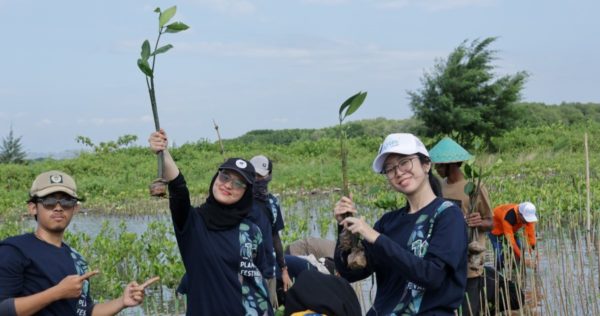
Search for Setu District on Google Earth, and the satellite throws up a lonely patch of green, squeezed between Bogor and the two major industrial centers of Jakarta and Bekasi.  

In recent years, the forested fringes of Setu have been giving way to new residential areas, shopping centers, buildings, and other infrastructure projects. The roads are increasingly clogged with cars, chugging to work in a cloud of petrol fumes.  

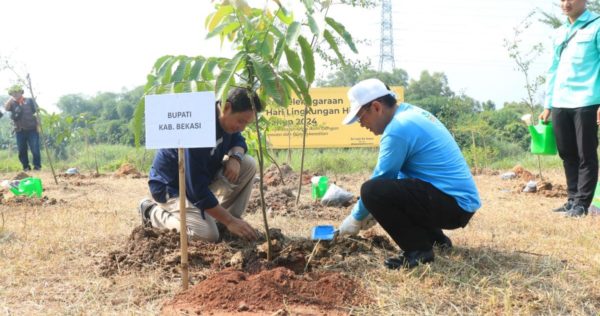
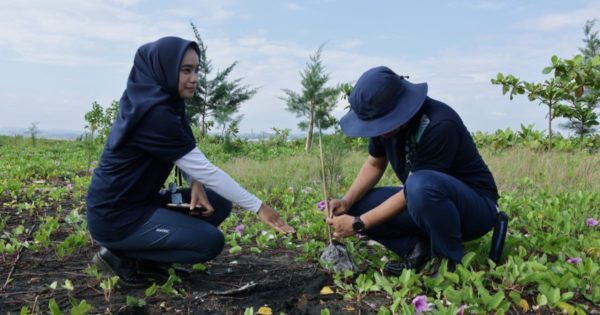
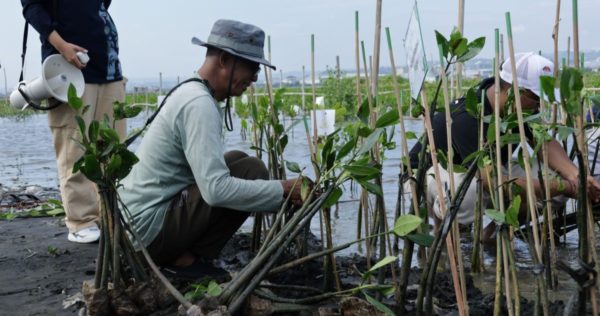
But solutions are on the way. Working in collaboration with Trees4Trees and the International Tree Foundation, the United Parcel Service (UPS) recently began a tree-planting program in Setu District that is bringing a breath of fresh air back to this important buffer zone. 

UPS contributions to the global sustainability movement 

On March 9, 2024, UPS set up camp at Hobbit Hills Eco Village for their second Indonesian tree planting project in the past year. According to Maya Sarininta, General Manager of UPS Indonesia, the latest initiative reflects the company’s ongoing commitment to environmental improvement.  

Maya Sarininta, General Manager of UPS Indonesia, leads the way in the company’s recent tree-planting activities

“This tree-planting event is part of our global sustainability program, which aims to plant 50 million trees worldwide by 2030,” said Maya during the event at Hobbit Hills. “Last year, we planted 1,200 mangroves in the coastal area of Jakarta. This year, we will continue the tree-planting program by planting various trees in terrestrial areas to enhance Jakarta’s buffer zone. We hope to plant more trees next year with the participation of our staff, working towards our global goal,” she added. 

The many benefits of an urban forest 

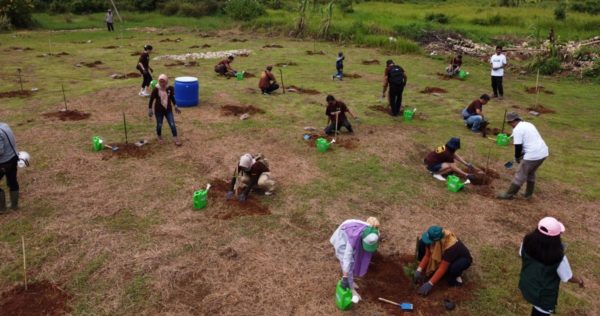
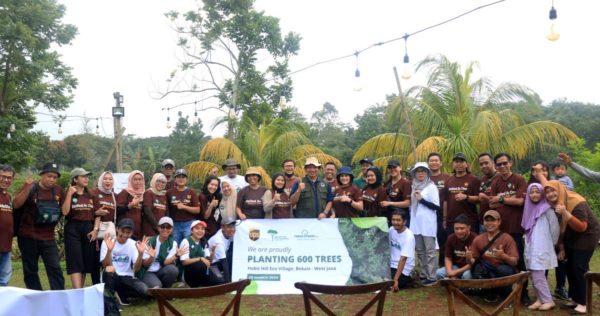
UPS’ program successfully planted 600 trees, comprising eight different species that will eventually grow into a new urban forest. These include local hardwood trees such as jabon, sengon, suren, and trembesi, which provide shade and can even help reduce temperatures in urban areas.  

Multi-purpose trees like durian, petai, and clove were also planted at the site. These trees support the environment by sucking up carbon dioxide, while also helping keep a lid on pollution and heat. Even better, their fruits can provide local communities with sustainable new livelihoods. 

Pandu Budi Wahono is Trees4Trees Program Manager. Speaking at the event, he noted that all partners involved in the project were excited about the long-term changes a bit of green could bring to the neighborhood. “We hope all the trees planted today on this farm will be properly nurtured and beneficial to the next generation, particularly in this area,” said Pandu. 

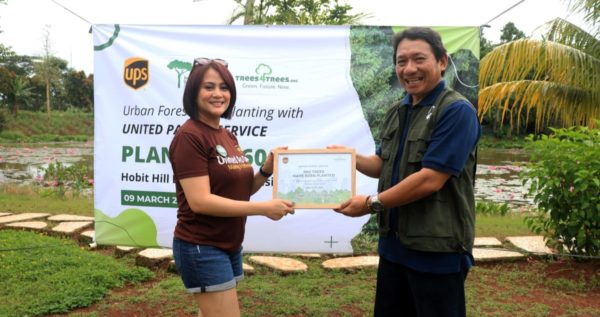
The GM of UPS Indonesia (left) receives a tree-planting certificate from Trees4Trees Program Manager (right)

It takes a village: Working together for a greener future 

The tree-planting event brought together staff from UPS and Hobbit Hills Eco Village, along with members of the local community as volunteers. “We involved UPS staff from all departments and invited families, including children, who were eager to join,” explained Mohammed Akbar, Chief of Community UPS Indonesia who was the tree-planting event coordinator. 

“I planted over ten trees today,” giggled Misha, one of several children who joined in. “It was exciting to know the correct ways to plant trees, and of course, to get my hands dirty without any complaints from my mom! I hope I can come back here to pick their fruits,” she added.  

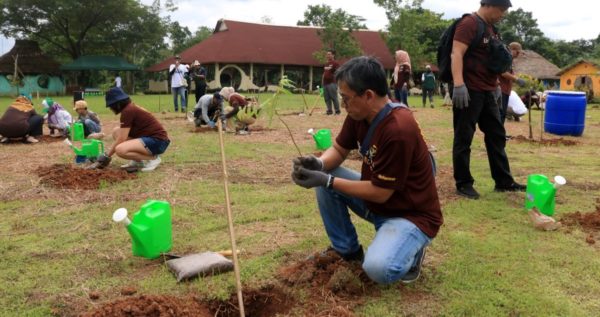
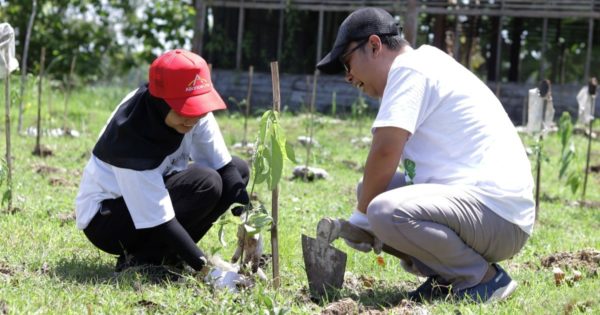
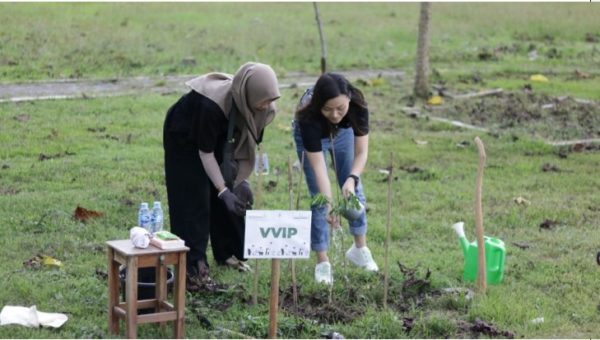
UPS staff and their families learn how to plant trees using a sustainable, organic approach.

Misha’s Mom, Ira, is a member of UPS Indonesia staff. She believes kids should be engaged in environmental education from a young age. “I brought my two children here to teach them about nature, how trees give us life and essential elements like oxygen. It’s crucial for the next generation to learn and contribute to nature preservation,” said Ira. 

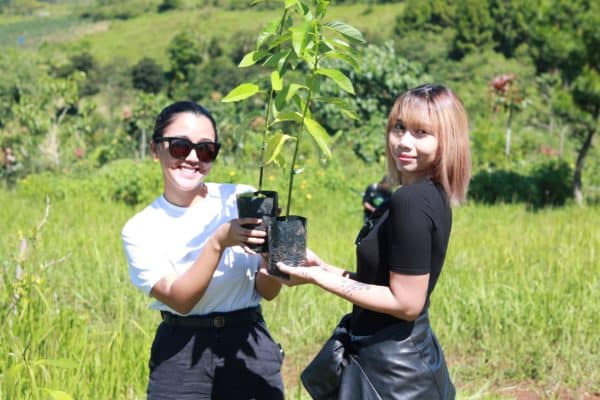
A UPS staff member planted trees with her children. Involving children in the tree-planting event as volunteers was part of the early education to introduce the importance of protecting nature and planting trees to the next generation

The latest tree planting program from UPS is a small part of their global sustainability goals. “UPS supports any environmental movement that makes a positive impact on the environment, especially efforts to reduce carbon emissions and combat global warming for a better future,” noted Farah, the UPS Co Chief of Community who was the assistance coordinator of the tree-planting event at the end of a long day’s planting on Hobbit Hill Eco Village. 

From Setu District to the rest of West Java, UPS Indonesia is working to positively impact communities and the environment as part of their global sustainability commitments. Through fruitful partnerships with Trees4Trees and the International Tree Foundation, UPS is determined to deliver on its green initiative.  

Planting Trees: A Sustainable Initiative in Bojonegoro

Tree planting in Bojonegoro

Tree planting in Bojonegoro

(Planting Trees: A Sustainable Initiative in Bojonegoro) Trate village, in the Sugihwaras District of Bojonegoro Regency, is landscape that’s prone to drought. Three neighboring villages – Papringan, Pandangtoyo, and Jono – have similar troubles. During the dry season, communities living here experience prolonged drought and water scarcity, making access to clean water a major challenge. 

Now, as part of a collaboration between Trees4Trees, Alliance One Indonesia (AOI), and Indonesia Tri Sembilan (ITS), a coordinated initiative is underway to address environmental concerns and support local communities. In 2023, this initiative focused on planting trees in those four villages of Sugihwaras district. 

Working With Partners to Grow a Better World 

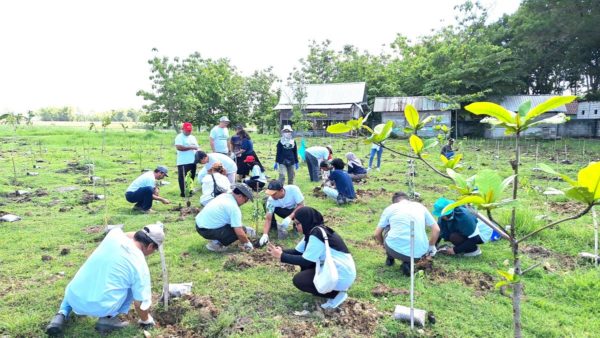
On December 12, 2023, 550 trees were planted in Trate Village, as part of a tree planting program based on the following theme: Let’s Green the Planet, Growing a Better World. The event featured members of Trees4Trees and the local community, along with around 20 volunteers comprising staff members from AOI and ITS.  

This is our contribution to the planet,” commented Cleomar Panno, AOI’s National Agronomy Manager, during the event. “It won’t change the world completely, but at least it will be beneficial for this area, including the local community. And the most important thing is they will be able to harvest the results later.”  

Tree planting in Bojonegoro
550 trees were successfully planted by volunteers and the local community (above).  Cleomar Panno (left) receives a tree-planting certificate from Trees4Trees(below).

CSR Program in Bojonegoro

This tree planting initiative reflects the companies’ commitment within the tobacco industry to contribute to preserving nature and support the local communities who partner with them as tobacco producers.  

Iba Swasono is the Operational Manager of Bojonegoro Regency for PT. AOI, who emphasizes the importance of environmental restoration to both companies. “We recognize that every business, including ours, contributes to environmental degradation,” said Iba while volunteering in Trate. “This tree planting initiative is our responsible action to give back what we have taken from nature. Through this activity, we aim to restore balance by giving back, working to minimize the effects of environmental degradation,” Iba added. 

Restoring the environment, empowering farmers 

In addition to the initial event in Trate, 5,000 more trees are scheduled for planting in early 2024.  

Khoirum Minan is the Trees4Trees Pati Unit Manager overseeing this regional program, which will involve planting avocado, teak, and indigofera trees. Another initiative will introduce four more tree types – kaliandra, petai, water apple, and elephant thorn (locally known as klampis) – selected for their ability to improve soil and conserve water. 

“After our initial assessments, Trate Village and the three other villages were identified as having soil prone to dryness,” explains Khoirum. “As a result, we opted for trees that are well-suited to these soil conditions and can address water scarcity concerns. Teak, for example, thrives in dry-prone areas, and water apples contribute to water conservation,” he explained.  

According to Khoirum, these types of trees bring environmental benefits but also offer economic value:. “Avocado trees provide fruits that local communities can enjoy, while indigofera, in addition to improving soil conditions during drought, yields leaves rich in protein that serve as fodder for the cattle raised by the local community.” 

CSR event program
(Above) Staff from AOI and ITS roll up their sleeves and get involved in the tree planting activities

Sustainable tree planting program 

AOI and ITS are committed to building on these positive benefits, with a target of 53,000 trees planted in Bojonegoro by 2030.  

This sustainable tree planting initiative aims to combat climate change as a global concern, reduce carbon emissions, address environmental issues in villages around the district (particularly water scarcity and drought), and support local community livelihoods. 

CSR Event with AOI and ITS
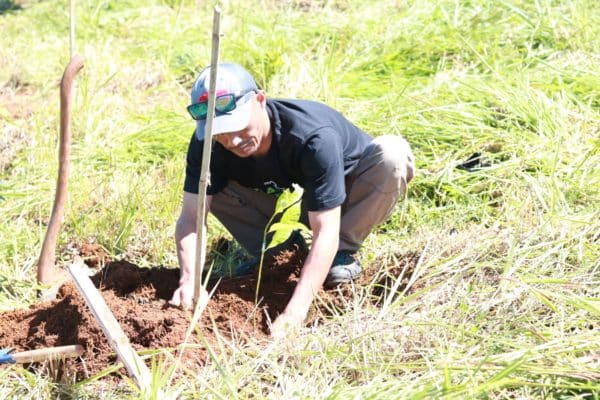
(Above) Volunteers plant seedlings in Trate Village, as part of AOI’s ESG activities

Yossy Zahra is the Environmental and Social Governance (ESG) Assistant Manager at AOI. She confirmed that the company’s tree planting program forms part of a wider scheme designed to generate long-term benefits for both the environment and society. In addition to conservation, AOI is aiming to bolster the incomes of local community members through products that come from the new trees. 

“This initiative is a component of our ESG program, which covers crops, environment, and people, with a specific focus on the environment,” explains Yossy, before adding that carbon offsetting, and crop diversification are their main areas of focus. “Through these efforts, our goal is to provide our farmer partners with tree products that they can either sell or utilize to meet their needs., 

At the beginning of a New Year, the residents of Bojonegoro Regency can look forward to a new era of productivity, landscape stability, and availability of resources. With support from AOI and ITS, Trees4Trees is planting the seeds of a more sustainable future in East Java. 

Preserving Cultural and Environmental Treasures: Greening Yogyakarta with Daimler Indonesia

Tree-planting event in Yogyakarta with Daimler Indonesia
Greening Yogyakarta with Daimler Indonesia
Photo: Trees4Trees/Yulianisa Dessenita

Centuries ago, kepel and sawo kecik trees were highly prized by the royal Mataram court of Central Java. Kepel fruits were the perfume of princesses at Yogyakarta Palace, while sawo kecik became a symbol of kindness that was recognized throughout the realm. Today, kindness returns to the soil of Central Java, with a planting activity born out of reverence for the region’s heritage. 

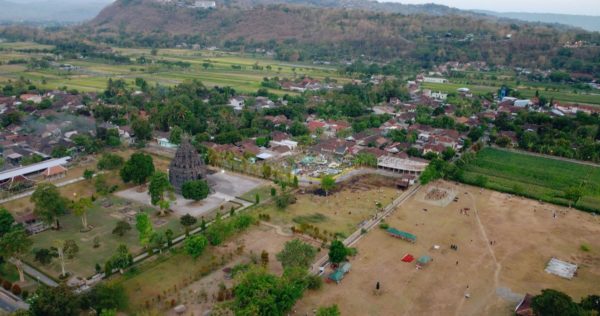
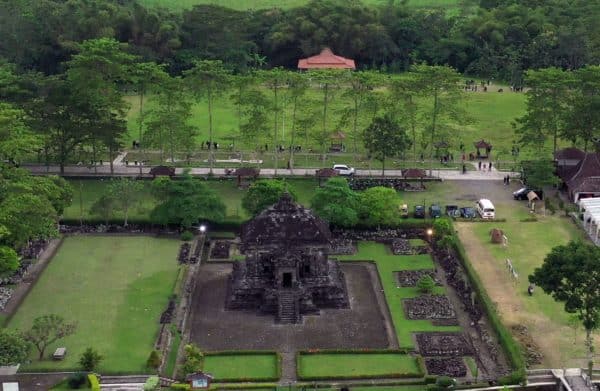
Sojiwan Temple (Candi Sojiwan) is a relic from this era. Located in Kebon Dalem Kidul Village, just over a mile from the more famous Prambanan temple, this ancient monument remains an important site for local communities.  

Every day, many people come to visit. With hardly any shade, this temple and its pilgrims are blasted by the midday sun. To provide some respite, Trees4Trees has been busy restoring the area to its former glory. 

Preserving Cultural and Environmental Treasures
With hardly tree covers, this temple and its pilgrims are lack of shades by the midday sun. Photo: Trees4Trees/Haryadi

New trees provide shelter and shade 

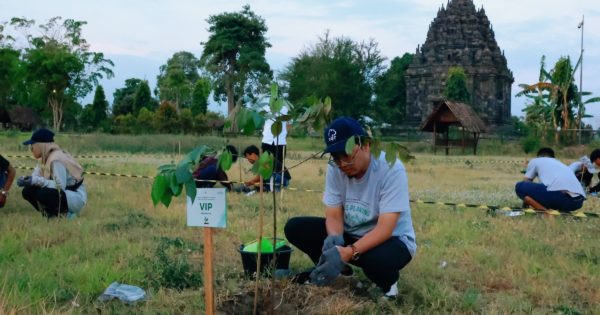
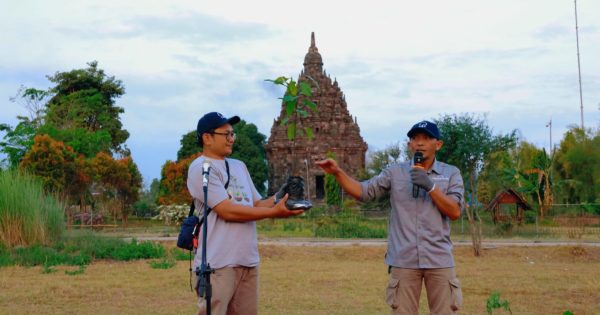
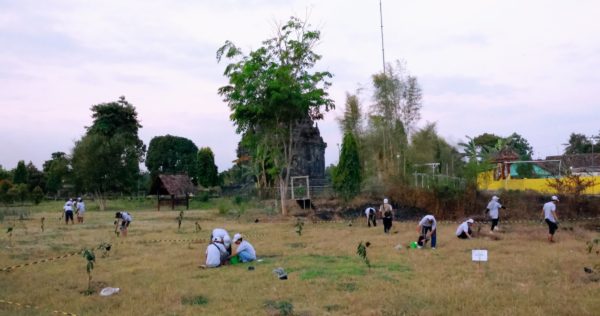
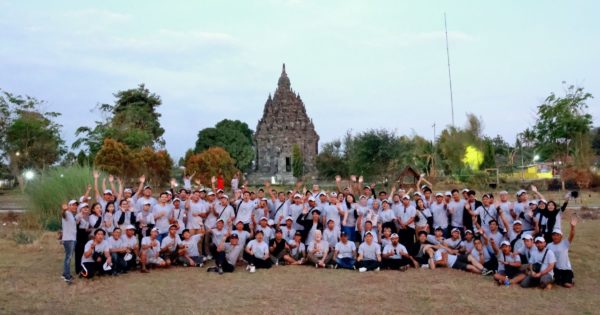
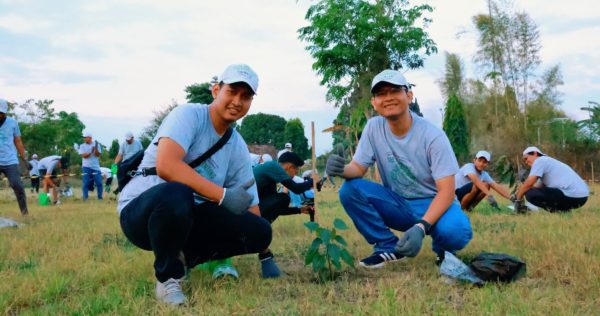
In early September 2023, Trees4Trees teamed up with 250 volunteers from PT Daimler Commercial Vehicles Indonesia (DCVMI) to plant trees around Sojiwan. The event was a golden opportunity to raise awareness and develop skills.  

“Before planting, we provided an educational session to teach proper tree planting techniques,” explains Erni Setyaningrum, Trees4Trees Office Manager. “In total, we successfully planted 300 trees with DCVMI and helped to increase tree cover.” 

Greening Yogyakarta with Daimler Indonesia
(Above) Trees4Trees experts share tips on tree planting with the DCVMI team. Photo: Trees4Trees/Yulianisa Dessenita
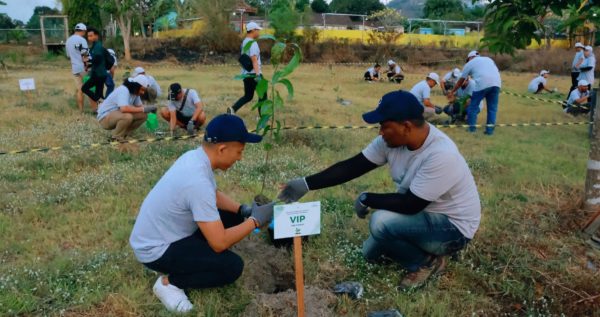
Rizki Pradhitya, Trees4Trees Kebumen Unit Manager overseeing the event, added:, “We planted 55 trembesi (rain trees) to provide shade and cool down the area, addressing the lack of trees as shade. Additionally, we planted Gayam trees to conserve water sources and prevent drought, aligning with the local community’s ecological needs.” 

Fun facts about trembesi trees 

  1. Also known as the ‘rain tree’ or ‘monkey pod tree’ 
  2. They can absorb up to 10 times as much CO2 as other species.  
  3. Their leaves fold up in the rain, allowing more water to reach the ground.  
  4. Their roots suck up large amounts of ground water, which helps prevent flooding and soil erosion during the wet season.  
  5. In 2010, Indonesia planted more than 1 billion trembesi trees as part of a nationwide conservation program.

Reconnecting with royal roots 

In addition to trembesi and other shady species, various trees were planted that hold cultural significance for the area. As Rizki explains, “we planted three species closely tied to Yogyakarta’s cultural heritage and indigenous to the region: duku, kepel, and sawo kecik trees.” 

Duku in particular is beloved by the local community and has a special place in Yogyakarta society, due to its popularity as a local fruit. 

Preserving Cultural and Environmental Treasures
Photo: Trees4Trees/Yulianisa Dessenita
Greening Yogyakarta with Daimler Indonesia
(Above) Volunteers gather to plant trees around the Sojiwan Temple. Photo: Trees4Trees/Yulianisa Dessenita

Growth and transformation: Paying tribute to Buddhist heritage 

Another tree chosen for the event was the Bodhi, also known as ‘the tree of awakening.’ This variety was chosen for its religious significance and close association with Sojiwan as a Buddhist temple. 

“There were already a few Bodhi trees in the temple area,” said Rizki. “We’ve added 55 new Bodhi trees (because they are) considered sacred by local communities and have a strong connection to Buddhist history,” he added.  

Greening Yogyakarta with Daimler Indonesia
(Above) Tree of awakening: Trees4Trees plant sacred Bodhi trees in deference to Sojiwan as a Buddhist site. (Below) Mango trees are planted due to their service as shades and production of fruits. Photo: Trees4Trees/Yulianisa Dessenita
Tree-planting event in Yogyakarta with Daimler Indonesia
Greening Yogyakarta with Daimler Indonesia

Next steps: Branching out to Gunung Kidul, Yogyakarta  

Following the success of Daimler Indonesia’s tree-planting project, an additional 4,700 trees will soon be planted in various villages around Semanu District, Gunung Kidul, Yogyakarta. With support from Daimler Indonesia, Trees4Trees, will continue working to heal the land and promotes water conservation. 

Tree-planting event in Yogyakarta with Daimler Indonesia
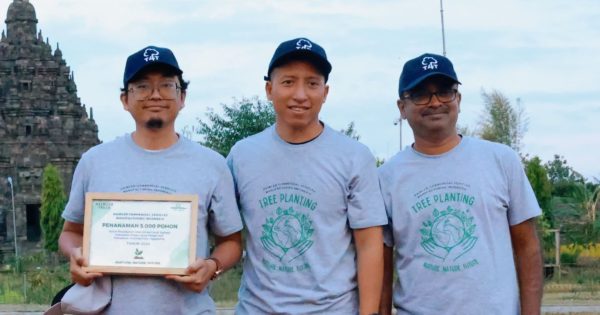
(Above) Daimler management representatives Adriana Sukmana P (left), Aditia Satrio Putro (center), and Sathish S (right) joined the planting efforts and were presented with Trees4Trees certificates. Photo: Trees4Trees/Yulianisa Dessenita

“Drought and water scarcity are common problems in Gunung Kidul, especially during the dry season,” explains Haryadi, Trees4Trees GIS Officer. “This area also has a significant amount of degraded land. That’s why, we will plant trees – to help improve the environment.”  

Rizki added that many local farmers have already requested new tree species for the area. They requested a mix of teak, Albizia, burflower, guava, mango, kelengkeng, and rambutan to enhance the environment. According to Rizki, “these tree species contribute to improving the livelihoods of local residents, due to their economic value through the production of fruits, leaves, and other tree products.” 

From economic value to environmental impact and from shade to religious tribute, these new trees will provide a wide range of services to the area surrounding Sojiwan Temple. Together, Trees4Trees and Daimler Indonesia are paying tribute to the past, while also building for a greener, more sustainable future. 

Writer: V. Arnila Wulandani. Editor: Christopher Alexander

A Monument to Cooperation: AstraZeneca Puts Down Roots in Java

(Above) Volunteers join the tree planting activities, part of AstraZeneca Indonesia’s CSR program

To the east of Yogyakarta city, Banyunibo stands alone; an island of stone, marooned in a sea of green farmland. Unlike most buildings from the ancient Mataram kingdom – like nearby Prambanan and Ratu Boko – this ninth-century temple leads a solitary life. 

Out on these sunbaked plains, there are hardly any trees to provide shade. Particularly in the dry season, the area can become very hot and arid during the day, chasing people back to their cars and villages. But all that is about to change. 

A Shade Better: AstraZeneca Program Targets Tree Cover Density  

In February 2023, a joint tree-planting program kicked off in Cepit sub-village, where Banyunibo is located. Implemented by AstraZeneca and with support from Trees4Trees, the program will expand tree cover and provide more shade at the site.  

AstraZeneca Indonesia is working to deliver social and economic benefits to the local community, as part of an overarching goal to improve the environment.

AstraZeneca Indonesia's top management volunteering at the tree-planting event, including Se Whan Chon, Country President (fifth from the left); and Rizwan Abudaeri, Director of Market Access, Government Affairs and Regulatory Affairs (fifth from the right)
(Above) AstraZeneca Indonesia’s top management volunteering at the tree-planting event, including Se Whan Chon, Country President (fifth from the left); and Rizwan Abudaeri, Director of Market Access, Government Affairs and Regulatory Affairs (fifth from the right)

Providing Benefits for People and Nature 

The program provided a number of benefits to the local environment: restoring bare land, increasing water availability, supporting biodiversity, and mitigating environmental problems in various locations.

“The tree-planting event also included the riverbanks,” says Novita, Assistant Planning Manager at Trees4Trees. She explains that the trees planted will protect the rivers from erosion. “They will also increase rainwater absorption in the ground, preventing rainwater from flowing directly into the river,” she added.  

The program chose trees that will benefit communities. Species like mahogany, teak, damar, and trembesi, provide shade, support water availability, and produce a vast amount of oxygen; while fruit trees such as avocado, durian, and sapodilla can offer a source of income to local enterprises. 

(Above) Ms. Belinda Aw, Cluster Procurement Manager at AstraZeneca Singapore & Indonesia, plants a tree with the help of a Trees4Trees forester.

The Program in Numbers  

The program involved many different people, working together to provide a range of environmental and social benefits, while also raising awareness in local communities about the importance of trees. 

  • 260 trees planted 
  • 2,500 square meters of land 
  • 500 volunteers from AstraZeneca Indonesia 
  • 25 groups, led by 18 experts from Trees4Trees 
  • 3 local communities 

“We hope everyone will benefit from the trees we have planted in this area,” says Novita. “Especially the local communities in the village, who can enjoy the shade provided by the trees and the oxygen they provide.,” Trees planted during the project will grow to provide shade for the temple, ecosystem benefits for the surrounding area, and livelihood opportunities for the people who live and work here. 

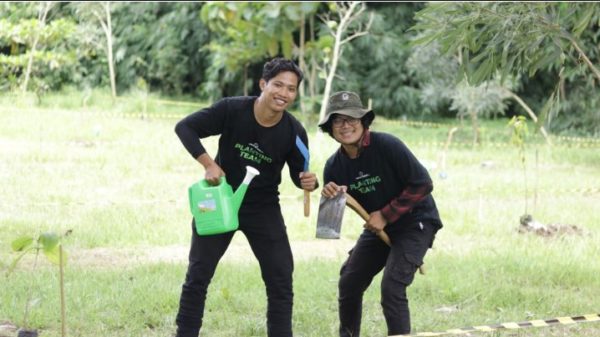
AstraZeneca Program : member of the Trees4trees planting team
Members of the Trees4Trees planting team

In the fertile heartland of Java, history and traditions run deep. Banyunibo is a symbol of this proud heritage. In the local language, the temple’s name means ‘dripping water’. With every drop of sweat shed during the recent tree-planting program, and every drop of rain that falls from now on, a forest will spring up around the temple; a living monument to the power of cooperation, shading the temple and its visitors for generations to come. 

For more information, and to find out how Trees4Trees is working together with AstraZeneca to restore forests around Indonesia, visit our website.