All My Efforts Were Worth It: Planting Mangroves, Protecting Livelihoods in Pati

All My Effort

All My Efforts Were Worth It: Planting Mangroves, Protecting Livelihoods in Pati

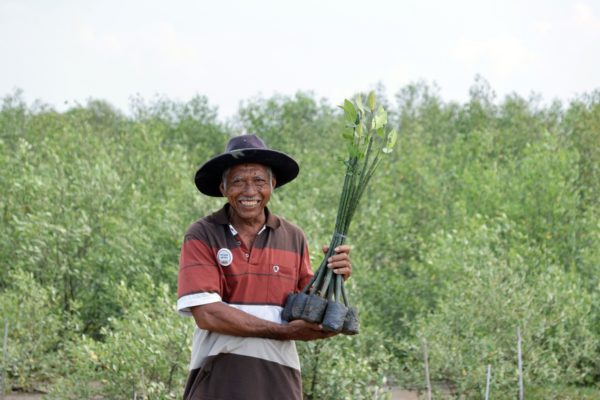
As the fifth of eleven siblings, Parmi missed out on a formal education in his youth. Instead, he and his two older brothers learned how to manage fishponds from their father. Parmi quickly turned this passion into a profession and now, more than 50 years later, continues to make a living in this way. 

Fishponds at the center of community life 

Central Java’s Pati Regency, where Parmi lives, is well known for its milkfish (ikan bandeng). “I manage two fishponds covering a total of 1.25 hectares,” he explains. “During the harvesting season, I can yield around a ton of milkfish per hectare, and we harvest two or three times a year.”  

With the income he makes from fishponds, Parmi can provide for his family. “This work allows me to give my son and daughter the education opportunities I never had,” he says.
Farmer mangrove
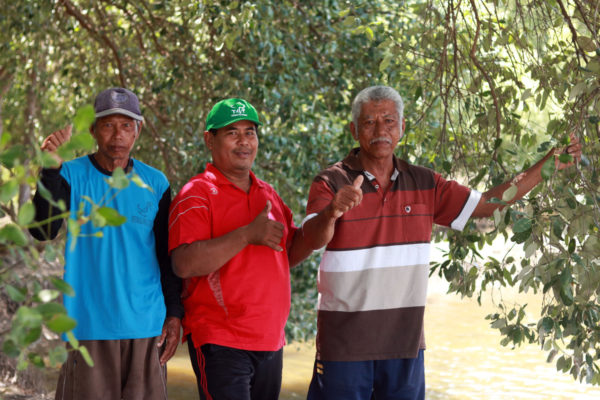
(Above) Parmi (right) with his fellow fishpond farmers, inspecting the mangroves he planted in 2001

Planting trees for protection 

Parmi’s fishponds are located in the coastal village of Dukuhseti, around 100 meters from the shoreline. In 2001, huge waves flooded the coast, destroying ponds and causing enormous damage. “I lost hundreds of millions of rupiahs,” he recalls. At that time, there were no protective barriers along the coast, leaving fishponds vulnerable to floods.  

In response, Parmi and his fellow fishpond farmers took steps to ensure this disaster would not happen again. They planted mangroves along the shoreline to provide a natural buffer against the waves. Now, 23 years later, those mangroves have grown big and strong. But there are not enough of them to guarantee protection. 

In 2022, there was another huge ocean surge. “I lost around 100 million rupiahs (USD 6,190),” Parmi remembers. But he was relatively unscathed, compared to other farmers further up the coast. “Our neighboring village suffered even greater losses because they didn’t have as many mangroves protecting their coast,” he explains. 
All My Efforts Were Worth It: Planting Mangroves
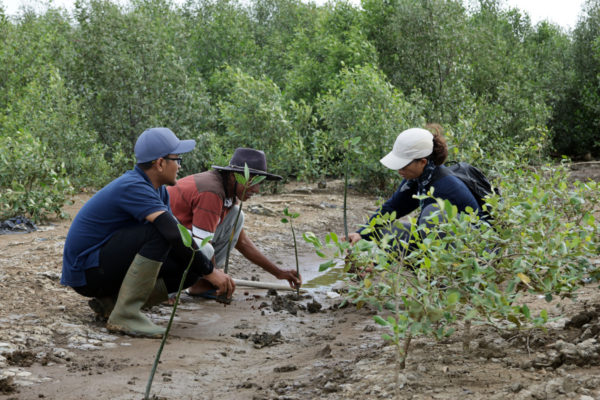
(above) Parmi plants new mangroves with members of the Trees4Trees team

Grab and EcoMatcher team up to plant mangroves 

Back in 2021, Parmi and other members of the Tani Makmur Mandiri farmers’ group were invited to join a mangrove planting initiative run by Trees4Trees, EcoMatcher, and Grab. A total of 30,000 mangrove trees were planted, creating a green belt covering 3.8 hectares along the Dukuhseti shoreline. 

Now, three years later, Parmi and his fellow farmers are reaping the rewards of their efforts. “Planting mangroves is not easy,” he says, remembering how he and his team would work waist-deep in muddy ground. “But seeing these trees grow big and strong (almost all of them are now at least three meters tall), I feel all my efforts were worth it.”  

Ocean waves no longer threaten Parmi’s fishponds as they once did. And the flourishing mangroves offer a range of other, unexpected benefits to the community – the leaves provide a sustainable source of organic fertilizer for the fishponds and the fruits, known locally as brayuh or brayo, can be sold at markets. 

“Local people often come to pick the fruits,” explains Parmi, “which they can sell for 5,000 Rupiah (about thirty US cents) per bucket (500 grams). These fruits are highly in demand here, given their importance to local dishes.”  

Mangrove fruits

Parmi has seen first-hand the protective power and economic potential of mangroves in his community. He insists that caring for these trees and using them sustainably is essential to environmental health and social well-being. “Everyone in the village can freely pick the fruits or leaves, but cutting them down is strictly prohibited,” he says.  

“We would like to thank Grab, Trees4Trees, and EcoMatcher for providing us with these mangroves and the many benefits they offer,” says Parmi.We will continue working to protect and appreciate these mangroves, just as they protect our homes and safeguard our livelihoods.

 

Sutajaya: Planting Trees, Preserving Biodiversity and Heritage in West Java

Planting Trees

One of our main tree-planting locations in West Java is the Citarum River basin, home to over 1,000 tree species and 3,000 flowering plants. These plants are central to ecosystem health and form the basis for many livelihoods in the region. However, in the wake of rapid development, many of these tree species are now threatened by deforestation. In response, a local forest farmer named Sutajaya is determined to reverse the damage. 

Six years ago, Sutajaya was granted free leasehold by the government to manage 2 hectares of land in the foothills of Sangar Mountain near Mekarjaya Village, the village in Bandung Regency that he calls home. “We are allowed to plant crops and manage the land,” says Sutajaya. “But the mandate is that we must plant hardwood trees that we never cut down.”  

Traditional roots, bearing new fruits 

At first, Sutajaya planted coffee trees. However, he quickly noticed that many of the trees he remembered from his childhood were becoming more scarce. He started planting native Indonesian species like rasamala, saninten, damar, kisireum, and tarum areuy. And this process reconnected him to his roots. 

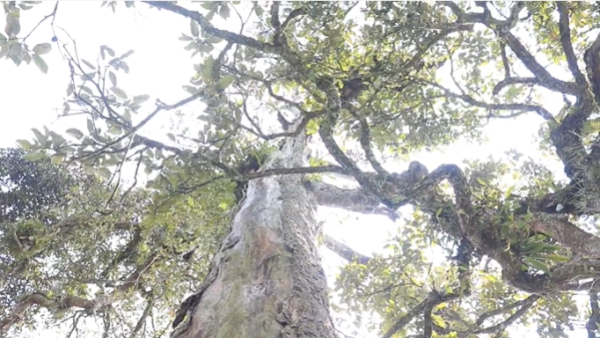
Saninten trees
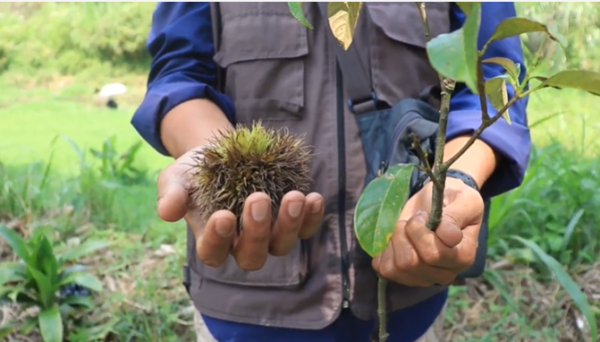
Figure 1 The Saninten tree, one of several native species making a comeback in West Java. Figure 2 The fruit and branches of Saninten tree.

fruits

“This land used to be the home of the powerful Tarumanegara kingdom,” explains Sutajaya, remembering a story passed down from his ancestors. “Their name came from the tarum areuy tree, which used to grow all around – the tree. also gave its name to the river that flows through the region, the Citarum.”. The kingdom was known throughout Southeast Asia for their production of distinctive blue fabrics, made using dye from tarum areuy trees.  

Today, the blue cloth is long forgotten, and the trees are disappearing too. “I don’t want my children to grow up without seeing the native trees so deeply rooted in our culture. So I will do all I can to stop them from disappearing,” said Sutajaya. 

Tarum Tree
Figure 3 Leaves of the tarum tree

Planting the seeds of knowledge 

Unlike most forest farmers in Mekarjaya Village, who manage the land primarily to plant crops and then reap the results, Sutajaya’s main goal in planting native trees is to create an educational forest, or arboretum. “My intention is to safeguard native trees, particularly those of West Java, and prevent further loss in the future,” he explains. “With the arboretum, I want to preserve biodiversity and educate people about the abundance of native trees that form part of our shared culture,” he added. 

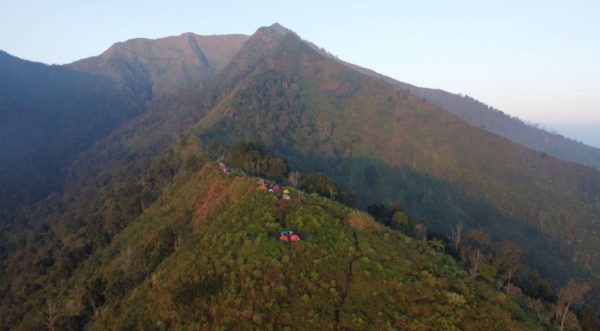
sangar mountain
Figure 4 Sangar Mountain, the location of Sutajaya’s arboretum

He plants these trees in the foothills of Sangar Mountain, a popular hiking track among  young hikers, especially at weekends. He hopes these groups will stop by his arboretum to learn more about native tree species. 

Support from Trees4Trees and TREEO 

Sutajaya is well on his way towards his goal. In 2021, he took a big step forward by joining a tree-planting project with Trees4Trees in collaboration with TREEO. “That was a great opportunity for me to add to my tree collection,” he remembers, “and I really thank Trees4Trees for helping me realize my dream.” 

Planting Trees
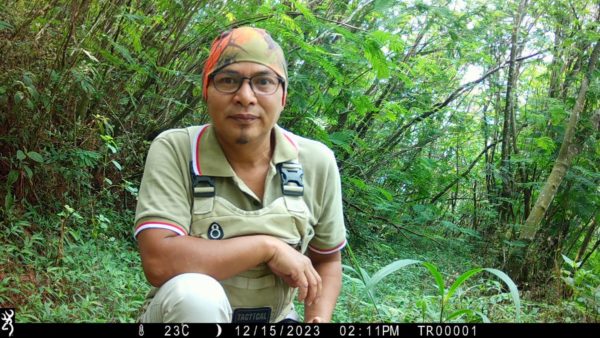
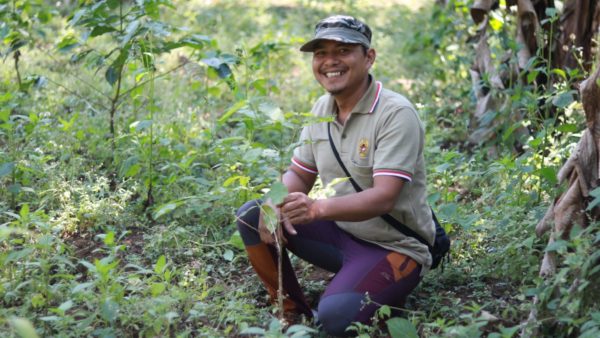
Figure 5 Sutajaya, on the ancestral lands he has almost single-handedly helped to re-green.

Together with Trees4Trees, he planted 1,600 sawo, damar, rasamala, and avocado trees, most of which have survived and are growing well to this day. From the sawo and avocado trees, he can harvest fruits to sell. From the damar trees, he collects sap, which also has economic value. The tarum areuy he planted provides leaves for organic fertilizer and fodder for his cattle. But the real value of these trees is something that can’t be bought or sold: a connection to heritage, and a glimpse of a greener future in the Citarum River basin. 

In spite of everything he has achieved, Sutajaya is not satisfied. “There are still many native trees out there that I haven’t inventoried yet,” he says. “I hope I can find them soon.”  

Trees4Trees is working closely with local forest farmers like Sutajaya to restore biodiversity and preserve natural heritage in West Java and beyond. To learn more about our tree-planting activities and get involved, please visit the Trees4Trees website.  

 Writer: V. Arnila Wulandani. Photo: Kemas Duga Muis

One Woman’s Story: Ratiyem the Farmer and Devoted Housewife

In Indonesia, social convention often dictates that a women’s place is in the home. But Ratiyem doesn’t care about convention. This 46-year-old farmer from Gunungsari Village in Kebumen, Central Java believes women have a right to work and follow their dreams. During her life, she has taken a long, hard road to independence. 

Nothing ever came easy for Ratiyem. Trapped in a cycle of poverty from an early age, her education was cut short when her family couldn’t pay the school fees. Ever since then, she’s been working hard to make ends meet. As a teenager, she took a job as a housemaid in Semarang, 170 kilometers away from her home and family.  

She worked hard in the big city for more than 10 years, but always felt like it wasn’t where she was meant to be. “I liked working in Semarang, because I could make a living,” explains Ratiyem. “But if I kept working there, there would be no-one to take care of my kids and my husband. I knew I had to return to my village,” she added.  

A woman’s work is never done 

After returning to her village, Ratiyem was determined to provide for her children with the education she never had. Together with her husband, she put her time, her heart and soul into working the soil. 

“I had a field measuring about 500 sqm and thought I could make some money by planting cassava and taro, as they’re always in high demand,” she explains. “My happiest moment as a farmer came when harvesting that first crop and the price was good. It made all the effort worthwhile.” 

Ratiyem balances her work as a farmer with her role as a mother and member of her community. “Early in the morning, after taking care of breakfast and getting the kids ready for school, I walk around the village to collect grass for my cattle. Then, I tend to my field and nurture the growing plants.” 

Growing stronger through the tree-planting program 

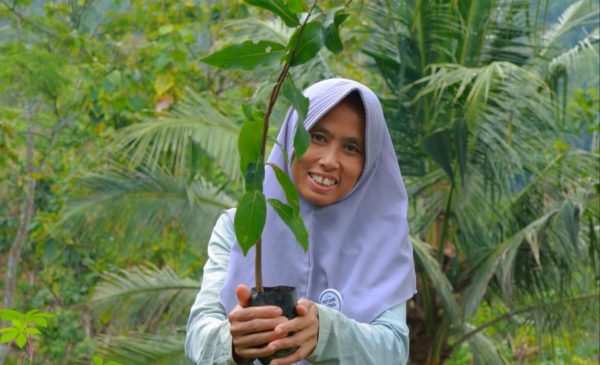
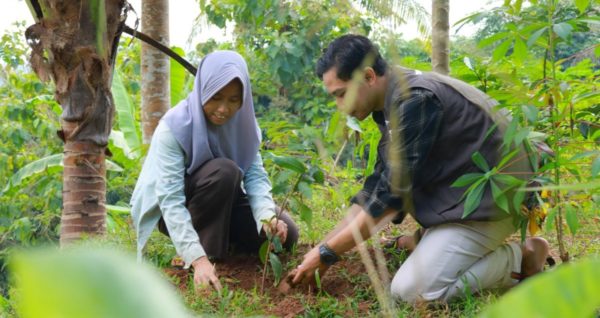
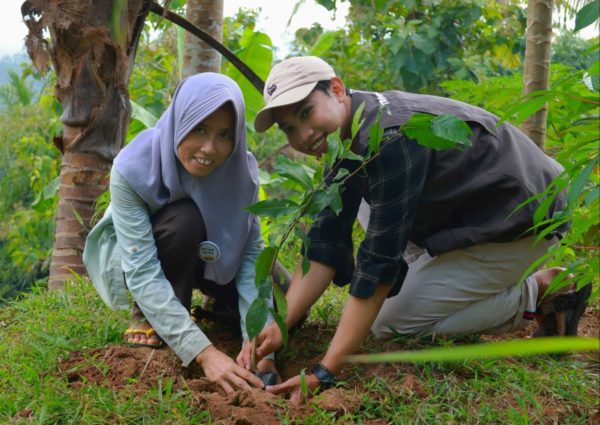
In 2022, Ratiyem was contacted by Trees4Trees, who invited her to become a grower for a tree-planting program in collaboration with Hong Kong – based TREE Ltd. Through this program, she received free seedlings and organic fertilizer, and was able to develop her farming skills with access to new knowledge.  

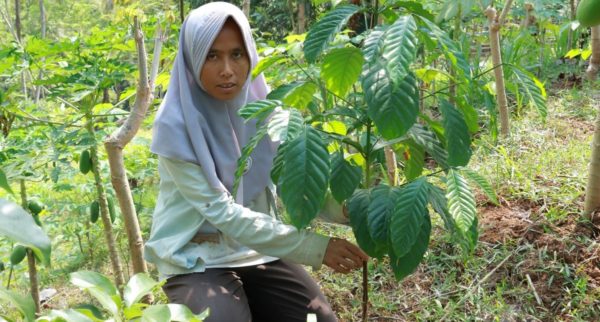
“I received 200 trees, including sengon, suren, and coffee,” remembers Ratiyem, who believes her own personal development will soon be reflected in the growth of her crops and the increased income it brings. “Being part of this program has provided me with a wealth of new farming knowledge through training, especially organic farming methods. This knowledge has made a big difference, as it guides farmers like me in managing our fields more effectively,” she added. 

The importance of independence 

Ratiyem takes great pleasure in being close to nature, living off the land she was born in. “Unlike the big city, where I had to buy all my food, here my fields provide me with everything I need,” she says, before adding that in her role as farmer she also has a responsibility to support food security. 

Through the Trees4Trees program, Ratiyem hopes to provide food for her community and earn extra income to support her family. Looking to the future, she wants to put more food on more tables, by starting up a catering business with ingredients sourced directly from her field. 

“I want to continue working and being productive,” she explains. “To me, it’s vital for women to work and generate income, so we don’t just rely on men to meet daily expenses. As working women, we can play a role in supporting the family financially,” she added. 

For Ratiyem and the many women farmers like her, independence means more than just following your own path. It is about overcoming obstacles, leading by example, and doing whatever it takes to provide for those who rely on you. With support from Trees4Trees, inspirational women like Ratiyem will continue to be a source of pride to their families and leaders in their communities. 

Writer: V. Arnila Wulandani. Photo: Yulianisa Dessenita

Farmer Story: Dayat Discovers a New Sense of Purpose in Saguling

Farmer story Partner of trees4Trees from Bandung

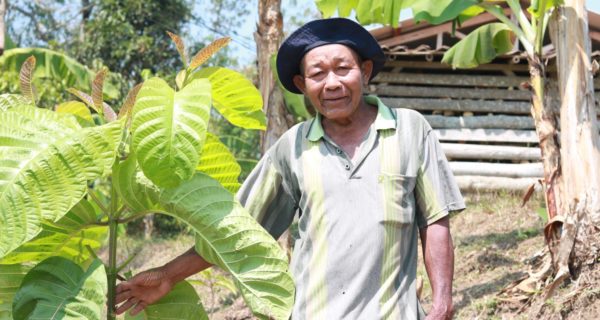
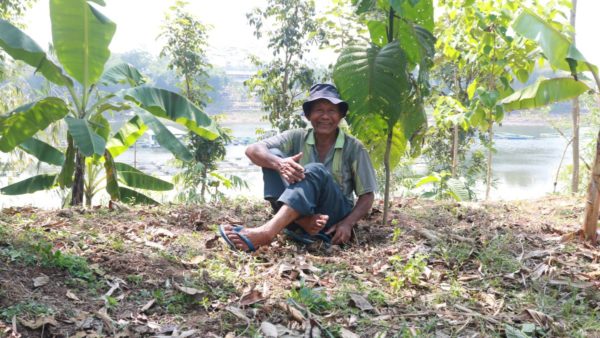
Farming is therapy for me when I am alone,” explains 75-year-old Dayat, as we explore his little plantation at the edge of Batulayang Village.  Since his wife passed away, Dayat spends most of his time alone nowadays. Most of his six children live far from home and rarely come to visit.  

Dayat owns a plot of land spanning about 0.12 hectares and overlooking the Saguling reservoir in Bandung, West Java. The bananas and Albizia trees he grows here have long been his main source of income. But this income is anything but certain. “As I am getting older, I want to find a more stable way to make a living,” he explains. 

Dayat recently joined the Trees4Trees planting program., He was given seeds, fertilizer, and training, and then began planting Jabon, Manglid, Gmelina, and Durian trees. “These plants thrive in my land and are worth more than bananas,” he says. Funded by AstraZeneca Forest and supported by Trees4Trees and One Tree Planted, this program is helping change lives and rejuvenate landscapes in West Java.

Branching out, but rooted in local tradition 

Dayat has been farming the fields around Cililin, Bandung, since he was a young man. Since then, he’s seen many people leave the village and head for the big city. But he prefers to stay put, caring for the land he inherited from his parents. He says the tree-planting program has given this land a new lease of life. 

“What I most appreciate is that all the tree seedlings and organic fertilizer I received were provided free of charge,” explains Dayat. I can’t help but wonder how I would have managed if I’d had to purchase them myself, as my income barely covers my daily living expenses,” he added. 

Daat and his tree

Farmer story; Dayat
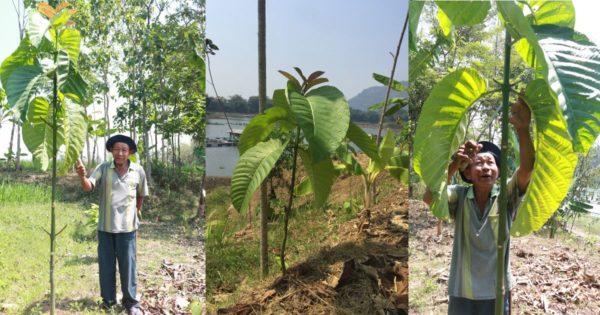
(Above) Dayat shows off his new crop of Burflower-tree (Jabon) 

New growth, new opportunities for development 

Of all the new seedlings, Dayat says jabon (Burflower) trees are best suited to his land,. as they grows quickly and offer income from timber. “After being cut, (the tree) regenerates from new shoots on the stems all by themselves,” says Dayat.  

Since witnessing the fruits of his recent labor, Dayat is already making big plans for the future. “If I’m fortunate enough to enjoy a longer life,” he says, “I look forward to harvesting and selling durian fruits.”  

Farmer story
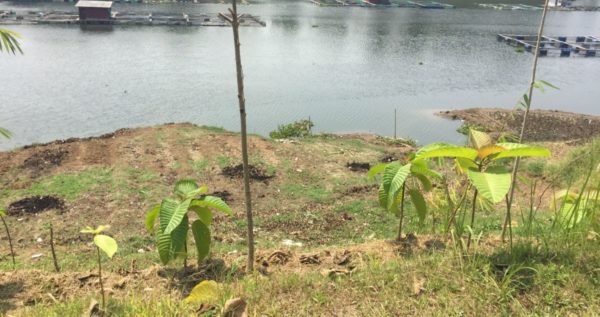
(Above) Dayat’s trees line the banks of West Java’s Saguling Reservoir

Providing benefits to the surrounding landscape 

Covering an area of over 5,000 hectares, the Saguling reservoir generates electricity that supplies power to Java and Bali. On its banks are agricultural lands owned by local communities and smallholders like Dayat. 

Over the years, erosion has become increasingly common in these lands, causing soil to be carried away by the current and increasing sedimentation within the dam. This has a knock-on effect for local fisheries and jeopardizes the energy supply. Dayat sees tree planting as a way to counter these issues. 

“My motivation for planting trees extends beyond the economic benefits,” says Dayat, whose new trees are helping combat erosion along the banks of the Saguling. “I believe I am making a meaningful contribution to the well-being of many people whose livelihoods depend on this dam,” he added. 

Waduk Saguling
(Above) The Saguling Dam, one of three reservoirs on the Citarum River, and (Below) Dayat is visited by the Trees4Trees Unit Manager.

Farmer story

Remarkable skill and valuable experience 

Ever since he joined the tree-planting program, Dayat has demonstrated his commitment to caring for trees. He’s also applied the knowledge gained from farmer training, which covered the use of organic fertilizers. 

“Out of the 375 trees Dayat received, more than 90% have gone on to thrive,” explains Dian Wardana, Trees4Trees Unit Manager for the Ciminyak 1 working area, where Dayat’s plantation is located. “This is a testament to his remarkable skill and dedication.”  

Dayat attributes this success to his meticulous care for all his trees. “I treat them like my own children and only use organic fertilizers that are gentle to my land,” he says. Being recognized as a top farmer is a great honor – I am grateful to Trees4Trees and their supporters, who have provided me with free seedlings, free organic fertilizers, and the knowledge, especially at my age,” he said. 

Writer: V. Arnila Wulandani. Editor: Christopher Alexander

Itang: A Young Farmer on a Mission to Pass Down Springs through Planting Trees

At 37 years old, Itang Zaenal stands out as a young farmer collaborating with Trees4Trees as a tree grower in Mandalahaji Village, Bandung Regency. In contrast to his peers who often seek employment outside the village, Itang has made a choice to remain within his community. He skillfully tends to his plot of land and has effectively generated income from its produce for several years. 

Become a farmer since his young age

Itang owns a parcel of land situated approximately 1 kilometer from the Cirasea sub-watershed, a tributary of the Citarum river. On this land, he cultivates both timber and various crops, aiming to secure both short-term and long-term income sources. The yields he generates from his land enable him to provide for his family, including his two children. 

However, Itang’s journey as a farmer commenced at a remarkably young age. At just seventeen years old, he decided to follow his passion and become a farmer.

“In those times, very few young individuals showed interest in farming. This was due to the mistaken belief that farming couldn’t lead to substantial earnings. I stood among the minority of young villagers who opted to remain in our community and pursue farming. Most of them preferred urban employment,” he revealed. 

Itang also acknowledged that prior to his decision to settle in Mandalahaji village, he had briefly worked in the city of Bandung. “City life didn’t resonate with me, I suppose. The rigid work hours left me with minimal opportunity to engage in activities I enjoyed,” Itang expressed. 

Benefiting from Trees4Trees’ Citarum rehabilitation tree planting program 

In 2022, Itang was presented with the opportunity in the tree-planting program initiated by Trees4Trees, sponsored by AstraZeneca and One Tree Planted. “The idea thrilled me, as I received tree seedlings completely free of charge and I get to keep all the results for myself. It was a significant help for me,” Itang expressed 

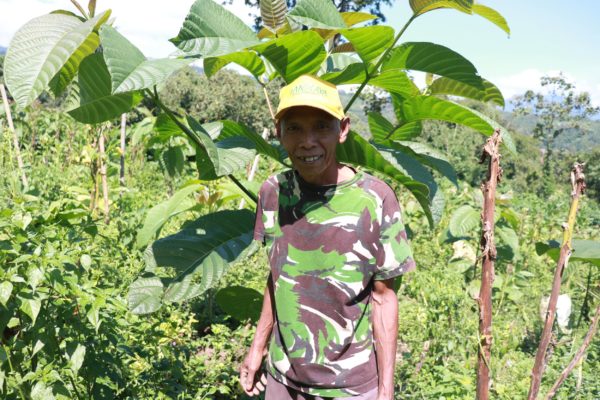
Focusing on planting bur-flower (Jabon) trees and coffee, Itang intends to gain long-term benefits. “Jabon is very well-suited to the soil conditions in my field, so it grows exceptionally well in this area. Jabon also regenerates new shoots automatically after being cut down, ensuring constant flourishing. Coffee, on the other hand, is a promising commodity. With more coffee trees, I can earn a better income,” Itang explained.

Applying organic farming  

Since his beginning, Itang has employed organic farming techniques in nurturing his trees. He has personally crafted fertilizer from the manure of his livestock. “Thank goodness, when I employ organic fertilizers made from the blend of manure and soil, the growth of the trees accelerates significantly,” he exclaimed while gesturing towards the flourishing trees around him.

Itang also expressed his gratitude for the organic fertilizers and pesticides provided by Trees4Trees. He noted that with these organic materials, he managed to foster Jabon trees that grew to around 2 meters in height in just eight months. “The outcome fills me with great excitement,” he confessed. He further added that these organic resources complemented the organic approach he had been practicing for years. 

Planting trees, passes down the Citarum springs to the next generation  

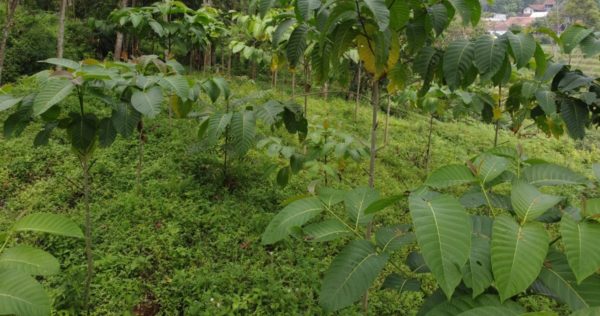
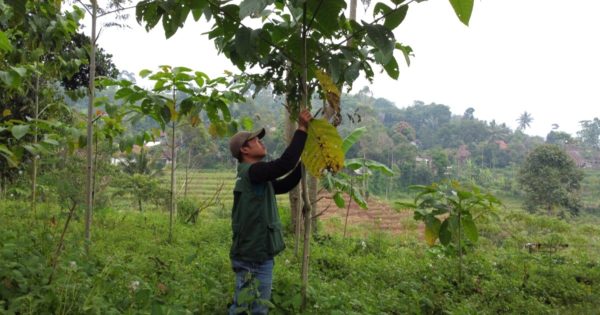
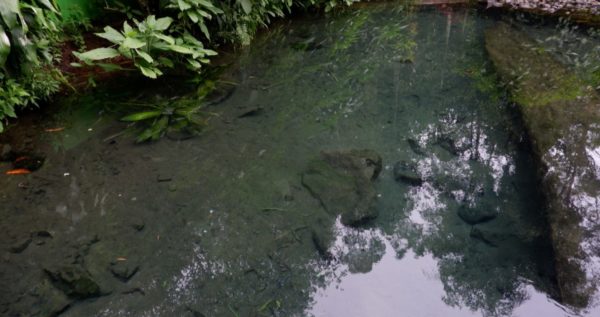
Itang’s land is situated approximately 15 kilometers from the source of the Citarum River. This location marks the origins of seven springs, which converge to form the Citarum River and its tributaries. 

“From these springs, the water flows into the Cirasea River – one of the Citarum’s tributaries that runs near my land. This river holds vital importance for the villagers, serving as a primary irrigation source and sustaining the trees I’ve planted. Thus, preserving both the river and its banks is essential,” Itang emphasized. 

He underscores that planting trees along the riverbanks plays a crucial role in curbing erosion and the siltation stemming from river sedimentation. 

“With the exceptional spring waters of the Citarum River, my endeavor in tree planting aims to pass on the legacy of healthy water sources to my children and the generations to come. I strive to pass down ‘mata air’ (water springs), not ‘air mata’ (tears). If we neglect our duty to care for it, all that remains to pass down would be tears – nothing of our natural heritage would be left,” Itang passionately conveyed. 

Writer: V. Arnila Wulandani. Photo: Kemas Duga Muis

Ayi: Preserving Water Sources Through Tree Planting

Ayi, a tree grower from Drawati Village Bandung_Trees4Trees
Preserving Water Sources Through Tree Planting
Ayi, a tree grower from Drawati Village Bandung_Trees4Trees

Drawati Village, nestled in Paseh District, Bandung Regency. This hillside community rests close to an upstream river—a tributary of the Citarum river watershed. As a result, vital springs dot the area, serving as crucial water sources for the local populace’s daily needs. 

Given the significance of the existing springs, safeguarding the surrounding environment becomes imperative. The preservation of water sources requires rehabilitation and reforestation efforts. To this end, the Drawati village government has been actively promoting reforestation activities among its residents through socialization and various programs. 

Trees4Trees Tree-Planting Program Contributes the Water Spring Conservation 

When the Trees4Trees team introduced a tree planting program funded by AstraZeneca in collaboration with Trees4Trees and One Tree Planted, both the village government and the villagers responded positively. This initiative aligned well with the village’s mission to advance reforestation efforts. 

Later, the tree planting program gained the participation of farmer groups in the village, composed of individuals dedicated to reforestation endeavors. Among these farmers, Ayi emerged as the best farmer of Drawati village due to his unwavering commitment to tree planting and reforestation. Ayi’s accomplishments are a testament to his long-standing dedication to his environment. 

Prior to joining this tree planting initiative, Ayi was actively engaged in reforestation activities alongside fellow villagers. He pointed out that accessing clean water in his village has become increasingly challenging, despite its proximity to the river’s source. This challenge fueled his determination to revitalize the village’s surroundings, ensuring a more abundant flow of water. He also aspires to enhance underutilized lands through increased tree planting. 

Ayi, a tree grower from Drawati Village Bandung is taking care of his trees_Trees4Trees

Planting Trees to Rejuvenate the Environment and Anticipate the Fruitful Yield 

“I plant trees for a better life and a brighter future for this village, not just for myself and my family, but for the entire community. Most importantly, it’s about nurturing a healthy environment around the village” Ayi said.  

He also revealed that many lands around his village are suffering and have been faced a shortage of clean water. This drives his motivation to plant more trees, hoping to rejuvenate our surroundings and ensure the abundant flow of water.  

“Water is a fundamental necessity for human life, making this endeavor worth every effort,” Ayi expressed. 

Furthermore, Ayi emphasized that tree planting not only fosters a healthier environment but also yields fruitful crops. When he joined the tree planting program, Ayi opted for jabon trees (burflower-tree) due to their rapid growth compared to other tree species. 

In addition, Ayi cultivated food crops such as corn, cassava, and various fruits, including orange trees. 

“I’ve also planted orange trees, anticipating a fruitful yield in the future. My aim is to harvest these crops. Planting trees holds immense benefits – it adds greenery to the environment and allows me to save for my future by selling the crops,” Ayi shared. 

Ayi, a tree grower from Drawati Village Bandung with head of village_Trees4Trees
Ayi was visited by Drawati Head Village dur to his dedication in reforestation and water sources preservation efforts.

Recognized for the Environmental Conservation Efforts 

Due to the unwavering dedication to tree planting and reforestation, Ayi and the farmer groups were acknowledged and commended by the head of Drawati Village. According to the village head, the present era mandates a life philosophy centered on nature preservation, as nature has nurtured and sustained us. Therefore, it is our responsibility to reciprocate this care. Ayi and the farmer group’s actions stand as a commendable example in this regard. 

“Greening initiatives contribute to the preservation and conservation of water, a crucial element for sustaining human life. We must prevent our water sources from depleting. We must ensure that our future generations do not shed tears due to a lack of springs. Let us unite to prevent such a future!” emphasized the village head during his encounter with Ayi and the farmer group of Drawati Village. 

Writer: V. Arnila Wulandani. Photo: Kemas Duga Muis